Tess of the D’Urbervilles

by Thomas Hardy
ages: adult
First sentence: “On an evening in the latter part of May a middle-aged man was walking homeward from Shaston to the village of Marlott, in the adjoining Vale of Blakemore or Blackmoor.”

Men are jerks.

Really.

That’s basically the bottom line that I got from this book, the one that I stomped around the house growling about, that I vented on the phone to a friend about, once I finished the book.

Men — all men, from fathers to lovers — are just basically going to take a woman’s innocence, their good hearts, their good will, and stomp. all. over. them.

Cheery, isn’t it?

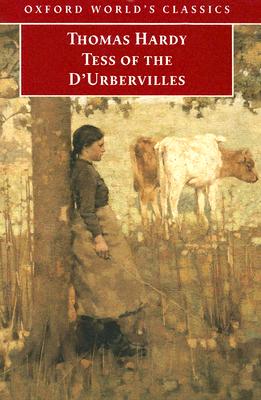
For those who are unfamiliar with this classic, Tess Durbeyfield is part of the Victorian working poor — oldest daughter of a lackadaisical farmer. When her dad inadvertently finds out that he’s a decedent of a noble family — the d’Urbervilles — he decides (practically pushes out the door) to send his daughter to a branch of the family who lives in a nearby town in order to beg them for money.

Male jerk #1.

Tess, being the kind, good, loving daughter that she is, does her father’s (and mother’s — she’s not much better!) will, and heads out. There she meets Alec: pretty boy, ladies man, and who is completely and utterly smitten with his “coz”. (Because as these things go, Tess is not only pure, but beautiful as well.) He pursues her very aggressively, and while she’s able to withstand his advances for quite a while, eventually he rapes her. Or at least, that’s how I see it.

Male jerk #2.

A short while later, Tess up and leaves the house and ends up back at her parents’ place. She gives birth and while the baby dies shortly thereafter (a very touching, passionate scene with her desperately trying to get the baby baptized before it dies), she’s determined to move on with her life. Fast forward a couple of years, and she gets a job at a dairy farm where Angel Clare is working.

A bit about Angel — he’s a gentleman’s son, and an enlightened Soul. He was meant for the Church, but unable to commit because of a lack of faith. And so, he decides to be a gentleman farmer, setting about visiting farms to get training. He falls head over heels in love with Tess, because of her purity and earthiness. She tells him she’s no good for him, that it would be better for him to marry one of the other dairymaids. He persists, and eventually she gives in (either these guys were REALLY persistent, or she really didn’t have much of a backbone), agreeing to marry him. On the wedding night, they decide to be confessional (word of advice: the wedding night is not a good time to be confessional). Angel confesses to having a short affair, whereupon Tess gets hopeful: perhaps he will be sympathetic to her plight. So, she tells him about her past.

Male jerk #3.

Actually — at this point, I don’t know who I was more incensed at: Alec for abusing and using Tess for his own personal pleasure or Angel for being such a merciless hypocrite. I had to put the book down for quite a while (a day or so) before I could deal with the story again.

Tess is totally the victim here, and it’s very frustrating for me as a reader to experience that. Especially since Tess is really the only sympathetic character in the novel. All that said, Hardy is a brilliant writer; engaging, descriptive, gorgeous language. And able to span all the emotions — from love to hate to disgust; he’s a master. The rest of the book is totally downhill, of course. A criticism of Victorian society and norms and a portrait of good intentions gone horribly wrong couldn’t have a happy ending.

That said, I’m not sure I’m going to run out and get more Hardy any time soon. Unless someone can convince me that it’s not full of horrid men. Because, I’m not sure I can handle much more of that!
Great Tales and Poems of Edgar Allan Poe

by… um… Edgar Allan Poe
ages: 13+

I saw this on display at the library, it having been chosen as the Big Read Wichita book for October and November. Not having read any Poe since Junior High/High School when I went through a morbid kick where he was my favorite author, I figured what better reason than this to pick up the book and see if I still like Poe as much as I did.

Oh, and I can count it for the RIP IV Challenge… 🙂

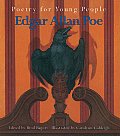
First off, I should mention that I didn’t read every story or poem in this book. I read the ones I remembered liking, which are basically his best-known ones — “The Tell-Tale Heart”, “The Cask of Amontillado”, “The Fall of the House of Usher”, “The Pit and the Pendulum”, and “The Raven” and “Annabel Lee” — as well as a couple I’d never read before: “The Black Cat”, “Ligeia”, “The Masque of the Red Death”, “The Gold-Bug”, and “Ms. Found in a Bottle” as well as assorted poems found in the Poetry for Young People collection we have kicking around the house.

Some general thoughts? When Poe is on, he’s brilliant at mood. “The Tell-Tale Heart”, “The Black Cat”, “The Pit and the Pendulum” and “The Raven” are all absolutely chilling. One of my most vivid school memories is listening to “The Tell-Tale Heart” in eighth-grade English, the lights out and curtains drawn. Deliciously terrifying. And it still is.

The other thing I noticed about Poe’s horror stories is that his protagonists are liable to flip off at any little thing; they, on many levels, are genuinely crazy. Take the guy in “The Black Cat”, for instance: he totally loses it because the cat is bothering him (obviously, he’s not a cat-person), and hangs it. Then another cat comes along, which he begins to believe is the dead cat out for vengeance, so he tries to kill it with an axe. And ends up offing his own wife, for which he feels no remorse. Sometimes, you just have to scratch your head and ask, “What was Poe on when he wrote this?”

The thing is, when Poe was off whatever it was that he was usually on, his writing is really not very good. “The Gold-Bug” was an interesting exercise in deduction to find a pirate’s treasure, but “The Masque of the Red Death” was odd (and not in a good way, either) and “Ligeia” made no sense at all. (It might have been me, though.) However, I did find that I enjoyed much of his poetry. In fact, my new favorite poem of his is a sweet one called “For Annie“, about a man expressing his love and gratitude for Annie, who helped him through a severe illness. It’s very touching and tender (and sane).

Do I love Poe as much as I once did? No… but that’s probably more of a factor of age and temperament than anything else. Poe was a brilliant writer, and is deserving of the praise he has gotten over the years.

The Moonstone

by Wilkie Collins
ages: adult
First sentence: “I address these lines — written in India — to my relatives in England.”
Support your local independent bookstore: buy it there!

Ten things about this classic mystery:

1. Basic plot summary: sacred diamond taken from India, gets bequeathed to flighty high-class (Victorian) girl, gets stolen same night. Who done it?
2. I did like this book a LOT better than I liked Woman in White.
3. Though, I think it had some similar problems — it was too slow for almost too long, and all the characters were pretty one-sided. But…
4. About 2/3 of the way through, it takes a sharp left turn which, no matter how clever you are, you will most likely not see coming.
5. And that totally makes the novel.
6. As for characters: I liked Sargent Cuff: he was very clever, though Collins didn’t let us know how much Cuff knew until the very end.
7. Which is kind of cheating, you think?
8. However, Betteredge was a HILARIOUS narrator. As was Miss Clack.
9. In fact, this one was funnier overall than Woman in White. (Which means it really wasn’t all that suspenseful.)
10. That said, it lacks the good baddies that Woman in White had. There really wasn’t a real bad guy in this one, and I felt that loss. One wants a good bad guy to hate.

Overall, though: a fun mystery. Glad I read it.

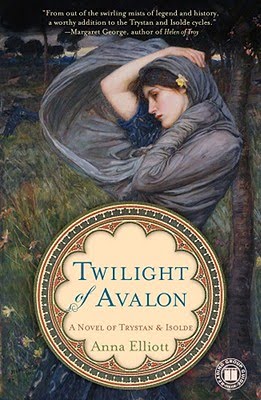
Twilight of Avalon

by Anna Elliott
ages: adult
First sentence: “So I say to call the visions into the scrying bowl.”
Support your local bookstore: buy it there!

When the lovely Kailana and I discovered we were both reading this book, we thought it would be fun to do a buddy review. Below are some questions she asked me about the book (as well as a couple I asked her, that I wanted to answer myself!)… Enjoy!

Twilight of Avalon takes two ancient myths — Arthur and Tristan and Isolde — and fuses them together into one story. The story picks up after Arthur was betrayed by his bastard son, Mordred, who also happens to be Isolde’s father. Isolde was made high queen, married to King Constantine, but seven short years after their crowning, Constantine is dead and Isolde fears for her own life. Especially since she knows that Constantine was murdered by Lord Marche, who is scheming for the high kingship himself. It’s only through her own wits, abilities, and the help of a half-Saxon prisoner named Trystan, that she’s able to escape and find a way to prove to the court the truth about Lord Marche.

What lead you to pick up this book? Will you be reading the rest of the trilogy?
I was sent it by the author (or a publicist; I can’t remember), but it was Trish’s review gave me the push I needed to pick it up. And yes, I will be reading the rest of the trilogy.

Do you have a favorite character?
I think I like Isolde best: she’s strong without being overly modern, and yet she had doubts and fears and insecurities. Though, it may just be that she was one of the few female characters in the book, and I needed someone to relate to.

What was your favorite scene?
Hmmm… it’s been a while since I’ve read it (bad memory…), but I think the scenes that stand out in my mind are the ones where Isolde is being a healer. I especially liked the one near the end when she’s helping Heneric recover from some serious wounds. Very touching.

What do you think of the mixing of fantasy and historical fiction? Was it believable?
I read in the material that was sent with the book that the author was going for a Mary Stewart feel — not exactly magic, but more than realistic. And I think, while it’s not as fluid as Stewart’s books, it works well. When you’re dealing with something as far removed from us as mid-6th century Britain, it’s easy to view it as fantasy. Which is perfectly okay with me!

What are your thoughts on the cover and the title?
Hmmm… first reaction: too Marion Zimmer Bradley. Which means I went in with a bit more feminist-mysticism expectations, which really isn’t what I thought the book is about.

What did you think of the “romance”?
Um… I expected something more. Truthfully, from the jacket flap, and the cover and the title, I really thought that there’d be some sort of hot and heavy romance… and there wasn’t. It was a more political book than I was expecting, and while I think Trystan and Isolde work well together, there really wasn’t much chemistry there. Maybe in the next book…

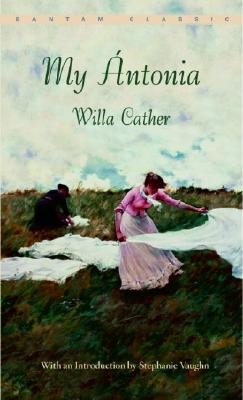
My Antonia

by Willa Cather
ages: adult
First sentence: “I first heard of Antonia on what seemed to me an interminable journey across the great midland plain of North America.”
Support your local independent bookstore: buy it there!

The thing that struck me most about this classic — which I remembered being my favorite of Cather’s work when I went through all her books about 10 years ago — was the amount of affection in it. Affection not only for the characters, but for the immigrant situation, the land, as well as the friendship that develops between the two main characters.

There isn’t much of a plot — it follows Jim Burden, the son of some Virginians who ended up living in Nebraska with his grandparents, and his friendship with Antonia Shimerdas, the daughter of some Czech immigrants. They, like all children, have ups and downs and as their paths go in different directions as they get older, they drift apart. It’s not an easy life for Antonia; she has to work hard for everything she gets, especially after the suicide of her father (who did not take to immigrant life very well).

But the plot seems to be immaterial here, and I found I didn’t mind (which is strange for me; usually without a strong plot, a book just seems to drag.) because the affection just leaks out of the book. That, and Cather is one of those writers that just captivate you. She’s not complex or flowery in her writing, but rather opting for a very straight-forward, yet descriptive prose. Here’s my favorite passage:

When spring came, after that hard winter, one could not get enough of the nimble air. Every morning I wakened with a fresh consciousness that winter was over. There were none of the signs of spring for which I used to watch in Virginia, no budding woods or blooming gardens. There was only — spring itself; the throb of it, the light restlessness, the vital essence of it everywhere; in the sky, in the swift clouds, in the pale sunshine, and in the warm, high wind — rising suddenly, sinking suddenly, impulsive and playful like a big puppy that pawed you and then lay down to be petted. If I had been tossed down blindfold on that red prairie, I should have known it was spring.

See? Simple, yet incredibly evocative.

But, really, it was the affection that made the book for me. I enjoyed being a part of Jim and Antonia’s life, and the final section — where Jim makes it back to visit Antonia 20 years after last seeing her — really touched me. A true classic.

The Book of Unholy Mischief

by Elle Newmark
ages: adult
First sentence: “My name is Luciano — just Luciano.”
Review as part of the Pump Up Your Book Promotion book tours.
Support your local independent bookstore!Buy it there.

It’s Venice, 1498. The dawn of the Renaissance, when the conflict between knowledge and religion is at it’s peak. The Catholic Church has ultimate control, peasants are ignorant and suspicious. In the midst of all this, there are rumors of a book, one that has a love potion, or an elixir of life, or the formula to turn metal into gold. With it, someone could have great power, and so those in power are searching for it.

This is not the story of the book, or at least not directly. It’s the story of Luciano, an orphan street-rat who was plucked out of his life by the doge’s chef and into the life of a chef’s apprentice. He wants the book, convinced that it will make his life better. Except, the deeper he gets into his new life, the more he realizes that getting the book is not the point.

That’s the basic gist of the plot, but it’s really not an easy one to pin down. There is one, and there is character development, but about a third of the way in, one realizes that plot is not the point of the book. The book works more like a tapestry: rich, lush, gorgeous, layers upon layers. The plot is only the nails to hang the tapestry of the words on the wall. The things that stood out in this novel were not the characters, or even what happens — though the homage to knowledge and the Guardians of such was quite fascinating — but, rather the descriptions. From the food to the streets of Venice, it was all very sensuous, very evocative. Like the tapestry, it sometimes got overly busy, and even a tad sparse and slow at other times, but overall, the effect was stunning.

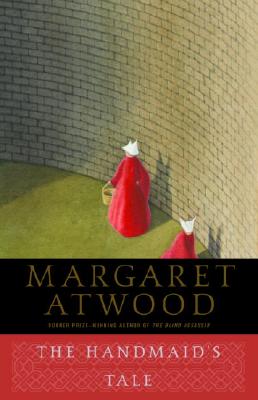
The Handmaid’s Tale

by Margaret Atwood
ages: adult
First sentence: “We slept in what had once been the gymnasium.”
Support your local independent bookstore: buy it there!

I read this book in my early 20s, sometime soon after I finished college. I remember thinking that this was a Great Warning; plausible enough to become true, and thus making it that much more powerful to me. I was moved to anger by the treatment of women as objects, and considered this one of the Best Books I’ve Ever Read.

This time around — 15 years later — I am still moved by it, but in a completely different way. The basic plot, for those who are unfamiliar with this dystopian classic, is that the U.S. falls apart after an attack which kills the president and Congress. The country is put into a state of emergency, which evolves into this warped religious state. Offred, our main character, is a handmaid: a woman whose sole purpose in life is to have babies for the Commanders. She is told that it is her religious duty to do so; the Wives and Marthas (the maids and cooks) tolerate her presence because her “duty” is so important. Offred — we never learn her real name — longs for her former life: the one where she had a job, money, husband, child. And it’s all she can do to put one foot in front of the other in her life.

I found this all monstrous. I’m thinking of it in a different light — I could very easily be Offred — and it’s monstrous what Attwood has dreamt up. Not only for the handmaids, but for the wives and commanders, too. (Maybe those books on polygamy are influencing my reading of this, too, because there are definite parallels there.) And I was depressed by it. I don’t think we — as a country — would ever head that way (though there was this one passage that struck me because of its similarities to 9/11 and the Patriot Act), but it’s depressing that there is that awful potential in people to control other people in that way. There are also Taliban similarities, as well — something which wasn’t even on the radar when I read this the first time around — that saddened me.

I can’t imagine — more like, don’t want to imagine — a world where women are treated as nothing more than the sum of their bodies, where men get excused for their behavior because of their position, where women hate and loathe each other because of their roles. Wait… that, too much, describes what our world is like now. Without the religious framework, without the robes, without the martial law, there are elements of this world around us.

And that really depresses me.

Fiction

by Ara 13
ages: adult
First sentence: “While in the cavalier guardianship of the forest of Marlay, I first saw the lowland tapir.”
Review copy sent to me by a publicist.

I’ll be honest: I married a guy who thinks a lot. In fact, his whole PhD and first five years of teaching was mostly teaching about thinking. And philosophizing. And thinking about philosophizing. Me, on the other hand: I’m a tactile person. I think, sure (even critically sometimes), and I like discussing ideas as much as the next person (well, maybe not every next person). But, honestly, when I’m reading, I like to lose myself in the work, to enjoy the ride, to escape.

Which means: I. Didn’t. Get. This. Book. Metafiction, which I am told this book is an example of, eludes me.

I did get bits and snatches of the plot — and while there was a plot that I was getting bits and snatches of, I enjoyed it — which basically went like this: Daniel is a priest, who decides to go into the jungle to convert the “savages” to the Gospel. However, when he gets there, he discovers that the “savages” are actually very sophisticated, and already have a religion. One that’s based on a picture book — Alice in Wonderland, of all books — that has been handed down for generations. This sends Daniel into a tailspin of doubt, especially when a couple of the natives take his example and decide to become missionaries himself.

The problem with the story is not the plot, it’s the narrative. It was odd. Very odd. (And not funny odd.) Sometimes it was funny. But mostly, it was rambling, shifting, and very confusing (at least to me). The narrative voice would shift from one person to the next, and the narrative would simply stop and switch to one of a number of sub-plots, which were confusing and led nowhere.

That said, I think the end is the key:

I’ve decided to set aside my fear of sounding trite and to leave you with a kernel of wisdom, one simple verb: Read… And look beyond the culturally ascribed worth of the artifact. Often, the value may be a lesson contrary to what is apparent or universally believed…. Scoff not at fictions merely on account of their fabrications. Nonfiction too is manufactured, therefore subject to the same human imperfections upon production, relieving no reader of the onus of deciding that which is sound judgment. So, digest not only fact; read fiction. Certainly there is much to gain from the made-up as well as the real. The lessons learned and the consequential defenses taken to avoid life’s miseries do not diminish in value because of their source.

There you have it. Metafiction. I just wish it made more sense.

Previously Engaged

by Elodia Strain
ages: adults, but if there’s interest, 14+
First sentence: “Apparently, weddings are breeding grounds for disaster.”
Review copy sent to me by the publisher.

First, some history: I did as little as possible to make my wedding my “special” day. It didn’t help that I was getting married in a state halfway across the county from where I lived at the time (relatives.), but really, I’m just not a frou-frou-y person. My mom made my dress, a friend did my flowers (on the wrist, not a bouquet), I didn’t have maids of honor, I didn’t have a line, or even a “proper” reception (opting for some more casual get togethers in three different states). Really, the only thing that mattered (you can see it coming!): the cake.

Sometimes I say that if I could go back and do it again, I’d do a period costume piece (either Renaissance or Regency — again, no surprises there), but really, the whole idea of a Bride Wars-inspired wedding hoopla turns me off (and for sweet revenge — or blessed irony — watch each of my four girls need something HUGE when/if they get married).

So, to be honest, I’m not the target audience for this book.

Annabelle Pleasanton is a Monterey-based writer who’s been dating her boyfriend, Isaac, for nine months, and she knows (in some visceral womanly way) that he’s going to propose to her. Except, things keep getting in the way. It doesn’t help that Annabelle’s old flame, Alex, shows back up in her life, throwing gifts and memories at her. It also doesn’t help that Isaac’s personal agent is a former model and flame from High School. Nor does it help that Isaac wants to move down to L.A., taking Annabelle away from her job — at which she’s applying for a promotion, her family, and her beloved Monterey. In addition, Annabelle has just won a $50,000 Dream Wedding — high couture, stunning settings, the best food — and it seems that even though it’s absolutely perfect, things keep falling apart at the seams.

It seemed to me that Strain was going for a Shannon Hale-esque cutesy chick-lit humor. But, while that generally doesn’t bother me, in this case it didn’t work. Not by a mile. The humor was grating (but then — as I’ve mentioned before — humor is such a fickle thing), as were all the “dear reader” asides. The dialogue was flat, and the vague Mormon-ness (it was published by a small LDS publisher) was awkward (either go all out, or don’t go there at all). But, what really bothered me was that Annabelle was shallow. Okay, so she attempted to redeem herself by being interested in philanthropic endeavours (like the company that recycles wedding flowers by giving them to women’s shelters), but really: shallow, one-dimensional, predictable, and (worst of all!) wedding-happy.

Yes, I did finish the book, and yes, there will be some people — read: wedding-happy women — who will really like this book. I am just not one of them.

Echoes From the Dead

by Johan Theorin
(translated by Marlaine Delargy)
ages: adult (though it could be a 16+ book, if they’re interested)
First sentence: “The wall was built of big, rounded stones covered in grayish white lichen, and it was the same height as the boy.”

Julia Davidsson’s five-year-old son died 20 years ago on the island of Oland off the coast of northern Sweden. They searched for him for a while, but it was foggy, and everyone (from the police down to Julia) assumed he was out wandering and drowned in the sea. However, for the past 20 years, Julia has not been able to get over her grief for her son, Jens. This has cost her her relationship with Jens’ father, her job, her relationship with her father and sister, and nearly her sanity.

Then one day, her father, Gerlof, calls saying that he received what he thinks is Jens’ sandal in the mail, which opens up the possibility that Jens didn’t drown, but rather was killed. And Gerlof thinks everything points to Neils Kant — someone who “died” before Jens was born — as the person who did it.

It’s a quiet mystery — more about grief and closure than an actual “whodunit” — as we follow Julia through her process of acceptance and discovery. Gerlof, who has lived on the island his entire life, and who knows practically everyone, does most of the detective work, trying to figure out what really happened. Nils Kant’s history is also explored through flashbacks; in order to understand what happened to Jens, you need to understand the motivations of Nils. I expected this book to be more graphic than it was, especially considering the subject matter. But, Theorin spends less time on the actual killings (and there are multiple), and more on the process of grieving and of coming to terms with what life deals you.

Mystery fans won’t be disappointed, though: there are a couple of twists near the end that turn most of what you thought was going to happen on its head, and allowing for some decent closure. That said, I found the book highly unemotional, almost clinical. The characters and situations were interesting, but didn’t really evoke a lot of emotional connection with me. Perhaps, though, this was for the best, since I don’t usually deal well with crime novels.

At least it had a somewhat happy ending.

Buy it at Amazon, Powell’s or your local independent bookstore. Or just pick it up at your library…