My Antonia

by Willa Cather
ages: adult
First sentence: “I first heard of Antonia on what seemed to me an interminable journey across the great midland plain of North America.”
Support your local independent bookstore: buy it there!

The thing that struck me most about this classic — which I remembered being my favorite of Cather’s work when I went through all her books about 10 years ago — was the amount of affection in it. Affection not only for the characters, but for the immigrant situation, the land, as well as the friendship that develops between the two main characters.

There isn’t much of a plot — it follows Jim Burden, the son of some Virginians who ended up living in Nebraska with his grandparents, and his friendship with Antonia Shimerdas, the daughter of some Czech immigrants. They, like all children, have ups and downs and as their paths go in different directions as they get older, they drift apart. It’s not an easy life for Antonia; she has to work hard for everything she gets, especially after the suicide of her father (who did not take to immigrant life very well).

But the plot seems to be immaterial here, and I found I didn’t mind (which is strange for me; usually without a strong plot, a book just seems to drag.) because the affection just leaks out of the book. That, and Cather is one of those writers that just captivate you. She’s not complex or flowery in her writing, but rather opting for a very straight-forward, yet descriptive prose. Here’s my favorite passage:

When spring came, after that hard winter, one could not get enough of the nimble air. Every morning I wakened with a fresh consciousness that winter was over. There were none of the signs of spring for which I used to watch in Virginia, no budding woods or blooming gardens. There was only — spring itself; the throb of it, the light restlessness, the vital essence of it everywhere; in the sky, in the swift clouds, in the pale sunshine, and in the warm, high wind — rising suddenly, sinking suddenly, impulsive and playful like a big puppy that pawed you and then lay down to be petted. If I had been tossed down blindfold on that red prairie, I should have known it was spring.

See? Simple, yet incredibly evocative.

But, really, it was the affection that made the book for me. I enjoyed being a part of Jim and Antonia’s life, and the final section — where Jim makes it back to visit Antonia 20 years after last seeing her — really touched me. A true classic.

The Book of Unholy Mischief

by Elle Newmark
ages: adult
First sentence: “My name is Luciano — just Luciano.”
Review as part of the Pump Up Your Book Promotion book tours.
Support your local independent bookstore!Buy it there.

It’s Venice, 1498. The dawn of the Renaissance, when the conflict between knowledge and religion is at it’s peak. The Catholic Church has ultimate control, peasants are ignorant and suspicious. In the midst of all this, there are rumors of a book, one that has a love potion, or an elixir of life, or the formula to turn metal into gold. With it, someone could have great power, and so those in power are searching for it.

This is not the story of the book, or at least not directly. It’s the story of Luciano, an orphan street-rat who was plucked out of his life by the doge’s chef and into the life of a chef’s apprentice. He wants the book, convinced that it will make his life better. Except, the deeper he gets into his new life, the more he realizes that getting the book is not the point.

That’s the basic gist of the plot, but it’s really not an easy one to pin down. There is one, and there is character development, but about a third of the way in, one realizes that plot is not the point of the book. The book works more like a tapestry: rich, lush, gorgeous, layers upon layers. The plot is only the nails to hang the tapestry of the words on the wall. The things that stood out in this novel were not the characters, or even what happens — though the homage to knowledge and the Guardians of such was quite fascinating — but, rather the descriptions. From the food to the streets of Venice, it was all very sensuous, very evocative. Like the tapestry, it sometimes got overly busy, and even a tad sparse and slow at other times, but overall, the effect was stunning.

The Handmaid’s Tale

by Margaret Atwood
ages: adult
First sentence: “We slept in what had once been the gymnasium.”
Support your local independent bookstore: buy it there!

I read this book in my early 20s, sometime soon after I finished college. I remember thinking that this was a Great Warning; plausible enough to become true, and thus making it that much more powerful to me. I was moved to anger by the treatment of women as objects, and considered this one of the Best Books I’ve Ever Read.

This time around — 15 years later — I am still moved by it, but in a completely different way. The basic plot, for those who are unfamiliar with this dystopian classic, is that the U.S. falls apart after an attack which kills the president and Congress. The country is put into a state of emergency, which evolves into this warped religious state. Offred, our main character, is a handmaid: a woman whose sole purpose in life is to have babies for the Commanders. She is told that it is her religious duty to do so; the Wives and Marthas (the maids and cooks) tolerate her presence because her “duty” is so important. Offred — we never learn her real name — longs for her former life: the one where she had a job, money, husband, child. And it’s all she can do to put one foot in front of the other in her life.

I found this all monstrous. I’m thinking of it in a different light — I could very easily be Offred — and it’s monstrous what Attwood has dreamt up. Not only for the handmaids, but for the wives and commanders, too. (Maybe those books on polygamy are influencing my reading of this, too, because there are definite parallels there.) And I was depressed by it. I don’t think we — as a country — would ever head that way (though there was this one passage that struck me because of its similarities to 9/11 and the Patriot Act), but it’s depressing that there is that awful potential in people to control other people in that way. There are also Taliban similarities, as well — something which wasn’t even on the radar when I read this the first time around — that saddened me.

I can’t imagine — more like, don’t want to imagine — a world where women are treated as nothing more than the sum of their bodies, where men get excused for their behavior because of their position, where women hate and loathe each other because of their roles. Wait… that, too much, describes what our world is like now. Without the religious framework, without the robes, without the martial law, there are elements of this world around us.

And that really depresses me.

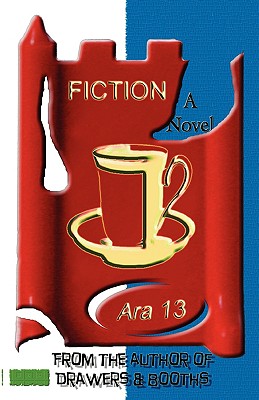
Fiction

by Ara 13
ages: adult
First sentence: “While in the cavalier guardianship of the forest of Marlay, I first saw the lowland tapir.”
Review copy sent to me by a publicist.

I’ll be honest: I married a guy who thinks a lot. In fact, his whole PhD and first five years of teaching was mostly teaching about thinking. And philosophizing. And thinking about philosophizing. Me, on the other hand: I’m a tactile person. I think, sure (even critically sometimes), and I like discussing ideas as much as the next person (well, maybe not every next person). But, honestly, when I’m reading, I like to lose myself in the work, to enjoy the ride, to escape.

Which means: I. Didn’t. Get. This. Book. Metafiction, which I am told this book is an example of, eludes me.

I did get bits and snatches of the plot — and while there was a plot that I was getting bits and snatches of, I enjoyed it — which basically went like this: Daniel is a priest, who decides to go into the jungle to convert the “savages” to the Gospel. However, when he gets there, he discovers that the “savages” are actually very sophisticated, and already have a religion. One that’s based on a picture book — Alice in Wonderland, of all books — that has been handed down for generations. This sends Daniel into a tailspin of doubt, especially when a couple of the natives take his example and decide to become missionaries himself.

The problem with the story is not the plot, it’s the narrative. It was odd. Very odd. (And not funny odd.) Sometimes it was funny. But mostly, it was rambling, shifting, and very confusing (at least to me). The narrative voice would shift from one person to the next, and the narrative would simply stop and switch to one of a number of sub-plots, which were confusing and led nowhere.

That said, I think the end is the key:

I’ve decided to set aside my fear of sounding trite and to leave you with a kernel of wisdom, one simple verb: Read… And look beyond the culturally ascribed worth of the artifact. Often, the value may be a lesson contrary to what is apparent or universally believed…. Scoff not at fictions merely on account of their fabrications. Nonfiction too is manufactured, therefore subject to the same human imperfections upon production, relieving no reader of the onus of deciding that which is sound judgment. So, digest not only fact; read fiction. Certainly there is much to gain from the made-up as well as the real. The lessons learned and the consequential defenses taken to avoid life’s miseries do not diminish in value because of their source.

There you have it. Metafiction. I just wish it made more sense.

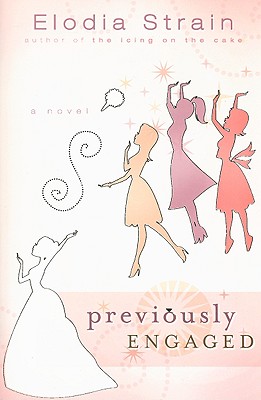
Previously Engaged

by Elodia Strain
ages: adults, but if there’s interest, 14+
First sentence: “Apparently, weddings are breeding grounds for disaster.”
Review copy sent to me by the publisher.

First, some history: I did as little as possible to make my wedding my “special” day. It didn’t help that I was getting married in a state halfway across the county from where I lived at the time (relatives.), but really, I’m just not a frou-frou-y person. My mom made my dress, a friend did my flowers (on the wrist, not a bouquet), I didn’t have maids of honor, I didn’t have a line, or even a “proper” reception (opting for some more casual get togethers in three different states). Really, the only thing that mattered (you can see it coming!): the cake.

Sometimes I say that if I could go back and do it again, I’d do a period costume piece (either Renaissance or Regency — again, no surprises there), but really, the whole idea of a Bride Wars-inspired wedding hoopla turns me off (and for sweet revenge — or blessed irony — watch each of my four girls need something HUGE when/if they get married).

So, to be honest, I’m not the target audience for this book.

Annabelle Pleasanton is a Monterey-based writer who’s been dating her boyfriend, Isaac, for nine months, and she knows (in some visceral womanly way) that he’s going to propose to her. Except, things keep getting in the way. It doesn’t help that Annabelle’s old flame, Alex, shows back up in her life, throwing gifts and memories at her. It also doesn’t help that Isaac’s personal agent is a former model and flame from High School. Nor does it help that Isaac wants to move down to L.A., taking Annabelle away from her job — at which she’s applying for a promotion, her family, and her beloved Monterey. In addition, Annabelle has just won a $50,000 Dream Wedding — high couture, stunning settings, the best food — and it seems that even though it’s absolutely perfect, things keep falling apart at the seams.

It seemed to me that Strain was going for a Shannon Hale-esque cutesy chick-lit humor. But, while that generally doesn’t bother me, in this case it didn’t work. Not by a mile. The humor was grating (but then — as I’ve mentioned before — humor is such a fickle thing), as were all the “dear reader” asides. The dialogue was flat, and the vague Mormon-ness (it was published by a small LDS publisher) was awkward (either go all out, or don’t go there at all). But, what really bothered me was that Annabelle was shallow. Okay, so she attempted to redeem herself by being interested in philanthropic endeavours (like the company that recycles wedding flowers by giving them to women’s shelters), but really: shallow, one-dimensional, predictable, and (worst of all!) wedding-happy.

Yes, I did finish the book, and yes, there will be some people — read: wedding-happy women — who will really like this book. I am just not one of them.

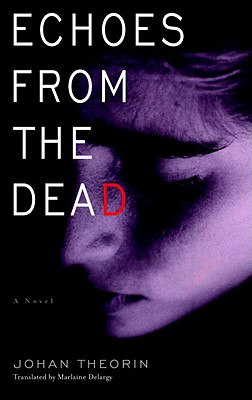
Echoes From the Dead

by Johan Theorin
(translated by Marlaine Delargy)
ages: adult (though it could be a 16+ book, if they’re interested)
First sentence: “The wall was built of big, rounded stones covered in grayish white lichen, and it was the same height as the boy.”

Julia Davidsson’s five-year-old son died 20 years ago on the island of Oland off the coast of northern Sweden. They searched for him for a while, but it was foggy, and everyone (from the police down to Julia) assumed he was out wandering and drowned in the sea. However, for the past 20 years, Julia has not been able to get over her grief for her son, Jens. This has cost her her relationship with Jens’ father, her job, her relationship with her father and sister, and nearly her sanity.

Then one day, her father, Gerlof, calls saying that he received what he thinks is Jens’ sandal in the mail, which opens up the possibility that Jens didn’t drown, but rather was killed. And Gerlof thinks everything points to Neils Kant — someone who “died” before Jens was born — as the person who did it.

It’s a quiet mystery — more about grief and closure than an actual “whodunit” — as we follow Julia through her process of acceptance and discovery. Gerlof, who has lived on the island his entire life, and who knows practically everyone, does most of the detective work, trying to figure out what really happened. Nils Kant’s history is also explored through flashbacks; in order to understand what happened to Jens, you need to understand the motivations of Nils. I expected this book to be more graphic than it was, especially considering the subject matter. But, Theorin spends less time on the actual killings (and there are multiple), and more on the process of grieving and of coming to terms with what life deals you.

Mystery fans won’t be disappointed, though: there are a couple of twists near the end that turn most of what you thought was going to happen on its head, and allowing for some decent closure. That said, I found the book highly unemotional, almost clinical. The characters and situations were interesting, but didn’t really evoke a lot of emotional connection with me. Perhaps, though, this was for the best, since I don’t usually deal well with crime novels.

At least it had a somewhat happy ending.

Buy it at Amazon, Powell’s or your local independent bookstore. Or just pick it up at your library…

The Talisman Ring

by Georgette Heyer
ages: 13+
First sentence: “Sir Tristram Shield, arriving at Lavenham Court in the wintry dusk, was informed at the door that his great-uncle was very weak, not expected to live many more days out.

For about a year now, I’ve seen reviews of Georgette Heyer’s books floating around the book blogs, and I’ve thought to myself that I ought to give one a whirl. But it wasn’t until Becky’s review of this book that I hit upon the perfect Heyer book to start with.

Think of Heyer this way: one part Jane Austen, one part P.G. Wodehouse, and one part Oscar Wilde, with some Sir Arthur Conan Doyle and Alexandre Dumas thrown in for good measure (and adventure). In short: absolutely delightful.

There’s an incredibly complex plot and a huge cast of characters, but all you really need to know is there are three cousins: Sir Tristram, severe and definately unromantic; Eustacie, young, French, silly, and desiring of an Adventure; and Ludovic, the heir to the Lavenham’s fortune, yet wrongly exiled for a murder he didn’t commit. Everyone at some point or other ends up at an inn where they meet Sir Hugh and Miss Sarah Thane, there is many Adventures (daring and otherwise), they flush out the Real Bad Guy and everyone lives Happily Ever After.

The real charm is in the sheer silliness of the novel. It’s a book about some of the silliest people I’ve ever “met”, which (of course) makes it absolutely hilarious and charming and plain fun to read. It’s not high literature by any means, but it’s definately worth the time.

Of course that means I’m going to go find another book of Heyer’s to read. Any suggestions?

Buy it at: Amazon, Powell’s or your local independent bookstore.

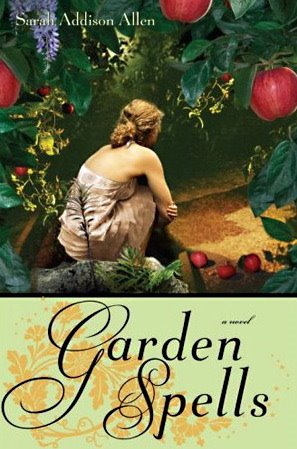
Garden Spells

by Sarah Allen Addison
ages: adult
First sentence: “Every smiley moon, without fail, Claire dreamed of her childhood.”

The first thing I noticed about this novel is the descriptions. It’s there in the first sentence: “smiley moon” rather than crescent, or even sliver of a moon, sure. But, it doesn’t stop there; it’s scattered throughout the book. Addison’s talent, at least in my opinion, is not necessarily in plots or characters, but in lush, memorable descriptions of small-town South, with a magical twist.

Claire is a Waverly, which means she tends to a garden and knows its secrets — what the plants can do to a person — and how to use them. She runs a successful catering business, and everything is just fine, until her estranged sister, Sydney, moves back in town — she’s on the run from an abusive boyfriend — with her daughter Bay. Oh, and art professor Tyler moves in next door. Of course, Sydney will have difficulties readjusting to small-town life in Bascom, North Carolina. Of course there will be conflicts with her old school friends (who never really were her friends, and I felt the sub-plot was a bit forced, and kind of unnecessary). Of course Claire and Tyler will fall in love. Of course there will be a happily ever after.

But that’s not the point. The point is the nurturing and the giving and the growing. The point is characters like the sisters’ aunt, Evanelle, who’s magic is to give things. The point is family and belonging are what really matters. The point is Southern summer days. The point is food that makes you feel, makes you love, makes you regret. The point is an apple tree that wants to be a part of the family. The point is sentences where you can nearly feel and smell what they are describing.

And the result is a magical, sweet, delightful summer read.

Buy it at: Amazon, Powell’s or your local independent bookstore.

Atonement

by Ian McEwan
ages: adult
First sentence: “The play — for which Briony had designed posters, programs and tickets, constructed the sales booth out of a folding screen tipped on its side, and lined the collection box in red crepe paper — was written by her in a two-day tempest of composition, causing her to miss breakfast and lunch.”

Ah, modern classics. Pages and pages of well-written, often beautiful, always complex exposition. Character development through psychological intricacies, with much telling, little showing. Pretentious in their understanding of human nature, but little or no plot to hang any of their characters on.

They bore me to tears.

Actually, I’m sounding harsher than I mean to; I did like aspects of Atonement — the idea that one person (though I’m having a hard time picturing her as 13; more like 9 or 10) can misinterpret situations, let their imagination run away with them and as a result affect many lives because of that is intriguing — but I had a hard time connecting with anyone. I also admit that I’m impatient (perhaps this is a negative side-effect of reading too much YA?) with books that take so long (more than 100 pages in set up) to get going, and then spent the other 2/3 of the story spinning around unraveling anything. I would have appreciated it if McEwan was more forthright in his writing, rather than leaving me to dig out plot points amidst all the extraneous thinking, musing, and suffering.

It was wonderfully written, though. I just wish it would have been more plot or character driven. Then again: it’s the same problem I have with Dickens. I’m just not a good judge of literary talent.

Buy it at: Amazon, Powell’s, or your local independent bookstore.

Fire Study

by Maria V. Snyder
ages: 14+
First sentence: “That’s pathetic, Yelena,” Dax complained.
Book three for the 48 HRC.

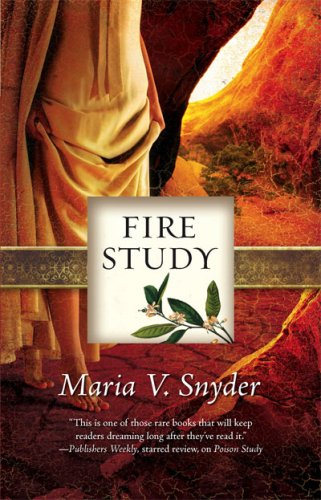
First off, can I tell you how much more I like the paperback cover (over there on the right), than the hardback covers on the other two books. Much, much better. (Even though a woman’s feet doesn’t really have much to do with the story. And Yelena would never wear a dress…)

I have also decided that it’s easier to review a series as one whole rather than three separate posts, since the same things apply for this one as did the last two. Valik and Yelena are still awesome. The action is kicking, though it really doesn’t go much of anywhere until Valik shows up, unexpectedly on page 200 (exactly). And then, it goes in places I wasn’t expecting, which isn’t a bad thing. I liked the religion of sorts that Snyder developed for the world, and while she let political strings dangle, it did resolve in a way that wasn’t entirely unsatisfying. She also juggled too many characters for my taste, and ended up leaving many things unresolved. Maybe there will be more books?

At any rate, it was an extremely enjoyable series to read — fun, with a dark edge, action-packed, interesting world, and compelling characters and plot. It’s difficult to do all that in a fantasy series. And Snyder succeeded quite admirably.

Buy it at: Amazon, Powell’s, or your local independent bookstore.