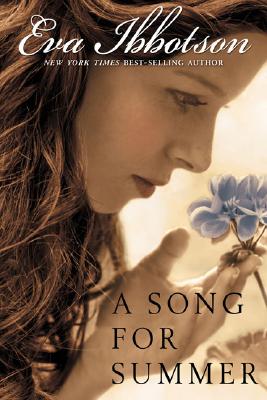
A Song for Summer

by Eva Ibbotson
ages: adult
First sentence: “In a way they were born to be aunts.”
Support your local independent bookstore: buy it there!

There is so much to absolutely love about this book. It’s a World War II story, yes, but it’s so much more than that. It’s lyrical. It’s evocative. It’s earthy and soaring at the same time. It’s a simple, yet poignant, love story.

It’s practically perfect in nearly every way.

Ellen is the product of some very intimidating women. Charlotte (Ellen’s mother), Phyllis and Annie are strong women, suffragettes, unafraid, and they expect grand things from their clever little girl. Except, Ellen grows up adoring her grandfather’s housekeeper, the Austrian Henny, and ends up more interested in cooking and cleaning than philosophy and being clever. She eventually bags going to University altogether, and instead graduates from the Lucy Hatton School of Cookery and heads off to Austria to become the matron at a boarding school there.

This is the story of her summer.

It’s a magical summer: not magical in the sense of magic, or even magical realism; no, it’s just magical in the sense that everything falls into place. Ellen works wonders on the children — each unique in their own way — and the staff — again, unique — in her small, subtle, and infinitely wonderful ways. She weaves her way into their lives and makes everything… better. It’s also a love story, for she meets Marek, the groundsman with a secret. And as the secret unfolds, we are taken on a musical journey that literally soars. Sure, it’s all make-believe, but Ibbotson’s writing is so tactile, you can almost hear the concerts, listening to the music float off the page.

While the war is in the background in part one, it does play more of a role in part two. Thankfully, it’s not as long as part one, even though it covers more time. It’s almost anti-climatic, though part one ends in such a cliffhanger that it feels necessary to finish the tale. And even though the second part is not as strong or as lyrical as part one, it does make the book come full circle, and ends it in a very lovely place.

And, really, you can’t get much better than that.

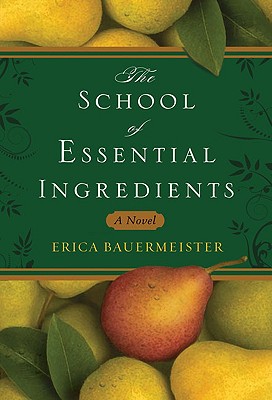
The School of Essential Ingredients

by Erica Bauermeister
ages: adult
First sentence: “Lillian loved best the moment before she turned on the lights.”
Support your local independent bookstore: buy it there!

The food book — whether it be a novel or a memoir (or whatever other category that food books falls into — can be a truly wonderful experience. If you get a writer that is evocative enough, descriptive enough, then you can be transported away to another place, another time, and delight in the feast for the senses. It’s the best kind of escapism, and when you combine the essence of food with a mystical magical power, there is the possibility of truly getting carried away.

Which is why, I think, I had high hopes for this one. The cover is gorgeous, the title inviting. The story, simple enough to let the food shine. Lillian, is a master chef who never works with recipes, preferring, instead, to find her own combinations, unique to the day, the person, the mood she wants to evoke. She runs a cooking school, teaching these essential principles: smell, savor, enjoy. Each chapter is a profile of a different student in the session, which is both a plus and a minus. Plus, because we get to know each person individually, their histories, their reactions to the different food. Minus, because it detracts from an overarching story. It was more like a series of connected short stories, and because of that, I felt unfulfilled when the story was over. It was kind of like The Jane Austen Book Club, in that way; except, I think that book handled the balance between the individual stories and an overarching plot better. I did come to like some of of the characters — the new mother Claire, or the Italian Antonia, or the geeky Ian — but it seemed that once their story was done, Bauermeister didn’t quite know what to do with them, and pushed them out of the picture.

But, all that would have been forgiven if the food had been worth it. And sometimes it was. Sometimes, like in the spaghetti chapter, I could almost smell the food, longing to taste it and savor the experience. Other times, like the white cake chapter, I felt like the person’s story overwhelmed the food, and I came away wanting more. More savoring, more magic, more experience. More food. There can never be enough food.

But then, sometimes even the best food can leave one unsatisfied.

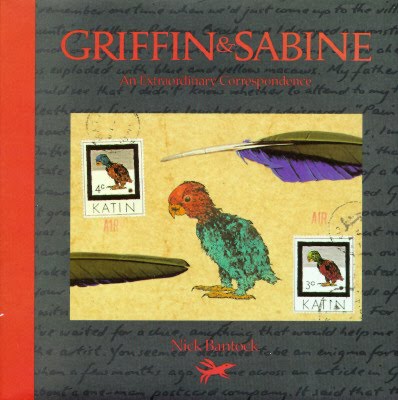
Griffin and Sabine

An Extraordinary Correspondence; Sabine’s Notebook and The Golden Mean
by Nick Bantock
ages: adult
First sentence (of the first one): “Griffin Moss, It’s good to get in touch with you at last.”
Support your local independent bookstore, buy it there!

A few weeks ago I was in a reading slump, and I sent out a plea for book ideas on Facebook (and Twitter, and here…). An old friend from high school responded, asking whether or not I’ve read the Griffin and Sabine letters. I hadn’t (hadn’t even heard of them), and so I stuck them on hold at the library.

And, wow! Oh, man, wow! Weird, wild and wonderful, these are books to peruse and savor even though reading one will take you less than an hour. They tell the story of a correspondence, via postcard and letter, between two artists: Griffin, living in London, and Sabine, living in the Solomon Islands. There’s a connection between the two: Sabine can “see” Griffin’s art (it’s a one way street; Grifiin has no idea who Sabine is), and sets about connecting with him. As the books go on, you learn more about Sabine and Griffin, and their relationship become ever more weird and complex. They are bound never to meet: is it because they’re in parallel universes? Is it because they are two sides of the same personality? Who is writing these letters? What is going on? It’s a mystery, and one that is never truly solved.

What really is wonderful about these books, though, is the format. The art — both on the cards and letters as well as the doodles in the margins — is amazing; detailed in some parts, simplistic, reflecting the text in the letters as well as the mood of the writers. But, beyond that, it’s the simple fact of reading the letters — letters! Not texts, not emails; who sends letters anymore? — of opening the envelopes, and removing the letters; of deciphering the handwriting, that gives these books a sense of intimacy, a peek into the lives of two characters in a way that a simple narrative wouldn’t. It’s quite amazing.

I’m just glad I discovered them now, and not back when I would have had to wait for the next book to come out!

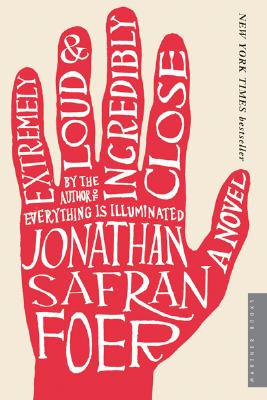
Extremely Loud and Incredibly Close

by Jonathan Safran Foer
ages: adult
First sentence: “What about a teakettle?”
Support your local independent bookstore: buy it there!

Huh. I heard so much good about this book, the people over at the Nook (that’s my online book group) are basically raving about it, and all I can come up with is… huh.

For those of you who don’t know (all five of you), the story revolves around nine-year-old Oskar Schnell whose father, two years before, died in the World Trade Center Bombings. Oskar has become increasingly fearful: of heights, elevators, people that look Arab and more and more neurotic, wearing only white, writing letters obsessively to famous people (mostly asking to be their protégé). Then, in his father’s closet, he finds a key in an envelope marked “Black”, and begins searching New York City for the owner. Somehow, he feels, this will help him learn more about his father and give him some kind of closure. Interspersed with Oskar’s story are letters from his grandparents: ones from his grandfather to his father explaining why he left and wasn’t there while his son was growing up. And ones from his grandmother to Oskar, explaining what happened with her husband and why she is leaving now.

It’s the combination of Oskar’s pretentiousness (and “wise innocence”) and the use of graphics — pictures or red markings or — that give this novel it’s unique feel. Sometimes, that’s a good thing. Sometimes, I thought, all of the novel ideas in this novel actually worked. I enjoyed the photographs; they gave an interesting perspective into Oskar’s world and his journey. It’s a depressing subject, 9/11, and I thought there were moments when Foer got grief, got incompleteness, got searching for closure just right. There were chapters that hit me powerfully — the letter from the grandmother about her reaction when she realized her son had died in the towers, for instance — and the ending is, ultimately, hopeful. Which is a good thing considering the scope of the tragedies in the book. It could have been a horribly depressing book, and it wasn’t.

But, there were also moments when the pretentiousness — of both the novel and of Oskar — drove me absolutely batty. I spent too much time trying to figure out the red editing marks on one of the grandfather’s letters, trying to figure out what it all “meant”. And the letter from the grandfather that began with numbers — he was trying to communicate on the phone without speaking — and ended in pages of black ink drove me batty. (Yes, I did try to figure out what he was saying. Argh.) Perhaps, for once in my life, I was over thinking a book instead of letting it wash over me. But perhaps, also, all the uniqueness and all the pretentiousness negated each other: there was too much of a good thing in this book, and in the end I was left with an empty void of Huh.

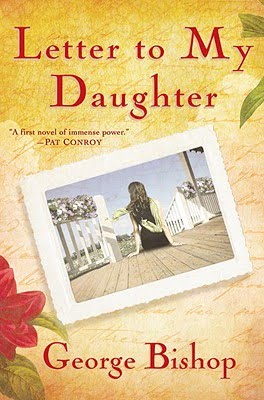
Letter to My Daughter

by George Bishop
ages: adult
First sentence: “Dear Elizabeth, How to begin this?”
Support your local independent bookstore: buy it there!
Review copy provided by TLC Book Tours.

Elizabeth, 15 years old, has taken the car and run away after a heated argument with her mother, Laura, which ended with Laura slapping Elizabeth. All Laura can do, now, is wait and hope and reminisce about her own adolescence. In a letter to her daughter, Laura lays her past out before her, hoping that somehow it’ll help the two connect.

And, thankfully, while it’s not a happy, pretty past, it’s also not something that’s truly horrifying. It’s honest in it’s reflections of the teenage years from an adult perspective. Nothing is sugar-coated, but there’s a reflectiveness to the prose, a weightiness that makes the actions of Laura’s youth — from her first, and only it seems, love affair to the loss of that love in Vietnam to her impulsive decision making to her strained relationships with her parents — seem less angsty.

It also helped that the book was one long letter from mother to daughter. It would seem, with something like this, that there would be a self-help feel to it: Bishop, after all, is exploring the relationships between mothers and daughters and (as I well know being on both sides of that equation) that is a tricky one. There is a need to be a parent, to set boundaries, to make sure that your daughter is safe. And yet, there’s is a desire to connect as women, as people who have gone through (or will go through) many of the same experiences. It’s this tension that Bishop is exploring, I think, and the letter format pushed that tension more into the background and less of a central theme. It’s still there, it’s still present, but the book reads less like a “what to do when you’re girl goes astray” and more like a memoir, which helped.

And Bishop writes quite elegantly, as well. It’s a slim novel, and never did a feel that there was more — or less — than should have been told. As a reader, you only find out about Elizabeth through incidental comments Laura makes, and that’s as it should be. It’s Laura’s story, Laura’s memories, and Bishop doesn’t do anything to take away from that. He also quite skillfully handles the passage of time, both flipping back from the present to the past as well as Laura’s traveling through high school. It didn’t feel choppy or jumpy at all.

It was a surprisingly good novel, one that I can see myself dipping into and out of as my girls get older (and perhaps passing on to them).

The Picture of Dorian Gray

by Oscar Wilde
ages: adult
First sentence: “The studio was filled with the rich odour of roses, and when the light summer wind stirred amidst the trees of the garden, there came through the open door the heavy scent of the lilac, or the more delicate perfume of the pink-flowering thorn.”
Support your local independent bookstore: buy it there!

If I’m being completely honest, I wanted to read this book because of the movie Dorian Gray that should be coming out sometime this year (at least in the US). It caught my fancy, and I realized that while I’ve seen several adaptations of The Importance of Being Earnest, I’ve never actually read any Oscar Wilde. Shame on me.

And, after finishing this, really shame on me. Wilde is a superb writer. Terribly funny — that wonderful British dry wit you have to love, self-deprecating and dismissive — and, at the same time, incredibly thought-provoking. I found that I couldn’t stop thinking about this book.

For the three of you that don’t know the plot, I may just have to spare you. I’ve tried writing a plot summary of the book, but it’s not working. It’s about the characters — Dorian, the young innocent, who wants to stay young and beautiful, and, in the end, is willing to sell his soul to do so; Basil, the painter who paints the portrait, who pins all of his artistic hopes on Dorian; and Lord Henry, the worldly, snide, philosophic man who leads Dorian — whether intentionally or unintentionally — into a hedonistic lifestyle that ends up corrupting Dorian.

It’s also about the ideas: the place of beauty and art in our lives, the purpose of beauty in our lives, in addition to the moral weight of art, as well as whether or not we should be asking art to carry our morality or for artists to express our morality. It’s heady stuff, ideas that begged to be discussed long and thoroughly over a good dinner. (Hmm… food’s still on my mind.)

That’s not to say Dorain Gray is an easy read; it’s not. It can be funny — Lord Henry, with his posturing and glib opinions often made me laugh — but it’s also incredibly creepy and highly disturbing. Which, honestly, is as is should be. If it were just glib and funny, then I think much of the impact of what Wilde wanted to get across. I can see how this would not have gone over well in Victorian England; Wilde is putting forth ideas that are challenging to our expectations of art and morality, and challenges of that sort never go over well.

Still, it’s an incredible book, a fascinating book. And I can only hope the movie can begin to do it some justice. (*fingers crossed*)

The War of the Worlds

by H.G. Wells
ages: adult
First sentence: “No one would have believed in the last years of the nineteenth century that this world was being watched keenly and closely by intelligences greater than man’s and yet as mortal as his own; that as men busied themselves about their various concerns they were scrutinized and studied, perhaps almost as narrowly as a man with a microscope might scrutinize the transient creatures that swarm and multiply in a drop of water.”
Support your local independent bookstore: buy it there!

This review comes to you in two parts.

Part one:

Yawn.

I could not, could NOT, make myself get interested in this book. Sure, it’s supposed to be gripping and scary, and the introduction by Orson Scott Card made it sound like a contemporary commentary, which I suppose most end-of-the-world novels are. But this book lost my interest for two reasons: first — and this surprised me — it’s written in the first person, past tense. We know from the start that our narrator, whatever his name is (strike two), will survive because he’s writing this as though it’s happened, done and gone. No sense of immediacy, no suspense, no thrill, at least for me. The second reason is evidenced in the first sentence. Blame it on Twitter, blame it on my reading YA books, but whatever the reason, I found wading through these sentences to be incredibly… boring. Which didn’t do anything to help the already dismal situation.

Then… part two:

After the Martians attacked, killed most everyone off, and settled in to “rule” the earth, I found myself fascinated in the book. Nothing changed, yet everything changed. I found myself fascinated by our narrator’s will to survive and the various stages of madness around him. I found myself thinking about The Stand, and how the second half of that book was more interesting to me as well. Perhaps I’m not so much a lover of end-of-the-world fiction, as I am interested in how society all plays out after the end of the world. Which, I suppose, feeds into my interest in dystopian fiction. Who cares how the world ends, really? The fascinating stuff is the rebuilding, the surviving, the changes that society goes through after the fall.

So, this book was kind of a wash for me in the end.

The Girl Who Chased the Moon

by Sarah Addison Allen
ages: adult
First sentence: “It took a moment for Emily to realize the car had come to a stop.”
Support your local independent bookstore: buy it there!

I don’t know why I picked up this Sarah Addison Allen book next, and not Sugar Queen. Perhaps because it was making the rounds on various blogs, and for some reason it looked appealing. Perhaps it was because of the cover; it’s a bit busy, but there’s something alluring about it, making me curious as to what’s inside.

And, from my limited experience with Allen, it’s pretty much exactly what to expect from her: a love story about broken people trying to heal, mixed with Southern charm, and just a dash of magical realism to add some spice to the story.

Don’t get me wrong, though: I enjoyed the book. In fact, I came away again wanting to make and eat food, in this case cake and pulled-pork sandwiches (though I’m a Memphis, not North Carolina, barbecue girl). I enjoyed the Southerness of the book as well; the summer humidity, the slowness of the days, the friendliness-bordering-on-nosiness of the townspeople. But, it also felt like it was more of the same in a different wrapper: the character coming home to find a mystery and dysfunction that she has to overcome. The heartbreak, the consequences and the trying to heal from said heartbreak. The magical home-grown elements; this time a mood-changing wallpaper, a sweet sense that allows characters to see/feel when cake is being made; and the biggest mystery of all… which I won’t spill because it is interesting to see how it all plays out.

That said, it was still an enjoyable read. Allen does have a way of drawing you into her world, of making you care about her characters, of entrancing you with her storytelling. It’s still the only magical realism that I can stomach without cringing — still can’t explain why, though — and I found that the book called to me whenever I put it down, until I finally gave in and let the family run wild while I finished.

Which means, in the end, I can’t complain.

Neverwhere

by Neil Gaiman
ages: adult
First sentence: “The night before he went to London, Richard Mayhew was not enjoying himself.”
Support your local independent bookstore: buy it there!

Being a Neil Gaiman fan has been sneaking up on me for the past two or so years. I’ve been slowly working my way through his books and have yet to be really disappointed in one. (Okay, I wasn’t terribly thrilled with American Gods, but it did have a good concept.) But, this one put me over the top. Neil Gaiman is a brilliant storyteller, a master juggler, someone who can grab you and hold your attention, entertaining you the whole time.

Richard Mayhew has a boring, normal, everyday London life. He goes to work, he does his job, he goes home. He’s got a fiance, someone who’s upwardly mobile; someone beautiful, slightly intimidating and predictable. Then, one night, he finds a girl wounded on the sidewalk, and, in the simple act of helping her, his life changes. After she — the Lady Door — leaves, he finds that he no longer exists in his life. And he discovers a whole other London, one of class and fiefdoms, of weirdness and magic, and of violence and heroism. He falls in with Door, becomes one of her companions on her quest to find out who murdered her family. And, in the process, finds out what is really real in his life.

I loved this one. It had me from the first sentence, and I couldn’t put it down. (Yes, it was one of those “let my kids watch too much TV because I have to finish this book” books.) The thing that really stood out to me, though, was how masterfully Gaiman juggled plots and characters. It’s like he had all these balls in the air, and he would, oh-so-calmly pick up another one and throw it in the mix without even blinking an eye. New characters, plot twists, descriptions of the underworld: it all came at exactly the right moment and made perfect sense. He would flit back and forth between plot lines and it never felt jarring or awkward. He gave details of the characters, helped us understand not only their inner workings, but also sympathize with and enjoy their interactions with each other. (Okay, one tiny quibble: he kept describing Hunter as “caramel colored” and after a while it did bother me. I felt like saying, “Yes. I know she is. Give it up already.”) It was funny, it was touching, it had the absolutely perfect ending. He led me on a storytelling journey and kept me positively breathless the whole time.

Masterful. Absolutely masterful.

The English American

by Alison Larkin
ages: adult
First sentence: “I think everyone should be adopted.”
Support your local independent bookstore: buy it there!

If you’ve hung around here for any time at all, you know I love many things British. So, how could I resist a book with this title (or the pretty cover)? I couldn’t, though it’s been on my TBR list for a very long time.

Pippa Dunn is adopted. She’s had a good life, growing up in England and traveling the world with her parents and sister. Yet, even though she’s mostly happy — she has abandonment issues with her relationships — she wonders: who is she, really? Who are the people who gave her life? What are they really like? So, she sets out on a quest to meet her birth parents, and to hopefully figure out herself.

She sets up a meeting with her birth mother, who, by all accounts (except for Pippa’s, at first), is crazy. Needy, clingy, paranoid… you name it, this woman is mentally unstable. Pippa tries for a connection, but finds that — after a while — it’s best to just get out. She finds her father — she’s a product of an affair — and while, initially connecting with him, discovers that he, too, is not what she wanted, needed or expected.

The whole book is her journey to this conclusion: that, while it’s nice to know the people who gave you your genes, that does not a family make. It’s an interesting journey, though. I liked the tension between British customs and manners and American ones, which created much of the tension in the book. There was a bit of a romance (hooray, she ended up with the guy I wanted her to!), as well, but mostly it was about self-discovery.

And in that journey, I felt that there was something missing. Perhaps the pacing was off: I felt too much time was devoted to her discovering her parents and not enough to developing anything else; everything happened overly fast at the end, wrapped up in a neat little bow. Perhaps it wasn’t British enough, or funny enough: I didn’t laugh as much or as often as I hoped I would. It also lacked a wit that I think would have helped the book overall in the end. Perhaps it was that I’m not all that interested, right now, in self-discovery: there was a lot of Pippa flailing around, trying to figure out who “Pippa Dunn” really is. I can respect that, but it’s a journey for much younger, much less settled people, which I am not. I’m sure it would mean more, as well, to someone who was adopted, or had adopted a child.

All that said, it was a quick, fun, mostly enjoyable read.