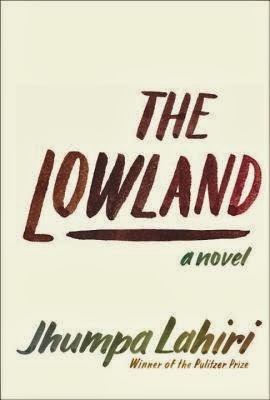
Audiobook: The Lowland

by Jjumpa Lahirir
read by: Sunil Malhotra
Support your local independent bookstore: buy it there!

I admit that I picked this up solely because M is currently in the part of India where this is set. I thought: Kolkata, Bengali… I should see if I could learn a little more of where M is staying for the next school year. Other than that, I really had no expectations.

It’s a much more political work than I was expecting. While, nominally it’s the story of the relationship between two brothers, Shubash and Udayan Mitra, Lahriri uses the background of the political unrest and Communist movement in India as a backdrop. The two brothers, who were close as children, grow apart as Udayan (the younger) gets involved with the Naxalite movement and Shubash heads to Rhode Island to pursue a PhD. Udayan gets married to Gauri (which Malhotra alternately pronounced Godi and Gori, so I had to check on the spelling) and then ends up killed by the police. When Shubash comes back for the funeral, he takes pity on Gauri, mostly because she’s pregnant, and marries her, bringing her back to the US.

That is the first third of the book. At which point, I was left wondering: What on earth is Lahiri going to do with the rest of the novel? Well, much like Khaled Hosseini’s And the Mountains Echoed, Lahiri explores the ramifications of those decisions. We follow Shubash and Gauri, and later Gauri’s biological daughter, through the years to present day (when Shubash is 70, and Gauri s in her mid-60s), and experience the fallout. Because there is fallout, and it’s not pleasant.

As I mentioned to people that I was reading this, their first question was “Do you like it?” Well…. no. And yes. It wasn’t bad enough to abandon. Malhotra was a delightful reader, capturing both Indian and American accents well. Perhaps it was him who kept my interest in the book going, because I was constantly annoyed at the characters. Gauri could never get past her dead love and move on with her life. And right up to the end, she never thought about the consequences for her actions, acting impulsively. But the thing that really infuriated me was Shubash’s insistence that because he wasn’t the sperm donor for Gauri and Udayan’s daughter, that he wasn’t her father. He. Raised. The. Girl. He was there for her when her mother abandons her, and yet he still questions whether or not he’s her father. *grumble* Biology isn’t what being a parent is about.

Maybe that was Lahiri’s point, in the end. Because, after finishing the last disc (a very unsatisfying ending, by the way), that’s what I got out of it. Family is what you make, and loving and caring for other people is the way to happiness.

So maybe it was a good book after all?

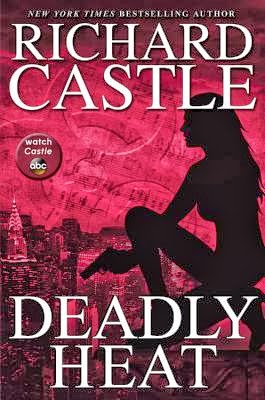
Deadly Heat

by Richard Castle
ages: adult
First sentence: “NYPD Homicide detective Nikki Heat double-parked her gray Crown Victoria behind the coroner van and strode toward the pizza joint where a body waited.”
Support your local independent bookstore: buy it there!
Others in the series: Heat Wave,  Naked HeatHeat Rises, Frozen Heat

I’ve always kind of thought that you couldn’t pick up these books without having first watched the show. But, after finishing this one, I realized that really the only frame of reference you need is Frozen Heat. It picks up almost directly where that one leaves off, and ties most directly into it, giving us some nice loose ends all wrapped up.

Nikki knows who actually killed her mother. What she doesn’t know, is who called the shots. And that’s something she’s determined to do, even though the Department of Homeland Security Agents Bell (who happens to be Jameson Rook’s ex) and Callahan keep getting in her way. In addition, she’s faced with a serial killer, nicknamed Rainbow, who is playing games with her. And yes, she’s next on his list.

She’s also getting flack from her incompetent commander for juggling two cases, something which Nikki resents. But, determined as she is, she (and Rook, of course) doggedly persevere, and manage to solve the crimes in the end.

Much like season 5, this was a bit lighter, but also like Frozen Heat, it’s really it’s own beast now. I recognized a few plotlines from the season, but mostly, that’s not what I was reading this for. No, now I’m invested in Nikki Heat the character (not Nikki Heat as a reflection of the way Stana Katic plays Kate Beckett… man, that’s confusing!), and her own personal journey. And this one, I think it’s safe to say, is a pretty decent mystery. I suspected the end, though the clues were there, and if I had been paying attention I would have figured it out. I also liked the way the two storylines intersected in the end, and how they helped each other resolve. I liked that both Nikki and Rook had a chance to shine.

I’m sold on this as a series now, which means I’ll be sad if the show ever ends and these disappear. Unless, of course, the ghostwriter decides to keep it up. In that case, I’ll keep reading them.

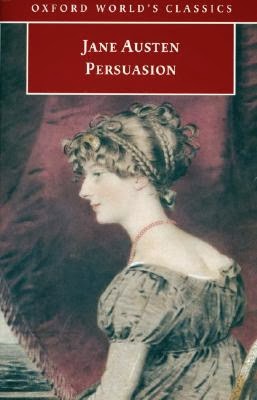
Audiobook: Persuasion

by Jane Austen
read by Greta Scacchi
ages: adult
Support your local independent bookstore: buy it there!

It’s been nearly five years since I last visited Anne Elliott and Captain Wentworth’s story, and I thought, especially after liking Emma so much and because of this article in Slate where they ranked it dead last, that maybe it wouldn’t be nearly as good this time around.

Maybe it was the reader — she was delightful — but I really do think that no matter how much I like to pretend otherwise, Persuasion will always hold a special place in my heart. It’s not funny or witty, though it is poking fun at snobby class-conscious people. No, what I said last time still holds:

This book is the best one of Austen’s because it’s a re-finding of love lost, it’s the rekindling of hope, rather than the blush of first love. Anne and Wentworth were torn apart — by pride, prejudice, situation, class… all of which are Austen themes in her other books — and yet they overcome all in order to be together.

It’s still my favorite.

The Golem and the Jinni

by Helene Wecker
ages: adult
First sentence: “The Golem’s life began in the hold of a steamship.”
Support your local independent bookstore: buy it there!

I have sat here for a good while, trying to figure out how to start this off. All I knew about it, going in, was that it was turn-of-the-century New York City immigrants. And that the main characters were a golem — Jewish mysticism — and a jinni — Arabic mythology. Everything else in the story was a mystery left to unfold.

Know what? I loved it that way. I loved not knowing what was going to happen next, discovering connections and twists and turns as they came.

I will tell you this: it’s a fantastic debut novel. Wecker’s writing is lyrical and magical, and she captures the essence of not only her human characters, but the fantastical ones as well. The sturdiness of the Golem and her need to fill desire; the flightiness of the Jinni. One of the things that impressed me (aside from her melding historical details with fantasy) is she managed to have both the Golem and the Jinni grow in their respective ways. And not always together. It’s simultaneously both their separate stories and their intertwining ones.

Which brings me to the end. There are some elements of the book that I wondered how they fit in. Flashback and stories that seemed out of place for much of the book. But the ENDING. Oh, wow. Wecker is a master storyteller that I didn’t even suspect how all the pieces fit together until it was upon me (or maybe I’m just not a careful reader), and the ending blew. me. away. It was amazing and perfect and totally and completely satisfying.

If all adult books were like this, I’d probably read more of them.

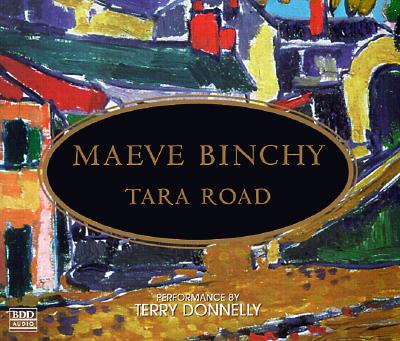
Audiobook: Tara Road

by Maeve Binchy
read by: Terry Donnelly
ages: adult
Support your local independent bookstore: buy it there!

I think I’m going to start with the why on this one. Because, honestly, much like a Jane Austen novel, the plot is really inconsequential to the enjoyment of this book. Earlier this year, Maeve Binchy released A Week in Winter, and people came in to snap it up, raving about her work. After the Northanger Abbey debacle, I was wandering the library looking for something light but good, and I settled on this. I knew nothing about it other than the author’s name.

The jacket flap posed this as a post-divorce/traumatic incident/finding oneself house swap story. And while there was a house swap, it didn’t come until late in the novel. Which leads me to believe: the jacket flap writers didn’t know what to do with this one. See: it’s really just a portrait of a woman, Ria Lynch, and the life she led. She married the first man, Danny Lynch, whom she fell in love with, and thought she had a good life. But, as the reader finds out through the pages, that good life was all in Ria’s head. She was surrounded by friends, by her children, in this lovely home, and her husband was off… being a philandering Irish jerk. (He wasn’t stereotypical, though: the role of Irish drunk was given to one of Ria’s friends’ husbands, who thankfully, got his just deserts in the end.) It’s the portrait of a woman who makes choices and stands by them, and then when life throws her a curveball, she goes on. It’s a testament to the power of community and connection: Marilyn, the American Ria trades houses with at the end, is grieving for a dead son and has been unable to move on. But through the connections she makes by being a part of Ria’s life, she is able to find some healing.

In the end, while “nothing” happened (well, lots happened, but it was everyday stuff) it was a compelling novel. A lot of that is credited to Binchy — she (again, like Austen) is a master of the domestic drama, painting gorgeous portraits of the Everyday — but I do have to admit that Terry Donnelly’s voice had me mesmerized. A light, lilting Irish accent; voices perfect for the characters; she had me staying in the car waiting for an “acceptable” stopping point.

I should read (or listen to) more Binchy. Because my first foray was gold.

Audiobook: Northanger Abbey

by Jane Austen
Read by Donada Peters
Support your local independent bookstore: buy it there!

Next up on my “reading Jane Austen” this year project was Northanger Abbey. It was more of a whim; I haven’t listened to any Austen in a while, and I was at the library, and this one just jumped out at me. I remembered reading it a while ago (2008, it turned out; follow the link if you want a plot summary), but I didn’t remember much else. I was excited to get going.

But… when I put it on, I realized that it was the same reader as Madame Bovary. Remember when I didn’t know if it was the book or the reader?? I’m here to tell you that it was at least 60% the reader. Because, while I plowed through this one (it’s JANE AUSTEN, and I can’t bail on her), I didn’t get much out of it. Peters’ voice grates on me, and I ended up tuning things out and missing huge chunks of the story.

Things I did get: John Thorpe is a complete jerk. Boorish, manipulative, and possibly one of the worst male characters Austen invented. He’s not a cad, or a rake, or even a Bad Guy. No: he thinks he’s Noble and Right, but he’s a bully, and that’s what makes him so terrible.

Along the same lines, General Tilney is shallow and boorish as well. Maybe they needed to exist so that Henry — who is a little on the dull side — would shine.

That said, Catherine herself is a silly, silly girl. Emma is, too, but in a completely different way. Catherine lets her imagination run away with her, but that’s really all she is. (Emma’s a snob, but there’s some growth there by the end of the book.) I didn’t feel like there was any growth, any reason for Henry to fall in love with Catherine other than she was pretty and nice. It was kind of unsatisfying, in the end. Which, by the way, I felt was rushed, a little.

Still not my favorite Jane Austen, but I also have to blame the reader for my lackluster reaction to this. Maybe sometime I’ll see if a different person read another edition of the audiobook and see if I have a different reaction.

Audiobook: The Sweetness at the Bottom of the Pie

by Alan Bradley
read by Jayne Entwistle
ages: adult
Support your local independent bookstore: buy it there!

Flavia DeLuce is an 11-year-old aspiring chemist in 1950s England. Often at odds with her two older sisters, she mostly tries to stay out of the way. That is, when she’s not researching poisons.

Then one fateful night, her father has an argument with a stranger, who turns up dead in the cucumber patch, uttering one word: “Vale”. Flavia (of course) was there to hear it, and it sets her on a path to figure out who the murderer really is, and free her father.

On the one hand, I was thoroughly entertained by Entwistle’s reading of this book. Her voices were terrific, and she managed to keep my attention, even though I had problems with the book itself. The first one being the number of similes. Oh. My. Heavens. If I drank, I’d make a drinking game of them. And I’d be plastered by the end of chapter 2. I tried counting them, but I lost count after a dozen (within 10 minutes or so). I was complaining about them to Hubby, and he did point out that Flavia — who is a precocious child (I don’t like precocious children in adult fiction; it grates) — is the narrator, which may have something to do with the inordinate number of similes. Even so, I resigned myself to them, rolling my eyes whenever I heard one.

My other problem was that I called the murderer too early. Bradley introduced a random character about halfway through, and even though I didn’t know how or why, I knew he had to be the murderer. Why else introduce a random character. And, in many ways, I find that bad form.

But, it wasn’t a terrible waste of time — I did finish it after all. Even if it wasn’t perfect.

The Silver Star

by Jeannette Walls
ages: adult (though it would be okay for a 14+ teen)
First sentence: “My sister saved my life when I was just a baby.”
Support your local independent bookstore: buy it there!

I read The Glass Castle so many years ago that I didn’t have much memory of it outside of a general liking of it. So, I went into reading The Silver Star with a fairly open mind. The only real prejudice was that I heard this was a good YA crossover. Which was enough to get me to pick it up.

And, surprisingly (to me at least), I quite liked it.

Sisters Liz and Bean (whose real name is Jean) have grown up with their artist/flake of a mom, moving constantly, and dealing with her occasional disappearing acts. Then one time, she doesn’t come back. Liz and Bean manage for a while, but when people start poking their noses around, they decide to up and go across the country to visit the uncle they’ve never met in their mom’s hometown of Byler, Virginia.

Their Uncle Tinsley takes them in, but they find that living in small town Virginia is has own set of challenges. (Especially in 1970-71, which is when this takes place.) In addition to the whole new kids in town feeling, the girls find they have to deal with a lot of Small Town History. The Hollidays used to be the mill owners, and used to be Big People in Town, but have been fading over the years. The current mill manager — Mr. Maddox — is a real piece of work (that’s being nice; ominous music started in my brain about page 100), and there’s a bit of a feud between him and Tinsley. And that only intensifies when Maddox assaults Liz.

Two things I think Walls really got: 1970s politics, and smart kids. The former was evident not only in the race relations, which admittedly she just breezed over, but in the politics of sex crimes. While the way the town and the legal system treated Liz, I was glad Walls wasn’t tempted to modernize this. (Though I wonder how “modern” the legal system really is in this area.) It helped the authenticity and feel of the novel overall.

I also appreciated that she didn’t glorify either small towns or the South; it’s all laid out there, the good and the bad, for better or for worse. And for some people — like Liz and Bean’s mom — it is worse. But that said, family doesn’t necessarily mean blood. And in tough times, good people stick together.

It’s a quick read, and well worth the time.

The Ocean at the End of the Lane

by Neil Gaiman
ages: adult
First sentence: “It was only a duck pond, out at the back of the farm.”
Support your local independent bookstore: buy it there!
Review copy picked up at Winter Institute and passed on to me by a coworker.

Childhood memories are tricky things. Especially when, with time and distance, the events seem less than real. So, what happens when one is faced with a memory — something do Dark and Sinister — that is unbelievable?

An unnamed man returns to his childhood home in Sussex, England and is drawn to the house at the end of the lane, or more particularly, the pond. That’s when he begins to remember: a suicide, and Letty Hempstock taking him Beyond and the Events that Followed.

I know I’m being vague, but that’s on purpose. Much of the charm of this fairy tale — and it is a fairy tale — is watching the events unfold through the child’s eyes. It’s got all the traditional fairy tale elements: an Evil that needs to be Vanquished; a good witch to help our unwitting hero do just that. I’m not a true fan or expert on Gaiman, but I don’t think he’s written something this straightforwardly charming since Stardust. And, in spite of the Dark and the Foreboding, it is a sweet, simple, charming story.
 
My coworker mentioned that she felt like something was missing when she finished, but I disagree: it’s just right the way it is. Not complex, not elaborate, but eloquent in its sparseness. And I admire that.

And the Mountains Echoed

by Khaled Hosseini
ages: adult
First sentence: “So, then,”
Support your local independent bookstore: buy it there!

The hardest part about writing about this book is that it doesn’t really have a plot, not in the traditional sense. The story begins with a folk tale about a poor but happy family who have 5 children. Then one day, a div comes and demands that they give up one of their children, or he will take them all. After much agonizing, the father decides to give up his youngest, his favorite, even though it breaks his heart.

The father goes later to see the div,to see what has happened to his child. He expects something sinister, but the child is happy, growing, thriving in the div’s care. The father is given another choice: take the child home, never to return. Or leave the child, and never see him again. It’s a tough choice.

Finishing that story, I had no idea it’s relevance for the book, but upon closing it, I understood. The story is, simply, about the ripple effect of one person’s decision. In this case, it’s an poor Afghani villager who sells his  daughter to a wealthy couple. It sounds a lot more sinister than it really is. In a series of short stories, really, Hosseini explores the people touched by that act in any little way. From the stepuncle, to the adoptive mom, to the doctor who ended up living in the house, Hosseini explores the ripple effect.

I don’t want to call this book profound, partially because after going to an event with Hosseini, I think he’d be uncomfortable with that label. It is, however, insightful and fascinating exploring lives through time. And while the stories were uneven — some of them ran long, and others weren’t that interesting — I thought the format served the story well. That, and Hosseini really is an elegant writer: I’m not a word person, but the words were just gorgeous.

It wasn’t a gripping read, but it was a thoughtful one. And one that I think will stay with me for quite some time.