The Lucky Ones

by Stephanie Greene
ages: 10-14
First sentence: “They were two little girls, six and eight.”

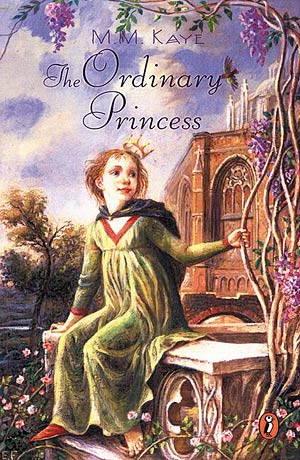
I picked this one up at the library because the cover caught my eye. It’s a very cute cover, isn’t it?

But. (You were expecting that, weren’t you?)

I’m halfway through, and I just can’t get into it. I can’t figure out when this is supposed to be taking place — it’s about family on an island, told from the point of view of the third child, 12 year old Cecile — is it contemporary? The 60s? The 40s? And for some reason this fact really bugged me. I didn’t particularly like any of the characters: Cecile is struggling with the loss of a relationship with her older sister, Natalie, and with the impending doom of puberty and is alternately cute and really annoying. Natalie is, however, a royal wench. I loathed her. And their mother. I know women can really be like her, but I really wanted to throttle her. And halfway through, the plot consisted of Cecile whining and trying to enjoy the vacation on the island, and everyone else being different than before. Not much to keep my attention, especially when Percy Jackson is beckoning.

And then there’s all this sub-plot stuff that I kept reading into it: why was the oldest boy, Harry, banished to Canada? Are the mom and the next door neighbor on the island, King, having an affair? Really, do I care that much?

For the record: when I announced at breakfast that I was abandoning this one, M looked a me, kind of sheepishly, and said, “Well, I thought it was good.” So, there. Someone in the age group it’s targeted for liked the book.

That’s probably a better recommendation than I could give, anyway.

The Screwtape Letters

by C. S. Lewis
ages: adult
First sentence: “My dear Wormwood, I note what you say about guiding your patient’s reading and taking care that he sees a good deal of his materialist friend.”

This book is a difficult one. To categorize — where does a religious epistolary allegory go? Non-fiction? Fiction? To read — it’s a dip-in-and-put-down book, not one that can be devoured, or even read in large chunks. And, to review — what does one say about the formidable C.S. Lewis, especially about his Christian writing?

Well, for one: I’m glad I read it. It gave me a lot to think about, even if I didn’t particularly get “into” it (lack of plot, lack of characters except for Screwtape himself). And not just the idea of everyone having a personal devil, but Lewis’s idea of Christianity itself, and what it should be, and what Christians should be doing.

For two: the preface that C.S. Lewis wrote in 1960. That I found fascinating. My favorite quote in the whole book was from the preface:

I like bats much better than bureaucrats. I live in the Managerial Age, in a world of “Admin.” The greatest eveil is not now done in those sordid “dens of crime” that Dickens loved to paint. It is not done even in concentration camps and labour camps. In those we see its final result. But it is conceived and ordered (moved, seconded, carried and minuted) in clean, carpeted, warmed, and well-lighted offices, by quiet men with white collars and cut fingernails and smooth-shaven cheeks who do not need to raise their voice.

I can get behind that.

For three: Well… it’s about time I read something other than Narnia, actually diving into some of Lewis’s Christian writing. So, for that, the experience was worth it.

Will I be reading more? I’m not going to rush downstairs (yes, we own them all) to pick up another one. It’s not really my “kind” of reading. But, eventually, some opportunity will present itself to read Mere Christianity or The Great Divorce or one of the other ones, and I won’t turn it down.

Geeky Review Formats

I wasn’t going to do this week’s geek, mostly because I don’t think I have a format, but then I saw Suey’s post (yeah, she references me, but that’s not why I’m doing this…), and I thought, hey, maybe I could explain a bit about what goes into what I write (some days, anyway). I’m going to shamelessly copy the way Suey did it, too. 🙂

1. Explain your review format – if you have one. Or maybe your rating system?
I’ve modified it over the years, so this is what I do currently. My reviews have always been my initial reaction to the book, what I thought about it and why. Currently, I always put the title in the post heading, then the author, what age range I think it’s appropriate for (or what the publishers think, if I really don’t have an opinion; I do have to admit, though, that sometimes I age the YA low because I’ve let M read it…). This year I’ve started putting the first sentence, too, and I’ve found I actually like doing that.

As for the rest, well, it depends on my mood and my creativity level. I’ve done lists, conversations, rants… I generally try to put some of the plot summary there, and most definitely what I think of it. If I’m inspired, and on the ball, I’ll add some quotes.

I would like to take the high road and say I don’t do stars or grades or ratings systems because I think they’re subjective and not at all reflective of what I write, but the reason is much more selfish: I’ve found that when I come across ratings systems in my reading, I just glance at the rating and if it’s not a 4+ or an A, I don’t even bother reading the review. And I want you to read — or at least skim — my writing. 🙂 So I don’t do the whole rating thing. See? Selfish.

2. Highlight another book-blogger’s review format by linking to a favorite example – don’t forget to tell us why they are a fave!
Most of the bloggers I read do the standard “here’s the plot and here’s what I think about it” format whenever they review. That’s not to say that it’s bad; the reviews are often interesting and insightful. However, it makes it hard to answer a question like this. Going through my feed, three stood out: Leila at bookshelves of doom stands out for her humor and her asterisk asides (I know others do them, but she was the first one I came across); Julie at Best Books has the best one line reviews (she rarely writes more than one line, too). And I adore Emily’s haikus at emilyreads.

3. Do a review in another book-blogger’s format of your latest read.
I just finished The Amaranth Enchantment, by Julie Berry (beautiful cover, no?). I always liked the reviews Dewey did where we’d ask her questions about the book and she’d answer them. So, if you’d like to leave me a question about the book in the comments, I’ll put up a post answering them sometime later this week.

4. Highlight a past review that you are particularly proud of and why the format or structure may have had something to do with it.
The most recent one that I’m particularly proud of (generally, so you know, I like my negative reviews better than my positive ones: they’re so much easier and fun to write) is the one I did of The Darcys and The Bingleys for Estella’s Revenge. While I was reading the book, I kept going back and forth between my enjoyment of it, and the fact that it was absolutely nothing like Pride and Prejudice, which mildly irritated me. So, I decided that the best way to express this was as a conversation between my intellectual and emotional (rational and irrational? scholarly and fluffy?) sides of my brain. I think it turned out well. At the very least, it was fun writing it!

Don’t forget to leave a question about The Amaranth Enchantment: what do you want to know about the book?

Extras

by Scott Westerfield
ages: 13+
First sentence: “Moggle,” Aya whispered. “You awake?”

The thing I liked most about Uglies — and that I missed most in Pretties and Specials — was that I thought it was a brilliant piece of social commentary. As far as worlds go, the one that Westerfield has created is certainly interesting and over-the-top, but what really drew me in was his observations on beauty and acceptance of self. And that was lost in the whole sci-fi adventure story that occupied the sequels.

Well, social criticism was back in Extras, at least for the first half to two-thirds of the book, and it had me totally captivated. It’s three years after the “mind-rain”: Tally’s dismantling of the world system in the previous three books. In Aya’s city, the way they’ve dealt with it is to create a merit- and reputation-based economy: only those who are popular get the good stuff: nice houses, clothes, invites to all the best parties. Aya is an “extra”, with a face-ranking of nearly 500,000 (in a city of 1 million), she’s someone who doesn’t really matter. She is determined to change that, by “kicking” a story that will get people talking about her, thereby bumping her face rank, and allowing her to get out of the lousy dorm that she’s in. She discovers the Sly Girls, an anonymous clique that thrives off danger and having low face rankings, and infiltrates them in the pursuit of a story.

In my opinion, this is the best part of the book — Westerfield’s created a world where everyone has a say about everything, where the trivial is important, if you can get people to talk about it. (The second most famous person — Tally is first, even though she doesn’t live there — sends out feeds about what she eats and what she wears, and people all over buzz about it. It doesn’t matter that it’s totally trivial; she’s famous because people talk about her.) There’s elements of Facebook and Twitter in there — the popularity contest that is having hundreds or thousands (or millions) of followers hanging on your every twit (or whatever it’s called) or status update. It was simultaneously very enlightening and very disturbing.

However, the second half of the book veers back into sci-fi adventure territory. Aya discovers (accidentally) and kicks a story that could possibly mean the end of the world. Tally shows back up (with Shay, Fausto, and David) to use Aya (and her friends) to discover the sinister plot behind it all. And everything just gets weird. The ending is totally unsatisfying, as if Westerfield had too many ideas and just needed to end the book because it was getting too long. He abandoned the Sly Girls (which, I thought, were the most interesting part of the book), and the whole social commentary (mostly) in favor of bringing Tally back into the story (not that she was bad, it’s just that I really didn’t care for her by the end of Specials, and I’m not sure she entirely redeemed herself here).

That said, it’s a good book. Westerfield’s writing is the kind that gets under your skin: I found myself thinking in hyphens (wow, so mind-altering or that was crazy-making type of thing), like I remembered doing during the first three books. His world building is great, too. And most of the book is worth reading, so it wasn’t a total waste.

BoB Semi-final Commentary

Match 1, Octavian Nothing really long title vs. Chains. Winner: Octavian Nothing. I’m running out of things to say about this book. It must be amazing, if people keep effusing over it. Let’s see if I’m changing my mind about reading it…. um… Nope. Betcha it wins, though.

Match 2, Hunger Games vs. The Lincolns. Winner: Hunger Games. No surprise. Really. I enjoyed reading Chris Crutcher’s commentary, though.

The real question now is: will final judge Lois Lowry go for a huge, sprawling work of genius or a hip, intense dystopian novel? (Not even going to try to answer that. But it’s fun to think about it…)

April Jacket Flap-a-thon

The end of another month already? Would someone please tell me where this year is going? I can’t believe it’s May tomorrow…

At any rate, on with the flap-a-thon:

Caddy Ever After (Margaret K. McElderry Books): “Love is in the air for the Casson family! Four hilarious, endearing tales unfold as Rose, Indigo, Saffy, and Caddy each tell their intertwining stories. Rose begins by showing how she does special with her Valentine’s card for Tom in New York. Not to be outdone, Indigo has his own surprise in store for the Valentine’s Day disco at school. For her part, Saffy has an unusual date in a very, very dark graveyard, and is haunted by a balloon that almost costs her her best friend. But it is Caddy who dares everything — as she tells all about love at first sight when you have found the Real Thing. Unfortunately the Real Thing is not darling Michael. What is Rose going to do?”

I’ve never really liked the jacket-flaps for the Casson family books; they try to get the tone right, and end up sounding gratingly annoying. This one, however, is not too bad. Not great, but not too bad, either.

Nim’s Island (Scholastic): “A girl. An iguana. An island. And e-mail. Meet Nim–a modern-day Robinson Crusoe! She can chop down bananas with a machete, climb tall palm trees, and start a fire with a piece of glass. So she’s not afraid when her scientist dad sails off to study plankton for three days, leaving her alone on their island. Besides, it’s not as if no one’s looking after her–she’s got a sea lion to mother her and an iguana for comic relief. She also has an interesting new e-mail pal. But when her father’s cell-phone calls stop coming and disaster seems near, Nim has to be stronger and braver than she’s ever been before. And she’ll need all her friends to help her. “

This one, however, is adorable. Or at least very cute.

Fire and Hemlock (Greenwillow Books): “A photograph called “Fire and Hemlock” that has been on the wall since her childhood. A story in a book of supernatural stories — had Polly read it before under a different title? Polly, packing to return to college, is distracted by picture and story, clues from the past stirring memories. But why should she suddenly have memories that do not seem to correspond to the facts? Fire and Hemlock is an intricate, romantic fantasy filled with sorcery and intrigue, magic and mystery, all background to a most unusual and thoroughly satisfying love story.”

This is a hard book to write a blurb for, and I think the folks at Greenwillow did a good job. Intriguing, without giving anything away.

People of the Book (Penguin Books): “In 1996, Hanna Heath, an Australian rare-book expert, is offered the job of a lifetime: analysis and conservation of the famed Sarajevo Haggadah, which has been rescued from Serb shelling during the Bosnian war. Priceless and beautiful, the book is one of the earliest Jewish volumes ever to be illuminated with images. When Hanna, a caustic loner with a passion for her work, discovers a series of tiny artifacts in its ancient binding–an insect wing fragment, wine stains, salt crystals, a white hair–she begins to unlock the book’s mysteries. The reader is ushered into an exquisitely detailed and atmospheric past, tracing the book’s journey from its salvation back to its creation. In Bosnia during World War II, a Muslim risks his life to protect it from the Nazis. In the hedonistic salons of fin-de-siècle Vienna, the book becomes a pawn in the struggle against the city’s rising antisemitism. In inquisition-era Venice, a Catholic priest saves it from burning. In Barcelona in 1492, the scribe who wrote the text sees his family destroyed by the agonies of enforced exile. And in Seville in 1480, the reason for the Haggadah’s extraordinary illuminations is finally disclosed. Hanna’s investigation unexpectedly plunges her into the intrigues of fine art forgers and ultra-nationalist fanatics. Her experiences will test her belief in herself and the man she has come to love. Inspired by a true story, People of the Book is at once a novel of sweeping historical grandeur and intimate emotional intensity, an ambitious, electrifying work by an acclaimed and beloved author.”

Long, but informative without spoiling the plot. And actually very interesting.

Other books read this month:
The Darcys and the Bingleys
Pemberley by the Sea
Jane Austen Ruined My Life
The Order of the Odd-Fish
Lock and Key
The Diary of a Young Girl
The Sharper Your Knife, the Less You Cry
Inkdeath
The Spirit Catches You and You Fall Down
We Are the Ship
Ancedotes of Destiny and Ehrengard
The Farwalker’s Quest
Aurelia
Artichoke’s Heart

People of the Book

by Geraldine Brooks
ages: adult
First sentence: “I might as well say, right from the jump: it wasn’t my usual kind of job.”

I have heard nothing but wonderful things about this book (a close friend of mine adored it, as well as many of the book bloggers I read), and so when Julie at FSB Associates wrote and offered me a review copy, I jumped at the chance. (Granted, I did wonder why she wasoffering me a popular book, a critically acclaimed book… I don’t usually get the “good” stuff.) Sure, I said, I’ve had decent enough luck with Geraldine Brooks in the past (liked Year of Wonders; didn’t like March, which just goes to show that I have vastly different tastes in books than the Pulitzer Prize committee). Why not give this one a try?

For those of you who don’t know, People of the Book is a sweeping work of historical fiction that centers around a real book: the Sarajevo Haggadah. It’s a beautifully illuminated manuscript, something that has baffled historians for centuries: Where did it come from? Who illustrated it? A situation just ripe for a vivid imagination.

Brooks grounds her work in the character of Hanna Heath, an Australian book conservator, who in 1996 was hired to conserve the book before it went on display in the Bosnian National Museum. In the process, she discovers things about the book which leads the story back through time. The format is one of the wonderful things about the book: it reads almost like several short stories, yet the overlying plot of Hanna, her life, and her connection with the book binds it together as a novel. It’s really quite brilliant.

But the thing I really liked about this one is that grounds her historical fiction in the human element. It’s a re-imagining history that feels historical, yet isn’t horribly offensive (though there are definitely some cringe-worthy moments). I also enjoyed the twist at the end, and how it all managed to get resolved. Very, very nice.

I’ll stop effusing now, mostly because I’m supposed to be hanging out with A and K, and they’re bugging me. Seriously, though: if you haven’t read this one, do. It’s worth all the praise it’s getting.

Library Loot #16

What does one do when one doesn’t want to read anything on the dresser? Why, go to the library, of course! (I really didn’t get all that much for me… only two books. That’s not that bad…)

For A/K:
The Castaway, by James Stevenson
A Friend for Minerva Louise, by Janet Morgan Stoeke**
I Will Surprise My Friend! (An Elephant and Piggie Book), by Mo Willems**
The Nine Lives of Rotten Ralph, by Jack Gantos/Illus. Nicole Rubel
City Witch, Country Switch, by Wendy Wax/Illus. Scott Gibala-Broxholm*8
The Pied Piper’s Magic, by Steven Kellog
Old Bear, by Kevin Henkes
The Tree, by Karen Gray Ruelle/Illus. Deborah Durland DeSaix
Dora’s Pirate Adventure (Dora the Explorer)

For M/C:
The Yggyssey: How Iggy Wondered What Happened to All the Ghosts, Found Out Where They Went, and Went There, by Daniel Pinkwater

For M:
Thirteenth Child (Frontier Magic Book), by Patricia C. Wrede*
Word Nerd, by Susan Nielsen
3 Willows: The Sisterhood Grows , by Ann Brashares*
Sammy Keyes and the Cold Hard Cash, by Wendelin Van Draanen
RuneWarriors, by James Jennewein and Tom S. Parker

For me:
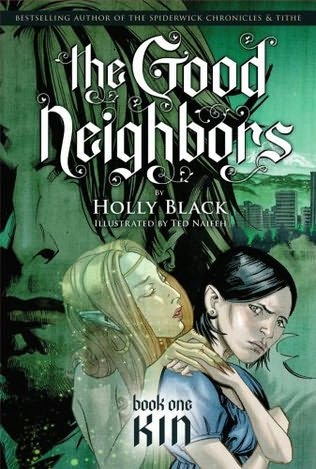
Kin (The Good Neighbors, Book 1), by Holly Black and Ted Naifeh
The Year the Swallows Came Early, by Kathryn Fitzmaurice

The roundup is either at Out of the Blue or A Striped Armchair.

*Ones that M eventually read.
**Picture books we really liked.

Artichoke’s Heart

by Suzanne Supplee
ages: 13+
First sentence: “Mother spent $700 on a treadmill ‘from Santa’ that I will never use.”

Weight is always a tricky subject. Writing about it, talking about it, thinking about it… everyone (read: girls and women) seems to have an opinion on it, obsess over it (or say they don’t obsess over it), or compare themselves to others. It’s a curse of today’s media-saturated age, but that’s a subject for another post.

Rosemary Goode is overweight (she thinks she’s obese, but she’s “only” 200 pounds, which to my mind is not obese, but then again, I’m not a health professional… and it’s mostly about how she thinks of herself anyway… so I tried to go with it). Her problem: food. (Well, duh.) She loves it. Craves it. Eats too much of it. Which is a problem of itself (inner pop psychologist refraining from commenting), but actually (couldn’t contain it. Sorry.) is a symptom of a larger problem: her mom. Rosemary’s mom, Rose Warren Goode, is the owner of Heavenly Hair in Spring Hill, Tennessee. She’s a single mom, getting pregnant with Rosemary when she was 17. She’s worked hard all her life: to be a successful businesswoman, to be a “good” (mom-issues in a YA book. Again.) mom, to be happy. She’s really close to her sister, Mary, and spends most of her free time with her (rather than her kid. No wonder Rosemary turns to food). Rosemary (obviously) resents this. But, because this is the South (I did love the voice in this book; it was very Southern. I felt like was back in Arkansas…), Rosemary just puts a happy face on, and goes through life the best she can. Because that’s what’s expected of her.

Except. She’s not happy. (Duh.)

Then she meets Kyle Cox. Well, “meet” is pretty strong. She reads about him in the school paper — he’s a jock — and he’s in her study hall. And he smiles at her. Which is the first little step she needs to get off her bum and do something about her habits. She goes on a liquid diet (issue: this girl crashed dieted to lose 45 pounds in the end. This bothered me. A LOT.), she starts exercising, she gets counseling (as a “trial experiment”). And when she starts losing weight she starts feeling better about herself… a little at a time. I don’t want to insinuate that it was a sudden, miraculous overnight change, because it wasn’t (something which I did like). But, once the pounds started coming off, she began to come out of her shell. (Are we saying that fat people just need to lose weight to feel good about themselves? That it’s impossible to love your body when your overweight? Rosemary’s target goal is 120 pounds — she’s 5 foot 6 — is that reasonable? See what I mean about weight being a loaded — sorry, no pun intended — subject?)

I did like the characters: Rosemary is a very sweet girl, and Kyle is adorable in his geekiness. But I had issues (being overweight myself) with this book. Not a bad one, but not my ideal fat-girl book either. Then again, I’m not sure there can be a fat-girl book that will please everyone. The issue is just too volatile. Which is too bad. (But that’s a subject for another post.)

Aurelia

by Anne Osterland
ages: 13+
First sentence: “Death disturbed the night.”

There are several elements that make a good fantasy tale, at least for me. There must be:

A feisty hero or heroine — I do better with feisty heroines, but a good, swashbuckling hero is great, too.

Action — swordfighting, adventuring, chasing, etc.

Romance — must have romance. Always nice to have a to-die for with an awesome leading pair, but even if it’s just hinted at (or one of the parties is cluesless), that works for me, too. I do unrequited okay, but pining just turns me off.

Intrigue, suspense, mystery, and magic are all optional.

Most of all, it must be fun.

Aurelia fits the bill. Feisty heroine: check. Aurelia is a conflicted person, but in the end, finds herself and kicks some butt. Action: great swordfighting, awesome horse-racing, mostly well-written. Romance: *swoon*. Mystery and intrigue and suspense: check. I was biting my nails, intent on figuring out who was behind the plot to assassinate Aurelia (that’s basically the plot of the book), and kept pestering M with questions (she read it before I got to it) until I figured it out. Granted, I was nearly done with the book at the time.

And fun? Check. It definately was fun. Very, very fun.