Factory Girls

From Village to City in a Changing China
by Leslie T. Chang
ages: adult
First sentence: “When you met a girl from another factory, you quickly took her measure.”
Support your local independent bookstore: buy it there!

 After living in China for a decade, Wall Street Journal reporter Leslie T. Change (who is Chinese; her father emigrated to Taiwan in 1948, when the revolution happened, and then from there came to the United States) decided that the whole idea of women (mostly) migrating from the villages in the country to work in factories in the cities was one worth pursuing. And writing a book about.

I’m so glad she did.

It’s a fascinating, rambling book, weaving in and out of time (I never really got a sense of how many years she spent hanging out with and shadowing the women she chose to focus on), including her family’s history as well as the current socio-economic state of China. She tries to generalize the lives of the women in the factories, and to a great extent it works because she focuses in on several women telling their individual stories, and how their lives have changed — for the worse and for the better — because of their choice to migrate and work at a factory. It made the book more personable, focusing on the few, and less just dry history, making the book more interesting and easier to read.

(As I side note, I’ve always wondered what the Chinese think about making all the chintzy holiday stuff we buy here in the U.S.)

On top of all that, it’s accessible book, and a quick read (even at 400 pages). Good for all those interested in the plight of women around the world.

Legend

by Marie Lu
ages: 11+
First sentence: “My mother thinks I’m dead.”
Support your local independent bookstore: buy it there!

It’s sometime in the future and what was the United States has dissolved into two warring countries: the Colonies, and the Republic, where our story takes place.

Day is the Republic’s most wanted criminal. Not the most dangerous: he specializes in terrorizing the Republic’s military, and has a bit of a Robin Hood schtick going on: he robs the bank and passes the money out to the people in his districts, the poorest of the poor. He became this way because at age 10, he failed the Republic’s Trials: tests given to determine what your future will be.

June, on the other hand, is the Republic’s best and brightest: she got a perfect score on her trial, she’s graduated college at age 15, and is now — at the death of her brother by Day — is appointed to one of the Republic’s military guards. Her goal: find day, hunt him out, and get justice (and revenge) for her brother’s death.

So, yeah: it’s Romeo and Juliet (of course they fall in love! You were expecting something different?) in a dystopian world. Told in alternating chapters (in which the font colors drove me to distraction), we get the story of June and Day and the Repulic’s mounting atrocities. Even though the characterizations weren’t the strongest — I never really connected with either Day or June, or even the “baddies” — the world building and the ideas behind the book were enough to keep me turning pages. There’s a bit of a mystery, as we delve deeper into the world and the story. The whole idea of the country at war with each other — though we are never given reasons for this — and the fact that the Republic is essentially a militaristic state — which brings up questions of obedience and trust and freedom — are both quite intriguing.

I felt like it was a grand set up, that there’s more to come in later books. (Which, considering the way these things go these days, it will be.) However, it does work as a stand-alone story; there is a natural arc and an ending, though there are questions — to ask would be to spoil — left unanswered.

I can only hope the next book provides more clues.

A note: I’m calling this middle grade, though it’s the upper ranges of it. While it’s violent at times, and there are complexities, it’s really much more innocent than other dystopian novels. More along the Percy Jackson lines than Hunger Games.

SLJ’s Battle of the Kids’ Books: Quarterfinal Roundup

As the finals are next Monday, I figured I’d round these up during the week, when I’m not running reviews….

Chime vs. Daughter of Smoke and Bone: One the one hand, NOOO! I seriously hoped E. Lockhart would pick Daughter for the win. On the other hand, I completely agree: “It is an awesome book, and I hugely recommend it to everyone, even though it ends with some of the mysteries unsolved because a sequel is forthcoming. Still, I am tipping the battle in favor of Chime by Franny Billingsley, largely because of my probably idiosyncratic inability to fall in love with that foxy, murderous angel.” Both are excellent novels; it’s a pity to see one go by the wayside. It goes up against Between Shades of Gray later this week; it’ll be interesting to see which one wins.

Drawing from Memory vs. Inside Out and Back Again: Again, I find I’m not surprised with judge Jewell Parker Rhodes decision to go with Drawing. I haven’t read it, and while I liked Inside Out, I wasn’t a huge fan. Besides, how can you compete with a book that’s a full-fledged imaginative assault”? We’ll see tomorrow which book (I’m hoping for Wonderstruck, because that would be an interesting match) it’ll go up against.

Things are definitely getting exciting…

A Monster Calls

Inspired by an idea from Siobhan Dowd
by Patrick Ness
ages: 12+
First sentence: “The monster showed up just after midnight.”
Support your local independent bookstore: buy it there!

Every once in a while a perfect book comes along. One that engages you both in its story and the telling of it, and is so heart-rendering (and honestly so) that you find yourself aching because of it.

A Monster Calls is such a book.

I don’t want to get too much into the plot, partially because it’s a lot more complex than my measly summaries can do justice to, and partially the beauty of this book is in the discovering. Know this, though: it’s no kids’ book. I’m sure there are children out there who will be mature enough to get what’s going on with Conor and the monster, and the sensibilities behind it all. But I also think that the more life experience you have, the more powerful this book is going to be.

For, like the monster, the sensibilities behind the simple story, are impossible old. Things like: stories not not just for entertainment, but to learn Things. Truths. And: not everything is simple, and can be wrapped up in a neat little bow. And: Monsters are the Other, which does not always make them Bad. And: sometimes, the person who needs healing is ourselves.

Know this, too, going in: you will cry. (If you don’t, you’re heartless.) And it will be honest, and well-deserved, because the writing, in its simplicity, is powerful.

I wouldn’t hand this to kids, unless they are going through some traumatic (sorry, a bit of a spoiler there, but not much) situation. Then, I think this book would be a powerful tool for healing.

Because that’s what good stories do.

SLJ’s Battle of the Kids’ Books: Weekly Roundup #2

Drawing from Memory vs. The Grand Plan to Fix Everything: First, I think judge Barbara O’Connor really liked Grand Plan more than I did. She found such wonderful, lovely things to say about it. (Though we both had the same movie-reaction to the book. Interesting.) But, in the end, (even though she had more to say about Grand Plan), Drawing from Memory takes the win, “For the teamwork of art and words and for the total experience of this book.” I called it (mostly because I didn’t think Grand Plan was strong enough to win), though I do need to read Drawing from Memory now.

Heart and Soul vs. Inside Out and Back Again: I have to admit that while I liked Inside Out, I didn’t love it. I didn’t get what judge Sarah Weeks got out of it: “When I closed the book, I did so reluctantly. I felt that I had tasted ripe papaya, and glutinous rice—as well as the salty tears of the endearing main character, Ha. I loved every minute of reading this book.” But I did guess that Inside Out would be the winner, so I’m not disappointed with Weeks’s decision here.

Life: An Exploded Diagram vs. A Monster Calls: I just finished A Monster Calls last weekend (review forthcoming… sometime…) and was floored by the book. So when Lauren Myracle says, ” I pick Life: An Exploded Diagram, because of its clean and absolute ability to pierce my heart and tear my brain to pieces, in the best of all possible ways.” And that it pulled her in: “I did not predict that Life would suck me in as hard and fast and with such slurpy ferocity as it did, especially not on the tail of Monster.” How could I be upset that Monster (my prediction, by the way) loses in a face of comments like that? I can’t. Another one for the hold list at the library.

Okay for Now vs. Wonderstruck: Oh, my heart breaks. Really. I adored Okay for Now, and really thought it stood a chance against Wonderstruck. But, obviously, I missed something in that book, because it beat out Okay for Now to move on. Jeff Kinney’s a nice guy, but he just broke my heart. *sigh* Now the question is: will the two art books  meet up?

Round 2, Match 1 Amelia Lost vs. Between Shades of Gray: After reading last week’s first round decision about Between Shades of Gray, I started to wonder if this was the sort of novel that could win it all… after reading this second round decision, in which it handily beat Amelia Lost — judge Marc Aronson writes, “As books, they are equally well-crafted and worth reading. But Ruta’s novel does for the destruction of Lithuania what, say, Paula Fox and Tom Feelings did for the Middle Passage—gave our readers access to a haunting, tragic, and crucially important part of our common past.” — I am seriously considering getting behind this little book as an ultimate winner. Then again, it has to get by Maggie Stiefvater, and will be up against one of two great YA fantasies. That will be interesting. At any rate, it’s screaming “READ ME!”

I can’t wait to see who else makes it to the semifinals!

Goliath

by Scott Westerfeld
ages: 12+
First sentence: “‘Siberia,’ Alek said.”
Support your local independent bookstore: buy it there!
Others in the series: Levithan, Behemoth

When we last left our fair heroes, Deryn and Alek, they had helped the revolution against the Ottoman Empire succeed, and prevented them from entering the Great War. Now the crew of the Leviathan is headed for Siberia, to pick up some unusual cargo — inventor Nikola Tesla, who claims that his invention, Goliath, can bring the Great War to an end, once and for all.

Of course, there’s still the problem of Deryn being a girl and Alek thinking she’s a boy, and plus she’s in love with him and he’s a prince and she’s a commoner. So, of course, there will be stickiness when he finds out.

Like the previous two books, Goliath is many things all at once: action-packed, filled with battle scenes and daring escapes and cool contraptions; gorgeous, with Keith Thompson’s art elegantly complimenting Westerfeld’s words. I have to admit flipping through the book to look at the pictures, just so I can see them before reading the words so I can figure out what the heck is going on. It’s a bit of a love story this time around as well, and even though Westerfeld doesn’t have the swoon-worthy prose of, say, Maureen Johnson, he does fairly well keeping a balance between Deryn and Alek’s friendship and their budding love. (Though I have to admit here that one of my favorite characters was Alek’s perspicacious loris, Bovril. He was awesome.)

It has a wider scope than the previous two books, as the Leviathan basically circumscribes the world, going from Siberia to Japan to California through Mexico to New York. It’s almost as if Westerfeld felt like he couldn’t leave any part of his new steampunk world untouched. It kind of felt forced, though I do get the historical implications; he was, after all, just following the path that the actual World War I took.

Even with that criticism, it was wonderful to follow Deryn — who is really one of those awesome, cool, capable heroines you just have to cheer for! — and Alek’s — who has really grown on me over the trilogy — story come to a good end.

And you can’t ask for more than that.

A Day Late (But Not a Dollar Short): It’s Once Upon a Time VI

I know, I know, I swore off challenges. But it’s CARL’S ONCE UPON A TIME CHALLENGE, and I can’t miss that.

And, as per my favorite thing, I am doing Quest the second, which consists of one book in each of the four categories.

1. Fantasy (in which I will read lots): I’m going to try to read Huntress, by Malinda Lo (but I will also most definitely read Hex Hall, by Rachel Hawkins as well).
Grave Mercy, Robin LaFevers
The Floating Islands, by Rachel Neumeier
Huntress, by Malinda Lo
Hex Hall, by Rachel Hawkins
Castle in the Air, by Diana Wynne Jones
Demonglass, by Rachel Hawkins
Spell Bound, by Rachel Hawkins
Girl of Fire and Thorns, by Rae Carson
Dealing with Dragons, by Patricia Wreade
Searching for Dragons, by Patricia Wreade

2. Mythology: Ilium by Dan Simmons. This has been on my TBR for years. Seriously.
The Lost Code, by Kevin Emerson
The Serpent’s Shadow, by Rick Riordan

3. Folklore: Good Omens by Neil Gaiman and Terry Pratchett. I don’t know if it is, but I’m not sure I care.

4. Fairy Tales: Cinder, by Marissa Meyer. Because everyone says I should. And/Or Fables: book one, by Bill Willingham, because it sounds cool.

Woo hoo! I love spring.

Notes From an Accidental Band Geek

by Erin Dionne
ages: 10+
First sentence: “Dad, seriously.”
Support your local independent bookstore: buy it there!

Elsie is a (french) horn player. First and foremost, before absolutely everything else. She is driven to play, and even though she’s only 13 years old, she’s ambitious. As a freshman in high school, she is determined to get into an elite music program, Shining Birches, which is something usually reserved for upper classmen. The only hitch is that she needs an extra music group, and because of her father’s gig in Austria (life is tough), she missed out in applying for the Boston Youth Symphony. Which means she’s stuck with (horror of all horrors) marching band.

I picked this up for C for Christmas because she’s basically fallen into band. She never wanted to be in band, but the way our middle school is, band is really one of the better options. That, and the teacher is fantastic. Much like Elsie, C went into band with a bad attitude, and is actually having a surprisingly good time.

Elsie, however, was an incredibly tough character to enjoy. She’s self-centered, snobbish, and competitive. She couldn’t understand why people asked for her opinion and then got offended when she gave it to them. And while she was competitive with her classmates, the person she was always at odds with was her father, who was also a french horn player.

On the one hand, all these things that grated on me came honestly to the character, and she really did go through a growth arc over the course of the book. Yes, it did get all wrapped up in a nice little bow, but not in the way you would expect given the beginning of the novel, which was nice. And, thankfully, there were interesting side characters that helped soften Elsie’s abrasiveness.

Even though Elsie was one tough pill to swallow, it was a fun little book. Dionne really got the value of marching band (not to mention its inherent coolness), and anyone who’s ever marched will find themselves nodding in agreement.

And that makes an already good book that much better. (Granted: I marched, so I may be a bit biased, here.)

Highland Fling

by Katie Fforde
ages: adult
First sentence: “‘I gave you a home, for goodness’ sake!’ said Henry.”
Support your local independent bookstore: buy it there!

After being laid off when her IT firm went bust, Jenny Porter decided that she’d never work for anyone but herself again. She became a virtual assistant, which is essentially a glorified secretary, even though she rarely meets her clients. Then, one of her clients, M. R. Grant-Dempsey, decides to send her into the wilds of Scotland to check out Dalmain Mills, and see whether or not it’s worth salvaging.

Once up in the wilds of Scotland, away from her increasingly insufferable boyfriend, Henry, (yes, he really is that bad) she discovers that not only does she really like Scotland, enjoys working in a fast food stand, and wants to find a way to salvage the mill, she is really attracted to possibly the least amiable man in the region: Ross Grant. (Yes, it is who you think it is.)

It’s fluff. Really. There’s no way around it. It’s predictable, enjoyable, fluffy romance, where you want the guy to get with the girl, and the stupid, silly boyfriend out of the way. Everything else about the plot is immaterial. There isn’t much sex (just one scene, in a snow cave… cozy…), though Fforde does know how to write a good kiss. And to be gratuitous in my review, this is who Ross Grant looked like in my head:

You’re welcome.

Not a bad way to spend some time, I think.

SLJ’s Battle of the (Kids’) Books: Round 1

As promised: here’s my thoughts on the week’s matchups:

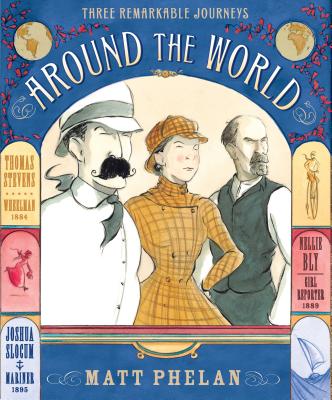
Amelia Lost vs. Anya’s Ghost: The first match, and I was an informed reader. I read them both and really liked Amelia Lost: concise, interesting history in a form everyone would like. Anya’s Ghost, while I thought was neat, just didn’t grab me. Thankfully, judge Matt Phelan agreed: “Amelia Lost succeeds in what it sets out to do, but for this reader it also manages to do more. Thanks to this book, an icon became a living breathing extraordinary human being with ambition, drive, and personality.”

Between Shades of Gray vs. Bootleg: I have to admit that I haven’t read either one. I went with Between Shades of Gray on my bracket solely on the recommendation of my boss (because she loved it), and because I hadn’t heard of Bootleg (shame on me). Well, my boss was right, and I was lucky: Between Shades of Gray for the win. As judge Gayle Forman said, “Between Shades of Gray is a harrowing, page-turner of a novel that shines a light on a piece of history too long shrouded in the darkness.” Time to pick me up a copy and read it.

The Cheshire Cheese Cat vs. Chime: I admit I went with Chime on this one. Partially (shame on me, AGAIN) because I haven’t read The Cheshire Cheese Cat. Possibly because I don’t (shock) love Dickens. But mostly because I really adored Chime, and I wanted to see it move on. Thankfully, I went with my gut: Chime gets the nod with a coin toss. Literally. (“Both are beautiful and perfect—neither is better than the other. I was so frustrated and at sea about this that I actually flipped a coin,” writes judge Sy Montgomery.) Sometimes, that’s all it takes.

Daughter of Smoke and Bone vs. Dead End in Norvelt: Argh! Sarah Zarr didn’t do what I expected her to do, so for the first time this round, I was wrong. That said, I’m perfectly happy with her decision to choose Daugher (LOVE that book, LOVE Laini Taylor), and the reason she gave is exactly why I love Taylor’s writing: “Taylor isn’t innocent of occasionally making her presence as an author more known than I’d prefer, but the poetry of her prose lent a mesmerizing quality to the fictional landscape and created a more wholly immersive reading experience.” I am more than happy to be wrong.

Which makes me 3 and 1 so far. Not too shabby a start.