

And I’m playing peanut gallery (but I’m not terribly snarky) over on my Tumblr. So far, I’m 1-1. (I think I picked All the Truth That’s In Me because I loved it so much. That said, I ordered a copy of The Animal Book for the store yesterday.)

And I’m playing peanut gallery (but I’m not terribly snarky) over on my Tumblr. So far, I’m 1-1. (I think I picked All the Truth That’s In Me because I loved it so much. That said, I ordered a copy of The Animal Book for the store yesterday.)
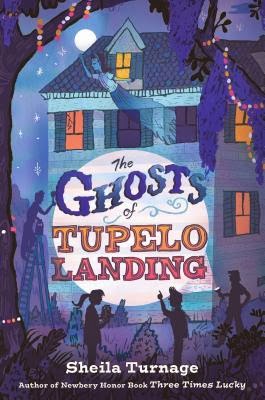
by Sheila Turnage
First sentence: “Desperado Detective Agency’s second big case snuck up on Dale and me at the end of summer, dressed in the happy-go-lucky colors and excitement of an auction.”
Support your local independent bookstore: buy it there!
Others in the series: Three Times Lucky
Content: There may be a few instances of mild swearing (but I really don’t think so), and some talk of abuse, and another (potential) murder. But it really is innocent and happily belongs in the middle grade (3-5th grade) section of the bookstore.
Every once in a while, a series of books captures my fancy so completely that I fall head-over-heels in love with the characters. The Casson family books are that way. As is My Most Excellent Year. I’m adding the Tupelo Landing books to that list. I adore the town, even with all its quirks, and the people in it. I want to live next door and enjoy them every day.
This installment picks up as the school year is starting, and Mo and Dale are about to enter sixth grade. This is a good time as any: one of the amazing things about this book is that while it is a sequel, it really does stand on its own. Turnage works in the story from Three Times Lucky as you go along, in ways — like press releases or newspaper clippings or just dropped comments — that don’t stop the narration of the current story. It was lovely to get a refresher while being immediately immersed in the new story.
The case that the Desperado Detective Agency is working on this time is a good old-fashioned Haunting. Miss Lana and Grandmother Miss Lacy bought the old inn at an auction, mostly because they didn’t like the look of the “city” woman (whom Mo less-than-affectionately calls “Rat Face”) who was bidding on the property. They didn’t want her to come in, tear the dilapidated inn down, and put up condos in place. Unfortunately, buying an inn to renovate and then renovating it — especially when there’s a bona fide ghost lurking about — are two different things.
Mo and Dale get involved because of a history assignment. They’re supposed to interview one of the town “elders”, and Mo’s nemesis, Anna (whom Mo less-than-affectionately calls “Attila”) nabs Grandmother Miss Lacy first. So, Mo — in a fit of pique — says they’re going to interview the inn’s ghost. That sets them to unraveling a 60-year-old mystery of how a girl — one of Grandmother Miss Lacy’s best friends — met her death.
The only real criticism I have of this book is that all the conflict seems a little contrived. The outside city girl just lurks in the background being uptight, and the new character, Harm Cremshaw, turns out to have more bark than bite. Even the resident town grump, Red Baker, turns out to be mostly harmless. That said, I’m not reading these books for the conflict. Or even for the mystery. (Or the ghost story in this case, though it’s so slight, I’m not really considering this as a “speculative fiction” though it probably is.) No, I read this because I love the characters — Mo’s spunk and observations; Dale’s adorable cluelessness, Miss Lana’s optimism, the Colonel’s stoic nature — and I love the way Turnage writes them.
And that’s why you should be reading these as well.
Before I get started, I have a bit of a proud moment. I was asked a while back to read The Secret of Ava Lavender and to blurb it for the Candlewick rep. He liked it enough and I guess they submitted it (I’m pretty sure I didn’t) to the Spring Indie Next kids list. I got an email at work a few weeks ago saying that my blurb was picked to be on the list, but I didn’t expect this:
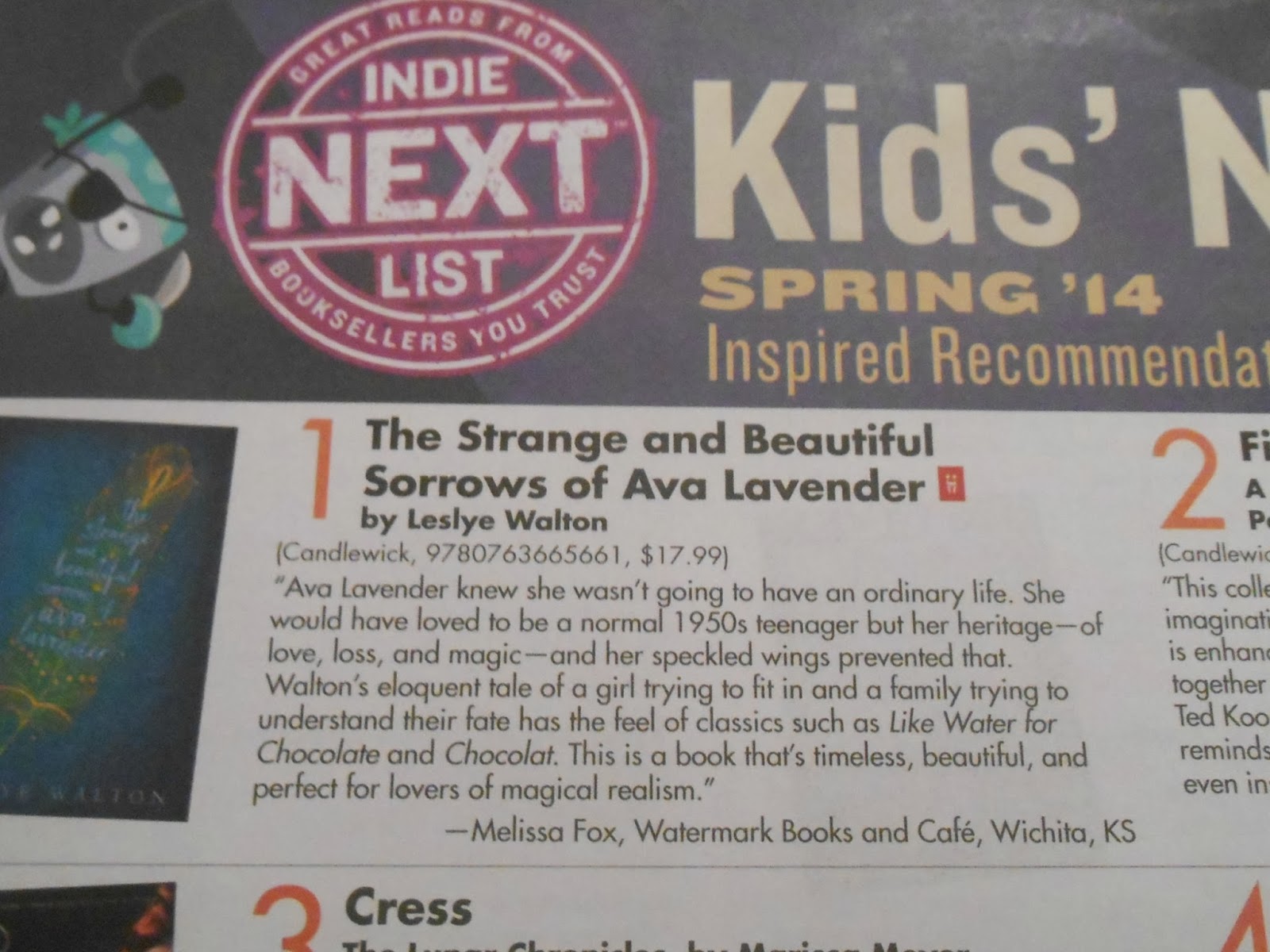
Not bad for my first time out!
As for my TBR pile it looks like this right now:

Half Bad, by Sally Green (It intrigues me. I thought I’d have more time before it came out, though. Oops.)
Slated, by Teri Terry (Th third one is coming out, and the Penguin rep really likes these. I’ve been asked to give it a go-through to see if we can sell some.)
We Were Liars, by E. Lockhart (This is going to be my nomination for the Summer Indie Next Kids List. Is it bad that I’ve decided that before I read the book?)
Reality Boy, by A. S. King (YAckers pick for this month)
The Shadowhand Covenant, by Brian Farrey (The Sequel to The Vengeeep Prophecies. I will get to it this month. Pinky promise.)
Her Dark Curiosity, by Megan Sheperd (Sequel to The Madman’s Daughter, which I really liked.)
Dorothy Must Die, by Danielle Page (my boss’s words were “Melissa. Get on this one.” Okay.)
The Storied Life of A. J. Fikray, by Gabrielle Zevin (Because she’s coming here in May. Also: I need to read her chocolate/dystopian series. I’ve been meaning to for years.)
The Coldest Girl in Coldtown, by Holly Black (Another I MUST get to.)
That’s not too bad, all things considered. What’s on your pile? Anything you’re really looking forward to?
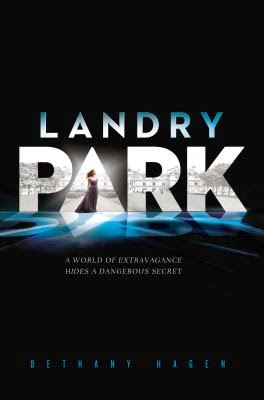
by Bethany Hagen
First sentence: “Two hundred years ago, America found itself at a crossroads.”
Support your local independent bookstore: buy it there!
Review copy snagged from the ARC shelves at work.
Content: There’s some talk of violence, though it’s all offscreen; a few mild swear word; and an illusion to an affair. It’s in the YA section (6-8th grade) of the bookstore, but I’d have no problems giving it to a younger child if they were interested.
Madeline Landry has grown up in a luxurious world: she’s the only child of an elite family and surrounded with opulence. She’s not particularly happy: she has struggles with her father over her education. She wants to got to university; he (and his will, not to mention the law) wants her to stay home, get married, run the estate, and pop out an heir. But she’s not entirely unhappy either: she loves her family and her home and the life. That is, until David Dana — the un-landed son of a gentry — comes into her life. Then, the things that have been skirting around her life — the class issues, the environmental concerns, especially with the lowest class, the Rootless — come front and center. Not to mention that David’s pretty dreamy.
In many ways, Hagen is treading the same ground as every dystopian book before her. America falls to the Eastern Empire, only managing to hang on by a thread. In the aftermath, a class system is formed — not based on race, as Hagen is so careful to point out — based on money and influence. And at the bottom are the Rootless, who handle the nuclear charges the gentry’s energy — and much of the wealth, especially the Landry wealth — comes from. And they’re getting restless. Where Hagen’s dystopian diverges from the pack is in the focus: Madeline is one of the elite, not the underclass. And when she has her eyes opened, she stands to lose everything. And I respected that.
I also really loved the world Hagen built, even though she never really gave us an explanation why the women were corseted and shoved into ball gowns and paraded around like it was Victorian England. I’m sure I could come up with some hypotheses — fancy dresses are synonymous with wealth? the women are as shackled as the Rootless? — but they are just that. No matter: Hagen is tackling issues that aren’t (readily, I think) usually seen in dystopia. Also, she doesn’t have a Romeo & Juliet love story going on here: both Madeline and David are from the gentry, and have to come to terms with their increasingly dissenting opinions.
It’s not a perfect beginning, but it is an intriguing one. I’m going to be curious to see where the rest of this series goes.
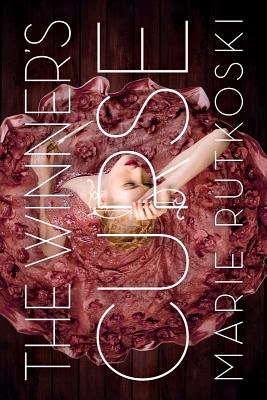
by Marie Rutkoski
First sentence: “She shouldn’t have been tempted.”
Support your local independent bookstore: buy it there!
Review copy pilfered from the ARC shelves at the bookstore.
Content: There is some violence, an attempted rape scene, some mild swearing, and a lot of politics. It’s in the YA section (grades 6-8th) of the bookstore.
Ever since I finished this book, I’ve been trying to think up a book talk about it. Some 30-second summary that I can give to entice people to want to read it. But I can’t. It’s partially because I’m enthralled with the book and once I start talking about it I just want to keep going and tell everyone ALL the good bits. And it’s partially because this one is REALLY hard to sum up.
I’m going to try, though.
It’s set in the fantasy world of Valoria, an empire of warriors loosely based on ancient Rome. Ten years ago they conquered Haran and enslaved all the people (they didn’t kill, of course). This is the world that Kestrel has grown up in. Her mother died when she was a young girl and her father — the general who led the invasion of Haran — has mostly raised her. He wants her to join the army — one of the two choices a Valorian girl has; it’s either that or get married — but Kestrel has resisted. Partially because she’s devoted to her music (taboo in Valorian society; music is for the slaves) and partially because she’s no good at it. What she is good at, however, is gambling.
I’m going to stop here and say that Kestrel is one of the more interesting characters I’ve read about, and one of the reasons I really liked this book. She wasn’t a “kick butt” heroine in the “traditional” fantasy sense of the word; she sucks at swordplay, is more interested in protecting her hands than learning how to slit a throat. But she is cunning. And observant. And willing to take risks and use what she knows (or deduces) to win a hand, whether that be in her game of choice, or in her life.
In fact, watching her strategize and manipulate the people around her was one of the most enjoyable aspects of this book. She’s not cruel — she’s actually sympathetic to the Haran rebellion that comes up — but she has her priorities, and she will do anything (anything!) to fill them. And even though it’s the first in a trilogy, this story line wraps up quite nicely.
The only weak leak is the Haran slave, Arin, that Kestrel falls in love with. He’s pretty much a one-dimensional character, and the love story felt, well, weak. Thankfully, there’s some nice twists near the end that fill it out much nicer. And maybe Arin will become more complex and fleshed out in later books.
Even with that minor quibble, I more than thoroughly enjoyed reading this one. I’m hooked.
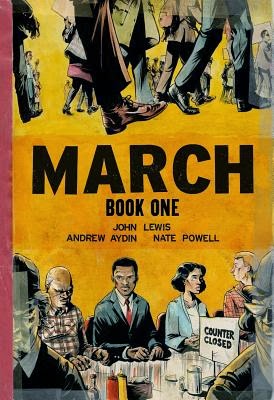
by John Lewis, Andrew Aydin, and Nate Powell
First sentence: “John, can you swim?”
Support your local independent bookstore: buy it there!
Content: The only objectionable thing in the book is the use of the “n” word (which doesn’t make the white Southerners look good at all). The library has it filed under adult graphic novels, but I think I’d put it with the teen ones. I’m sure even a curious 10- or 11-year-old would get something out of this one as well.
I picked this up because it made the SLJ’s Battle of the (Kids) Books contenders list and I like to (try to) read as many as I can before the competition starts. Like every year, I found a wonderful book I’d have never picked up otherwise.
This is a slim graphic memoir, telling the first part of Congressman John Lewis’s story. (For the record, Hubby knew who Lewis was; I did not.) This volume starts with his childhood in Alabama, and goes through the Nashville sit-ins that he participated in. My favorite thing about this memoir was the framing: It opens with Lewis waking up the morning of Obama’s first inauguration, and the story unfolds as Lewis is remembering his path to D.C. as he tells it to a couple of constituents who have stopped by his office.
It’s your pretty typical Civil Rights story: sharecropper parents save money for their own farm. After an exposure to a different way of doing things (he visited his uncle and aunt in New York City for a summer), child wants an education, rather than be stuck at home doing what his parents do. (I loved the bits about raising chickens, though.) He feels a call to be a preacher, and ends up at American Baptist Theological Seminary in Nashville. There is an interesting aside here: Lewis wanted to go to college in Alabama, closer to home, and actually met with Dr. Martin Luther King, Jr. and his lawyers to talk about segregating Troy State. In the end, though, Lewis’s family didn’t want to chance the backlash, so he stayed in Nashville.
He was very influenced by the school of non-violent protests, and he got involved with a group that organized the sit-ins in Nashville in 1959. I think this was the most moving part of the book; the abuse and hurt that Lewis and his friends endured just so they could have the same services as the white people in Nashville was pretty brutal. This volume ends just after the Nashville mayor decrees that all businesses should be integrated. I’m quite interested to see where Lewis’s story goes from here.
I loved the format as well: there aren’t enough non-fiction graphic novels (at least that I’ve read), and the art — done in stark black and white — adds to the intensity of the story. I’m glad I picked this one up.
It turned out to be an enormously busy month (which made it go by quickly), so the girls spent most of the month reading the same book, trying desperately to finish them. Well, maybe not desperately, but not a lot of free-time reading got done.
K did move on to this one with Hubby:
and has decided that her favorite characters are Gurgi and Eilonwy. She’s become so enamored with the books that she’s rereading The Book of Three on her own for a book report for her reading tier at school. She is a bit stressed about what project to do — it vacillates between drawing a scene or dressing up as Gurgi (as a mom, I’m praying for the former…) — but, for the most part, she’s enthralled with Prydain. The only one of our kids to become such, I might add.
Between her book report and our busy schedule, A pretty much spent the month trying to finish Fablehaven: Rise of the Evening Star.
 |
| A as Joan of Arc. |
That said, she finally finished on Friday, and was looking for something else to read while we waited for the third Fablehaven to come in at the library. She found this ARC of mine
and has been happily reading it. Her thoughts so far: “Mom, you HAVE to read this one.”
And C had an experience we don’t think she’s ever had before: she’s become so enthralled with a book that she eschewed TV and all other social interaction and read a book in a single day. That’s not unknown around here for the bookish people, but C — while she likes reading — has never really been “bookish”. She’s much more a social person. But the series that captured her imagination?

She says it’s kind of a dystopian feminist Bachelor, and she loved the characters and the world the author created. And she’s dying for the third one to come out. I think she found them through a flow chart she discovered on Tumblr. (I got them in at the store because of the pretty dresses on the cover and I think we’ve even sold a few.) I’m just glad she’s found a series to love with all her heart.
As for the book group: it was just A and me (hopefully I can work with our marketing manager to spread the word; I really don’t want my book group to die. We NEED things like this for kids) but we both really loved The Westing Game. (It’s because it’s a good book.) Our March book is

but A picked it up, read the first chapter, and declared it “boring”. And, after reading the first chapter, I kind of have to agree. We’ll see what happens. (If no one shows, it’s going to be a pretty lame discussion.)
Have your kids read any good books lately?
I think I figured out why I was in a reading slump. Look at my adult titles? So far, this year, I’ve read 9 of them. Which is a quarter of the total I read for the entire year last year. And the year’s not even a quarter done. And I’ve only read 12 middle grade and YA books COMBINED. Now I know: adult books make me grumpy. I’ve been reading MG and YA books for the past week and I’ve been SO much happier.
That said, my favorite last month was:
 |
| The Crane Wife |
I know it’s an adult book, but it’s Patrick Ness, and I forgive him for that. It really is a charming book.
As for the rest:
Middle Grade:
 |
| The Year of Billy Miller |
 |
| The Westing Game |
 |
| What the Heart Knows |
 |
| Jinx’s Magic |
Adult:
 |
| The Art Forger (audio book) |
 |
| Cloud Atlas (DNF) |
 |
| One More Thing (audio book) |
Non-fiction:
 |
| From Scratch |
YA:
 |
| Cress |
 |
| Grasshopper Jungle |
 |
| The Tyrant’s Daughter |
What did you enjoy reading this month?

by J. C. Carleson
First sentence: “My brother is the King of Nowhere.”
Support your local independent bookstore: buy it there!
Review copy downloaded from NetGalley
Content: Some mild language, and some indirect violence. It sits in the YA section (grades 6-8) of the bookstore. I don’t know if I’d give it to a 5th grader or not. I think it depends on how news-savvy the kid is.
Laila is the daughter of the ruler of an unnamed Middle Eastern country. She has a good life — trips to Paris with her mother, a private tutor, a resort by the sea. Then one day her world turns upside down when her father is assassinated right before her eyes.
Suddenly Laila, her mother, and her younger brother, Bastian (the “little king”) are exiled, taking refuge in the United States as Laila’s fundamentalist uncle takes over the country. Not only is Laila exiled from her country, she’s thrown into a world that — for all the riches and opulence she was used to — is vastly different from her own. And, on top of that, as she meets other refugees from her country, she discovers that her loving father was actually a brutal dictator.
I think the publishers are billing this as a thriller — J. C. Carleson is a former CIA operative, after all — but it’s not. It’s much more one girl’s story of awakening, and the harsh realities that brings, as well as of the plight of immigrants and how difficult it is to make a new home. Although she makes friends in her Washington D. C. school, Laila never quite belongs here, being uncomfortable with little things: from wearing short skirts to the dance to the seeming nonchalance that the students have to a bomb threat. Laila is constantly a fish out of water, and I think Carleson captures that perfectly.
There are some thriller-esque elements; Laila’s mom is a constant schemer, and there’s a CIA guy hanging around ominously. And I felt the ending was a bit too pat, not quite fitting in with the rest of Laila’s story. But, for the most part, it was a fascinating exploration of one girl’s attempt to come to terms with her family and the outside world.

by Kevin Henkes
First sentence: “It was the first day of second grade and Billy Miller was worried.”
Support your local independent bookstore: buy it there!
Content: None. It’s currently in the middle grade (grades 3-5) section of the bookstore, but after finishing it, I’m wondering if I should move it to the beginning chapter books section. Since Billy’s a second grader and the type is pretty large and the words pretty simple.
Billy Miller is in second grade. That’s a Big Deal. He’s never done that before. And he’s not sure he can. Especially since the first day of school — with his very kind, and probably unrealistically good teacher, Ms. Silver — gets off to a bad start.
But, as the book unfolds in a series of short vignettes, each focusing on a different member of Billy’s family and in a different season, we find that Billy has ways of dealing with each and every challenge that comes his way.
It’s a very sweet little book. Simplistic, sure — there’s a girl, Emma, in Billy’s class that isn’t very nice, but instead of dealing with (or expanding) the problem, Henkes just kind of glosses over it — and without much conflict. But that doesn’t stop it from being sweet and charming. But really, that’s all it is.
Which isn’t a bad thing.
 The Book Nut