The Bird and the Blade

by Megan Bannen
First sentence: “I arrived in Sarai on the fifteenth day of the seventh month — Ghost Day — but for the first time I dream of my brother, Weiji, is two months later, on the night I meet Khalaf.”
Support your local independent bookstore: buy it there!
Review copy provided by the publisher.
Content: There are several f-bombs (I think I didn’t count more than four) and other mild swearing. There is also frank talk about genitals. It’s in the Teen section (grades 9+) of the bookstore, but I think an interested 7th grader could handle it.

They say, “Don’t judge a book by a cover”, but we all do.  And my judgement for this one, when I first saw the cover was “okay, it’s going to be a light fantasy; I hope it’s good.” Well. It’s not a light fantasy (okay, so there’s a small ghost element at the end, but I’m not really counting that). Set in the late 13th century and  loosely based on the opera Turandot, it’s a sweeping story about a captured girl from the Song empire, Jinghua, the slave of the Kipchack Khanate. The il-khan, Timur, and his youngest son, Khalaf, are on the run after an invasion from a neighboring khanate, and through a twist of fate, Jinghua ends up with them as they travel across the Mongol empire. Once Khalaf finds out that the daughter of the Great Khan, Turandokht, is refusing to marry anyone unless they solve three riddles, Kahalf decides that that’s the only way to save his father and his kingdom, so they head there. Khalaf to solve the riddles, Jinghua to stop him.

It’s a difficult one to sum up, this book, because there is so much going on. It’s a forbidden romance — as Jinghua and Khalaf spend time together, they find they have  a mutual respect and admiration that develops into something more, but a son of an il-khan and a servant can never be together in any real way. It’s a road trip — as her characters travel, Bannen takes us through multiple parts of the Mongol Empire, showing just how vast and varied it was. And it’s a work of historical fiction, though it felt like it had a modern sensibility. Khalf stood up for Jinghua in ways that I’m not sure a 13th century man would, but I found I didn’t mind. It’s a unique book, set in a unique place, with some fantastic characters.

Definitely recommended.
Two (Older) Mysteries

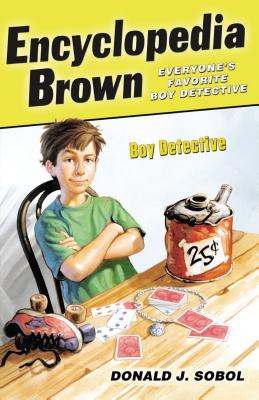
Encyclopedia Brown, Boy Detective
by Donald J. Sobol
First sentence: Mr. and Mrs. Brown had one child.”
Support your local independent bookstore: buy it there!
Content: It’s got short chapters, and simple text. It’s in the beginning chapter book section (grades 1-2) of the bookstore.

The girls reminded me, when I picked this one up, that on a vacation we listened to one of the later books in this series. They enjoyed it, or at least they have memories of enjoying it. I remember this, vaguely, but had never actually read these. There’s not much to them: Encyclopedia Brown is presented a mystery — everything from a tent that the resident bully claims is his to missing roller skates — and then the reader is encouraged to solve it. I’ll be honest: I didn’t get a single one. I came close a few times, but never actually guessed the right answer. I went back and looked, and the clues were there. I’m just not a careful enough reader to catch them. Even so, it was a fun little read.

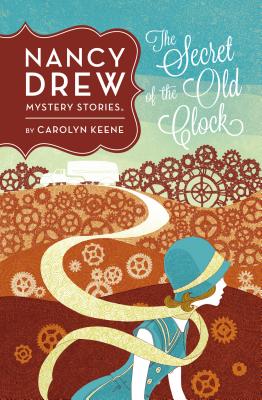
The Secret of the Old Clock
by Carolyn Keene
First sentence: “Nancy Drew, an attractive girl of eighteen, was driving home along a country road in her new, dark-blue convertible.”
Support your local independent bookstore: buy it there!
Content: There’s some scary moments, but nothing too intense. It’s in the Middle Grade Classics section of the bookstore.

I adored Nancy Drew when I was a kid. (Nancy Drew and Little House on the Prairie and Wrinkle in Time: those were the books I read and re-read.) I don’t know what it was about these books that drew me to them, whether it was Nancy as a character or just the mysteries and adventure I liked immersing myself in, but I have fond memories of reading these.

So I was a bit wary as I dipped back into the world of Nancy Drew as an adult (after nearly 40 years!). Would it hold up? Well… yes and no. The no is easier to handle: the writing is not only formulaic (which is to be expected, as it is written by committee, something I didn’t know as a kid) but also quite mundane. The thing that really stood out was how expressive Nancy’s eyes were: they sparkled and flashed and twinkled…. how many adjectives can they use to express her eyes and what purpose does it really serve? It wasn’t a mystery that a reader could get involved in; it wasn’t meant to be a puzzle that the reader could solve, but rather we were along for the ride, watching as Nancy got into scrapes and met people and was determined enough to find the solution. In this case, she accidentally stumbled upon a family dispute: Joseph Crowley died and was supposed to have left money to his relatives and friends, all of whom were less well off than he was, but it turned out that he left the money to this snobbish, well-off family in town instead. Everyone, Nancy found, was convinced that there was a newer will. But no one knew where it was.

The thing I did like about this was Nancy. Sure, she was a proper 1930s young lady: polite, kind to her elders, friendly and helpful. But, she was also smart, determined, and  unafraid to take chances. In this one, at least, she’s out there taking on bad guys and solving cases, and doing it by herself. (I know she picks up a boyfriend and a couple of friends later, but in this one, it’s just all Nancy.) Maybe that’s what I loved about these books as a kid: I wished I could be that determined and risk-taking, and I admired that about Nancy. I still do.

I don’t think I’ll revisit any of the others in the series, but I’m glad I reread this one.

Monthly Round-Up: June, 2018

I have no excuses for not putting this up yesterday; I went to work, I mowed the lawn, and then I spent the rest of the day finishing a book. I could have written a blog post, but… I didn’t. Whoops.

Here’s my favorite from last month:

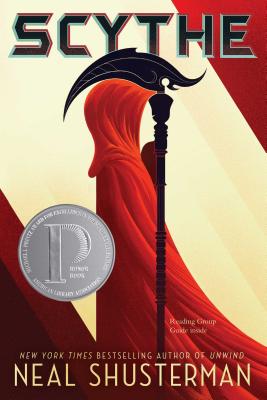
Sythe

They’d been telling me for a couple of years at work to read this, and I didn’t and I didn’t… and then I did, and yes, it is as good as everyone says it is.

And here’s the rest:

Middle Grade:

Lions & Liars

YA:

145th Street
From Twinkle, With Love
Tess of the Road
Strange Fascinations of Noah Hypnotik

Adult:

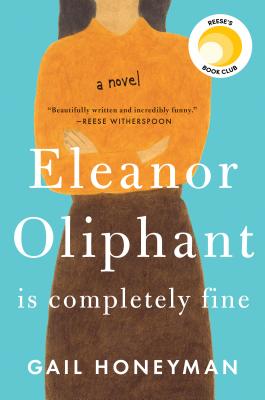
Eleanor Olipahant is Completely Fine (audio)
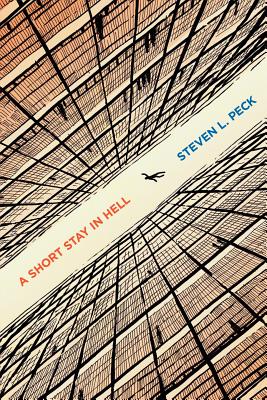
A Short Stay in Hell
My Name is Asher Lev
Still Life

Non-Fiction:

Tyrant (audio)

Graphic Novel:

Scarlett Hart, Monster Hunter

What was your favorite this month?

The Strange Fascinations of Noah Hypnotik

by David Arnold
First sentence: “I’ll hold my breath and tell you what I mean: I first discovered the Fading Girl two months and two days ago, soon after summer began dripping its smugly sunny smile all over the place.”
Support your local independent bookstore: buy it there!
Review copy provided by the publisher.
Content: There’s some teenage drinking, and lots of swearing, including f-bombs. It’s in the Teen section (grades 9+) of the bookstore.

The plot of this one is going to sound weird. And, to be fair, it’s not really the point of the book,  I think.

Noah Oakman is feeling a bit at sea heading into his senior year. He’s a great swimmer, but he doesn’t love it, and so he fakes a back injury to get out of spending his life in the pool. He’s thinking about college, sort of. Mostly he just wants to Think. And then, at a party he didn’t want to go to, he meets this kid Circuit, and heads to his house. It seems uneventful, but after that, everything’s slid sideways just a little bit. His best friend, Alan, used to be a huge DC fan, and now he’s a huge Marvel fan. His mother has a scar. Nothing life-shattering, but enough to throw Noah off. The only things that haven’t changed are his “strange fascinations” — little things, like the Fading Girl of the opening sentence, that have captured Noah’s interest. And perhaps by pursuing those and trying to make sense of them, he can make sense of his life.

I’m not going to give you much more than that, mostly because it’s the journey in this one that makes it such a good book. It’s populated with people that are fascinating and interesting and quirky and fun, and Noah’s journey is a strange and weird and wonderful one. I even thought that the ending explanation made sense, and made the book that much better.

I’ve liked Arnold’s books in the past, but I honestly think this is his best one so far.

Still Life

by Louise Penny
First sentence: “Miss Jane Neal met her maker in the early morning mist of Thanksgiving Sunday.”
Support your local independent bookstore: buy it there!
Content: There are a few f-bombs, and some other mild swearing as well as few instances of disturbing violence. It’s in the mystery section of the bookstore.

I’ve been meaning to read this one for a while, just to see what the fuss about the Inspector Gamache stories are (we have a ton of customers who just love this series). This is the first one, which takes place in a small village in Quebec, around Thanksgiving weekend (which, since it’s Canada, is in mid-October…). A local woman, Jane Neal, dies in a hunting “accident”, pierced through the heart with a hunting arrow. Gamache is called in from Montreal to solve this case. There are ups and downs, setbacks and advances, and a junior detective that I didn’t get why Gamache was so impatient with. It’s a pretty simple plot, and one in which I guessed the ending early on, but then second guessed myself, so I was pretty miffed when it turned out to be the person I guessed.

It was an interesting portrait of a small town, but I didn’t love Gamache enough to want to revisit this series again and again. Still, I’m not disappointed to have read it.

Audiobook: Tyrant

Shakespeare on Politics
by Stephen Grenblatt
Read by Edorado Ballerini
Support your local independent bookstore: buy it there!
Or listen on Libro.fm
Content:  There’s some in-depth Shakespeare analysis, which might make it uninteresting to some. It’s in the Shakespeare/Theater section of the bookstore, but it could go in Current Events/Politics as well.

The basic premise of this book is simple: Greenblatt, a noted Shakespearean scholar, takes a brief — by no means scholarly — look at some of the  tyrants in Shakespearean plays. He primarily looks at Richard III, Macbeth, Lear, and Coriolanus: dissecting their motives, their pasts, and their rise to tyrant-dom. It’s, on the surface, an interesting look at these four plays (there’s a bit about Julius Caesar, as well), a fascinating and well-written exploration of these characters.

But — and maybe this is my politics showing — there’s a lot of similarities between the current administration and the tyrants in these plays. It serves as a reminder that these things are never new: there have been tyrants and tyrannical behavior for a long time. And those who don’t know their history are bound to repeat it. In fact, I had to keep reminding myself that this was a work of Shakespearean analysis. Greenblatt never comes out and says “Trump is like this” but the undercurrent is there (if you choose to see it). It’s a smart analysis of the plays, and I learned a lot about them (I’ve never seen King Lear, and that is something I should fix; and I’d like to see the Richard III with Ian McKellen again), and the book is definitely worth it for that.

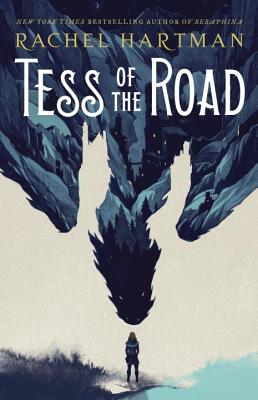
Tess of the Road

by Rachel Hartman
First sentence: “When Tessie Dombegh was six and still irrepressible, she married her twin sister, Jeanne, in the courtyard of their childhood home.”
Support your local independent bookstore: buy it there.
Others in the series: Seraphina, Shadow Scale
Content: There are many allusions to sex (including rape). It’s in the Teen section (grades 9+) of the bookstore.

As a head’s up, while this one references Seraphina and Shadow Scale, it’s a completely separate story, and you can probably get away without reading them if you’re not interested. (I didn’t re-read them, and so really didn’t remember much, and still enjoyed Tess.)

Let me say this at the start: I love Hartman’s writing. It’s not elegant like Laini Taylor or Maggie Stiefvater, but Hartman knows how to tell a story in such a way that you lose yourself in it. Tess is a human girl — Seraphina’s half sister — who just wants to be intellectually challenged. But raised in a strict household (they’re paying for Seraphina’s “sin” of being a dragon), what’s expected of her is to marry well. But Tess messes that up when she gets pregnant (at age 14!) and has a baby. And now, when she’s 17, faced with the prospect of raising her twin sisters children or going to a convent she does the unthinkable: she disguises herself as a boy and takes to walking the road, ostensibly to help her quigutl (a sub-species of dragon) friend find the World Serpent.

This is such a remarkable book: a heartfelt and emotional tale as Tess’s story unfolds through a series of flashbacks, but also an adventurous one, as we experience Tess and Pathka’s adventures on the road. It’s a deeply feminist book as well, as Hartman explores the consequences of not teaching your kids sex ed or discouraging girls from getting an education, if they want. It’s all about expressing anger and compassion and helping others out along they way and redemption and forgiveness.

And it’s left open-ended, so we may (or may not) get to join Tess for more adventures.

It’s wonderful.

My Name is Asher Lev

by Chaim Potok
First sentence: “My name is Asher Lev, the Asher Lev, about whom you have read in newspapers and magazines, about whom you talk so much at your dinner affairs and cocktail parties, the notorious and legendary Lev of the Brooklyn Crucifixion. ”
Support your local independent bookstore: buy it there!
Content: It’s long and often philosophical. It’s in the adult fiction section, but I think high schoolers who are interested in art should read this.

I’ve briefly talked about this book (in 2004 and in 2007), but I’ve not written a proper review. I probably haven’t picked up the story of Asher Lev in about 10 years, and doing the #ICTReads challenge gave me a chance to revisit this world of Brooklyn Hasidic Jews and the struggle between religion and art.

The basic story — if you haven’t heard — is that of  prodigy artist and orthodox Jew Asher Lev’s childhood and teenage years. His father was an ambassador for their sect leader, the Rebbe, and his mother ended up going to school to learn Russian to help with the work as well. They were both fully committed to their religion, to helping build up yeshivas (schools) around the world, and to helping Jews escape communist countries in the years after World War II. Asher’s passion, on the other hand, was to draw. He had a drive to do it, sometimes not even realizing that he was drawing. That’s not to say he wasn’t religious — he was. He went to school and to synagogue, he studied the Torah, he kept kosher. But, he wanted to create art. Which meant that his parents just didn’t understand him or his desires to do something so frivilous.

And it all comes to a head in his 20s, after he goes to Florence and Paris and has been abroad for many years. He comes back with paintings that use the form of the crucifixion —  he says in the book something along the lines of “what better way to depict anguish?” — and his parents, for whom Jesus is the symbol of suffering and hate, just cannot accept that.

It’s a very introspective book, musing about the meaning of art and the purpose of religion and whether there’s a place in religion for art that doesn’t conform to the rules of religion.  And while it’s often philosophical and sometimes has a tendency to be sluggish, I do think Potok does an excellent job walking the line between religion and art, and showing not only the conflict within Asher, but also between him and his parents (especially his father) and between his parents. And while I wish, now, that there were more female characters (there’s his mother, their housekeeper, and the art gallery director), it’s still an excellent book.


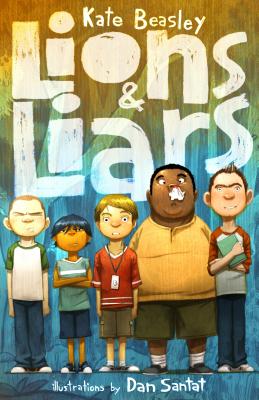
Lions & Liars

by Kate Beasley, illustrated by Dan Santat
First sentence: “Frederick Frederickson was thinking about strawberry daiquiris when the dodgeball slammed into his face.”
Support your local independent bookstore: buy it there!
Review copy provided by the publisher.
Content: There is some violence and some mis-adventures, and a few intense moments. It’s in the middle grade section (grades 3-5) of the bookstore.

Frederick Frederickson (whose mother wanted a name everyone would remember, bless her heart) is not high up on the totem pole of popularity. And this bothers him. Even though he has a couple of friends, he wants more: people who laugh at what he says (and not because they’re being mean), to be respected, to be Liked. To not be the bottom of the totem pole. So, when the one thing he looks forward to every year — a cruise with his family — is taken away (poor pity Frederick) he gets into a fight with his friends and ends up adrift on a river… and lands at a weekend camp to Reform boys.

Pausing here for a minute:  I’m sure his parents were frantic when he goes missing (though there’s hardly a word about that), and I know middle grade books can only happen with bad or absent parents, but the fact that Frederick so casually integrates himself into the camp and COMPLETELY FORGETS ABOUT HIS FAMILY kind of doesn’t make me like him. At all. In fact, I kind of just wanted to smack his spoiled, privileged face. (REALLY? You’re pitching a fit because your cruise got canceled because a HURRICANE is coming? I know you’re ten but give it up already.)

Frederick ends up impersonating a kid called Dash, and discovers that maybe the kids in cabin 13 — who go by Ant Bite, Nosebleed, Specs, and The Professor — aren’t so bad, after all.

I know this was supposed to be a heartwarming story about a kid who learns how to be a decent friend (because he’s pretty dang awful to his friends, and they’re pretty dang awful back) and I’m sure there are kids who will like this a lot (because who doesn’t want to run away from home and go to a weekend camp?) but this was just not for me.

From Twinkle, With Love

by Sandhya Menon
First sentence: “Hello, namaste, buenos dias, and bonjour, Mira Nair!
Support your local independent bookstore: buy it there!
Review copy provided by the publisher.
Content: There’s some mild swearing, and lots of kissing. It’s in the YA section (grades 6-8) of the bookstore.

Twinkle is a budding filmmaker. She loves looking at the world through the eye of her camera lens, and it’s what she wants to do with her life. She has a YouTube channel (though not many subscribers), and a dream. The rest of her life isn’t so hopeful: she’s not really high up on the popularity totem pole at her prep school, her best friend has begun to ditch her for other girls (who are higher up in popularity), and her parents are often gone. Thankfully, she has her grandmother and her crush on the most popular kid in school, Neil.

Then comes the Midsummer Festival. Popular guy’s twin brother, Sahil, talks Twinkle into making a film — they decide a gender-swapped Dracula — and that fact sets a whole lot in motion.

I wanted to like this. It’s got everything that should hit for me in a summer romance: a cute guy, some conflict, a lot of swoony situations… it feels like a Bollywood film with kissing. I should have loved it.

But, I didn’t. I was talking to a co-worker about it, and she said that Twinkle was annoying — and she was, being so obsessed with being popular and getting her friend “back” that she didn’t realize what was right in front of her — and because of that, she couldn’t get into the book. I think that’s a lot of it. Twinkle was very human, and very much a teenage girl, and I appreciated that. I thought the relationships, at least between the girls, were very realistic. Maybe what didn’t sit well with me was the juxtaposition between the friendship arc and the romance arc. The romance was all very “true love”-y; Sahil’s had a thing for Twinkle since they were 11 and he’s finally on it (that’s what came off as unrealistic to me!) and he’s all “you’re my One True Love”, and I think that’s (for a high school book) what didn’t work for me. I understood the friendships, and Twinkle’s desire not to have things change, but when you put that in the same book as a meet-cute, fluffy summer romance that you’r trying to make weightier with declarations of True Love. Maybe that’s also what didn’t quite sit well with me. If Menon had just kept it fluffy, Bollywood-like (with kissing!), then maybe I would have liked it better.