June 2014 Wrap Up

I really did mean to get this up this morning, but things just didn’t work out that way. Instead, I’m in a hotel in Billings, Montana (where the population of cows outweigh that of people), trying to get it up before bed. I reread a few this month and didn’t write reviews of a couple of them; I felt like I didn’t have anything new to say.

My favorite this month was, because it was just so much fun:

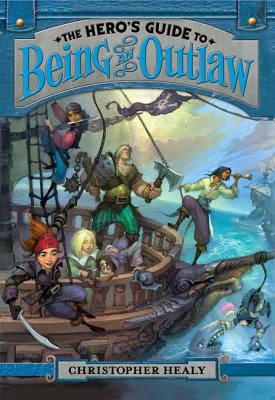
The Hero’s Guide to Being an Outlaw

As for the rest:

MG:

My Basmati Bat Mitzvah
The Screaming Staircase

YA:

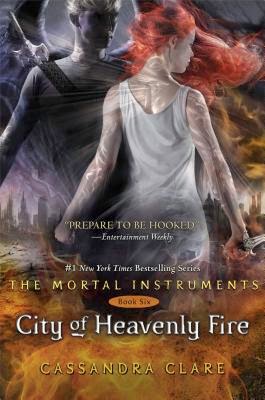
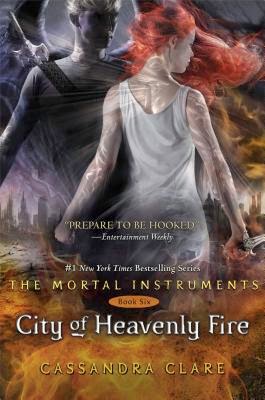
The City of Heavenly Fire
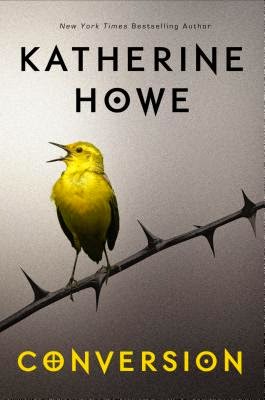
Conversion
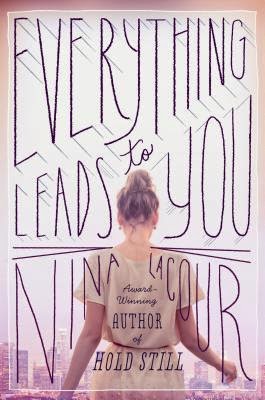
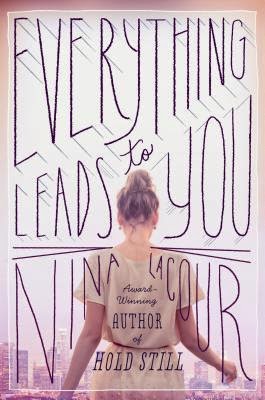
Everything Leads to You
Fat Boy vs. the Cheerleader
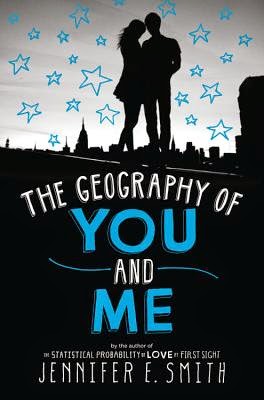
The Geography of You and Me
Girl in Reverse
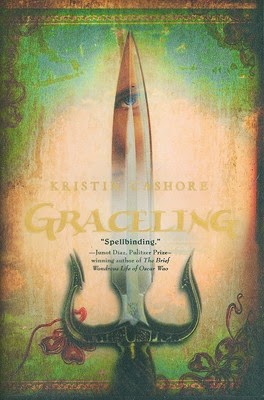
Graceling (reread)
I Love I Hate I Miss My Sister
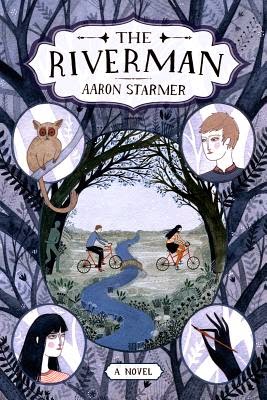
The Riverman
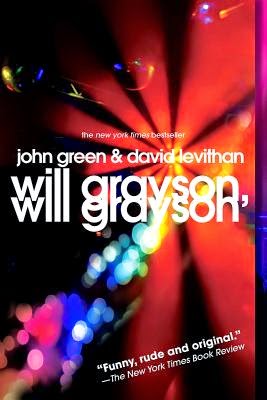
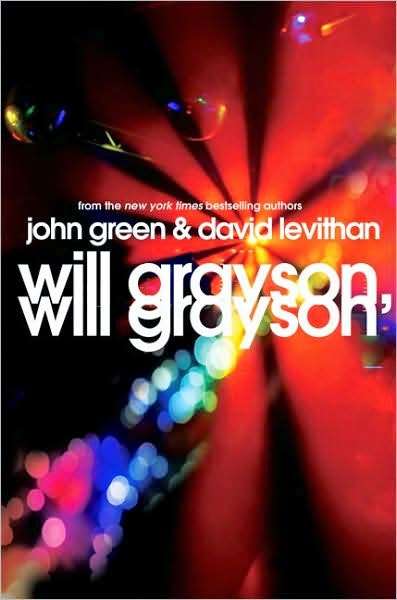
Will Grayson, Will Grayson (reread)
The Fault in Our Stars (reread)

Graphic Novels:

A Game for Swallows
Hereville: How Mirka Met a Meteorite
Wil &Whit

Adult:

The Chocolate Thief 
The Cuckoo’s Calling (audio)

What did you enjoy reading this month?

Graphic Novel Roundup, June 2014

I discovered that 1) I’m reading more graphic novels than usual right now. Perhaps because I’m picking up a bunch for K at the library due to summer reading. Her goal is to read 36 graphic novels by the end of July. She’s read 15 so far. And 2) I really like these graphic novel roundups. Here’s what I’ve been reading this month.

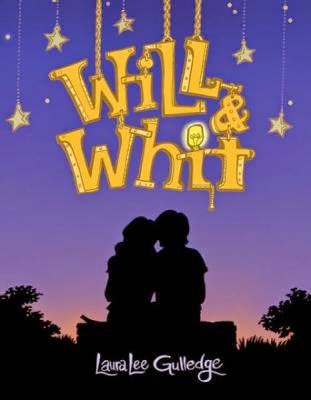
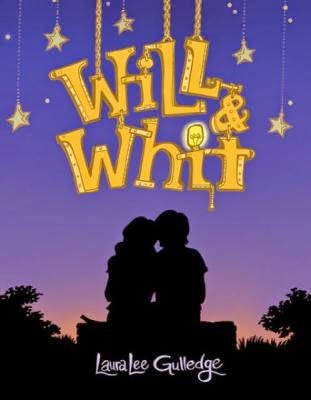
Will & Whit
by Laura Lee Gulledge
Support your local independent bookstore: buy it there!
Content: The cover is misleading; it’s not a romance. Not really. Thematically, it’s a little mature — it’s in the teen graphic novel section — but I’d give it to an interested 10- or 11-year-old.

The Will in the title is Wilhelmina Huckstep,  girl whose parents died in an accident recently, the summer before her senior year. She’s living with her aunt, who runs the family antiques store. The Whit in the story is Tropical Storm Whitney which causes the entire town to lose power, thereby creating a situation where everyone has to be unplugged from their technology and interact with each other. It’s delightfully drawn, and balances the dark — Will grieving for her parents and trying not to be a burden — and light — her wonderfully eclectic friends, and the Penny Farthing carnival they put on. There is some romance, with a couple of Will’s friends, but it was very sweet and not at all central to the plot. A delightful summer read.

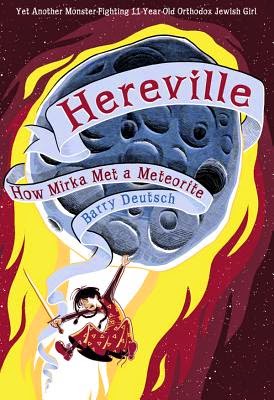
Hereville: How Mirka Met a Meteorite
by Barry Deutsch
Support your local independent bookstore: buy it there!
Others in the series: How Mirka Got her Sword
Content: There’s nothing. I’d let K read this, though she might be a bit confused with the Yiddish words. It’s in the middle reader graphic novel section.

Mirka has her sword, but she longs for more adventures. Instead, she’s stuck at home, knitting berets (its the only thing she can knit) because she’s grounded. Her stepmother, Fruma, just wants her to make reasonable choices. But Mirka is impulsive — something I love about her — and as soon as she could, she went back to the troll for her sword, craving something More. Then the troll sends a meteorite to earth, and the witch changes it into another Mirka. Suddenly, Mirka’s got someone she hast to share her life with. It’s complicated, and Mirka learns that adventures sometimes aren’t all they’re cracked up to be.

Like the first, this one is a delightful mix of Orthodox Judiasm and fantasy. And it works wonderfully. I adore Mirka, I love learning about her life, and I love the adventures Deutsch gives her. Fantastic.

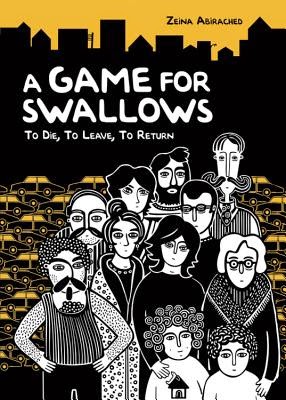
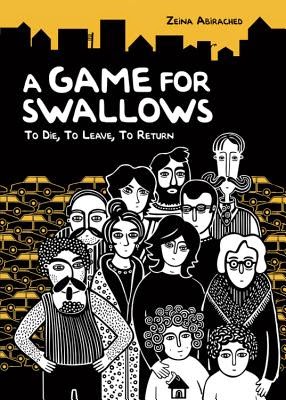
A Game for Swallows
by Zeina Abirached
Support your local independent bookstore: buy it there!
Content: There’s some talk of war and killing, so thematically it’s pretty intense. But, I wouldn’t object to giving it to a 10- or 11-year-old, if they expressed interest. It would been in the teen graphic novel section.

I know absolutely nothing of the Lebanese civil war that happened in from 1975 to 1990. I was a teenager in a small town in America, and it just wasn’t on my radar. But, thanks to Abirached, I have gotten a glimpse into what life was like for those going through it. The book takes place entirely in one night in the foyer of the apartment of two children as they wait for their parents to come back from their grandparents’ house. It shouldn’t be that big of a deal, but in East Beirut, full of shelling and snipers, it is. The foyer is the only safe place in the apartment, and their neighbors — from the young(ish) handyman to the older couple to the former French teacher to the older woman who has been a nanny for a family for 65 years — congregate there in the evenings. The mood ranges from celebratory — they make a cake and enjoy a game of Scrabble — to tense — when they find out that the children’s parents had left an hour earlier and had still not arrived. It’s a picture to how life goes on in the face of war, in the face of uncertainty and in the face of death. Done in very stark black-and-white drawings, it’s a very simple and powerful tale of human resilience.

Will Grayson, Will Grayson

by John Green and David Levithan
First sentence: “When I was little, my dad used to tell me, ‘Will, you can pick your friends, and you can pick your nose, but you can’t pick your friend’s nose.'”
Support your local independent bookstore: buy it there!
Content: There’s a lot of swearing in this one. A. Lot. So, it’s in the Teen section (grades 9+) of the bookstore.

I think the last time I read this, four years ago, I cheated on the review. It’s like I had nothing original to say. And perhaps, because I read it when everyone else was reading it, I didn’t.

So, I decided it deserves a proper review.

Will Grayson (1) is one of those people who just kind of goes with the flow. His best friend, for better or worse, is Tiny Cooper — who is anything but tiny — and he is the sort of person who creates drama. In fact, he’s written a musical, aptly title Tiny Dancer, about his life and is staging  it.

Will Grayson (2) is on medication for clinical depression, and by any account is less than enjoyable to be with. He has exactly three friends (sort of) but is harboring a crush on his on-line friend, Isaac. So when Isaac suggests that they meet up in Chicago, WG2 jumps at the chance

Except, Isaac isn’t real. And, WG2 meets WG1 (and Tiny) instead. And, lives were changed. Mostly for the better.

A lot of what there is to be said about this book is about the format. Green wrote WG1 and Levithan wrote WG2, and at the beginning, you can tell. It’s jarring traveling back and forth between the Will Graysons, but after they meet things become easier. And more fluid. I love how Tiny goes back and forth between the Wills but still ends up being Tiny. I also love the inclusiveness of this novel. That being gay is not an Event. It’s more who you are. And that’s okay. I also love that there’s a terrific example of non-romantic love. (Watch this video for what I mean.) While it’s not my favorite John Green book, I found myself touched by the end, by Tiny’s inclusiveness, and by his friends’ ultimate desire to help him realize that he matters. And by extension, that we all matter.

I’m glad I had an opportunity to reread it.

Conversion

by Katherine Howe
First sentence: “How long must I wait?”
Support your local independent bookstore: buy it there!
Review copy downloaded from Edelweiss
Content: There is some mild swearing, and talk of sex, but nothing actual. It’d be happy in the YA section (grades 6-8) of the bookstore, but I might put it in Teen (grades 9+) so I can get the adult crossover.

Colleen Rowley is a senior at St. Joan’s Academy, a high-profile, all-girls school in Danvers, Massachusetts. Everything is going great… mostly. Colleen is a tenth out of valedictorian position, something which stresses her out because her college acceptance to Harvard (only one of many Ivy League schools that have wait-listed her) is hinging on her senior year academic performance. She’s not the only one under pressure; all of her friends and many of her classmates are as well.

And then something strange happens: Colleen’s classmates, one by one, succumb to a mysterious illness that pulls them out of school. Some develop Turette’s Sydrome-like tics, others loose the use of their legs; still others’ hair is falling out. It’s an epidemic. Except Colleen, spurred on by some anonymous texts, is suspicious. And when she starts looking into the real events behind The Crucible, which they’re studying, especially Ann Putnam’s story, she finds that there is possibly a connection to what’s happening in Danvers now, and what happened in Salem back then.

Told in alternating storylines, Howe gives us both the story of the girls of St. Joan’s and Ann Putnam’s confession about the incident that began what came to be called the Salem Witch trials. She doesn’t spell things out for the reader; instead, she trusts our intelligence and in our ability to draw parallels between the two stories. And although the characters — especially Colleen and her friends — are quite sympathetic, it’s finding the parallels and solving the mystery that fascinated me most about this book.

Unfortunately, the ending didn’t hold up to the rest of the book. Howe kind of goes off into muddle-land, and doesn’t hold up to the suspense that the book built. Even so, it wasn’t enough to completely kill the book for me (it was more of a “HUH?” moment). And it’s made me curious about Howe’s adult books, which is a good thing.

13 Books with LGBTQ Characters

I was fishing around for ideas for a book list this month, and C pointed out that Obama had proclaimed June LGBTQ Pride Month. She suggested I should do a list of books with good LGBTQ characters. I don’t read them often, but I thought that was a great idea.

Everything Leads to You, by Nina LaCour: The story of a Southern California girl who has recently graduated and is trying to figure out what to do next. She just happens to like girls. “I loved this book. Wholeheartedly and unabashedly. I loved the peek into the way movies work, the facts behind the fantasy. I loved the way Emi thought about characters and set design. And I loved how sometimes she let fantasy overtake her reality. The characters were so real, so deep, so complex, that I couldn’t help but be drawn into their lives.”

Will Grayson, Will Grayson, by John Green and David Levithan: The story of two boys with the same name, one who is gay, and one who isn’t (but whose best friend, Tiny, is gay). I’m rereading this one for my John Green book group, and thoroughly enjoying it. I think it’s not just that Tiny Cooper is a wonderful contradiction, he’s a person who has thoroughly accepted himself for who he is. And that’s so refreshing.

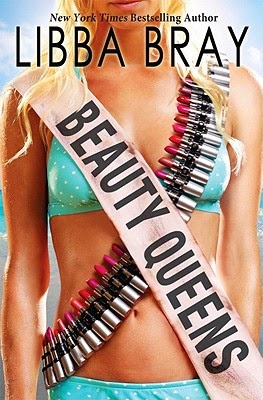
Beauty Queens, by Libba Bray: “On the surface, the book is terribly shallow and stereotypical. Bray has lumped every single cultural reference and stereotype she could think of in this book: there is a lesbian, transgender, bisexual, stupid Southerner, aggressive Texan, Indian-American, black contestant. Honestly: none of the characters are likable, and the plot was fairly simplistic, which almost made it hard to get through.But, when you read it as a satire, the book works brilliantly.”

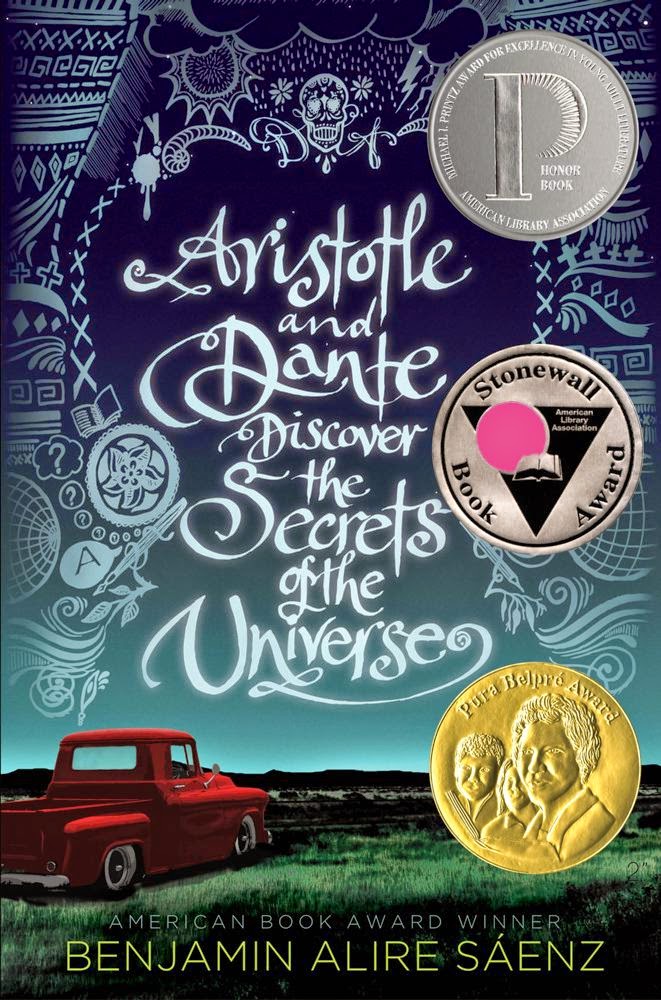
Aristotle and Dante Discover the Secrets of the Universe, by Benjamin Alire Saenz: A story of two boys in south Texas who realizes that their friendship is something more. I didn’t have a very good first reaction to this one, partially because it was so very guy, I think. I did like, however, the acceptance of Dante’s parents to his coming out. And the juxtaposition of that with the violence done to Dante by others in his down. I’m still not sure it needed to be an 80s book, though.
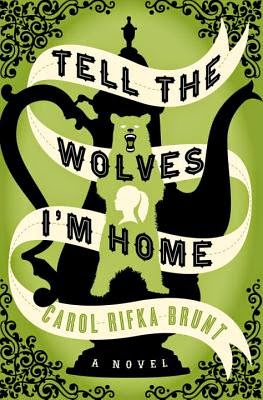
Tell the Wolves I’m Home, by Carol Rifka Brun: The one adult book on this  doesn’t have a gay main character, but a beloved rather a beloved uncle who died of AIDS and the way that effects the family. “What I did like, however, was the exploration of June’s relationships. Not only with her uncle and his boyfriend, but also with her mother and sister as well. June’s perceptions of all those relationships were — partially because she’s 14 — off, sometimes drastically. And it’s a growing process for her to realize that everything isn’t quite how she perceives, that the truth of everything is multilayered and complex.”
On the Count of Three (aka The Bermudez Triangle), by Maureen Johnson: I’ve been trying to get people to read this one for a while now, because I remember it being a good book about friendship. There are three friends, one of whom is gay and is dating one of the other friends, and keeping it secret from the third. “It’s a good book; not my favorite of Johnson’s but a good, solid story, one where friends stick it out through thick and thin, and realize that sometimes being friends — just being friends — and having friends is the most important thing.”
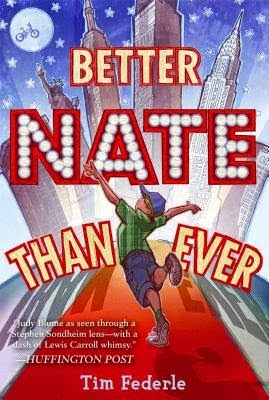
Better Nate than Ever, by Tim Federle: Okay, so Nate isn’t openly gay; he’s just interested in musicals. And that’s a stereotype that drives me nuts; you can be straight and like musicals just like you can be gay and hate them. But I’m throwing it in, anyway. “Even with all the cliches and stereotypes, this wasn’t a terrible book. I think what saved it, for me at least, was Nate himself. Federle caught the voice of an awkward, insecure, hopeful kid someone who has been beaten down his whole life, and yet still remains optimistic about everything. He’s adorable, and heart-warming, and just plain fun. It was this that kept me reading, and when I finished, it was this that made the book a good one for me.”
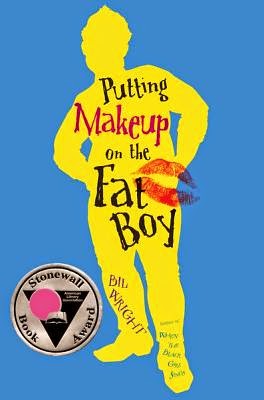
Putting Makeup on the Fat Boy, by Bill Wright: A gay teen with a troubled life makes good. Sounds cheezy, but “even though this boy faces more challenges than you can shake a stick at (being a gay teenin NYC isn’t the cakewalk that you would suppose it is…), he is hopeful and optimistic and confident that he can do what it takes to be successful. It was ….well…. if not inspiring, then at least affirming.”

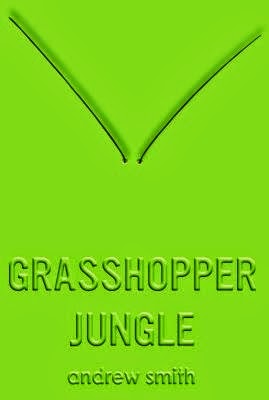
Grasshopper Jungle, by Andrew Smith: I’ll be up front here: this book is not for everyone. I didn’t particularly like it. BUT there are some positives: “That said, there were things to admire: actual sentences that made me laugh aloud. Or the fact that Austin’s (and Robby’s for that matter) sexuality was just a thing, and not an “issue”. Or six-foot-tall unstoppable praying mantises.”

Ash, by Malinda Lo: A retelling of Cinderella, where Cinderella doesn’t fall in love with the prince. “It’s similar enough to the fairy tale that you can recognize it for what it is. But Lo has created a world that is unique on it’s own, from the weaving in of original fairy tales and folk wisdom, to the twists on the love story.”

And as a bonus, some books with LGBTQ Parents:

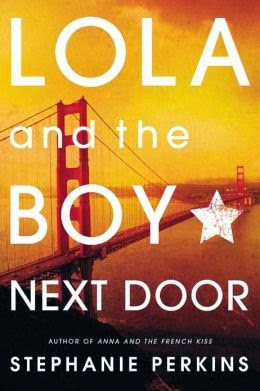
Lola and the Boy Next Door, by Stephanie Perkins. “Lola’s two dads are also a delight: it’s nice to have a gay couple shown as stable and loving without making a big deal about it. (Additionally: they’re great characters in their own right.) “

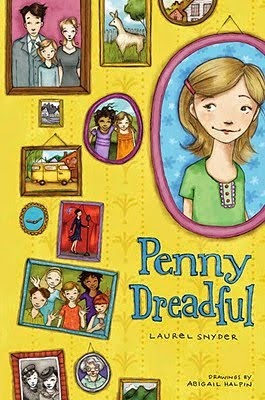
Penny Dreadful, by Laurel Snyder. It’s a smallish part, but one of Penny’s friends, Twent, has two moms. Again, it’s just presented as a way to live life, and even though it’s small, it’s meaningful in that it’s just a fact of life.

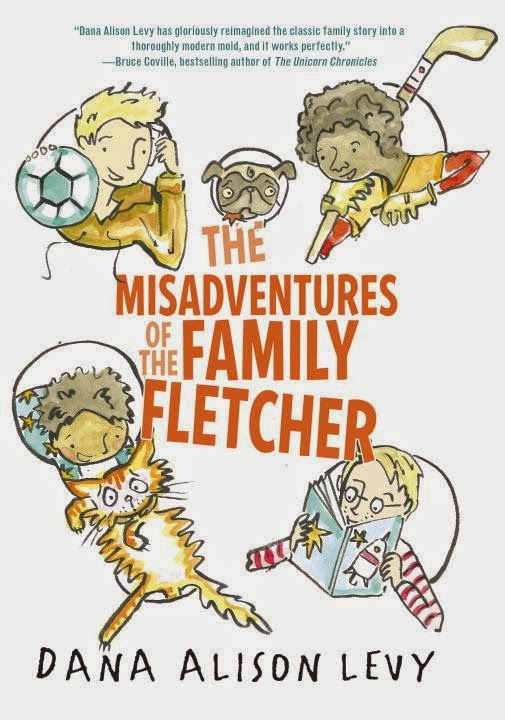
The Misadventures of the Family Fletcher, by Dana Alison Levy: I haven’t read this one (yet). But from what I’ve heard about it  — it made this summer’s Indie Next list — it sounds delightful. And they just happen to have two dads. “Peppered with life lessons about learning to admit you were wrong, trying something new, and standing up for your family, this book will make you feel like you are inside a group hug.” —Sara Hines, Eight Cousins, Falmouth, MA”

What did I miss?

The Chocolate Thief

by Laura Florand
First line: “Sylvain Marquis knew what women desired: chocolate.”
Support your local independent bookstore: buy it there!
Review copy snagged from the ARC shelves at my place of employment.
Content: Very little swearing (in English; perhaps if I knew French, this would be higher), but it’s most definitely a Blush Book. I may never think about climbing stairs the same. It would be in the adult fiction section of the bookstore, if we carried it.

I was pursuing my TBR shelf, looking for something light to read, when my eye caught this. I remember a bunch of YAckers loving it (and plus: CHOCOLATE and PARIS), so I picked it up. It is most definitely light and fluffy. And sexy. And not much else.

Cade Corey is the daughter of a Hershey’s-like family. They’re in the basic chocolate bar business, and own a huge percentage of the market. While she’s not the CEO, she’s being groomed to take over the company. But what she really wants is Parisian chocolates. Artisan chocolates. Sylvain Marquis’s chocolates, since they’re the best. But she quickly discovers that while money can buy a whole lot it can’t buy her Sylvain. He’s much, much too proud of his French chocolates and much much too disdainful of her American crap. So, she does the only logical thing (right.): breaks into his store, and pilfers through his chocolates, tasting, eating, leaving hints of herself behind.

Which totally turns him on.

From there, the plot is immaterial. It’s all sex. sex. sex. and then more sex. Mostly tastefully written (but not-off screen) sex. And there’s chocolate. Descriptions of luscious, rich, delicate, expensive chocolate. I found myself craving chocolate while I read, so I think Florand did her job. I did have issues with the way that Cad wanted Sylvain to control her… part of me rebelled at the idea of a man being SO in charge of sex, of wanting to master a woman, but to each their own. It did what I wanted to do: transport me to Paris (not enough of that, though), indulge me in chocolate, and be eye candy.

I have no interest in reading the others, though. And I may need some non-fiction to follow up on all that candy. But it was enjoyable while it lasted.

The Hero’s Guide to Being an Outlaw

by Christopher Healy
First sentence: “Outlaws have too many feathers in their hats.”
Support your local independent bookstore: buy it there!
Others in the series: The Hero’s Guide to Saving Your KingdomThe Hero’s Guide to Storming the Castle
Content: There’s some kissing, a bit of violence (and almost violence), and it’s long for a middle-grade novel. It’d be in the middle grade section (grades 3-5) of the bookstore; don’t let the length fool you; it goes fast.

I don’t even remember what our Fair Heroes were doing at the end of the second book. But, honestly: it doesn’t matter. I fell right back into the silly stupidity (and I say that with all loving kindness in my heart) of this book, snorting and giggling as The League of Princes (and the Ferocious Female Freedom Fighters — or FFFF) try to save the Thirteen Kingdoms from Lord Rauber’s (who they thought they killed in the last book) evil plan to take over the world.

The point to the book, I think, is not the plot. Sure, there is a plot: The whole gang is branded as outlaws because they were supposed to have murdered Briar Rose (sure, she’s annoying, but they wouldn’t literally kill her. Only figuratively) so everyone’s on the run and trying to prove their innocence. But the point is for the guys to be dorky (ah, Duncan), the girls to be awesome (bonus: pirate captain Jerica! Double bonus: Gustav trying to flirt), and for super-silly jokes and asides (like the prisoner Val Jeanval. Get it??). Yes, it was stupid. But, I love it.

Full of action (and stupid jokes), and perfect for just about anyone who doesn’t mind a bit of fairy tale adventure.

Fat Boy vs. The Cheerleaders

by Geoff Herbach
First sentence: “Shortly before midnight on June 15, Gabriel Johnson, a sixteen-year-old from Minnekota, MN, was apprehended outside Cub Foods by Officer Rex McCoy.”
Support your local independent bookstore: buy it there!
Review copy pilfered from the ARC shelves at my place of employment.
Content: There’s a lot of swearing, none of it strong. I put it in the Teen (grades 9+) section of the bookstore primarily because I like to keep the YA section toned down. Also, because that’s where all of Herbach’s other books are. I’d say, depending on your kid, it’s good for as young as 7th graders.

In high school, there are two types of people: the jocks and everyone else. Gabe is everyone else.  Actually, Gabe is a band geek, and a mostly friend-less loser. He’s been going downhill since his mom ran off with a Japanese guy a few years back, and his grandpa moved in. It’s not just that he has only two friends, it’s that he’s overweight. Massively so. In fact, everyone (including his friends) call him Chunk. And he’s okay with that.

Gabe spends his days chugging Code Red, primarily because the money in the school’s soda vending machine goes to support the band that is Gabe’s lifeline. He figures he can chug 5 bottles of the stuff, if the money goes to fund his program. Then he finds out that a Super Sekrit school board meeting took away the vending machine money from the band and gave it to the Brand Spanking New dance team. Which makes Gabe mad. Eventually.

There’s more to the plot, of course, but it’s more about Gabe gaining self-respect than any eventual result. You know from the start — the whole book is his confession; a one-sided conversation with a Mr. Rodriguez — that he’s gotten arrested for doing something. You assume it’s for stealing money out of the vending machine. But, things are more complex than that.

Part of the charm of this book is the format; I was entertained by hearing only one side of the conversation, and imagining what Mr. Rodriguez’s side was. But, it was also Gabe. He was such a loser to start with, and it’s empowering to see how he regains control over his life, in spite of the people — from his friends to his father — who are trying to hold him back. Everyone needs a summer in which they find their best selves, and this story of Gabe’s was a truly fun one.

City of Heavenly Fire

by Cassandra Clare
First sentence: “On the day Emma Carstairs’s parents were killed, the weather was perfect.”
Support your local independent bookstore: buy it there!
Others in the series: City of Bones, City of Ashes, City of Glass, City of Fallen Angels, City of Lost Souls
Also helpful to read before picking up this one: Clockwork Angel, Clockwork Prince, Clockwork Princess
Content: There’s violence, some mild swearing, and some sexytimes. The sex is tasteful and protected (yay!), but it is depicted, to an extent. This entire series is in the Teen section (grades 9+).

I’m not even going to try and sum up what has happened up to this point, or even what happens in this book. Coming in at over 700 pages, to say a lot of stuff happens is a major understatement. But, everyone is here: Jace and Clary, Simon and Isabelle, Alec and Magnus, Jocelyn and Luke, as well as hangers on: Brother Zachariah (yay!) and Tessa each play a role, as do Maya and Raphael. And, of course, the big baddie, Sebastian.

It also introduces new characters in 12-year- old Emma Carstairs and her best friend Julian Blackthorn. They don’t really play a huge role in the story; mostly they just play small roles. But they — and their family — are involved enough that we get to know them. And — and this is a complaint I have — they serve as a linchpin for a start of a new series. At some point, one does have to wonder, I think, if Clare can write any stories in a different world. But then, why should she, when this one is so rich?
It was nice to hang out with Clary and crew again, to see how relationships have developed, and follow them as they try to thwart Sebastian’s evil plan. Like always, Magnus was the most interesting character, and I was thrilled to see the way he and Alec’s relationship went. There’s some heartbreaking moments, and Simon even gets to shine with his Dungeons & Dragons references.

It’s a good conclusion (of sorts) and a fun story, even for all its length.

Audiobook: The Cuckoo’s Calling

by Robert Galbraith
read by Robert Glenister
Support your local independent bookstore: buy it there!
Content: None of the murders are grisly — they’re all alluded to — and there’s some talk of sex, but none actual on screen. However, the language is very adult (including many, many f-bombs), and for that reason, it’s in the mystery section (well, also because it’s a mystery) of the bookstore.

Cormoran Strike is hard up on his luck. Retired from the military due to an accident in which he lost part of his leg, and recently broken up with his posh, upper class girlfriend, the only thing Strike has is his private detective practice. And even that’s not doing terribly well. He can’t afford the temporary secretary that’s shown up, and he’s pretty sure he’s going to default on the loan his estranged (but famous) father gave him.

Things are looking pretty down when John Bristow, adopted brother of supermodel Lula Landry walks in Strike’s office with an incredible story. Bristow claims that the police have it wrong: that Landry’s death was not a suicide as originally thought, but rather murder. Someone pushed her off her third floor balcony to her death. The question is: who?

I really didn’t have expectations going into this one. I knew it was J. K. Rowling but I don’t really read many mysteries, so I wasn’t dying to get to this one. But, when I saw the audio book, I figured it was worth a try. I didn’t love it, but I was intrigued by it.

Perhaps it was because I knew it was Rowling before I went in, but I could tell that it was Rowling’s work. The way she described things (and because it’s audio, I don’t have a handy example) felt similar to the Harry Potter books. That, and she really does have a gift for names. The plotting was good as well; she kept up a good pace, and even though there were some bits that weren’t vitally necessary, it wasn’t under-edited. And the twist at the end didn’t come out of nowhere; something which was incredibly important to me.

I did feel like she under-utilized the administrative assistant, Robin. She gave us background on her, and made her a sympathetic character, but really didn’t have her do much of anything. I kept waiting for a grand Robin Moment that never quite came. The narration was excellent; I was impressed with the range of accents and voices that Glenister could do; perhaps one of the reasons I stayed interested in the book was because his narration was so compelling.

That said, it was a good, solid mystery. Nothing too spectacular, but nothing mundane or pedantic. Which means it’s just about right.