June 2012 Wrap-Up

Summer is in full swing here, and my reading is reflecting it. Not only more (though much of that is due to Mother Reader‘s 48 Hour Book Challenge), but fluffier. Ah, gotta love the brain drain that the heat brings on.

It’s fitting that in a month where I mostly read Middle Grade books, that my favorite read was this:

Three Times Lucky

I loved it, but I have yet to convince my girls to read it, which makes me sad.

As for the rest:

Adult fiction

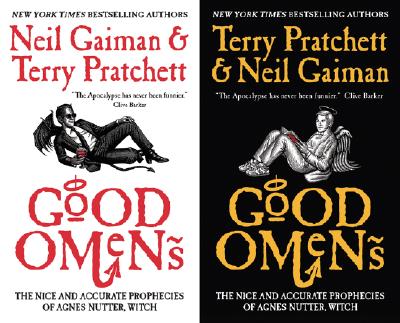
Good Omens
Ilium
Lady Cyclist’s Guide to Kashgar

Non-Fiction:

My Life as an Experiment
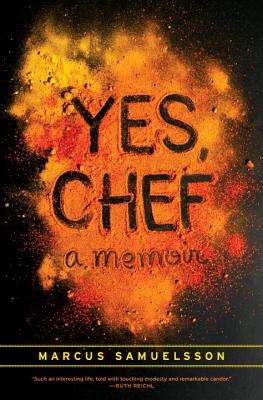
Yes, Chef

YA:

Crossed
The Lost Code
Matched
The Statistical Probability of  Love at First Sight
Seraphina
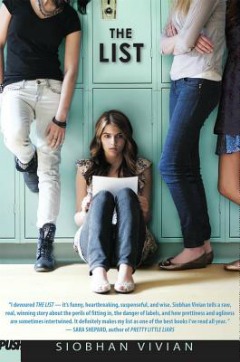
The List
At Yellow Lake

Middle Grade:

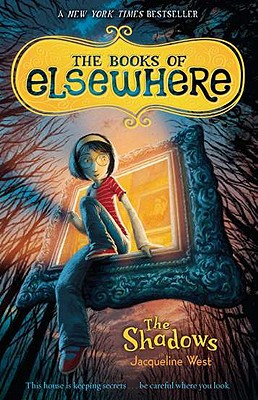
The Books of Elsewhere: The Shadows 
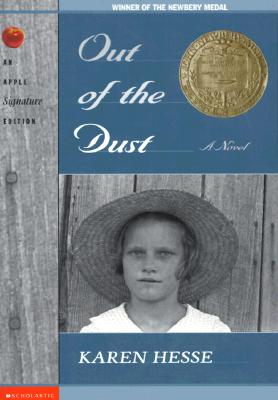
Out of the Dust (reread)
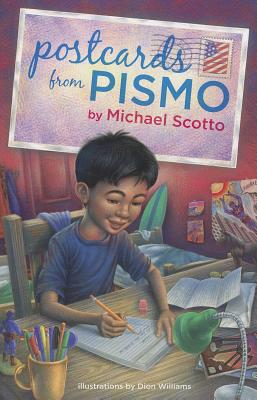
Postcards from Pismo
The Serpent’s Shadow
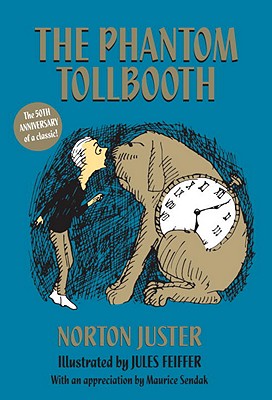
The Phantom Tollbooth
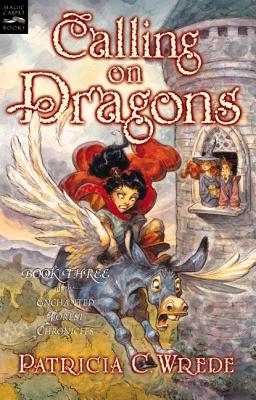
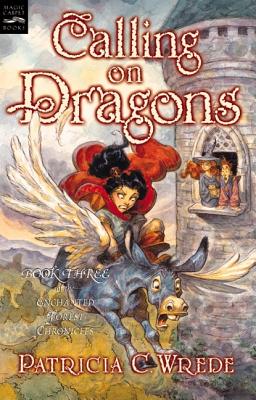
Calling on Dragons
Spy School
Jeremy Fink and the Meaning of Life

Graphic Novels

Batman
Stickman Odyssey: The Wrath of Zozimos

Only one audio book this month; I’ve been on a listening hiatus since school got out:

Cinder

What have your favorite reads been this month?

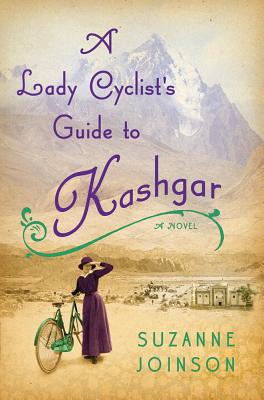
A Lady Cyclist’s Guide to Kashgar

by Suzanne Joinson
ages: adult
First sentence: “I unhappily report that even Bicycling for Ladies WITH HINTS TO THE ART OF WHEELING – ADVICE TO BEGINNERS – DRESS – CARE OF THE BICYCLE – MECHANICS – TRAINING – EXERCISES, ETC. ETC. cannot assist me in this current predicament: we find ourselves in a situation.”
Support your local independent bookstore: buy it there!

Two things drew me to this book. First, the cover: I love it. I don’t know why (it’s not a young girl in a pretty dress, after all), but something about it just calls to me. And second, that first sentence. It’s wonderful, full of promise, of something … exciting.

And the premise sounded interesting as well: it’s 1923, and Evangeline English and her sister, Lizzie, have thrown their lot in with a evangelical missionary and are traveling to the wilds of Eastern Turkestan/Upper China. Lizzie and the missionary, Millicent, are there to convert people; Evangeline is there to write a book about cycling in this wild, unknown (at least to the English) place. It doesn’t go well, to say the least. They try to help a girl give birth, but the mother ends up dying, and they are placed under house arrest and given charge of the baby. From there, things only go down hill. There’s a lot of resistance to their missionary message, and Millicent is overbearing; she and Evangeline don’t get along.

However, that’s not the only story: it’s modern day London, and Frieda, the daughter of hippy parents and world traveler — is in a dead-end relationship with a married man. She’s back in town after a trip to Cairo, when two unusual things happen: one, she gets a letter telling her that she is the next-of-kin for an Irene Guy, whom she’s never even heard of; and a Yemeni man, Tayeb, parks himself outside of her door. Both of these things will change her life.

I spent a good portion of the book trying to figure out how these two stories were connected. I should have realized how much sooner than I did; if you’re paying attention, it’s pretty obvious. Even so, each of the stories might have made a decent book on their own; together it kind of seems forced. I wanted more from each of the stories, more than I got anyway, and I feel like in combing them Joinson somehow cheated me of the full story. That, and I think the most interesting character was the elusive Ilene Guy; her story seemed like the most intriguing.

That said, it wasn’t a bad book. There’s enough in it to keep my attention throughout it all, and while I didn’t love it in the end, at least I wasn’t bored by it. And that’s something.

Right?

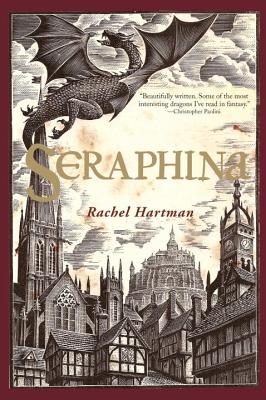
Seraphina

by Rachel Hartman
ages: 13+
First sentence: “I remember being born.”
Support your local independent bookstore: buy it there!
Release date: July 10, 2012
Review copy provided by my place of employment.

I should get the gushing out of the way first: I have read books about dragons, some of which were really clever, but I have never seen dragons like this.

And that blew. me. away.

I have struggled with how to sum this novel up, but am completely at a loss. There is so much going on, much of which is best left to be discovered as you go, that a summary is almost impossible. This is what I can tell you: the main character is Seraphina, a sixteen-year-old assistant chief musician in the castle. Except she has a secret, one that will cost her her life if revealed. The country is Goredd, which has been at peace with the dragons for forty years. It’s a tentative peace, one which is hanging by the slimmest of threads. There is prejudice against the dragons rampant in the populace of Goredd, a fire that is barely constrained. And so when Prince Rufus is found beheaded, it’s everyone’s — from the military down to the common people — assumption that the dragons did it, and there are people calling for blood.

And then there are the dragons. They walk among the humans, as humans: learning, teaching, advising, observing. Granted, they stand out to the humans; dragons are more rational, less emotional, mathematically minded, and not at all spontaneous. But, even though they are differences, it’s their ability to mimic humans that is the root of all the prejudice and terror in Goredd.

Really, that’s all you need to know to start. Know this as well: this is an excellent first novel. It’s a rich, rich world that Hartman has created, full of religion, politics, romance, music, and action. And while it works as the start of a trilogy, it also stands on it’s own, bringing the story arc to a satisfying conclusion, while leaving threads open to pursue in later books.

But really, read this one for the dragons. You’ll never see them like this again.

The Books of Elsewhere: The Shadows

by Jacqueline West
ages: 9+
First sentence: “Ms. McMartin was definitely dead.”
Support your local independent bookstore: buy it there!

Eleven-year-old Olivia, the daughter of two absent-minded mathematicians, has lived her whole life in boring apartments. That is, until her parents by a creepy, old, drafty, mysterious stone house on Linden Street. It’s not only got character, it’s got paintings that Olivia swears are moving.

Not to mention the talking cat.

Soon, Olivia discovers a pair of old spectacles (great word, that), and finds that she can climb into the paintings. Once there, she discovers something more sinister: not only are these paintings in Elsewhere real, the people were once real people. They’ve been trapped there. And, inadvertently, Olivia has let free the person who trapped all these people — including her new friend, a 9-year-old boy named Morton. How is she going to set things to rights?

The jacket flap compared this one to Neil Gaiman and Roald Dahl, and I have to agree: there is the same dark undertones, same sense of foreboding that you get with Gaiman, and the same sense of the unusual you get with Dahl (not to mention the same underwhelming parental figures). But it also has a feel of it’s own: it won the Middle Grade Science Fiction/Fantasy Cybils for 2010 because they liked the pacing and humor and world building. I have to agree: I read this book quickly not just because it was a breeze to get through, but because I didn’t want to put it down.

And I can’t wait to see what other adventures Olivia and Morton will have.

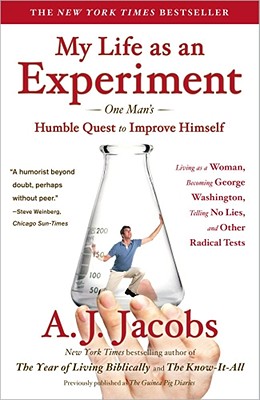
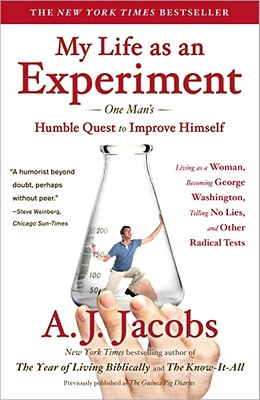
My Life as an Experiment

by A. J. Jacobs
age: adult
First sentence: “Over the years, I’ve gotten a lot of suggestions.”
Support your local independent bookstore: buy it there!

It’s no secret that I really like A. J. Jacobs. Even so, I somehow missed this book when it came out. Unlike his other three books, this is a series of short vignettes, one month projects ranging all over the place from a month of trying to be like George Washington, to a month of outsourcing his life to India, to a month practicing being radically honest.

While it’s a fascinating and fun little jaunt — my favorite chapter was the rationality project — it lacked the depth that his longer books have. See: he’s really not all about the gimmick, at least not in his big books. Sure, they’re gimmicky, and they’re silly, but there’s a profoundness (profundity??) to them that was missing from these experiments. And because of that, they weren’t nearly as interesting as they could have been.

That said, I’m not sure I’d want to read a whole book about him outsourcing his life, or even being George Washington (though I didn’t learn a thing from that chapter, since Hubby’s a pretty big GW fan). They worked as vignettes, even if the depth and reflection isn’t there. They are funny (the naked one was pretty hilarious), and his wife is still amazingly tolerant (though he gives her a month of whatever she wants, and she quite abuses the power). It has all the elements of his books, just not to the extent that I have come to enjoy.

Upon reflection, this would be a really good introduction to the weird world that is A. J. Jacobs.

Once Upon a Time VI

I think, at some point, I stopped counting all the general fantasy that I read, so this isn’t a complete list. At any rate, I’m more than happy that Carl’s still giving me an excuse (although I don’t really need one) to clear out my fantasy lists every spring. This is what I read:

Fantasy:
Grave Mercy, Robin LaFevers The Floating Islands, by Rachel Neumeier
Huntress, by Malinda Lo
Hex Hall, by Rachel Hawkins
Castle in the Air, by Diana Wynne Jones
Demonglass, by Rachel Hawkins
Spell Bound, by Rachel Hawkins
Girl of Fire and Thorns, by Rae Carson
Dealing with Dragons, by Patricia Wreade
Searching for Dragons, by Patricia Wreade

My favorites for these were Grave Mercy (of course; though I haven’t been able to find a person to sell it to at the store, which depresses me greatly) and the Hex Hall series.

Mythology:
Ilium by Dan Simmons.
The Lost Code, by Kevin Emerson
The Serpent’s Shadow, by Rick Riordan

Rick Riordan wins, every time. Though I did like The Lost Code, too. Ilium, not so much.

Folklore:
Good Omens by Neil Gaiman and Terry Pratchett.

Fairy Tales:
Cinder, by Marissa Meyer.
Fables: book one, by Bill Willingham

I’m glad I read both, because I really enjoyed Fables and I’m glad I know what Cinder’s about now. 

What were your favorites?

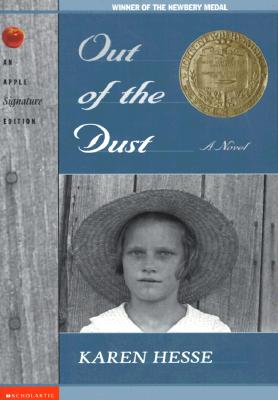
Out of the Dust (reread)

by Karen Hesse
ages: 11+
First sentence: “As summer wheat came ripe, so did I, born at home, on the kitchen floor.”
Support your local independent bookstore: buy it there!

My original “review”, from a long, long time ago was this: “Out of the Dust, Karen Hesse: Free-verse poetry about the Dust Bowl in Kansas. I’m not crazy about the free-verse idea; I found it difficult to ‘get into’ the story.”

First off: I was wrong. It’s the pan-handle of Oklahoma, not Kansas. Now that I live here, that’s a very important distinction to make. We’re not just all plains states lumped into one category out here.

Secondly: I’ve come to  actually really like novels in verse. And I think it suits this book; it’s spare like the environment is out here, especially during the Dust Bowl in the 1930s. It works as a form, and it doesn’t bog the story down.

That said, this book is SO depressing. 

It’s the story of Billy Jo, age 14, in 1934, the height of the Great Depression. It’s just her and her parents, out on the prairie; her father keeps trying to beat the odds and grow some wheat. Her mother is pregnant when tragedy strikes and both she and the baby die. Billy Jo, who is also injured in the accident, and her dad stick it out, trying to make everything work, even as it all is falling apart.

See? Not exactly cheery.

Other than elegance of the form and the depressing story, there isn’t much to say. It’s not my favorite out of the Newbery winners, but it’s not too bad, either.

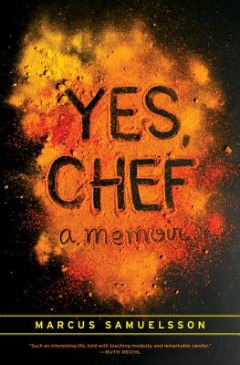
Yes, Chef

by Marcus Samuelsson
ages: adult
First sentence: “I have never seen a picture of my mother.”
Support your local independent bookstore: buy it there!
Release date: June 26, 2012
Review copy provided by my place of employment.

I am not really into the whole food “scene”. I love reading books about good food, I like cooking (but I’m a cook, not a chef, even though I worked in a restaurant for a year when I was a teenager), and I like the idea of good food, but when it comes to names of chefs, I’m pretty much limited to the really popular Food Network people.

So, before a Random House rep came into the store pitching hot books this summer, I  had never heard of Marcus Samuelsson. I think that was a good thing, however, because I was able to come to his story free of biases, open to whatever journey he was willing to take me on.

And it’s quite the journey: Born in Ethiopia, he, his mother and his sister contracted tuberculosis when Marcus was 2. His mother walked for days to get to a hospital, dying soon after reaching there, leaving the children orphaned. Luckily, there was an older couple in Sweden who were desperate for children, not caring what color or nationality they were, and they adopted both Marcus and his sister.

Samuelsson spends quite a bit of the book on his childhood and upbringing in Sweden, primarily because he firmly believes that this was the foundation for all his successes. His mother’s mother taught him to cook, in the classic Swedish style. His parents taught him the work ethic that made Samuelsson what he his today, and supported his journeys around the world, as well as his choice of career. These parts of the book are fascinating: from his stages (I guess that’s what they’re called) in Sweden, Switzerland, Austria, and New York before the ultimate stage in France and then back to America where he became — almost by accident — the executive chef of Aquavit. He is liberal with praise for the people who helped him, candid about the people who were jerks, he muses about the idea of race in the restaurant and food world. But always, always these reflections are centered around his food journey and his chasing the flavor around the world.

The latter third of the book, his time at Aquavit, his stint on Top Chef masters (and winning that competition), to his finding his birth family in Ethiopia and opening his current restaurant, Red Rooster, in Harlem are not as compelling as the first part, though they still hold interest. The time line gets a little fuzzy, and I felt like he was rushing through things, when I wanted him to linger, especially on the flavors and the tastes of the food he was creating.

Even with that slight drawback, it’s a marvelous foody memoir. Enough that I would love to step into his world, just to taste the dishes he made sound so delicious. Anyone up for a trip to Harlem?

Calling on Dragons

by Patricia Wrede
ages: 9+
First sentence: “Deep in the Enchanted Forest, in a neat gray house with a wide porch and a red roof, lived the witch Morwen and her nine cats.”
Support your local independent bookstore: buy it there
Others in the series: Dealing with Dragons, Searching for Dragons

It’s about a year after Cimorene and Mendenbar got married, and things are afoot in the Enchanted Forest. Again. (Yes, it is the wizards. Again.) This time, Morwen was clued into the problems by a six-foot-tall rabbit named Killer. Things get a little trickier when they — Morwen, the cats, and Killer, of course — get to the castle to find out that the wizards have stolen the sword that the magic of the Enchanted Forest is tied to.

Unfortunately, that means Mendenbar (unfortunately, in A’s opinion) has to stay in the forest, while everyone else (including Killer) goes off to find the sword and get it back from those nasty wizards. They end up on a few adventures, and in some interesting pickles. Eventually, the six-foot-tall rabbit ends up a six-foot-tall blue floating donkey with wings, but that’s neither here nor there, really.

In fact, that’s kind of what we thought of this book, as well. A lost interest in it; even though I read it out loud to her, she bailed about 2/3 of the way through. And the ending — which practically requires you to read book 4 — was highly irritating.

We should have bailed at the last book, but now that I’ve come this far, I think I’m just going to have to read the next one just to see how it ends.

At Yellow Lake

by Jane McLoughlin
ages: 14+
Review copy provided by my place of employment.

I was asked to read this at work, because we get some sort of “credit” for doing so. (I have no idea what this is.) They told me up front, that I didn’t have to finish it, that I only had to give it a try.

Good thing.

Because I hated it.

Well, hated it a strong word. I didn’t hate it. But, I spent a good portion of 200 pages or so I gave this book (It’s a 400 page book!) trying to figure out just who the audience was.

The book is, nominally, the story of three kids: 14-year-old Etta, who has moved to northern Minnesota with her mom to escape her mom’s bad ex-boyfriend (who, of course, turns up); 15-year-old Peter, a kid from England, who has come on his own to Yellow Lake to bury his mom’s fingernails, his mom’s dying request; and 16-year-old Jonah, an Ojibwe Indian who is trying to find his roots. It’s also, nominally, a mystery: there are Creepy Things going on at Yellow Lake, because the jacket flap says the kids lives are supposed to be threatened. I never got that far, though.

See, the book is way too angsty (and not thriller-y enough) to be targeted toward the upper-middle grade crowd. Not to mention the half a dozen f-bombs, and assorted other swearing. (Yes, I know kids swear in middle school; you just don’t see it in books unless it’s geared toward the high schoolers.) But, the story is too slow, too pedestrian, too… middle grade … to truly appeal to the teen crowd.

(Is this a good time to mention that the cover is hideous?)

Aside from the lack of audience, the book is okay. I was never really interested in the characters: out of the three, Jonah’s story seemed to have the most going for it, but by the time Peter and Etta showed up, it was turning into a horrible love-triangle, and I just didn’t have the patience for that.

Maybe the mystery would have been interesting, but after reading for half the book, I decided I wasn’t invested enough to continue.

Perhaps someone else will be, though.