November Jacket Flap-a-Thon

Drink, Slay, Love (Margaret K. McElderry): “Pearl is a sixteen-year-old vampire . . . fond of blood, allergic to sunlight, and mostly evil . . . until the night a sparkly unicorn stabs her through the heart with his horn. Oops. Her family thinks she was attacked by a vampire hunter (because, obviously, unicorns don’t exist), and they’re shocked she survived. They’re even more shocked when Pearl discovers she can now withstand the sun. But they quickly find a way to make use of her new talent. The Vampire King of New England has chosen Pearl’s family to host his feast. If Pearl enrolls in high school, she can make lots of human friends and lure them to the King’s feast—as the entrees. The only problem? Pearl’s starting to feel the twinges of a conscience. How can she serve up her new friends—especially the cute guy who makes her fangs ache—to be slaughtered? Then again, she’s definitely dead if she lets down her family. What’s a sunlight-loving vamp to do?”

I love how this one not only reflects the tone and the style of the book, but makes you 
want to read it. And can I say that cover is just gorgeous?

Ten Miles Past Normal (Atheneum): “Janie Gorman wants to be normal. The problem with that: she’s not. She’s smart and creative and a little bit funky. She’s also an unwilling player in her parents’ modern-hippy, let’s-live-on-a-goat-farm experiment (regretfully, instigated by a younger, much more enthusiastic Janie). This, to put it simply, is not helping Janie reach that “normal target.” She has to milk goats every day…and endure her mother’s pseudo celebrity in the homemade-life, crunchy mom blogosphere. Goodbye the days of frozen lasagna and suburban living, hello crazy long bus ride to high school and total isolation–and hovering embarrassments of all kinds. The fresh baked bread is good…the threat of homemade jeans, not so much. It would be nice to go back to that old suburban life…or some grown up, high school version of it, complete with nice, normal boyfriends who wear crew neck sweaters and like social studies. So, what’s wrong with normal? Well, kind of everything. She knows that, of course, why else would she learn bass and join Jam Band, how else would she know to idolize infamous wild-child and high school senior Emma (her best friend Sarah’s older sister), why else would she get arrested while doing a school project on a local freedom school (jail was not part of the assignment). And, why else would she kind of be falling in “like” with a boy named Monster—yes, that is his real name. Janie was going for normal, but she missed her mark by about ten miles…and we mean that as a compliment. Frances O’Roark Dowell’s fierce humor and keen eye make her YA debut literary and wise. In the spirit of John Green and E. Lockhart, Dowell’s relatable, quirky characters and clever, fluid writing prove that growing up gets complicated…and normal is WAY overrated.”


It’s a little long, but it hits all the high points without giving away everything. And I really like the final line.

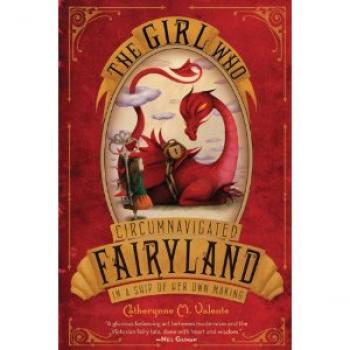
The Girl Who Circumnavigated Fairyland in a Ship of Her Own Making (Square Fish): “Twelve-year-old September lives in Omaha, and used to have an ordinary life, until her father went to war and her mother went to work. One day, September is met at her kitchen window by a Green Wind (taking the form of a gentleman in a green jacket), who invites her on an adventure, implying that her help is needed in Fairyland. The new Marquess is unpredictable and fickle, and also not much older than September. Only September can retrieve a talisman the Marquess wants from the enchanted woods, and if she doesn’t . . . then the Marquess will make life impossible for the inhabitants of Fairyland. September is already making new friends, including a book-loving Wyvern and a mysterious boy named Saturday.  With exquisite illustrations by acclaimed artist Ana Juan, Fairyland lives up to the sensation it created when the author first posted it online. For readers of all ages who love the charm of Alice in Wonderland and the soul of The Golden Compass, here is a reading experience unto itself: unforgettable, and so very beautiful.”


I like that they managed to sum up a very un-sum-up-able book. And make it sound as whimsical and charming as it really is. That said, I think if I have to read about another “unforgettable” book, I may scream. Please, publishers, find a different adjective.

Other books I read this month:
Caleb’s Crossing
The Help (audiobook)
Addie on the Inside
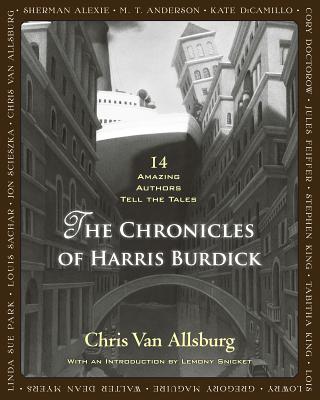
The Chronicles of Harris Burdick 
Chime
The Scorpio Races
The Son of Neptune
Jeremy Bender vs. the Cupcake Cadets
The Buddha’s Diamonds
War and Watermelon
Precious Bane
Floors

Floors

by Patrick Carman
ages: 9+
First sentence: “Merganzer Whippet was an impulsive young man of fifteen when he raced into his father’s room just in time to hear these fateful words.”
Support your local independent bookstore: buy it there!

Leo Fillmore lives and works with his father in the most amazing place: the Whippet Hotel. It’s small, exclusive, and very, very wild (and weird). All the rooms are themed: from the Cake Room, to the Pinball Room, to the Caves and Ponds Room; it’s a kid’s dream (and possibly a maintenance man’s nightmare) to live in a place like this, even if it is only in the basement.

Except Merganzer Whippet, the owner, has disappeared, been gone for more than 100 days, and the hotel is falling apart. Then, a small purple box arrives for Leo, and he finds out that saving the hotel is up to him, his new friend, and a duck named Betty. They’re in for some wild (and weird) adventures, as they figure out who is sabotaging the hotel (because it’s just not falling apart on its own) and save it from being sold to developers.

Part mystery, part buddy novel, part adventure story, this quirky little book has a lot going for it. Carman’s writing is accessible without being overly simplistic, and the whole whimsical aura gives it a very carnival-like feel. There’s a couple of nice twists and turns throughout the book, and the story wraps up quite nicely. Which leads me to my only concern: this one is billed as Book 1, and I have no idea where the story could go in book 2 (or 3 or 4 or 5). It’s a self-contained story, one that is quite entertaining and very sweet, and doesn’t need a sequel. At all.

*sigh*

Sometimes children’s publishing these days frustrates me. In spite of that, the book is more than worth reading.

Precious Bane

by Mary Webb
ages: adult
First sentence: “It was at a love-spinning that I saw Kester first.”
Support your local independent bookstore: buy it there!

Prue Sarn was born “hare-shotten”, with a hairlip. Because of this, she has been told her whole life that she is cursed, that no one will want her, that her lot in life is to just support her family, which includes her older brother, Gideon, in his ambition to become wealthy, for he believes that only money can buy happiness.

However, money doesn’t buy happiness. Although Gideon skimps and makes Prue slave (granted, he works hard, too), and although he’s in love with and engaged to fair Jancis, grudges, ambition, and pettiness kept him from his happiness. Cursed Prue, however, with her kind-hearted nature, and willingness to help others helps her get her happy ending, in spite of her appearance.

It took me the longest time to get into reading the book. It’s in dialect, set in Shropshire, but I’m not sure that’s what it was. I think a lot of it is that it’s just a slow-starting book. However, I stuck with it, and halfway through, I figured out not only what was going on, but the story that Webb was trying to tell. And from there, the story picked up. It’s a both a heartbreaking and a hopeful one. There’s a message, yes, but it’s told in such a way that it isn’t heavy-handed. As a reader, you feel pain for Gideon, and see what the consequences of his stubbornness will lead him, and yet are powerless to stop the outcome. It’s a hard read, but one most definitely worth the time.

A Thankful Blogiversary

I’ve been thinking for weeks now that my first post was on November 24, 2004. I figured since that fell on Thanksgiving this year, that I’d combine my seven year (!) anniversary with all the things my blog has brought me that I’ve been thankful for over the years.

Turns out that I was wrong about the date, but I was only off by a few days, so I’m still going to go through with my idea here…

Seven reasons why I’m thankful for my blog:

1. My on-line book group, Sequestered Nook: I would have never known about this (not having met anyone on there in real life when I joined up), if I hadn’t complained about my in-person book group on my blog. And then Corinne, bless her, mentioned that she’d started this on-line book group, and would I like to join? Of course! It’s a wonderful place, somewhere where we can discuss books and life and movies. I value our discussions and the small community we’ve built. I’ve actually met several of the members in real life over the years, too, which just makes it that much more special.

2. KidlitCon (well, shoot: the whole KidLitosphere): when I first started blogging, I felt I had to justify my love for YA and MG books. Then, a couple of years into it, I discovered that there’s this whole community of people who have the same love of these books as I do. And they get together to talk about books and blogging. And they’re passionate and fun. And they’ve accepted me as part of their community, even if I’m not a librarian or a teacher and I’m “just” a mom and a reader and a lover of books. I couldn’t ask to be a part of a better community.

3. The Cybils: I’ve valued every moment of my experience being a part of the Cybils. I’ve followed it since the beginning, and love the lists of books that the award generates. But more than that, it’s amazing to be a part of something larger than oneself, something I would have never experienced without my blog.

4. Challenges: I’ve joined many challenges over the years, and even hosted a couple of my own. I am so glad for these, for the ways they stretched and pushed my reading in directions I never would have gone otherwise. And even for the piles and lists of books to be read that have been created as a result.

5. Book recommendations: Before my blog, I would wander the bookstore and the library stacks looking for books that sounded good. Seriously. And a good 6 times out of 10, my initial instincts (“ooh, pretty cover!”) were wrong. SO wrong. After my blog, when I started to create relationships and find people with tastes and opinions I respected, nearly everything I read is good. Sure, I still get a clunker here and there, and sure I still don’t finish books. And sure I sometimes don’t like the “in”book that everyone else loves (The Book Thief anyone?). But for the most part, my reading experiences are so much better for blogging about books.

6. Friendships: I’ve kind of alluded to this already, but I honestly value the people I’ve met over the years. From Andi and Heather and the experience writing for Estella’s Revenge, to Pam and Charlotte and Liz and Abby and Jen, to Becky and Julie (and Julie, even though she doesn’t blog anymore) and Laura and Suey and Amira, and many, many more that I both have and haven’t met in real life: my life is richer for having known you. Thank you for blogging, and for being awesome.

7. My job at Watermark Books: I firmly believe that if I hadn’t been reading and writing all these years, I wouldn’t have the coolest part-time job ever right now.

And all this because my husband suggested that I start a blog. It’s been an amazing seven years!

The Girl Who Circumnavigated Fairyland in a Ship of Her Own Making

by Catherynne M. Valente
ages: 11+, good for read aloud 6+
First sentence: “Once upon a time, a girl named September grew very tired indeed of her parents’ house, where she washed the same pink-and-yellow teacups and matching gravy boats every day, slept on the same embroidered pillow, and played with the same small and amiable dog.”
Support your local independent bookstore: buy it there!

Once upon a time, there was a blogger who got an email about a book. This book had a very long, somewhat pretentious title, and the blogger thought to herself, “It can’t be any good” and proceeded to delete that email.

Then she started seeing reviews of it pop up all over the place, reviews saying how wonderful and amazing and delightful this little book with the long, pretentious title is. And still she said to herself, “It can’t be true” and didn’t read the book.

Then, one day, while she was shelving other titles, she saw the book, and picked it up. Once she had it in her hands, she began to question her firm belief that this book wasn’t any good. And so, she checked it out.

And was absolutely delighted.

To be sure, she is not sure that September’s story and adventures in Fairyland would be appealing to children. The book is pretentious and precocious, and not at all something that she can see many 10-year-olds picking up. Sure, there’s magic and danger and adventure, but it’s not flashy or laugh-out-loud hilarious. The language is a bit advanced, and she thinks that Valente sometimes talks down to the reader (and sometimes talks over the reader as well).

And yet, there’s a whimsicality about it all, a sense of timelessness, of a telling of Every Story, that makes this story work. She could envision reading it aloud to her children, smiling at the humorous asides, being afraid at the tense moments, sharing the adventure. It would be a delight, actually, to read this book aloud. She also found herself captivated by September and her adventures, as well as the sometimes fickle narrator, though she has to admit that her favorite character is the Green Wind, even though he only briefly appears.

At any rate, she regrets not getting to this one sooner, and since it’s always better to get to things later than never, she’s happy she finally arrived at the gala, giving this story its’ much deserved happily-ever-after.

The End.

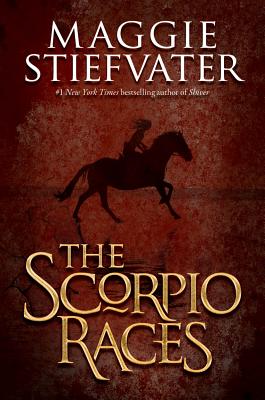
The Scorpio Races

by Maggie Stiefvater
ages: 13+
First sentence: “It is the first day of November, and so, today, someone will die.”
Support your local independent bookstore: buy it there!
Review copy picked up at KidlitCon 2011

Life on the island Thisby is not easy. Life is harsh, jobs and food are scarce, and the population is always leaving for a better life on the mainland. And then there are the capaill uisce (pronounced CAPple ISHka; yeah, it doesn’t look like that to me, either): bloodthirsty water horses that are caught, somewhat tamed, and raced in the Scorpio Races every November 1st.

For Sean Kendrick, the capaill uisce have become his life. Sure, he works for the wealthiest man on the island at his ranch, but really his heart and soul live for his water horse (in all but actual ownership), Corr. They’ve raced together and won four times. Who’s to day that this year they won’t come out on top.

Kate “Puck” Connelly, on the other hand, lives and breathes the island. Her parents were killed by capaill uisce, and she normally would have nothing to do with them. However, her older brother has dropped the bomb that he’s leaving for the mainland, and in a desperate attempt to keep him around a little longer, she announced that she’s going to ride in the races. On her regular horse, Dove. Suddenly, she finds herself the talk of the island, and discovers that perhaps she’s in over her head.

To be fair, this is not a book for the faint hearted. Bloodthirsty, flesh-eating horses does not for a happy tale make. (Kind of awesome, yes. Happy, no.) And yet, in Stiefvater’s hands, it isn’t a gruesome one. Yes, there’s death and mauling and unhappiness, but the book isn’t about those things. It’s about Puck and Sean, (and, yes, there’s a romance between the two, but it’s wonderfully understated) and their love of the island and all things that belong there. It’s a wonderfully hopeful book, intriguing its twists and turns and subtle use of magic, with a sweetly touching ending.

While it’s not quite a delight to read, it is incredibly captivating. Which is just as good, I think.

Six Sentence Saturday: Three Middle Grade Boy Books

Jeremy Bender vs. the Cupcake Cadets
by Eric Luper
ages: 10+
First sentence: “Jeremy Bender once heard that every time a person learned something, a new wrinkle worked its way into his or her brain.”
Support your local independent bookstore: buy it there!

Jeremy Bender has a problem: he’s ruined the engine of his father’s prize boat and needs to come up with $500 (because it’s just too scary to tell his dad) to fix it. So he and his friend come up with this brilliant, if a bit far-fetched, idea: infiltrate the Cupcake Cadets (think Girl Scouts with cupcakes instead of cookies), win the Windjammer Whirl with it’s $500 grand prize and get off. Easy-peasy, right? Well, not so much. At turns weird and hilarious, Jeremy and Slater learn that sometimes the easy way out is not, well, so easy. Luper gets boys and their impressions of girls down-pat, making for a very fun read.

The Buddha’s Diamonds
by Carolyn Marsden and Thay Phap Niem
ages: 8-12
First sentence: “In the gloom of the dusty temple, Tinh bowed to the Buddha.”
Support your local independent bookstore: buy it there!
Review copy provided by the publisher for the 2009 Cybils (I think)

The simple story of a boy, Tinh, who has to learn responsibility in the face of a big storm. Tinh and his father makes it back to shore just ahead of a typhoon, but because Tinh wasn’t brave enough to save the boat, it’s ruined. So, it’s up to Tinh to get the boat — the source of his family’s income — fixed. I picked this one up as part of Wichita’s Big Read (the main book was Tim O’Brien’s The Things They Carried, but I had no interest in reading that), not really knowing what to expect. It was a sweet little story, but I felt it lacked any sort of emotional punch. Mostly, I felt like I was looking at the action from the outside, never really connecting to either the characters or the story.

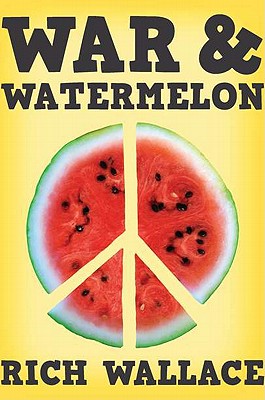
War & Watermelon
by Rich Wallace
ages: 11+
First sentence: “I look across the pool and see Patty Moriarity and Janet DeMaria hanging out by the refreshment stand.”
Support your local independent bookstore: buy it there!

It’s the summer of 1969, and everything’s changing in Brody’s world. His brother, recently graduated from high school, and their parents are stressed about the draft; Brody’s dealing with girls, and football, not to mention seventh grade and junior high; and it’s the summer of Woodstock and the Mets have just taken over first place. Seeing this summer of through a 12-year-old’s eyes is an interesting venture: a lot happens in the course of the book, and yet Wallace keeps it light enough for middle grade readers. Yet, as an adult, I didn’t think Brody’s story was particularly interesting. Or perhaps Wallace was trying to cover too much in too short of time. Either way, this one fell flat in the end.

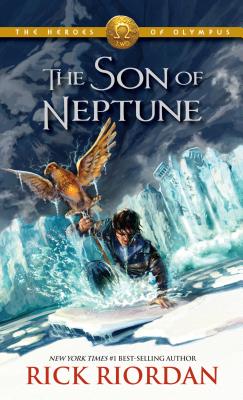
The Son of Neptune

Heroes of Olympus, book 2
by Rick Riordan
ages: 10+
First sentence: “
Support your local independent bookstore: buy it there!
Others in the series: The Lost Hero

Ah, Percy. We’re glad you’re back.

We join up with him as he’s running across the California landscape, being chased by Gorgons who can’t be killed for some reason, trying to get… somewhere. See, he’s lost his memory, and doesn’t know who he is or where he’s really going. (Even though we fans haven’t; I was interested to see how Riordan would handle that, since we knew that Percy would have amnesia by the end of The Lost Hero, and I have to say that he did it well. Having the book be in third person rather than first, as the first series was, helped a lot. As did multiple points of view; I found it fascinating to see Percy from viewpoints other than his own.)

He shows up at Camp Jupiter — the Roman equivalent of Camp Half-Blood — meets Frank Zhang, a halfblood with an interesting past and a curse to carry, and Hazel Levesque, the daughter of Pluto (aka Hades) who isn’t really supposed to be alive anymore. The three of them are sent on a quest by Mars (aka Ares, though I have to admit that I like Mars a whole lot more than I liked Ares) to face the giant sons of Gaea (the new bad “guy”), unleash death, and get back before an army of monsters destroys Camp Jupiter. In four days.

Clear as mud?

As usual, Riordan tells a compelling and entertaining story, playing on his two strengths: plotting and characterization. This one is shorter than Lost Hero, but not by much, and Riordan packs in as much as he possibly can. There’s everything we’ve come to love in a Riordan book: action-packed sequences; a wee bit of sweet, innocent romance; humor (and good, quotable lines); and many, many references to mythology. (I’m not sure he’s pulling from myths anymore; I don’t know Roman mythology as well as Greek. That said, I’m not sure it matters at this point.)

Additionally, for this one especially, it helps if you know your Olympians series well. Thankfully, I’ve just finished reading them aloud to A, so they were pretty fresh in my mind. There’s references to that series all over the place, from hints about Percy’s past (in one of the more clever pulls, Reyna, one of the praetors at Camp Jupiter, was one of the people in Circe’s employ that Percy came across in The Sea of Monsters.) to references of what Percy has accomplished in the past four years. And yet, while there’s a lot to juggle in this book, it doesn’t seem crowded. In fact, there were times — especially with characters; the set up for Octavian is intriguing, but Riordan never really goes anywhere with it — when I wanted more, not less.

As I mentioned before, Percy’s back in all his lovableness, and it’s quite refreshing to see him from other points of view. And Frank and Hazel were just as awesome to get to know. The overall plot arc is coming together slowly, but Riordan leaves a lot of threads hanging, and a lot of questions unanswered. (Though perhaps the one question I have — how is he going to fit all seven the prophecy talks about together in one book? Because whomever narrates the next one, there will be characters I will miss hearing from — is going to have to wait.)

It’s fun fluff, great for those of us who are fans of the series.

The Chronicles of Harris Burdick

by Chris Van Allsburg, and 14 other writers
ages: 10+
First sentence: “Is there any author more mysterious than Harris Burdick?”
Support your local independent bookstore: buy it there!

Back in 1984, Chris Van Allsburg authored a book called The Mysteries of Harris Burdick. Supposedly, he was recreating the art of one Harris Burdick, who left fourteen paintings at a man called Peter Wender’s office, with only the titles and a brief caption. The drawings were mysterious and wondrous all at the same time: something for parents and children to pour over and imagine.

Of course the next logical step — albeit nearly 30 years later — is to get fourteen (including Van Allsburg himself) of the most talented children’s (and adult) writers to do the imagining for us. Each author — and there are some brilliant ones here: from Sherman Alexie and Lois Lowry, to M. T. Anderson and Kate DiCamillo , to Stephen King and Gregory Maguire — takes a different painting, and spins a story around it, incorporating the tantalizing caption that “Harris Burdick” gave to each painting.

Let me say right off: this is not a picture book. I cannot imagine curling up with my 5-year-old and reading these stories. For one, they are much too long. For two, they are much too… old. This is an illustrated set of short stories, ranging from the disturbing to the strange to the whimsical, meant for older audiences to savor and think about.

Like every short story collection, the stories themselves are uneven: I found Cory Doctorow’s “Another Place, Another Time” to be odd, full of science I couldn’t quite grasp; and Sherman Alexie’s “A Strange Day in July” to be terribly cruel in a ten-year-old bully sort of way. But, when the writing is on, the book is a marvel: Jon Scieszka’s “Under the Rug” is hilarious; Linda Lois Lowry’s “The Seven Chairs” is simple and magical; both Linda Sue Park’s “The Harp” and Louis Sachar’s “Captain Tory” are deliciously sweet; and Stephen King’s “The House on Maple Street” is perfect. It’s fascinating to see how each author’s imagination works with the painting, taking the small details and spinning them into a larger, more complex story, and yet leaving enough space that the reader can invent and hope and dream right along with.

It’s one of those books that begs to be taken out time and time again, to read and look at, inspiring you to dream about both the possible and the impossible. In other words: it’s just the perfect sort of book.

10 Questions for Michael Scotto

I don’t usually read early chapter books, but I thought the premise for Michael Scotto’s book Latasha and the Little Red Tornado sounded intriguing, and ended up being a great little story about a girl and her dog. Michael was more than willing to sit down (metaphorically), and answer a few questions about writing, reading, and Latasha. You can find out more at his website.

The book is on shelves today.

MF: This is your first novel! Congrats! What are the differences, for you, between writing picture books and novels?
MS: Picture books are a much more collaborative form. In a novel, the writer has complete control. The words do all of the heavy lifting — if the author doesn’t describe it, it doesn’t exist for the reader. In a picture book, the illustrator handles a lot of that “world building.” That can be scary for an author. In picture books, you have to let go of the text and trust that the illustrator will understand your vision — or even better, bring a new dimension that enriches and deepens what you’ve written.

MF: I’ve always wanted to ask this: which is “easier” to write picture books or novels?
MS: Each presents its own particular challenges. You have to be especially economical with words in a picture book, which for me is tough. That said, the writing of a novel requires a much greater time commitment, and also demands more complex storytelling. In my experience, novels have been been a more difficult undertaking. Of course, my illustrator would disagree!

MF: Why did you decide, after writing so many picture books, to write a novel?
MS: When I started Latasha, I’d been writing picture books for several years — a series aimed at the educational market. I love the series, but I’d been writing the same characters for so long that I was just itching to challenge myself in a new way. I thought it would be best to make a complete break from the kind of writing I had been doing.

MF: What inspired you to write about Latasha and her dog?

MS: When I sat down to write Latasha, I knew two things: I wanted to write about my hometown, Pittsburgh, and I wanted to write a story that involved a girl raising a dog. My wife and I had adopted a puppy half a year before I started the novel, and so I was eager to write about that experience. While I invented most of Ella’s misadventures, I drew her look and personality from my pup, Lucy…the original “little red tornado.”

As for Latasha herself — she came from an exercise that I did when I first began to write the book. I sat down at my favorite coffeeshop with a pen and pad, and began to free write, just to see what would come out. What came out, almost fully formed, was Latasha’s voice. The voice came to me so quickly that I knew I had no choice in the matter; she was going to be my protagonist. In fact, a lot of the opening of the book was drafted that day.

MF: Was it difficult to get into the character of an 8-year-old African American girl? What kind of research did you do?

MS: When writing Latasha, the trickiest terrain to navigate wasn’t the “girl” part or the “African-American” part, but the “8-year-old” part. It was difficult because Latasha is a very bright girl, with a manner of expression that makes her seem older than her years. At the same time, emotionally she’s still very young. Part of my research was just simple observation; studying kids, their mannerisms, how they interact with the world, how they speak. I also dug through a lot of personal writing I did when I was that age. It helped to remind me of how the world appeared to me at that age.

MF: You packed a lot into an early chapter book — working single mothers, making friends, cheating, loss — and yet it didn’t seem overwhelming for an 8-year-old reader. How did you achieve that balance?

MS: Thanks for the kind words! I really just tried to deal with each of these elements as honestly and matter-of-factly as I could, and then trust that the reader would follow me. It helps that Latasha is a very plucky, optimistic character. I think her can-do attitude makes the subject matter easier to digest.

MF: Do you have a favorite character or moment in the story?
MS: I absolutely loved writing Mrs. Okocho. The scene where she drives Latasha around to hang signs near the end of the book is one of my favorites.

MF: I liked Mrs. Okocho, too: she had such spunk and heart. Who, or what, inspires you to write?
MS: Deadlines inspire me! Actually, I write because I’m fascinated by people. I love seeing how people interact, how they behave, how they speak. I have a massive file on my computer that consists solely of interesting turns of phrase that I’ve heard people use. I especially like to explore lives and perspectives that differ from my own. It makes me a better, more empathetic human being to do so — and I think one of the most important tools a writer can have is empathy.

MF: What was the last book you’ve read and why did you love it?
MS: I just finished Kira-Kira by Cynthia Kadohata, which won the Newbery Medal in 2005. A librarian friend of mine recommended it to me. It tells the story of a young Japanese girl growing up in Georgia. The book was gorgeously written, it featured a voice I’d never read before but found instantly relatable, it was emotional but never maudlin — I could go on and on. Suffice it to say, I adored it. The only trouble now is that now I’ve got to find an equally wonderful book to suggest to my friend! (I may lend her my copy of Wonderstruck.)

MF: Both are excellent books! And you can’t go wrong with Brian Selznick. If you don’t mind telling us, what can we expect from you next?

MS: I’ve got a lot on the horizon. The first big thing has to do with my picture book series. At the end of January, five titles from my “Tales of Midlandia” series will be released to the general public. These are humorous stories with a character-building or social element to them. They could be compared to the Berenstain Bears books in that way — only with much more detailed, rich illustration work. At the same time, my publisher is developing storybook apps for the iPad from these books, which I have been tapped to narrate! It’s a real thrill for me.

I also have a second novel in the pipeline, due out around Memorial Day 2012. It’s called Postcards From Pismo, and it tells the story of boy in California who strikes up a penpal friendship through letters with a soldier in Afghanistan. I’ve gotten to see some of the preliminary art and design work for it — it’s going to look awesome.

Lastly, I’m in the middle of drafting a sequel to Latasha and the Little Red Tornado. I don’t want to give away any details yet, but it follows Latasha through fourth grade and a whole bunch of new challenges. Thanks so much for your questions!

MF: All of which sound fascinating! Thank you so much for your time.
MS: Thanks again!