March Jacket Flap-a-Thon

Another month down in my year of doing things slowly. I think I’m doing okay; I’m still reading a lot (and I still double- and triple-book sometimes), but I feel like I’m more comfortable with my reading pace. I still check out more books from the library than is good for me, especially considering the huge-for-me pile of books from publishers and authors I really should get through. Too many books, too little time!

On to my favorite jacket copy from this month:

A Tree Grows in Brooklyn (Harper Perennial Modern Classics): “The beloved American classic about a young girl’s coming-of-age at the turn of the century, Betty Smith’s A Tree Grows in Brooklyn is a poignant and moving tale filled with compassion and cruelty, laughter and heartache, crowded with life and people and incident. The story of young, sensitive, and idealistic Francie Nolan and her bittersweet formative years in the slums of Williamsburg has enchanted and inspired millions of readers for more than sixty years. By turns overwhelming, sublime, heartbreaking, and uplifting, the daily experiences of the unforgettable Nolans are raw with honesty and tenderly threaded with family connectedness — in a work of literary art that brilliantly captures a unique time and place as well as incredibly rich moments of universal experience. “

Writing copy for classics is a tricky premise. But I think this one manages to capture both the essence of the book, as well as giving a nod to its timelessness.
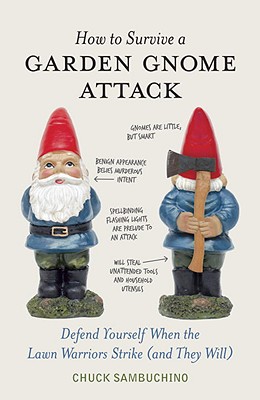
How To Survive a Garden Gnome Attack (Ten Speed Press): “Move over zombies and adolescent vampires. There’s a new threat in town—and it’s only twelve inches tall. How to Survive a Garden Gnome Attack is the only comprehensive survival guide that will help you prevent, prepare for, and ward off an imminent home invasion by the common garden gnome. Once thought of as harmless yard decorations, evidence is mounting that these smiling lawn statues are poised and ready to wreck havoc. The danger is real. And it’s here. Class 1 gnome-slayer and gnome defense expert Chuck Sambuchino has developed a proven system—Assess, Protect, Defend, Apply—for safeguarding property, possessions, and loved ones. Strategies include step-by-step instructions for gnome-proofing the average dwelling, recognizing and interpreting the signs of a gathering hoard, and—in the event that a secured perimeter is breached—confronting and combating the attackers at close range.”

This one had me at “adolescent vampires”. Seriously. I thought the book was funny, but the flap copy is hilarious.
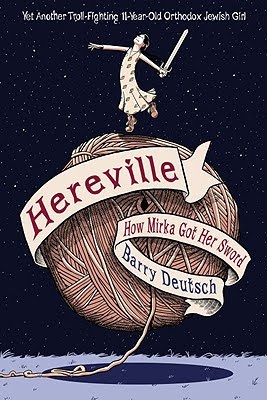
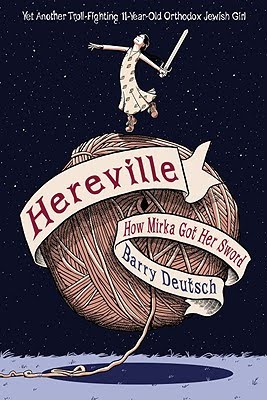
Hereville: How Mirka Got Her Sword (Harry N. Abrams): “Spunky, strong-willed eleven-year-old Mirka Herschberg isn’t interested in knitting lessons from her stepmother, or how-to-find-a-husband advice from her sister, or you-better-not warnings from her brother. There’s only one thing she does want: to fight dragons! Granted, no dragons have been breathing fire around Hereville, the Orthodox Jewish community where Mirka lives, but that doesn’t stop the plucky girl from honing her skills. She fearlessly stands up to local bullies. She battles a very large, very menacing pig. And she boldly accepts a challenge from a mysterious witch, a challenge that could bring Mirka her heart’s desire: a dragon-slaying sword! All she has to do is find—and outwit—the giant troll who’s got it! A delightful mix of fantasy, adventure, cultural traditions, and preteen commotion, Hereville will captivate middle-school readers with its exciting visuals and entertaining new heroine.”

I’m not sure this was on my actual book (since I didn’t bother to write it down before returning it to the library). If it isn’t, it should be. Though I’m not quite sure about “exciting visuals.”

Other books read this month:
The House at Pooh Corner (audio)
Amulet: The Cloud Searchers
India Calling
Serenity: Those Left Behind; Better Days
Heat Wave
Hattie Big Sky (audio)
Naked Heat
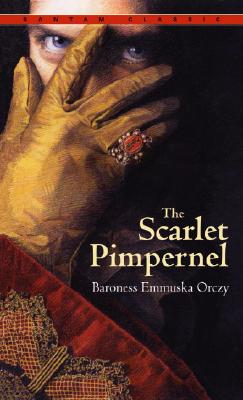
The Scarlet Pimpernel
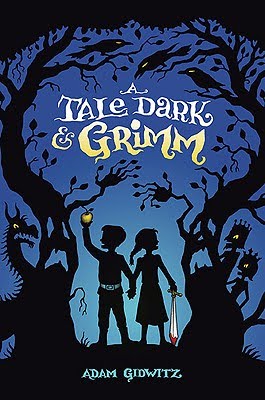
A Tale Dark and Grimm
Luv Ya Bunches
Harry Potter and the Sorcerer’s Stone (audio)
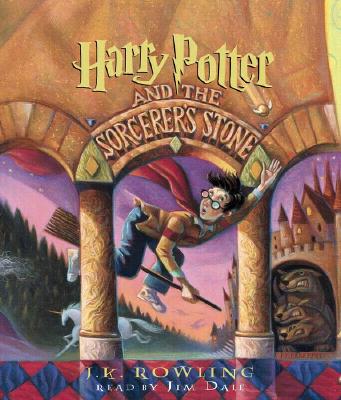
Audiobook: Harry Potter and the Sorcerer’s Stone

by J. K. Rowling
read by Jim Dale
ages: 7+
Support your local independent bookstore: buy it there!

This was A’s choice to listen to as we traveled south for spring break. She’s is a Harry Potter nut, having convinced Hubby to read the first four books out loud to her. So, of course, she wanted to listen to the books again. This wasn’t her first choice, but as K is only not-quite-five, it’s the one that I thought would work best for the family.

And since I don’t have a review of this book here — I first read it in 1999, for a book club at a children’s bookstore in DC — I thought I’d give my impressions of it, even if everyone knows about the books (and Jim Dale’s reading of it) already.

Our first impression was that Jim Dale is a grand narrator, great with suspense and nuance and voices, most of which we liked. Except Hermione. Maybe it’s because by now the movies are really ingrained in our brains, but his Hermione was a whiner. And it drove us all bonkers. Other than that, though, he managed to keep everyone straight for us (and the cast of characters is huge), and kept us engaged in the story.

And the story? It’s Harry Potter! It was nice to visit that world again; I haven’t picked up a book since finishing the seventh one several years ago. (And the movies don’t count. Not really.) I was reminded how wonderful Rowling is at world-building, and how much this one stands alone. Though I also noticed details that were picked up in the later books: the big plotlines, of course, but also little things (and dang if I can’t remember them now!). Not to mention all the little ways the book is different from the movie; C — who really didn’t read the books at all — noticed that the most, and even picked up the book when we got home, rereading several sections.

In short: it was a good book for a long road trip.

Luv Ya Bunches

by Lauren Myracle
ages: 10+
First sentence: “(Shot from Katie-Rose’s sunshine yellow video camera)”
Support your local independent bookstore: buy it there!

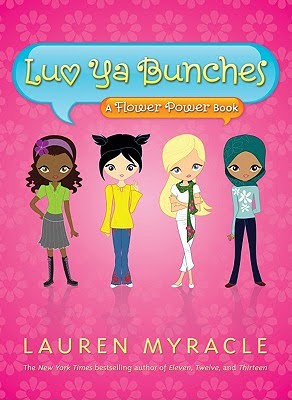
It’s the first day of fifth grade, and Katie-Rose is stoked. And nervous. She just really, really wants a friend. Sure, she’s got Max, but he’s a boy, and while he’s a good friend, he’s not BFF material.

Little did she know that by the end of the week, she would have not one BFF, but four. We get to know them as they figure out their budding friendship: there’s Katie-Rose, of course; but also Yasaman, Turkish Muslim, class observer, and computer wizard; Violet, the new girl with a bit of a tough secret; and Milla, former popular girl who’s trying to figure out what real friendship is. Told through alternating viewpoints, we get to see into the heads and hearts of these four girls as they bond and stand up to the class bully.

I don’t usually go in for books that are so embedded in pop culture, but to my surprise, in spite of the cover, this one wasn’t. Sure, it’s got texting and IMing and cell phones and video cameras, but Myracle does a good job balancing the pop culture with a good old-fashioned story of bullying, lying, and the meaning of friendship. I liked the girls: they were well-developed, and rang true to the whole fifth-grade mentality. The pre-teen angst, the concern about fitting in and yet wanting to be true to one’s own self. Myracle tackled all that with humor and love for the age, for the problems and for the characters. And most importantly, she doesn’t talk down to her readers: the plot is simple without being simplistic. There’s a bit of a crisis with a missing bobble-headed turtle (okay, I kind of want a bobble-headed turtle now), but for the most part it’s just about the girls.

Which is perfectly fine by me.

Sunday Salon: Battle of the Kids’ Books, Week two

Week two of The Battle of the Kids’ Books has come and gone. And even though I was gone on a mini-vacation with my girls for most of it, I can’t let the week go without putting in my two cents.

Match 6 The Ring of Solomon vs. Sugar Changed the World: Give it up for Adam Rex for 1) pointing out all the faults of The Ring of Solomon, 2) making me want to read the other book and 3) coming up with a decision that, while reading, I completely didn’t expect. Though I’m quite happy about it. (Go Bartimaeus!)

So, Solomon versus The Odyssey? I don’t know. Personally, I’m favoring Ring of Solomon, but the Odyssey sounds really, really good. It’ll be interesting to see what comes of that.

Match 7 A Tale Dark and Grimm vs. They Called Themselves the K.K.K.: I’ve not read any of judge R. L. Stine’s books, but I knew enough to call this one. It helps that the winning books is quite fabulous. I’m not sure I’ll ever read K.K.K, though; it may be too much for me to manage.

Match 8 Trash vs. Will Grayson, Will Grayson: Again, we’re pairing a book I absolutely loved with one I hadn’t read. But after reading judge Mitali Perkin’s thoughts on it, I’m completely sold on Trash. (One of the wonderful side benefits of this is learning about less well-known books; how did Trash fly under the radar? It sounds wonderful!) I’ll forgive it for beating the Wills; any book about the “the love of power and the power of love” deserves to win.

Grimm versus Trash? I don’t know. I’ve only read one of them, and really, really liked it. But, from what Mitali Perkins said, Trash is a pretty powerful book. I’m going to go against my personal preference and say that Trash takes it. (I hope Grimm puts up a fight, though!)

Round Two, Match 1 The Cardturner vs. Countdown: I loved judge Laura Amy Schlitz’s introduction:

Let me make one thing clear: I’m not going to be dispassionate about
this. I agreed to be a judge, but I refuse to be judicious; I’m not going to nitpick and split hairs. If I had been given two mediocre books, I might have managed it: one can be beautifully dispassionate about mediocre books. But COUNTDOWN and THE CARDTURNER are remarkable books, and the proper response is not assessment, but appreciation. I’m going to fling objectivity out the window (let’s face it; it’s overrated) and have myself a good time.

So, so true! And her reason for picking Cardturner to move on? That it’s a true comedy; not a “funny book”, but something that “is a celebration of human resilience. At its best, [comedy] takes the tensions and failures and tragedies of life, and transmutes them. It pulls the threads taut, mending the rift in the cloth. It draws the toxins out. And of course this is tremendously refreshing, because we are surrounded by tensions and failures and tragedies.” I’d never thought of it that way. Fabulous.

Round 2, Match 2 The Good, The Bad, and the Barbie vs. Keeper: This is not a year for non-fiction. That’s okay, because I agree with judge Naomi Shihab Nye, that Keeper is a gift of a book. Beautiful and perfect. Even though I still want to read Barbie, you don’t see me shedding any tears that Keeper is moving on.

Keeper versus The Cardturner, though? That’s another tough one to call. I’ve read them both, so I can actually make a reasonable judgment call (ha!). While Keeper is just about perfect, I’m leaning toward Cardturner. I think it has a winning quality that wins over everyone who reads it. And I’m beginning to wonder if it just can’t take the whole thing.

We’ll just have to wait and see…

Naked Heat

by Richard Castle
ages: adult
First sentence: “Nikki Heat pondered red lights and why they seemed to las so much longer when there was no traffic.”
Support your local independent bookstore: buy it there!

Oh, you knew this review was coming.

Yep.

I figured, since I’ve already caved into the publicity machine that is ABC, and the meta-ness of it all (and am really kind of finding it all fun and games), what the heck. Why not read the second one?

Besides, it’s a really good book to read when I’m on the elliptical at the gym: engaging, but not hard to follow.

As far as the book itself: I think it holds up better than the first book as a novel. Sure, it’s still in-jokes from the series (the book opener is lifted pretty much straight from the season 3 TV opener), and the basic plot lifts from a few episodes of season 2 Castle. The murder is of a gossip columnist, which ends up being a triple murder/suicide. There’s some nice twists and turns in the plot, and the outcome didn’t really become obvious until nearly the end. It was plotted much more evenly as well; it was more character- and plot-driven, and relied less on the reader knowing the background of the show. This is a book I could see non-Castle fans picking up and actually liking on its own terms. That’s not to say there isn’t the jabs and in-jokes (in fact, what made me laugh the hardest was the moonlighting profession they assigned to Jameson Rook. Too, too perfect).

Additionally, it’s much less about wish-fulfillment on the part of Castle, the character, and more about getting the story across. In other words, Nikki comes off as more of a real character this time — she’s smart and resourceful (and remember that episode where Castle has Alexis duct tape him to the chair? That’s important.) and while she does a lot of saving Castle’s butt (coming to his rescue at least twice), they’re also working more as a team than they did in the first book. The sex is dialed way back (though there is a couple of scenes; they are just briefer and less “steamy”), and it’s more about building an actual relationship between the two characters.

So, the discussion I ended up in with Hubby was about whether or not there will be more. On the show, they’ve kind of abandoned Castle’s premise for following Beckett around, and — if I remember right — he’s not done much writing this season. So, is ABC going to keep churning out the Nikki Heat books if there’s no reference to them in the show? Hubby seems to think that they could put out as many as they like independent of the TV show, but I think that the books lose much of their charm if you divorce them from the fun of the weekly episodes. Either way, I’ll probably keep reading them until they stop being brain candy.

The Scarlet Pimpernel

by Baroness Orczy
ages: adult(ish)
First sentence: “A surging, seething, murmuring crowd, of beings that are human only in name, for to the eye and ear they seem naught but savage creatures, animated by vile passions and by the lust of vengeance and of hate.”
Support your local independent bookstore: buy it there!

I’ve heard about this book for years. YEARS, I tell you. From people who love it mostly; I don’t remember hearing much bad about the book. And so, when finally given the push to pick it up and read it (for the in-person book group), I was quite intrigued, to say the least.

Thankfully, I’d been forewarned about the first few chapters; had I not been, I’d have thrown in the towel. As far as gripping beginnings go, this one is terrible. Horrid. Confusing and distracting, it’s supposed to set the mood, but doesn’t really do much for the story. Sure, I get that the Baroness was trying to emulate the novels of the time period (it’s set in 1792), but it was a really, really bad way to get one into an adventure/mystery novel.

Once we settled on Lady Marguerite Blakeney and her husband, the foppish Sir Percy, the story picks up. For those of you who haven’t read it (people tell you they love the book, but they never tell you what it’s about!), it’s the middle of the French revolution, and about a year int’ Marguerite’s, who’s French, and Percy’s marriage. There’s been a bit of an estrangement between them ever since it came out that Marguerite inadvertently said something which sent a couple of nobles to the guillotine. On top of that, she’s incredibly clever and fashionable and Sir Percy is, well…. not. In the backdrop of all this, the folk hero The Scarlet Pimpernel has been, under the cover of night (and under French police chief — I think; I was never quite sure — Chauvelin’s nose) rescuing and transporting condemned French nobles to the relative safety of English shores. This infuriates Chauvelin, of course, who sets out — blackmailing Marguerite along the way — to discover the identity of The Scarlet Pimpernel and get Rid of Him Once and For All.

Not a bad bit of plot, there; except that it seemed to go everywhere and nowhere at once. It seemed that the world was so populated with people flitting in and out that, while it felt busy and it felt like things were progressing, it never gave anyone a chance to really shine as a character. There are pages and pages of nothing, until the book’s nearly over when we finally figure out (called it!) who the Scarlet Pimpernel is and the adventure part begins. Except, since we’re seeing it through Marguerite’s eyes, it never really goes anywhere either. Speaking of Marguerite, there was a lot of hysterical clinging and wishing and crying on her part, which got old quite quickly. And, in the end, the real point of the plot was not really to figure out the Scarlet Pimpernel, or to criticize the French Revolution, but rather a simple love story: to reunite Percy and Marguerite.

Which is okay, I guess. It just didn’t work as well for me as I had hoped.

A Tale Dark and Grimm

by Adam Gidwitz
ages: 11+
First sentence: “Once upon a time, fairy tales were awesome.”
Support your local independent bookstore: buy it there!

Throughout the decades, fairy tales have been watered down. One could blame Disney, or blame the fact that we’ve come to believe that children can’t handle violence. That somehow, scary stories, stories with blood and gore are bad for them. And I’m not sure I disagree: violence for violence’s sake can be desensitizing. But the Grimm fairy tales aren’t that way. Yes, they’re scary, yes they are violent, but it seems to all have a purpose.

Adam Gidwitz doesn’t just retell a few of the more obscure Grimm tales. He takes the Hansel and Gretel story and morphs it from a weird step-mother-hate story into something more. There’s kings and queens, danger and temptation, loss and redemption, and dragons! It has everything. Which, even though sounds a bit like overkill, works. Gidwitz gave the original story depth and purpose. And yes, by keeping the tales creepy and violent and fascinating, Gidwitz embodies the original Grimm tales. It’s fascinating and wonderful.

But the best thing about the novel is the narrator. Seriously. Having an active narrator in a story like this is a tricky thing. It could have fallen flat on its face, and maybe for some people it will, because (s)he interjects with humor and explanations quite often as the story goes along. It pulls the reader out of the story, but it doesn’t pull them away from the story. It works as an interjection, because it’s not intrusive. And I think, for kids especially, it actually helps having a narrator — a storyteller, actually — looking over your shoulder, giving you information you need to not only process what’s going on, but to really enjoy it as well.

Excellent.

Spring = Once Upon a Time

Here I was, reveling in the fact that it’s spring (and 71 degrees here!), and it completely slipped my mind until I saw the post… It’s time for Carl’s Once Upon a Time Challenge! Whee!

I can’t let this one go by without joining in.

I am, as per my usual fare, signing up for Quest the Second:
1. Fantasy: Exile, by Anne Osterlund
2. Folklore: Runemarks, Joanne Harris
3. Fairy Tale: The Fairy Godmother, by Mercedes Lackey
4. Mythology: Zeus: King of the Gods and Athena: Grey-eyed Goddess, by George O’Connor

My Unfair Godmother, by Jannette Rallison
Enchanted Ivy, by Sarah Beth Durst
The Throne of Fire, by Rick Riordan
Reckless, by Cornelia Funke
Mad Love, by Suzanne Selfors
Dragonfly, by Julia Golding
Magic Under Glass, by Jaclyn Dolamore
Gods Behaving Badly, by Marie Phillips

Can’t wait to get started! Won’t you join us, too?

Sunday Salon: Battle of the Kids’ Books Round 1 Commentary

I meant, last week, to put up a post with my predictions for the School Library Journal’s Battle of the Kids’ Books. But, it was C’s birthday, and I spent my morning decorating a cake and doing birthday stuff, and predictions — which I’m horrible at, anyway — took a back seat.

But I can’t pass up the opportunity to comment on the matches so far.

Match 1 As Easy as Falling Off the Face of the Earth vs. The Cardturner: As Liz B. points out the best thing about this match was the way Francisco X. Stork wrote the decision. Brilliant bit of blog writing/reviewing. But then, that’s why he’s the writer and I’m the reader. Right? I haven’t read Lynne Rae Perkins’ book (I may, though, after reading something about it), but I’m not quibbling with the result of the match: I loved The Cardturner.

Match 2 A Conspiracy of Kings vs. Countdown: I adored one, got annoyed with the other. And being solidly on Team Gen (though I’m also on Team Bartimaeus), I really wanted Kings to move on. But judge Dana Reinhardt doesn’t do fantasy though I thought this was telling:

while the journey one takes reading Megan Whalen Turner’s A Conspiracy of Kings is to a world of the writer’s ingenious imagination that feels so real I’m embarrassed to admit I began to question my own knowledge of ancient history. I found myself dusting off the cobwebs, trying to remember if I’d ever studied Sounis, Eddis and Attolia in school.

Truly, the Thief novels are fantasy books for non-fantasy people. She does have another valid point: while it can stand alone, it really does help if you’ve read the other books in the series. And given that, the true historical fiction moves on.

Shall I put in a hope here? I do hope that The Cardturner wins the next round; I found Countdown to be that annoying, and am still scratching my head as to why everyone else seems to like it. But a book that makes bridge sound interesting? That’s worth rooting for.

Match 3 The Dreamer vs. The Good, The Bad, The Barbie: I haven’t read Barbie, though I’ve been curious about it for a while. (It’s on my list.) Anyway, judge Barry Lyga’s decision is a blast to read (being one who often has conversations with myself), and I liked his reasoning throughout. Granted, I was predisposed to Barbie, having read The Dreamer and thinking, while beautiful and lyrical it really wasn’t very interesting. So, no complaints from me.

Match 4 Hereville: How Mirka Got Her Sword vs. Keeper: This one, if you knew anything about the judge Susan Patron, was a no brainer. No matter how fun and clever and interesting Mirka is, the lyricalness (and it was a good story) of Keeper was going to pull the judge. As commentator Jonathan Hunt said, “Hey, wait! Didn’t this happen before: where an author tried to judge her own book? Oh, yeah. Kristin Cashore wrote Graceling—not Tamora Pierce. And Susan didn’t write Keeper; Kathi Appelt did.” Still, this one was obvious.

I do wonder how Keeper will fare against Barbie? I might have to go with Keeper here, if only because it’s the one I’ve read, though Barbie does sound intriguing.

Match 5 The Odyssey vs. One Crazy Summer: Just when I was thinking graphic novels weren’t going very far this year, judge Karen Hesse goes and pulls an upset on me. The question is, though: is One Crazy Summer the likely candidate for the undead poll winner? (I’m keeping my fingers crossed for my vote: A Conspiracy of Kings.)

As for this week’s battles? I’m crossing my fingers for Bartimaeus, Will Grayson and the Grimm book (which I just finished; it’s quite fabulous). But we’ll see how they fare against the judges’ opinions. (Ah, that’s half the fun, isn’t it?)

Hereville: How Mirka Got Her Sword

by Barry Deutsch
ages: 11+
First sentence: “Mirka liked her stepmother, Fruma, well enough.”
Support your local independent bookstore: buy it there!

This book, hands down, has the best tagline: “Yet another troll-fighting 11-year-old Orthodox Jewish girl.” How can you resist that?

Hereville is a town, the where is not really important, that is pretty much secluded from the outside world. Mirka lives there with her father, stepmother, and brothers and sisters (both blood and step). Life is pretty ordinary: she goes to school, her stepmother tries to teach her how to knit, her sisters worry about getting married, her brother deals with the neighborhood bullies. But, Mirka is a bit different than the others: she sneaks in non-Jewish books (how she gets them, I don’t know) which are banned, pouring over the ones about swordfighting and killing dragons, especially. Her dream? To get a sword and fight dragons.

This is not exactly feasible for an 11 year old Orthodox Jewish girl. That is, until Mirka finds a witch in the forest and has a run-in with the witch’s pig. In a brilliant bit of art and storytelling, Mirka goes through the trial, beating the pig. In the end, she’s rewarded by the witch with the location of a troll who has a sword. Even though, when she asks Fruma about how to defeat trolls, Mirka’s forbidden from seeking the troll, she goes, she confronts everything, and — no secret since it’s in the title — gets her sword. But there’s a cost; there always is.

You wouldn’t think it could be done, but the book deftly combines fantasy with a peek into the world of Orthodox Judaism. The book is littered with Yiddish words, and the section on Shabbos was poetic. It’s a good start to a series — hopefully it is a series, since I’m quite curious to know what Mirka’s going to do with her sword now she’s got it — with a unique premise. And you can’t get much better than that.