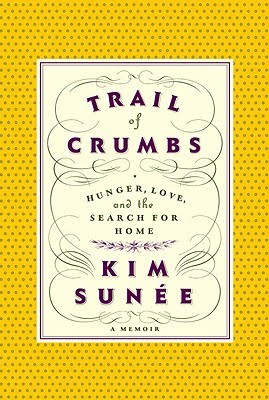
Trail of Crumbs

Hunger, Love, and the Search for Home
by Kim Sunee
ages: adult
First sentence: “Let me start by saying where I am.”

Perhaps I was influenced by Corinne’s and Lilly’s reviews of this book. Perhaps if I hadn’t read those, I would still have had the same reaction to the book. As it was, I couldn’t make it even 50 pages into it.

Many of Corinne’s and Lilly’s complaints are mine: Kim Sunee is unsympathetic, she tells more than shows, she’s not even very good — for a food memoir — at describing the smells, tastes, and feel of the food she’s cooking, eating or enjoying.

Honestly, I skipped around, read the ending, and chalked it up to me being much less hip, much less interested in self-discovery than the book wants from me.

There are better food memoirs out there, and better ways to spend my time.

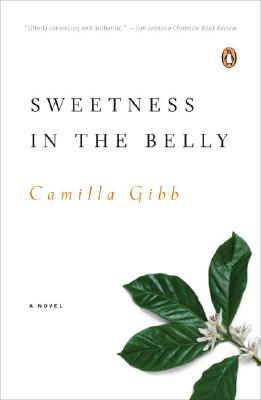
Sweetness in the Belly

by Camilla Gibb
ages: Adult
First sentence: “The sun makes its orange way east from Arabia, over a Red Sea, across the volcanic fields and desert and over the black hills to the qat- and coffee-shrubbed land of the fertile valley that surrounds our walled city.”

This was a buddy read with Kailana — and if it seems a little weird, it’s because she has the first half of the conversation up on her blog. Go visit it, then come back for the second half…

Melissa: That’s funny. I don’t know of many white Muslims, but I do have friends (who are white) who are very interested in Islam, so I knew a bit about the religion going into the book. I do like the portrait that Gibb painted of the religion: how there are some extremes (like the female circumcision, which was very difficult for me to read!) but most Muslims are just trying to find their path back to God. I liked how she looked upon Christians as “misguided”. That made me chuckle.

Kelly: Yeah, I have always had trouble with female circumcisions. It is so horrifying to hear described, and I know I never want to experience it first-hand! In other cultures the male circumcisions can be pretty graphic, too. Then it is less about religion and more about making the men feel less manly, but still, I will never understand the practice!

Melissa: Me, either! I got into an argument with my husband over it: I compared it to foot-binding in China (he disagreed that there were similarities), and wondered why women put their girls through such things for the sake of a “good marriage”. I’ve never encountered this in a book before (pretty sheltered reading, I guess): it was horrifying. One of the other things I liked about the religion is how much of it was cultural; how much of her religion when she got to Britain was almost more Ethiopian than what we’d consider (as an outsider) to be “Muslim”.

Kelly: It is actually China that is one of the places that would cut off men’s manly parts to make them better servants… And, women put themselves through that because it has become a norm that it is what is desired. So, it really is the men’s choice as much as the women’s. Women are worthless in many cultures if they don’t marry, and men won’t marry them if they don’t abide by cultural norms for what a woman is supposed to be!

Melissa: Very true. And very unfair! So… one of the things I noticed about the book was the language. Usually, it stands out to me and grates on me when a writer is so very effusive? technical? with language — like they’re trying to be flowery and trying to show that they have a mastery of it — but this felt very natural, very poetic. I loved it. What did you think?

Kelly: Oh, so happy you brought this up because I never would have thought to. I totally agree, though. Flowery writing is something I have never been a big fan of, but Gibb did it so well that I didn’t even pay attention. Normally I would also find writing like that slows the book down, but once I got into the book I found it was over with really fast. For the style it was actually a pretty fast read. I was impressed. I learned a lot, too, which was great. She says in the note in the back that it is mixed with fiction, so obviously not a true story, but I think she captures well what a character in Lilly’s position would be thinking. Would you agree?

Melissa: I totally agree. I have had problems with current “classics” in the past because the way the writer’s written the book is distracting from the story and the characters. I like the way you put it: that Gibb captures well the character of Lilly. I also felt like she gave a real sense of what it was like to be living in Ethiopia; the feel, the rhythm, the smell. It almost felt like I was there.

Kelly: I know! I really felt like I got a sense for everything, which is always a good thing in a fiction novel. Was there anything that you didn’t like about the book?

Melissa: Aside from the circumcisions and the medical stuff in general (I have a weak stomach!)? No. I think that’s one of the things that really surprised me about the book: there wasn’t anything that stood out as being really negative? How about you?

Kelly: I know! It is great, huh? I have read a bunch of good books in a row. I think I have another book by her on my TBR pile, so I am really looking forward to it! I can’t remember what book actually won the Giller the year she was nominated, but it must have been some book for her to lose to it! Medical stuff doesn’t really bother me, but I am bothered by the ways that women try and make themselves ‘appealing’ for men. Anything else that you want to mention?

Melissa: You have a stronger stomach than I do! You’ll have to let me know how her other book is; I’m not sure the library here has anything else by her. It was good reading this; thanks for introducing me to her books!

Kelly: Welcome! I am glad this worked out so well!

Library Loot #40

I’ve been really bad lately in getting books for M. It seems the last month or so, she’s been handing me the stack of books back without having read any of them mostly because they don’t sound “interesting.” So, when she came home from the library on Saturday having checked out Orson Scott Card’s Hart’s Hope (verdict: interesting, but very disturbing), it occurred to me that maybe she’s moving beyond the teen section.

So: what do I give a 13 year old girl to read that isn’t too graphic (violence, language, or sex) that is a bit more challenging/interesting/intriguing than the teen books I’ve been bringing home? She tends toward the fantasy, but she also likes historical and realistic fiction, too.

For A/K:
Monster Baby, by Dian Curtis Regan/Illus. by Doug Cushman
Bella & Bean, by Rebecca Kai Dotlich/Illus by Aileen Leijten*
Dora’s Costume Party! (Dora the Explorer) (I was really happy all those weeks when the Dora books weren’t in. Sigh.)
One Wolf Howls, by Scotti Cohn/Illus. by Susan Detwiler
Who Wants to Be a Poodle I Don’t, by Lauren Child*
The Terrible Plop, by Ursula Dubosarsky/Illus. by Andrew Joyner
Just How Long Can A Long String Be?!, by Keith Baker

For C:
Still reading “grumpy Harry”. I’m glad she’s so determined.

For M:
The Strongbow Saga, Book One: Viking Warrior, by Judson Roberts
Magic Street, by Orson Scott Card
The Memory of Earth, by Orson Scott Card

For me:
The Princess Bride: S. Morgenstern’s Classic Tale of True Love and High Adventure, by William Goldman
Oracle Bones: A Journey Through Time in China (P.S.), by Peter Hessler
Ninth Grade Slays: The Chronicles of Vladimir Tod, by Heather Brewer
Emma-Jean Lazarus Fell Out of a Tree, by Lauren Tarshis
Emma Jean Lazarus Fell in Love, by Lauren Tarshis

The roundup is either at Reading Adventures or A Striped Armchair. Obligatory FTC love: the links are provided through my Amazon Associates account. If you click through and actually purchase one of these books, I’ll get a teeny, tiny payment. But, since no one ever does, and it’s SO much easier using the associates account to put up these links, I’m going to keep doing it.

*Ones that M eventually read.
**Picture books we really liked.

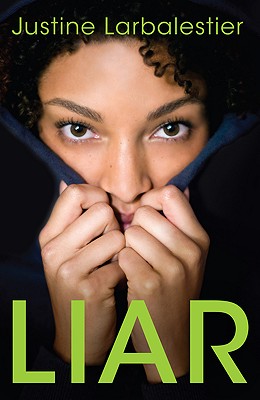
Liar

by Justine Larbalestier
ages: 13+
First sentence: “I was born with a light covering of fur.”
Review copy sent to me by the folks at Bloomsbury.

The hardest part about reviewing a book like this is not giving anything away. The hardest part about reading a book like this is knowing what to believe.

There are unreliable narrators — characters who don’t understand what’s going on around them, who whether willfully or unknowingly misinterpret the information around them, while the reader fully understands what’s going on. Then, there’s Micah. Micah is a liar, something for which she’s very up front about.

However, that means everything in the book is suspect. Everything.

I think the basic plot — that Micah’s “after hours” boyfriend, Zach was brutally killed — is pretty much sound. But everything else, from the opening sentence to the final paragraph, is suspect. How much is truth? Micah tells you that she’s telling the truth, but as the book unravels, there are lies. So you wonder: is she lying about lying? You can’t trust her as a narrator, and yet you have no information other than what she gives you. Everything in the book is on shaky ground, and you’re left at the end wondering what really happened.

It’s a compelling look at… what? Lying and truth-telling, yes. But other things as well. But you could also go meta here: it’s exploring the role of a narrator in a book, the role of a reader and the agreements the reader makes with the narrator/author when opening up the book. It’s an exploration of a girl trying to fit in, but… how?

I’d go on, but really, as Justine Larbalestier says, it’s better left spoiler free. Once you’ve read the book, head over to the spoiler thread and leave your two cents on what it all means.

I’m still reeling from it all. Fascinating.

Get Your Nominations In

Two days from now — Thursday, October 15th — is the last day to nominate your favorite children’s and young adult books published in the last year for a Cybil Award. The book(s) you nominate need to have have been published sometime between October 15, 2008 and October 15, 2009. You are allowed to nominate one book in each of the following categories:

Easy Readers/Short Chapter Books
Fantasy & Science Fiction
Fiction Picture Books
Graphic Novels
Middle Grade Fiction
Non-Fiction Picture Books
Non-Fiction: Middle Grade & Young Adult
Poetry
Young Adult Fiction

Click on the category title to see the list of books already nominated in that category. I’m really not very good when it comes to coming up with lists of books that haven’t been nominated. Click here to see Sherry’s list of books she’d like to see… I can tell you that right now we only have 92 books on my panel’s list, which is about 40 short from last year. (Does that mean there aren’t as many good Middle Grade books published this year?) I have noticed that we’re missing the latest Moxy Maxwell and Heavy Medal Newbery favorite A Season of Gifts on our list. If you haven’t spent your nomination in the Middle Grade Fiction category, consider one of those two. (Or others. I’m sure there are others…)

At any rate, you only have two days left to get your nominations in!

On Comments and Commenting, Part 2

This has been on my mind ever since Mother Reader asked me (along with Tricia at The Miss Rumphius Effect, Mary Lee at A Year of Reading, and Jennifer at BiblioFile) to be on a panel for the KidlitCon, and then asked “How can I get people to comment on my blog? Or link to my blog? Or notice I have a blog?” Honestly, the first thing that came to mind was commenting.

You want people to know you’re out here in the bloggy world? You want people to read what you write? Comment on blogs. All sorts of blogs. Follow links from your favorite blogs and comment on those blogs. Follow the links of the people who comment on your blogs and comment there. The only way people will know you’re out there is if you tell them you are. And the best way to tell them you’re out there is by comment love.

And I admit: I love comments. I feel bad when a post of mine doesn’t get any — it looks so neglected and ignored without any. And, to be really honest, I do wonder if what I wrote wasn’t “good” enough or “interesting” enough to merit any comments. Then I get all self-conscious: am I just shouting into the void? Is there anyone out there reading what I’m writing?

Yet, I find that I’m really bad at leaving comments. It’s not that I’m not reading what you write: I am (mostly). It’s just that I have — we all do — a limited amount of time in the day, and dividing it up between running a family, reading books, blogging about those books, and reading other’s blogs, the thing that gets pushed to the bottom every time is reading other’s blogs. I could spend all day wading through my feed reader, commenting on every blog, and I’m sure it’d make me hugely popular (well, I’m actually NOT sure about that) and I’d get a ton of comments (then again, maybe not). But, I don’t have that kind of time, and that’s not where my priorities lie.

And so to bring these two blogging poles into balance, I have developed a battle plan: comment on the posts and the blogs that aren’t getting much love. I find that if a post has more than 20 comments, or a blog that I read consistently gets 30, 60, 100 comments, I don’t feel a need or a desire to comment. What I probably wanted to say was probably already said by someone else (I hardly ever read through comments when they get over 25, anyway). It’s at that point that I don’t feel like I’m really contributing to the conversation, instead becoming just another yay– or nay-sayer in the crowd.

But on the smaller blogs and smaller posts, I feel I can make some sort of difference. Add that one comment that will make the post author’s day. (Because, believe me, I know how it feels.) Even if it’s just a “good review!” comment.

Which brings me to “good review” comments: do leave them. I know that my reviews get read, but I feel bad for the ones that don’t get any comment love. I don’t know why — like somehow my reviews are my babies, and I feel bad that they’re being rejected because no one liked it enough to say “Hey, great review.” Or even, “That sounds terrible/interesting/unique/stupid.”

Commenting is one way to get involved in the wider community — and leaving comments will most likely make someone else’s day. But, we do realize: we all have a limited amount of time, and not every post will get a comment from everyone. It’s just nice when it happens.

So, leave a comment: do you live for comments, or are you more like Liz: you know there are readers out there, and it really doesn’t matter if they comment?

Ice

by Sarah Beth Durst
ages: 12+
First sentence: “Once upon a time, the North Wind said to the Polar Bear King, ‘Steal me a daughter, and when she grows, she will be your bride.'”
Review copy sent to me by the publisher at the author’s request.

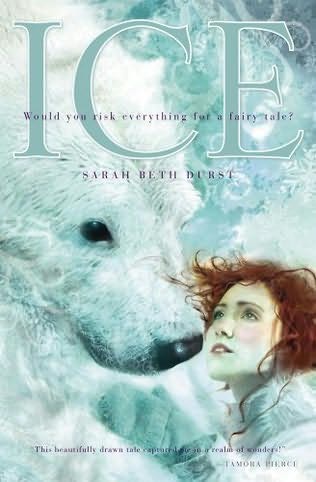
Cassie has spent her life knowing two things: polar bears and ice. It’s because she grew up with her father at a remote research station in northern Alaska. There was one other thing she was told: her mother was the daughter of the North Wind, and she was currently residing in the troll castle in exchange for defying the North Wind and having a daughter (who she promised would marry the Polar Bear King). Cassie figured it was just a fancy way for her dad and grandmother to tell her that her mother had died.

Until, on her 18th birthday, she discovers that the story was really true: she encounters Bear, who comes to take her to his castle and marry her.

Thus begins Sarah Beth Durst’s latest book, a modern adaptation of the fairy tale East of the Sun, West of the Moon. There have been other adaptations of this tale, but Durst takes it in a couple of new and intriguing directions. First, by setting it in modern day, it makes the fairy tale end of it seem more surreal. There aren’t supposed to be talking bears or magic in our modern, scientific world. Durst makes this work by introducing a vaguely religious aspect to the book: Bear and his kind are munasqri: beings who have powers in order to capture souls of the dying and deliver souls to the born of the creatures they oversee. It’s an intriguing concept: one that allows for magic without making things overly fairytale-ish.

The other thing I found interesting was that the marriage between the main character and the bear took place near the beginning of the book, rather than being the reward for finding the bear. The basic elements of the tale were there, except that Cassie is married — and pregnant — for most of the book. It added something more to the book; it’s almost more believable that Cassie would go to the ends of the earth and beyond for her husband rather than someone she just discovered she loved (though there’s some of that, too), especially because she’s carrying their baby. As a mother and a wife that particularly touched me. I’m not sure how much teens would find it interesting — M really enjoyed reading the book, though — but I did appreciate it for the picture of a loving, healthy relationship.

Durst opts for a more quiet tone than in her previous two books. There is no supreme adventure, a race against evil — though interestingly enough, evil takes a similar form in this one as it did in both of her other books. No, it’s a quest, a journey in the traditional sense: Cassie is searching for her husband, questing to prove to herself that the impossible can be done, learning that she not only can do what she thought she could — both physically and emotionally — and overcoming all in the end.

An excellent addition to this fairy tale’s adaptations.

The Summer I Turned Pretty

by Jenny Han
ages: 12+
First sentence: “We’d been driving for about seven thousand years.”

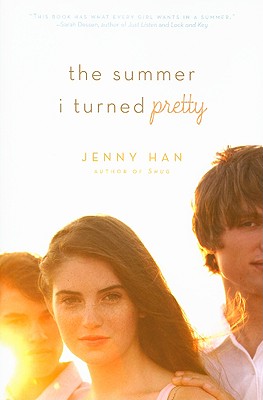
Belly lives for summers. Summers are when she is most alive, most at home, most in her element. Summers are when magic happens. Summers spent at the beach house, with her mother, older brother Steven, her mother’s best friend Susannah and her two boys, Conrad and Jeremiah. They are Belly’s world every summer.

She’s been the tag-along little sister for most of her life, but this summer, the summer she turns 16, it’s different. This summer, for the first time, people — boys — notice that she’s pretty. It’s also the summer that everything changes, because whether Belly likes it or not, nothing can ever stay the same.

Han has perfectly captured two things: 1) a hesitancy to grow up — Belly wants to be older, wants to be included with the boys, and yet she can’t quite seem to let the past, the way things were and have always been go quite yet; and 2) the need, desire, want of every girl to have at least one boy (preferably the boy they secretly adore) to acknowledge that they are pretty. Sure, there are other things going on here — divorce, angst, cancer — but really, the book all boils down to one girl, one summer, and her conflicting desires to change and yet stay the same.

It tugs at the heart strings, but not in a manipulative way. Perhaps, though, it’s a better nostalgia book for adults or older teens. One has to have gone through these emotions at some point in their life (and what girl doesn’t?) in order to truly “get” the book. Aside from that, though: it’s a beautiful portrait of a girl and the summer that changed everything for her.

An Argument for Bias: An Open Letter to the FTC

To Richard Cleland, Federal Trade Commission:

As I’m sure you’re aware, a lot of book bloggers have reacted strongly to the inclusion of book blogging in the “Guides Concerning the Use of Endorsements and Testimonials in Advertising” which have recently been released by the FTC. They, like me, are wondering how it will apply to the work we do. We are also somewhat frustrated at your apparent lack of understanding regarding how book reviewing and book blogging works. It is these latter concerns — with which I mostly agree — that has prompted this letter.

As I understand the guides, the FTC is concerned about the consumer’s perceptions of individual reviews of “products”. I can understand this concern, especially when it comes to utilitarian products.

When I am reading “reviews” (though as one book blogger, Mother Reader, observed, “how does how one ‘review’ a bookshelf or swingset or tungsten rings?”) of clothing, shoes, strollers, computers, cameras, or cars, I want to know how well they work. I want to know which brand or item is going to give me the most for my money. It’s reasonable that such things are “reviewed” on the basis of their form and function, because their value comes from how well they perform those functions. Reviews of those products need to be clear about any bias which might have come into the review, because being biased or dishonest about the performance of a product will diminish the value of those products in the hands of consumers. In short, it makes sense to regulate and oversee reviews of these kinds of commercial products: they have a definite utilitarian value which can be easily compared.

But books are different. Sure, they can be perceived as a product: they are physical in ways that, say, movies are not. There are publishers and authors who benefit from their production and sale. However, this is not what book reviewers are reviewing. You will not read a review of a book that says, in essence: “This book is about 6 by 8 inches, with 288 pages. There’s a nice smell about it, and the pages turn excellently. It also makes a great doorstop.” There is usually no (or very little) mention of the physical or utilitarian aspect of the actual book. There is also almost never any mention of which “brand” of book — be it Bloomsbury, or LittleBrown, or HarperCollins — is better than the other.

Rather, what we are reviewing are the ideas, the outpourings of a person’s imagination, in the book’s story. And for that, we often want bias. When it comes to books — or movies, music or art — biases (of some sorts anyway) can be helpful. It can mean that you’ve read a lot of other books (some of which you got for free, some of which you bought on your own, some of which you checked out from the local library), that you’re familiar with the author, that you understand what the publisher is trying to accomplish. This will enable you to be more sympathetic (and thus give potential readers a chance to learn something new) or more critical (and thus warn potential readers away when a book is really just more of this or more of that, and not as good).

Ultimately, a book review involves a question of taste. We book reviewers are reacting to the book in ways that a stroller reviewer doesn’t react to a stroller. Sure, you can look at the “construction” of a book — Are all the words spelled right? Does the sentence structure make sense? Is it cleverly or beautifully assembled? — but, ultimately, what a review really boils down to is the reviewer’s taste in stories. And taste cannot be regulated or influenced by free products.

Ask yourself what the consumers of book reviews–which include book bloggers themselves–are looking for. As readers of books, we actively search out not only multiple opinions on each and every book (if we’re so inclined), and we look for opinions of people whose taste (which we have determined over time) closely matches our own. It doesn’t matter if the review they find is in The Washington Post, the Wichita Eagle, Bookslut, or on an individual’s blog. Generally speaking, all readers want to know is whether they will have a positive experience with the story the book contains. So, we find people with like-tastes and read and come to trust (or, in some cases, distrust) their reviews, searching out (or avoiding) the books they recommend. It doesn’t matter if they got the book for free from Random House, or through a blog book tour, or because an author emailed them out of the blue; what matters is how they reacted to the story, and how we as consumers of book reviews are able to measure their taste against ours. As commenter Nicole said on this post in response to a comment about the bias inherent in blogs, “There is no tradition of ‘unbiased’ blogs, and any reader would know, going into a blog, that it is just a biased person giving an opinion. Sounds like the consumer has all the knowledge he needs.”

Although the print media has a reputation for being “unbiased” in their reviews, in all actuality they are not any more unbiased than individual bloggers. In my role as book editor for Dialogue: A Journal of Mormon Thought, I receive books — many unsolicited — from publishers for review in the journal. I consciously seek out reviewers who are knowledgeable about and are involved in the issues surrounding the topic of any given book, which increases the likelihood of their giving a “biased” review. This happens in ways both “positive”–in that they see the author has agreed with the reviewer’s own or work or has added something to the discussion which the reviewer thinks to be valuable–and “negative”–when the reviewer sees the author approaching a topic or area of study in a manner they think is ignorant, irresponsible, or counter-productive. I do not think this bias hurts the journal, and I do not think getting a free book biases a reviewer in favor of the book, whether that book comes from me, as an editor, or directly from the publisher. In fact, I think that if we actively discourage people from reviewing — or receiving — books they have a vested interest in, there would be far fewer reviews — and far worse ones.

After all this, I do know that it’s not really bias itself which you’re attempting to regulate. In terms of the regulations, it doesn’t matter if a particular blogger likes John Grisham or John Green. What does matter is if that blogger got the books directly from Grisham’s or Green’s publishers (or agents or publicists) instead of walking to the bookstore and buying a copy. But I’m here to say 1) that the variety of biases available throughout the book blogger world makes for a better and broader marketplace for those books (to say nothing of the “marketplace of ideas” which that variety contributes to), and 2) that the practice of obtaining getting free books needn’t affect that variety — on the contrary, it probably expands it. The reviewer who likes John Green will like his work whether or not the book was free. Same goes for the reviewer who dislikes his work. Because, unlike cameras or cars or strollers, books don’t have a set physical value. Sure, a book may sell for $19.95, and the publisher, author, and agent each get a cut. But, honestly, that’s not the real value of a book.

The real value to all readers of books is the ideas, and the experience of reading stories which contain those ideas. I’d like to think that the consumers of our blogs — our fellow readers — understand that concept. It’s not the possession of the physical book that ultimately determines what I think of it, it’s the reading experience. And, honestly, can one put a monetary value on or regulate an experience?

Sincerely,
Melissa Fox

Library Loot #39

Hi, my name’s Melissa.

(Hi, Melissa.)

I’m here because I’m a book addict. I love them. I love the feel of them in my hands, the weight, the smell. But I really love the stories. I can’t get enough of the stories. And when I’m wandering around the bookstore or the library or the book blogs, I hear them calling to me: “Pick me! Read me!”

(We understand, Melissa. We really do.)

I try to resist, I really do. Especially since I have a stack of books on my nightstand that have been waiting, so very patiently, for their turn to be read. But, sometimes the urge to pick up a book, to hold the book becomes so powerful that *breaks down crying* I have to give in.

(*patting on the back* *passing tissues*)

*sniffling* At least it was only checking books at the library and not buying them. Right?

(Right. Just think of all the money you saved.)

I’m glad I’m among friends.

For A/K:
The Teeny Tiny Woman, retold by Harriet Ziefert/Illus. by Laura Rader
Clyde Monster, by Robert L. Crowe/Illus. by Kay Chorao
Biscuit Visits the Big City, by Alyssa Satin Capucilli/Illus by Pat Schores**
Boogie Knights, by Lisa Wheeler/Illus. by Mark Siegel**
The Monster Trap, by Dean Morrissey
Too Many Toys, by David Shannon**
A Penguin Story, by Antoinette Portis
Betsy B. Little, by Anne McEvoy/Illus. by Jacqueline Rogers
Princess Pig, by Eileen Spinelli/Illus. by Tim Bowers
The Negro Speaks of Rivers, by Langston Hughes/Illus. by E. B. Lewis

For C:
There wasn’t anything that caught my eye for her. And since she’s *determined* to wade through “grumpy Harry”, I’m encouraging that.

For M:
Catalyst, by Laurie Halse Anderson*
Evil Genius, by Catherine Jinks
The Awakening, by Kelley Armstrong

For me:
Perfect Girls, Starving Daughters: The Frightening New Normalcy of Hating Your Body, by Courtney E. Martin
Al Capone Does My Shirts, by Gennifer Choldenko
Alvin Ho: Allergic to Camping, Hiking, and Other Natural Disasters, by Lenore Look
Envy: A Luxe Novel, by Anna Godbersen (I know: I caved.)
Trail of Crumbs: Hunger, Love, and the Search for Home, by Kim Sunee

The roundup is either at Reading Adventures or A Striped Armchair. For full disclosure (aka, FTC love): the links are provided through my Amazon Associates account. If you click through and actually purchase one of these books, I’ll get a teeny, tiny payment. But, since no one ever does, and it’s SO much easier using the associates account to put up these links, I’m not going to stop doing it.

*Ones that M eventually read.
**Picture books we really liked.