

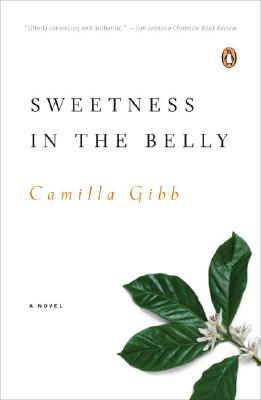
 by Camilla Gibb
ages: Adult
First sentence: “The sun makes its orange way east from Arabia, over a Red Sea, across the volcanic fields and desert and over the black hills to the qat- and coffee-shrubbed land of the fertile valley that surrounds our walled city.”
This was a buddy read with Kailana — and if it seems a little weird, it’s because she has the first half of the conversation up on her blog. Go visit it, then come back for the second half…
Melissa: That’s funny. I don’t know of many white Muslims, but I do have friends (who are white) who are very interested in Islam, so I knew a bit about the religion going into the book. I do like the portrait that Gibb painted of the religion: how there are some extremes (like the female circumcision, which was very difficult for me to read!) but most Muslims are just trying to find their path back to God. I liked how she looked upon Christians as “misguided”. That made me chuckle.
Kelly: Yeah, I have always had trouble with female circumcisions. It is so horrifying to hear described, and I know I never want to experience it first-hand! In other cultures the male circumcisions can be pretty graphic, too. Then it is less about religion and more about making the men feel less manly, but still, I will never understand the practice!
Melissa: Me, either! I got into an argument with my husband over it: I compared it to foot-binding in China (he disagreed that there were similarities), and wondered why women put their girls through such things for the sake of a “good marriage”. I’ve never encountered this in a book before (pretty sheltered reading, I guess): it was horrifying. One of the other things I liked about the religion is how much of it was cultural; how much of her religion when she got to Britain was almost more Ethiopian than what we’d consider (as an outsider) to be “Muslim”.
Kelly: It is actually China that is one of the places that would cut off men’s manly parts to make them better servants… And, women put themselves through that because it has become a norm that it is what is desired. So, it really is the men’s choice as much as the women’s. Women are worthless in many cultures if they don’t marry, and men won’t marry them if they don’t abide by cultural norms for what a woman is supposed to be!
Melissa: Very true. And very unfair! So… one of the things I noticed about the book was the language. Usually, it stands out to me and grates on me when a writer is so very effusive? technical? with language — like they’re trying to be flowery and trying to show that they have a mastery of it — but this felt very natural, very poetic. I loved it. What did you think?
Kelly: Oh, so happy you brought this up because I never would have thought to. I totally agree, though. Flowery writing is something I have never been a big fan of, but Gibb did it so well that I didn’t even pay attention. Normally I would also find writing like that slows the book down, but once I got into the book I found it was over with really fast. For the style it was actually a pretty fast read. I was impressed. I learned a lot, too, which was great. She says in the note in the back that it is mixed with fiction, so obviously not a true story, but I think she captures well what a character in Lilly’s position would be thinking. Would you agree?
Melissa: I totally agree. I have had problems with current “classics” in the past because the way the writer’s written the book is distracting from the story and the characters. I like the way you put it: that Gibb captures well the character of Lilly. I also felt like she gave a real sense of what it was like to be living in Ethiopia; the feel, the rhythm, the smell. It almost felt like I was there.
Kelly: I know! I really felt like I got a sense for everything, which is always a good thing in a fiction novel. Was there anything that you didn’t like about the book?
Melissa: Aside from the circumcisions and the medical stuff in general (I have a weak stomach!)? No. I think that’s one of the things that really surprised me about the book: there wasn’t anything that stood out as being really negative? How about you?
Kelly: I know! It is great, huh? I have read a bunch of good books in a row. I think I have another book by her on my TBR pile, so I am really looking forward to it! I can’t remember what book actually won the Giller the year she was nominated, but it must have been some book for her to lose to it! Medical stuff doesn’t really bother me, but I am bothered by the ways that women try and make themselves ‘appealing’ for men. Anything else that you want to mention?
Melissa: You have a stronger stomach than I do! You’ll have to let me know how her other book is; I’m not sure the library here has anything else by her. It was good reading this; thanks for introducing me to her books!
Kelly: Welcome! I am glad this worked out so well!
 The Book Nut
Oh! A couple months ago, I read an INCREDIBLE memoir about that same time period in Ethiopia called Notes From a Hyena's Belly. It's one of my very favourite memoirs ever, so if you're still curious about the topic, I'd HIGHLY recommend it. Very literary! <-- that part of comment was C&p'ed from Kelly's blog. Ok, I think there's a TOTAL similarity between female circumsion (which is MUCH WORSE than male circumsion-unless Kelly's thinking of castration?!) and bound feet. Last month, I read Half the Sky about the condition of women worldwide, and it drew the same parallel-it's written by two Pulitzer-prize winning journalists, so I'd say you're vindicated. 🙂 There's a profile of a western woman who has lived in Senegal for the last 30 years or something like that, and she's developed a very successful anti-female circumsion program by making it a village-wide decision, so the men are involved as well and no one can be ostracised. Well, I want to read this one right now-what an exccelt co-review guys!
LikeLike
Female circumcision is horrible. I'm a little more leery of the book now if it actually describes the process in a graphic way…but i still want to read it. I might just have to skim past those parts.
LikeLike
Thanks for this conversation/review. I'm adding this book to my to-read list.
LikeLike
Amanda — it's graphic, but not overly so. I'm just really sensitive to medical scenes. There was a scene later with parasites that was almost harder for me to read than the female circumcision.
Eva — thanks for the recommendation. I'll have to look it up1
LikeLike
Great review! I'll have to add this to my TBR list.
LikeLike
This was fun! I look forward to another buddy review in the future!
LikeLike