November Jacket Flap-a-Thon

The (mostly) Middle Grade edition…
How the Garcia Girls Lost Their Accents (Algonquin Books): “The Garcias — Dr. Carlos (Papi), his wife Laura (Mami), and their four daughters, Carla, Sandra, Yolanda, and Sofia — belong to the uppermost echelon of Spanish Caribbean society. They descend from the conquistadores. Their family compound adjoins the palacio of the dictator’s daughter. The Garcia girls giggle at the sight of the dictator and his toddler grandson in matching general’s uniforms. The Garcia grownups are careful not to seem to snub the neighbors (much less dispose them). So when Papi’s part in a coup attempt is discovered, the family must flee. This is the chronicle of that family in exile. Papi has to find new patients in the Bronx. Mami, far from the compound and the family trainers, must find herself. The girls try to lose themselves by ironing their hair, buying bell-bottoms and fringe, forgetting their Spanish. Before Papi knows it, his “harem” has broken out in new identities that are at definite odds with the very proper Island life of maids and manicures. For the Garcia girls, it is exhilarating and terrifying, liberating and excruciating being betwixt and between, trying to live up to Papi’s version of honor while accommodating the expectations of their American boyfriends. Little revolutionary plots evolve at home. Little stores of pot, birth control devices, explicit love letters are squirreled away. But Papi is not so easily overthrown. The boarding schools fill up with Garcia girls’ the analyst’s couch and divorce courts will too. Julia Alvarez’s brilliant first book of fiction sets the Garcia girls free to tell their irrepressibly intimate stories about how they came to be at home — and not at home — in America.”

This is actually a really good blurb: the book’s written backwards, so the blurb not only gets people interested in the book, but actually helped those of us who were a bit disoriented by the style. Who knew a blurb could do so much?

4. My Dad’s a Birdman (Candlewick Press): “Roll up! Roll up! A new illustrated novel by David Almond! IN a rainy town in the north of England, there are strange goings-on. Dad is building a pair of wings, eating flies, and feathering his nest. Auntie Doreen is getting cross and making dumplings. Mr. Poop is parading the streets, shouting louder and LOUDER, and even Mr. Mint, the headmaster, is getting in a flap. And watching it all is Lizzie, missing her mam and looking after Dad and thinking how beautiful the birds are. What’s behind it all. It’s the Great Human Bird Competition, of course!”

This was one of those instances when I liked the blurb better than the book.


3. Island of Mad Scientists (Kids Can Press): “‘We are running away!’ Aunt Lucy announces to her eccentric household. Her niece, fourteen-year-old pioneering aviatrix Emmaline Cayley, ‘indestruckable’ pilot Rubberbones and lovably ferocious Princess Purnah of Chiligrit are looking forward to their upcoming holiday. (‘Holiday,’ in this case, being another word for escaping from the authorities.) But things don’t go entirely as planned. Before long, this merry band of travelers is en route to a cold and damp Scottish isle used by experimental scientists. And Purnah is once again being pursued by nefarious forces intent upon returning her to St. Grimelda’s School for Young Ladies. An even greater peril threatens Emmaline and Rubberbones: a sinister old man known as the Collector aims to capture the duo, with the help of two misfit thugs and a sneaky master of disguise, and add them to his alphabetically organized collection of brilliant scientists…”

Terribly funny. Like the book.

2. The London Eye Mystery (David Fickling Books): “What goes up must come down… mustn’t it? When Aunt Gloria’s son, Salim, mysteriously disappears from a sealed pod on the London Eye, everyone is frantic. Has he spontaneously combusted? (Ted’s theory.) Has he been kidnapped? (Aunt Gloria’s theory.) Is he even still alive? (The family’s unspoken fear.) Even the police are baffled. Ted, whose brain runs on it’s own unique operating system, and his older sister, Kat, overcome their prickly relationship to become sleuthing partners. They follow a trail of clues across London in a desperate bid to find their cousin while time ticks dangerously by…”

Clever and intense. Made me want to read the book.

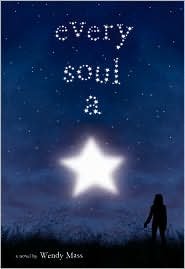
1. Every Soul a Star (Little, Brown and Company): “At Moon Shadow, an isolated campground, thousands have gathered to catch a glimpse of a rare sight: a total eclipse of the sun. Three lives are about to be changed forever. Ally: Ally likes the simple things in life — labyrinths, stargazing, and comet hunting. Her home, the Moon Shadow campground, is a part of who she is. She refuses to imagine it any other way. Bree: Popular, gorgeous (everybody says so), and a future homecoming queen for sure, Bree wears her beauty like a suit of armor. But what is she trying to hide? Jack: Overweight and awkward, Jack is used to spending a lot of time alone. But when opportunity knocks, he finds himself in situations he never would have imagine. With humor and warmth, Wendy mass weaves an intricate and enchanting tale. Told from three unique perspectives, Every Soul a Star is about strangers coming together, unlikely friendships, and finding one’s place in the universe.”

This was a hard one to choose, because they all were good. But I think this blurb captured the essence of the book (without giving too much away) the best.

There was no one worst. Go figure. It was a good blurb month.

Little Audrey

by Ruth White
ages 9-12 (though my library has it shelved in the Teen section…)

There are some books that just floor you when you read them. Either they’re so fabulous that they draw you into their world. Or because the so horrible that you wonder how on earth people existed like that. Little Audrey is the latter. When I read The Glass Castle this summer, I was moved by Jeannette Walls’s courage in dealing with her less-than-ideal living situation. I had much the same reaction to White’s book: it’s deeply saddening that anyone would have to live like they did, and it’s remarkable that they survived and thrived as much as they did.

Little Audrey is the story of a part of White’s childhood. Told (and somewhat fictionalized) though the eyes of White’s oldest sister, Audrey, this is the story of the White family in a mining “holler” in southwest Virginia in 1948. It’s not a pretty life: their father is a drunk, taking the scrips (they don’t get money) and spending most of it on alcohol. They’re barely making it from week to week. Audrey’s recovering from the scarlet fever, and is supposed to be gaining weight, but it’s hard when there’s not enough food to go around. Yet, through it all, and through the tragedy that happens in their life, they find hope. Audrey learns about the inner strength of her mother. She also finds kindness in those around her, from her neighbors to her schoolteacher to her friend, Virgil. It’s an inspiring and hopeful book, something which you don’t expect from the subject matter.

This is a book for younger readers, after all, and White only glances on the wreck that was her father. It’s probably a good thing — Audrey was young enough not to really notice or understand what was going on, but at the same time, she’s an incredibly perceptive girl. She knows her mother is trying to make do even though her father is trying to drink them all into oblivion. She knows her father beats her mother. She knows when to stay out of his way. And she knows that she will make do in spite of it all.

It’s a good book, one that surprised me how much I was drawn in and moved by it. And the fact that it’s a true story made it all the more powerful.

(Just for the record: because this is a Cybils nominee, I’ve been asked to make sure y’all know this is my opinion only, and not that of the panel.)

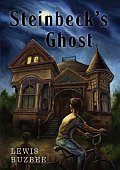
Steinbeck’s Ghost

by Lewis Buzbee
ages: 10-14

I’m not going to review the book — I liked it, well enough, but thought it fell apart in the end. Instead, since this is what I really liked from reading it, I thought I’d share some of the wonderful bookish quotes from the book.

“Every book he recognized opened up the world of that book to him. These weren’t stacks of paper bound together with glue or string–they weren’t items or products. Every book was an entire universe.” (p. 26)

“Reading a library book wasn’t something you did on your own. It was something you shared with everyone who had ever read that book. You read the book in private, yes, but other hands had been on it, had softened its pages and loosened its spine. With hardcovers, the clear shiny Bro-Dart, put on to protect the dust jacket, quickly got scuffed and crinkly, and sometimes you’d find a thumbprint pressed into the plastic. The book, when you were done with it, went back to the library, and from there to other hands. When you read a library book, you were connected to all these strangers.” (p. 56)

“When you read, the world really did change. He understood this now. You saw parts of the world you never knew existed. Books were in the world; the world was in books.” (p. 89)

Isn’t that so true?

(Just for the record: because this is a Cybils nominee, I’ve been asked to make sure y’all know that whatever brief opinion is in this post, it’s my opinion only, and not that of the panel.)

My Fair Godmother

by Janette Rallison
ages: 10-14
Publication date: January 6, 2009

Sixteen-year-old Savannah has a perfect life… or at least the perfect boyfriend. That is, until he decides that he’s more attracted to, and compatible with, Savannah’s older sister, Jane. All of a sudden, things are looking pretty bleak: after all, who will take Savannah to the prom? Enter Chrissy, Savannah’s “Fair” (she’s going to school, and hasn’t quite earned the whole “fairy” part yet) Godmother. She grants (well, sort of) Savannah three wishes, which creates a bit of a mess. Savannah’s sent back to the Middle Ages in the role of Cinderella, then Snow White, and then Chrissy sends Savannah’s friend Tristan back to become a prince. By this time, Savannah’s a bit fed up with Chrissy, yet Savannah braves the Middle Ages one more time to help Tristan accomplish his quest. And possibly fall in love in the process.

I read this one out loud to C, and aside from a few pages in the prologue where I was wondering if it was a bit too high-school-romancey for her, we both really enjoyed it. It was more fluff than depth, but I thought it worked well for the tale. Savannah spent most of the book being dogged on by other people (she didn’t take school seriously enough, she was just underfoot), but in the end, she understood things and worked with what she had quite creatively. Additionally,there was sufficient adventure to keep C interested (but not too many cliffhangers), and Rallison uses the traditional fairy tales quite creatively. We both especially liked her treatment of the Snow White story.

And it had the most important requirement for reading aloud (at least in our house): lots of fun characters with accents. (My personal favorite was Clover T. Bloomsbottle, the jaded leprauchan.) It was also pretty funny; I’m not sure how much of the humor C “got”, but I was laughing at all the asides and clever references. I’m not sure how well this would stand up if I had read it by myself, but I really enjoyed reading it aloud.

Which is okay, too.

The London Eye Mystery

by Siobhan Dowd
ages: 10+

I was fascinated by this book. I’m still trying to decide if “fascinated” translates into “good” and “liked it” — I think it does — but I do think fascinated is an accurate way to describe my response.

Ted’s brain works on, as he calls it, a “different operating system”. He recognizes systems and patterns — he loves weather, most of all — but can’t understand nuances and idioms. He’s living a nice, quiet life with his parents and older sister, Kat, in London. Then his Aunt Glo and cousin Salim come to visit on their way from Manchester to New York City (they’re moving). Salim desperately wants to go up the London Eye (the link is for your information, since I had no idea that this was a real thing!). Ted, Salim and Kat were standing in line waiting for tickets when a stranger comes up and offers one ticket to them. Salim takes it, goes up the Eye, and… doesn’t get off. From there unfolds a mystery that only Sherlock Holmes — and possibly Ted — can solve.

I liked Ted as a character; he was sympathetic, and even though you knew he was what most people would call disabled in some way, it never felt like a handicap. He did get frustrated when people wouldn’t listen to him, and by the way his sister often treated him, but he was a very determined character. And a very interesting narrator. As for the mystery, well, I’m no judge of mysteries, but this one was pretty good. The adults were dissolving into panic, but betweeen Ted and Kat they were able to look at the situation and reason it out. I’m not sure if that would work for all readers, but it worked for me. I have read a couple of reviews that complained that Dowd broke a fundamental mystery rule in that the reader couldn’t have figured it out, but I’m not so sure. Then again, I never figure out a mystery before the detective does, so I’m a lousy judge of that.

The book does stick with you, though. I’m finding that I’m thinking about it off and on since I finished it, wondering if it was really plausible, wondering about Ted’s unique operating system, musing about the whole situation.

That’s usually a sign that it’s a good book. Isn’t it?

(Just for the record: because this is a Cybils nominee, I’ve been asked to make sure y’all know this is my opinion only, and not that of the panel.)

Little Leap Forward

by Guo Yue
ages 7/8-12

Little Leap Forward is a boy in Bejing, China in 1966. It is the height of Chairman Mao’s reign, but it hasn’t really touched Leap Forward’s life much. He still plays by the river with his best friend, Little-Little, and he still enjoys his silkworms and the music he hears around him. One day, the boys capture a little yellow bird, which Leap Forward calls Little Cloud. He takes the bird home, intending on taming it and enjoying it’s music. The bird, once caged, won’t sing. Then the Red Guards arrive and Leap Forward’s life — and perspective — change.

This is a small autobiographical novel that while not detailed, I think caputures something different about the Cultural Revolution and China during that time. Leap Forward isn’t running from anything, he isn’t being oppressed; he’s mostly just trying to be a kid. Yet, because of the bird and a bamboo flute and a desire, his life was changed. There is a simple humanity and kindness to the book that I don’t remember finding in the other books I’ve read about this time.

Additonally, I loved the paintings, done by Clare Follows, Gue’s wife; they’re simple, yet beautiful. Something that I could spend time absorbing. But I have to admit, what I enjoyed most was the author’s note at the end where Gue tells part of his story. It’s touching and sad and sweet and just perfect. He as also released a CD called Music, Food and Love, which I’d love to find and listen to. He sounds like a remarkable man, one with a fascinating story to tell.

(Just for the record: because this is a Cybils nominee, I’ve been asked to make sure y’all know this is my opinion only, and not that of the panel.)

Not A Cybils Review

Can you believe it?? Thank Heather for the break in our programming, she’s the one who passed the award on to me. (Thank you, Heather!!)

7 things I did before
1. played the french horn
2. swam
3. watched TV
4. went to the ballet
5. listened to tapes
6. aspired to be a journalist
7. drank soda

7 things I do now
1. play the piano (though not as much as I want)
2. run (but mostly after my kids)
3. read
4. long to go out
5. listen to MP3s
6. aspire to get paid for writing reviews
7. drink water

7 things I want to do
1. get paid
2. travel overseas
3. lose 30 pounds
4. get rid of the debt
5. find an extra 5 hours in the day
6. decorate a wedding cake
7. learn French

7 things that attract me to the opposite sex
1. fine eyes
2. dark hair (an accent’s a bonus)
3. humor
4. patience
5. intelligence
6. empathy
7. gentleness

7 Favorite Foods
1. orange scones at Panera
2. hot chocolate
3. anything with chocolate, caramel and nuts
4. Spinach-Artichoke dip
5. homemade wheat bread fresh from the oven
6. chili
7. angel food cake with fresh strawberries and whip cream

7 Things I Say Most Often
1. Mmmm… Uh huh. What?
2. Do your chores, please!
3. K, did you do that?
4. I need you to… (multiple ways to finish that one)
5. How was your day?
6. Do you have any homework?
7. I love you, too.

7 More Kreativ Bloggers:
This is the hardest part for me… I hate picking and choosing among my list. I’ve been participating in Mother Reader’s comment challenge, and have discovered some (more) wonderful blogs. A sampling of my new additions:
1. Hip Writer Mama
2. Everead
3. Charlotte’s Library
4. Teacher Ninja
5. Confessions of a Bibliovore
6. Semicolon
7. Writing and Ruminating

Every Soul a Star

by Wendy Mass
ages 8-12

Yesterday, I saw a lovely review of this book over at Fuse #8, which coincidentally enough, I had just brought home from the library. I thought that it sounded like something that I would enjoy, and began it this afternoon. I couldn’t put it down.

I’m having trouble putting my effusive thoughts into coherent sentences (the Alvin and the Chimpmunks Witch Doctor in the background isn’t helping!), so I’ll just stick with a bullet list:

  • Basically, it’s the story in the voices of three (well, four) kids: Ally, a homeschooled girl who lives at Moon Shadow campground, and has been preparing for the advent of a solar eclipse her whole life, and who is faced with the impending move back to suburbia; Bree, a A-list girl, whose whole life is fashion and shopping, and who is being summarily uprooted from her suburban life when her parents decide to take over the running of Moon Shadow; and Jack, an overweight loner who failed science and is stuck going to see the solar eclipse instead of going to summer school.
  • I loved that this book was about astronomy. Honestly, that was the only thing I remember from 8th grade science, but I really love going out and looking at stars and the moon. This book captured the awe that stargazing can make a person feel very eloquently.
  • I liked how Mass did the three voices. Each one was disctint, with a voice I could literally hear in my head, but they all interconnected in ways in order to propel the story forward. There were only a few instances where I felt like the narrative sagged, and it wasn’t enough for me to really care.
  • In the same vein, I liked how Mass treated her characters. Bree was one that I could see myself being annoyed at, but I found myself sympathizing with her and eventually even liking her. But it wasn’t just Bree: all of the characters (even the 20-something eclipse chaser dudes) were likable. Even though we only heard the narrative from three of the kids, I wound up liking pretty much everyone who had a place in the book.
  • All that said, I actually learned stuff from this book. (It’s not often I can say that!) Mass threw an awful lot of astronomy in the book, and did so in a way that felt completely organic to the story. Of course Ally’s going to go off about stars and nebulae: it’s been her whole life for as long as she can remember. I just happened to pick up a few interesting facts along the way.
  • Given all the science and narrative and everything else, what I really liked was that this was a book about change and hope. And looking for the best in everything — from situations to people.
  • Oh, and don’t forget to read the author’s note at the end.

(Just for the record: because this is a Cybils nominee, I’ve been asked to make sure y’all know this is my opinion only, and not that of the panel.)

Two Very Different Books About Two Extraordinary Girls

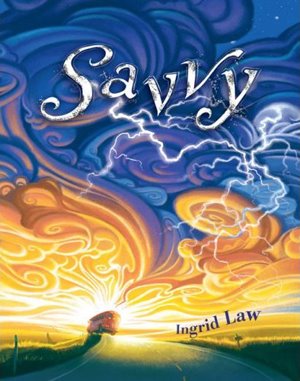
Savvy
by Ingrid Law
ages: 9 (I would say 10, but call it fourth gradeish)+

Mississippi Beaumont (she’d rather you call her Mibs) is about to turn 13. The thing is, in her family, that’s when your savvy hits. It’s kind of like a super-power, but it’s not. Mibs’s brother Rocket is trying to control electricity, her grandpa moves land around (to hear him tell the story, Idaho was his fault), and her brother Fish controls the weather. Naturally, Mibs is excited (if not a little bit anxious) to find out what her savvy will be. However, the night before her birthday, her Poppa is in a car accident and lands in a hospital in Salina, Kansas. From there, a series of events unfolds that makes Mibs’s birthday one of the most unforgettable of her life.

Law had charmed with this book. At least, when I started it yesterday, I was. I think if I had finished it yesterday, I might have been bubbling over the top with praise, but I put it down, and didn’t get around to finishing it until later this afternoon. As a result, I felt like it was missing something. Like the end didn’t maintain the momentum that the beginning set up.

In the end, though, I do think it’s a very, very good book, with very, very good characters and a very, very entertaining plot. I liked Mibs’s savvy, and the way she learned to deal with and use it. But it was more than that: I liked Mibs as a character; she was a good-hearted, sweet, girl who was determined and stubborn when she needed to be. I liked the adventure she and her brothers and the preacher kids went on. And I appreciated the ending, even if it didn’t wow me as much as the beginning did.

It’s definitely worth reading.


Daisy Dawson is on Her Way!
by Steve Voake
ages: 6-9

On the completely opposite end of the spectrum from Savvy, we have Daisy. It’s a quiet, sweet little book without much conflict but with some wonderful illustrations.

Daisy is like many other girls: she gets up, she goes to school, she likes animals. The liking of the animals, however, seems to get in the way of going to school. On the way, she stops, watching and helping all the little and big animals she sees. As a result, she’s usually late to school. This amplifies one day, when Daisy discovers that the animals can talk back. This leads to some fun friendships (and some interesting exchanges) and a daring rescue attempt of a sweet dog named Boom.

I think what I liked best about the book was Voake’s matter-of-fact way of handling Daisy. He simplified everything for the youngest chapter-book readers, but he didn’t talk down to them at all. It’s very descriptive, but in as few words as possible, he captures the essence of Daisy’s heart and personality. I also liked how he touched on growing up, ever so lightly, when Daisy is trying to figure out whether or not her gift for talking to animals is a “real” one. She tells herself that she needs to grow up and come down to earth, but the animals — wisely — talk her out of it. Sure, maybe someday she’ll grow up and not be able to hear the animals, but for now, she’s enjoying all her newfound friends.

As did I.

(Just for the record: because these are Cybils nominees, I’ve been asked to make sure y’all know this is my opinion only, and not that of the panel.)