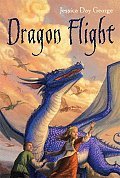
Dragon Flight

I’m on a bit of a middle grade kick right now…

I actually stayed up a bit late last night finishing this one, partially because I could, but mostly because I was enjoying myself and I lost track of the time. A sequel to
Dragon Slippers, this essentially picks up a while after it left off. Since it’s been eight months since I read the first, I was a bit fuzzy on all the details, and I was actually hoping I could read this one okay as a stand-alone, and that I wouldn’t be missing too much if I didn’t re-read the first book.

Thankfully, George spins a good stand-alone tale, weaving in just enough details to remind me of the basic plot of the first book, without bogging the plot of this book down. It picks up basically where Slippers left off, with Creel as a fairly successful dressmaker and Prince Luka off to a neighboring land as ambassador. We find out that the dragons — Shardas and his mate, Velika — are alive but seriously wounded. Then Luka sends word that the neighboring country is planning on attacking Feraval… with hundreds of dragons. This shocks everyone, not least Creel, and she (with her trusty sidekick and friend, Marta) heads off to figure out what the big deal is. (This is not just because if she didn’t, the book wouldn’t work, but because Creel has been deemed a “dragon expert”.) From there, they discover deeper, more sinister plots, and work to not only save themsevles, but the dragons.

I think it works well as an action book, though I was a bit disappointed in the climactic battle scene. I remember liking the budding romance between Creel and Luka, and this, while lacking the intensity I usually like, built nicely upon their relationship and has a good (or perhaps it should be silly?) proposal. I’m sure there’s more that I could nitpick, but honestly, I’m tired and so I won’t.

In all, though, it was a fun way to spend an evening.
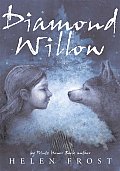
Diamond Willow

After reading Sarah Miller’s enthusiastic review of this today, I went upstairs and plucked it off my pile (it being there because it’s one of the Middle Grade Cybil nominees). I’m so very glad I did.

It’s a beautiful book — both to look at and to read. There are no illustrations, but the poems themselves are works of art. Each poem is a shape of the diamond willow sticks (for a picture, either go to Sarah’s or to Helen Frost’s website), with a darker hidden message in each one. I loved paging through the book, just looking at each individual shape (I don’t think there are two alike). But in addition, the words themselves are carefully, simply and yet powerfully chosen. I like how each poem each builds the story towards a most satisfying conclusion.

The story is pretty simple: Willow, a 12-year-old part-Native Alaskan who lives in a remote town, is struggling with herself, with school, with finding happiness. She begs her parents to drive the sled (with three dogs) to her Grandparents house one weekend, and on coming back there’s an accident. From there, it builds and to go on would spoil your experience, so I won’t.

There are so many things to like in addition to the simple beauty of the book. There’s the ancestors spirits who are guiding and helping Willow along her path. There’s a subtle, understated humor about it. There’s a respect and love of nature. There’s a wonderful human-dog relationship (which made me think of my sister, who would love this book). And I think Frost captured the insecurities and hopes and determination of a 12-year-old who is trying to find herself.

In all, it was one of the best hours I’ve spent in a long time.

(Just for the record: because this is a Cybils nominee, I’ve been asked to make sure y’all know this is my opinion only, and not that of the panel. Thank you.)

Explaining How I Do Things Around Here (A Manifesto)

When I started this blog just about four years ago, I had no idea it would evolve into anything like it has. I began it with the sole purpose of having a place to put my personal thoughts on books, primarily because people love to ask me “what do you think of X” and I can never remember. Over time, and much to my (pleasant) surprise, I’ve managed to accumulate a whole bunch of readers, write for two e-zines, and am getting sent ARCs right and left.

Because my blog has evolved in the direction it has (and because of a recent email exchange), I figured it was probably past time for me to put down in writing what I’m attempting to do here, and elsewhere, with the reviews I write.

The basic principles guiding what I do around here:

  • I review everything I read: the good, the bad, the didn’t finish. I do that because I, at least, want to know whether I liked a book or not, or whether I managed even to get through it, and, if so, why I abandoned it. I know that when I don’t like a book, I can come off as mean sometimes, because I like to be honest. I also know I have offended authors in the past, because I have said that I haven’t liked their books. Know that this is just my opinion. I know I am able to change them (or not) with enough discussion, because I have in the past. However, that doesn’t mean I’m going to go back and change what I wrote about the book, because I want to remember what I thought when I read it initially. If I choose to reread a book, and my opinion of it has changed, I’ll put up a new review.
  • Here on Book Nut, I try to only review books I obtain myself. That means: gifts, library books, books that I either bought or won. I don’t do author interviews here. I don’t (usually) review ARCs here, though I have a few times in the past. I think I have noted in my review that it was a book not obtained by personal means; if not, it’s something that I will rectify in the future. I may change my policy in the future, but for right now, I’d rather not review books given to me by publishers, publicists and authors here.
  • The ARCs that I am sent (whether by publishers, publicists, or authors), I review in one of two places: Estella’s Revenge (ER) or The Edge of the Forest (TEOTF). Generally speaking, ER gets all the upper-YA and adult books, TEOTF gets all the lower-YA and middle grade (and some picture books, when I get those; I don’t usually do picture books, though). I am also more than willing to do author interviews for ER.
  • I try not to accept ARCs that I have no interest in, or I don’t think I’ll even remotely like. However, generally I am only going off publicist blurbs and cover pictures when I make those decisions, and so I’m going to invariably get a few that initially I may think I’m going to like but end up disliking.
  • That said, I can only read and review so much a month for those two publications (averaging about 3 a month for each), and so it’s easy for me to get behind. But I do read everything. Eventually.
  • My reviews for ER tend to be similar to what I write at Book Nut. I do try to be less chatty, and more descriptive (and longer), but if I didn’t like the book, I’m going to say so. For TEOTF, however, I tend to range from cautiously positive to adoring. Even if I didn’t like the book, I’ll try and write something that isn’t completely negative. Yes, that may not be completely honest, but that’s the way the publication treats books. I’m just writing for the audience there.
  • When I read a book, I am influenced by: the previous book I read, the mood I’m in, my stress level, whether or not my kids are climbing on me while I read (or write!), my religion, my age, my situation in life, my political beliefs, and a whole host of other factors. I don’t apologize for that. As I said before, I’m interested in my initial response to the book. I do try to say, in the review, if there are any cirumstances that could have affected my reading of the book (like I read an excellent book previously, or I read the graphic novel version/saw the movie first, or I was having a bad day, or I was annoyed at the narrator/characters/copy-editing) so that my readers will know what my opinion is shaped by. I would like to think that makes my opinion still valuable to my readers, but I don’t want anyone to think that I am conciously trying to be especially “objective” or “professional” or “balanced” in my reviews; they are my opinion, first and foremost. As I said before, my attitudes may (or may not) change with time, and from time to time I do revisit books.
  • Authors: if you do have an issue with what I write, leave a comment or write me an email at mmfbooks AT gmail DOT com. PLEASE remember that it’s just my opinion. I’m not out to vilify you or destroy your career.

I think that’s about it.

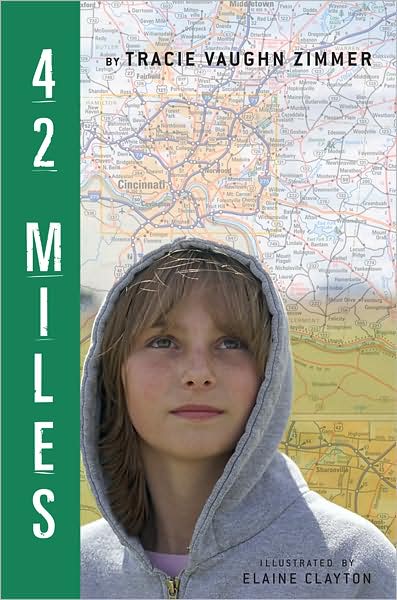
42 Miles

Continuing my light, quick and delightful reads…

JoEllen is the child of a divorce. With her mother, she is Ellen, lives in the city, going to movies and eating Chinese take-out. On weekends, with her father, she is Joey, and lives a carefree life on the farm. It’s hard keeping up a dual life, and shortly before her 13th birthday, JoEllen decides to take charge and not only bring her two halves of her life together, but forge a new one for herself.

This book’s charm, however, isn’t in its plot. It’s written in verse, and while I still have a “thing” about poetry, I’m finding that I manage to “get” novels written in verse. I liked JoEllen’s voice, I loved the poems. I am always amazed that an author, in this case Tracie Vaughn Zimmer, can pack so much into so few words. I also felt that Zimmer caught the feelings of a divorced child (or what I imagine a divorced child must feel, not having experience there myself), being torn between two parents, two worlds.

While I wasn’t blown away with excitement over it, I did enjoy the time spent, and I even managed to come away with a favorite poem, which interestingly enough is about poetry, and which I think captures the essence of the book perfectly:

The Poems I Like Best
The poems I like best
wear classic black
with vintage accessories
and smell like a new book,
and the spine just cracked.
They’re the chitchat overheard on a city bus
or nonsense
volleyed between toddlers
on swings at the park.

My favorite poems
squeeze your hand
on a crowded street and say:
Look.

The poems I like best
wear blue jeans
and smell
like the tack room of a barn:
worn leather and horse.
They’re the varied verses
of a mockingbird’s song
or syllables traded between brothers
scratching scruffy chins
over the dark mysteries of an engine.

My favorite poems
hold a wooden spoon of words
and whisper:
Taste.

(Just for the record: because this is a Cybils nominee, I’ve been asked to make sure y’all know this is my opinion only, and not that of the panel. Thank you.)

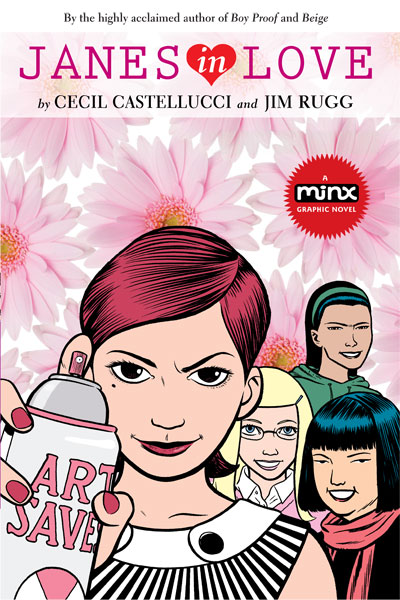
Janes in Love

Back in March, I read Plain Janes, and liked it enough that when I heard there was a sequel, I was terribly excited. I needed something light (not just subject matter, but reading style!) after the last book, and thankfully this one was in at the library on Tuesday. Oh, happy day. I curled up for an hour last night and lost myself in Jane’s world.

This graphic novel picks up right where the last one left off. The girls are still at their promotion of art (pegged vandalism by the town’s police chief, who’s a real jerk), but in addition, they’re trying to figure out their love lives. (It’s February, and the heart turns to love…) Damon, who took the fall for P.L.A.I.N.’s art on New Years eve, is suspended. Our Jane like-likes him, but can’t tell him. Theater Jane has an enormous crush on a Metro City actor, and is constantly talking to him. Jayne (she’s the science geek), has a crush on fellow science lover, and in one of my favorite bits of the novel, creates a pheromone potion that works on every other guy in the school… except the one she wants. Polly Jane is the most direct: she tells the star basketball player that he’s going to be her boyfriend. He says yeah. How I wish it were that easy.

There’s other things going on in the book, too. Jane’s mother is still having seclusion issues — she refuses to come out of the house after her friend from college is killed in an Anthrax attack. After getting caught and arrested during one of their attacks, Jane works at getting legitimate support from the town, and applies for a grant from the National Foundation of the Arts, which poses its own problems and challenges.

It’s not a deep read, or even a terribly complex one. But it’s an enjoyable, fun, quick read. And I love the characters. I can only hope the Cecil Castellucci and Jim Rugg write more.

Quickie Reminder

The nominations for the Cybils close tomorrow! If you haven’t already, head over and nominate your favorite books (they also have links to blog posts with suggestions if you’re stumped, or if your favorite’s been nominated already).

I have to say while I’m excited, I’m also a bit overwhelmed: at last count, my panel gets to go through 96 books! Wow! How are we going to narrow it down??? Still…. I can’t wait to get started…

Founding Mothers

I have mixed feelings about this one. A collection of stories and letters about the women behind (beside?) the men that were instrumental in founding the United States, it’s a work that could be seen as enlightening and entertaining. In fact, there were many times when I was enlightened and entertained. I did learn about some women that I hadn’t heard of before — my favorite was Eliza Pickney, a South Carolina woman who basically managed things on her own for most of her life. She was also a bit of an entrepreneur, coming up with the idea and the means to make indigo a cash crop. There were also the usual players: Abigail Adams, Martha Washington, Dolley Madison, and it was interesting to see the way that Cokie Roberts portrayed each of those women.

However, it was a hard book to get through. I think that the book had simultaneously a too broad and too narrow of focus. Too broad, because of all the people she tried to squeeze into 277 pages. Roberts organized her book chronologically, which was probably inevitable considering that it was the time period that drove all the people, but it also made it hard to keep everyone straight. She started Abigail Adams’s story in one chapter, dropped it after a few pages and didn’t pick it up again for another couple of chapters. There were also so many women — I couldn’t keep the Kittys straight to save my life — that Roberts focused on, however briefly, that I felt like I needed a flow chart to figure out who was who (and who was related to whom!).

It was too narrow because I felt that Roberts slighted the men. Sure, it’s a book on the women during the late 1700s, and yes, we want to give them the credit the history books have denied them all these years, but I felt that Roberts did it at the expense of the men. She poked fun at John Adams (I was not happy with that… especially after reading David McCullough’s biography!); portrayed George Washington as a competent leader, but an incompetent in his personal life… (I agreed with her assessment of Alexander Hamilton and Ben Franklin, though…) Perhaps it’s just personal biases getting in the way here, but I felt like she could have portrayed these women as working in partnership with their partners, rather than at odds with them.

And then there was Cokie Roberts herself. She peppered the book with asides, snide remarks, opinionated comments. Which is all fine and good; she’s the author, she can interpret the letters however she wants. But it drove me nuts. After a while, the extreme annoyance (I shouted at the book a couple of times!) I had at the beginning boiled down to a mild irritation, but it never left. There was a (very large) part of me that wished she’d just shut up and leave the letters and stories to speak for themselves.

That said, the letters and stories are fascinating to read. And I do appreciate that Roberts took the time to focus on these amazing women. Even with its faults, its a book worth reading.

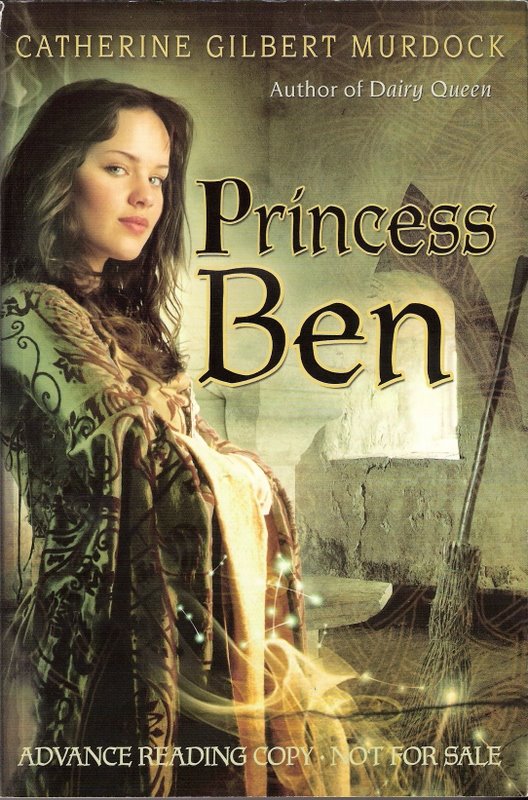
Princess Ben

This is another one of those my-gosh-I-can’t-believe-my-library-FINALLY-has-it-in books. I know I’ve seen reviews of this one popping up around; though for the life of me, besides Sarah Miller, Em, and Abby, I can’t think of where I found them…. at any rate, I heard about it, I wanted it, and I was super happy to get it.

It’s a great princess book. I loved Catherine Gilbert Murdock’s other books (Dairy Queen and Off Season), but this one is nothing like her other books. It’s deliciously different. Benevolence (that’s Ben for short, thank you very much), is a princess who doesn’t want to be one. She’s raised by a loving mother and a prince father, but they mostly let her do what she wants. Until one day, Ben’s left an orphan. She’s taken in by Queen Sophia, who tries, mostly against Ben’s will, to change Ben into a princess. It’s not pretty. Accidentally, Ben discovers a wizard room, with a book of spells, and sets to learning them. And, because she finds it unbearable, she ends up escaping the castle and Sophia’s regiment. Unfortunately, that only gets Ben into more trouble. Then again, that may not have been an unfortunate thing.

I really liked this book, as princess tales go. I liked that Ben’s not your typical princess, not just being a fiesty, head-strong (though spoiled) girl, but in other ways. She’s not thin. She has issues with food and comfort. She’s not perfect; her imperfections aren’t even remotely endearing. She has to endure (grumpily) trials in order to learn. In short, she’s a heck of a lot like me. I liked that. M said that she didn’t like that Murdock made a big deal about Ben being fat, but I think it was a necessary element to the story… it was something that Ben had to learn to deal with and accept, and it didn’t define who she was.

I also liked the world building, and use of magic. I liked that I felt the world supported the characters, rather than overwhelming them, as it can do in fantasy novels. I liked Queen Sophia; sure she was supposed to be mean and evil, but I felt more that she was overwhelmed and inexperienced (at being a parent, mostly), and I empathized with her, even while I was rooting for the grumpy and stubborn Ben.

However, I do think that Murdock slighted her other ones, Prince Florian and his father especially. Actually, the romance in the book was a bit uneven… it putters along at a 3 and then rockets to a 10 in the last chapter. (I liked the rocketing; I just wish there was more build-up.) I wanted to know more about Prince Florian than his glower. (Granted, it’s written from Ben’s point of view, so that may not have been possible…)

Most of all, though, I liked that what I liked outweighed what I didn’t like. It’s always nice when that happens.

2008 Challenge #8: The Arthurian Challenge

For this challenge, I mostly deviated from my original list. I did read Mary Stewart’s triology — The Crystal Cave, The Hollow Hills and The Last Enchantment — and have to admit, that I still like them best. They really are classics.

As for the other three:
Sword of the Rightful King, by Jane Yolen
Grail Prince, by Nancy McKenzie
The Dragon’s Son, by Susan L. Thomson

I attempted The Acts of King Arthur and his Noble Knights, by John Steinbeck, and found that I’d rather read a novelization of the myth instead.

Thanks Becky for hosting this one!

The Dragon’s Son

I picked this one up to round out Becky’s King Arthur Challenge, mostly because I felt bad that I didn’t finish the John Steinbeck book. I found it through a random search of the library’s catalog; I knew I wanted a young adult or middle grade book, but that was all. After a bit of looking, this one popped out at me. Sarah Thomson takes a new and interesting approach to the legend: not only does she go back to the earliest Welsh stories of Arthur, she tells the story from the point of view of the lesser-represented characters (Nimue, Morgan, Luned and Medraud/Mordred) rather than from the usual perspectives.

Essentially a collection of four short stories (everyone gets a few chapters to tell their tale), I was impressed not only with the stories themselves, but with the way they were used to propel the entire myth forward. Thomson manages to tell the entire Arthur story — from conception to death — in 181 pages, and while it wasn’t as in-depth as it could have been, I don’t feel like I missed anything.

The book begins with Nimue, and tells her story from her meeting Myrddin through their relationship to his death. It covers a huge amount of time, but her primary role is to tell about the conception and birth of Arthur. Morgan comes next, but her fundamental character has been changed: she’s not a witch or even a Lady of Avalon. Instead, she’s a bitter, slighted sister of Arthur. She saw her father’s murder by Uther, and she was never able to forgive Myrddin for that. So, when she married Arthur (interesting twist, I thought) and he took her to the castle, she left him because he wasn’t willing to get rid of Myrddin. The story then switches to Luned, who is the handmaid to Elen, Morgan’s sister. This one I found the most fascinating. It involves Lancelot, called Owain here, and how he came to marry Elen/Elaine. Thomson made Elen terrified of men, mostly because she was married off at 12 to a brute of a man. Luned is Elen’s voice, her strength, her solace. It’s only after Luned brokers a marriage to Owain for Elen’s saftey (after her former husband’s death), that Elen learns to love. Unfortunately, Owain’s heart belongs to another, and Elen pines away in a monestary. It moves the story forward, though, because Elen is given Gwydre, who is Arthur’s heir (another interesting twist; Morgan had twins) to raise. The last story is Medraud/Mordred. His is the most tragic, the most bitter. Growing up as the son of Morgan, he is not only influcenced by her mother’s wanton ridding of sons (she gives up Gwydre to Arthur without any complaints), but by Arthur’s neglect. He resolves to kill Arthur, not just because his mother is bitter and wants revenge, but also because Arthur is unwilling to recognize Medraud as his rightful heir. He wages a war of words, rumors against his own brother, and eventually after a confrontation with Arthur, leaves and comes back with an army. And we all know how that turns out.

I liked the changes to the traditional story that Thomson made– the basics were the same, but details were different. I found that interesting and, yes, refreshing. It was nice not to read the same story hashed out. Seeing the story from the minor characters point of view also made it more intersting. A lot of the other elements we usually associate with Arthur were done away with, too: magic, aside from Myrddin’s few prophecies, was essentially non-existant. As were most elements of Druid worship (there were some references to “old ways” but that was it).

I always feel good when I manage to find a book on my own that I like. So, I’m feeling pretty good today, because I liked this one. A lot.