Audiobook: All the Crooked Saints

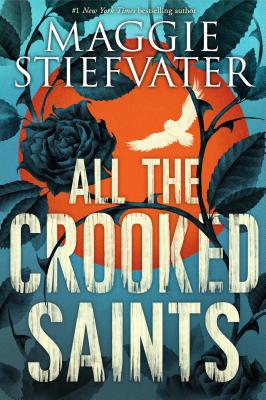
by Maggie Stiefvater
Read by Thom Rivera
Support your local independent bookstore: buy it there!
Or listen at Libro.fm
Content: There’s some swearing, including a couple of f-bombs. It is in the Young Adult Science Fiction section of the bookstore, but younger kids might be interested in it.

I’m not really going to sum up the plot, since I did that when I first read this book eight years ago. I did enjoy Rivera’s narration, though. And maybe I enjoyed this better as an audiobook. It felt like Rivera was sitting there telling me this tall tale about family and love and miracles. It’s the least Stiefvater-y book of all the ones I’ve read this year, but I still loved it. And yeah, while I see it’s problematic that Stiefvater is exploring a culture that isn’t hers, I still liked the way she wove religion and myth with Latinx culture and 1960s. It was a delightful audiobook to listen to.

Highly recommended on audio, especially.

Inspired

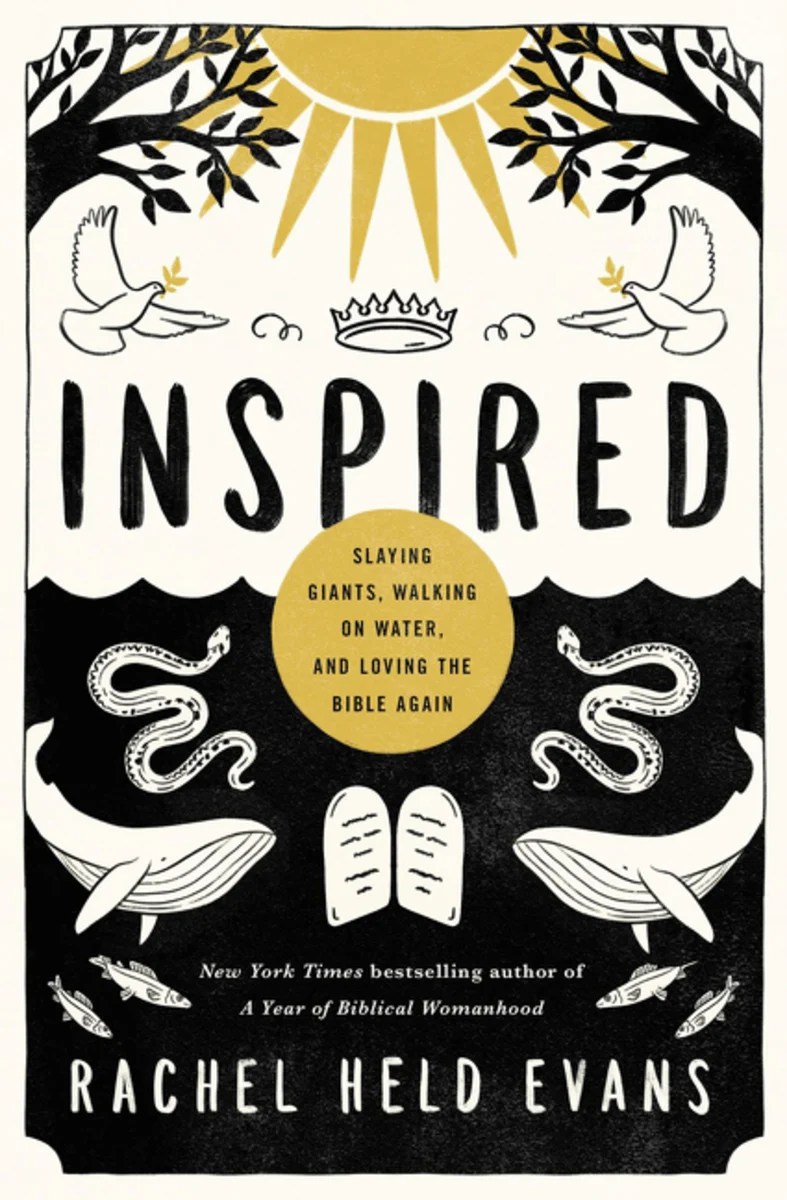
by Rachel Held Evans
First sentence: “Once upon a time, there lived a girl with a magic book.”
Support your local independent bookstore: buy it there!
Content: It’s accessible and not too scholarly. It’s in the Religion and Philosophy section of the bookstore.

In this thoughtful work of scriptural examination, Evans looks at the stories in the Bible and deconstructs them. She asserts that the Bible isn’t an instruction manual, at least not in the way modern Christians have come to think of it, but rather a collection of stories that are meant to instruct, to challenge, and yes, to inspire.

I don’t know what I expected going in, but Evans’s writing is so accessible, so comforting, that even though she’s talking about challenging things, I was willing to take them in and think about them. She makes excellent points about faith and community, and about the dangers of prooftexting and being too absolutist about the Bible. Everything in context, as it should be.

A very good read.

The Making of Biblical Womanhood

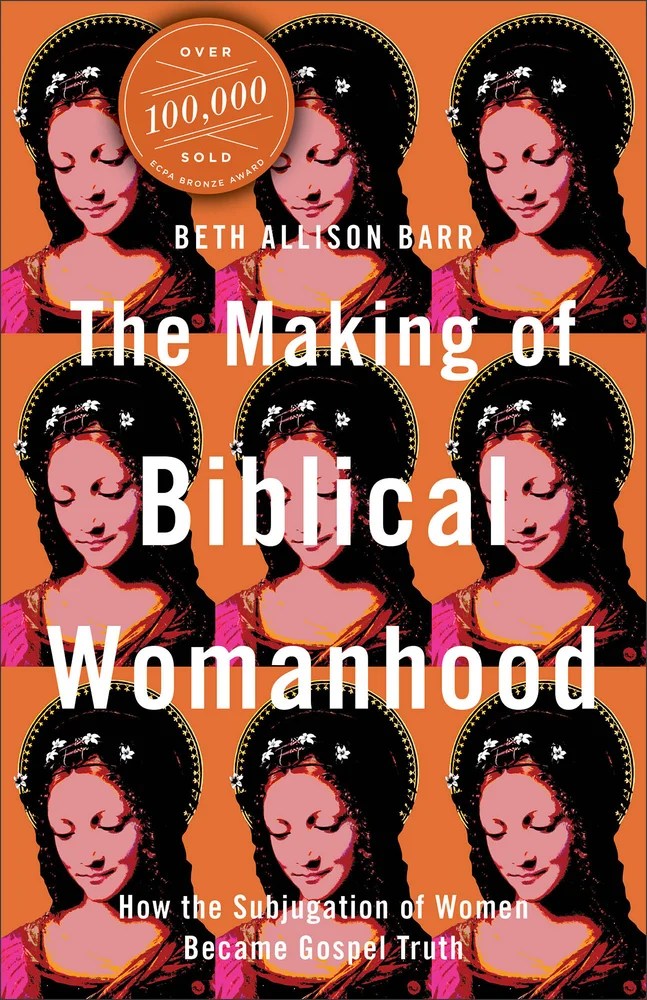
by Beth Allison Barr
First sentence: “I never meant to be an activist.”
Support your local independent bookstore: buy it there!
Content: While this isn’t a true work of scholarship, there is scholarship there, and it might be a lot for some people. It’s in the Theology and Religion section of the bookstore.

Barr wrote this book after her husband was fired from his job as youth pastor at a Baptist church in Texas. The reason? Simply put, he supported having women in leadership/teaching roles. This book, on the evolution of the idea of “Biblical womanhood” and the “God-given” roles that men and women are supposed to have, is the result of that firing. Barr is a medieval Church historian, and as she shows time and time again, the way conservative Christians think things have always been is, in fact, not the case.

I found this fascinating and enlightening. Barr tackles the Pauline creeds, puts them in context, and explains that really it’s the combination of the Restoration and the current trend for Biblical inerrancy that has led to women needing to be silent, submissive to their husbands, and focused entirely on being a wife and mother above all else. Barr is a good writer, helping someone like me without much scriptural knowledge or historical background through the murky waters of history and theology.

Absolutely worth picking up.

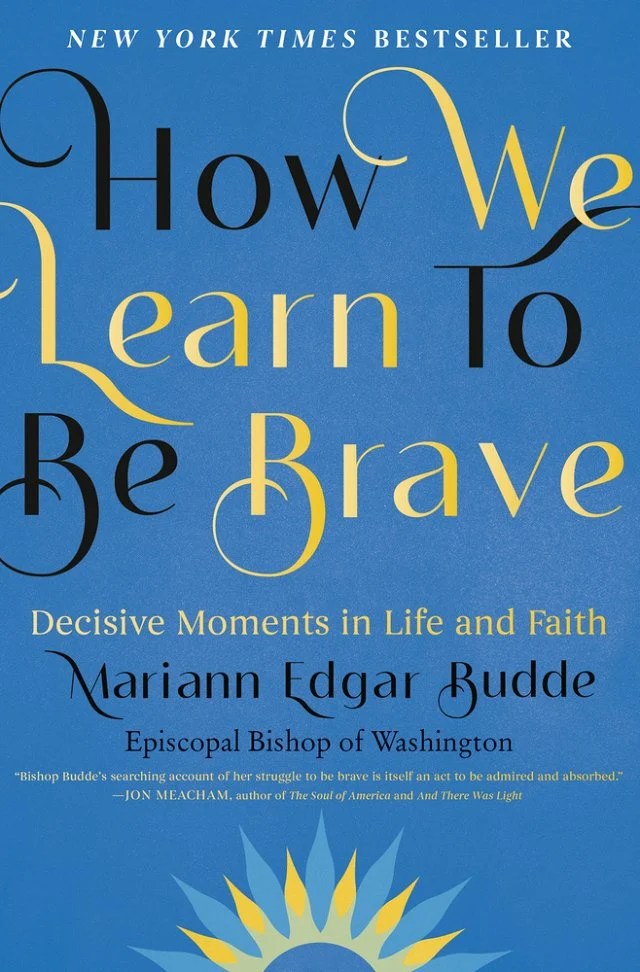
How We Learn to Be Brave

by Mariann Edgar Budde
First sentence: “On Monday, June 1, 2020, at 7:06 p.m., the president of the United States strode defiantly across Washington, D. C.’s Lafayetter Park – trailing a retinue of aides, Secret Service agents, his daughter Ivanka, the attorney general, and America’s top military leaders, including the secretary of defense and the chairmen of the Joint Cheifs of Staff – in order to be photographed holding a Bible in front o St. John’s Church, whose parish house had sustained minor fire damage during protests during the previous evening.”
Support your local independent bookstore: buy it there!
Content: It’s kind of dense in some spots, though it’s mostly accessible. It’s in the Religion and Philosophy section of the bookstore.

Like many people, I picked up Budde’s book in the wake of her sermon pleading Trump to have mercy for those who are less fortunate. I picked it up partially because of the backlash against her (“who was she to criticize the president?”), but also I was curious. This was written in the aftermath of Trump’s performative use of the church and the Bible to prove that he was… something (Christian? Devout? He is neither.)… and her explanation of how she came to speak out against him at the time. It’s a bit of a self-help book, as she explores different aspects of bravery from choices (or not) to perseverance.

I don’t think I was expecting anything when I picked it up, but I did find some interesting insights into Jesus and some insights into how to be more mindful in the world. I’m not sure Budde set out to create a blueprint, or to put herself up as an example (I know that she didn’t intend to be an example, as she used many other people’s experience as well), but I found it to be a thoughtful look at what bravery, in a Christian framework, means.

I’m glad I read it.

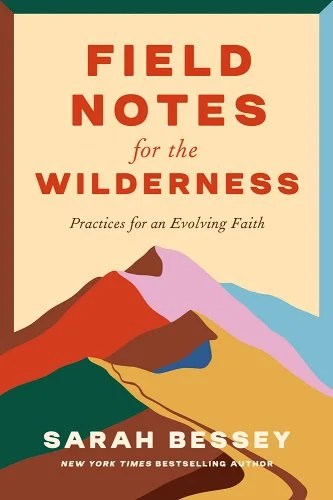
Field Notes for the Wilderness

by Sarah Bessey
First sentence: “Dear Wanderer, Welcome, Welcome, my friend.”
Support your local independent bookstore: buy it there!
Content: It’s an epistolary book, so if that’s not your jam, it might be hard to read. It’s in the Thought/Religion section of the bookstore.

I picked up this book mostly because I have been thinking about faith and church and religion a lot lately. It’s not an easy thing for me to process; I’m so used to just doing things that I don’t really stop and think about the Why behind them. I don’t know if I was hoping that this book would give me some sort of blueprint to figuring out what I feel. At any rate, it’s a series of letters by Bessey exploring what it means to be in the Wilderness of your faith, finding oneself on the outside of religion for whatever reason.

First off, this took me six months of reading on and off, so I honestly don’t remember much from the beginning. I do remember being glad that I’m not alone in my questions and doubts and that it’s not an abnormal part of faith. She does have some good advice for not being so rigid in one’s worship, and the importance of remembering that Jesus is really at the center of all things.

So, while it wasn’t what I wanted (or maybe even needed right now), it was worth reading, if only for the things that resonated with me.

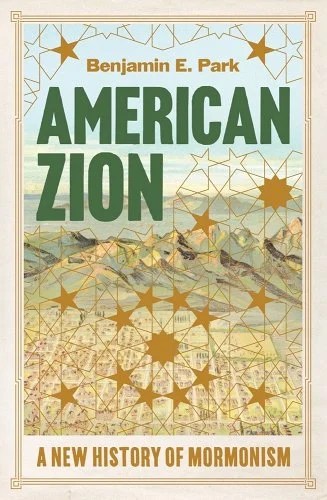
American Zion

by Benjamin E. Park
First sentence: “In June 2009, the Church of Jesus Christ of Latter-day Saints completed a new library and archives.”
Support your local independent bookstore: buy it there!
Content: It’s a dense work of history, but it’s quite readable. There is also polygamy and racism. it’s in the History section of the bookstore.

This is a sweeping history of the Church of Jesus Christ of Latter-day Saints, from its beginnings through Joseph Smith to the present day. But Park puts a bit of a spin on it: he’s looking at church history as it parallels the history of the country. It’s not comprehensive – it’s only 407 pages long – but Park does touch on not only the highlights but also addresses some of the more controversial aspects of the religion.

It’s a fascinating look at the religion. I was fascinated by the context that Park placed the religion in, especially the parallels between the changes in the region and the changes in America. I thought he was balanced with both polygamy and racism within the church, and while I learned things I didn’t know, I also knew a lot of the information (it helps being married to a Mormon history junkie). I found it easy enough to read – each chapter covered 50 years, and while they were long, they weren’t impossible to get through. I’m not much for deep history, but I felt this one was palatable even for a non-scholar.

I’m glad I got the push to buy and read this one; it was a fascinating read.

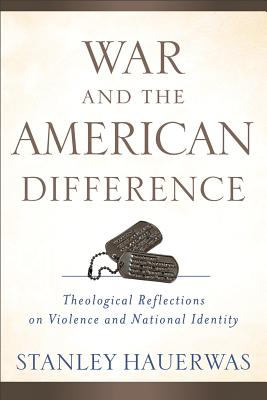
War and the American Difference

by Stanley Hauerwas
First sentence: “Ten years and counting.”
It’s out of print, so you can’t support your local independent bookstore (unless they can procure used books, like ours does), but you should buy it at Alibris, instead of Amazon.
Content: It’s super academic. It’d be in the theology section of the bookstore if it wasn’t out of print.

On the 10th anniversary of 9/11 and the War in Iraq, religious and political philosopher Hauerwas (my husband’s read some of his other stuff!) published a collection of essays/papers/speeches about the connection between war and American Christianity. 

But Melissa, you say, this is not your usual reading. And you’d be right. I usually don’t tackle works of religious and political philosophy; I leave that to the professor in the house. However, I’ve started following Pastor Ben Cremer on Instagram and signed up for his weekly newsletter/sermons. There was one a while back (maybe around the 4th of July?) about why the idea that Americans worship war is wrong, especially as Christians, and he recommended this book. As someone who at the very least is uncomfortable with the idea of war, I thought I’d give it a shot. 

I’ll admit a lot of this book was over my head. That said, the parts I was able to grasp/understand, I found fascinating. Hauwerwas talks about the need for local churches, involved in the work of building the kingdom. He talks about rejecting the idea that countries are only meant to conquer. He laments that Christianity became connected to the Roman empire, and on down to the founding of America. He talks about how America’s true “religion” (in the absence of a state religion) is war and the sacrifice that war brings. And that if we truly believe that Christ has conquered death, we would be more willing to be killed than to kill others. All things to think about. And his conclusion is probably the most striking: “Let the Christians of the world agree that they will not kill each other.”

So, no, I probably didn’t get everything I could have out of this book, but it did make me think. Which is something I appreciate.

Two Graphic Novels about Belonging

Huda F Are You?
by Huda Fahmy
Support your local independent bookstore: buy there!
Content: There are instances of racism and Islamaphobia. It’s in the Graphic Novel section of the bookstore.

In this loosely autobiographical graphic novel, Fahmy tells of the time in her childhood when her parents moved the family to Dearborn, Michigan just so they could be a part of a bigger Muslim community. Huda went from being the only Muslim to one of many hijab wearers. She talks about the struggle she had to figure out who she was, in relation to her friends, her family (and sisters), and her religion. There is an incident with a teacher who grades Muslims harsher after 9/11 and a slight bomb “scare” at the high school, that brought Huda’s conflicts within herself to a head. Can she stand up for herself, especially in the face of Islamaphobia?

I adored this one. I think everyone can identify with the feeling of being an outsider, but I can empathize with identifying with a religion where you are in a place where your religion (mostly) is in the minority, and then moving somewhere where it is the majority religion. It messes with your head and identity. I loved the humor of this book and the way it treats religion as something that can be a big part of a teenager’s life, without it seeming all-encompassing or something the teen needs to “grow out” of.

Smart, fun, and worth reading.

The Tryout
by Christina Soontornvatillustrated by Joanna Cacao
Support Your local independent bookstore: buy it there!
Content: there are some instances of racism and bullying. It’s in the Middle Grade Graphic Novel section of the bookstore.

Also loosely autobiographical, Soontornvat reflects upon 7th grade and the way trying out for the cheer team affected her. She grew up in a small town in Texas, and her parents – a mixed-race couple (her mom is white, her dad is Thai) – ran a Chinese restaurant in town. She reflects on how har it is to make and keep friends in middle school, and the ups and downs of friendship. But the central challenge is Christina’s desire to try out for the cheer team. It’s a challenge becasue her best friend Megan is trying out as well and Christina fears that it wil negatively affect their friendship. They encounter racism (Megan is Iranian) at their small-town school – none of the teachers can pronounce Christina’s last name, and some kids are blatantly racist to her and Megan. Christna works hard, though, and finds value in trying out for the team, and along the way, makes and strengthens friendships.

This is another good one about finding where you belong. Middle school is rough, and I think Sontornat recognizes that. THis one reminde me a lot of Real Friends, centering navigating female friendship in the heart of the book. But I also like how it debunked some of the cheer stereotypes and reminded me (again) that cherlieading isn’t just a fluff thing that popular girls do. I really appreciated the author’s note at the end.

Really soild.

The Length of a String

by Elissa Brent Weissman
First sentence: “Dear Belle, All my life I’ve shared with you.”
Support your local independent bookstore: buy it there!
Content: There is talk of death and the Holocaust, and some crushing on boys. It’s in the middle grade (grades 3-5) section of the bookstore.

Imani is stuck on what to do for her bat mitzvah project until her great-grandma Anna passes on, and Imani finds an old diary of Anna’s. Anna came to America, by herself, in 1941, sent by her parents to live with “cousins” in New York City right before the Jews in Luxenburg were deported to ghettos and then to concentration camps. Imani is fascinated by Anna’s story not just because of their religious connection, but because Imani is adopted, and has been wondering about her birth family. Anna’s story is told through a series of letters she wrote in a journal. As Imani dives deeper into Anna’s story she has more and more questions about what makes a family.

This was pretty good. I liked the Jewish aspects of it; the preparing for a bat mitzvah, Hebrew school, and the connections made there. I didn’t mind the historical aspect, because it made the Holocaust relevant to today, as opposed to being stuck in the past. I didn’t mind the adoption story, but I did wonder why a white woman author felt this story needed to have a Black main character. I suppose it was good to let readers know that all Jewish people aren’t white presenting, but I don’t know if it was Weissman’s story to tell. That said, it wasn’t a bad book.

Go Tell it On the Mountain

by James Baldwin
First sentence: “Everyone had always said that John wold be a preacher when he grew up, just like his father.”
Support your local independent bookstore: buy it there!
Content: There is violence, some talk of sex, a liberal use of the n-word, and some swearing. It’s in the adult fiction section of the bookstore.

This one is difficult to describe plot-wise. It takes place over one night, as John, the son of a preacher in New York in 1935, goes to the church to clean and pray with his parents and other church-goers. Over the course of the prayers, we learn that John is not the biological son of his father, who resents his mother for not being more repentant for her sin of bearing John out of wedlock. We learn that John is conflicted about his stepfather, and the idea of church. We learn that John’s mother is just doing what she needs to do, and that his aunt — his stepfather’s sister — has held a lifelong grudge against her brother.

There isn’t much of a plot, it’s more of an exploration of the ways in which racism, enslavement, and patriarchy have affected the lives of these characters and the way they use religion to justify or explain or hide from the world. I’m not entirely sure it comes off as favorable to religious people; religion seems like a crutch to escape and a means of punishment rather than a means of worship and service. But that’s my white privilege talking; I have never been enslaved and I don’t know how religion works in that world. It was a fascinating read (possibly not one that I would recommend while on painkillers) and a complex one, even if it lacked plot.