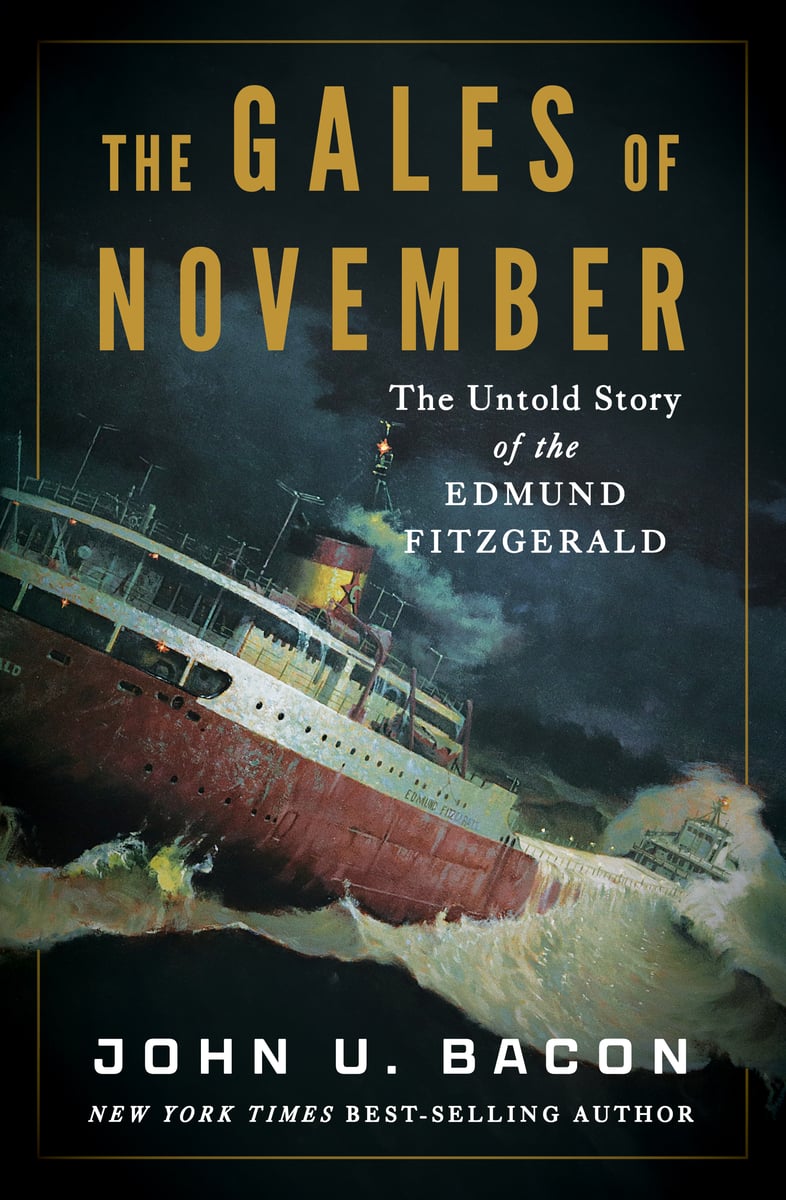
Audiobook: The Gales of November

by John U. Bacon
Read by Johnny Heller
Support your local independent bookstore: buy it there!
Or listen at Libro.fm
Content: There are some harrowing instances, and talk (of course) of shipwrecks. It’s in the History section of the bookstore.

I honestly didn’t know much about the Edmund Fitzgerald and its wreck in Lake Superior, except the Gordon Lightfoot song (though I have been to the shipwreck museum in Whitefish Bay). That said, I didn’t know everything, and Bacon looks at all the aspects of it. From sailing on the Great Lakes (more dangerous than the ocean, believe it or not) to the importance of shipping, to the history of the ship, to the actual circumstances of the ship sinking. It’s a social history as well as a history of the ship, looking at the sailors’ lives, as well as the shipping industry as a whole.

And it was utterly fascinating. Having grown up in Michigan, I adore the Great Lakes, but I didn’t realize just the scope of the impact the lakes have had over the years. I found myself wanting to stay in the car listening. Heller was a fine narrator, but it really was the story that carried this book.

A remarkable book about a fascinating incident in time.

Audiobook: The Wager

by David Grann
Read by Dion Graham
Support your local independent bookstore: buy it there!
Or listen at Libro.fm
Content: There are some gruesome details about the status of the survivors once the ship wrecked, as well as mentions of cannibalism. It’s in the History section of the bookstore.

In 1742, a small boat washed up on the shore of Brazil, holding 30 emaciated men. They said they were what was left of the crew of His Majesty’s ship, The Wager, and that they had been shipwrecked off the coast of Patagonia for months. After nearly starving to death, they escaped through the Straits of Magellan and to Brazil. When they finally made it back to England, they were regarded as heroes. Then, a few years later, three more men show up after having arrived in Chile. They told a story of mutiny and rebellion, of bad decisions and murder.

I’ve had this one on my TBR (or to-listen, actually) pile for a couple of years, ever since it came out. I knew it was going to be good; co-workers who don’t usually read history read this one and thoroughly enjoyed it. But I was still surprised just how much I liked it. Part of that was Graham’s narration – he’s an excellent narrator and he made the already compelling narrative that Graham wrote even more compelling. We listened to this one driving to St. Louis and back, and we hung on every word. So much so that we couldn’t listen to it while navigating around the town – there was no talking over the book. I knew Grann was a good historian, I just didn’t know how compelling he was. It was a fascinating story told really well and read by an amazing narrator. A perfect storm of excellence.

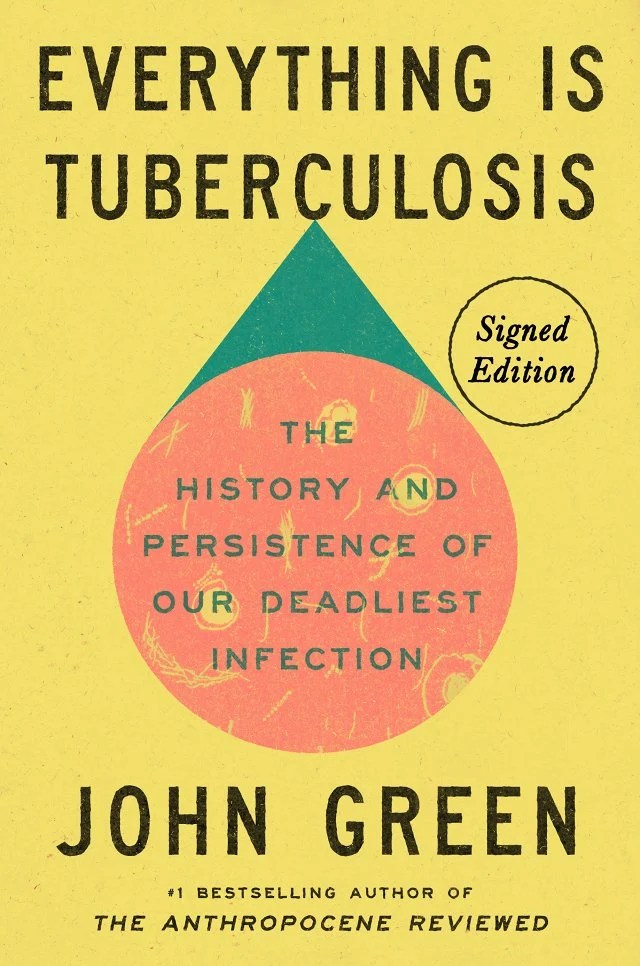
Everything is Tuberculosis

by John Green
First sentence: “Around the turn of the nineteenth century, the Scottish tinkerer and chemist James Watt began working on a new project.”
Support your local independent bookstore: buy it there!
Review copy provided by the publisher.
Release date: March 18, 2025
Content: There’s a couple of milder swear words. It will be in the Health section of the bookstore.

When John started talking about tuberculosis on the vlogbrothers YouTube channel, I didn’t know what to think. I mean, I knew about tuberculosis – I got the TB tests when I was a kid – but I didn’t really think about tuberculosis. And so, I watched in fascination as John shared his research and stories over the years in his videos, and learned about how much tuberculosis has influenced human history.

This book, in many ways, is a synthesis of those videos. But, what I found remarkable was how John (can I call him John? I’ve been watching the videos until 2008, and it feels kind of weird to call him Green) made the disease personal. He focuses on Henry, a young man with tuberculosis that John met in Sierra Leone. He focuses on Henry’s struggle with the disease, his struggle to get treatment, and the reasons why. Interspersed with Henry’s story, John gives us the history of the disease and the development of treatment for the disease.

But, what I found most powerful in the book was the ending. John writes: “We cannot address TB only with vaccines and medications. We cannot address it only with comprehensive STP programs. We must also address the root cause of tuberculosis, which is injustice. In a world where everyone can eat, and access healthcare, and be treated humanely, tuberculosis has no chance. Ultimately, we are the cause. We must also be the cure.”

It’s a book that is absolutely worth reading.

P.S. If you’d like to do something to help, may I suggest supporting good.store? The Green brothers have set up a way to get subscriptions of things you might need (from coffee/tea to soap to socks and underwear) and all the profits go to help either building a maternal health center in Sierra Leone or tuberculosis treatment programs. It’s not a lot, but it is something. (And the products are really good as well: I’ve done the Awesome Socks club, and we’re currently getting the soap, and the tea is excellent.)

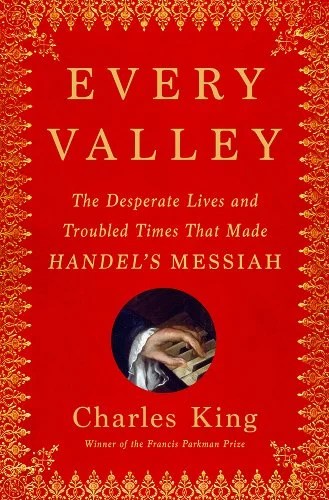
Audiobook: Every Valley

by Charles King
Read by Juliet Stevenson
Support your local independent bookstore: buy it there!
Or listen at Libro.fm
Release date: October 29, 2024
Content: There’s talk of slavery, colonialism, affairs, and general debauchery. It will be in the History section of the bookstore.

Much like anyone who grew up involved in music, I’m very familiar with Handel’s Messiah. But, until I saw this book in the November IndieNext, I never really gave much thought to how Handel came to compose the work. I probably assumed it was just something he composed at one point in his life. What I didn’t realize was the political and social circumstances that surrounded the piece. I never stopped to consider who wrote the libretto – I suppose I just assumed Handel adapted it from scripture – or the role it might have played in 18th-century England.

All this to say, I found this book fascinating. Stevenson is an excellent narrator for this journey. I learned a lot about Handel, but also the political circumstances in England and Europe and the eccentrics surrounding the piece of music. It sounds outlandish because it’s just an oratorio, but there is a pretty remarkable story about how a random oratorio in Handel’s repertoire became The Messiah.

All this to say: this book is excellent.

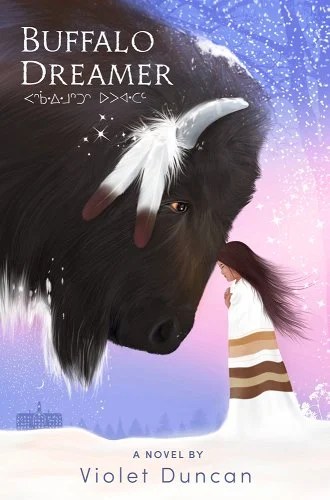
Audiobook: Buffalo Dreamer

by Violet Duncan
Read by Ashley Callingbull
Support your local independent bookstore: buy it there!
Or listen at Libro.fm
Content: There are some tough subjects, including the residential schools, but they are handled in an age-appropriate way. It’s in the Middle Grade (grades 3-5) section of the bookstore.

Summer is looking forward to a relaxing summer at the rez in Alberta where her mom grew up. But this year, there is a change: they have discovered a mass grave at a closed-down residential school where Summer’s grandfather was forced to attend. Additionally, Summer is having vivid dreams about a girl who ran away from a residential school and walked through a blizzard to escape.

It’s not a long book or even a harrowing one. But it is a sweet story about respecting and learning history, even (or maybe especially) hard history. Summer’s mom and aunties doesn’t think she’s ready to learn the history, and her grandfather is hesitant to speak about it, but when Summer shares the dreams, they are more willing to admit that talking about the hard and painful history can be a healing thing. I also appreciated learning about Summer’s heritage and family traditions as we went along; Duncan was excellent at weaving the small details in with the larger story.

The narrator was excellent as well; I really love listening to books by Native authors in audio because I know I would have no idea how to pronounce some of the words. I thoroughly enjoyed this one.

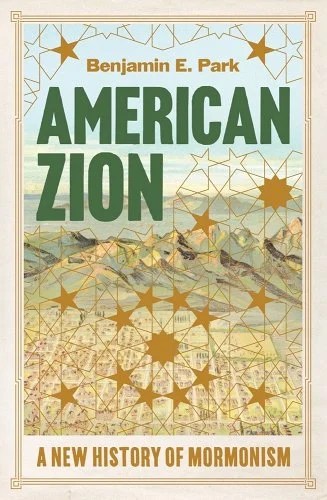
American Zion

by Benjamin E. Park
First sentence: “In June 2009, the Church of Jesus Christ of Latter-day Saints completed a new library and archives.”
Support your local independent bookstore: buy it there!
Content: It’s a dense work of history, but it’s quite readable. There is also polygamy and racism. it’s in the History section of the bookstore.

This is a sweeping history of the Church of Jesus Christ of Latter-day Saints, from its beginnings through Joseph Smith to the present day. But Park puts a bit of a spin on it: he’s looking at church history as it parallels the history of the country. It’s not comprehensive – it’s only 407 pages long – but Park does touch on not only the highlights but also addresses some of the more controversial aspects of the religion.

It’s a fascinating look at the religion. I was fascinated by the context that Park placed the religion in, especially the parallels between the changes in the region and the changes in America. I thought he was balanced with both polygamy and racism within the church, and while I learned things I didn’t know, I also knew a lot of the information (it helps being married to a Mormon history junkie). I found it easy enough to read – each chapter covered 50 years, and while they were long, they weren’t impossible to get through. I’m not much for deep history, but I felt this one was palatable even for a non-scholar.

I’m glad I got the push to buy and read this one; it was a fascinating read.

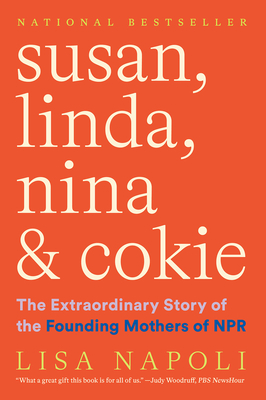
Susan, Linda, Nina & Cokie

by Lisa Napoli
First sentence: “On August 18, 2019, Mary Martha Corinne Morrison Claiborne Boggs Roberts, age seventy-five, did what she’d done for thousands of Sundays.”
Support your local independent bookstore: buy it there!
Content: There is some swearing, including a couple of f-bombs. It’s in the biography section of the bookstore.

Nominally, this is a history of how NPR became what it is today. Napoli focuses on the four women who were hired near the beginning of NPR’s tenure. Although she briefly illustrates the four women’s pasts and how they landed at NPR, the majority of the book is about the influence they had on shaping the way NPR became the influential reporting pwoerhosue that it is today.

I picked this up because I really liked Dinners with Ruth, and I was curious to know more about how NPR became NPR. It’s billed as the story of the women, but it’s really the story of NPR as a whole. There were ups and downs that I didn’t know about as NPR struggled to become relevant in the 1970s and 1980s, including a bankruptcy scare. and although the four women played a big role in it, they were not the only ones.

It was a good book, even if it wasn’t exactly what I was expecting. I liked learning the history of NPR, and learning what it took to get a national radio station off the ground. I was impressed, again, by the challenges women faced in the workplace in the 1970s, and the gumption that these four women had to become successful at a time when the odds were stacked against them. It’s not going to be my favorite book ever, but it was interesting and I enjoyed it.

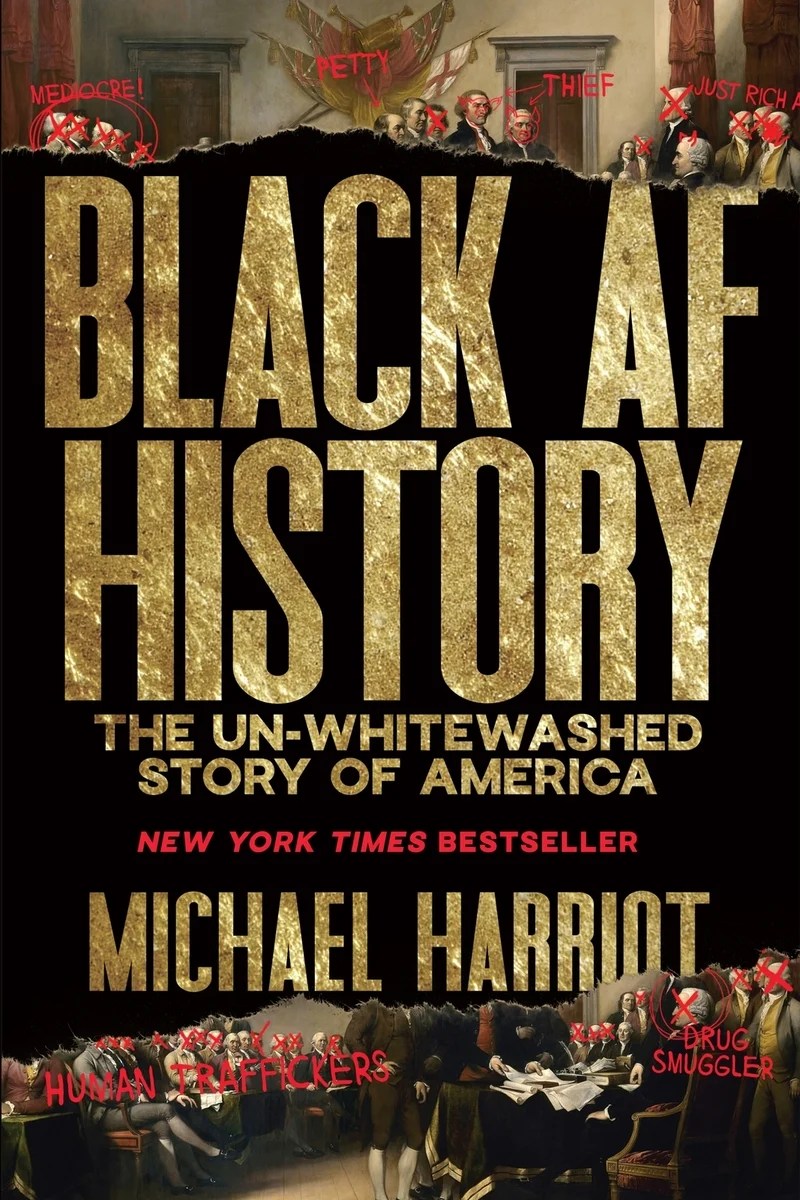
Audiobook: Four Hundred Souls

Edited by Ibram X. Kendi and Keisha N. Blain
Read by a full cast (too many to list!)
Support your local independent bookstore: buy it there!
Or listen at Libro.fm
Content: It does not sugar coat history. There are mentions of lynchings, rape, use of the n-word, and mild swearing. It’s in the history section of the bookstore.

I’ve had this on my TBR pile (the large one, not the small one by my bed) ever since it came out a year ago. And then I got a great idea from a bookstagrammer: read a little every day in February for black history month. I tried to get it done by the end of the month and almost made it. It was easy to break down into little sections: the book spans 400 years, but every author gets a 5 year period, and the sections are broken up into 40 years chunks. Each individual author gets to choose what they want to talk about: some focus on an event, some on a person, some on an idea. Many chose to relate their essay to the way the country is today. It’s less of a history book and more of a “how history has impacted today” book, which I appreciated. Not all essays were equally interesting, but there was enough for me to keep engaged. That, and the essays were generally very short – less than 5 minutes in audio. The narrators were all really good, for the most part. I think some of the essays were read by the authors, but since the narrators didn’t announce themselves before they began reading, I wasn’t sure. (They do all say their names a the end, but it was hard to match them up. Mostly I was like “Oh, they read? Cool!”)

I thoroughly enjoyed listening to it and learning about the history of Blacks in America. Fascinating well-done book.

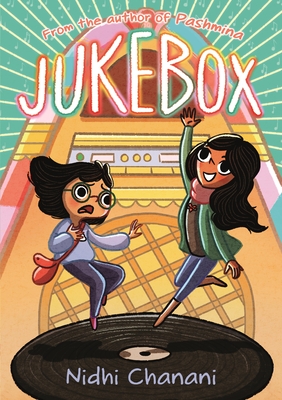
Jukebox

by Nidhi Chanani
Support your local independent bookstore: buy it there!
Content: There are some intense moments. It’s in the middle grade graphic novel section of the bookstore.

Shaheen’s dad is always going on about musicians and records, and she just wants to tune him out. But when he goes missing, she and her cousin, Tannaz, go looking for him and discover a time-transporting jukebox in a record store that Shaheen’s dad was always frequenting.

From there, it’s traveling through time trying to figure out what the jukebox is doing and where Shaeheen’s dad is. Full of historical facts and bits of music, this is a delightful graphic novel! Shaheen starts the book out hesitant and withdrawn, but the idea of finding her dad helps give her courage. it’s fun, it’s a smartly drawn book — I loved the historical bits — and full of music facts. Perfect for anyone who enjoys music.

In the Shadow of the Fallen Towers

by Don Brown
Support your local independent bookstore: buy it there!
Content: It’s not graphic, but it is frank about the events of 9/11.

The subtitle of this book says it all: The seconds, minutes, hours, days, weeks, months, and years after the 9/11 attacks.

It’s a good anniversary book, timed to come out on the 20th anniversary of the attacks. It essentially covers the events of that day and the following days, focusing on personal stories. Probably a good introduction to someone who knows nothing about the attacks (say, young kids these days, though my kids still get remembrances in school). The art is done in grays and browns, keeping it from being too graphic, and underscoring the seriousness of the story.

But.

I am tired of 9/11. I am tired of remembering. Especially in this time of COVID, when more than the number of people who died in the attacks have died every single day. I am tired of rallying around the “remember New York” cry. I am tired of this America.

So, no, this book wasn’t the best thing for me to read. Perhaps someone else will enjoy it more.