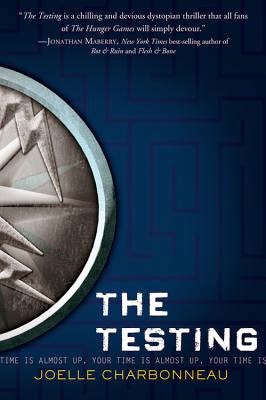
The Testing

by Joelle Charbonneau
First sentence: “Graduation Day.”
Support your local independent bookstore: buy it there!
Content: It’s violent, but not graphically so. And there’s kissing, but no sex. Which means it’s in the YA section (grades 6-8) of the bookstore. However, much like Hunger Games, I’d be wary of more sensitive readers liking it.

This book has been out for two years now, and I’ve been putting it off for just as long. Mostly because the whole post-apocalyptic/dystopian genre has been SO overdone, that I really didn’t want to read yet another one.

Then we scheduled Charbonneau to come to the store — they’ve been working on it since the first one came out and the rep mentioned it was set in a futuristic Wichita — and I was tasked with reading and reviewing the book before she gets here. And so I did, smacking myself when I finished for waiting too long to get around to this one.

Sixteen-year-old Cia Vale has just graduated from her colony’s small school near the top of her class. She’s excited: in this post-Seven Stages War America, now called the United Commonwealth, that means she’s likely to be chosen to attend The Testing in the capitol, Tosu City (aka Wichita, though it took me nearly the whole book to figure that out). Except her father — a former Testing candidate and University graduate himself — doesn’t want her to go. However, once Cia’s been chosen, she can’t say no; refusing the Testing is an act of treason, punishable by death.

So, Cia travels to Tosu City with her father’s warning — TRUST NO ONE — echoing in her ears, and discovers what he meant. The Testing is not just high-pressure and high-competition for the twenty university slots. It’s deadly.

While the plotting and writing isn’t as tight as Suzanne Collins’s, it’s still a quick, engaging read. Charbonneau sets the stakes high right away, with Cia’s roommate committing suicide, and doesn’t let up until the final pages of the book. There are twists and turns — some of which I saw, some of which I didn’t — and Cia is a good, strong narrator to carry this story on her shoulders. It’s definitely post-apocalyptic; Charbonneau cleverly gave us a brief history of how this country came to be in a series of short written test questions early on. The dystopian part is harder to see — Cia comes to hate the Testing officials, and the government as an extension, but I’m not sure I ever felt the way she did about the officials. Unlike, say, President Snow in The Hunger Games. (Yes, comparisons are inevitable.) I do think, on the other hand, that it’s a tighter, more interesting story than Divergent (yes, there’s a love interest, which I think was mostly unnecessary).

But the best thing about waiting to read this one is that the whole series is out already. And I don’t have to wait to read the second one. And I’m invested enough in Cia’s story that I’m quite curious to find out what happens next.

Thursdays with the Crown

by Jessica Day George
First sentence: “‘You are not leaving me behind,’ Celie repeated.
Support your local independent bookstore: buy it there!
Others in the series: Tuesdays at the Castle, Wednesdays in the Tower
Content: There’s nothing objectionable, really. It’s a good book for both readers who love fantasy, and for struggling readers — lots of white space, and short chapters — who need action. It’s in the middle grade (grades 3-5) section of the bookstore.

When we last left Celie, Rolf, and Lila, they had just disappeared from Slene (along with Lulath and Pogue). No one knew where they went or why the castle sent them away.

As the book opens, Celie and her intrepid siblings and friends are stuck in a place they didn’t know existed. And they need to find the Glorious Arkower, the head magician, to go back to Slene. Except, things aren’t that simple. They discover that Rufus (Celie’s griffin) isn’t the only one; he’s got parents. Who happen to be the king and queen of the Royal Griffins. The motley crew manages to find and hatch a couple more griffin eggs (one for everyone!) and discover that the Glorious Arkower is… not so glorious. And things aren’t as simple. The question is: can Celie figure out a way to return back (and wake up!) the castle she loves?

This is such an adorable series, though I think it might be one that’s better read in one sitting. Sure, I fell pretty fast into the world (I haven’t read the other two in a while). But, I think I would have liked it more had I read them all in quick succession. Even so, Celie’s delightful, Lulath’s still my favorite, and I’ll happily spend time in Slene with them for as long as George wants to write about them

10 Awesome Middle Grade/YA Families

I had a bad week, and I ended up pulling the Casson family books (by Hilary McKay) off the shelf, just for some comfort reading. And I realized: THIS (with the exception of Bill, who’s a jerk) is a great family. And it got me wondering: with all the dead moms, and bad dads, and missing parents in middle grade and YA literature… how many books are out there with some really great families? (Great enough that you remember they’re wonderful.)

This is what I came up with.

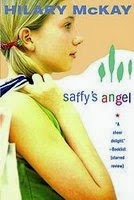
Saffy’s Angel, by Hilary McKay: I couldn’t live in the Banana House, but I want, very much, to live next to the Banana house and be best friends with the Cassons.

The Misadventures of the Family Fletcher, by Dana Alison Levy: I loved the every day feel of this, and I wanted Dad and Papa to be my parents. They were really amazing dads.

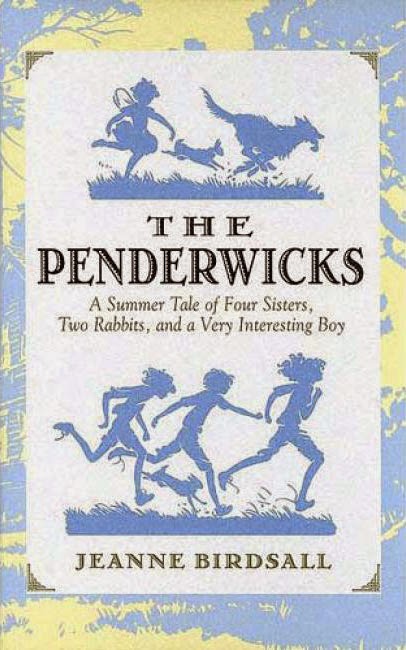
The Penderwicks, by Jeanne Birdsall: I feel like this is one of my go-to books for these lists, but it really is that good. And yeah, there is a dead parent (Mr. Penderwick gets remarried the end of the second one, though.), but I love the way the Penderwicks work as a unit.

Tuesdays at the Castle, by Jessica Day George: Another one where the family just rocks. Sure, Mom and Dad are missing for most of the book, but the kids care enough to look for them and fight for them, and the work really well as a unit. Even though I loved Celie on her own, I really enjoyed her in context of her family.

Penny Dreadful, by Laurel Snyder: I’m not sure this one is a good family as much as a good community book. I loved the place Penny ended up and the people she met. The town became her family and I loved that.

Three Times Lucky, by Sheila Turnage: same goes for Mo and the town of Tupelo Landing. She doesn’t have a “family” but she finds one in the town and Ms. Lana and the Colonel. I want to move there and just be friends with everyone.

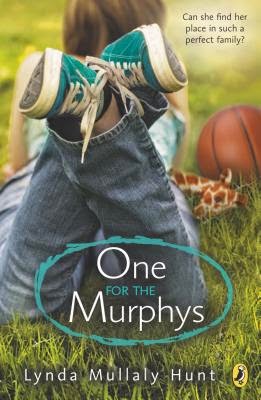
One for the Murphys, by Linda Mullaly Hunt: Another non-traditional family. There is one in the book, but the main character doesn’t belong to it. And what I loved is that the family embraced her and made her one of their own. Wonderful.

Counting by 7s, by Holly Goldberg Sloan: The best part of this book is not the dead parents in the beginning, but the fact that Willow created another family for herself out of broken fragments. And it was a good thing.

The Raven Boys, by Maggie Stiefvater: Sure the focus of the book is the boys and the search for the ley line and Glendower. But let’s not forget the psychic house and the way these women — some related, some not — are a complete, close-knit family. They are there for each other. And much like the Cassons, I wouldn’t want to live there, but I would want to visit often.

Dangerous, by Shannon Hale: Again, family is not the center of this story, but let’s take a minute to recognize that Maisie has awesome parents. They don’t hover, they don’t control, they let her be what she wants and needs to be. It’s wonderfully refreshing.

So, what did I miss? (And this is not an especially diverse list. Help me out?)

Drums, Girls and Dangerous Pie

by Jordan Sonnenblick
ages: 11+
First sentence: “There’s a beautiful girl to my left, another to my right.”
Support your local independent bookstore: buy it there!

This is a cancer book. Just to get that out of the way.

Steven is in eighth grade and on his way to being a wicked-good jazz drummer (being one of two eighth graders in the All-City Jazz Band). He has had a crush on Renee since third grade, and she still doesn’t know he exists. And his best friend, Annette, has been acting a little weird lately.

Steven also has a younger brother. Jeffrey is five, and annoying in the way five year olds can be. And while Steven doesn’t mind his younger brother, he often feels like he’s competing with Jeffrey for his parent’s affection. And who can win out against a very cute five-year-old?

Steven starts the year complaining about everything, but in October, things change. That’s when Jeffrey’s diagnosed with leukemia, and Steven’s — well, the entire family’s, really — whole world is turned upside down. It’s heartbreaking and tough to deal with, as we witness this crumbling. And yet, it’s not a downer of a book. It’s funny, it’s sweet, it’s endearing. Steven’s a good kid, and while he struggles and is resentful, he means well. By the end you’ve grown to love both him, and Jeffrey (whom you couldn’t help but love), and understand and empathize with them. It’s an excellent example of showing: while we get Steven’s perspective, we’re never pummeled over the head with anything.

Which makes it the best kind of cancer book, I think.