Bayou Magic

by Jewell Parker Rhodes
First sentence: “My name is Madison Isabelle Lavalier Johnson.”
Support your local independent bookstore: buy it there!
Review copy provided by the publisher in conjunction with the ABA Children’s Institute.
Content: It’s a pretty basic story, and aside from some French scattered through, it’s pretty basic in its vocabulary. I’d give it to anyone 2nd grade and up. It’s in the middle grade (grades 3-5) section of the bookstore.

Not-quite-ten-year-old Maddy is the youngest of five sisters in New Orleans. She’s the one that is always the tag-along, never quite fitting in with her sisters. She is often teased, and the only time she feels comfortable is when she’s cooking with her mom. Then, her turn to spend the summer in Bon Temps, in the Louisiana bayou, with Grandmère comes around. At first, Maddy doesn’t know what to expect: her sisters all spent summers with Grandmère and came back with horror stories. But Maddy is different: she likes the quiet, earthy nature of Grandmère and the bayou. She wants to learn the old ways. And she finds friends and adventure there. And magic.

Rhodes simple, lyrical style was really well suited to this story. I loved the earthy feel of the book, and the connection to old stories and family roots. I loved the mix of African and French, of Creole and magic and modern. The environmental crisis aspect of it wasn’t as important as the back blurb led me to believe — it was really just tacked on at the end — but the theme of caring for and connecting to the earth was prominent and important for the story. At first, I thought that this could pass for “realistic” fiction, that maybe the mermaids Maddy saw were just dreams and imagination, but no: this is speculative. And it worked for me. I loved seeing Maddy grow and learn and develop, and yet she was still a 10-year-old girl with all the concerns and abilities of that.

I haven’t ever read Ninth Ward, but I think I need to, now. I’ve come to really love Rhodes simple style.  

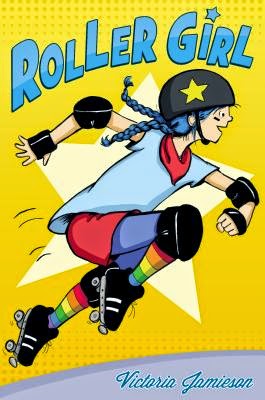
Roller Girl

by Victoria Jamieson
Support your local independent bookstore: buy it there!
Content: It’s in the middle grade graphic novel section.

It’s the summer before sixth grade — middle school (gulp!) — and Astrid has things all Planned Out. She and her BFF, Nicole are going to hang out, go to derby camp, and have tons of fun!

Except. That’s not the way things happen. Nicole is off to dance camp, and is becoming someone Astrid can’t even relate to. And derby camp, well, let’s just say it’s a LOT harder than Astrid ever figured it’d be.

I picked this one up for K a while back, who really enjoyed it. But had some issues with it, especially with the friendship element. Why do things this happen, she wondered. It spawned a discussion about friends and change, and trying new things. So, I needed to see what it all was about.

And I loved it. I loved that Astrid was who she was, and while she changed — she realized that she was being a bit self-centered and not a very good friend — she still remained the same person she always was. I liked that it showed that things can pay off when you work hard at something. And that sometimes, it’s okay when other people take the spotlight. The drawing’s fun and colorful, and I love that Astrid is (at least) half-Puetro Rican.

It’s a sold graphic novel, and one that I know kids will love. (K did!)

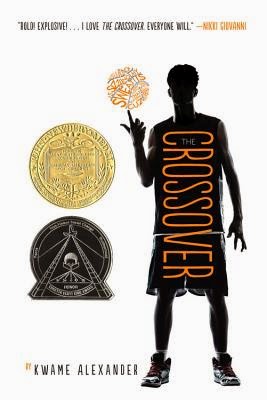
Crossover

by Kwame Alexander
First sentence: “At the top of the key, I’m MOOVING & GROOVING, POPping and ROCKING — “
Support your local independent bookstore: buy it there!
Content: It’s poetry, which is a plus and a minus: plus, because it means it’s a quick read. Minus, because you have to convince kids that it’s okay to read poetry. There’s some kissing, but I’d give this to kids ages 10+. It’ll be in the Newbery section of the bookstore (yes, we do have one!).

I really didn’t know what to expect going into this. I’m sure it would be good — it won the Newbery, after all — but is it one of those good books that are just all style and no substance?

Because this book does have style. You can tell that right from the first page. Alexander’s not only writing a novel in verse, he’s playing with form. There’s style to these poems, it’s not just words on a page; they sometimes (like in the opening poem) leap right off the page. (There’s one poem, about 2/3 of the way though, that can be read in two different directions. I love that!) But, there’s also substance as well.

Twins Josh and Jordan Bell are inseparable, both in life and on the basketball court. Sons of a retired (due to injury) Euroleague player, basketball is their Sport. Their Religion. Their Life. But, during their 8th-grade year, things change. They drift apart, mostly because Jordan — JB as he wants to be known — starts going out with a girl. And their dad has serious heart problems. All of this weighs on Josh, and he lets it interrupt his game.

It’s a simple story, but one with tremendous amounts of heart. Josh is a complex character, who worries about his parents, misses the connection with his brother, and wants to be the top of his game. And yet, he has a temper, one that gets in the way of his wants and desires sometimes. There’s a depth to him that makes him real, which I appreciated it.

I did have a couple of complaints… I didn’t like the portrayal of the girlfriend, but I do understand it’s from Josh’s point of view, and he didn’t really like her intrusion into the relationship with his brother. So, I can understand why she was a bit of a caricature.) The other thing I didn’t really care for — and this is a spoiler — was the dad dying in the end. I did like that there wasn’t a “neat and tidy” ending, but it was a bit, well, Dramatic.

But aside from those two little complaints, I loved this one. I loved the style and the characters and just immersing myself in this world. For the Bells, the highest compliment is that they are Da Man. And this book is definitely that.

Eddie Red Undercover: Mystery in Mayan Mexico

by Marcia Wells
First sentence: “I’m back.”
Support your local independent bookstore: buy it there!
Review copy provided by the publisher.
Content: There’s some mild violence and some mild romance (it’s not a kissing book), but the language/chapter length level works for the younger readers as well as the older ones in the age range. It’s in the middle grade (grades 3-5) section of the bookstore.

I had a woman in the store the other day, looking for a Harriet the Spy-type mystery for a 10-year-old boy, who wanted something with intrigue and adventure. (They’d already read Harriet the Spy, or I would have given them that.)  Thankfully, I had just finished this one, so I had a great, middle grade mystery with intrigue and adventure to hand to the customer. (Bonus: this is the second, but you don’t need to read the first at all!)

Edmund (call him Eddie, please!) and his family are in need of a vacation. He’d just gotten done being grounded (for events in the previous book), and his mother was given a vacation/opportunity to go to a conference. In Mexico. Sounds delightful, no? Especially since Eddie’s best friend, Jonah, was along for the ride. But once there, an ancient mask that’s on display at the hotel is stolen and Eddie’s father is blamed for the theft. So, it’s up to Eddie, Jonah and their new friend, Julia, to solve the crime and find the real thief.

I really did thoroughly enjoy this one. It’s well-paced, with intrigue, suspense, and action, as Eddie and Jonah follow the twists and turns through this mystery. I liked that they were reasonable kids, doing reasonable things, and that aside from Eddie’s photographic memory and artistic skillz, they’re pretty normal kids.

But what I really liked is that Eddie is an African American kid, and its not an issue. At all. In fact, it’s not something I even realized (shame on me?) until I was about a third of the way through. It’s a diverse cast, being set in Mexico, and it’s not something that’s pointed out. It just is. Which is always nice.

A good, refreshingly solid, middle grade book.

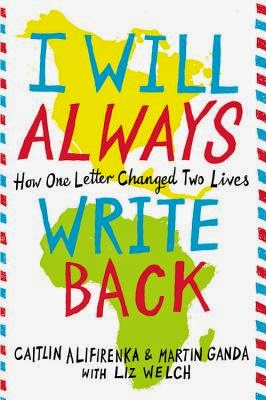
I Will Always Write Back

by Caitlin Alifirenka, Martin Ganda, and Liz Welch
First sentence: “I’d never heard of Zimbawe.”
Support your local independent bookstore: buy it there!
Content: It’s a non-fiction book that deals with teens, and so there’s some mention of teen drinking and pot smoking, but for the most part it’s pretty harmless. It’ll be in the middle readers biography section, though I’d hesitate giving it to the younger end of the readers. I think it’ll be best for grades 5 and up.

In the fall of 1997, Caitlin Stoicsitz made an impromptu decision that changed multiple lives. She raised her hand to get a pen pal, and her letter was sent to Martin Ganda in Zimbabwe. You wouldn’t think something as simple as that would be life-changing, but it was. Caitlin’s letter got sent to a small, rural school in Mutare, and by chance Martin, who was one of the best students in class, was on the receiving end. He wrote back, and that was the beginning of what became a deep friendship for them. And because of that friendship, Caitlin was able to change Martin’s life, to give him the opportunities — especially educational — that he wouldn’t have had otherwise. For what seems like mere pittance, Caitlin (and eventually her whole family) was able to pay Martin’s fees for school (especially since his father was out of work) and help him get into a U. S. College. That doesn’t sound like a whole lot, but as you get to know both Caitlin and Martin over the course of the book, you realize that it IS.

In return, Martin gave Caitlin something that many Americans desperately need: a view of how everyone else lives. Compassion for the downtrodden, and a knowledge that we really, truly are privileged in America.

Like many memoirs, this one is uneven. It’s chatty, and sometimes Caitlin’s narrative borders on whiny, neither of which might bother the intended audience, but kind of grated on me. I also felt like there was a bit of the “American savior swoops in to save the day” which also kind of grated.

But I do honestly believe that Caitlin and Martin have a bond, and I do believe that writing and responding to the letters, when one truly cares and when one is open to other ideas, can change lives.

And this book is a good reminder of that.

The Trap

by Steven Arntson
First sentence: “The last day of summer break before the start of my seventh grade year was the first time I ever got punched in the face.”
Support your local independent bookstore: buy it there!
Review copy provided by the publisher.
Content: It’s some pretty dark subject matter — kidnapping and out-of-body experiences. Plus there’s romance, but nothing too mature. It’s in the middle grade (grades 3-5) section of the bookstore, though it’ll probably be of interest to the older end (and maybe into the 6th grade).

It’s the summer of 1963, right before seventh grade, and Henry Nilsson is pretty sure nothing exciting is going to happen. His dad is being laid off at the railroad and they’re having to tighten their belts at home (they even sold the TV!). Henry like-likes his twin sister’s best friend, Nikki, but has no idea what to tell him. And his best friend, Alan’s, brother bullying has increased.

Then, two things happen to change the trajectory of Henry’s summer: Alan’s brother goes missing. And they discover a book to teach them how to have an out-of-body experience, called “subtle” travel. Once they figure out how, they enter the subtle world, where things aren’t as nice as they seem. And where there’s some pretty scary things going on in them thar woods.

On the one hand, I enjoyed this one. I liked the historical detail, which was never the point of the book, but rather just background to give it some weight. I liked the friendship between Henry and the rest, including his sister. I liked that both Nikki and Alan were people of color — Nikki is Asian; Alan, Latino — but that it was never really an issue. (Well, it is, once.) I liked the mystery, the discovery of what was going on with Alan’s brother, and the realization that even though he’s often mean, he has some good in him.

What I didn’t like was the whole speculative fiction part of it. The subtle travel was weird (Seriously.) and I was never really able to suspend my disbelief enough to make it work for me. There was just too much left underdeveloped, that was just plain weird.

But, perhaps, those are adult concerns creeping into a middle grade book. It is a dark book, one that’s kind of creepy, and for those who like a slight creep factor to their book, it’s a good one. And perhaps, the positives outweigh the negatives.

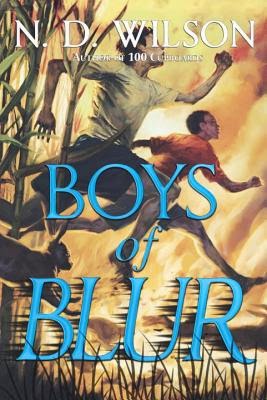
Boys of Blur

by N. D. Wilson

First sentence: “When the sugarcane’s burning and the rabbits are running, look for the boys who are quicker than flame.”
Support your local independent bookstore: buy it there!
Content: There are some intense moments, some violence, and some reference to abuse. It’s pretty intense, so while it’s in the middle grade (grades 3-5) section of the bookstore, I’d hesitate giving it to the younger part of that age range.
There’s so much going on in this slim book, that it’s difficult for me to know where to start. 
There’s Charlie Reynolds, who had an abusive father, but whose mother was strong enough to leave and who found Mack, a former professional football player from a small town in Florida, to help keep her and Charlie safe. They got married and had an adorable little girl, Molly.
There’s Cotton Mack, the homeschooled son of one of Mack’s cousins, whom Charlie meets when he’s in Florida to attend the funeral of Mack’s former football coach.
It’s after that funeral that things start getting weird for Charlie and Cotton. Like ancient mythical men on mounds wielding swords weird. Like panthers that are tame and the zombie-like Stank (aka Gren) who feed off of envy and greed. And somehow it falls to Charlie and Cotton (well, mostly Charlie) to stop the Gren from rising and destroying their town.
In many ways, this one is reminiscent of The Dark is Rising: an ancient force pitted against a boy, who didn’t know he had it in him to face that ancient force. The difference is that this one is very southern, and is liberally scattered with African Americans. Which brings me to my one problem: why did the white kid have to be the one to save the world, in the end? Why did Cotton have to be taken out of commission? Although I really liked the book, with its mix of football and mythology and family, I was disappointed by this.
I don’t know how much that affected my enjoyment in the end, because Wilson does know how to pace a book, and he’s incredibly tight in his timing, and he knows how engage a reader. So, overall, I’d consider this one a win. 

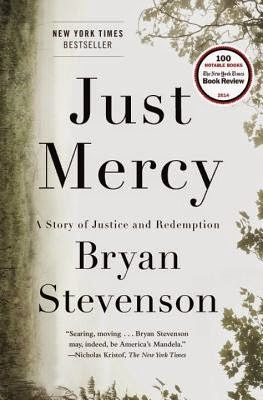
Just Mercy

by Bryan Stevenson
First sentence: “I wasn’t prepared to meet a condemned man.”
Support your local independent bookstore: buy it there!
Content: It’s intense, and there are some graphic elements, as well as swearing. It’s not for the tender-hearted (I had to put it down several times and read other books because I couldn’t handle the nature of the story). It’s in the adult non-fiction sections of the bookstore.

This one has been on my radar for a while as one I’d need to get around to reading. But what really prompted me to pick it up was listening to Serial. The two don’t really have a ton in common, but there are similarities. Both deal with minorities being imprisoned, mostly unjustly. Both are difficult, at times, to listen to/read. Both are important.

Bryan Stevenson was a young lawyer from Harvard in the mid-80s when he went to Atlanta to do an internship there. He got involved with a death-penalty case in Alabama, where he determined that the man was accused falsely. Stevenson became involved in the case to the point where he started the Equal Justice Initiative, a group that advocates for people on death row, as well as for children and for those with mental disabilities who have been imprisoned for life.

I took away two things from this book: First, our justice system may work “as well as it can”, but that usually means “for those who can afford it.” If it wasn’t clear before, it’s clear after reading this: our system is broke. It favors those who are white, those who are healthy, and those who are well off. Especially in the South. It saddened and depressed me that this isn’t history. This is happening in my lifetime, not in some distant past.

The second thing is that Stevenson is an incredibly hopeful individual. He’s practical, yes. But he’s also hopeful, and Christian, and just Good to do this work for people society — people like me — have written off. It makes me want to go out and give everyone I meet a second, or third, chance. Yes, there are people out there who are beyond hope, but I think, especially after reading this, that there aren’t that many people who are completely unredeemable.

It was a tough book, emotionally, for me to read (it didn’t help that I went and saw Selma while reading this as well). I cried a lot. My heart broke. And I had to think about the way I treat and judge people.

I am grateful that there are people like Stevenson out there doing this work. And I’m glad he wrote this book if only to make people like me more aware.

A Dozen Books about the African-American Experience

It’s Martin Luther King Jr Day tomorrow, and we’re probably celebrating by going to see Selma. And I know I’m a bit early for Black History Month, but I thought I’d do a list of books that celebrate the depth and breadth of the African-American experience. I don’t think I came up with one that’s really comprehensive, especially since I tend toward the historical fiction, but it’s a start.

Historical:

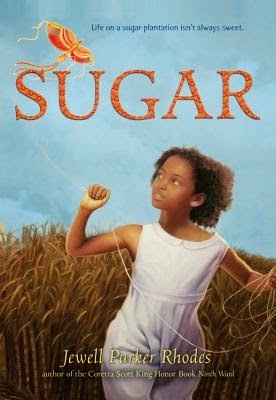
Sugar, by Jewell Parker Rhodes: “It’s 1871, and slavery is supposed to be over. However, for ten-year-old Sugar, on a sugar plantation in Louisiana, it doesn’t feel like it. Sure, the former slaves are free to go if they can, but they’re paid so little that it’s almost impossible for them to leave.”

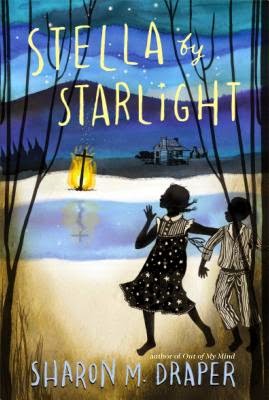
Stella By Starlight, by Sharon M. Draper: “It’s 1932, North Carolina. The whole country is in the throes of the Great Depression, Franklin D. Roosevelt is running for office. For Stella and her family, this doesn’t really matter. They’re more concerned about making ends meet. And avoiding the local Klu Klux Klan.”

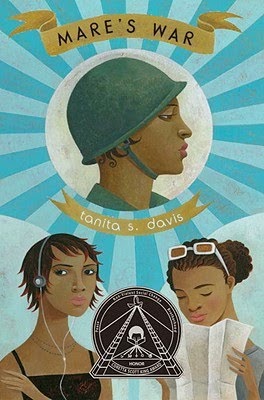
Mare’s War, by Tanita S. Davis: “As they start driving, Mare starts talking about her past: what made her run away from Bay Slough, Alabama and join up in the Women’s Army Corps near the end of World War II. Her experiences in both a segregated south and a 1940s midwest, not to mention in the army. The chapters alternate between then — Mare’s history — and now — the road trip — and as the book unfolds, we learn more about all three of our characters”

Flygirl, by Sherri L. Smith: “Ida Mae Jones has always wanted to fly. Ever since she was put behind the wheel of her daddy’s plane and taught how, she knew that this was what she was born to do. Except, she’s an African American and lives in the outskirts of New Orleans. Not only can she not get a pilot’s license because she’s a woman; she can’t get one because she’s the wrong color.”
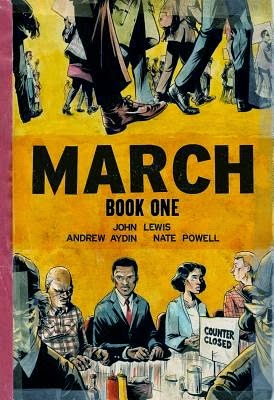
March: Book One, by John Lewis:This is a slim graphic memoir, telling the first part of Congressman John Lewis’s story. This volume starts with his childhood in Alabama, and goes through the Nashville sit-ins that he participated in. My favorite thing about this memoir was the framing: It opens with Lewis waking up the morning of Obama’s first inauguration, and the story unfolds as Lewis is remembering his path to D.C. as he tells it to a couple of constituents who have stopped by his office.

The Watsons Go to Birmingham, by Christopher Paul Curtis: “: This was a terrific book — a wonderful portrayal of a black family in early 1960s Flint, MI. It was hilarious (all the way through the end): the narrator called his family the “Wacky Watsons” and they were.”

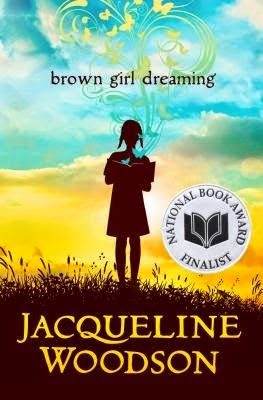
Brown Girl Dreaming, by Jacqueline Woodson: “Her childhood begins in Ohio, but mostly it’s spent in South Carolina, with her grandparents, and in Brooklyn, where her mother finally settled with Jacqueline and her brothers and sister. I kept trying to figure out the timeline (if she was born in 1963, then it must be…) but eventually, I just gave up and let myself get absorbed in the story.”

No Crystal Stair, by Vaunda Micheaux Nelson: “The book follows Lewis and his family — his parents, and a couple of his brothers — through most of the 20th century, beginning in 1906, through his many failed ventures to his inception and success in the bookstore. It’s fascinating to read and think about: Lewis’s big thing was that black people can’t stop being Negros — that is, defined by white people — until they know their history. Which means: they need to read. And read about their people.”

Contemporary:

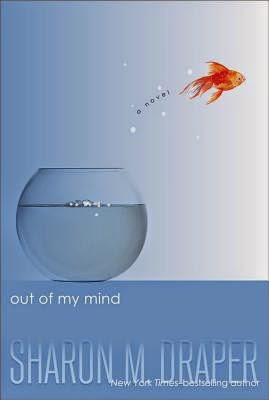
Out of My Mind, by Sharon M. Draper: “Melody is very, very smart. She’s known words and ideas and concepts since she was very little. She loves music, and can see colors when it plays. But, she has no way to tell anyone any of this. Melody has cerebral palsey, and while she can hear and understand, she just can’t communicate. Which is incredibly frustrating to her.”

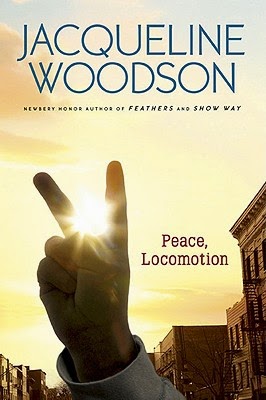
Peace, Locomotion, by Jacqueline Woodson: “The book is a series of letters from Lonnie — aka Locomotion — to his younger sister Lili. They’ve been put in different foster homes after a fire killed their parents. The loss is still there, at least for Locomotion, and he’s made it his “job” to help Lili not forget his parents.”

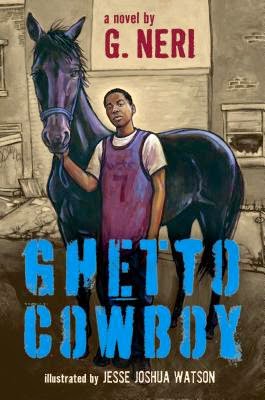
Ghetto Cowboy, by G. Neri; “Living in Detroit, twelve-year-old Cole and his mom are scraping by. Sure, he doesn’t go to school that often, but he’s okay. Until the day he gets caught, his mom flips, and drives him to Philadelphia to live with a father Cole has never met. Once he gets to Philly, angry about being abandoned (as he sees it), by his mom, he decides he will have nothing to do with his father, or the stables he runs in North Philly.”

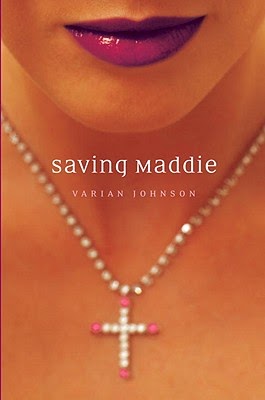
Saving Maddie, by Varian Johnson: Joshua Wynn is a good guy. He doesn’t drink, he doesn’t smoke, he doesn’t party, he doesn’t have sex. He chooses leading his church’s youth group over playing on the school basketball team. Granted, he’s the preacher’s kid, and there’s an enormous amount of pressure on Joshua to be good. And Joshua’s mostly okay with that.  That is, until Maddie Smith — his best childhood friend who moved away when she was 13 — moves back into town.”

So, I know I left off a lot. What are some of the best ones?

Stella By Starlight

by Sharon M. Draper
First sentence: “Nine robed figures dressed all in white.”
Support your local independent bookstore: buy it there!
Review copy snagged off the ARC shelves at my place of employment.
Content: There’s some pretty intense stuff going on in this book, by Draper never lets it get too dark. She knows her audience and (rightly) assumes they can handle anything that is thrown at them. Be prepared, however, for some discussion. It’s in the middle grade (grades 3-5) at the bookstore.

It’s 1932, North Carolina. The whole country is in the throes of the Great Depression, Franklin D. Roosevelt is running for office. For Stella and her family, this doesn’t really matter. They’re more concerned about making ends meet. And avoiding the local Klu Klux Klan.

And they’re doing a pretty good job until Stella’s dad, pastor, and a family friend decide to exercise their constitutional right and vote. Then, all hell breaks loose.

There’s actually a lot more going on than that: Draper knows her history, and paints a picture of what life was like for African Americans struggling to get ahead in the 1930s. The one-room school, with a teacher who handles all grades next to the white school where they get new books. The small houses and hand-me-over clothes. Having to enter in the back door of shops. Or, most tellingly, a white doctor who won’t come help Stella’s mother after she’d been bitten by a rattler.

And Stella is such an engaging character to go through all this with. She’s an observant, smart girl, but one who also struggles with writing in school. She’s trying to figure out her place in life, how to navigate the injustices of her situation, and still come out ahead. She’s got fantastic parents, and a supportive community. There’s so much that I found admirable about the way she deals with her situation. And so much to discuss (I know; I ended up talking to my family) when you’re done.