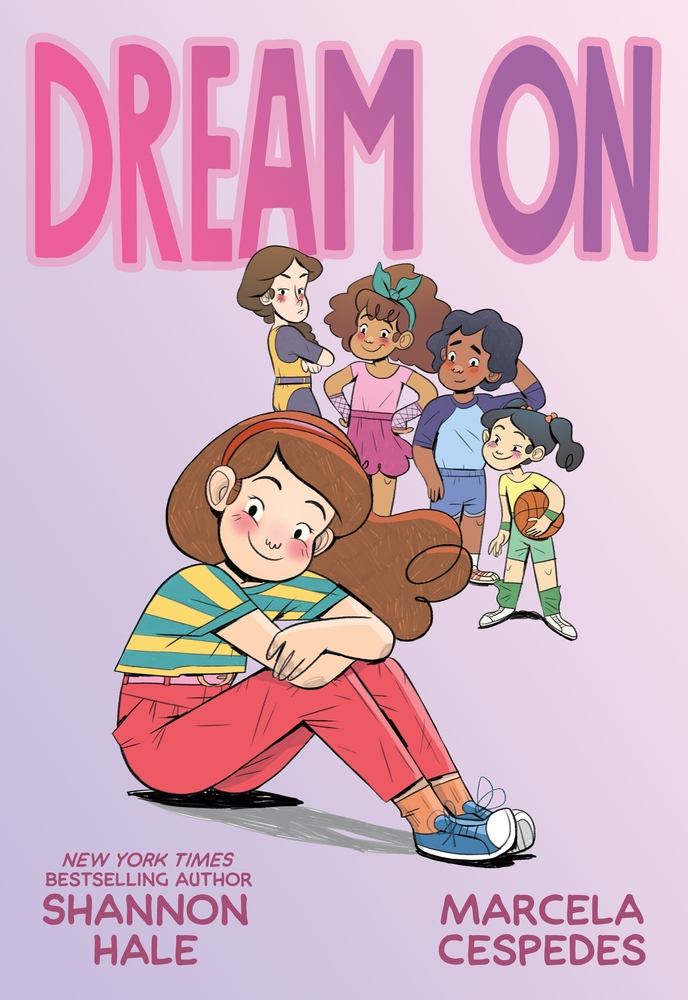
by Shannon Hale, illustrated by Marcela Cespedes Support your local independent bookstore: buy it there! Content: There is some bullying and depictions of panic attacks. It’s in the Middle Grade Graphic Novel section of the bookstore.
Cassie is a pretty happy kid. She has a best friend, she likes playing imagination games, she loves her 4th grade teacher, and even though her family is big and they don’t have much money, she’s pretty content. But then things start to change: a third girl comes in between Cassie and her friend, and she tries too hard to keep the friendship together. She discovers a sweepstakes letter that says she’s won the Grand Prize – a trip, or furniture, or money! – and she sends in some magazine subscriptions to get it (ah, that’s a throwback!). She doesn’t like it when her mom tells others that Cassie is “too sensitive”. What seemed good now seems to be falling apart.
The thing I like best about Shannon Hale is that she just gets the Big Emotions that young kids can have. This is a book about Cassie and her Feelings, and I just felt the empathy Hale has for her character. She’s able to validate these emotions, to make them seem more substantive, to make the kids who have them feel seen. It’s remarkable.
I did enjoy the story, and choosing to place it in a time where there wasn’t cell phones or internet is a good choice (though how many kids today will know about those silly sweepstakes junk mailers?). I liked the art well enough, but found myself wishing for LeUyen Pham’s drawings instead (I don’t know why; maybe it’s because Hale and Pham make a great team?). In all, though, it’s a good graphic novel for the younger elementary reader.
by Hena Khan First sentence: “I wince as the sharp metal tool scrapes against my molars and pricks my gums.” Support your local independent bookstore: buy it there! Content: There are some tense moments, and Deena experiences a panic attack. It’s in the Middle Grade (grades 3-5) section of the bookstore.
What Deena really wants to do is draw. She’s good at it, and she loves it. However, her parents are always super stressed about money, and they are always pushing her towards doing something that will help her earn a living. They work hard – her mother has a clothing business, that Deena is sure she could help with – but they are unwilling to spend their money on art lessons. There are other money issues, and it all weighs on Deena, until she starts having anxiety attacks.
This is a quiet little book, without high-stakes conflict, but I thought that Khan did well with the characterizations. I could feel Deena’s parents’ stress, and understood their hesitation to spend money (I’ve been there!). I could understand why Deena wanted to both pursue her art but also to make her parents happy. I got the friendship conflicts and Deena’s jealousy of her cousin. I also liked her portrayal of anxiety, especially in someone who didn’t know they had it. Nothing in the book was high-stakes, but Khan is a good writer and while the book was quiet, it was a good sort of quiet.
by Barbara Dee First sentence: “Okay, here we go.” Support your local independent bookstore: buy it there! Content: There is some friendship drama, anxiety depictions, and mild crushing. It’s in the Middle Grade (grades 3-5) section of the bookstore.
Lyla loves to write. She’s got a whole novel inside her head, and when her ELA class comes to a creative writing unit, she’s super excited. The excitement only intensifies when her teacher mentions a short-story contest that gives actual money prizes. Lyla just knows she can win this. Except, when the time comes, Lyla is paralyzed. She can’t put anything down on paper. And it seems like external pressures – the fight she’s having with her best friend and the secrets she’s keeping for her older sister – are just making her even more anxious.
On the one hand, the fact that this was about something simple – Lyla’s inability to write the story in her head on paper – was quite refreshing. Her parents were loving, if a bit helecopter-y; she was having friend trouble, but it wasn’t all-consuming; her sister was having problems motivating herself to go to college – nothing life-shattering. It all felt very normal and authentic. That said, it was also often very anxiety-inducing. (Which is probably a sign of good writing.) I had to put it down quite a bit because I just couldn’t handle Lyla’s anxiety spirals. But, she does learn coping mechanisms, and she does learn to accept things and communicate her feelings, so in the end, I think the depictions of anxiety were a good thing. They were just hard to read.
I did really like this one, in the end. It’s good for kids who are thinking about being writers, or ones who just like good stories.
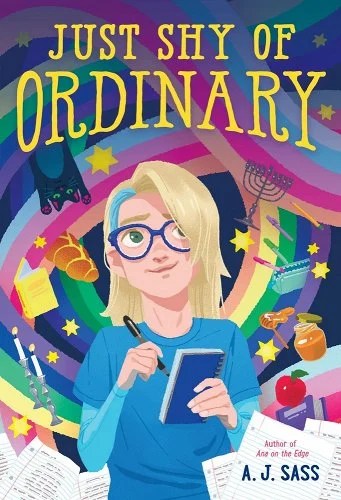
by A. J. Sass First sentence: “Day one of my new normal began on the Sunday before I started my first-ever day of public school.” Support your local independent bookstore: buy it there! Content: There is some talk of crushes and like-liking people, there is mention of anxious self-mutilating behaviors, and it’s on the longer end for the age range. It’s in the Middle Grade (grades 3-5) section of the bookstore.
Shai has a plan to create their new normal: come out as non-binary to their mom and their closest friends (done), wear sleeves to cover their arms so they stop picking and pulling out the hairs when they get anxious (their best friend Mille designed and made the sleeves as an added bonus), and start 8th grade at a public school. They believe that the change of routine will help with the picking. Except they test out of 8th grade (they’ve been homeschooled up until now), and get put into 9th grade. High school!
So while Shai is anxious about starting something new, they meet a couple of people -Nia and Edie – who seem nice enough to be friends. (And maybe even tell them that they’re non-binary!)And then their English teacher assigns a long-term project that has Shai thinking about their Jewish heritage. It’s all complicated and difficult, but maybe this new normal will turn out for the best.
This is a simple tale – the conflict is mostly internal, with Shai struggling with anxiety and the compulsion of picking, as well as the distance they feel from their mom, who has been studying and working to get a new job. But Shai was an enjoyable character to spend time with. I think Sass did a good job portraying the uncertainties that a kid would go through when they’re redefining who they are, as well as the added challenge of skipping a grade and starting something really big, like public school. I appreciated the inclusion that Shai’s mom, grandparents, and friends showed, as well as the diversity in their small-ish Wisconsin town. While it’s not a book that really blew me away, it is one that made me smile, and I enjoyed until the end. I’m glad it’s out there for the kids who need it.
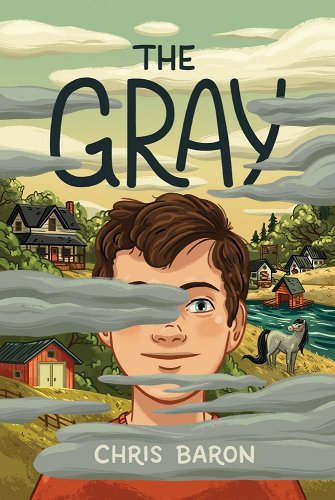
by Chris Baron First sentence: “All my plans for the summer are ruined.” Support your local independent bookstore: buy it there! Content: There is bullying, and an inference of sexual assault, as well as descriptions of anxiety. I read this book for the Cybils, and this is a reflection of my opinion and not that of the whole panel.
Sasha has a problem with anxiety. He gets what he calls “the gray” and disassociates. In one of these moments, when he was being bullied, he hit an ex-friend with a book and injured him. As a result, his parents decide to send him to stay with his Aunt Ruthie in the country. He doesn’t want to – there will be no friends, no video games, no Wi-Fi, and hardly any cell service. He figures that it won’t do him any good. But, once he gets there, he finds that there are friends and bullies, just like back home. There is his connection with Aunt Ruthie, who is still grieving over the death of her husband. While his anxiety isn’t cured, Sasha finds a way to handle his anxiety, and that maybe the country isn’t terrible.
I liked this book well enough. I liked the way Baron described someone having a panic attack, and the way anxiety was portrayed. I didn’t care for the bullies, though I thought Sasha did his best to handle them. I liked that nature was a healing place. But I didn’t love it. There was nothing in particular, it just wasn’t my cup of tea. Not a bad portrayal of anxiety, and I’m sure it will help kids recognize and be able to deal with it.
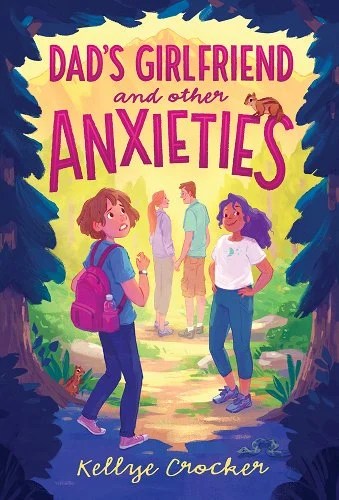
by Kellye Crocker First sentence: “Ana should have been happy.” Support your local independent bookstore: buy it there! Content: There is a lot of lying, talk of pregnancy, and some parental neglect. It’s in the Middle Grade (grades 3-5) section of the bookstore.
Ana’s whole life it has just been her and her dad. Her mom passed soon after Ana was born, and she hasn’t known anything else. But the summer after sixth grade, her dad decides to take her out to Colorado to meet his new girlfriend and her daughter. For two whole weeks. This wouldn’t be so bad, but Ana just got diagnosed with anxiety disorder, and the idea of traveling to Colorado from nice, safe Iowa is positively anxiety-inducing. And so, when they get there, all she wants to do is go home. So she decides to sabotage the vacation. In one horrible situation after another, Ana tries to make everything come undone… and learns a lot in the process.
This was a good portrait of a 12-year-old, who was used to being the center of her father’s life, learning to share him with another adult. And remember to manage her anxiety, and how to be open to new situations. It’s kind of fun, sweet, and perfect for those middle-grade readers who want to experience a Colorado vacation (while simultaneously getting second-hand embarrassment).
A-Okay by Jarad Greene Support your local independent bookstore: buy it there! Content: It’s a very “middle school” book, with crushes and friendship issues. It’s in the middle grade graphic novel section of the bookstore.
Jay is starting 8th grade with a face full of acne. This is a problem, mostly b because he is very self-conscious of his looks, and he thinks that his friends won’t like him anymore. He tried everything, but nothing seemed to work until he goes to a dermatologist and got on a heavy course of medication. The only problem is that it gives him mood swings and makes him sweat a bunch. On top of that, his best friend is more interested in hanging out with his new band members and Jay feels alone. He tries to make new friends, but it doesn’t go terribly well. And one more thing: he’s just not interested in a couple of his classmates the way they are in him.
I liked that this book dealt not only with the way boys feel about their appearance but also with the lack of feelings of attraction to people. I think there are more of these coming out now, normalizing not “liking people”, which I really appreciate. It’s not a really great graphic novel, but it is a good one, and one that I think kids will find valuable.
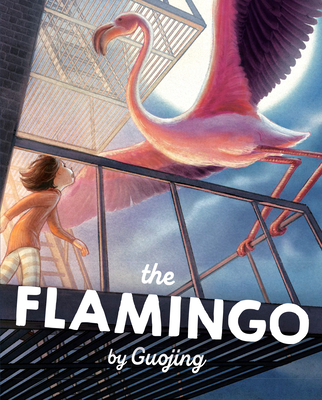
The Flamingo by Guojing Support your local independent bookstore: buy it there! Content: there are very few words, so this works as a beginning chapter book, a picture book, or a graphic novel. It’s in the Middle Grade graphic novel section of the bookstore, but it can definitely go younger.
The simple story of a city girl who goes to visit her grandmother in an unnamed (but presumably Asian) country. They spend days on the beach, and at night, her grandmother telles==s her the story of how she came to have a flamingo wing. It’s a simple story, one that is meant to delight as well as entertain, and when the girl returns home to the city, she draws the flamingo adventure for her grandmother.
There is not much to this book, but man, it was absolutely gorgeous. The art is so so evocative, you can’t help but fall in love with the characters from the girl and her grandmother to the flamingo. It’s absolutely stunning.
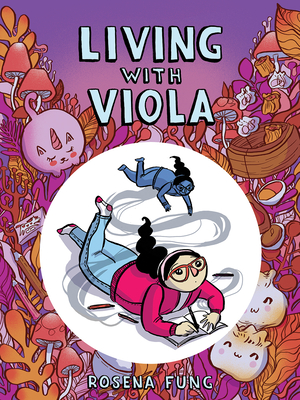
Living with Viola by Rosena Fung Support your local independent bookstore: buy it there! Content: It talks pretty frankly about anxiety, and implies suicidal thoughts. It’s in the Middle Grade Graphic Novel section of the bookstore.
Olivia is a sixth grader, and her parents have transferred her to a new school, one with a better reputation so she can get a better education, which means starting completely over. That’s shared enough, but Livvy has pretty bad anxiety, which she personifies as “Viola” Sometimes Livvy can keep Viola at bay, but often Viola becomes so big that it’s overwhelming. Livvy does make new friends, but there are friendship struggles and struggles with her immigrant parents as well as with her extended family. Overarching it all is Viola, and her insistence that Livvy is just no good.
This is an excellent graphic novel for a couple of reasons. First, it’s great that it shows anxiety as something “other” – it was a little weird to get used to at first, but eventually, I did. I think it’s beneficial because kids will realize that anxiety is not “them” but something outside of their control. At least by themselves. At the end of the book, Livvy goes to see a therapist who gives her some tools to help keep Viola at bay better. The book doesn’t get into medication, but it does provide hope that anxiety isn’t something to be ashamed or afraid of. I liked that Livvy felt like a sixth grader, aught between friends who want to “grow up” and Livvy wanting to carry around her cute plush unicorn. That pretty well sums up sixth grade. I also enjoyed Fug’s exploration of Livvy’s Cantonese heritage, from the microaggressions of kids at school (why does your food smell, why don’t you speak Chinese) to Fung choosing to make every time a character speaks in Cantonese in red. It’s a clever, good, well-drawn graphic novel and I enjoyed it quite a lot.
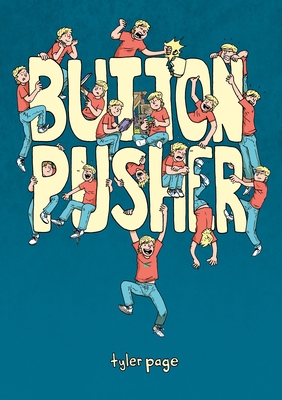
Button Pusher by Tyler Page Support your local independent bookstore: buy it there! Content: There is some domestic violence, as Tyler’s dad has a temper. There are also allusions to swearing (but they are @#!!). It’s in the Middle Grade Graphic Novel section of the bookstore.
In this graphic memoir (sort of), Page relates his history of having ADHD during his childhood, and his path to his parents not only getting him diagnosed but also the ups and downs of medication. There is also family drama: Tyler’s dad has an explosive temper and is pretty misogynistic towards Tyler’s mom (and his boys, too, really). Page doesn’t sugarcoat the contention at home, and even recalls the times when his mother had had enough and wanted to leave (but chickened out). There is a lot of “it gets better” in this book as well, as Page is looking back on his childhood.
It’s well-drawn, and I liked that Page spent time trying to explain what ADHD is, and how the brain of a person with ADHD works (and doesn’t work). It may be a bit advanced for kids, but I found it fascinating. And I think the purpose of the book is to not only try and illustrate what a kid with ADHD looks like (though, as Page notes near the end, it’s different for everyone), and to create awareness. I don’t think the problems at home had much to do with the ADHD (except maybe Page’s dad was undiagnosed? I felt like he was bipolar, but that’s me being an armchair doctor), but Page was trying to be as honest as possible about his childhood. A really good graphic novel, though maybe not as much for kids as it is for their caregivers.
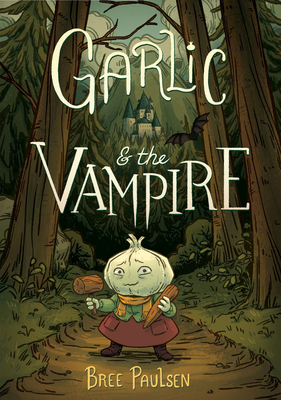
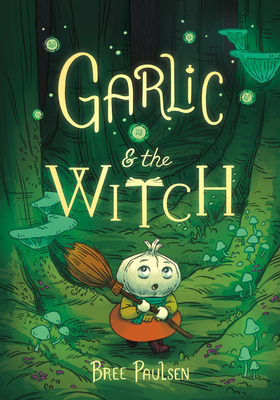
by Bree Paulsen Support your local independent bookstore: by them there! Content: There really isn’t anything, unless you don’t like vampires or witches. They are in the Middle Grade Graphic Noel section of the bookstore.
This is an absolutely adorable pair of graphic novels. They center around Grlic, the “child” of Wicth Agnes, who along with other veggies and fruits, help the witch in her garden. In the first book the veggies notice smoke coming from a nearby, old, abanodned castle, and Garlic is nominated to go see if a vampire lives there. One does, but he turns out to be “retired”, ad joins the veggies in their gardening.
In the second, GArlic needs to go on an adventure to fetch an ingredient for Count(he’s the vampire) blood substitute, which is very scary but also very exciting. Additionally ti seems Garlic and the other frit/veggie people are turning human, which is pretty stressful.
In both, Garlic is an anxious bean (well, she’s a root? I don’t know: what is garlic?), who is afraid of change but is determined to not let that get in her way. They are adorable books, cute and homey and safe, and absolutely good for any kid who deals with anxiety. Also for people who like cute, cozy stories
I like Paulen’s stories and her art, so I’m cureious to see what she does next!
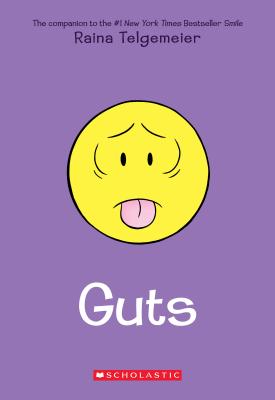
by Raina Telgemeier Support your local independent bookstore: buy it there! Content: There is a lot of talk about bodily functions — throw up, diarrhea, puberty, among others. It’s in the middle grade graphic novel section of the bookstore.
My first reaction to finishing this book? My gosh, Raina had a childhood. All of these books (Smile and Sisters as well) are loosely based on her childhood. And if that’s the case (and I don’t know why it wouldn’t be), then wow, Raina’s childhood was something.
This one deals with her issues with stomach aches and throwing up and anxiety and the reactions of her classmates and family surrounding it. In fourth grade, Raina developed a fear of throwing up, which made her want to throw up, and so she developed a phobia around food and being sick because of that. There’s anxiety wrapped up in there as well: when she was nervous, it manifested physically. And there’s a subplot with a girl in her class who made fun of Raina because of her issues. It all turns out happily in the end.
Telgemeier is a fantastic artist; there are a few spreads where I think she nails what anxiety feels like in images. And one where she depicted the passing of time in a single image that is just amazing. And I appreciate that she’s telling these sorts of stories. There has to be kids out there who experience the same feelings — or just the ones with anxieties! — who need this book to feel seen and understood.
It may not be my favorite graphic novel this year, but it’s another solid entry from Telgemeier.
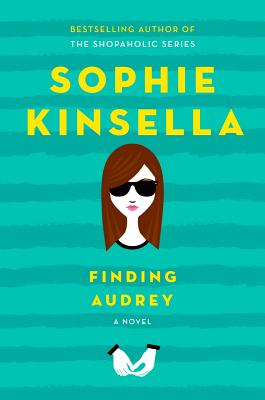
by Sophie Kinsella First sentence: “OMG, Mum’s gone insane.” Support your local independent bookstore: buy it there Content: It has six f-bombs, all near the end of the book, and nothing else. So, I’m torn: do I leave it on the YA shelves (grades 6-8), where it thematically belongs? Or do I move it to Teen (grades 9+) where it’s not quite edgy enough, but it fits language-wise? Tough call.
Audrey doesn’t leave the house. Doesn’t talk on the phone. Doesn’t talk to people (outside of her therapist and her family). Doesn’t look people in the eye (in fact, she prefers to wear dark sunglasses all the time). She hasn’t done any of these things since the “incident”. And she prefers to keep it that way.
Before I go much further I have to interject: this is a hilarious book. Perhaps it’s because I love All Things British, but I was thoroughly charmed by Audrey and her family. It is possible to take something serious (like bullying — though you never really find out what happened, and that’s okay) and severe anxiety and to be, well, warm about it.
Maybe I should make a second diversion: I adored Audrey’s family. From her gamer older brother (with his mile-wide sarcastic streak) to her absolutely adorable four-year-old younger brother (adorable!) to her completely clueless dad (probably stereotypical, but it worked), to her over-protective mom (I will stand by my statement that the best way to be a good parent is to read YA books), they were all entertaining. Kinsella definitely wrote this with love.
(It reminded me, in some ways, of the Casson family books. That makes me happy.)
The arc of the novel is Audrey’s “recovery”. It’s aided by Linus, one of her brother’s friends who takes an interest in her. He supports her and pushes her to try new things, to somehow get a grip on her anxiety. I really liked that Audrey was never “cured”: she learned how to handle her fears and her body’s reaction to them, but they were always still around, which was not only realistic but somewhat of a relief.
Yes, things were kind of tied up in a nice bow at the end, but that’s kind of expected and I didn’t mind. In fact, I really quite enjoyed this.





 The Book Nut