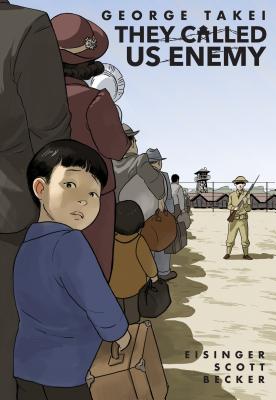
They Called Us Enemy

by George Takei, Justin Eisinger, Steven Scott and illustrated by Harmony Becker
Support your local independent bookstore: buy it there!
Content: There is violence, some swearing, and many racist actions. It’s in the graphic novel section of the bookstore.

Everyone knows George Takei as Sulu on Star Trek (and as a side note, Hubby and K and I are working our way through the original series on Netflix — a consolation prize for not paying for CBS all access so we can watch Picard — and are enjoying it immensely). And if you’ve followed Takei on social media at all, you know about his childhood in the Japanese internment camps during World War II. But, since not everyone knows about this (shameful) part of our past, and because his story is relevant today with the ICE camps in California and Texas, he decided to tell it as a graphic novel.

It’s a tough story, but an important one; Takei was about 4 or 5 when his family was shipped off to live in one of the camps in Arkansas. He admits that he doesn’t remember much, and that he is grateful his father was willing to talk about their time in the camps (many of those who were sent felt shame and didn’t talk about it). It reminded me of John Lewis’s March, in that this is framed by a TED talk, by Takei looking back at this time. It’s a mirror to white people, at how harsh and how exclusive and judgmental we can be. And what the government will do — to citizens! — in the name of national security. (War is just awful.) While I’m not entirely sure the storytelling was smooth and the art was good but not brilliant, but the story is important enough to make this one worth reading.

Surviving the City

by Tasha Spillett and Natasha Donovan
Support your local independent bookstore: buy it there!
Content: There is tough content about indigenous women who have disappeared. It’s in the graphic novel section of the bookstore.

Miikwan and Dez are best friends. They’ve done everything together from their hanging out after school to their traditional and important Berry Fast. And ever since Miikwan’s mother disappeared, she has needed Dez in her life. But, Dez’s kokum is not doing well, heath-wise, and the state has threatened to put Dez into a group home. Which she doesn’t want, and so she leaves. Which sends Miikwan into a spiral: she can’t lose another woman in her life.

On the one hand, this is an important book: it’s picturing the lives of Native peoples in the city, not on the reservations, showing them balancing the traditional with the contemporary. It highlights the injustices by the government — why should Dez go into a group home because her grandmother’s health is failing? Would that happen if she were white? Or less poor? — and the grave harms done to indigenous women — the book is populated with ghosts of the women murdered and who have disappeared. It’s definitely an important story to tell.

Which is kind of why I wish it were actually told better. Maybe it’s because I am white, but I didn’t feel like the characters were fully developed — Miikwan’s main character trait was that she missed her mother and Dez’s was that she didn’t want to go into a group home. I wanted to know more about their Berry Fast: what was it, why is it important to them? I just wanted more from these characters to balance out the importance of the story they were telling. I also wanted to know more about the ghosts. Could MIikwan see them? Sometimes I felt like she could. I get why they were around, but what was their connection to our characters? And Dez — I just wanted more from her, other than the fact that she was worried about her kokum. What are her interests? She got in trouble in the beginning, was she the one who was always picked on by the teacher? Does she see the school counselor often (I got that impression, but wasn’t sure). There were just so many holes.

That said, I am glad this exists in the world.

Grimoire Noir

by Vera Greentea and Yana Bogatch
Support your local independent bookstore: buy it there!
Content: There are some scary images. It’s in the graphic novel section of the bookstore, but I think this one would appeal to younger mystery lovers (and lovers of the supernatural).

The town of Blackwell is unusual: all of the girls and women in town are witches. And prisoners: there is a magical barrier surrounding the town that prevents the girls and women from leaving: if they do, they will at best lose their powers and at worst, die. Bucky Orson was best friends with one of the girls, Cham (short for Chamomile, if that helps with the pronunciation), but their friendship died when she joined the Coven of Crows. But now, when Bucky’s younger sister Heidi has gone missing and the town is in upheaval (partially because it rains whenever Bucky’s mother cries, and so it’s been raining for a while) and the police don’t seem to be solving anything. So, Bucky takes it into his own hands to find out what happened to Heidi, and discovers a lot of the secrets of the town in the process.

First, this one was gorgeously drawn. It’s all in sepia and black and white with some spots of red and blue and is just beautiful. I loved how Bogatch depicted magic and how she captured the noir feel of the title. And while I enjoyed the story — I liked how Bucky peeled back layers of the town, going back to the origin. I liked that you could look at it through a feminist lens: the women have power, but were deemed “unsafe” by less powerful men, who are keeping them trapped in this town. There’s a lot to think about.

The ending is a bit weak, but for the most part, this was a thoroughly enjoyable graphic novel!

Monthly Round-Up: February 2020

I totally forgot about this yesterday! Something about there only being 29 days in February totally threw me off…

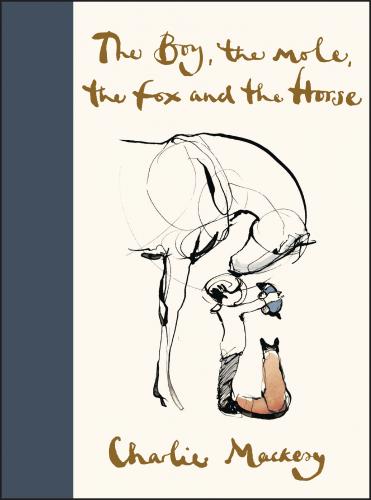
I actually didn’t read a whole lot this month; most of what posted was from when I was judging the Cybils. That said, this was my favorite:

It was just so stinking beautiful and charming.

As for the rest:

Graphic Novels

Meg, Jo, Beth, & Amy
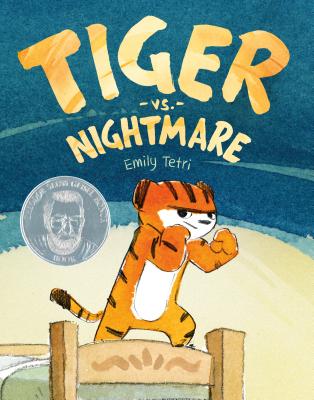
Tiger vs. Nightmare
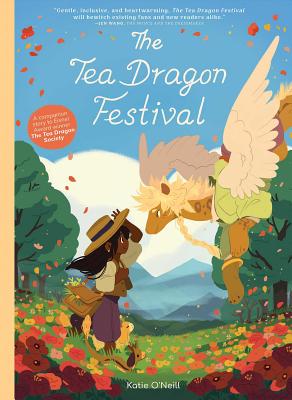
The Tea Dragon Festival
Operatic
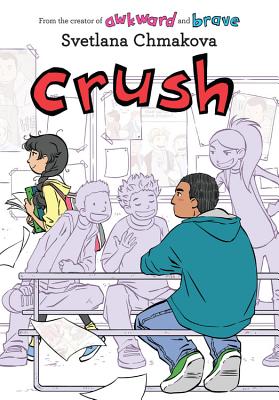
Crush

Middle Grade

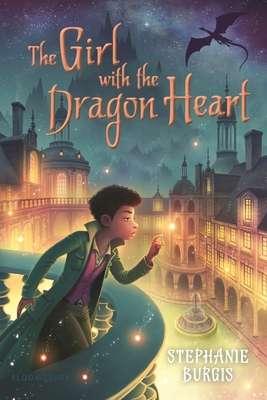
The Girl with the Dragon Heart
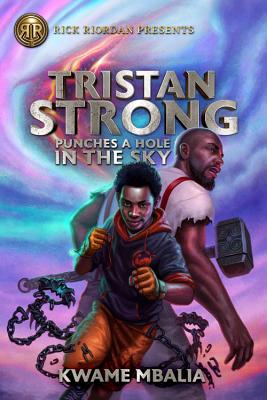
Tristan Strong Punches a Hole in the Sky
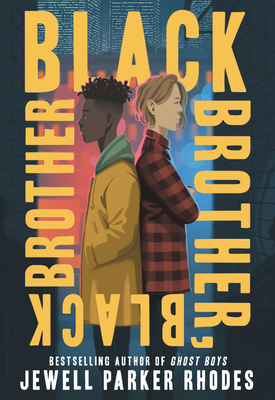
Black Brother, Black Brother

What were your favorites this month?

Crush

by Svetlana Chmakova
Support your local independent bookstore: buy it there!
Others in the series: Awkward, Brave
Content: There’s some bullying and general middle-school romance. It’s in the Middle Grade Graphic Novels section of the bookstore.

Jorge is the Big Kid at Berrybrook Middle School, the one that’s head and shoulders taller than everyone else. He doesn’t mind; he uses people’s assumptions of him (that he’s a Heavy) for good, making sure that bullies don’t pick on other kids. He’s got a group of friends he’s been friends with forever: Liv, the outgoing popular one, and Garrett, who just transferred to Berrybrook and is trying to fit in. Jorge is fine with the way things are.

But then Garrett decides to get in with the starting quarterback James’s group, and Jorge develops a crush on Liv’s friend Jazmine, and Drama breaks out in the middle school halls.

I really enjoyed this one. I think that Chmakova gets middle schoolers, and the everyday ups and downs of friendship, crushes, and belonging. I liked Jorge as a character, how he used his size to help others and how he wasn’t afraid to be an individual rather than going along with the crowd. This one was less about crushes, though, and more just about relationships, and what it takes to have a good one, whether it be friendships or romantic. Jorge wasn’t the character with the growth arc; rather, he was the rock that everything in the book revolved around, which was perfectly fine by me.

Really very, very good.

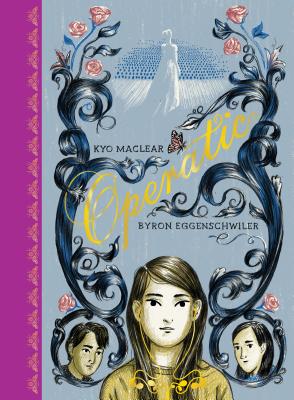
Operatic

by Kyo Maclear and Byron Eggenschwiler
Support your local independent bookstore: buy it there!
Content: There is some bullying and a wee bit of romance. It’s in the middle grade graphic novels section of the bookstore.

It’s near the end of middle school and Charlie is trying to figure herself out. Her music teacher, Mr. K, as assigned the class to come up with a presentation on a song that “speaks” to them. As part of that, he’s introducing a lot of new stuff to the class. And when he hits opera — Una voce poco as sung by Maria Callas — Charlie is smitten. She does a lot of research about Maria and decides that maybe being a Diva isn’t a bad thing.

There’s also Emile, a boy Charlie likes; Luka, the super-talented, yet super-awkward guy at school that is bullied; and Charlie’s three friends, Addie, Rachel, and Mayin. It’s a bit of personal drama as they all make their way through the last couple of months before the end of school.

On the one hand, the art in this is gorgeous. It’s all done in sepia tones, except for the bits about Maria Callas which are done in reds and pinks. I loved the use of insect imagery and the use of music (though I wish it had a playlist with artists in the back; I kept trying to look the songs up!).

I had a hard time following the story though. Does Charlie end up ditching some of her friends? I think so? But I’m not entirely sure why. I couldn’t quite follow who was who, and the story just felt like it was lacking something. Maybe I really am getting to old for this.

Black Brother, Black Brother

by Jewell Parker Rhodes
First sentence: “I wish I were invisible.”
Support your local independent bookstore: buy it there!
Release date: March 3, 2020
Review copy provided by the publisher.
Content: It’s pretty simply told, and easy enough (and appropriate) for younger readers to understand. It will be in the Middle Grade section (grades 3-5) of the bookstore.

Dante is the black brother in his family. His dad is white, his older brother Trey presents as white, but Donte and his mom present as black. Which wasn’t a problem until the family moved to a (mostly white) suburb of Boston and the boys started attending a (mostly white) prep school.

I’ll stop here and say this book is all about racism. Explicit racism from some of the students at the school — the story’s antagonist and school bully, Alan — but also the implicit racism in the system: Donte, because he is black, is the one who is always in trouble, who the teachers and the headmaster blame for things that go wrong. But it goes broader than that: Rhodes tackles the prison system — Donte is arrested for something he didn’t do at school, and the only reason he gets off is because he doesn’t present as stereo-typically black (and having a white father helped, too). And the overall racism inherent in sports.

It’s a simple book, but that makes sense, considering who its intended audience is. And Rhodes is a remarkable writer, able to simplify without dumbing down for her audience. It’s a good story, and one worth reading.

The Tea Dragon Festival

by Katie O’Neill
Support your local independent bookstore: buy it there!
Content: There’s really nothing objectionable. It’s a bit long for beginning readers. It’s in the Middle Grade Graphic Novel section of the bookstore.

From what I understand, this world is introduced in The Tea Dragon Society, so I kind of feel like I’m coming into this a little blind.

There is this world where dragons are shapeshifters (I think?) and they protect villages. There are also talking animals (I think?) and the tea dragons are kind of like little goats that you can harvest leaves from to make tea (I think?).

This book has to deal with a small village (in the mountains, so they only eat what they can forage) and a dragon that was supposed to be protecting it but had fallen asleep for 80 years. And with figuring out what you’re good at and doing that and not what People Expect you to do.

Or something like that

It’s just a weird little book. The art is gorgeous, though. I’d love to have some of O’Neill’s paintings; she does such lush landscapes. And I did admire that she has a deaf character that does sign language, though that was a bit challenging to depict in a graphic novel format. I do appreciate, too, that this is a tame little inclusive fantasy without any violence or conflict. Though that kind of means there’s not much meat to it either.

Good for those who want pretty pictures and a light story.

Tiger vs. Nighmare

by Emily Tetri
Support your local independent bookstore: buy it there!
Content: It’s pretty simple text-wise and lots of illustrations, though one nightmare is pretty scary. It’s in the middle grade graphic novel section of the bookstore, but it almost works as a beginning chapter book.

This is a super simple picture book: Tiger is friends with the monster under her bed, mostly because Monster keeps Tiger’s nightmares away. That is, until one night when Monster meets a nightmare that it can’t scare away. Then it’s up to Tiger to help Monster get rid of the nightmare.

This is so stinking cute! I adored Tiger and Monster’s friendship, and this would work as an overlong picture book for kids who are struggling with things that go bump in the night. The illustrations are adorable and it’s just a delight to read.

A great new (to me, at least) comic artist!

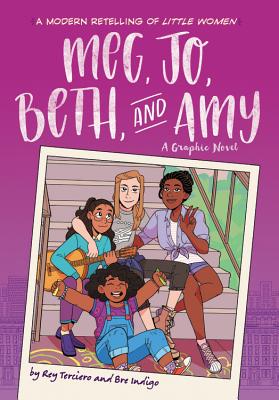
Meg, Jo, Beth, and Amy

by Rey Terciero and Bre Indigo
Support your local independent bookstore: buy it there!
Content: There are some situations with bullying. It’s in the middle grade graphic novel section of the bookstore.

If you can’t tell from the title, this is a modern adaptation of Alcott’s Little Women. It’s a blended family: Meg’s dad married Jo’s mom and they had Beth and Amy together. That doesn’t stop the sisters from being incredibly close. Their dad is deployed in the Middle East and their mom is working hard to make ends meet. As we follow the March sisters over the course of a year — from one Christmas to the next — anyone familiar with the original will catch all the highlights: there’s Laurie and his grandfather across the street. There’s crotchety old Aunt Cath that Jo works for. There’s Brooks that has a relationship with Meg, as well as Meg’s aspirations to be part of the rich social set. Beth shy and quiet and Amy loud and obnoxious. t

There are differences from the original, but mostly because it’s modernized. Meg and Jo are making decisions that diverge from the original, reflecting today’s society, but I felt Terciere and Indigo stayed true to the spirit of the original work.

I did feel like this one fell short a bit, but mostly because I felt it wasn’t really it’s own thing. It’s an excellent adaption of Little Women, but I’m not sure it’s much else.

That said, I really enjoyed reading it.