The Exiles in Love

It’s not very often that I like the sequel better than the original, but I have to say that enjoyed The Exiles in Love so much more than I did The Exiles. I didn’t need the tissue at the end, like the blurb from Horn Book said I would, but I did laugh, quite a bit (and manage to pick up on the satire this time!), at the escapades of the Conroy sisters.

The girls — most of them, anyway — are in love. Ruth is in love with no less than four men/boys: the bus driver, the Temporary English teacher, Alan Adair (the butcher’s son), and Philippe, the grandson of Big Grandma’s French friend who comes to say with the Conroys for a few weeks. Naomi and Rachel, in comparison, are only in love with one each: the Temporary English teacher for Naomi, and Phillipe for Rachel. (Though Rachel is very level-headed about it all, asking Philippe to marry her the second he walks into the house.) Phoebe, on the other hand, is mildly disgusted by this business with the “family failing” (aka, falling in love), preferring to devote herself to John le Carre, and becoming an international spy. To cure the girls of their failing, Big Grandma proposes an escapade to France, staying in a cottage on the property of her friend, and the girls manage to have a few adventures, as well as manage to fall out of love. All is well, of course, in the end.

I loved the trip to France. Having spent a summer in Germany, without knowing German, I completely empathized with the girl’s frustrations and insecurities about being in France. The part where they went shopping in the villa had me in tears, I was laughing so hard. And I thought they were all very cute and sweet and silly about falling in love… Ruth especially was good at pining. And I did catch this time around that McKay was satirizing parents who expect perfection from their kids. Mrs. Conroy is always moaning that her girls aren’t normal little girls, that they read too much, and aren’t normal enough, and get much too dirty for their own good. And when Rachel goes up for May Queen at her school, finally, Mrs. Conroy thinks, she’s acting like a “normal little girl”. Puh-lease. (Maybe I just needed the satire spelled out more blatantly; it was there in the first book, but I just found it annoying there. Here, I was amused by it.)

The book was told in flashbacks by Naomi and Ruth, each chapter beginning with a little conversation between the two of them. At first, I found that annoying, but eventually, it grew on me. And I have to admit, I did like the ending.

But the absolute best thing, the only thing I really marked because I liked it so much, was this quote, when they’re in France:

“And speaking of food,” said Big Grandma, “we’d better make a list. You girls will have to go shopping after breakfast.”
“Aren’t you coming?”
“With my ankle?” [she twisted it at the beginning of their vacation, and spent the week lounging in the orchards]
“What will you do then?”
“I shall sit quietly in the orchard with A Tale of Two Cities. I always enjoy books much more when I read them on location.”

Indeed.

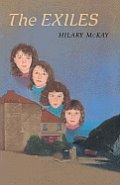
The Exiles

I picked this one up (and a couple of others) after finishing The Penderwicks on Gardam Street, partially because Lelia compared Jeanne Birdsall to Hilary McKay and I felt a little doofish because I had no idea who Hilary McKay was, and partially because Jane (in the book) was reading the sequel to this one (Exiles in Love), and both of these things sparked my curiosity.

First off: Leia’s right. Birdsall is a lot like Hilary McKay. They have the same feel, the same kinds of stories, the same values (for lack of a better word) for a happy childhood. The Exiles are four sisters (even that’s the same), who are a bit impractical and bookish. Not to mention, slightly, um, childish. So when their parents (who aren’t terribly likeable, in my opinion, unlike Mr. Penderwick) come into some money, they ship their girls — Ruth, 13; Naomi, 11; Rachel, 8; and Phoebe, 6 — to their grandma, affectionately called Big Grandma, for the summer. There, they are deprived of reading material and forced to have adventures. And work. And it turns out to be a smashing good summer. Even if they’re reduced to reading cookbooks.

It was a fun read, and I didnt’ dislike it, but I have to admit I liked the Penderwicks better. I liked the girls better, the parents better, and I thought McKay was a bit heavy handed with the “too much reading is warping kids brains” theme. (Though I admit, this may be becuase I let M read so much… not to mention my reading habits…) I got that it was supposed to be tongue-in-cheek, but it lacked that charm, that sweetness, that made me really like the Penderwick sisters. (No matter how cute Phoebe is, she will never be as cute as Batty. Period.)

June-July Estella

Is up! Like usual, there’s a lot of good stuff there. Stuart, as usual, has written a great article about reading outside, and I thoroughly enjoyed Miss Havasham’s How I Spend My Summers.

As for my stuff, there’s the good:
An interview with Longstocking and first-time author Daphne Grab, as well as a review of her book. She was a delight to interview, and I really enjoyed her book.

The bad:
I’m actually quite proud of this review of a terrible book.

The mediocre:
I think this one might have been better than I thought it was; I just wasn’t in the mood for it.

Everything else:
There’s a boatload of reviews, columns and author interviews.

Stop by and check it out!

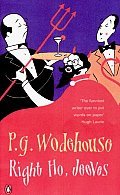
Right Ho, Jeeves

There is something about Jeeves and Wooster that always makes me want to talk like them. Bertie, especially. What ho. Pip pip and all that. I think I did this a bit backward, though. On somebody-or-other’s recommendation a while back, we put Fry and Laurie’s Jeeves and Wooster series on our Netflix queue (that was complicated) and loved it. Well, they did this book over two episodes, pretty much word-for-word (or at least scene-for-chapter). And while it didn’t ruin the book for me (they did an excellent job), it did take… something… away from the reading experience.

For those who haven’t seen the episodes, or read Wodehouse, or even don’t know what the heck I’m talking about…. Bertie Wooster has friends that are in trouble. Specifically, this time, Gussie Fink-Nottle (Wodehouse is brilliant with names). Gussie’s in love with Madeline Bassett and can’t bring himself to propose to her. So, Bertie hatches a plan (which involves sending Gussie to Bertie’s Aunt Dahlia’s house) to get them together. Meanwhile, Bertie’s friend Tuppy Glossop (another great name!) has had his engagement with Angela (who happens to be Bertie’s cousin) broken off over a spat about a shark (don’t ask; too long to explain). Bertie, again, comes up with a plan to save their relationship. After much hilarity, everything (of course) goes awry, and finally Jeeves steps in, makes a bit of a fool out of Bertie, saving the day for everyone.

Confusing? But the plot isn’t the point. I’m sure you could also read some sort of social critique of the idleness of the upper class. For heavens sake, Bertie — nor any of his friends — doesn’t DO anything. Perhaps Wodehouse was trying to say something about this idleness, especially making the servant the useful, brilliant one. It reminds me of this exchange from The Importance of Being Earnest:

Lady Bracknell. I feel bound to tell you that you are not down on my list of eligible young men, although I have the same list as the dear Duchess of Bolton has. We work together, in fact. However, I am quite ready to enter your name, should your answers be what a really affectionate mother requires. Do you smoke?

Jack. Well, yes, I must admit I smoke.

Lady Bracknell. I am glad to hear it. A man should always have an occupation of some kind. There are far too many idle men in London as it is.

Same principle. But as I was saying, that’s not the point either. The point is comedy. It’s silly. It’s slapstick. It’s the complete insanity of it all. Jeeves is the ultimate straight man, always the foil for Bertie’s goofiness. And Bertie is lovably goofy. I do have to say, though, that Jeeves really didn’t come off as brilliant in this book — if I hadn’t had seen the series, I’d be wondering what the big deal is. Most of his brilliance was alluded to. Not that it mattered. (Not the point.)

I enjoyed this. I’m not sure if I’ll go out and read a whole bunch of Wodehouse, but I’m glad I’ve read at least one. It was a lot of fun. (I need to find a use for oojah-cum-spiff — as in “things are not looking to oojah-cum-spiff at the moment” — in a sentence sometime….)

Drumroll, Please…

We put all the names in a bowl (sorry, couldn’t find a hat) and A did the honors… And the winner of this

is….

(Which goes to show that if you jump up and down saying “Pick me!”, you just might win the book. 🙂

Congratulations, and if you could email me your snail mail address (mmfbooks AT gmail DOT com), I’ll get that in the mail for you. Thanks to all who entered. I’ll have to do this again, sometime. 🙂

Whoopsie: A Giveaway

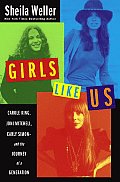
A little while back, I got offered a copy of Girls Like Us: Carol King, Joni Mitchell and Carly Simon — And the Journey of a Generation for review on Estella’s Revenge (review coming in either August or September….). I accepted it because I totally spaced that I had entered a contest to win a copy at my friend Wendy’s blog, Two Well Read. Well… oops… I won that copy… and now I have two.

Well, I don’t need two. So, because it’s summer, and because I saw this great idea over at Lynne’s, I’m going to turn around and give away a copy of Girls Like Us to one lucky reader.
You have until July 2 to leave a comment. Then I’ll have one of the girls pick a paper out of the hat because they like that. Good luck!

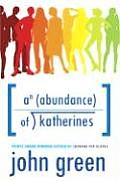
An Abundance of Katherines

This book, without a doubt, is a book for nerds. I don’t think it matters what kind of nerd — I’m only a book nerd, after all, with a dabbling of music and math nerditry — but I think you might have to be at least a little bit of a nerd to truly enjoy this book. (And since I think most people are at least a little bit of a nerd…)

Colin — former child prodigy and recent high school graduate — has a tendency to not only date girls named Katherine, but to get dumped by them. After the most recent dumping — by Katherine XIX — he and his friend Hassan decide to go on a road trip. They end up in Gutshot, Tennessee, where they learn a little about themselves, about relationships, and about trusting in the unknown.

That’s the basic plot, anyway. What I really liked about the novel, and the reason I think it’s worth it to read, is the footnotes. I’m an obsessive footnote reader, which sometimes gets in the way of the reading experience. But in this case, they made the book for me. They were snide, funny, and oh-so-John Green (at least the way he comes off in his vlog). And the afterword/appendix was fascinating, too (although Green wrote that it was “optional” to read.) The book was pretentious, like Looking for Alaska, but in this case the pretention wasn’t taken so seriously and therefore worked better. Sure, Colin was soul-searching, looking for the Truth and the Meaning of Things. But it wasn’t so weighty, so oppressive a search as Miles’s was. And I think Green’s style works better when he’s not being so Heavy. (A side note about the language: it was cleaner than Looking for Alaska, but only because there’s a wonderful homage — which I didn’t know was one until they spelled it out for me — to Norman Mailer. If you’ve read him — I haven’t — you’ll know what I mean. If you haven’t, well, then, you’ll either have to read some Mailer, or read this book.)

I’m glad Green’s writing books (especially ones where the nerd gets the girl, and it doesn’t come off as forced or contrived); it’s about time nerds got some respect. And Green’s just the person to give it to them.

June Jacket Flap-a-Thon

I’m suffering from a cold/allergies, and I feel like I’ve got a head stuffed full of cotton. I’m not sure how coherent this is going to be this month, but I’ll try.

5.
Ever (HarperCollins): “Falling in love is easy… even for Kezi, though she knows her days are numbered. And head-over-heels, come-what-may love is inevitable if her heart’s desire is Olus, the Akkan god of the winds. But accepting death is hard, especially when romance is new. Falling in love is easy for Olus if his beloved is Kezi, a beautiful mortal, a dancer and rug weaver from the city of Hyte. But facing Kezi’s approaching death is unbearable. Love brings Kezi the will to fight her fate. Love gives Olus the strength to confront his fears. She questions her faith and seeks truth in dark places. He suffers a god’s trial when she needs a champion. Together — and apart — they encounter spiders with webs of iron, the cruel lord of the land of the dead, the mysterious god of destiny, and the tests of the Akkan gods. If they succeed, they will be together; but if they fail, Olus will have to endure the ultimate loss, and Kezi will have to make the supreme sacrifice. Newbery Honor author Gail Carson Levine has created a stunning new world of flawed gods, unbreakable vows, and ancient omens. Her story about love, destiny, and belief is spellbinding.”

Actually, it was this jacket flap that made me want to read the book. (Well, that and a couple bloggers’ gushing reviews.) Always a good sign.

4. Persepolis: The Story of a Childhood (Pantheon):“Originally published to wide critical acclaim in France, where it elicited comparisons to Art Spiegelman’s Maus, Persepolis is Marjane Satrapi’s wise, funny, and heartbreaking memoir of growing up in Iran during the Islamic Revolution. In powerful black-and-white comic strip images, Satrapi tells the story of her life in Tehran from ages six to fourteen, years that saw the overthrow of the Shah’s regime, the triumph of the Islamic Revolution, and the devastating effects of war with Iraq. The intelligent and outspoken only child of committed Marxists and the great-granddaughter of one of Iran’s last emperors, Marjane bears witness to a childhood uniquely entwined with the history of her country. Persepolis paints an unforgettable portrait of daily life in Iran: of the bewildering contradictions between home life and public life and of the enormous toll repressive regimes exact on the individual spirit. Marjane’s child’s-eye-view of dethroned emperors, state-sanctioned whippings, and heroes of the revolution allows us to learn as she does the history of this fascinating country and of her own extraordinary family. Intensely personal, profoundly political, and wholly original, Persepolis is at once a story of growing up and a stunning reminder of the human cost of war and political repression. It shows how we carry on, through laughter and tears, in the face of absurdity. And, finally, it introduces us to an irresistible little girl with whom we cannot help but fall in love.”

I thought this does a good job of giving the reader an overview of the book, illuminating the fact that it’s a graphic novel, and yet not giving away too much of the plot.

3. The Penderwicks on Gardam Street (Alfred A. Knoff): “The Penderwick Sisters are home on Gardam Street and ready for an adventure! But the adventure they get isn’t quite what they had in mind. Mr. Penderwick’s sister has decided it’s time for him to start dating—and the girls know that can only mean one thing: disaster. Enter the Save-Daddy Plan—a plot so brilliant, so bold, so funny, that only the Penderwick girls could have come up with it. It’s high jinks, big laughs, and loads of family warmth as the Penderwicks triumphantly return.”

Short, to the point, and immediatly grabs the people that loved the Penderwicks. I’m not sure how well it’ll do getting readers not familiar with the first book interested, though, and for that reason it’s not higher on the list.

2. the mysterious edge of the heroic world (athenum books for young readers):
“Amedeo Kaplan seems just like any other new kid who has moved into the town of St. Malo, Florida, a Navy town where new faces are the norm. But Amedeo has a secret, a dream: More than anything in the world, he wants to discover something — a place, a process, even a fossil — some treasure that no one realizes is there until he finds it. And he would also like to discover a true friend to share these things with. William Wilcox seems like an unlikely candidate for friendship: an aloof boy who is all edges and who owns silence the way other people own words. When Amedeo and William find themselves working together on a house sale for Amedeo’s eccentric neighbor, Mrs. Zender, Amedeo has an inkling that both his wishes may come true. For Mrs. Zender’s mansion is crammed with memorabilia of her long life, and there is a story to go with every piece. Soon the boys find themselves caught up in one particular story — a story that links a sketch, a young boy’s life, an old man’s reminiscence, and a painful secret dating back to the outrages of Nazi Germany. It’s a story that will take them to the edge of what they know about heroism and the mystery of the human heart. Two-time Newbery winner E. L. Konigsburg spins a magnificent tale of art, discovery, friendship, history, and truth.”

I always like it when the jacket flap reflects the style of the book, and I think this one captures E.L. Konigsburg perfectly.

1. The Fall of the Kings (Bantam): “In an ancient city full of dreams, no king rules anymore. And some thing that it’s for the best… Generations ago the last king fell, taking with him the final truths about a race of wizards who ruled at his side. But the blood of kings runs deep in the land and its people, waiting for the coming together of two unusual men: THE GENTLEMAN. Heir to an ancient house and a modern scandal, Theron Campion — a young nobleman of royal lineage — chooses his lovers with reckless abandon. Tormented by his twin duties to his family and his own bright spirit, he seeks solace in the precincts of University. But no one can live in two worlds forever. THE SCHOLAR. A brilliant and charismatic teacher ruled by a passion for knowledge, Basil St. Cloud is in love with the ancient kings. Of course, everyone now knows that the wizards were charlatans, the kings their dupes and puppets. Only Basil is not convinced. Against a rich tapestry of artists and aristocrats, students and strumpets, scheming spies and renegade royalists, Basil and Theron will find themselves playing out an ancient drama destined to blow open their society’s smug vision of itself — and reveal that sometimes the price of uncovering history is being forced to repeat it….”

Not my favorite book this month — actually, it was probably my least favorite — but every time I read this jacket flap copy, I think “wow, that’s gotta be a good book”. That’s got to count for something.

The One Worst:
Sword of the Rightful King (Harcourt, Inc.): “The newly crowned King Arthur is unsure of himself; worse, the people are unsure of him. Too many people want the throne, and treachery is everywhere. Merlin must do something before the king is betrayed, or murdered, or–worst of all–gets married. So Merlin magically places a sword into a slab of rock, lets it be known that whosoever removes the blade will rule all of England, and invites any man who would dare, to try to pull out the sword. After a bit of showmanship, Arthur will draw the blade (with a little magical help, of course), and the people will rally around the young king. Except someone else pulls the sword out first. . . .”

Biggest complaint (yet again): when the jacket flap includes one sentence from the plot that doesn’t happen until the last 30 pages. I kept expecting the whole plot to revolve around the “someone else pulls the sword out first” when that was really an afterthought in the book.

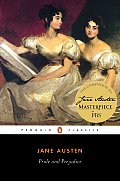
Pride and Prejudice

Ah, the consummate Jane Austen. The Most Popular Jane Austen (thanks, Colin Firth…). The Chick Lit Jane Austen. What is there really to say about Pride and Prejudice??

I used to say that I read it annually, that it was my favorite Jane Austen. Honestly, though: I don’t, and it’s not. But, I do love it for what it is: a genuinely funny, sweet, wonderful romantic comedy. (My mother’s complaint about the A&E version of the book is that they played up the romance too much and short-changed the comedy. It really is a funny book.) Lizzy and Darcy are the perfect romantic leads: the lovers who don’t realize that they’re in love until they’re already most of the way there. (I thought reading this was very appropriate after having seen Much Ado About Nothing. Lizzy and Darcy have much in common with Beatrice and Benedict.) The man who can’t resist the woman, even though he really tries hard. The woman who loathes the man until she realizes that he’s really much more than he appears. They fight the urge to fall in love, for different reasons: there are no star-crossed, obsessed (Bella and Edward!), pining lovers here. And, because of that, because of their wit and banter, and because of the whole tension surrounding their relationship, that final kiss (well… in the movie), their final tumble into and acceptance of their love is that much more sweet and fulfilling. It is truly a perfect book to read on a hot, summer day.

That is what I can say.

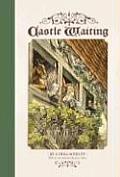
Castle Waiting

I found this book through a commenter on Fuse’s Rapunzels Revenge review who suggested it as a follow up for those who were looking for more after reading Shannon and Dean Hale’s graphic novel. It sounded interesting, our library had it, I put a hold on it, and M graciously picked it up for me on Friday (because she was hoping that there would be something for her).

I’m torn about this one. I liked it very much — the art was black and white, comic strip style, but it worked well in this situation. (Though part of me longed to see the color of things. I do think that color would have overwhelmed the page in some places.) Linda Medley is a good artist, and is incredibly inventive with the world she has created.

But. I liked the story at the beginning: using the Sleeping Beauty fairy tale as a jumping off point, Medley creates a world where Sleeping Beauty’s castle is used as a refuge. A woman, Jain, makes her way there, pregnant with her lover’s baby, seeking refuge from an abusive husband. There, she finds comfort and companionship with the castle residents, whom in turn ask no questions and love and accept her odd-looking baby.

So far, so good. I was enjoying hearing Jain’s story, enjoying the characters that were a part of the castle, enjoyed the novelty of the world Medley had created. But then, for the third part of the book, Medley chooses to abandon everything she had done before, and take off in a completely different direction, telling the story of one of the castle’s residents, Sister Peace. It’s not that Sister Peace’s story was uninteresting; the story of how the Solicitine Order came to be and how Peace became to be a part of it, and of her friend Nessie escaping her abusive husband and finding a better life for herself was all very interesting, it’s just that I kept searching for some kind of connection to the story that went before, some kind of cohesiveness, and some kind of ending of the story I was previously enjoying. I never got that, and it kind of spoiled the novel for me. If only…

Ah, well.