Throne of Glass

by Sarah J. Maas
ages: 14+
First sentence: “After a year of slavery in the Salt Mines of Endovier, Celaena Sardothien was accustomed to being escorted everywhere in shackles and at sword-point.”
Review copy provided by my place of employment
Release date: August 7, 2012

At first glance, this should be a great fantasy novel. A strong, but not exactly noble, heroine (is there an assassin theme this year?) is put up against twenty three other people (Hunger Games!) in competition for the spot to be the king’s Champion (i.e., heavy) and win her freedom.

Of course she’s Beautiful, Desirable, Awesome, Cool, Flawed, Intelligent, Perfect, and both the prince and the Captain of the Guard is in love with her. (Or so I assume; I never actually got to that point.)

It has Everything a Woman Fanasty Reader wants, right?

Well, there is one problem: the writing is crap.

Sorry. I suppose I should beat around the bush, and I do have to admit that it may be me, not the book, but honestly I had no patience for this (all from the ARC, so maybe the editing will get it together in the next month…):

“She curtsied, looking up at him beneath lowered lashes.” (*eye roll* I understand she’s playing a part, here, but this is just lame.)

“She actually did trip on her dress, and her shoes cut into her heels quite terribly, but he would hear none of her objections as he dragged her into the hall.” (Blah blah blah. There were a lot of instances like this, where I just wanted to say: Really, we don’t need to know how many buttons are on her dress, or whether or not her heels hurt terribly. Get. On. With. It.)

“‘Save it for the competition,’ he said softly, but not weakly.” (SERIOUSLY??? Why does “softly” imply “weakly”? Why do I care?)

“Ahead, Cain turned a corner, heading north — back toward the castle. [repetitive] Like a flock of birds, they followed him. [What have they been doing up to this point?] One step after another, never slowing down. [I didn’t think, giving the previous two sentences, that they had been slowing down.] Let them all watch Cain, let them plot against him. [Okay then: she switched Point of View here, didn’t she?] She didn’t need to win the race to prove she was better — she was better without any kind of validation that the king could give her! [You keep telling yourself that, dearie.] She missed a breath, and her knees wobbled, but she kept upright. The run would be over. Soon. [Not soon enough.]”

There were more, but that pretty much gives you an overview of my irritation. I know that by reading so many middle grade and young adult fiction books, my patience with plotting and wordiness has become limited. But, this was egregious even for a crossover novel (was it supposed to be teen? Adult? I never did figure that out).

So, I bailed. The romance(s) were moving too slowly for me (too much simpering, not enough smouldering), the author kept telling me rather than showing me stuff, and the whole plot was taking way. too. long.

One other note: this author has a huge fan base [don’t shoot me!], and has written several on-line prequels leading up to this novel. I don’t think reading on-line fiction should be a prerequisite to enjoying a novel, and yet I felt that I was missing something when reading this one. Yet another reason I bailed.

But I’m sure some people will luuuuuvvvv it.  Just not me.

Sunday Salon: Final Top 100 Chapter Book Poll Results

Here, in all its glory, is Fuse #8’s final chapter book poll list. And, because I like lists, I’m going to make this a meme of sorts. How many have you read (89, for me; the first one I haven’t read is #24, and I have no excuses for that)? What’s your reaction to the list? What’s missing?

As for me, the big omission is the Percy Jackson series. I love me some Harry Potter, but out of the two series, I have an easier time selling the Greek mythology to kids. That, and I’ve found it has a wider appeal. That said, there were only three on my list that didn’t make the top 100, so I’m satisfied. Also: I need to read Elizabeth Enright. Obviously, I’m missing something here.

#1 Charlotte’s Web by E.B. White (1952)
#2 A Wrinkle in Time by Madeleine L’Engle (1962)
#3 Harry Potter and the Sorcerer’s Stone by J.K. Rowling (1997)
#4 The Giver by Lois Lowry (1993)
#5 The Lion, the Witch and the Wardrobe by C.S. Lewis (1950)
#6 Holes by Louis Sachar (1998)
#7 From the Mixed-Up Files of Mrs. Basil E. Frankweiler by E.L. Konigsburg (1967)
#8 Anne of Green Gables by L.M. Montgomery (1908)
#9 The Westing Game by Ellen Raskin (1978)
#10 Bridge to Terabithia by Katherine Paterson (1977)
#11 When You Reach Me by Rebecca Stead (2009)
#12 Harry Potter and the Prisoner of Azkaban by J.K. Rowling (1999)
#13 The Thief by Megan Whalen Turner (1997)
#14 The Hobbit by J.R.R. Tolkien (1938)
#15 The Secret Garden by Frances Hodgson Burnett (1911)
#16 Tuck Everlasting by Natalie Babbitt (1975)
#17 Harriet the Spy by Louise Fitzhugh (1964)
#18 The Book of Three by Lloyd Alexander (1964)
#19 Little House in the Big Woods by Laura Ingalls Wilder (1932)
#20 Because of Winn-Dixie by Kate DiCamillo (2000)
#21 The Phantom Tollbooth by Norton Juster (1961)
#22 The Dark is Rising by Susan Cooper (1973)
#23 Hatchet by Gary Paulsen (1989)
#24 Ramona the Pest by Beverly Cleary (1968)
#25 The Watsons Go to Birmingham, 1963 by Christopher Paul Curtis (1995)
#26 Winnie-the-Pooh by A.A. Milne (1926)
#27 Little House on the Prairie by Laura Ingalls Wilder (1935)
#28 The Golden Compass by Philip Pullman (1995)
#29 The Penderwicks: A Summer Tale of Four Sisters, Two Rabbits, and a Very Interesting Boy by Jeanne Birdsall (2005)
#30 Matilda by Roald Dahl (1988)
#31 Alice’s Adventures in Wonderland by Lewis Carroll (1865)
#32 Roll of Thunder, Hear My Cry by Mildred Taylor (1976)
#33 Mrs. Frisby and the Rats of NIMH by Robert C. O’Brien (1971)
#34 Where the Red Fern Grows by Wilson Rawls (1961)
#35 Tales of a Fourth Grade Nothing by Judy Blume (1972)
#36 The Witch of Blackbird Pond by Elizabeth George Speare (1958)
#37 The Wednesday Wars by Gary D. Schmidt (2007)
#38 Frindle by Andrew Clements (1996)
#39 The Invention of Hugo Cabret by Brian Selznick (2007)
#40 Maniac Magee by Jerry Spinelli (1990)
#41 The Wonderful Wizard of Oz by L. Frank Baum (1900)
#42 Gone-Away Lake by Elizabeth Enright (1957)
#43 Jacob Have I Loved by Katherine Paterson (1980)
#44 Okay for Now by Gary D. Schmidt (2011)
#45 Island of the Blue Dolphins by Scott O’Dell (1960)
#46 The True Confessions of Charlotte Doyle by Avi (1990)
#47 Little Women by Louisa May Alcott (1868)
#48 The Bad Beginning by Lemony Snicket (1999)
#49 My Father’s Dragon by Ruth Stiles Gannett (1948)
#50 Number the Stars by Lois Lowry (1989)
#51 The Tale of Despereaux: Being the Story of a Mouse, A Princess, Some Soup, and a Spool of Thread by Kate DiCamillo (2003)
#52 Betsy-Tacy by Maud Hart Lovelace (1940)
#53 The Graveyard Book by Neil Gaiman (2008)
#54 Half Magic by Edward Eager (1954)
#55 All-of-a-Kind Family by Sydney Taylor (1951)
#56 A Little Princess by Frances Hodgson Burnett (1905)
#57 The Wolves of Willoughby Chase by Joan Aiken (1962)
#58 Swallows and Amazons by Arthur Ransome (1930)
#59 The Miraculous Journey of Edward Tulane by Kate DiCamillo (2006)
#60 Bud, Not Buddy by Christopher Paul Curtis (1999)
#61 Charlie and the Chocolate Factory by Roald Dahl (1964)
#62 Clementine by Sara Pennypacker (2006)
#63 The Great Gilly Hopkins by Katherine Paterson (1978)
#64 The Twenty-One Balloons by William Pene du Bois (1947)
#65 Wonder by R.J. Palacio (2012)
#66 The Evolution of Calpurnia Tate by Jacqueline Kelly (2009)
#67 A Long Way from Chicago by Richard Peck (1998)
#68 The High King by Lloyd Alexander (1968)
#69 The Ruins of Gorlan by John Flanagan (2006)
#70 Walk Two Moons by Sharon Creech (1994)
#71 Each Little Bird That Sings by Deborah Wiles (2005)
#72 Where the Mountain Meets the Moon by Grace Lin (2009)
#73 The Best Christmas Pageant Ever by Barbara Robinson (1972)
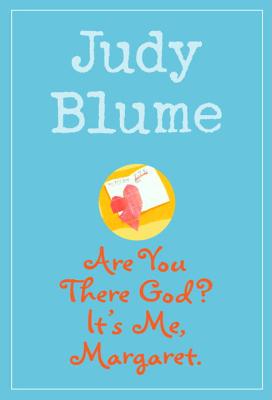
#74 Are You There, God? It’s Me, Margaret by Judy Blume (1970)
#75 The Saturdays by Elizabeth Enright (1941)
#76 Diary of a Wimpy Kid by Jeff Kinney (2007)
#77 My Side of the Mountain by Jean Craighead George (1959)
#78 Ballet Shoes by Noel Streatfeild (1936)
#79 The Egypt Game by Zilpha Keatley Snyder (1967)
#80 The Four-Story Mistake by Elizabeth Enright (1942)
#81 The Witches by Roald Dahl (1983)
#82 The Cricket in Times Square by George Selden (1960)
#83 Ozma of Oz by Frank L. Baum (1907)
#84 The Long Winter by Laura Ingalls Wilder (1940)
#85 Ella Enchanted by Gail Carson Levine (1997)
#86 Peter Pan by J.M. Barrie (1911)
#87 The Strange Case of Origami Yoda by Tom Angleberger (2010)
#88 The BFG by Roald Dahl (1982)
#89 The Mouse and the Motorcycle by Beverly Cleary (1967)
#90 The Children of Green Knowe by L.M. Boston (1954)
#91 Pippi Longstocking by Astrid Lindgren (1950)
#92 Flipped by Wendelin Van Draanen (2001)
#93 Journey to the River Sea by Eva Ibbotson (2001)
#94 Ramona and her Father by Beverly Cleary (1977)
#95 The Little Prince by Antoine de Saint-Exupery (1943)
#96 The Horse and His Boy by C.S. Lewis (1954)
#97 The Diamond in the Window by Jane Langton (1962)
#98 Harry Potter and the Goblet of Fire by J.K. Rowling (2000)
#99 The Boxcar Children by Gertrude Chandler Warner (1942)
#100 Love That Dog by Sharon Creech (2001)

The Incorrigible Children of Ashton Place: The Unseen Guest

by Maryrose Wood
ages: 9+
First sentence: “‘Lumawoo, look.'”
Support your local independent library: buy it there!
Others in the series: The Mysterious Howling, The Hidden Gallery

The best thing about this one is that finally (!) some of the questions I’ve had are finally being (slowly) answered.

See, Lord Frederick’s mother and her suitor, Admiral Faucet, show up at Ashton Place, with an ostrich. (Seriously.) The ostrich gets looks, and Admiral Faucet, intrigued by the Incorrigible’s tracking skills, takes them into the woods to find said runaway ostrich. Of course, their governess Penelope — somewhat daunted by the idea of taking the children into the woods, where there are scary bears and other animals — comes along.

Once in the woods, Strange Things happen. Penelope sees where the Incorrigibles were living before they came to Ashton Place, and discovers their relationship with the wolf, Mama Woof. Additionally, she learns of Admiral Faucet’s Grand Plan, which involves taking the Incorrigibles on the road as a freak show. After he squanders the Ashton fortune, of course. To stop him, Penelope turns to her friend Simon to hold a seance for Lord Frederick’s mother.

The best thing about these, still, is the narrator. Long, hilarious asides explaining words and meanings. Nudges to the reader about the characters. Silly, silly plot twists. I’m still not sure how many kids will like/get this one, but I sure find them enjoyable. Bring on the next installment.

The Book of Three

by Lloyd Alexander
ages: 9+
First sentence: “Taran wanted to make a sword; but Coll, charged with the practical side of his education, decided on horseshoes.”
Support your local independent bookstore: buy it there!

This is one of the titles I remember having fond memories of as a kid. I don’t really remember the act of reading it, though I know I must have: I remember talking about it with friends, especially after the Disney monstrosity of a movie came out. (We were purists, if you can’t tell…) I know I’ve reread the story before this, but I don’t have any record of it, so it’s good that I was asked to reread it again (and write up a lengthy review…)

Taran is just an Assistant Pig Keeper at Caer Dallben, charged with taking care of the oracle pig, Hen Wen. He longs for adventure, and then one day, quite unexpectedly, he gets it: the Horned King and his minions (in service of the Big Baddie, Arawn — yes, that does remind me of Lord of the Rings, thanks for asking) make Hen Wen uneasy and she escapes her pen. Taran, because he’s just impulsive that way, takes off after her, falling in with Prince Gwydion for a bit before they get separated and Taran is on his own.

But he’s not alone: he collects a rag-tag band of friends:the half-animal, always hungry Gurgi; the headstrong Eilowny; the ever-exaggerating bard Fflewddeur Fflam (who will always be “flewder flam” instead of “fleoothur flam”); and the grumpy dwarf Doli. Together they find their way back to Gwydion, fight the Horned King (though Taran rightly asserts in the end that he didn’t do anything worthy of being called a hero), and realize there’s no place like home.

On the one hand, the book is really simplistic: boy leaves, boy has adventures, boy comes home a Wiser and Better person. And yet, I found it to be incredibly compelling. Perhaps it was because I loved it as a kid, but I don’t think that’s entirely it. I think it’s because Alexander is a master storyteller, and he knows how to create characters that we can relate to and root for, ones that are flawed even in a black-and-white world.

And that is really the best kind of middle grade book. And yes, I am going to make the time to read the rest now.

The Books of Elsewhere: Spellbound

by Jacqueline West
ages: 9+
First sentence: “Everyone who lived in the big stone house on Linden Street eventually went insane.”
Support your local independent bookstore: buy it there!
Others in the series: The Shadows

As a result of events in the first book, Olive is no longer able to get into the paintings — the doorway to Elsewhere — on her own. She needs the help of the cats — Horatio, Harvey and Leopold — to get in and out. And, increasingly, they are unwilling to help her. That, and her friend Morton is getting more and more cantankerous because Olive can’t find a solution to get him out of the painting for good.

Then a boy moves in two doors down, and starts asking questions he shouldn’t (or, rather, Olive doesn’t want to answer), but he puts an idea in her mind: if she can find the grimorie (book of spells), then maybe she can figure out not only how to get to Elsewhere by herself, but maybe she can figure out how to get Morton out.

Except, things don’t go the way Olive wants them to.

The best thing about this one is that it’s delightfully creepy. There’s a point when you, as the reader, know something bad HAS to happen, and yet West drags it out, bit by bit (but not in a painful way), stringing us along just enough for us to sit at the edge of our seats, wondering when the resolution will come.

And come it does.  (It’s quite satisfying, too.)

While it’s a continuation of the previous book, it’s also a stand-alone story of its own. You don’t really need to have read the first one to enjoy this one, and there really isn’t any threads left undone (well… not entirely true, but the undone thread isn’t entirely relevant to the story). And that truly makes this a winner of a series.

June 2012 Wrap-Up

Summer is in full swing here, and my reading is reflecting it. Not only more (though much of that is due to Mother Reader‘s 48 Hour Book Challenge), but fluffier. Ah, gotta love the brain drain that the heat brings on.

It’s fitting that in a month where I mostly read Middle Grade books, that my favorite read was this:

Three Times Lucky

I loved it, but I have yet to convince my girls to read it, which makes me sad.

As for the rest:

Adult fiction

Good Omens
Ilium
Lady Cyclist’s Guide to Kashgar

Non-Fiction:

My Life as an Experiment
Yes, Chef

YA:

Crossed
The Lost Code
Matched
The Statistical Probability of  Love at First Sight
Seraphina
The List
At Yellow Lake

Middle Grade:

The Books of Elsewhere: The Shadows 
Out of the Dust (reread)
Postcards from Pismo
The Serpent’s Shadow
The Phantom Tollbooth
Calling on Dragons
Spy School
Jeremy Fink and the Meaning of Life

Graphic Novels

Batman
Stickman Odyssey: The Wrath of Zozimos

Only one audio book this month; I’ve been on a listening hiatus since school got out:

Cinder

What have your favorite reads been this month?

A Lady Cyclist’s Guide to Kashgar

by Suzanne Joinson
ages: adult
First sentence: “I unhappily report that even Bicycling for Ladies WITH HINTS TO THE ART OF WHEELING – ADVICE TO BEGINNERS – DRESS – CARE OF THE BICYCLE – MECHANICS – TRAINING – EXERCISES, ETC. ETC. cannot assist me in this current predicament: we find ourselves in a situation.”
Support your local independent bookstore: buy it there!

Two things drew me to this book. First, the cover: I love it. I don’t know why (it’s not a young girl in a pretty dress, after all), but something about it just calls to me. And second, that first sentence. It’s wonderful, full of promise, of something … exciting.

And the premise sounded interesting as well: it’s 1923, and Evangeline English and her sister, Lizzie, have thrown their lot in with a evangelical missionary and are traveling to the wilds of Eastern Turkestan/Upper China. Lizzie and the missionary, Millicent, are there to convert people; Evangeline is there to write a book about cycling in this wild, unknown (at least to the English) place. It doesn’t go well, to say the least. They try to help a girl give birth, but the mother ends up dying, and they are placed under house arrest and given charge of the baby. From there, things only go down hill. There’s a lot of resistance to their missionary message, and Millicent is overbearing; she and Evangeline don’t get along.

However, that’s not the only story: it’s modern day London, and Frieda, the daughter of hippy parents and world traveler — is in a dead-end relationship with a married man. She’s back in town after a trip to Cairo, when two unusual things happen: one, she gets a letter telling her that she is the next-of-kin for an Irene Guy, whom she’s never even heard of; and a Yemeni man, Tayeb, parks himself outside of her door. Both of these things will change her life.

I spent a good portion of the book trying to figure out how these two stories were connected. I should have realized how much sooner than I did; if you’re paying attention, it’s pretty obvious. Even so, each of the stories might have made a decent book on their own; together it kind of seems forced. I wanted more from each of the stories, more than I got anyway, and I feel like in combing them Joinson somehow cheated me of the full story. That, and I think the most interesting character was the elusive Ilene Guy; her story seemed like the most intriguing.

That said, it wasn’t a bad book. There’s enough in it to keep my attention throughout it all, and while I didn’t love it in the end, at least I wasn’t bored by it. And that’s something.

Right?

Seraphina

by Rachel Hartman
ages: 13+
First sentence: “I remember being born.”
Support your local independent bookstore: buy it there!
Release date: July 10, 2012
Review copy provided by my place of employment.

I should get the gushing out of the way first: I have read books about dragons, some of which were really clever, but I have never seen dragons like this.

And that blew. me. away.

I have struggled with how to sum this novel up, but am completely at a loss. There is so much going on, much of which is best left to be discovered as you go, that a summary is almost impossible. This is what I can tell you: the main character is Seraphina, a sixteen-year-old assistant chief musician in the castle. Except she has a secret, one that will cost her her life if revealed. The country is Goredd, which has been at peace with the dragons for forty years. It’s a tentative peace, one which is hanging by the slimmest of threads. There is prejudice against the dragons rampant in the populace of Goredd, a fire that is barely constrained. And so when Prince Rufus is found beheaded, it’s everyone’s — from the military down to the common people — assumption that the dragons did it, and there are people calling for blood.

And then there are the dragons. They walk among the humans, as humans: learning, teaching, advising, observing. Granted, they stand out to the humans; dragons are more rational, less emotional, mathematically minded, and not at all spontaneous. But, even though they are differences, it’s their ability to mimic humans that is the root of all the prejudice and terror in Goredd.

Really, that’s all you need to know to start. Know this as well: this is an excellent first novel. It’s a rich, rich world that Hartman has created, full of religion, politics, romance, music, and action. And while it works as the start of a trilogy, it also stands on it’s own, bringing the story arc to a satisfying conclusion, while leaving threads open to pursue in later books.

But really, read this one for the dragons. You’ll never see them like this again.

The Books of Elsewhere: The Shadows

by Jacqueline West
ages: 9+
First sentence: “Ms. McMartin was definitely dead.”
Support your local independent bookstore: buy it there!

Eleven-year-old Olivia, the daughter of two absent-minded mathematicians, has lived her whole life in boring apartments. That is, until her parents by a creepy, old, drafty, mysterious stone house on Linden Street. It’s not only got character, it’s got paintings that Olivia swears are moving.

Not to mention the talking cat.

Soon, Olivia discovers a pair of old spectacles (great word, that), and finds that she can climb into the paintings. Once there, she discovers something more sinister: not only are these paintings in Elsewhere real, the people were once real people. They’ve been trapped there. And, inadvertently, Olivia has let free the person who trapped all these people — including her new friend, a 9-year-old boy named Morton. How is she going to set things to rights?

The jacket flap compared this one to Neil Gaiman and Roald Dahl, and I have to agree: there is the same dark undertones, same sense of foreboding that you get with Gaiman, and the same sense of the unusual you get with Dahl (not to mention the same underwhelming parental figures). But it also has a feel of it’s own: it won the Middle Grade Science Fiction/Fantasy Cybils for 2010 because they liked the pacing and humor and world building. I have to agree: I read this book quickly not just because it was a breeze to get through, but because I didn’t want to put it down.

And I can’t wait to see what other adventures Olivia and Morton will have.

My Life as an Experiment

by A. J. Jacobs
age: adult
First sentence: “Over the years, I’ve gotten a lot of suggestions.”
Support your local independent bookstore: buy it there!

It’s no secret that I really like A. J. Jacobs. Even so, I somehow missed this book when it came out. Unlike his other three books, this is a series of short vignettes, one month projects ranging all over the place from a month of trying to be like George Washington, to a month of outsourcing his life to India, to a month practicing being radically honest.

While it’s a fascinating and fun little jaunt — my favorite chapter was the rationality project — it lacked the depth that his longer books have. See: he’s really not all about the gimmick, at least not in his big books. Sure, they’re gimmicky, and they’re silly, but there’s a profoundness (profundity??) to them that was missing from these experiments. And because of that, they weren’t nearly as interesting as they could have been.

That said, I’m not sure I’d want to read a whole book about him outsourcing his life, or even being George Washington (though I didn’t learn a thing from that chapter, since Hubby’s a pretty big GW fan). They worked as vignettes, even if the depth and reflection isn’t there. They are funny (the naked one was pretty hilarious), and his wife is still amazingly tolerant (though he gives her a month of whatever she wants, and she quite abuses the power). It has all the elements of his books, just not to the extent that I have come to enjoy.

Upon reflection, this would be a really good introduction to the weird world that is A. J. Jacobs.