Audiobook: Smek for President

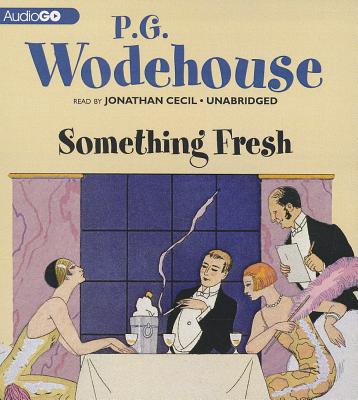
by Adam Rex
Read by Bahni Turpin
Support your local independent bookstore: buy it there!
Content: Nothing. Nada. Some fake swearing (“pardon my language”). The audio version is probably good for kids who have an attention span longer than 20 seconds; the book is in the middle grade (grades 3-5) section of the bookstore.

I loved the audiobook of The True Meaning of Smekday, so when I heard that Bahni Turpin was doing the sequel, I KNEW that was how I needed to experience this book. And I was right. Turpin is perfect for this. Seriously.

The story picks up a year and a half after Gratuity “Tip” Tucci and J. Lo save the world. The Boov have moved to New Boovworld, on one of Saturn’s moons. J. Lo and Tip are hanging on Earth, trying to get used to having Tip’s mom around. And, for J. Lo, trying to to fit in. They need a break, and so J. Lo soups up their car, Slushious, and they head off-world to check out the new Boov homeland. Since they saved the world, they’ll be welcomed as heroes, right?

Well, no.

Things don’t go quite like they planned. J. Lo is named Public Enemy Number One, and thrown into jail. Tip repeatedly avoids being captured, but only just barely. Which sends her on an adventure through New Boovworld. She meets and befriends a delightful flying billboard, whom she names Bill (of course), as well as several other Boov (and one human; Dan Landry’s son), in her attempts to free J. Lo and set everything right. There’s a lot of action, tons of humor, and a bit of time travel in the mix.

But what really made the book was Turpin. I adore her reading style, and it’s perfect for Adam Rex’s humor. I was chortling, guffawing on occasion, and I was thoroughly charmed by all the Boov voices (with their distinctive quirks). I was pleased to see that the Chief was back (if only in Tip’s imagination), as well as other favorite characters from the first book. I loved how Rex imagined New Boovworld. And it was satisfying (as a parent) to see that there were real consequences for Tip’s actions.

In short: I adored it.

Lost in the Sun

by Lisa Graff
First sentence: “When we were real little kids, Mom used to take Aaron and Doug and me to Sal’s Pizzeria for dinner almost every Tuesday, which is when they had their Family Night Special.”
Support your local independent bookstore: buy it there!
Review copy snagged from the ARC shelves at work.
Release date: May 26, 2015
Content: There’s some bullying, and some tough subjects and a couple of instances of mild swearing. It’ll be in the middle grade (grades 3-5) section of the bookstore, though I would hesitate giving it to the younger end of that spectrum.

Eight months ago, Trent was the cause of a fatal accident. He hit a hockey puck into the chest of one of his friends, who then died. Not really from the hockey puck: his friends had a heart condition that no one knew about, and that’s what caused the death. But Trent is convinced that it’s his fault. And he feels like everyone — well his father, his brothers, and his former friends — blames him for what happened.

Now, on the first day of sixth grade, Trent is completely depressed. Until the “weird” girl, Fallon, decides that they need to be friends. Fallon’s the one everyone shuns, mostly because she has a scar down her face. Everyone asks how it happened, but she keeps the true story close, choosing instead to make up ones. Over the fall, Fallon and Trent deal with his grief, guilt, and anger, as he tries to make life work.

A lot of books deal with grief from dead or sick parents, or dead or sick siblings. But the idea that a kid could be the catalyst for a friend’s death hits home and deep. I thought Graff captured those emotions perfectly, from Trent’s self-loathing to his feelings like everyone hated him. And because we saw the rest of the world through Trent’s eyes, I could tell which adults were reaching out (his homeroom teacher, eventually) and which adults just needed a good smack (his father). The longer Trent’s self loathing went on, the more I was afraid that Graff wouldn’t be able to give Trent a good resolution. But, in so many ways, she did. I was thoroughly satisfied with Trent’s arc, and with the way things weren’t neatly tied up in a bow.

Quite good.

Black Dove, White Raven

by Elizabeth Wein
First sentence: “Sinidu told me I should aim for the sun.”
Support your local independent bookstore: buy it there!
Content: There’s a smattering of violence, and some insinuations, but it’s not nearly as intense as Wein’s other books we have in the store. I’m torn between leaving it where it is (in Teen, grades 9+) and moving it to YA (grades 6-8), where it really fits better, subject and content-wise. Thoughts?

I know Wein has written other books about Ethiopia, but I didn’t know they existed, really, until this one came out and I started hearing the buzz. And so I really didn’t know what to expect with this one.

Many of the elements I have enjoyed about Wein are there: women pilots, in this case two: a white woman, Rhoda, and her black friend, Delia,  learned to fly in France and go around the States in the late 1920s/early 1930s with their barnstorming act. There is also World War II: after Delia’s accidental death, Rhoda takes their two children, her daughter Emelia and Delia’s son Teo (whom Rhoda has taken as her own) to live in Ethiopia, which was Delia’s dream.

The book is a long letter written to the emperor of Ethiopa by Emelia. It’s in the middle of World War II, and the Italians have invaded Ethiopia. Because of their precarious legal situation: Teo is not legally Rhoda’s son, they’re not really legally in the country, and because Teo’s father was Ethiopian, it means that their position in the country, especially with the Italians there, is a precarious one.

Emelia recounts history and how their little family ended up where they are. Teo contributes some, writing journal entries and flight logs — Rhoda eventually teaches both children to fly — and so you hear his voice as well as Emelia’s.

There’s a lot going on in this book, and yet, I felt like the conflict didn’t really pick up until the last third. It’s a quieter book than her previous two WWII books, one that felt more vignette-driven as well. (Though typing that, and thinking back to Code Name Verity and Rose Under Fire, I’m not sure that’s true.) The characters were definitely younger in this one, and perhaps that’s what I’m feeling. I did like how Wein rounded out most of the characters in the book, but especially the female ones (the male ones, aside from Teo, were basically set dressing, there to move the plot along). Wein also touched on a lot of cultural issues for the time: segregation in the US, slavery in Ethiopia, the war, the limitations of women at the time. Even though it didn’t feel like much, plot-wise, there was enough to hold my interest and carry the book.

I’m not sure I love it as much as I do the other books I’ve read by Wein, but I did thoroughly enjoy it.

Moonpenny Island

by Tricia Springstubb
First sentence: “Transparent.”
Support your local independent bookstore: buy it there!
Review copy pilfered from the ARC shelves at my place of employment.
Content: It’s pretty basic, language-wise, with short chapters and simpler words. Good for anyone who likes friendship stories. It’s in the Middle Grade (grades 3-5) section of the bookstore.

Flor and Sylvie have been best friends forever. Growing up on a small island in the middle of Lake Erie (it’s doesn’t exist, but it’s possible, though I had to look it up) on the Ohio side, they were pretty much all they had. Which was just find with Flor. Then things change: Sylvie is sent to Cleveland to live with her aunt and go to school there. And Flor’s mother leaves as well, and they don’t know when — or if — she’s coming back.

With her life falling apart, how can Flor cope?

Once I got over my annoyance about the whole there’s an island in Lake Erie by Toledo thing… I found I really liked it. It’s not magical quirky, but it does fit with the whole small-town quirky thing. I liked how Flor knew everyone on the island, and was willing to stick up for the less “acceptable” members of their community. I liked how Springstubb introduced a scientific-minded, homeschooled girl into the mix, and how she wasn’t weird or unusual or super-religious. I felt like Springstubb tackled everything — from problems at Flor’s home to problems with her friends — with an evenness that suited her audience.

The only thing that bothered me, really, about the story was that it had the feel of a first person narration, but it wasn’t. For the most part, I was able to flow with it, but every once in a while, it pulled me out of the story.

But that’s a small quibble in an otherwise good book.

12 Books You Should Read Instead of Seeing the Movie

I was sitting around, trying to figure out what to do for a list this month, and C suggested bad movies. (We were talking about the new City of Bones TV show, Shadowhunters, and how we have high hopes that it’ll be better than the movie.) In the spirit of goodness (and this Tshirt, which, yes, I do own)  I give you a dozen books that you should read rather than wasting  your time on the movie. (For the record: I always try to read the book first, when I can. But that’s just me.)

In the category of Don’t Even Bother With the Movie:

Twilight – I know: we’re all over the vampires. But, given a choice between reading the books and watching the movies (I never even bothered with the last three), I’d take the books, hands down. At the very least, you can skip the annoying parts.

The Lightning Thief – When the author disses the movies you know it can’t be good. But, aside from the book, this doesn’t even hold up as a movie. Don’t bother. Especially since the book is SO good.

Inkheart – The movie isn’t terrible. I mean, Brendan Frasier is really eminently watchable. But, it’s not good either. It’s just kind of… Meh. Like everyone phoned in their performances and they were hoping to get a movie as fascinating as the book was.

The Three Musketeers – Orlando Bloom is the best thing in the most recent movie. Seriously. It’s not even remotely the book, which is really quite good.

The Hobbit – I loved Lord of the Rings, all three movies and all 12 hours of it. But, after slogging through the FIRST of three movies for this charming little book, I bailed. (That said, the TV movie from 1977 is quite good.)

The movie is okay, but it has Nothing To Do With the Book:

Ella Enchanted – It’s actually a charming movie. I love the music (always have), and there are parts of it that I think are great. But, aside from the title, the character names, and the curse on the main character, it’s not the book. Which is just as charming and fun on its own.

The Great Gatsby – It’s a gorgeous movie. Lush and beautiful. But that’s all it is. It missed the point of Gatsby, of what Fitzgerald was trying to say. If you don’t think about that, it’s a good movie, but I’d rather read the book.

The Hitchhiker’s Guide to the Galaxy– the opening minutes of this were brilliant and I had high hopes for the movie, but it kind of just petered out. Alan Rickman as Marvin is brilliant, however.

Tuck Everlasting – C insisted that this one be on the list. She adored the book, and the movie is NOTHING like the book. Except for the premise, there’s really nothing in common with Babbitt’s powerful book.

I know I’m going off the trailer here, which can be misleading. (Bridge to Terabithia anyone?) But, the trailer for these books scared me so much, I haven’t seen the movie. And unless someone convinces me otherwise, I probably won’t.

The Dark is Rising  – I really didn’t think this book would translate well onto the screen, and if the trailer’s correct, it proves me right.

Ender’s Game – Yeah, there are some big blockbuster-y moments in the book, but the movie missed out (or at least the trailer implied this) on the reflective nature of this book, of the underlying themes of brutality and the means we’ll go as humans to reach the ends we want. I know I may be wrong, but I haven’t had the desire to find out.

The True Meaning of Smekday  – This is the one I’m most conflicted about. I want to see Home because of a person of color, girl main character. And because it does look charming. But, I can tell that it’s not the book. I don’t object to that, I just haven’t worked up the courage to see the movie yet.

As a side note, they really shouldn’t make any picture book into a full-length movie. There isn’t a single one (Where the Wild Things Are, How the Grinch Stole Christmas, The Cat in the Hat, Alexander and the Terrible, Horrible, No Good, Very Bad Day) that’s any good.

What are some of your worst (and best) movies from books?

Bayou Magic

by Jewell Parker Rhodes
First sentence: “My name is Madison Isabelle Lavalier Johnson.”
Support your local independent bookstore: buy it there!
Review copy provided by the publisher in conjunction with the ABA Children’s Institute.
Content: It’s a pretty basic story, and aside from some French scattered through, it’s pretty basic in its vocabulary. I’d give it to anyone 2nd grade and up. It’s in the middle grade (grades 3-5) section of the bookstore.

Not-quite-ten-year-old Maddy is the youngest of five sisters in New Orleans. She’s the one that is always the tag-along, never quite fitting in with her sisters. She is often teased, and the only time she feels comfortable is when she’s cooking with her mom. Then, her turn to spend the summer in Bon Temps, in the Louisiana bayou, with Grandmère comes around. At first, Maddy doesn’t know what to expect: her sisters all spent summers with Grandmère and came back with horror stories. But Maddy is different: she likes the quiet, earthy nature of Grandmère and the bayou. She wants to learn the old ways. And she finds friends and adventure there. And magic.

Rhodes simple, lyrical style was really well suited to this story. I loved the earthy feel of the book, and the connection to old stories and family roots. I loved the mix of African and French, of Creole and magic and modern. The environmental crisis aspect of it wasn’t as important as the back blurb led me to believe — it was really just tacked on at the end — but the theme of caring for and connecting to the earth was prominent and important for the story. At first, I thought that this could pass for “realistic” fiction, that maybe the mermaids Maddy saw were just dreams and imagination, but no: this is speculative. And it worked for me. I loved seeing Maddy grow and learn and develop, and yet she was still a 10-year-old girl with all the concerns and abilities of that.

I haven’t ever read Ninth Ward, but I think I need to, now. I’ve come to really love Rhodes simple style.  

Station Eleven

by Emily St. John Mandel
First sentence: “The king stood in a pool of blue light, unmoored.”
Support your local independent bookstore: buy it there!
Content: There are a half-dozen f-bombs, spread throughout the second half of the book. It’s a bit meandering, but otherwise, it’s a good crossover story, and I’d give it to a teen interested in the post-apocalyptic genre. It’s in the Fiction section of the bookstore.

It’s difficult, I think, to write a linear plot for Station Eleven. There’s a pandemic, obviously: the world has to end somehow. An aside: I think it’s interesting that the way the world ends in fiction these days is through sickness or climate change rather than some horrific nuclear event. Times have changed since Canticle for Leibowitz.

Anyway, a pandemic — Georgia Flu — sweeps through the world, with a 99% fatality rate. It kills you within 48 hours of catching it, so it doesn’t take long. That simple thing, changes the world. Station Eleven follows an actor, Arthur, and everyone his life touches — ex-wives, son, paparazzi, best friend, the child actors he was in King Lear with — before and through the pandemic, exploring the connections between them and the way everyone handles the New World.

The book was less about the pandemic or the world collapsing as it was about the connections between people. The action flipped between before the pandemic to 20 years after, only vaguely hitting upon time in-between. There was enough movement to keep me interested; the huge cast of characters were always doing something, and the non-linear plot helped with that as well. I think it was an intriguing reflection on the way our lives touch one another, how seemingly random occurrences to one person have great significance to another. Admittedly, there were times when I didn’t get the connections: the paparazzi’s story, for example, was so disconnected from the rest, I wondered why his was included. But for the most part, I found the book to be an intriguing examination of connection and humanity in a time of crisis.

Cuckoo Song

by Frances Hardinge
First sentence: “Her head hurt.”
Support your local independent bookstore: buy it there!
Review copy left for me by the publisher rep.
Comtent: It’s more than a bit creepy, and it’s slow (like many Hardinge) books. I’ll probably put it in the YA section (grades 6-8), but I’d give it to a 10-year-old who showed interest and was willing to be patient with it.

I have not read everything Hardinge has read, but what I’ve read I’ve (almost) wholeheartedly loved. She is not an easy author to love; she makes you work for the story, often having a very slow start and building from there. Cuckoo Song was no different in that respect. It was a slow and somewhat confusing beginning, one that took me a bit to get into.

Triss has been ill for a good long while. She is Delicate, and often prone to Sickness. And so when she wakes after an accident during her family’s vacation no one seems to think that anything is the matter. Except she feels like something is … off. And her younger sister, Pen, (with whom she has always had a contentious relationship) is screaming awful things at her.  And so Triss does what any 12-year-old would do: she tries to figure out what’s wrong with her. And the deeper she goes into that mystery, the more she discovers that there are things Wrong with her family in some very dark (and somewhat magical) ways. And it’s probably up to her and Pen to fix things.

I don’t want to give away too much because much of what I loved about this was the slow realization of what was going on. There’s a reason the beginning is slow and confusing: Triss, herself, is slow and confused. The reader figures things out as Triss does, peeling one glorious, dark, delicious layer back after another. And no to worry: once the story really gets going, Hardinge’s writing is so lyrical it pulls you in, increasing the tension until the immensely satisfying ending.

It’s absolutely wonderful.

State of the TBR Pile: May 2015

Happy Mother’s Day, to all of you who celebrate it. I don’t think we have much planned here, but perhaps I’ll get some reading off my pile done today… Though looking at this pile, it’s heavy on the YA. I may have to look through my other piles and find some nice middle grade books to balance it out.

The Cage, by Megan Shepherd
The Heart of Betrayal, by Mary E. Pearson (she’ll be at the store on June 10th; I figure I should read this)
The Curious World of Calpurnia Tate, by Jacqueline Kelly
The Wrath and the Dawn, by Renee Ahdieh
Truth Commission, by Susan Juby
Saint Anything, by Sarah Dessen
Spelled, by Betsy Schow
Read Between the Lines, by Jo Knowles
I’ll Meet You There, by Heather Demetrios

What’s on your TBR pile?

How to Be a Heroine

by Samantha Eliis
First sentence: “A couple of summers ago, I was on the Yorkshire moors, arguing (over the wuthering) with my best friend about whether we’d rather be Jane Eyre or Cathy Ernshaw.”
Support your local independent bookstore: buy it there!
Review copy provided by the publisher.
Content: There’s a handful — not more than six — of f-bombs and some mentions of sex, but nothing graphic. It’s in the adult creative nonfiction section of the bookstore, but I’d give this to anyone in high school and up.

Somehow, I ended up with a complimentary copy of this book. I really have no idea how it ended up on my pile. I do know the idea of it (and the subtitle: “Or, What I’ve Learned from Reading Too Much”) appealed to me. Any book that is about books or the love of reading has to be good, right?

And it was.

The book is nominally a reflection of Ellis’s life. She’s an Iraqi Jew, living in London, with all the cultural and religious implications you’d think that entails. She struggled against expectations, she struggled with faith, she struggled to find her own path. And, on its own that would be a fascinating story. But she framed the book with an analysis, heavily feminist, of classic heroines. From familiar to me ones like Jo March and Anne Shirley and Jane Eyre to ones I’ve never heard of, like Franny Glass and Esther Greenwood. She explored their narrative arcs, and what she took away from their stories. Both when she was younger and then, as an adult, how she feels the held up. Some did. A lot didn’t. And many she got something different out of the book than what she got when she was younger. She discovered new things along the way, and made me want to revisit books I’d loved when I was younger and read ones I’ve not read before.

And for all the literary criticism, it wasn’t a stuffy book. Ellis has a way of drawing the reader in, of making the characters pop to life. Perhaps that’s because she’s a playwright and has a way with words as it is. But whatever the reason, this one won my heart over.