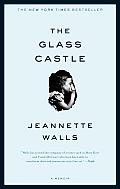
The Glass Castle

Memoirs, for me, usually fall into two categories: those I think I could have written, and those whose lives are unique, unusual and fascinating. I prefer the latter, obviously, and this one by Jeannette Walls, falls solidly into the that category. She had a whopper of a childhood: fascinating and horrible at the same time. Basically, it’s the story of her childhood, and what a childhood. Her father was an alcoholic, her mother an “excitement addict”, and her sisters and brother and her were left to fend for themselves. In practically every way. Literally. When she was little, and they were living in the desert — in Nevada, Arizona and California — it wasn’t so bad. But, eventually her father’s drinking got really bad and her mother thought that moving back to his hometown would help (why she thought that was beyond me), and so they moved to West Virginia. From there, Walls’s life became particularly hard. Her parents wouldn’t take welfare or charity, so the kids took to fending for themselves. Digging lunch out of the garbage, getting work where ever they could. The house had no indoor plumbing, and was falling apart. The grandparents — especially Erma — were a real piece of work. It’s a wonder Walls survived at all.

I was caught between admiration for her parent’s fierce sense of independence and lack of judgement of others (and statements that no one should judge them) and horror at the good values gone wrong. They were parents, for God’s sake. They should act like parents. My great-great grandfather was a drunk — he’d go off to work in the morning, earn the money, and then spend it all on booze and come home to beat his wife and kids — but at least my great-great grandmother had the wits and the resources to earn money and raise her children. Neither one of Walls’s parents had that. Her mother spent her days painting and reading and eating chocolate, rather than buying food for her kids. Her father spent his days dreaming about striking it rich and drinking the income away. I felt bad for Walls, even though I don’t think she wanted us to feel bad. This was who she is, and I don’t think she wanted our charity or pity. She survived, she managed to find her way in life. And she did it basically on her own. She’s very independent, she had some wonderful experiences as a child — ones that our kids, as scheduled and structured as they are could never have — and she loves her family, crazy as they are. I think that’s what she was trying to get across — that even though it was horrible, she survived, thrived, and managed not to get stuck in that trap.

There is much to discuss about this book — poverty, and escaping poverty (I’m finding in my reading that one of the best ways to escape is through some sort of brilliance; if you’re smart, you can find a way out.); parenting; structuring of children; judgements; the 50s and 60s… it goes on and on. And it’s a fascinating, well-written, engrossing read. Just not a comfortable one.

The Orchid Thief

I began this book, by Susan Orlean, thinking it was about a weird guy in Florida named John Laroche, and his arrest and trial for stealing orchids out of Fakahatchee preserve in south Florida. What it ended up being was a long, and sometimes interesting, look at obsessions, particularly orchid obsessions and what drives the people who are obsessed by them.

What I learned: orchid people are weird. I don’t understand what people see in them in the first place, and I don’t feel any more enlightened. It’s an either you love them or you hate them type of thing. I thought the history of orchid collecting was fascinating, especially about the orchid hunters, the people rich collectors in England would send out to actually get the orchids (since they most likely died in England, and they didn’t know how to clone them yet). They lived fascinating, dangerous, mostly undocumented lives. Then there was the role that the state of Florida played. I’ve never been, but the way Orlean described it, it’s a weird and unusual and vaguely terrifying place. I liked the parts about Florida and the wildness of it best.

The writing was good, but I had to read this one in short doses, because as weird as the people are and as good as the writing is, it just couldn’t grip me and hold my interest for long periods of time. I guess I just don’t go in for obsessions much. And a whole book on a plant I’m not really interested in was a bit much.

Though I did finish it, so that must mean something. Right?

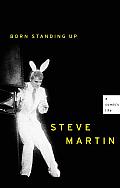
Born Standing Up

I was really glad when I saw that this one came in (Eventually I’ll read Rascal.) at the library. I’ve wanted to read this ever since I saw a bit about it at someone’s roundup of some publishing conference (how’s that for specific) primarily because I’m a fan of Steve Martin. Not a big fan — I don’t love everything he’s done — but I generally enjoy his humor, and I’ve enjoyed his writing in the past. A memoir by him sounded both funny and intriguing.

Martin insists that this book isn’t an autobiography, but rather a biography, because, he writes, “I am writing about someone I used to know.” I enjoyed getting to know that person. While it wasn’t always funny (though there were some great funny bits), it was an insightful, gentle trip into how Steve Martin became the Steve Martin of the late-70s and early-80s. (He’s no longer that Steve Martin. One of my favorite lines was: “At first I was not famous enough, then I was too famous, now I am famous just right.”) I learned that being a comic is work (probably should have figured that), that when people stand up to entertain us, it doesn’t just happen spontaneously. One of the more interesting aspects of the book was the evolution of Martin’s comedy. From magician-banjo-everyguy to hippie-cuttingedge-philosophical guy (get the book just to see photos of Martin’s hippie days… they’re hilarious) to finally what he ended up as: manic-physical-crazy guy. Fascinating stuff. I also learned that his rise to fame was not just a product of hard work (he’d tape his shows and make corrections/adjustments based on what he heard), but also a bit of luck (he got on as a writer on the Smothers Brothers show because an ex-girlfriend’s current boyfriend was a writer), and because he’s basically a decent guy. He was willing to be polite and willing to be humble and willing to make the effort to make it all happen. And it was interesting watching the evolution of it all and finding out why he gave up the life of a stand up comic for movies and writing (well, who wouldn’t?).

The weirdest thing about it all was the writing style. I don’t know what I was expecting and I can’t quite put my finger on it. But there was something about the way it was written that kept nagging at me. Perhaps because he got a bit overly sentimental at times? Or maybe because he kept flipping back between past and future and the foreshadowing just didn’t fit? Or maybe because it wasn’t as funny as I was expecting it to be?

Whatever it was, it wasn’t enough to keep me from really enjoying this trip down Martin’s memory lane. I’m glad he invited us along for the ride.

Totto-Chan: The Little Girl at the Window

My friend Sarah recommended this one for our in-person book group; we’ve been passing her two copies around since the library doesn’t have one. And it was my turn to have the great pleasure of reading Tetsuko Kuroyangai’s wonderful little memoir.

It’s the most unusual memoir I’ve read recently. It’s in the third person and reads more like a work of fiction than a collection of personal recollections. That, and it’s so simply, so cheerfully written that it’s not just an easy read, but an entertaining one as well.

The story is about Totto-Chan, Kuroyanagi’s childhood name, and her experiences at the Tomoe (to-mo-e) Gakuen school, an alternative elementary school outside of Tokyo designed and run by Sosaku Kobayashi from 1937 to 1945. He believed in a whole education — and this book is as much a portrait of an ideal school as it is a memoir — and letting the child determine his or her place in school. He taught music, believed in exploring nature, used everyday experiences (like lunch) as teaching tool, and created a wholesome environment so that the children attending developed confidence and self-esteem. It was truly remarkable to read about.

I’m sure much could be said about the educational value of the book, and the critique it indirectly gives of modern education. I, however, preferred enjoying it on a simpler level: as a series of sweet reflections of a woman about her idyllic childhood. Either way, it’s a wonderful little book.

My Life as Furry Red Monster

This little book, by puppeteer Kevin Clash (with Gary Brozek, in very small print), is one-part memoir, one-part glimpse into the world of Sesame Street and one-part life-affirming-self-help-ish-type book. I liked two-thirds of it.

The memoir part was fascinating. Have you ever wondered how a 45-year-old, tall black guy ends up playing a 3 1/2-year-old furry red monster? I have. Ever since I found out that the same guy played both Hoots the Owl and Elmo (as well as Natasha the baby monster), I’ve wondered about him. How did he get into puppetry? How did he end up being Elmo, of all muppets… This book answers some of those questions. He had a poor, but loving, and nearly idyllic (if you believe everything he writes) childhood. His parents were awesome — how many parents would take their child’s love of puppets and wholeheartedly support it? And his evolution as a puppeteer and a performer is fascinating, too.

I loved the parts about Sesame Street, too. Jim Henson was probably the world’s best boss, and Clash gives you a little insight into that world. I appreciated the logic and the insider dope on some of the global spin-offs, as well as the Sesame Street’s evolution here. (Especially since I stopped watching the show with my kids sometime in 2002. C was the last one who really watched it. A didn’t have much interest in it, and since we don’t have cable now and the local PBS station’s signal is weak, we don’t even get it anymore.) I haven’t always liked what they’ve done with the show, but I understand the reasoning behind it. Clash took us through the whole process from curriculum design through to rehearsals and test audiences. It was pretty interesting, too.

But when he tried to sum the whole thing up into little bits of advice (good advice: love, joy, creativity, tolerance courage, friendship, cooperation, learning, optimism), it just felt forced. I would have rather read a book about Clash’s life, his experiences with being a master puppeteer, and left the whole life affirming stuff off. Even so, it wasn’t too obnoxious and overbearing. And it was worth it to read about his life and work.

The Year of Living Biblically

I’ve had my eye on this for a little while; I know it’s been making the blog rounds where it’s been getting overwhelmingly positive reviews. So, when Hubby’s colleague loaned it to us a month ago, I jumped at the chance to skip the hold line at the library and actually read the book.

A. J. Jacobs is a man with a mission, crazy though it might be (especially for an agnostic, secular Jew): to live the teachings of the Bible — all of them — as literally as possible for an entire year. He grows a huge beard, he wears white, he dances with joy, he sacrifices an animal (well, pays to have one sacrificed), he prays… the list goes on.

It’s an ambitious project, as Jacobs soon finds out; he’s attempting to do in one year what most people don’t accomplish in a lifetime. But he’s game, almost naively so, to give it a try. And the result is a funny, fascinating, enlightening book.

Jacobs spends eight months of the year exploring the Old Testament/Hebrew Bible, partially because he’s Jewish (at least by heritage) and partially because so much of the Bible (comparatively speaking) is made up of the Old Testament. It’s an interesting journey, full of bumps and starts and failures and revelations. I thoroughly enjoyed his journey with prayer; being reminded, in the process, of things that I could be doing better. I enjoyed his experiences with the weirder aspects of the Bible (like not wearing mixed fibers), and his
ultimate realization that sometimes you do things just because God asked you. I liked the New Testament part less, mostly because — and Jacobs admits that this is a problem — without believing in Jesus as the Savior, the New Testament isn’t as easy to follow. Still, he makes a go at it, exploring many facets of Christianity (including snake handlers… go figure) with an open mind.

It helps that Jacobs is a witty, engaging writer, as well as an honest and forthright one (well that is one of the commandments, after all). It’s an excellent read.

Omnivore’s Dilemma

First, some history. Back in 2001 Hubby brought home a New York Times Magazine article by Michael Pollan had written about corn and the effect it is havingAmerican diets. I read it, was sufficiently shocked, and started reading ingredient labels. A anti-corn syrup activist was born. I have changed my diet (and my family’s) significantly in the past 7 1/2 years: I make my own bread, we limit the cereal and snack intake, we only have soda rarely. Aside from that article, the other motivators for food change over the years have been Fast Food Nation (which Hubby read; he said I probably couldn’t stomach the slaughtering chapters) and Crunchy Cons. We rarely eat at fast food (not never, though I do loathe McDonalds these days), and we try our best to buy local, especially when it comes to food. (Warning: this is one LONG review. Sorry.)

So this book, for me, was not so much a revelation as a confirmation. I can — and should — take the next step, take our food awareness to a slightly higher level (even if that means, much to C’s distress, getting rid of chicken nuggets and hot dogs and mac-and-cheese in a box).

The book is divided up in to three parts: Industrial, Organic, and Foraging, where he follows four meals from the beginning through to eating them. In industrial, he follows corn through corn-fed steers being “processed” to eating at McDonalds. If you read nothing else out of this book, read this section. Please. The only way we’ll even remotely begin to change the hold of industrial agribusiness has on this country is if more people know. (At one point, Pollan writes that the best way to change things would be to require glass walls on all slaughterhouses. Then, the public would be forced to acknowledge what goes on in those places in the name of cheap beef.)

The organic section was the one that I found most interesting. Pollan’s ultimate conclusion is that big organic (Whole Foods, Trader Joes, what you get at the supermarket) isn’t a whole lot better than industrial agriculture. I found this somewhat surprising. But, he visited farms and feedlots, and was unimpressed with the organicness of it all. Sure, they didn’t use pesticides or antibiotics, but the vegetables were still being picked by immigrant workers and the animals were still living in overcrowded conditions. Not exactly environmentally healthy, even if there is an “organic” stamp on it. (He also spends a lot of time talking about USDA regulations. If you can read this book and not end up angry at the USDA, I’ll be impressed.)

The second part of the organic section is Pollan’s ultimate ideal. He spent a week at Polyface farm, run by Joel Salatin. This man is an impressive farmer. He considers himself a”grass farmer“, rethinking how he raises cows, chickens, pigs, and rabbits. Everything is eco-friendly, local and interconnected. It’s an amazing place (it almost sounds too good to be true), and it made me wish for such a place closer to me (either that, or that I still lived in the DC area so I could pop down for a visit). It also made me realize that even though I buy local, I haven’t visited the farms where I get my meat. How are the animals living? How are they slaughtered and processed? I should be more proactive.

The final section is his attempt to recreate the hunter-gatherer. He hunts for wild boar. He forages for mushrooms, and serves a meal, in the end, that cost him practically nothing (except for time). He also visits vegetarianism, and the implications that has for modern eating. It’s all very fascinating (and well-written).

But, in the end, it leaves me slightly depressed. How many people are going to pick up this book? How many people can it change? Sure, organics and farmers markets are growing, but (as we’ve found out), it’s expensive. We spend a good chunk of our monthly paycheck on food, and it’s not because we’re buying more. I liked this quote (from Joel Salatin):

“Whenever I hear people say clean food is expensive, I tell them it’s actually the cheapest food you can buy… [W]ith our food all of the cost are figured into the price. Society is not bearing the cost of water pollution, of antibiotic resistance, of food-borne illnesses, of crop subsidies, of subsidized oil and water — of all the hidden costs to the environment and the taxpayer that make cheap food seem cheap. No thinking person will tell you they don’t care about all that. I tell them the choice is simple: You can buy honestly priced food or you can buy irresponsibly priced food.”

It just seems like a huge, uphill battle. But one in which I’m more than willing to do my part.

The Royal Road to Romance

I decided a while ago to abandon my original list for The Armchair Challenge. After reading, and loving, The Embarrassment of Mangoes, I knew there was no returning. So, I hunted for the suggestions that my friend, Amira, gave in the comments of one of my other posts. No luck; I guess my library just isn’t as versed in Central Asia as hers is. But, they did have my Nook friend Cami’s suggestion (well, actually Cami’s mother’s): Richard Halliburton’s The Royal Road to Romance. And I’m so glad I picked it up.

I’ve gotten into BBC’s Jeeves and Wooster (based on the P.G. Wodehouse books, which I really must read). I’ve not only enjoyed the silly (very silly!) story lines, but I’ve loved the whole 1920s aura; the dress, the attitude, the language. So, what does Bertie Wooster have to do with The Royal Road? Well, imagine Bertie as an American tramping about the world, and you’ve basically got the feel of the book. It’s really a whole lotta 1920s fun.

First, a couple of laments: I lamented the lack of a map. I had an idea where many of the places were, but there were several stops I had no clue about. I wanted to know where Andorra was, and whether or not it was still a country. Same with Ladakh. I wanted to know where in India all these cities he popped in and out of were. There was a map in the original publication; Halliburton made reference to it. But, my edition lacked one and there were times when I really missed it. But the greater lament was the lack of photographs. Halliburton’s tromping all over the world with his trusty camera (even getting thrown in jail for taking pictures in Gibraltar) and the only evidence we have is the cover photo of him in front of the Taj Mahal. So sad.

My laments aside — and they really are paltry — I thoroughly enjoyed seeing the world through Halliburton’s eyes. The world was so different then; Halliburton literally bummed around the world, hitching rides on steamers, stealing trips on trains (avoiding train conductors was a common pastime of his: “All day long, it was necessary to fight off collectors, as the news of my default spread by telegram up and down the line. Not only conductors were on hand to hound me, but inspectors, police and station-masters. I was diving out of windows, changing compartments and haggling from morning till night. One particularly obnoxious collector would have pushed me bodily off the train had I not pushed him off first.”), biking, walking… things that very few people these days would even think of doing. Sure, he comes from a certain class of people — for who else, when graduating from college, would shun a career for 600 days of “horizon chasing” — and that affects his view on the world. But, there’s also the fact that so much of the British Empire was still intact, so there was a feeling of compatriotism from the ex-pats he met, people who were more-than-willing to help him on his adventures.

And what adventures he had! He climbed the Matterhorn, without any previous climbing experience (and was mildly disgusted at his friend Irvine’s response: “At last,” he continued in a far-away voice, “after talking about it and dreaming about it all these years, at last, I can actually SPIT A MILE!”). He met the president of Andorra, and bummed around Spain with a fellow American (an architect student; the funniest part was their “contest” in Seville where they tried to get as many girls as they could to smile/flirt with them). He went south to Gibraltar, snuck (sneaked?) into the fort at night, and then got jailed for taking pictures a couple of days later. (I liked this quote: “That same afternoon we approached the Bay of Algeciras, and there before me, rising abruptly across the water, I saw the majestic Rock, entirely devoid, to my great disappointment, of the Prudential Life Insurance advertisement I had always seen emblazoned upon it in picture.” Hubby said, “Wow. Even back then.”) He got out by sheer pluck, and with a fine of 10 pounds, which he did not have, but the guards (for whatever reason; because Halliburton was plucky?) and friends paid the fine for him.

From Gibraltar, he headed to Monte Carlo, where he and another American, Pauline, lost $200 gambling. I really liked this passage:

Finding diamonds very boring, we sat on a bench in the Casino Gardens overlooking the sea, and there surrounded by great banks of flowers we finished our inadequate box of candy, realizing how much better it was to drown our desolation in this form of narcotic than to do the commonplace thing of shooting bullets into our skulls.

And then on to Egypt, where he spent the night on top of one of the pyramids, Kheops, and got caught naked in the Nile (that was a funny adventure!). He decided instead of heading to Greece, that he’d go on to India, spent the night in the Taj Mahal (yes, he snuck — sneaked — in there, too), and bummed around various other places. He climbed the Kyber Pass, visited Kashmir, and was one of only 12 whites to see Ladakh that year. From there, he decided to continue east:

[I] turned my attention to maps, upon which I saw that in my aimless peregrinations I had wandered half-way round the world. It was now as near home eastward as westward so I resolved to return to America via Japan, despite the fact that this move would make me eligible for the dreadful epithet “globe-trotter”.

He saw a cremation festival in Bali, partied in Hong Kong, got robbed by pirates off of Macao, met Russian exiles in Harbin, Bolsheviks in Vladivostok and then managed to secure passage across to Japan (as an “official” mail courier) and climbed Mt. Fuji (in January, in the ice and snow, taking the first-ever picture of the crater in the snowy season) before working his way back home.

It really is a grand adventure, a royal road to romance. And one that’s really worth the time to read. I’ll end with my favorite quote of the book, from after the pirate incident:

As our little ship moved painfully toward her dock I was standing on deck in my shirt-sleeves beside the unfortunate American tourist who had lost most of his two hundred dollars.
“Lord, I’m hungry!” he growled at me.
“Oh, everybody’s hungry,” I replied unsympathetically. “But it’s worth it having such a jolly adventure. “
“Jolly adventure!” he gasped.
“Why, of course. I’ve never had such a good time.”
“Idiot!” he burst out.
“Fossil!” I retorted.

Eight Feet in the Andes

I think, perhaps, several years ago I would have been more inclined to like this book by Dervla Murphy. I think I would have admired her, thought her ambitious and adventuresome for climbing the Andes mountains with no companions except her 9-year-old daughter and a mule, living on the land and the generosity of the Peruvians. I think I would have found her feminist observations — why can’t a woman do this by herself, anyway? — inspiring.

Now… I just think she’s crazy. Crazy for even thinking about hiking through the Andes. Crazy for taking her daughter along. Crazy because… well… let’s just say it’s not something I even remotely related to. (Not that I have to, but it didn’t amuse or inspire me, either.)

It took me a while to get into the book — it’s a diary, and those are hit and miss with me. This time, it was more misses than hits. There’s really no story here. They hike from place to place. They have food sometimes; they sleep in various places. They almost freeze, rescued by a native family who didn’t speak a word of Spanish or English. And, by the entries in mid-October I was tired. Tired of her whining about modern civilization (though early on I thought it had Wendell Berry-esque overtones), tired of the paces she put her child through. Tired of Peru.

So, I abandoned them. Sure, I checked the back: whew, they made it to the end of the trail safe by Christmas Day. Yee-haw.

That’s the third book for the Armchair Challenge. Not one memorable one yet. Maybe I ought to re-think my list….

Reviving Ophelia

Number one book finished on vacation. I didn’t pick light and fluffy books. I did, however, read everyone’s reviews of Eclipse, and am very happy that it’s now waiting for me at the library. Unfortunately (maybe), I have two Austen-sequels to get through before Saturday, so Bella and Jacob and Edward will have to wait (as well Pretties…). I do promise to put pictures of Amira and booklogged up, if it’s okay with them. 🙂

On to the review…

After reading Girls Gone Mild, and since M is due to start Middle School any day now, I figured it was about time I got around to reading Mary Pipher’s book. My mom sent me this one a year or so ago; she had read it a while back when my sister was going through some tough times at home. Mom figured it could help me — you know, the whole four girls thing and all.

I found this book — it’s the 1994 version — to be both incredibly helpful and completely out of date. Well, mostly out of date. I think we’ve come a long ways in the 13 years since this book was written. I’m not sure the teenagers of today are nearly the demure, confused girls that Pipher was interviewing. There is greater equality in education (in fact, I read a report that quoted statistics that said more girls than boys are likely to graduate high school and go to college.) At the same time, I completely buy what Shalit was writing about: we are still an incredibly sexist, lookist and misogynistic society and that the incidences of eating disorders and other self-abusive practices are actually up, rather than down.

It was really a lot of personal stories, many of them disturbing and sad. But, there were a couple of places where Pipher gives some much-needed advice. (Unfortunately, they were at the end of the book.) She has a chapter on “What I Learned from Listening”, which is essentially a primer on how to listen to your teenager, and how to guide her through the process of discovering her own opinions, thoughts, and belief systems. Invaluable. And the final chapter, “A Fence At the Top of the Hill”, she gave suggestions on how to keep your girl from being swept away by the storm that is teenage years. I found it to be encouraging and helpful.

It’s not a perfect book, but I am glad I read it. Maybe I will survive my girls being teenagers. It’s like everything else: hard work, perseverance, mistakes, crying, and joy. Either that, or just cross my fingers and hope. Right?