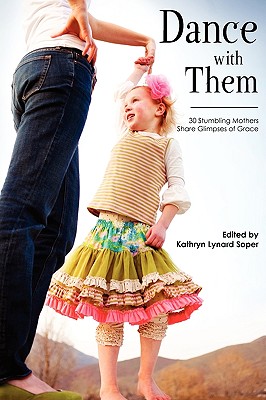
Dance with Them

30 Stumbling Mothers Share Glimpses of Grace
edited by Kathryn Lynard Soper
ages: adult
First sentence: “I clambered up the fronts steps of the elementary school, sweaty and panting, with an infant, a toddler, and a preschooler in tow.”
Support your local independent bookstore: buy it there!
Review copy sent to me by the editor.

Writing about motherhood is a tricky thing. How to balance the weight of one’s personal experiences as a mother, and yet not come off as a know-it-all? How does one impart advice to those following after you, with similar problems and not seem arrogant?

The answer I have to give you lies in this book. It’s a series of personal essays on all aspects of motherhood/wifehood: divorce, step parenting, parenting children other than your own, children with disabilities, growing up, teenagers, mistakes, growth, tears, and joy. It’s all faith-based, but not necessarily overtly religious; these are women who are trying to make sense of their lives, of the cards that Fate and God and Choice have dealt them. While reading, it’s easy to relate to and feel for each individual author, learning and growing with her on her journey. Sure, it can be trite: here are the “lessons learned” while experiencing this inevitable trial that came with being a mother. But it never felt saccharine.

Like with Nurture Shock, the essays that resonated with me most were the once on teenagers. They were equal parts terrifying (really? That much running around and sleep deprivation?) and encouraging (they do turn out okay in the end, right?), they gave me hope and courage that not only am I not in this alone, but also that I can do it. I can raise four girls, and end up sane in the end.

I’m not exactly a reflective person; I tend to take life as it comes and let it flow over me. But this book helped me stop and think and enjoy, for a moment, a little bit of what being a mother and wife can possibly be. Which is exactly why there are books like these.

(Full disclosure: I do know and like the editor, though we have not met in person, and I do know several of the authors of the stories. I’m not sure that affected the way I read the book, but you never know.)

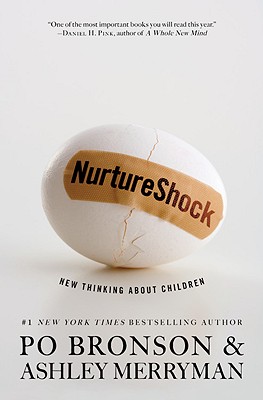
Nurture Shock

by Po Bronson and Ashley Merryman

ages: adult

First sentence: “My wife has great taste in art, with one exception.”

Support your local independent bookstore: buy it there!

This was my on-line book group this past month, and to be honest, I really had no intention of picking it up at all. I’ve been trying to make it through stacks of books that I own, or have been sent. Not to mention indulging in rereading.

But, the discussion on the board made me curious, and I cracked it open to read a few chapters.

For the most part, the chapters I read (I dipped in and out, reading the chapters on praise, race, lying, sibling rivalry) were pretty much rehashing parenting advice that I’ve either heard elsewhere or figured out on my own. (But look: it’s backed by science. Therefore it must be credible.) Admittedly, I’m inherently distrustful of these types of parenting books (well, to be really honest: I’ve been inherently distrustful of parenting books, period, ever since I tossed my copy of What to Expect During the First Year — or something like that — fourteen years ago), and so I really wasn’t expecting anything earth shattering. I think, for parents who talk and think and use common sense and put their kids best interest ahead of what’s “expected” or “right” or what the kids “should” be doing, most of the information in this book will be second nature.

But the chapter on the science of teen rebellion? That, I found interesting.

Perhaps it’s because M is hitting that stage, and I haven’t really broached the topics of teenagerhood or arguing. There’s part of me that’s got my head in the sand: everything will run as smoothly as middle school did, since I honestly believed those would be the terror years. But, the studies that they cited, and the results that were found made me think. Arguing good? To a certain extent, yes, because it’s a dialogue of sorts with the teen. Having rules is good, too, but being anal about them leads to lying and hiding. In other words, don’t be a pushover, but also listen to your kids and work the rules around what seems reasonable. The studies on the pleasure center in teens brains was fascinating, too.

Typing this up, I realized that, yeah: all this is logical, common sense stuff, too: there’s really nothing ground breaking. But perhaps, as parents, what was needed was a one-stop shop, someplace where all this good stuff about parenting, and treating our kids differently from adults (which is really their final conclusion), which includes having different expectations for them, because they’re not adults is quite a good thing.

Which, I suppose, I can agree with.

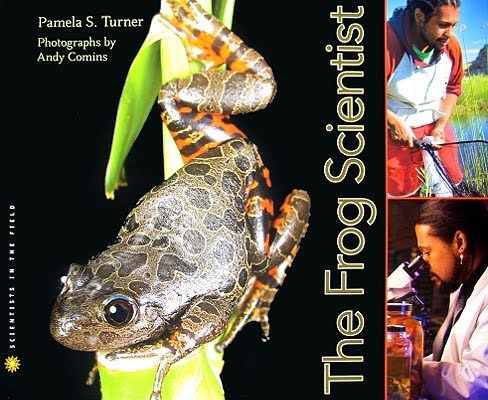
The Frog Scientist

by Pamela S. Turner
Photographs by Andy Comins
ages: 9+
First sentence: “THe sun is just peeking over golden Wyoming hills as Dr. Tyrone Hayes wakes his team.”
Support your local independent bookstore: buy it there!

I’m really kind of at a loss as to what to say about this book. Really, the only thing is: I think it’s very cool. I think it’s cool because it’s about an African-American research scientist. How many books are there out there about minority scientists? (Then again, I’m not sure I’ve read many books about scientists; maybe there are tons.) I think it’s cool because the photography is fabulous, even if it is mostly just frogs. Then again, I think it’s cool because it takes frogs seriously, and actually makes the study of them sound fascinating and appealing.

I think it’s cool because it connects the study of frogs to the environment and gives the science behind it all relevance. I think it’s cool because it is quietly environmentalist, without being preachy. I think it’s cool because while being a scientist isn’t really cool or hip or sexy, it is interesting.

But most of all, I think it’s cool because it’s accessible to kids. Simple text, without a lot of science speak, but it never talked down to the readers. Here’s hoping that someone, somewhere reads this book and wants to become a frog scientist.

Now, that would be cool.

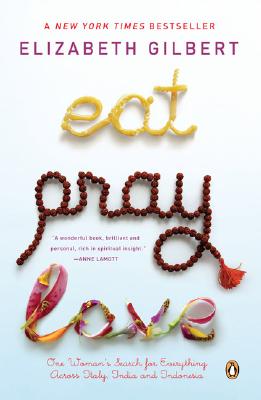
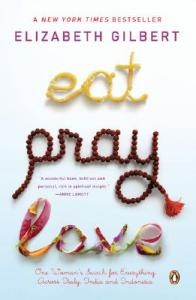
Eat, Pray, Love

by Elizabeth Gilbert
ages: adult
First sentence: “When you’re traveling in India — especially through holy sites and Ashrams — you see a lot of people wearing beads around their necks.”
Support your local independent bookstore: buy it there!

I — honestly — expected to be underwhelmed by this book. Really. I’m highly suspicious of anything really popular, especially if they spawn parodies like this one. It can’t be everything everyone says it is. Right?

Well, call it the blessing of low expectations. Or perhaps it was a good time in my life to read it (who knows what I would have thought if I’d read it when it first came out), but I liked it. Not super-love, going-to-change-my-life like, but it was enjoyable to read. And fun. And, yeah, it made me want to go to Italy. And take a yoga-influenced vacation (though maybe not quite spend a month at an Ashram). (Bali didn’t make much of an impression on me, mostly because it was almost too personal on her end for me to truly relate. Though I’m glad she found peace and love.) It made me grateful for the friends I have. And that I’m in a good, healthy marriage. It made me think about the way I talk to God, the way I approach my spiritual life. And it made me want to do good in the world.

Since I’m reading this so far after it came out (catching the second wave with the movie coming out later this summer; yes, I am curious to see what they do with the book), you probably all know about Liz’s (I’m sorry to be personal here, but after finishing the book, you feel like she’s your best gal pal that you’ve managed to hang out with for a while) year-long journey where she, in short, eats for four months, prays for four months, and then spends four months trying to find a balance between the two and falls in love.

So, I’m going to leave you with some quotes and ideas that really struck me.

First is too long to type out. But, when Liz was in Italy, she made friends with an American, Maria, and her husband Giulio. Liz was contemplating that while she loves Rome, she could never really fit in there. And Giulio puts forth this idea that it’s because her word doesn’t fit with Rome’s word.

“He went on to explain, in a mixture of English, Italian and hand gestures, that every city has a single word that defines it, that identifies most people who live there. If you could read people’s thoughts as they were passing you on the streets of any given place, you would discover that most of them are thinking the same thought. Whatever that majority thought might be — that is the word of the city. And if your personal word does not match the word of the city, then you don’t’ really belong there.”

I love this idea. I don’t know why, really; perhaps it’s an urge to identify things, to label things, to stick them in a box, but I love the idea that you can boil any city, any family, any person down to one word. (And yes, I have thought of mine.) It is, in Liz’s words “a kooky theory, impossible to prove” but it has captivated my fancy.

And a couple that aren’t too long:

AS you. If there is one holy truth of this Yoga, that line encapsulates it. God dwells within you as you yourself, exactly the way you are. God isn’t interested in watching you enact some performance of personality in order to comply with some crackpot notion you have about how a spiritual person looks or behaves. We all seem to get this idea that, in order to be sacred, we have to make some massive, dramatic change of character, that we have to renounce our individuality. This is a classic example of what they call in the East “wrong-thinking.”… To know God, you need only to renounce one thing — your sense of division from God. Otherwise, just stay as you were made, within your natural character.

and a quote from Ketut, the wonderful, wise, funny, healing man from Bali:

Why they always look so serious in Yoga? You make serious face like this, you scare away good energy. To meditate, only you must smile. Smile with face, smile with mind, and good energy will come to you and clean away dirty energy. Even smile in your liver. Practice tonight at hotel. Not to hurry, not to try too hard. Too serious, you make you sick. You can calling the good energy with a smile.

Hubby asked, while I was reading it, if it was a self-help book? It is but only to the extent that she is helping herself and is inviting us along for the journey. It really is, in the end, just that: a book about one woman’s journey. And it’s an interesting journey, with an interesting (if a bit self-indulgent) woman. You can’t get much better than that.

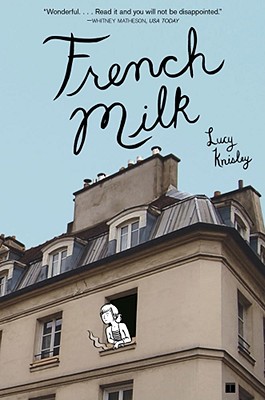
French Milk

by Lucy Knisley
ages: 16+
First sentence: “My last night in Chicago for six weeks, and unseasonably warm for December.”
Support your local independent bookstore: buy it there!

This slim travel memoir/graphic novel is about Lucy’s trip to Paris with her mother the semester before she graduates from college. It’s very much a young adult book; Lucy’s trying to figure out her future, dealing with rejections and insecurities about what path to take, and so it, at times, becomes highly angst-ridden. The book is best the times when Lucy lets her ego go, and she sits back and enjoys what Paris has to offer. The food! The art! The architecture! The history! The people!

The trip is in January, and so the book has a very winter feel. But even with that, it’s a joyful experience. Told through drawings and pictures, Lucy captures Paris in a way I’ve never read before. The only thing it lacked, I think, was a sense of smell. I saw what she saw, I felt what she felt, but I wanted to smell it all as well. It was a touristy book, but she also went off the beaten path, discovering shops and markets and museums that your average tourist wouldn’t have the time. (In other words: I’d love to have the opportunity to be this kind of tourist!)

Mostly, though, what this book made me do is long to be in Europe again. The pace of life, the sensibilities, the food… I’m just a European at heart, I guess. And this book tapped into that for me. And I really enjoyed that.

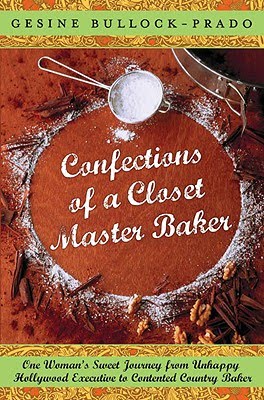
Confections of a Closet Master Baker

One Woman’s Sweet Journey from Unhappy Hollywood Executive to Contented Country Baker
by Gesine Bullock-Prado
ages: adult
First sentence: “I saw the devil at age three and he gave me chocolate.”
Support your local independent bookstore: buy it there!

I needed something light, something foody, something not-YA, yet something interesting, and when Andi reviewed this, I knew that this had to be my next book. And, thankfully, it was everything I wanted it to be.

One part memoir of a childhood, one part food-lover’s delight (including recipes!), one part Hollywood insider (sans names, except for older sister Sandra, though), this book follows Gesine (pronounced Geh-see-neh) Bullock-Prado’s path from high-powered Hollywood executive to the owner of Gesine’s Confections in Montpelier, Vermont. It’s not a comfortable journey; baking increasingly becomes self-described social misanthrope Gesine’s obsession before she left Hollywood, and the store had some fits and starts before becoming a smoothly operating business. And the book isn’t exactly even either: told in hour increments mirroring the arc of Gesine’s day, it’s often uneven, sometimes telling the same stories more than once, and often the lack of chronology in the stories is quite jarring.

But, given that, Gesine’s a likable person and, Hollywood gossip aside, it’s an interesting story. She grew up in Germany and with her descriptions of food and customs and traditions, made me long to visit there again. I know I have to try every single recipe (well, not the carrot cake) in the book. It was comforting to read about of someone who adores baking, someone who finds satisfaction in creating something delicious to eat. And, no, it’s not the best-written book ever, though she is often funny, sometimes sentimental, and occasionally wandering, you can’t help but love her and want to sit down with her, eat something delicious and chat a while.

Which, I’d like to think, is what she wanted you to think when she wrote this book.

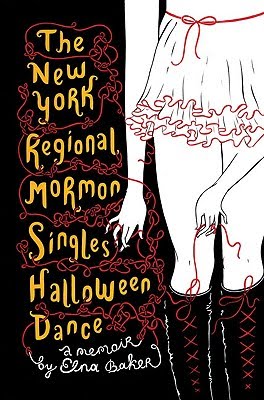
The New York Regional Mormon Singles Halloween Dance

by Elna Baker
ages: adult
First sentence: “I am at the New York Regional Mormon Singles Halloween Dance.”
Support your local independent bookstore: buy it there!

This book was: Sometimes funny. Often self-indulgent. Also, quite pretentious. But then, what memoir written by a 27-year-old isn’t?

I found Elna to be: overly obsessed with her body. And overly obsessed with finding a boyfriend. The first, I find worrisome, which probably says more about me and my reaction to our culture than it does about her. She loses 80 pounds, starting at 250, and is obsessed with controlling her weight. She doesn’t dwell on her obsession with her body, but it comes out; and when she does, she has justifications for it. From the “pretty points” to her eventual decision to get plastic surgery; I’m trying not to judge (it’s not my life, after all), yet finding myself concerned that a person would do that to their body. On the other hand, the second — the boyfriend (though not marriage) — made the feminist in me growl. I’m a hypocrite, though: when I was single, I rarely went without a boyfriend. And I did the “right” thing and got married at age 20 — almost 21! — to another member. Still. Her quest to find the “perfect”, “right”, “best” man drove me bonkers. I wanted to shake her and say that there is no perfect, right, best (I almost cheered when her mom told her that), and that perfect, right, best is what you make of it not what you find.

In addition, I have no idea who would read this book. It’s not written for Mormons, specifically; she goes through pains to describe our beliefs, not in excruciating detail and not everything, but enough to get her points across. That, and I’m sure there are many members of our church who would judge her much more harshly for some of the decisions and choices she makes. And yet, I’m not sure what the appeal of the book would be to a person not of her faith. Yes, it’s a general coming-of-age discovery story, but it’s one seeped in Mormonism — faith, practices, customs. Yes, it’s kind of a wink-wink look: like she’s saying “look at us Mormons! Aren’t we so silly?”, but at its heart it’s a thoroughly Mormon book. Perhaps others are interested in it — for curiosity’s sake — but I wonder if they’ll connect with the book or if they’ll just find it an oddity.

But… there was something in her story, in her journey that I found fascinating. Not just because I’m Mormon, though that’s part of it, partially because I can empathize with her inner spiritual life, her doubts and questions. And, yes, partly because Elna’s is an interesting, if pretentious and self-absorbed, journey. She’s lived a fascinating, unusual (privileged, yes) life, and she can be a funny and observant writer. Even if, in the end, the book was only just okay.

Marching for Freedom

Walk Together, Children, and Don’t You Grow Weary
by Elizabeth Partridge
ages: 10+
First sentence: “The first time Joanne Blackmon was arrested, she was just ten years old.”
Support your local independent bookstore: buy it there!

I’m sure this was on my radar before SLJ’s Battle of the (Kids) Books began, but the decision of Gary Schmidt prompted me to delve into it.

And he’s right: it’s a remarkable book.

It’s the story of the Selma, Alabama marches in 1965 as told through the eyes of the children and teenagers that were involved. Partridge’s words and photographs from the time paint a vivid picture of the stories of these children, their parents, and the general plight of African Americans in the south before the mid-60s. The sacrifice that these people made to get what many people now take for granted is awe-inspiring. Sure, the civil rights leaders show up — Dr. King, Rosa Parks, among others — but the real heart and soul of the book are the children that faced the billy clubs, cattle prods, tear gas, and were consistently arrested and rearrested. It’s enough to bring one to tears.

Honestly, two thoughts kept going through my mind while I was reading. First was that I think that this book couldn’t come at a better time. Sure, it was 40 years ago, but I think we need to constantly be reminded of, and remember to teach our children about, the sacrifices that were made. I think — and this just may be me talking — that we tend to become apathetic about what we have, and forget all the people that worked to make it all possible.

Second was that if I wasn’t a voter, I’d be very ashamed. In fact, the next time someone tells me they don’t vote, I’m going to hand them this book. It’s a right, it’s a privilege, and — dang it — we should take advantage of that.

Enough soapbox. The book really is worth your time.

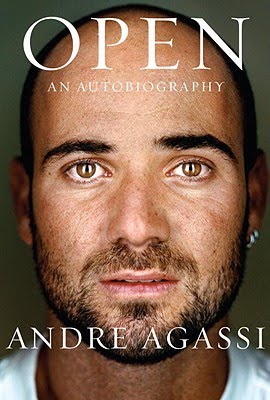
Open: An Autobiography

by Andre Agassi (with help — credited in the acknowledgments — from J. R. Moehringer.)
ages: adult
First sentence: “I open my eyes and don’t know where I am or who I am.”
Support your local independent bookstore: buy it there!

I’m a sucker for memoirs, especially well-written ones by interesting people. I was doubtful — at first — that this one would be well-written, but was game to read it anyway: I’ve adored Agassi for years. And I was pleasantly surprised: while the writing style took some getting used to (there’s conversations, but no quotation marks, which bugged me at first), thanks to the help of Moehringer, this book was honest– almost brutally so — and interesting.

It’s basically Agassi’s story about his relationships: with tennis, with his father, with the women in his life, with his trainers and coaches, with himself. It’s not an easy road: he was (you get the impression, by the end, that he isn’t anymore) a very tortured individual. He was often depressed, conflicted, unsure of himself. You would think it would be a very depressing book, a harsh read, and yet it’s not. Partially that’s because it’s fascinating (I thought, anyway) to see Agassi’s tennis career from his point of view. It’s interesting to see the inner conflict between his hatred of the sport and the fact that he had this natural talent for it. It’s interesting to see his career ups and downs from his point of view — like how much losing to Pete in Slam finals really ate at him, and how much winning the 1999 French Open meant to him. He breaks down most matches he played, talks about the men he played against (dislikes Connors, loathes Chang, and hates Becker; respects Borg, Federer and Sampras), and talks about what’s going through his mind. I found it interesting to see the game from the inside (even if it was tortured), to get a feel for what goes on in the head of a player on the court. Fascinating stuff.

But, what really made the book for me was when he finally got to his relationship with Steffi (he calls her Stefanie, since that’s what she prefers, which I think is really sweet) Graf. She’s a running theme through the book, an aside here and a mention there (I wonder if it really happened that way, or if he’s just remembering it that way because he loves her), but his recollection their first “real” meeting (they met in 1991 and 1992, and she brushed him off) in 1999, before the French Open, is so incredibly sweet, you can’t help but smile. And for the rest of the book, the tone changes: he’s a better man because of her. (Well, that, and he finally realizes that doing something for someone other than yourself is a helpful thing; he’s so incredibly proud of the school he’s helped build and the good its doing.) Maybe he’s not a better player — he still wins some and loses some — but he’s less conflicted, more sure of himself.

I’m not sure if your average reader would like this book, though. It’s for fans of Agassi, of tennis. But for us, it’s fantastic.

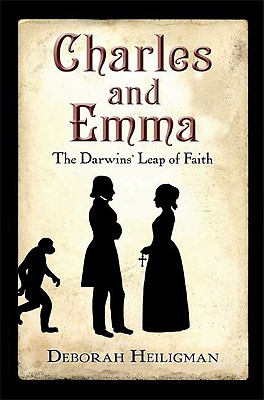
Charles and Emma

The Darwins’ Leap of Faith
by Deborah Heligman
ages: 12+
First sentence: “In the summer of 1838, in his rented rooms on Great Marlborough Street, London, Charles Darwin drew a line down the middle of a piece of scrap paper.”
Support your local independent bookstore: buy it there!

I’ve read a couple of books on Darwin and his theory — not enough to consider myself in any way an expert (or even incredibly interested) — but this one took an approach that intrigued me. It’s not so much about Darwin, his history and his theory, as it is about Darwin and his relationship with his wife, Emma, and their constant tension between her belief in religion and his belief in science.

It’s a fascinating story — the ebb and flow of their relationship, anchored in their love and respect for each other, as well as respect for their philosophical differences. It’s fascinating because it humanizes Darwin (he’s too often demonized!), as well as puts his evolutionary theory in context with his life and the times. The book isn’t preachy: both religion and science are given fair time, and its possible, I think, to see how the two could compliment each other, as Charles and Emma did. Most of all, though, I think it champions free-thinking, accepting differing opinions as just that: differing opinions. I think, too often, that we forget that people can still be likable, even if we disagree with them strongly. And this is a story of two people who disagreed and yet loved each other.

On top of that, the book is really very well written. It’s aimed toward a younger crowd, and so was a bit simpler and choppier in areas than I would have liked. But, if it gets young people interested in Darwin, and gives them a reasonable base for the study of evolution and science, then it’s done its job. And, the fact that it’s an interesting story is just an added bonus.