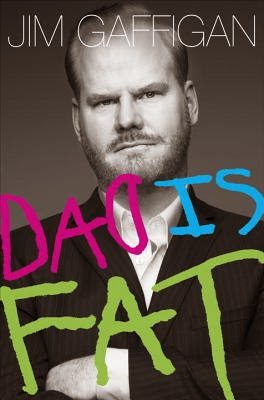
Audio book: Dad is Fat

by Jim Gaffigan
read by the author
Support your local independent bookstore: buy it there!
Content: Some mild swearing (like, less than a dozen times) and it’s all about parenting, so I’m not sure how many kids would be interested. It’s in the humor section at the bookstore.

Jim Gaffigan is a comedian (whom I hadn’t heard of) and a father of five kids. In New York City. He lives in a two-bedroom apartment in a five-story walk-up. And as you can imagine, all this leads to an immense amount of hilarity, most of which he turns into comic gold. (Well, not gold, really.)

Like most comedians (and humor really), it’s really quite subjective. This one tickled my funny bone, partially because I could relate to it (one tweet I sent out: “So true: ‘When children see animals in captivity, it makes them want ice cream.’ – Jim Gaffigan), perhaps because I have nearly as many kids as he does. And partially because he’s honest about himself and his abilities as a parent. I want to sit down with him, swap horror stories, and say, “Yeah, I think I suck at this parenting gig, too.”

I’m not sure I would have liked it if I had read it, but Gaffigan is a terrific narrator of his own material (see: stand-up comedian), and I often found myself guffawing (yes, I do guffaw) along with his hilarious and often ridiculous (see: five kids in NYC) stories. As I was telling a friend of mine: there’s nothing like listening to the war stories of someone who’s got it more challenging than you to make you feel good about your life.

And this was a thoroughly diverting ego boost.
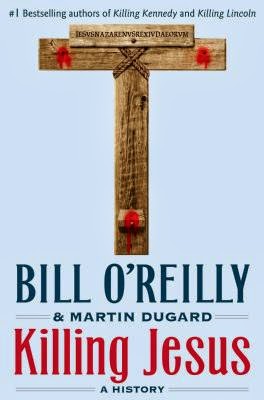
Killing Jesus

by Bill O’ Reilly and Martin Dugard
First sentence: “The child with thirty-six years to live is being hunted.”
Content: It’s “history” (or at least vaguely historical) so there’s some talk about sex, and it’s violent. But I suppose anyone who wants to read it, no matter how old, will. (I also suppose, given what he’s done in the past, O’Reilly will make a kids’ version of this.)

I am not a Bill O’Reilly fan (at. all.), and that may have influenced how I thought about this. I should probably also say that I’m coming at this from a curiosity about the history surrounding Jesus, but an extreme lack of knowledge. I do know some, after reading Zealot, but I’m no Biblical scholar. In that way, I’m like most of O’Reilly’s readers.

But I just couldn’t deal with this book.

It wasn’t the subject matter: I’m pretty familiar with the life of Jesus, and even if I’m not a Biblical scholar, I do know about the history, both the Biblical version as well as the scholarly version. And I picked this up because right now I’m interested in learning the life of Jesus. But there was no scholarly information to be had. While this followed the life of Jesus, and brushed with history, it lacked the scholarship. There were no source notes for the chapters (there were some source recommendations, but nothing cited), and the footnotes were barely explanations of Hebrew terms. That, combined with their use of B. C. and A. D. (instead of the more scholarly BCE and CE) served to make me distrust what the authors were writing.

Which brings me to my second critique: the book was written in the present tense. Perhaps they meant to do this to lend a sense of immediacy to the history, but all it did was tick me off. But sentences like “The Son of God thinks himself immortal.” and “‘You brood of vipers,’ John screams at the Temple priests who have come to the river to question him. and “But nothing matters more than silencing Jesus.” just made me cringe. It’s bad writing. It’s presuming an authority that doesn’t exist. And it’s just lame.

So, about halfway though I’d had enough, and bailed on it.

I’m still interested in the life of Jesus, and there are other books out there still left to read.  Hopefully, they’ll be better.

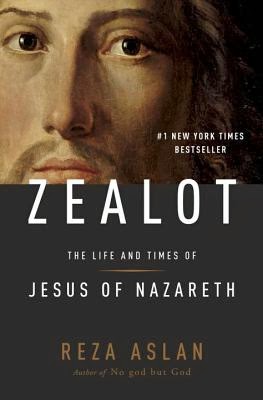
Zealot

by Resa Aslan
First sentence: “When I was fifiteen years old, I found Jesus.”
Support your local independent bookstore: buy it there!
Content: There really isn’t anything objectionable. I think the issue here is content. Again, nothing questionable, but Aslan is a scholarly writer, and so the reading ability will match that. It’s in the thought/religion section at the store, but it’s more history than anything else.

I’ve had my eye on this one for a while, since it came out. But it was only on a prompting from a friend that I finally stuck it on my library hold list and picked it up. Having only ever read one other Aslan book (No god But God) and that being years ago, I don’t know what I expected.

Whatever that was, it wasn’t a historical look at the man Jesus of Nazareth and how (historically) he came to be Jesus the Christ. I should say going in that there are other, better reviews of this one out there, as well as criticisms of both Aslan’s interpretation and presentation of what little data there is.

I am not a Biblical scholar (duh), and I’ve not really been interested in Biblical scholarship. (Hubby, on the other hand, is: most of the points I brought up as new to me, he’d already heard of.) I know that those who are have found this one reductive, but I don’t think Aslan was writing for the scholarly audience. Rather, he was writing for people like me: curious individuals who didn’t know much about Biblical history but were interested in what he had to say.

And I found what he had to say to be, well, interesting. Although he uses a mishmash of scholarship  — relying on the gospel of Mark mostly as well as Roman history from the time period — he presents his thesis — that Jesus of Nazareth was someone who wanted to overthrow the Roman rule of Jerusalem — in a way that, while it doesn’t challenge Christianity as a theology, challenges the idea of the Bible as a historical document. Which makes sense, if you think about it; having been translated and passed down and retranslated, it’s probably not a history of Jesus as a person. I’m not sure if Aslan’s book is, either, but it tries to put Jesus in a historical setting. And, with that at least, I think it succeeds.

Did I like it? Well, I was interested in it. And it made me think. And I learned things I didn’t know, though after reading some scholarly reviews of this, I’m not sure how accurate the things I learned are. But, I’m not sure that boils down to “like”. It was an interesting reading experience, which may be the best I can hope for.

From Scratch

Inside the Food Network
by Allen Salkin
First sentence: “Before there was a Food Network, there was no Food Network, or even a world in which it was obvious that there ought to be a Food Network.”
Support your local independent bookstore: buy it there!
Content: It’s a non-fiction book, so there’s that. And people don’t always talk nicely, and Salkin didn’t do anything to prettify it, so there’s a lot of swearing, including f-bombs. It’s in our film/TV section of the bookstore.

I picked this up because I have watched Food Network in the past (back when I lived in Mississippi and Arkansas) and I was, well, curious to see what Salkin had to say about the behind the scenes goings-on at the network.

The thing is: this wasn’t. Not really. It was a little bit: there were stories of how Alton Brown and Rachel Ray and Paula Deen and Emeril and Bobby Flay all got their shows, but it was more the story of the network as a whole.

Which means there was an awful lot about the whole business of the network. Getting it started, ad revenue, selling it, CEO changes, programming…. all of which is behind the scenes and dishy, but none of which I was interested in.

So, in truth, I actually ended up skimming this one, looking for the “good” bits (read: the stuff I was actually interested in), and then just kind of petering out near the end. I guess I wanted more gossip. (I suppose that say something about me.)  It wasn’t a badly written book, and I think someone who is interested in the business of television, or is interested in the Food Network and doesn’t mind the business of television would actually really like this one.

That someone just wasn’t me.

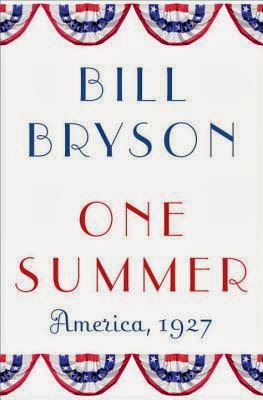
Audiobook: One Summer: American 1927

by Bill Bryson
Read by the author
Support your local independent bookstore: buy it there!
Content: It’s popular history. And because of that, there is talk of sex and some swearing (maybe 4 or 5 f-bombs). It’s adult-oriented, but I’m sure an inquisitive high schooler could read it.

I adore Bill Bryson. Sure, he’s a former journalist and a popular historian, but he comes at history in such unique ways that I can’t help but love him. Rather than Another Dry Biography of any of the people he talks about in this book — Charles Lindberg, Babe Ruth, Jack Dempsey, Al Capone, Calvin Coolidge, Ruth Snyder, Niccola Sacco and Bartolomeo Vanzetti, among others — he realized that talking about a summer, the summer where everything seemed to gel, would be so much more interesting.

And he was right.

He had me enthralled from the prologue when he talked about the failed attempts at flying across the Atlantic in the early 1920s. And he kept me enthralled (for the most part; I did tune out the banking parts) for the whole of the entire book. (Granted, that may be because I listened to it, and I love listening to Bill Bryson read his books. Kind of like Neil Gaiman.) It was chock full of trivia (the one thing I remember is that the summer of 1927, Memphis had the highest murder rate in the country, not Chicago), sure, but also of insightful passages. (I would quote them, but again: audio book.) That’s one of the things I love about Bryson; the way he throws in asides and commentary about his subject, but you never quite feel he’s being didactic. Snarky, yes. But didactic or preachy? No.

One of the things that I kept thinking as listened is just how much history repeats himself. And how much we ARE. Racism and trying to block immigrants? Check. (Except it’s south of the border and Middle East rather than Ireland, Italy, and Jews.) Banking bubble because politicians won’t regulate it? Check. I’m sure there are others, but (audio book, dangit!) I can’t think of them right now. I’d say everyone needs to read this for that reason — so we can grow and change and become better — but really? Read it because it’s Bill Bryson and it’s fascinating and a lot of fun.

You won’t regret it. Promise.

Blue Plate Special

by Kate Christensen
First Sentence: “Often, whenever I come up against anything painful or difficult, my mind escapes to food.”
Support your local independent bookstore: buy it there!
Content: There are other issues, but mostly, lots of f-bombs (didn’t count).

I’m going to spare you this review and tell you what I think straight up: much like Vizzini, this book is not what Christensen (or I) thought it was. It says, right there on the cover, “An Autobiography of My Appetites.” And I thought: “Oh good! Food book!” Even though Christensen threw me a bone in the form of a recipe every once in a while (though honestly: BEAN BURRITOS), this had none of the hallmarks of a food book (except said recipes): luxurious, descriptive, evocative passages about the food and the eating experience.

What it was, however, was a very long, very involved, very sordid, very blunt telling of Christensen’s very messed-up life. It’s the epitome of tell-all: she Told it ALL, from her father’s abuse of her mother to her very horrid first marriage. I read the whole thing, though I often wondered why. (Actually, I knew why: it was one of those books that I kept hoping would get around to being what I Wanted It To Be, but never did. Those are the WORST KIND.) I wondered what the point was, because even though Christensen led an adventurous life, the book version of it was anything but interesting. I don’t know what her purpose was: to make us feel sorry that she never appreciated anything? To purge all her secrets so that she can make a fresh start? Whatever it was, all I got was annoyed: annoyed that she was going amazing places and not Taking Advantage. Annoyed that she spent her 30s drunk and unhappy. Annoyed that I picked up this stupid book in the first place.

The writing wasn’t even lyrical, or evocative. It was boring on a sentence level. Which makes me wonder about her novels, which I’ve never read. But then again, a person may be able to write a novel, but not manage to be evocative about a picnic in Italy. I think I’ll go find some Frances Mayes as a counter balance.

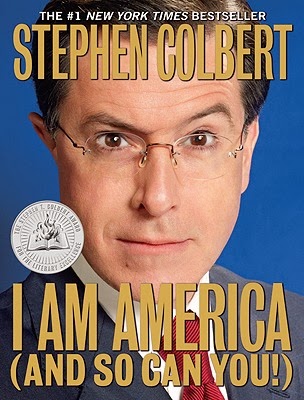
Audiobook: I am America (And So Can You)

by Stephen Colbert
read by the author
Support your local independent bookstore: buy it there!

I picked this up on a whim because I needed something short, and I was in the mood for something funny. And, even though I’m not a fan of his show, I had hopes Colbert would be both.

Well. It was short, anyway.

As for the funny, sometimes it was. There were moments — I can’t remember them now, though — when I did chuckle, guffaw, and few when I snorted. But, mostly I had to constantly remind myself that he doesn’t mean any of this. I’m not quite sure if this was a parody of or a commentary on conservative thinking, but either way, I spent a good part of the time thinking “What’s the point?”

If his point was commentary, then sometimes it was brilliant. Sometimes, he went on rants that I thought worked if you heard (in this case) them ironically. And sometimes, I thought that it was a terrific parody of conservative culture. But — perhaps like all good parodists (is that a word?) — it was uneven. Sometimes it worked. Mostly, though (and this is because humor is really subjective), it didn’t work for me. Every time I found myself ticked off or agreeing with something Colbert said, I had to remind myself he doesn’t mean ANY of it. Or if he does, it’s so hard to filter what’s “real” and what isn’t that I just gave up.

I did come to one conclusion, though: give me Jon Stewart and I’m a happy person.

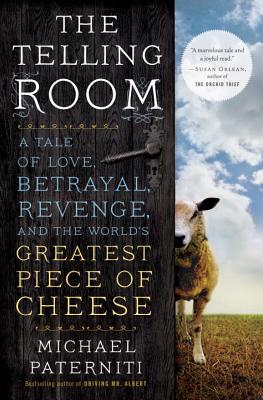
The Telling Room

A Tale of Love, Betrayal, Revenge, and the World’s Greatest Piece of Cheese
age: adult
First sentence: “This particular story begins in the dusky hollows of 1991, remembered a rotten year through and through by almost everybody living, dead, or unborn.”
Support your local independent bookstore: buy it now!

This tale — and it is, in many, many ways a “Tale” — begins in my hometown of Ann Arbor, Michigan, with a University of Michigan masters writing student. He needed a job, so he picks up one as a copyeditor for the Zingerman’s Deli newsletter. There he is introduced to Ambrosio Molinos and the Páramo de Guzmán.

And he — the author — is enthralled. Ambrosio is larger than life. Guzmán is charming. So much so that Paterniti moves his family there for a year. And the cheese… well… by the time Paterniti gets to Spain, the cheese doesn’t exist anymore. See: Ambrosio had a good thing going. He dreamt of, and made by all accounts, a brilliant sheep cheese. It won awards. It got the attention of the king, of international buyers. But. Things went south. Ambrosio said it was his best friend, the lawyer Julián who betrayed him. He sold the business out from under Ambrosio, leaving him destitute.

Except, while that makes a good Story, the truth is so much more complicated than that.

One of the things that made this story so fascinating for me was that Paterniti was so caught up in it all. This book took 10 years for him to write, mostly because he didn’t want to believe Ambrosio’s story could be wrong. He wanted to believe that Ambrosio was a Real Thing, that his ideal of Rural and Simple could work. And it took a long time for him to be able to step away from it and see the big picture. But, as he writes about Abrosio, Guzmán, and his own personal journey, you can’t help but get caught up in it all as well. It’s a layered story, with many diversions (my only real complaint is that the footnotes would sometimes get in the way of the story), side roads, and interesting people along the way. It’s a great story.

And a great book.

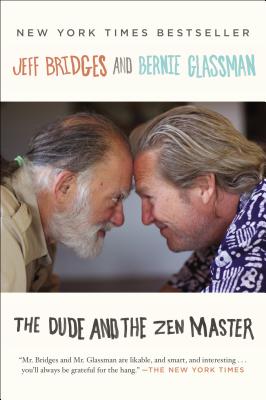
The Dude and the Zen Master

by Jeff Bridges and Bernie Glassman
ages: adult
First sentence:
Support your local independent bookstore: buy it there!

The thing I like most about this book — and what drew me to it in the first place — is the title. I liked that they’re playing off of The Big Lebowski and Jeff Bridge’s role in it. I like the thought that the Dude is a Zen master. I also like the idea of Jeff Bridges as the Dude and the Bernie Glassman is a Zen master.

I don’t know what I really expected from this book. It is exactly what it claims to be: a conversation between Jeff and Bernie. Nothing more.

And that’s where the problems lie. Although we get a bit of history about Bridges’ life — his childhood, his marriage, his acting — it’s mostly just a long, winding conversation about whatever strikes the fancy of these two men. Which is interesting, for the most part. They riff (best word, that) on Zen, The Dude, Buddhism, acting, activism, love, music, politics.

What it’s not is linear. And (for me at least), that mattered a great deal. I think they tried to have everything tie into something Meaningful, but it just didn’t work as a whole. So, I took to reading it in small chunks. Which made it work better. I’d read until I got tired of their circular discussion (and honestly, of Bridges: he talks a lot — either that or Bernie is just a great listener — and he doesn’t always make sense) and then put the book down for a few days.

In the end, it wasn’t what I’d hoped it would be. It wasn’t bad, but it wasn’t terrific either. I’m going to be Zen about it though, and just accept it and move on.

It’s what they would have wanted.

Mama Makes Up Her Mind

And Other Dangers of Southern Living

by Bailey White

ages: adult
First sentence: “The other day Mama made up her mind she wanted some smoked mullet.”
Support your local independent bookstore: buy it there!
This one, generally speaking, has everything I want in a book: short, personal essays with Southern flavor. But, perhaps for the same problem I have with David Sedaris, I didn’t find it funny.
I  wanted to: Bailey White, first grade teacher and unmarried woman living with her eccentric mother, is a good writer, and the stories she tells were pretty outrageous. The sort of rural crazy that you really only see down South. But, while I enjoyed some of the stories the — the bit about the wildflower garden was my favorite, as was her stories about cleaning out her mother’s house — I never really laughed.
Maybe I was expecting too much, hoping for hilarious when all I got was amusing. I’m not sorry I read it, but it’s also not something I’d want to read again.