The Truths We Hold

by Kamala Harris
First sentence: “Most mornings, my husband, Doug, wakes up before me and reads the news in bed.”
Support your independent bookstore: buy it there!
Content: It’s pretty policy-heavy. It’s in the biography section of the bookstore.

I picked this one up over the summer mostly because I was interested in what her story was. I didn’t get around to reading it until right after the election, when I figured that because she was going to be Vice President, I really ought to learn more about her.

Granted, reading a memoir that was mostly likely written because she was considering a presidential run isn’t the most balanced way to get information about a person. That said, I am interested in people’s stories and how they see themselves. Looking at it that way, I learned a few things.

1: Kamala really is her mother’s daughter. She rarely, in the book, talked about her father — he as a presence in her life for the first several years, but after her parents divorced, he was out of the picture (at least narratively). You can tell, as a reader, how much Kamala admires her mother, and how much she relied on her advice, and how big a loss it was when her mother passed away.

2: Although her mother was South Indian, Kamala and her sister were raised as Black women. They lived in a heavily Black neighborhood in Oakland, CA, during the late 1960s and 1970s. Her mother was involved in the Civil Rights movement and exposed her daughters to many of the leaders at the time. Kamala grew up around passionate Black women who not only believed in justice, but had each other’s backs as often as they could.

3: Kamala works hard. And she cares. Maybe sometimes her polices are a bit misguided (not that she would admit that), but I think they come from a good place. She wants justice and a better life for people. She wants to reform the justice system, but she also wants to try and stem off the things that lead people into the justice system. Maybe she doesn’t have the best ideas to do it, but she is willing to listen, to put herself into situations that allow her to listen, to advocate, and to do the work. I can respect that.

So, not, it’s not a brilliant narrative, and she’s not the most lyrical writer. But it was still good to read.

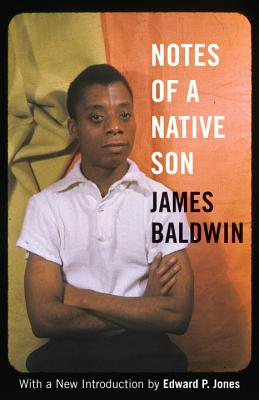
Notes of a Native Son

by James Baldwin
First sentence: “I was born in Harlem thirty-one years ago.”
Support your local independent bookstore: buy it there!
Content: There is some use of the n-word. It’s in the Biography section of the bookstore.

This is one of Baldwin’s earliest books, a series of essays reflecting on his life, thus far. I was published in the 1950s, and is really a product of its time, with the use of Negro and just the language in general.

Which means, I wanted to like it more than I actually did. I think the two best essays in the book are “The Harlem Getto”, a series of reflections after Baldwin’s father passed away, and “Equal in Paris” which is Baldwin’s experience on being arrested in Paris (for being an accomplice to steeling a sheet). Both are introspective and interesting. The rest, if I’m completely honest, I mostly skimmed.

Read The Fire Next Time. It’s the better book.

Dear Fahrenheit 451

by Annie Spence
First sentence: “Dear Reader, Welcome to Dear Fahrenheit 451.
Support your local indpendent bookstore: buy it there!
Content: There is some mild swearing and about a half-dozen f-bombs. It’s in the Literary Reference section of the bookstore.

This is really exactly what the cover says it is: a series of letters that Spence, a librarian in a suburb of Detroit, wrote to a bunch of different books. Some are to ones she loves, some to ones she’s weeded from the library (“The One-Hour Orgasm” is the best one of these), some about books she’d recommend to people (like her husband, a non-reader). I can tell, from reading the book, that she and I absolutely do not have the same taste in books. That said, it was still entertaining reading her little notes to the books. (That said, I skipped all the reading lists in the back for that exact reason.)

It’s not deep, but it is fun. And especially good for bookish readers.

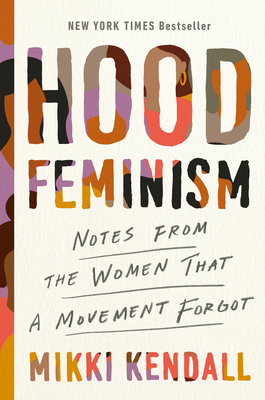
Hood Feminism

by Mikki Kendall
First sentence: “My grandmother would not have described herself as a feminist.”
Support your local independent bookstore: buy it there!
Content: There is some mild swearing. It’s in the Sociology section of the bookstore.

I’ve had this one on my pile for several months; probably since soon after George Floyd was murdered and I became more invested in reading books by Black (and other POC) authors. I also consider myself a feminist, so I figured this was a good merging of the two interests.

What it is is a series of essays by Kendall, where she reminds feminists — specifically (mainstream) White Feminists — that while the issues they’re fighting for — equal pay, reproductive rights, misogyny etc — are all fine and good, if they don’t think about the issues that are affecting women of color, then they’re not *truly* being feminists. Issues like housing and food availability, gun violence and single parenting. Things like making sure Black (and other POC) women are included in the conversation, and reminding White women that just because they’re oppressed by men doesn’t mean they can’t turn around and be oppressors as well.

No, it’s not an easy read. Kendall admits up front that she’s not out to be nice or polite. She’s is out to speak her truth (she grew up in the inner city, her first marriage was abusive and she admits that she had privileges that allowed her to get out of both situations and achieve a middle class-adjacent life, in her words) but also the truth for women, specifically Black women, who are not given the opportunity to speak.

But it’s an important read. It’s important to remember that the charity work we do is good but not enough if the government is taking away housing opportunities and punishing poor people for being poor. It’s a reminder that, as a White woman, I need to listen the voices of my BIPOC sisters and not just barge in there thinking I have the answers.

It’s definitely a book I will go back to and would love to discuss with others.

Audio book: The Color of Compromise

by Jemar Tisby
Read by the author
Support your local independent bookstore: buy it there!
Or listen at Libro.fm
Content: There is descriptions of violence done to Black people and use of the n-word. It would be in either the Sociology section or Religion section if the bookstore carried it.

This book is the history of chattel slavery in the United States, but as seen through the lens of Christianity. So, on the one hand: there wasn’t much new for me to learn about slavery that I hadn’t already learned from Stamped from the Beginning. But the part about Christianity was fascinating. See, white Christians have always bee complicit in slavery, in Jim Crow laws, in racism. There’s no way around it. If we consider the United States a Christian nation, if there were God-fearing people who owned slaves; who owned people; who discriminated against Blacks; who, say, in the example of my own church, refused to give them equal standing as white men and women; then, Christians have always been complicit in the oppression of Black people.

And that’s a hard realization. It’s so easy to think of the oppressors as “other”, but as Tisby points out, even if Christians were not actively acting as slave-owners or KKK members (and some were) the Silence of the church as a whole (and many, many members) gave tacit approval to the systemic oppression. By not speaking out against it, by not working to fight against it, they were, by default, for it.

Although Tisby gives suggestions on how to fix the problem of Christianity’s complicit behavior in anti-Black racism, I’m not sure what I can do systemically. I do know I am working on the racism – both implicit and explicit — in my life, working to enlarge my circle and my point of view. And to remember that we are all God’s children, even if the system doesn’t behave like we are.

Women Who Run With the Wolves

by Clarissa Pinkola Estes
First sentence: “Wildlife and the Wild Woman are both endangered species.”
Support your local independent bookstore: buy it there!
Content: There’s frank talk about bodies and sex. I have no idea where this would be (Self-help, maybe?) if the bookstore had it.

I came across this book in an article for the last class I took, and I thought it sounded interesting.

How it came off 25 years after publication was a lot of heteronormative, new-agey, psychobabble nonsense. Estes takes a fairy tale — generally from another culture, but we’ll give her mid-90s self a pass on that — and then deconstructs it to help explain why society has trapped the Wild Woman inside of women and how she needs to be freed. Now don’t get me wrong: I agree with the premise. Society HAS trapped women into gender roles and norms that are not just harmful for women but for men as well. However, I’m not sure that this was the best way to communicate it. Well, maybe it was in 1995. But now it just seemed very very dated.

And so I ended up skimming and skipping a lot. I did enjoy her tales; some of them I had heard before but many I had not. But the rest of it? Well, there are always self help books about finding your inner wildness. Maybe read one of those instead.

Audio Book: Untamed

by Glennon Doyle
Read by the author
Support your local independent bookstore: buy it there!
Or listen on Libro.fm
Content: There are several f-bombs as well as some mild swearing. There is talk of addiction. It’s in the Biography section of the bookstore.

Sometimes a book comes into your life at the right time. I picked this one up to fill out a category in the #ReadICT challenge — everyone’s reading it (or they were back in March, but who’s keeping track?) — and got something completely unexpected and absolutely needed.

I have heard of Glennon Doyle, but never read any of her work, so I was going into this blind. In a series of short essays (some longer than others), the book is essentially the story of her falling in love with a woman, divorcing her husband, and building an entirely new life. But it was about more than that: it was about taking back ownership of your decisions, your life, your feelings and not being “caged” by anything, whether it be society, religion, yourself. It’s a hard thing, being true to your own truest self. It’s much easier to lean on other people’s beliefs and perceptions of you. It doesn’t require the work of figuring things out for yourself. And I think that’s something I needed to hear right now.

I appreciated the humor of the book, the thoughtfulness, the encouragement. I adored Doyle’s honesty and forthrightness, and her willingness to be true to herself at all costs. She sounds like an imperfect but utterly remarkable woman. Doyle is also a good narrator, and I’m glad she read this one; it made it that much more personal.

I’m not sure this is a book for everyone, but I really enjoyed listening to it.

Black is the Body

by Emily Bernard
First sentence: “This book was conceived in a hospital.”
Support your local independent bookstore: buy it there!
Content: There is swearing, including a few f-bombs. Also, an entire chapter is devoted to teaching and talking about the n-word. It’s in the biography section of the bookstore.

This has been on my radar for a while; everyone — well, all my coworkers — said it was a really good exploration of one person’s experience as a Black woman moving through White spaces.

And it was that. Bernard grew up in Nashville, but went to college at Yale, and teaches in Vermont, so she is often the only (or one of the only) Black people in a space. In this series of essays, she explores what that means. She talks about an act of violence she experienced, the adoption of her daughters, her relationship with her White husband, and tells the stories of her mother and grandmother’s lives.

It’s an interesting book, one that is very personal to Bernarnd’s own experience. She doesn’t pretend to have answers, but does ask a lot of questions about how White people treat and react to Blacks. It was worth a read if only to think about how I am reacting to others.

That, and it’s a series of personal stories, which I always enjoy. So while this was not my favorite book about race, it was a good book. Because everyone’s perspective is worth hearing.

Audiobook: Wandering in Strange Lands

by Morgan Jerkins
Read by the author
Support your local independent bookstore: buy it there!
Or listen at Libro.fm
Release date: August 4, 2020
Content: There is some swearing including a few f-bombs and the use of the n-word. It will be in the biography section of the bookstore.

Morgan Jerkins is a writer, but she’s also the daughter of a New Jersey woman and a North Carolina man. The central question she grapples with in this book is this: how has moving away from her families’ roots in the South (after slavery, but mostly during the Great Migration) affected their connection to the land, to their communities, and to each other? She explores this question by visiting South Carolina and talking with and trying to understand the histories of the Gullah people there. She heads to Louisiana to talk to Creole, and to Oklahoma to explore connections between African American freed slaves and the Cherokee nation. And she finally heads to Los Angeles. Through all this, she unearths her family history and stories, as much as she can, and that it was White Supremacy and Institutional Racism that was the driving force for much of what her ancestors experienced.

A friend once told me that you can talk statistics and data at people, but it’s the stories that really matter. And this book brings that home. Yes, I knew there was (and is) Institutional Racism and white people were (and are) discriminatory and prejudiced against black people to the point that they want to push them out. But, hearing Jerkins’ stories gets that point home in a way data just doesn’t do. It also reminded me of the importance of knowing where you’re from and knowing your family’s stories. (I have been very bad about passing this on to my children.)

It’s an interesting story, and Jerkins is an interesting narrator to guide the story along its path. I’m glad I read it.

The Fire Next Time

by James Baldwin
First sentence: “Dear James: I have begun this letter five times and torn it up five times.”
Support your local independent bookstore: buy it there!
Content: There is some mild swearing and use of the n-word. It’s in the sociology section of the bookstore.

This is two essays — or one essay and a letter to Baldwin’s nephew — on the state of being Black in America. In 1962. Short version: It wasn’t easy. And it’s a sign of my privilege that I am just now realizing two things: 1) that life for a Black person in the early 1960s was not an easy or enjoyable one and 2) that it’s not changed very much for very many people in nearly 60 years. That’s the thing that stood out to me most about this book: it’s still relevant. And it shouldn’t be. This book should never have had to be written. This book shouldn’t have to be still relevant. And yet, it was and is. And it’s a sign that I am a privileged person that I am just NOW realizing this.

I think I enjoyed this more than If Beale Street Could Talk, because I think Baldwin’s style is more suited to essays and rumination than fiction. He has a very thoughtful, lyrical prose style which I thought suited both the impassioned letter to his nephew (which brought to mind Between the World and Me) and his essay about his youth and experiences with the Nation of Islam.

It’s definitely an excellent book.