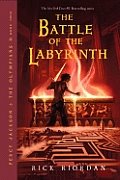
The Battle of the Labyrinth

Ohmanohmanohmanohman.

I wasn’t planning on reading this so soon, but I managed to “have” a reason to go to the bookstore on Tuesday, and picked it up for M who was DYING to read it. She (of course) devoured it after school, even forgetting dinner and even taking it to the church mother-daughter activity (I understood, though I think everyone else was a bit frustrated that she sat in the corner, reading…). When she finished it, she plunked it down on the table next to me and said, “I’m mad at Rick Riordan.” “Why?” I asked. She kind of sighed and said, “I just wish he’d write faster.”

Amen to that.

This one — if you haven’t read the previous three, then you’re just missing out — begins the summer after Titan’s Curse. It’s supposed to be a “normal” summer for Percy (ha!), but everything gets off on the wrong foot. He sets fire to the school he’s trying to get in to, meets up with an acquaintance from Titan’s Curse (wasn’t expecting that, but I’m glad), and (good news!) Annabeth is back, and leading a quest into the labyrinth, in order to save Camp Half-Blood. (The rest of the plot you’ll just have to find out by reading the book. Though I will tell you that my favorite chapter titles are “The Underworld Sends Me a Prank Call” and “We Play the Game Show of Death”.)

While it’s not as funny as Titan’s Curse, it does have its moments. And, like all the books, it’s incredibly action-filled. While there’s a lot of walking and talking and trying to figure out girls (poor Percy!), Riordan manages to include just enough action to make it fun. It’s not suspenseful in the way some books are, but Riordan does have a gift for writing action sequences that actually manage to actually convey action vividly, something I appreciate. That, and (I know I’ve said this before, but it’s the one thing that awes me every time) he really knows his Greek myths, and is incredibly creative in his uses of them. I love all the mythical characters, monsters and situations that Percy and his friends find himself in. And no matter how like Harry Potter it is (and while we were talking to Hubby — who hasn’t read any of the books — about it last night, I realized that it is very like the Harry Potter books), it has a fresh, exciting, gripping feel to it.

I wish Riordan could write faster, too… I’m anxious to know how the series ends!
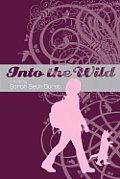
Into the Wild

Fairy tales are supposed to have a beginning, a middle and a happily ever after for the heroes and a bad ending for the witches, step-family, and other assorted “evil” characters. And that’s the way it’s always been, and no one’s really thought much about it.

Except for Sarah Beth Durst. The Wild, in her first book, is a living thing, a place where fairy tale characters are caught, trapped, forced, into living their stories over and over again. Until they escape, and Rapunzel becomes the guard of the wild. For five hundred years, everything is fine, and Rapunzel even has a child, Julie. Then one day, someone wishes the Wild free, and it begins taking over their town, trapping the characters (and other people) into endings and beginnings and it’s up to Julie to rescue her mom and save everyone from the Wild.

This was a fabulous book. I think I knew it would be; so many people have absolutely loved it. But it’s hard to convey in a review how wonderfully clever it is, how enjoyable it is to read. Durst takes every single fairy tale character and uses them in new and unexpected ways, making the old stories come alive again. I loved the struggle for free will and how the Wild uses character’s choices; I loved how Julie used the Wild against itself, in order to make it through her story; and I loved how endings and beginnings were used.

And the ending was so perfect. It was both unexpected (though I had an inkling) and made perfect sense.
I can’t wait to read the sequel. I hear it’s just as good (if not better).

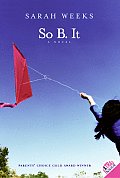
So B. It

I liked this book by Sarah Weeks. It’s a slight book, well-written, and at first glance, not that interesting or profound. Yet, it gets under your skin, and you feel for the characters in unexpected ways. Perhaps that’s why, a day after I finished it, I’m still thinking about it.

Heidi is a 13-year-old girl, living in Reno, whose past is a mystery. Her mom is mentally disabled, and can only say about 23 words. She calls herself So Be It. And 13 years previously, she shows up mysteriously with Heidi at Bernadette’s door. Bernadette is an interesting character, too: an older woman, who has agoraphobia, and therefore can’t leave their apartment. Heidi’s been home schooled by Bernadette, comfortable with her mother and her family, until… until she gets old enough to realize that she should have some sort of past. And to be curious about a word her mother only says: soof.

It’s a journey book — Heidi goes across the country to New York in search of answers. It’s a finding book — Heidi finding her past, and some answers anyway. It’s a loss book — there isn’t anyone in this book who hasn’t lost something. It’s powerful, in its own, slight, way. It’s one that stays with you for its humanity, for it’s love and for the journey that Heidi goes on.

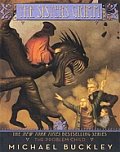
Sisters Grimm: The Problem Child

I have to admit: this series is losing a bit of its charm for me. Sure, C’s still enjoying it (and Hubby’s even been listening in), but I’m feeling like it’s getting a bit stale: the same jokes, the same cuteness, the same story. It’s suffering from the “series syndrome”: Buckley’s trying to give someone who picks up this book enough back story so the book makes sense, but in the process completely bores those of us who’ve read books one and two. I skipped paragraphs, pages even, of information that we already knew (C would say, “We know that, already. Skip it.”).

But… the story picked up about two-thirds of the way through. When Sabrina and their newly “found” Uncle Jake finally (mostly) give up whining and complaining and actually start doing something: finding the pieces of the Vorpal Blade so they can kill the Jabberwocky, but more importantly, cut a hole in the barrier so they can take Puck to the faeries because he got his wings ripped off by the Jabberwocky while he was trying to save the Grimm sisters. (Whew.) The taking Puck to the faeries is the fourth book, but the adventures they had to put the Vorpal Blade together (okay, I did like the way Buckley utilized Lewis Carrol in this book) were fun. We met the not-so-Little Mermaid, Baba Yaga and figured out who The Blue Fairy is (from Pinocchio; she’s the most powerful Everafter because she has the power to give life). The ending was even okay, mostly because while it was a bit of a cliff-hanger, it wasn’t nearly as suspenseful or hate-inducing as the last two books.

So, we’re going to keep plugging on with the series (can’t give up in the middle). And I’m hoping that the next two books make me like the series as much as I did in the beginning.

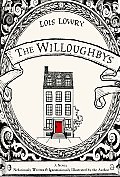
The Willoughbys

This is one book, I think, that you’ll either really really love… or just not get. It’s by Lois Lowry, known more for her thought-provoking Newbery winners, and I think many people just won’t know what to do with it. However, I am solidly in the former category: I grinned the whole way through, gratefully in on the joke (or parody), eating up the snide remarks and sarcasm. It’s like Lemony Snicket’s books, but better. Much better.

I’d write a long review myself, but Fuse #8 and Sarah Miller both wrote such eloquent reviews (and I can’t think of anything else to say that would add much), I think I’ll send you over there instead. Read them, be entertained, pick up the book. You won’t be sorry.

Oh, and I’m thinking that this one would make a fabulous read-aloud. I’m going to foist it upon C right after we finish our latest Sisters Grimm. Hopefully, she’ll love it as much as I did.

(Just for the record: because this is a Cybils nominee, I’ve been asked to make sure y’all know this is my opinion only, and not that of the panel. Thank you.)

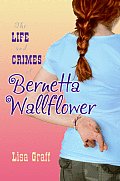
The Life and Crimes of Bernetta Wallflower

This one — by Lisa Graff, whose group blog, The Longstockings, I’ve followed for a while — had me on the edge of my seat. Not really out of suspense, though; it was mostly because I was anxious. Anxious for Bernetta, anxious because the story is pretty over-the-top, anxious because the situations made me anxious. I had to put down the book every once in a while and just get up and walk around (or go do something else), just so I could get away from the story. But I would find myself thinking about it, almost instantly, and end up back in a chair with the book until I got too anxious again.

I’m not even sure if anxious is the right word. Concerned? Worried? Stressed? Nope… it’s anxious.

The plot is simple: Bernetta Wallflower, at the end of her sixth-grade year, is framed by her ex-best friend Ashley, for running a school-wide cheating ring. Bernetta is grounded (for life or until her tonsils grow back), suspended, and has her scholarship to Mt. Olive private school revoked. Which means, she has the summer to come up with the tuition: $9000. It seems impossible until she meets Gabe, who uses Bernetta’s talent for doing magic tricks to help with his plan to “raise” money.

In spite of my anxiousness, I really liked this book. It was very funny — never talking down, always smart — and the while the plot is way over-the-top (I mean really, is this even plausible? Really?), I was happy to go along for the ride. Bernetta is a charming character, one that I could easily identify (who hasn’t been framed for something they didn’t do, even if it isn’t a cheating ring?) and sympathize with. I loved her family — including her very nice older sister Elsa to her silly younger brother Colin — and even enjoyed the relationship Bernetta formed with Gabe.

And even the ending fit the book, which I wasn’t expecting. I was expecting either a grand set up with a grand fall, or something more out of the movies. What I got was a simple, effective ending that was true to Bernetta’s character without losing anything from the tone of the book. Graff found a way to make the whole con business just reasonable enough without making it too appealing, which isn’t an easy task.

Now, if I could just shake the anxious feeling….

(Just for the record: because this is a Cybils nominee, I’ve been asked to make sure y’all know this is my opinion only, and not that of the panel. Thank you.)

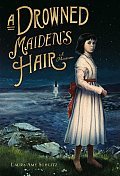
A Drowned Maiden’s Hair

I’ve heard nothing but good about this one, by Laura Amy Schlitz. I liked the Newbery winner she wrote, and so I figured with those two recommendations, I couldn’t go wrong with this one.

Thankfully, I was right. I loved this little story. Schlitz deftly weaves a bit of mystery, some beautiful scenery and a lot of longing into a not-so-traditional orphan story. Wonderful.

Maud, an 11-years-old orphan, is singing in the outhouse of Barbary Asylum on the best day of her life: the day that Hyacinth Hawthorne decides that it’s Maud she wants to adopt. She has always longed for a home, or at least ever since she was 5 and someone adopted her older brother and younger sister and not her. She goes home with Hyacinth, meets her two sisters Judith and Victoria, and then discovers that she’s to play a part in the “family business”. She makes the best of it, vying for Hyacinth’s attention and affection, and eventually finds happiness in the bargain.

That’s a terrible plot summary, but I don’t know how to do the book justice while not giving too much away. I loved Maud as a character: feisty and spunky yet with so much longing to be loved it made my heart break. I thought it was an interesting look at family and death and separation and surviving… and so much. I liked the relationship that Maud had with Muffet (the deaf house maid in the Hawthorne home); how Maud came to understand Muffet and how their relationship developed. I really liked the ending, even though I saw it coming. I thought it was just perfect, and very satisfying.

M’s only quibble with the book was the subtitle: A Melodrama. She finished the book and said that it didn’t really read like a melodrama (or at least how Hubby defined a melodrama to her). (My only quibble is that Schlitz seems to like colons in her titles. They all have one.) According to trusty old Webster, a melodrama can mean both “a work characterized by extravagant theatricallity and by the predominance of plot and physical action over characterization” (doesn’t quite fit) or something “appealing to the emotions” (fits better). Maybe M’s right: it’s not quite a melodrama (though I think it was melodramatic at some parts). But it is a really wonderful book.

Alcatraz Versus the Evil Librarians

How I ended up reading this book: Brandon Sanderson was getting a bit of buzz a while back on Hubby’s group blog. I noted it, figured I’d get around to reading something from him eventually. But when I was in the library searching for something for M to read (not unusual), I noticed this one, picked it up, and gave it to her to read. M devoured it, laughed uproariously, couldn’t stop talking about it and now insists that we need to get it. Well, with that big of a reaction from her, I couldn’t resist throwing it on my pile. Especially after reading the author description on the jacket:

Brandon Sanderson is the pen name of Alcatraz Smedry. His Hushlander editor forced him to use a pseudonym, since these memoirs are being published as fiction. Alcatraz actually knows a person named Brandon Sanderson. That man, however, is a fantasy writer — and is therefore prone to useless bouts of delusion in literary form. Alcatraz has it on good authority that Brandon is actually illiterate and dictates his thick, overly long fantasy tomes to his potted plant, Count Duku. It is widely assumed that Brandon went mad several years ago, but few people can tell because his writing is so strange anyway. He spends his time going to science fiction movies, eating popcorn and goat cheese (separately), and trying to warn people about the dangers fo the Great Kitten Conspiracy. He has had his library card revoked on seventeen different occasions.

Who could resist something like that? Not me. I devoured it, laughed uproariously, can’t stop talking about it and agree that we should probably get this one.

Alcatraz Smedry is a thirteen-year-old orphan who’s been bounced around from house to house. The reason? He keeps breaking things. (He can’t help himself. ) His life takes a turn for the interesting when he gets a bag of sand on his birthday. It’s his inheritance, which is pretty weird. It doesn’t get much better: soon his grandfather shows up, babbling about the Free Kingdoms and evil Librarians and Alcatraz is sucked into infiltrating the downtown library in a desperate attempt to rescue the bag of sand. He just has no idea what he was in for.

Sure, there are the Harry Potter comparisons: orphan boy with great untapped power, thrown into a new world with weapons he has to learn to use, in order to fight an evil bad guy (though the evil bad guy is really a consortium of evil bad guys). There’s even horcrux-like elements, as well as an alternative reality hidden from the rest of us (Hushlanders rather than Muggles). But what really makes this book work, for me, is the tone. Alcatraz is snarky about almost everything that has to do with a book. He begins each chapter with an aside about something either to do with the plot, or writing a book (authors are not nice people; they like to torture their readers), or reading… I first thought they were cute, then they annoyed me, but eventually, I caught the tongue-in-cheek idea of it all and decided that they’re really funny, and that I liked it.

I’ve talked about humor before: how it’s an individual thing, and how what I find amusing some others (like Hubby) might find benal or pedantic. I won’t even go so far as to say there are universal funny things. It’s all a matter of your mood, your history, your tastes… I have to admit that as I was talking up this book at breakfast, reading passages to Hubby this morning, his comment was, “Sounds a bit precious to me.” I thought about it: it is a bit precious — walking the line between snarky and smart-aleck — but it worked for me.

And maybe it’ll even work for you. Besides, how can you not want to read a book with an author blurb like that?

Sisters Grimm: The Unusual Suspects

So, when C and I last left the Sister Grimm, they had finally found a home with their Granny Relda and managed to defeat both Jack and the giants. What’s next for our heroic sisters? Nothing other than…. school.

Sabrina, at least, would rather spend her days (and nights) reading the “reference” books at Granny’s house trying to find magical tools to help her find and rescue her mom and dad. Unfortunately, the state steps in, and off Daphne and Sabrina go. Daphne has it easy — Snow White is her teacher — but Sabrina’s lot is another story. Especially when her teacher ends up dead at the end of her first day.

So, of course, they have a mystery on their hands. One that will lead them into much danger, nearly tear the family apart, and lead Sabrina closer to finding her parents.

While this one didn’t have the novelty that The Fairy Tale Detectives did, I still enjoyed reading it out loud to C. Sure, there was a lot of extra plot points (did we really need to know how Daphne did her hair?), but C didn’t seem to mind, and they added a bit of whimsy to what could have been an otherwise dark tale. We both really enjoyed Puck; he’s a fun addition to the Grimm family. There weren’t as many voices to “do” (and I couldn’t remember half of the ones I’d done previously; C was always correcting me), but neither of us seemed to mind (though now that I think about it, there were still quite a handful of fairy tale characters; I just didn’t get into doing voices this time through.) The story itself was fairly gripping, leaving us hanging at several points. It even ended on a cliff-hanger, after which C said, “I hate this book. When can we get the next one?” (She doesn’t like cliff-hangers…) It was a fun, well-told tale. I can’t wait to see what happens next…

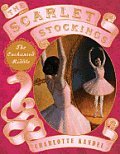
The Scarlet Stockings

I have to admit, I didn’t quite know what to do with this book. It’s an ARC, but it’s too young for Estella’s Revenge. I could have pitched it to the Edge of the Forest, but the email I got sent said it was for my site, so here it is. I usually review books I’ve either bought or checked out on principle (preferring to plug the ARCs I’ve gotten to a wider audience — both ‘zines get much higher reader numbers than I do here). But, since there’s no other place for this review to go, here it will be.

The story, by Charlotte Kandel, is one of a girl with big dreams and a desire to be loved. Daphne is an orphan at St. Jude’s in London when she receives a mysterious package with a pair of silk stockings. It doesn’t take long for Daphne to realize the stockings are magic, but they come with a price: they will help her achieve her dreams, but she must be responsible and choose wisely and pass them up at the height of her fame, or they will lead her to her death.

It’s one part Hans Christian Anderson’s The Red Slippers and one part that story where the girl has magic ballet shoes who help her be good and can’t perform without them until one day when she forgets them and realizes that it’s all her own hard work (can’t remember the name of it right now). It also has an interesting premise behind the story: what would a person do when ambition is confronted with an opportunity too good to resist? An ambitious idea, and one that’s intriguingly set in the world of 1920s ballet.

However, I didn’t especially like this book. My main problem was that I felt like there was too much tell and not enough show. The author’s telling us that people care about Daphne, the author’s telling us that people are upset and angry and hurt, but I’m just not feeling it. It doesn’t help that Daphne — probably on purpose — is the least sympathetic character in the book. I felt bad for all the people who she stepped on — from her adopted parents, to her friends, to her former employers — on her way to stardom. Sure, she’s got ambition, and talent, but what about a heart, or some kindness? She had two emotions: ambition and guilt. Not a pretty picture.

Because the main character was so unsympathetic, I looked to the secondary characters for interest. Some were interesting– like her first boss, Magda, — but most were just stepping stones on the way to Daphne’s eventual success. How could I not feel bad for her adopted parents when she was treating them so horribly? Or her friends that she pledged to be friends forever with? Here they come… there they go. Everyone nice got shuffled off-stage pretty quickly. I didn’t even feel like Ova, the ultimate prima ballerina, got enough stage time to fully develop her whole jealousy of Daphne. (Maybe she didn’t need it. She’s the star, she’s just as self-centered as Daphne, she wants her crowds. Who needs more explanation than that?)

There’s a lot in this story that could have been developed, fleshed out — there’s even a decent moral at the end. I just felt like it was developed enough, or in such a way, for us truly care about Daphne and her experience. Which is too bad.