The Exiles in Love

It’s not very often that I like the sequel better than the original, but I have to say that enjoyed The Exiles in Love so much more than I did The Exiles. I didn’t need the tissue at the end, like the blurb from Horn Book said I would, but I did laugh, quite a bit (and manage to pick up on the satire this time!), at the escapades of the Conroy sisters.

The girls — most of them, anyway — are in love. Ruth is in love with no less than four men/boys: the bus driver, the Temporary English teacher, Alan Adair (the butcher’s son), and Philippe, the grandson of Big Grandma’s French friend who comes to say with the Conroys for a few weeks. Naomi and Rachel, in comparison, are only in love with one each: the Temporary English teacher for Naomi, and Phillipe for Rachel. (Though Rachel is very level-headed about it all, asking Philippe to marry her the second he walks into the house.) Phoebe, on the other hand, is mildly disgusted by this business with the “family failing” (aka, falling in love), preferring to devote herself to John le Carre, and becoming an international spy. To cure the girls of their failing, Big Grandma proposes an escapade to France, staying in a cottage on the property of her friend, and the girls manage to have a few adventures, as well as manage to fall out of love. All is well, of course, in the end.

I loved the trip to France. Having spent a summer in Germany, without knowing German, I completely empathized with the girl’s frustrations and insecurities about being in France. The part where they went shopping in the villa had me in tears, I was laughing so hard. And I thought they were all very cute and sweet and silly about falling in love… Ruth especially was good at pining. And I did catch this time around that McKay was satirizing parents who expect perfection from their kids. Mrs. Conroy is always moaning that her girls aren’t normal little girls, that they read too much, and aren’t normal enough, and get much too dirty for their own good. And when Rachel goes up for May Queen at her school, finally, Mrs. Conroy thinks, she’s acting like a “normal little girl”. Puh-lease. (Maybe I just needed the satire spelled out more blatantly; it was there in the first book, but I just found it annoying there. Here, I was amused by it.)

The book was told in flashbacks by Naomi and Ruth, each chapter beginning with a little conversation between the two of them. At first, I found that annoying, but eventually, it grew on me. And I have to admit, I did like the ending.

But the absolute best thing, the only thing I really marked because I liked it so much, was this quote, when they’re in France:

“And speaking of food,” said Big Grandma, “we’d better make a list. You girls will have to go shopping after breakfast.”
“Aren’t you coming?”
“With my ankle?” [she twisted it at the beginning of their vacation, and spent the week lounging in the orchards]
“What will you do then?”
“I shall sit quietly in the orchard with A Tale of Two Cities. I always enjoy books much more when I read them on location.”

Indeed.
The Exiles

I picked this one up (and a couple of others) after finishing The Penderwicks on Gardam Street, partially because Lelia compared Jeanne Birdsall to Hilary McKay and I felt a little doofish because I had no idea who Hilary McKay was, and partially because Jane (in the book) was reading the sequel to this one (Exiles in Love), and both of these things sparked my curiosity.

First off: Leia’s right. Birdsall is a lot like Hilary McKay. They have the same feel, the same kinds of stories, the same values (for lack of a better word) for a happy childhood. The Exiles are four sisters (even that’s the same), who are a bit impractical and bookish. Not to mention, slightly, um, childish. So when their parents (who aren’t terribly likeable, in my opinion, unlike Mr. Penderwick) come into some money, they ship their girls — Ruth, 13; Naomi, 11; Rachel, 8; and Phoebe, 6 — to their grandma, affectionately called Big Grandma, for the summer. There, they are deprived of reading material and forced to have adventures. And work. And it turns out to be a smashing good summer. Even if they’re reduced to reading cookbooks.

It was a fun read, and I didnt’ dislike it, but I have to admit I liked the Penderwicks better. I liked the girls better, the parents better, and I thought McKay was a bit heavy handed with the “too much reading is warping kids brains” theme. (Though I admit, this may be becuase I let M read so much… not to mention my reading habits…) I got that it was supposed to be tongue-in-cheek, but it lacked that charm, that sweetness, that made me really like the Penderwick sisters. (No matter how cute Phoebe is, she will never be as cute as Batty. Period.)

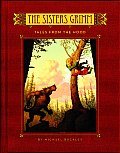
The Sisters Grimm: Tales from the Hood

I’m not sure if any of you are still following along, but things have gotten pretty grim for the Grimm sisters. Mr. Canis was arrested by Ferryport Landing’s sham of a cop and mayor and is being put on trial for the murder of Red Riding Hood’s grandmother. It’s up to the sisters, of course, and their grandmother to prove Mr. Canis’s innocence and keep him alive.

I didn’t like this one as much as I’ve liked the past two, but it wasn’t bad. For all of Buckley’s verboseness, he did come up with some clever plot twists and action points, and a decent ending, the “to be continued” notwithstanding. I thought his re-telling and manipulation of the Red Riding Hood tale was pretty clever, giving the story a whole new interpretation.

But that’s about it. I do have to say that I’m honestly glad that this is the last one for a while. Though, both M and C really loved the series.

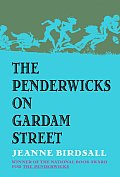
The Penderwicks on Gardam Street

I knew I would love this book. The first charmed its way into all our hearts around here — I picked it up on a whim at the bookstore, drawn by the title, and never regretted the purchase — and because Jen, Leila, and Erin all highly recommended it, I knew going in that this one would be just as wonderful.

There are books that are exciting and thrilling, holding you on the edge of your chair; there are books that make you laugh; and there are books that contain numerous twists and turns of plot, intricately setting up the conclusion. The Penderwicks on Gardam Street is not one of those books.

Then there are the books that you just smile at, content knowing the end from nearly the beginning, savoring the characters and loving the plot — such as it is — and patiently waiting for the characters to realize what you already know. The Penderwicks on Gardam Street is one of those books.

All the things I loved about the first book are back: the sisters, of course, but especially Batty (she’s at that wonderful, fun, precocious age); their lovable, endearing, slightly absent-minded father; boys to be friends with (their neighbors across the street — though I admit that I did miss Jeffrey); the scrapes the girls get themselves in to; and the wonderful, fun, evocative language. And there are new things to love: an amazing, smart, fun, interesting new next-door-neighbor with a very cute toddler whose one word is “Duck”; a scheme to keep their dad from dating, as his sister Claire seems determined to have him do; a neighborhood forest for exploring and hiding; and a little bit of learning and maturing on everyone’s part.

Other reasons to like the Penderwick family:

[Jane] hated finishing one of her favorite books, because she knew she’d have to wait at least a few months before she could read it again. It was a rule she’d imposed on herself after reading The Various twice in one week — a disaster, like eating three large slices of chocolate cake at one sitting.

He hung up the phone with a bang. “Here’s some advice, daughters. Try to avoid having younger sisters.”
“Too late for that, Daddy,” said Jane.

[Batty] must have done it well, because Hound nuzzled her joyfully, and then she pounced on hi, and they wrestled around the yard until they knocked the red wagon over and all the animals tumbled out. And then there was putting them back in, which was fun, and altogether, it was turning out to be an okay afternoon, even if Rosalind had scolded her for being noisy.

I have to agree that it’s a practically perfect book in every way.

(Just for the record: because this is a Cybils nominee, I’ve been asked to make sure y’all know this is my opinion only, and not that of the panel. Thank you.)

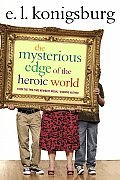
the mysterious edge of the heroic world

There is something about E.L. Konigsburg’s writing that simultaneously entertains, enlightens, and even mildly annoys me. I enjoy her books, sometimes immensely– as in this case– but am usually left with a sense of not-quite-getting it, of not entirely being in on the joke.

I felt that way after finishing this book, but I’m not sure it mattered.

The basic story is about Amadeo — a precocious boy who is looking for friends and the chance to discover something that has been lost. He falls in with William, whose mother (Dora Ellen Wilcox) supervises estate sales, and ends up helping with the categorization when his next-door-neighbor, Mrs. Zender — former opera singer and diva supreme– decides that she needs to put the contents of her house up for sale. There ensues a mystery, a discovery, and a bonding.

Sounds pretentious, and in some ways it is. Yet, I liked the story a lot. Possibly because Konigsburg’s writing is so wonderful. A passage early on in the book:

Mrs. Zender swept her arm in the direction of the back of the house. The hallway was wide enough to allow them to walk side by side, but Mrs. Zender walked ahead. She was tall, and she was zaftig. Definitely zaftig. She was also majestic. She moved forward like a queen vessel plowing still waters. Her kimono corrugated as she moved. There as a thin stripe of purple that winked as it appeared and then disappeared in a fold of fabric at her waist.

And later — though taken out of context, it sounds like it could be from a self-help book:

Friendship is a combination of art and craft. The craft part is knowing how to give and how to take. The art part is knowing when, and the whole process only works when no one is keeping track.

The other reason I enjoyed this book so much, in spite of is precociousness, is because I really loved the precocious and mildly irritating characters. Especially Mrs. Zender. She was a hoot. A dignified, respectable hoot, but one nonetheless. From near the end:

“I haven’t read a book in years. Every now and then I read a review in a magazine at the beauty parlor, and sometimes I think I would enjoy reading an entire book, but I allow the thought to pass.”

How wonderful is that?

At the mysterious edge of the heroic world… pretty wonderful.

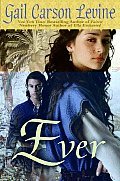
Ever

I think it was over at Bookfoolery and Babble (but it may have been somewhere else…) where I saw someone comment that the first Levine book you read is the one you like best. I thought about that a lot while I read this story.

It has all the hallmarks of a good fairy tale — mortal girl, Kezi, who is inadvertently sentenced to death to avoid the wrath of the god she worships (her father made an oath, and she ended up fulfilling the oath to save her aunt’s life…). And then there’s the uber-handsome (well, if you believe the cover) Akkan god of the wind Olus, who is not only intrigued by mortals, but longs to be friends with them. It’s inevitable that they will fall in love. But it’s not exactly a comfortable love: one of them will live forever, the other is doomed to be sacrificed in less than 30 days. So, they do what all star-crossed lovers do: look for the loophole.

There’s a good story there. And I enjoyed much of it. I think, though, what I enjoyed most was the questions of love, faith and doubt that the book raised. In that respect, it was very challenging, especially to someone who has a belief in religion. I thought Kezi’s doubt was very real, especially when confronted with someone like Olus, a god who is a real, physical being, unlike the god Kezi’s always believed in. I wasn’t sure what Levine was trying to “say” about religion, if anything, but the journey fascinated me.

That said, while it was enjoyable, it wasn’t, well, as good as the first Levine I read (or even the second or third). I thought it lacked the character development and romance found in Ella Enchanted, the humor found in the short Princess Tales, the “good message” of Fairest, the compelling heroines in Two Princesses of Bamarre.

Any Levine book is going to be a good book. She’s a good writer, and tells good fairy tales. It just so happens that this one is, perhaps, the fourth best one I’ve read. Maybe it’s because I read all the others first.

The Sisters Grimm: Magic and Other Misdemeanors

First thing: that’s a terrible reproduction of a pretty good cover. Sorry.

I’ve been slowly reading this series to C, and while I thought the idea was original and interesting in the beginning, my interest has waned over the last three books. The fourth one kind of perked it up, but I admit I wasn’t more interested in the story than I actually needed to be in order to read to C.

All that changed with this one, though.

This time, I found myself interested enough in the story to want to read ahead (and did, much to C’s chagrin). It’ s not because Buckley’s writing has changed — he’s still an overly long-winded writer, including scenes that really don’t have a whole heck of a lot to do with the plot (but for some reason M and C really enjoy) — but rather because this time there was an interesting enough story.

Prince Charming’s lost the mayoral election and the new mayor, Mayor Heart (as in Queen of Hearts) has decided to tax the humans out of town. On top of that, magical items around the town — specifically the Wand of Merlin, the Wonder Clock and water from the Fountain of Youth — are disappearing. And to make things more challenging, rips in the fabric of time are occurring randomly, spending people, animals, and even the Grimm sisters forward and backward through time. And then, of course, there’s still the pesky little Scarlet Hand problem, in addition to trying to figure out how to wake up their parents.

The things I liked: Charming was a winner in this book. He’s been annoying throughout the series, but I really liked him here. Not only does he prove to be a decent fellow, but a good action hero on top of that. I liked the future sequences, too… Daphne and Sabrina meet their older selves, which makes for some interesting situations.

Things I didn’t like: The end. Doesn’t Buckley know how to wrap up a book?! The one thing I hate the most is a book that ends with “to be continued…” Don’t slip in a cliff-hanger (and this one’s a doozy) two pages before the end of the book. Sure, it’ll get people to buy the next one, but it’s bad form.

I’ve just discovered that our library has the sixth one, so I get to read that one to C. Though I really liked this one, I still find myself asking: When will this ever end? That’s probably not a good sign. Even so, C adores them, talks about them, and wants to keep going, so we will…

Out of the Wild

After I raved about Into the Wild, I got an email in the mailbox from Sarah Beth Durst (when that happens, I have to admit that I get all fan-girly: an author’s reading my blog!) offering me an ARC for the sequel. I would have been stupid to say no…

M got to it first, and raved about it. And so, in between review books and challenge books I decided to see what Julie, Rapunzel and all the rest of the fairy-tale characters were up to.

I couldn’t put the book down.

While Into the Wild is a wonderful, brilliant idea in it’s own right, Out of the Wild takes everything to a more complex, deeper, more fascinating (and scarier) level. It seems not everyone has been happy with Rapunzel’s decision to escape the Wild — that in itself is a complex issue, even the escape wasn’t a happily-ever-after for everyone — and the Wild’s development in the first book was just a step. Six weeks later, the Wild spits out Julie’s dad — Rapunzel’s prince — who has a hard time accepting that his role as a hero is not to be his fate in this world. As soon as he senses a quest, he’s off. And Julie — who knows the danger of the Wild — is off to stop him. There’s some fascinating stuff going on here: parent-child relationships, the value of choice, the problems of freedom and of making decisions… The real enjoyment here is that it can be enjoyed on more than one level: there’s some great adventure going on here (chasing a fire-breathing dragon on a flying bathmat, or being eaten by a wolf to name a couple) in addition to all the thought- and discussion-provoking issues. It’s a perfect mix.

Julie’s still a great heroine — spunky, thoughtful, daring, yet still imperfect. I love that she makes mistakes, yet is able to deal with them and work with them. And I still love what Durst does with fairy tale characters. I like how she uses the fairy tales, working not only with characters but with the individual elements in the tales, and, ultimately, the telling of the tales. And this book, like the first, has an absolutely perfect ending.

The only sad part is that you have to wait until June 19th to read it.

Airman

This is another one (among many) that I see positive reviews of (this time at Fuse and ShelfElf), think Hmmm, that sounds interesting, and promptly forget about until it shows up on the new books shelf at the library, when I snatch it up (probably giggling maniacally) and check it out. It then sits on my nightstand for three weeks, and it’s only when I realize that it’s DUE that I finally get around to reading it.

And promptly kick myself for not reading it sooner.

(That seems to happen quite a bit, doesn’t it?)

Airman is by Eion Colfer, whom I think I’ve read exactly three books by. Two of them were Artemis Fowl ones (I lost interest in the series halfway through the second book), the other was a little book I remember very little about. (Not surprisingly.) But all three are blown out of the water with this one. This one (as ShelfElf said) is the real deal: an adventuresome, flying, dark, humorous, swashbuckling, alternative history filled with dark prisons, romance, science and great characters.

A basic plotline: Conor was born on a balloon in Paris, 1878, and ever since (perhaps because of?) has longed to fly. He lives on the island Great Saltee, off the coast of Ireland, and has an idyllic childhood with his French tutor Victor, learning to fight and fly, and his best friend, Princess Isabella. I liked these chapters, though I thought they were a bit jumpy. There were some interesting passages (like how Conor rescued Isabella and himself from a burning tower on the castle), but mostly it was just set-up.

Then, one day after he turned 14, Conor is framed (of sorts) for the murder of the king and thrown into prison on Little Saltee. Little Saltee is not a nice place, and this is where I found that Colfer excelled. He writes depressing, dank, and misery really well. It was very intense, Conor’s years in the prison, and Colfer threw an awful lot in Conor’s way in order to help Conor succeed. Friendless, hopeless, Conor uses his wits and his observations to get through the tough, unforgiving place that is the prison and diamond mines of Little Saltee. By this point, we’re only halfway through the book, and I began wondering what Colfer had in store to fill out the pages… and he didn’t disappoint. I’ll not tell you — it’ll ruin some of the surprises that are in store. But, know this: it lives up to its name and its very cool cover. I don’t know if it’s the best book ever, but it’s definitely my favorite by Eoin Colfer.

The Sisters Grimm: Once Upon a Crime

I didn’t particularly want to continue reading this series out loud to C, especially since the second and third books weren’t all that thrilling. But, she desperately wants to read on (spurred by tantalizing hints from M, who’s read the series), and me, being the loving mother that I am, checked the fourth book out from the library. And amazingly enough, enjoyed it.

There was less exposition in the book, but (aside from the fact that you might wonder how Puck ended up desperately wounded) you could probably pick up the series here and not miss a thing. In fact, I’d probably recommend it. This one is easily the best of the bunch (that I’ve read so far).

Because of Puck’s injury, the Grimm sisters (along with Granny Relda, Mr. Canis, and Mr. Hamstead) need to leave Ferryport Landing and take Puck back to his fairy family in New York City. In a brilliant turn of events, King Oberon gets killed and the Fairytale Detectives are asked to find the killer. Of course there are hilarious characters along the way (love Scrooge and Tiny Tim), some fun twists, and some interesting revelations. They aren’t any closer, really, to knowing why their parents were kidnapped and are asleep, or how to wake them up, but they do know who did it by the end of the book. It had tighter writing, some pretty good action scenes, and you realize by the end of the book that while Puck’s annoying, he does add some good comic balance and relief to Sabrina’s annoying personality. (Man, she gets on my nerves.)

And we’re on to the next book. Hopefully, it’ll continue to be good. (I am harboring the secret belief — secret from my girls — that this series is going on a bit too long…. when’s it going to end??)