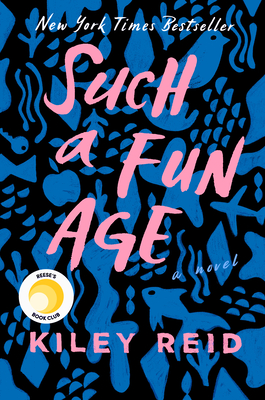
Audio book: Such a Fun Age

by Kiley Reid
Read by Nicole Lewis
Support your local independent bookstore: buy it there!
Or listen at Libro.fm
Content: There is a lot of swearing, including multiple f-bombs. There is also talk of sex, but none actual. It’s in the Fiction section of the bookstore.

Emira is a 25-year-old Black woman who is kind of aimless. All her friends seem to have “real” jobs, but she’s working as a temporary typist for the Green Party in Philadelphia and as a babysitter for Alix and Peter Chamberlin. The thing is, Emira adores Briar, the girl she sits, and doesn’t really feel much of a need to change things up. Then she meets Kelly — at a grocery store after Emira had a run-in with a security cop. And they begin to date, which sets up a run-in with Alix.

It doesn’t sound like a whole lot happens in this book from the description, but it’s more thoughtful and intricate than that. It’s a meditation on relationships — can a wealthy White woman really have a “friendship” with her Black babysitter? Is a White man who sees himself as an ally because he has Black friends and dates Black or biracial women, really an ally? — but it’s also a meditation on how we perceive ourselves. Reid did a fabulous job making no one out to be the “villain” here. Everyone had reasonable motivations (or at least presented reasonable motivations) and I could see they were all operating from a place they thought was reasonable. But, I could also see how the decisions were self-interested. Everyone said they were trying to help Emira, but were their decisions really helping? There’s a lot to talk and think about, especially about the way White people center themselves, even when they’re trying to help.

On top of that, the narrator was fabulous. I loved the way she portrayed each character (especially 3-year-old Briar; she was perfect!) and the way she made them distinctive and intriguing. She kept me coming back (though I think this one would have worked for me in print form, as well) and wanting to see what was going on next with Emira and Alix.

Definitely worth the buzz it’s been getting.

Audio book: The Color of Compromise

by Jemar Tisby
Read by the author
Support your local independent bookstore: buy it there!
Or listen at Libro.fm
Content: There is descriptions of violence done to Black people and use of the n-word. It would be in either the Sociology section or Religion section if the bookstore carried it.

This book is the history of chattel slavery in the United States, but as seen through the lens of Christianity. So, on the one hand: there wasn’t much new for me to learn about slavery that I hadn’t already learned from Stamped from the Beginning. But the part about Christianity was fascinating. See, white Christians have always bee complicit in slavery, in Jim Crow laws, in racism. There’s no way around it. If we consider the United States a Christian nation, if there were God-fearing people who owned slaves; who owned people; who discriminated against Blacks; who, say, in the example of my own church, refused to give them equal standing as white men and women; then, Christians have always been complicit in the oppression of Black people.

And that’s a hard realization. It’s so easy to think of the oppressors as “other”, but as Tisby points out, even if Christians were not actively acting as slave-owners or KKK members (and some were) the Silence of the church as a whole (and many, many members) gave tacit approval to the systemic oppression. By not speaking out against it, by not working to fight against it, they were, by default, for it.

Although Tisby gives suggestions on how to fix the problem of Christianity’s complicit behavior in anti-Black racism, I’m not sure what I can do systemically. I do know I am working on the racism – both implicit and explicit — in my life, working to enlarge my circle and my point of view. And to remember that we are all God’s children, even if the system doesn’t behave like we are.

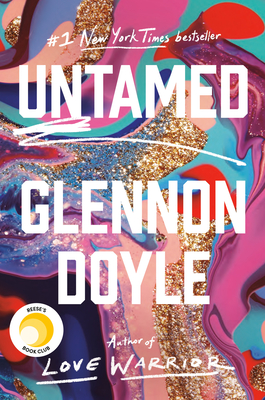
Audio Book: Untamed

by Glennon Doyle
Read by the author
Support your local independent bookstore: buy it there!
Or listen on Libro.fm
Content: There are several f-bombs as well as some mild swearing. There is talk of addiction. It’s in the Biography section of the bookstore.

Sometimes a book comes into your life at the right time. I picked this one up to fill out a category in the #ReadICT challenge — everyone’s reading it (or they were back in March, but who’s keeping track?) — and got something completely unexpected and absolutely needed.

I have heard of Glennon Doyle, but never read any of her work, so I was going into this blind. In a series of short essays (some longer than others), the book is essentially the story of her falling in love with a woman, divorcing her husband, and building an entirely new life. But it was about more than that: it was about taking back ownership of your decisions, your life, your feelings and not being “caged” by anything, whether it be society, religion, yourself. It’s a hard thing, being true to your own truest self. It’s much easier to lean on other people’s beliefs and perceptions of you. It doesn’t require the work of figuring things out for yourself. And I think that’s something I needed to hear right now.

I appreciated the humor of the book, the thoughtfulness, the encouragement. I adored Doyle’s honesty and forthrightness, and her willingness to be true to herself at all costs. She sounds like an imperfect but utterly remarkable woman. Doyle is also a good narrator, and I’m glad she read this one; it made it that much more personal.

I’m not sure this is a book for everyone, but I really enjoyed listening to it.

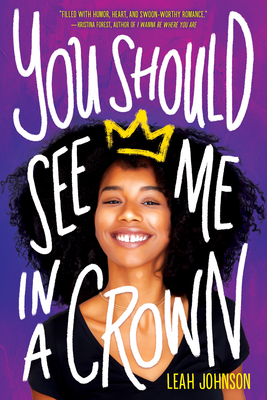
Audio book: You Should See Me in a Crown

by Leah Johnson
Read by Alaska Jackson
Support your local independent bookstore: buy it there!
Or listen at Libro.fm
Content: There’s some bullying, a race and homophobic-centered hate crime, and one f-bomb. It’s in the YA section (grades 6-8) of the bookstore.

Liz Lighty has kept her head down through all of high school, avoiding crowds, avoiding any sort of drama. Which isn’t easy in Campbell, Indiana because she is one of only a handful of black kids in the school (and town). But when she doesn’t get a scholarship to the college of her choice, she decides to enter the competition for Prom Queen, since winning that comes with a scholarship. And then, all of a sudden, she’s thrust into the limelight, where she isn’t comfortable.

But there are good things that come out of running for prom queen, too. Like re-kindling her friendship with Jordan, whom she fell out with their freshman year. And the new girl, Mack, who is smart and funny, and whom Liz might just have more than a little crush on.

Oh, this was such a delight to listen to! The narrator is perfect for the book, pulling me in with Liz’s voice and just keeping me there. And Johnson balanced some heavy topics: like a mom who died from sickle cell anemia, as well as the idea of popularity, and overt and covert racism and homophobia. But it’s never an “issue” book. It’s centered in Black joy and excellence, and is just a delight every step of the way. Plus the love story is super super cute. So much cute.

It was exactly the thing I needed and I’m so happy I listened to it.

Audio book: The End of Policing

by Alex S. Vitale
Read by Michael Butler Murray
Support your local independent bookstore: buy it there!
Or listen at Libro.fm
Content: There is some description, none graphic, of abuses by police officers over the history of policing in the United States. It’s in the sociology section of the bookstore.

When all the protests started happening around the death of George Floyd, one of the things I heard and saw was a call to defund the police. I had no idea what that meant, and so (as I do), I found a book — the author was in a story on NPR — to explain it to me.

Vitale, a sociology professor at Brooklyn College, collects data in various areas, from homelessness to the war on drugs to protest policing, about how effective the police force and criminal justice system is in the United States. The short answer: the police are completely and utterly ineffective in dealing with problems in communities. They are there to protect those who have property (usually white people) from those who don’t (usually poor, non-white people). And the methods they use are, to be frank, racist and ineffective.

The data in the book is a bit old; the most recent is from 2014-2015, but I don’t think much has gotten better. Vitale asserts that without real reform — and not just more “diversity training” — to communities and the way they tackle things like poverty, joblessness, mental illness, and immigration then searching for “criminals” and arresting Black and brown youth are not going to solve the problems. In short: defund the police and send the money into the social programs that we have been starving for 40 years.

The thing is: this isn’t a Republican/Democrat thing. Vitale reminds readers that Clinton and Obama were as bad promoting policing as the answer to being “tough on crime” as Reagan and the Bushes were. It’s a policy thing. Which reminds me of something else I’ve seen: the system isn’t broken. This IS the system. The way policing has developed in this country is inevitably skewed against the poor and the non-white. And to change it will take an overhaul of not just policing, but the whole system. It’s not going to be fixed with short-term, “look at us we’re doing ‘reforms'” bills, but a constant holding politicians and elected leaders accountable for the money that is going into the policing system.

And I think Vitale has convinced me that we really do need to #defundthepolice.

Audio Book (sort of): James and the Giant Peach

by Roald Dahl
Read by Taika Waititi and friends
Support your local independent bookstore: buy it there!
Content: It’s silly, but much like most of Roald Dahl books, mostly harmless.

I don’t know how I stumbled upon Taika Waititi (and friends) reading James and the Giant Peach, but it has been something that has utterly delighted me these past few weeks. It’s a silly story, one I’ve read maybe once (there’s a bit about the wicked aunts killing spiders I think about every time I deep clean, though), one I have usually dismissed as “lesser” Dahl.

But in Waititi’s hands, it was magical. He’s a gifted storyteller, and the people he’s assembled to help him are wonderful as well. Some are more memorable than others: Meryl Streep and Benedict Cumbertbatch as the aunts in Episode 2 were hilarious, Cate Blanchett as the Centipede in Episode 3 was absolutely perfect, and YoYo Ma as the grasshopper was simultaneously incredibly earnest and utterly endearing. I listened to three episodes every Friday, which was about an hour, and I was always charmed.

It’s still a silly story, with an utterly pedantic ending, but Waititi made it wonderful.

Audio book: Me and White Supremacy

by Layla Saad
Read by the author
Support your local independent bookstore: buy it there!
Or listen at Libro.fm
Content: There is some mild swearing. It is in the Self-Help section (I think?) of the bookstore.

I am going to say this up front: I read this book wrong. It was meant to be an interactive 28-day journey with journaling and extensive deep reflection. However, that just doesn’t work (for me) in audio format. I listen in the car or doing a puzzle, and it’s just not conducive to a lot of serious reflection. So. I am going to purchase this book (when it’s reprinted; it’s on backorder now) and do the actual work.

Some thoughts though:

This book, by a Black woman, centers on how white people are privileged by the system we live in. Saad asks some tough questions, explains some tough concepts (like white privilege and white fragility), and encourages readers to do the work to become anti-racist and more inclusive. She also asks about concrete commitments we (white people!) can make in order to continue the lifelong pursuit of becoming anti-racist. It’s a challenging book to read, if only because she (very calmly and eloquently) challenges the very fabric of the society white people are used to.

And for that, it’s very much worth reading.

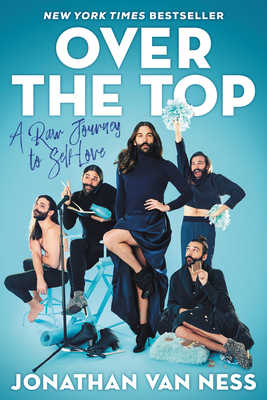
Audiobook: Over the Top

by Jonathan Van Ness
Read by the author
Support your local independent bookstore: buy it there!
Or listen on Libro.fm
Content: Jonathan has not lived a PG-13 life, and his book reflects that. It’s in the biography section of the bookstore.

Much like Tan France’s memoir, I listened this for the sheer pleasure of getting to “know” another person’s story. Jonathan grew up in Qunicey, Illinois, as one of the few out gay people in the town (as he said: “Hunny, I was never in!”). It wasn’t easy. He’d experienced sexual abuse at a young age at the hands of a family friend, and spent most of his childhood and 20s trying to suppress the shame and trauma that came along with that abuse. It doesn’t make for a light, fluffy, fun book, but that’s the point. JVN is known on Queer Eye for being the positive, optimistic one, and he sets out in this book to share all the parts of himself with us. Part of that is bubbly and optimistic, but there’s a lot that isn’t. He’s been through a lot. And I’m glad he’s talking about it.

He was absolutely delightful as a narrator, as well. I liked that he made himself giggle at times and that his voice was choked with emotion at other times (the death of his stepdad, whom he loved, was particularly hard). It’s a very personal story, and I’m glad I chose to experience it in this personal way.

It’s not high literature, but I never expected it to be. It is engaging and entertaining and enlightening, though. And I loved it for those reasons.

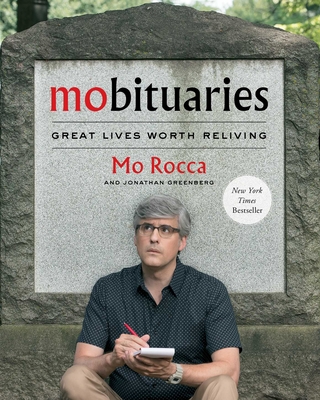
Audio book: Mobituaries

by Mo Rocca
Read by the author.
Support your local independent bookstore: buy it there!
Or listen at Libro.fm
Content: There may be some mild swearing. And sometimes the topics are kind of gross. It’s in the biography section of the bookstore.

I picked this one up because I like Mo Rocca on Wait Wait Don’t Tell Me. Which is also the reason I picked to listen to it rather than read it. I enjoyed listening to Mo tell these stories — some of which I knew, most of which I didn’t — about people and ideas that have passed on. The problem? In audio, while it was going, I was interested and entertained. Afterward, though, I couldn’t tell you a single thing about what I heard. Maybe it’s just how I retain knowledge, maybe it was a bit the way the book was structured (it was more a trivia book than anything else), but I didn’t retain a single thing. It’s very much a bathroom book: read a story while you go to the bathroom, and then put it down.

That does’t mean it was bad. Mo is very entertaining, both as a writer and a reader, and some of these stories were quite fascinating. But it just didn’t stick with me in the long run.

So: entertaining, but not really informative.

Audiobook: The Glass Hotel

by Emily St. John Mandel
Read by Dylan Moore
Support your local independent bookstore: buy it there!
Or listen at Libro.fm
Content: There is a lot of swearing, including multiple f-bombs. It’s in the adult fiction section of the bookstore.

This one is a bit hard to sum up, plot wise. We mostly follow Vincent, who grew up in a small town in British Columbia, on the ocean, and whose mom died in a freak accident when she was 13. She’s working as a bartender in the posh Hotel Caiette when she meets Jonathan Alkaitis, who ends up going to jail for running a Ponzi scheme. There are various sub-plots and diversions, but that’s the basic meat of it.

However, the joy in this book comes from the diversions. It doesn’t follow a linear timeline, jumping back and forth throughout the years, as we get to know Vincent and others. Mandel focuses on the effects of actions, and everything in the book is interconnected. There’s a bit of mystery, a bit of romance, a bit of commentary on class issues, and a bit of reflection of art. That sounds disjointed, but it never felt that way. Mandel knows how to bring a reader in and help them care about her characters.

Though, maybe it’s because I listened to the book. The narrator was fabulous, and she was able to pull me in and keep me interested even though the timeline wasn’t always the easiest to follow. I found myself caring about Vincent and her life, as well as a lot of the people who intersected with it, and I’m sure that’s almost entirely because of the way Moore told the story.

It’s not my favorite book of the year, but it was certainly an intriguing one.