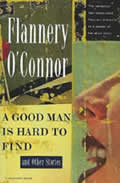
A Good Man is Hard to Find

A couple months ago, when that “which author’s fiction are you” quiz was going around, this was my result:

Which Author’s Fiction are You?


Flannery O’Connor wrote your book. Not much escapes your notice.
Take this quiz!


I was highly embarrassed; I had never read Flannery O’Connor, and didn’t want to link to something that I hadn’t read. Now, thanks to the online bookgroup, I can now say: I’m not sure I want Flannery O’Connor writing my story.

I say that mostly because her stories, at first glance, are harsh, violent and, well, depressing. I hope my life isn’t like her Southern characters… they are often banal, pathetic, racist. They grate on the nerves, on the psyche: what on earth is redeeming about any of them?

Yet, I found as I was reading, that I related to and liked several of these stories. The first — A Good Man is Hard to Find — is a horrible way (for me) to start a book: a banal picture of a family taking a vacation, which ends in the violent deaths of said family. I was about ready to give up on O’Connor after that one. (I’m still not sure if I see the “redemption” and “grace” that’s supposed to be in that particular story.) But, feeling a desire to be a part of the discussion, I kept reading. I found I actually liked “A Stroke of Good Fortune”; I identified with the main character’s desire to be something more than the way she was raised, though I thought denying that she was pregnant was a pretty drastic way to do so. I liked “A Late Encounter with the Enemy”: I thought the ending was particularly ironic, which made me smile. The rest of them… well, I have to admit that I didn’t get them. Some of them I didn’t get more than others (“The River”, in particular), but I’m lost as to the whole Christian allegory that she’s supposed to have written about.

I guess she may just be over my head. At the very least, she’ll make for good book group discussion, right? (And maybe I’ll even learn a thing or two in the process.)
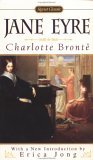
Jane Eyre

I’ve been telling people that I’m “re-reading” Jane Eyre, that I hadn’t read it since 8th grade, but I realized a few chapters into it that I’ve never read this one by Charlotte Brontë (I think it was Ethan Frome I read in 8th grade….). And it’s about time I did.

I really have the movie, and the adoration of the movie by my fellow book bloggers, to thank. If there had never been a Masterpiece Theater movie, and if y’all hadn’t raved about it, I wouldn’t have gotten it from the library, watched it with M, loved it, and then read the book.

Since you all know the plot, I’ll just leave you with some observations:

1) I like Charlotte better than Emily. I read Wuthering Heights several years back and HATED it. (Sorry to all you Heathcliff lovers out there.) It was like watching a train wreck. Horrible, but you can’t tear yourself away. I think I must have assumed that all Brontë sisters were alike, and so I thought Jane Eyre would be monumentally depressing. It wasn’t. It truly is a wonderful love story. Not as simplistic as The Blue Castle, but just as wonderful. I think my annoyance of Eclipse is hereby purged.

2) St. John Rivers is a jerk. Mr. Rochester may be gruff, may be impulsive and may be arrogant, but he is not a jerk. I was seething at St. John when he went off on Jane trying to convince her to marry him. Humph. She said no; deal with it, man.

3) I liked Jane. A lot. She was sensible, practical, intelligent and kind. She’s a remarkable, admirable heroine. In short, someone I want my girls to grow up like. (Just without the aunt that hates them. ) I like what Erica Jong said about her in the introduction:

Jane may be the first heroine in fiction to know that she needs her own identity more than she needs marriage. Her determination not to relinquish selfhood for love could well belong to a contemporary heroine.

I don’t know about the contemporary heroine part; she’s a lot more selfless than contemporary heroines. But she does have a self-awareness and goodness about her that demands respect and admiration. In Jane, Charlotte came up with a remarkable, and memorable, character.

I know the Brontë sisters have been compared to Jane Austen, but I’m not sure there’s really a comparison. Austen wrote social commentary in the form of love stories; I don’t think Charlotte was really making a commentary on society in Jane Eyre (though I suppose it could be read as such). I think she was just writing a gripping love story, a tale of someone who overcame all odds to find happiness in her life.

And isn’t that one of the best stories to tell?

Liszt’s Kiss

I’m a pianist, of sorts. I used to be really pretty good — not professional or anything, but good enough. But since I haven’t practiced regularly in years, I can only say I’m probably above average now. Enough to play when asked at church, but that’s about it.

But this book, by Susanne Dunlap, made me want to practice again.

I’m not sure that was her intended outcome…. it’s a historical romance and mystery (of sorts). It’s set in Paris during the cholera epidemic of 1832 (what’s it with me and French books?). Anne, the daughter of marquis de Barbier-Chouant, recently lost her mother to the cholera epidemic. Her mother’s friend, Marie d’Agoult, takes Anne under her wing in spite of Anne’s fathers’ disapproval. From there, she engages noted pianist and composer Franz Liszt to give Anne’s natural talent for the piano some polish. And from there, of course, things develop.

While the story itself was quite intriguing, the real power of this book, for me, was in it’s musical passages. My only regret is that I don’t know music well enough to know what “lively Schubert dances” or “sonata by Beethoven” or even the work by Chopin that Anne plays at her salon debut was. I feel like the book should have come with a CD of all the music played (I’m even deficient enough that I didn’t know which aria from Don Giovanni was being quoted at one point.) That said, though, I completely related with Anne’s relationship to the piano. She played to express herself. When she was heartbroken, she played. When she was angry, she played. When she was upset, she played. When she was happy, she played. In fact, the greatest harm her father ever did was shut her off from playing the piano. It was Anne’s desire for the piano that woke up my own latent pianist. When I finished this book, I dug out my Liszt and Chopin and Beethoven and spent a wonderful 20 minutes playing. (I would have spent longer, but that was as long as I got before K decided that she needed to practice with me, ending all my hopes for a long session.)

The other intriguing thing about this book was that it was told from at least five different points of view — there was Anne, Marie, Pierre (a medical student), Liszt, Armand (Anne’s cousin) and possibly others. Often an event would happen, and then the next section would back up and retell the same event from a different perspective. I have found that this is a hit and miss idea for me; sometimes it works, others it falls flat. This time, it worked. I enjoyed getting to know each of these characters, from the budding Anne, to the passionate Liszt, to the concerned doctor to the hesitant Armand, to the very intriguing and independent Marie. Each character had something interesting to contribute to the story and the story would have been less without each perspective.

I did know enough music history to know that the characters of Liszt (of course) and Marie were based historical figures. But, Dunlap managed not to let the history get in the way of the story. And she chose to make both Liszt and Marie less central to the story, which also allowed the other characters to shine through.

In all, a wonderful way to spend a summer day.

Sunshine

Ah, Robin McKinley. I love her writing. And I was reminded during my Twilight/New Moon phase that she had written a vampire novel. So, during the first lull I had (between challenges and Estella books), I popped over to the library and picked it up.

It’s an interesting story, set in an interesting world. Sunshine — Rae — is a baker in a coffee house, specifically the Cinnamon Roll Queen. She has a nice little life, a boyfriend, a time-consuming job, friends, but one night she feels restless. She drives out to the lake, to her father’s cabin (divorced parents, father’s whereabouts is unknown), and proceeds to get kidnapped by vampires. She is taken to be a sacrifice for Constantine, whom a master vampire (Bo), has captured and is keeping prisoner. But, Sunshine manages to escape (by changing a pocket knife into a key; she’s got magic powers, but hasn’t used them) and takes Constantine with her. And their lives will never be the same (ominous music here).

I liked the ethical dilemmas posed by this: if a human is supposed to, by default, have an animosity with vampires then how does one deal with the fact that you let one live? For Sunshine could have just let Constantine die in the beginning and never thought about it again. It was something the character struggled with throughout the book, and one I thought McKinley manages better than Stephenie Meyer does in Twilight (since that same ethical dilemma is present there, too, on some level). There’s a lot of musing and soul-searching in Sunshine, though, and while a lot of it works, sometimes it gets heavy-handed. And it definitely asks more questions than it answers.

I enjoyed the book, though the ending leaves things hanging. And, on one level, it’s okay. Sunshine comes to accept and deal with who she is (and it’s not just the Cinnamon Roll Queen). The big bad guy gets his comeuppance. She has a relationship with Constantine, but it isn’t as unhealthy and obsessive as Bella and Edward’s is. You can’t call it a romance, though it’s something more than a casual alliance or even friendship. It all ends happily, for what it’s worth.

But I really wanted to know what happens next. There were too many questions left unanswered, too many ends left loose. And sometimes that’s just unsatisfying.

Midsummer Night’s Dream

Note to self: Shakespeare reads immensely better once seen. At least for me.

I thoroughly enjoyed the performance on Friday — sure, it was amateurs, and the actor who played Puck was young and he rushed his lines, but the the actor playing Bottom was hilarious, as were the other leads. But because I had seen it, and had the basic gist of who was whom and where they were going and what was supposed to be funny, the text was much more accessible to me than when I read As You Like It.

So, things that struck me while seeing/reading the play:

Oberon is a bit of a jerk, isn’t he? I mean, really, he set this whole mess in motion just because he wanted Tatania’s little changeling boy. How selfish.

It’s really a very silly play. All of the Riverside Shakespeare’s (that’s the version I have, complete with hubby’s notes from his college Shakespeare class written in the margins) hifalutin’ notions aside, there really isn’t much to this play other than a lot of silliness.

Shakespeare is amazing: not only can he write good plays, but he can write excellent parodies of bad plays. I think in many ways, the fifth act was my favorite part. Alack, alack, alack!

What happens if Demetrius wakes up one day wondering how on earth he managed to get married to Helena?

It’s quite fitting to see this play in a park setting, especially on a summer evening. There wasn’t any fixed stage; they had roped off an area, and we sat on blankets and lawn chairs surrounding the “stage”. The actors ran around us — for the part in the forest where Hermia’s chasing Lysander’s chasing Helena who’s being chased by Demetrius they ran all through the trees and the audience. It was very fun.

I think this play is probably one of Shakespeare’s more accessible plays. There’s romance, there’s humor, there’s faeries. And it’s really not all that confusing.

I’m glad that this was part of the challenge. Without it, I may have never been pushed to see the Shakespeare in the park, and I had a grand time. They’re doing Measure for Measure in September (when it cools back down!), and we’re definitely going to go.

As You Like It

I have no idea how to write this without sounding, well, un-ed-jee-kated. Coz, unlike many English students/graduates/professors, I firmly believe that Shakespeare should be SEEN and not READ. I try once in a blue moon (granted the last time I tried was, oh, about 17 years ago when I was in college) to read a Shakespeare play, and, I’m sorry to say, it always ends up with the same result. I. Don’t. Get. It.

I remember my high school AP English class, struggling through Hamlet, until my mom suggested that she and I read it aloud. All of a sudden, it made (more) sense. Since then, I’ve been a big fan of seeing the Bard’s plays, but not so much reading them. I’d like to say that years and years of not reading Shakespeare would make a difference. And maybe since this play is one of his comedies that would make it easier, but, sorry, no. I read the words, and even managed to be surprised that “all the world’s a stage, and the men and women are merely players” turned up in the play. But, I just don’t get the appeal of reading the words on the page. It’s a decent play, and I think I got the gist of what was going on. But, I think I would have enjoyed it (and understood it) so much more if I’d seen it.

My question then, I suppose, is for Carl: If I go see Midsummer Night’s Dream on Friday, do I still have to read it?

The Killer Angels

My family, growing up, was one of those who didn’t go to amusement parks. Even though I was promised a trip to Disneyland, we never made it (we moved across the country instead). No, we were subjected to Educational Trips. I remember monuments, national parks, historical sites, battle sites… my dad’s dragged the family to all sorts of places. I guess it’s even more telling that I married a man who feels much the same way about vacations: a trip to a national park or a Civil or Revolutionary War battle site is what a good vacation is all about.

The thing is, when it comes to the battle sites, I could care less. Walking around a nice piece of countryside where lots of people shot at each other a long time ago isn’t my idea of a fun way to spend an afternoon. So, I suppose it’s no surprise that I’d never heard of or expressed interest in this book by Michael Shaara.

I should say, then, thank heavens for book groups. Because without my in-person group, I never ever would have read this book. And I was fascinated by it.

For those of you who don’t know, it’s a novel about the three days of the battle of Gettysburg, beginning with the day before. It’s the story of how General Lee lost the war, of how the North managed to dig in and pull out a victory. It’s heart-rendering. It’s exciting. It’s… well… a classic.

Sure, the book has it’s drawbacks. It’s a war book. That, in itself, could be a drawback. But it’s an engaging read — much of it is internal monologue with the main characters: Lee, Longstreet, Chamberlan. Sometimes, the rambling got long, and I do have to admit that I skimmed parts that got boring (granted, there were times I regretted that, and had to go back and re-read). But for the most part, it was a compelling book. The most exciting part, for me, was Chamberlain’s defense of Little Round Top. It was gutsy, brilliant, and dang impressive. And I had no idea. I think that’s probably the most interesting thing about this book: it’s so well written that I could believe that this wasn’t made up, that it actually really happened the way Shaara wrote it. I had to keep reminding myself that it’s fiction, that Lee/Chamberlain/Longstreet probably didn’t actually think/feel/say these things.

But wouldn’t it be interesting if they did?

Bridget Jones’s Diary

Since pretty much all of you have read this one, I figured I’d just write some notes:

It’s not The Bridget Jones Diary. Didn’t know that.

It doesn’t exactly mean you have a stellar life if you’re feeling smug and superior to a fictional character.

She was really annoying. But not half as annoying as her messed up, but very loyal, friends. Or, worse still, her really messed up parents and parents’ friends. I couldn’t stand Una and Geoffrey. Ugh.

I went back and forth between amusing and irritating during their rants about emotional f***wittage. Usually ended up on amusing.

Kept seeing Colin Firth in my mind while reading. But couldn’t picture Hugh Grant. Daniel, as written, just didn’t have that certain Hugh Grantness.

Best line: “It struck me as pretty ridiculous to be called Mr. Darcy and to stand on your own looking snooty at a party. It’s like being called Heathcliff and insisting on spending the entire evening in the garden, shouting ‘Cathy’ and banging your head against a tree.”

Best explanation of Jane Austen-mania: “Tom says football guru Nick Hornby says in his book that men’s obsession with football is not vicarious. The testosterone-crazed fans do not wish themselves on the pitch, claims Hornby, instead of seeing their team as their chosen representatives, rather like parliament. That is precisely my feeling about Darcy and Elizabeth. They are my chosen representatives in the field of shagging, or rather, courtship. I do not, however, wish to see any actual goals. I would hate to see Darcy and Elizabeth in bed, smoking a cigarette afterwards. That would be unnatural and wrong and I would quickly lose interest.”

The second half of the book (after she ditched Daniel) was better than the first. But, I liked the ending of the movie better than the ending in the book.

For a chick-lit book, it was an okay read.

Austenland

There is no way I’ll be able to write anything remotely objective for this book. (Though I’m going to try for the June issue of Estella.)

So, I’m just going to leave you with my favorite quote from the book. Jane’s (she’s the main character) trying to explain her fascination with Austen and the whole Regency thing to a guy she’s met. She says, “I don’t think I could explain it to a man. If you were a woman, all I’d have to say is ‘Colin Firth in a wet shirt’ and you’d say ‘Ah’.”

Ah, indeed.

If you’ll excuse me, I’m going to go pop in the DVD now.

An Instance of the Fingerpost

The local library’s Read Outside the Box program is coming to an end, and for my final book, I decided I wanted to read a mystery. Browsing around Book Girl’s Nightstand a while back, I was reminded (she mentioned her Murder on Monday group) that she was a big mystery reader. (I know that more of you out there are mystery readers; I just happened to be at her blog at the time.) And I found this gem of a book, by Iain Pears.

I can’t go into the plot; it would spoil the book. Basically, it’s the same murder mystery from four different perspectives. It’s difficult, writing from the perspective of four different characters (some you like more than others), but Pears does so very effectivly. And as a result, he gives us a wonderful look into Truth and Perspective and how subjective “facts” are. That alone makes this book worth your time.

The book is long and it sometimes drags, and I had to keep going back and forth between the sections to remember who was who. All the historical figures (whom I could never quite keep straight) had a tendency to muddle the story at times. But none of that detracted from the book for me. It’s a great murder mystery, and I thought the political intrigue and the historical elements give it a great feel. In the end, I put it down knowing I just read a fabulous story.

If I could find more mysteries of this quality, I’d probably read more of them.