Mansfield Park

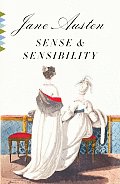
This was the other Jane Austen (along with Northanger Abbey) that merited a one sentence review: “It’s not a bad book; I just like her other stuff a whole lot better. ” Actually, I’m going to change that, borrowing a line from Becky’s review of Camilla: It’s not Jane Austen’s best work, being both delightfully pleasant (I did smile a few times) and yet sluggishly dull. But it’s not my favorite Austen, and it never will be.

Why do I not like thee? Let me count the ways:

1) Fanny. She’s annoying. She’s a doormat, a pushover. Sure, she’s an upright, moral person, but what good is that if she can’t even do anything without Edmund there. Yeah, there’s the whole status thing and Mrs. Norris is sufficiently vile, but even so, I’d like her to just be slightly more assertive, or at least more something. She reminded me of Anne in Persuasion, but Anne’s so much more sympathetic. Perhaps it’s because she’s older. But Anne knows her own mind, and even though her family (and others) think little of her, she’s not a doormat. Fanny is, and that drove me nuts. That, and she spent the entire book pining for Edmund. (Mr. Crawford wasn’t that bad until the end. Okay, so their sensibilities were not similar, but he really was trying and she just sat there pining for Edmund. What if he had never come round?) She’s not a sympathetic heroine at all. Which brings me to point 2.

2) The love story was terrible. This book was a long diatribe on what Austen believed to make up a good character. She abhorred excess in all its forms — either too rich or too drunk or too poor or too flirty — and Fanny was supposed to be the model of quiet, sensible decorum. (She didn’t like the spoiling of the Bertram sisters, but she also didn’t like the excess of ill manners at her parents house.) The love story was an afterthought, only coming on in the last 50 pages. Even Northanger Abbey had a better love story. When you read Austen, you want to read good character development and societal parody but you also want a good love story. At least I do. And I was highly unsatisfied with this one. (It’s not the “kissing cousins” thing. I can deal with that. It’s the “Edmund’s in love with Miss Crawford for the entire book and it’s just because she wasn’t horrified enough — or at all, really — at the actions of Henry and Maria and so Edmund realized that he could not marry someone who couldn’t be horrified at running away with someone else’s wife and that means Fanny has to be perfect” thing. Bleh.)

3) All the other characters. Enough said. Mrs. Norris was vile, evil, and I wanted to smack her. No wonder Maria went wrong. Sir Thomas and Lady Betram were lazy and Mrs. Norris was just a snob. She’s worse than Lady Catherine deBerg, too, because Mrs. Norris really has no reason to be a snob. She’s someone Lady Catherine would look down on. That makes it worse. Lady Bertram was as much a pushover as Fanny (maybe that’s why they got along?). Sir Thomas was a flip-flopper, sometimes being nice to Fanny, sometimes being a real jerk. Edmund was a twit. Sorry. See above. Tom was a drunk (at least he reformed). The Bertram sisters were shallow flirts and Maria got what she deserved. No pity. Mary Crawford was also a shallow, money grubbing flirt who could have been okay, but Austen decided that no, the only “decent” person in the book is going to be the pushover Fanny. And then there’s Henry. I actually liked him until he ran off with Maria. He wasn’t too bad; a bit of a flirt, but he was actually fun and interesting (and he read and acted well).

Mansfield Park isn’t an Austen book I’m going to come back to any time soon. I’d say that’s too bad, but I’m perfectly happy with the Austen books I do like.

Djinn in the Nightengale’s Eye

A couple years ago, when I read Possession (also by A. S. Byatt), my friend Julie recommended this collection of fairy stories, saying that I would LOVE it. She’s almost right: I liked it, but it fell short of LOVE. (Sorry, Julie.)

I really liked the first three stories: “The Glass Coffin”, which was a Snow White-esque story with a tailor instead of a prince waking up the imprisoned princess; “Gode’s Story,” a somewhat complex story about a man who wanted a woman, cursed her to wait for him, dumped her when she became haunted, married another and then became haunted when the first woman killed herself; and, my favorite,”The Story of the Eldest Princess,” where she goes off on a quest, but because she’s read so many stories, ends up opting out of the whole quest thing and instead hooks up with an old healer woman.

The other two stories — “Dragon’s Breath” and the title one — were okay, but not nearly as enjoyable. My complaints with Djinn, especially, are similar to the ones I had about Possession: too much extra stuff, but not enough plot. When it finally got around to the plot, I really enjoyed it: what would you do if you had access to a personal djinn? (And, what is it that a woman most desires? They never answer that one.)

It really was a collection of stories about stories. Sometimes, it worked — like in “The Eldest Princess”; sometimes, not so much, like in “Dragon’s Breath”. But when it worked, it worked really well, and I was captivated by the writing — Byatt is a really descriptive writer; I just wish she’d be a tighter writer. Perhaps that’s why the shorter stories appealed to me more: the writing was tighter, the stories more linear and less circular. They worked better for me.

Maybe sometimes I do “get” short stories. Funny.

Interpreter of Maladies

I was supposed to read Mistress for my last Expanding Horizons Challenge book. But I’ve had it on hold at the library for two months, and I just don’t think it’s coming (mostly because it’s currently listed as in the display case). So, I cast about looking for a last book to fill the Indian requirement, and my friend Sarah lent me this book.

For those of you (like me) not in the know: it’s a series of short stories written by Jhumpa Lahiri, an Indian-American. The stories feature people in various situations — dealing with death, with affairs, with tourists, with life — and places. Some are in America, some in India, some in England. One of the things that bothered me is that I kept trying to come up with some overarching theme, some reason why these stories were supposed to be together in a book. That was foolish of me (I don’t read enough short story collections): each story was meant to stand on it’s own, a little snapshot into the lives of the characters.

On the one hand, I loved this book. The prose is very eloquent (I can see why it won the Pulitzer Prize; it seems to be that sort of book), the images very picturesque. And yet, I felt on some level like it was calculated. It bothered me the same sort of way poetry bothers me — it’s beautiful, but I feel like I’m missing something. It’s like seeing a snapshot of an event versus experiencing the whole event. And, when I read at least, I often prefer the whole event to a little slice. I felt like I wanted more, needed more, and just when it was getting interesting, the story ended. That’s not to say I didn’t like the stories. “Mrs. Sen’s” was a very touching look at being an immigrant and adjusting to a new life in a new country. “This Blessed House” was amusing — a newly married couple kept finding Christian iconography (for lack of a better word) around their newly bought house — and an interesting look at the compromises people have to make when they get married. And, my favorite, ” The Third and Final Continent” was a nice portrait of a man’s immigrant journey and the people he encountered before and after arriving in the U.S. to settle. It’s also a glimpse into what the second immigrant generation loses.

Even though I wasn’t ultimately satisfied by it, it was a good read, something that I’m not sorry to spend my time on. Maybe one of these days, I’ll even “get” it.

The Other Boleyn Girl

I tried, a few years back (almost exactly), to read this one by Philippa Gregory, to no avail; I had read a couple other fiction books on Anne Boleyn and the Tudors (albeit YA fiction), and I was Tudored out. I went on and enjoyed two others by her, but this one was always lurking in the background; I figured I’d get around to it someday. The release of the movie prompted me to pick it up again. But, 230 pages into it, I realized something: I really don’t like these characters. In fact, I loathe them. I don’t mind naked ambition so much, but combine naked ambition with wantonly using people and loose morals, and you’ve got a bunch of people I’d rather not be reading about.

So, I bailed. Sometime after Mary Boleyn was pushed aside as King Henry VIII’s lover and Anne was squirming her way in, I decided that I’ve had enough of the Boleyn and Howard family. I mean, really: it’s one thing to be an object of the king’s desire, and to have him literally lust after you in front of his wife, the Queen. It’s entirely another to be practically pushed on him by your family (father and uncle specifically) and told to go have sex with Henry because it’s good for the family, while your poor husband (which your family arranged for you to marry in the first place) is shunted to the sidelines. Ugh. And so, since I know how the book ends anyway (everyone knows how the book ends; that’ s not the point), why bother spending time with such disagreeable people?

It’s not Philippa Gregory; as I said, I enjoyed both The Queen’s Fool and The Virgin’s Lover (though I remember liking the former better). Rather, it’s the Tudors, Howards and Boleyns. They were just despicable people (well, in historical fiction, anyway, they’re made out to be despicable people). And I think I’d rather not read about them. (Though I do have to admit, I’m intrigued enough by the time period that I’m rather curious about HBO’s The Tudors. I don’t know if I’ll ever get around to getting the DVDs, though… maybe after I forget how annoying and amoral these people were…)

This does mean, however, that I’m not going to count this one for the Once Upon a Time Challenge. I think I’ll substitute American Gods by Neil Gaiman, instead. I’ve been meaning to read another Gaiman. It’s got to be better than the Tudors, anyway.

The Winter Queen

I almost got a Russian minor in college. I know, I know… I’m not exactly a connoisseur of all things Russian around here, but I did have an interest in the country during my college days. (That and I had a morbid fear of Calculus. I know, I know… Russian isn’t easier than calculus. But try telling a stubborn 18-year-old that.) Anyway… I was trudging along taking classes, and mostly enjoying them until it came to the last two classes for a minor. One was conversation, and it was taught by a grumpy Russian woman, who told me that if I took her class she’d fail me. I spoke horribly. The other was the Russian literature class. I realized I just couldn’t stomach Russian literature.

Well, either I was horribly wrong (and I’ll admit that I could have been — Anna Karenina wasn’t nearly as horrible as I thought it would be… except for the last 100 pages. They were worthless) or Russian literature has changed a whole lot in the last 20 years.

Because I loved this book.

I’m not a big mystery reader, but I do love it when I find a good one. One that keeps me guessing, that makes me bite my nails, that keeps me up until late hours trying to finish it. Throw in a bit of humor, keep it relatively clean, add a winning/cute/sympathetic, detective, add a real intense ending, and you’ve got me hooked.

There you have it: Boris Akunin’s The Winter Queen in a nutshell. Really. Why bother with a plot summary, when all you really need to know is that Erast Fandorian, while no Sherlock Holmes, is an up-and-coming detective who just happens to get involved in something way over his head. And that he manages to solve the mystery anyway. And don’t forget the ending that had me going, “AAAAHHH! Where’s the next book!”

There’s really nothing more to say.

The Saffron Kitchen

This is one of those really good book-group books; there’s so much fodder for discussion. Talk about Sara and her relationship to her parents, especially her mother. Compare Sara’s and Maryam’s childhoods… was Maryam a good mother? Talk about Maryam’s relationship with her father. How did it affect her future and why do/don’t you think it affected her?

And the one that’s been haunting me for a couple of days: Was Maryam’s decision right?

I won’t bore you with the personal details on my end (I’d rather not, anyway), but I will say that this book threw my past up in my face (in a way; I didn’t live in Iran, obviously, and my father was — and is — actually a very kind, loving man. ) and made me assess my present. Can a person be happy in the life and love she chose even when she has had to give up something very dear to her?

I’d like to think, yes, she can.

But, one of the premises of the book — sorry for the spoilers, I don’t know how to review this without divulging it, because it’s just too personal — is that Maryam, at least, can’t. She lives with the ghosts, is haunted by her past, and ends up wrecking her life in order to face that past. I felt so bad for her husband, Edward. The only thing he ever did to deserve being left is love her. And that’s just not fair. That’s not fair of me, though, because this book isn’t about fairness.

I did like that it addressed issues of homeland and exile — is part of the reason why Maryam can’t overcome her past because she was forced to leave her country for another? (Ah, another book group question.) I liked and admired Sara; she was stuck in the middle of all this, and helplessly confused about her mother’s actions, especially since they so closely deal with Sara, herself. I liked Sara’s marriage to Julian — it was grounded, honest, and open, everything a good marriage should be. (And, I should add, very unlike her parents’. )

I’m not sorry I read this, but I do have to say it’s not one I, personally, will be reading again. The language is beautiful, the story haunting and moving. It’s just too close for comfort.

The Painted Drum

This is me exercising my right to give up on a book that I just am not enjoying.

This is me giving up on trying to enjoy Louise Erdrich’s books (this is the second one I’ve disliked).

This is me not writing what I really think about this book (though Hubby dared me to).

I had fairly high hopes for this one. I know I didn’t like Birchbark House, but I figured maybe it was that because Erdrich is usually an adult-fiction writer, that she just didn’t quite know how to write well for kids. It’s not that she doesn’t write well — some of her passages were quite beautiful. It’s just that there was nothing else. And after a while I lost interest in the whole first section — the story of Faye and how she came to have the drum. So, I skimmed to the second section, the story of how the drum came to be, hoping that it would be better. It was, but only marginally. And not enough for me to even care about the last two sections of the book. I wasn’t moved, I wasn’t touched, I wasn’t captivated.

So, I abandoned it. I’ve got better things to do with my time.

Northanger Abbey

I read this one ages ago, and the one-line summation that currently exists on my blog is this: “I didn’t particularly like this story. Perhaps I ought to re-read it sometime.”

I don’t remember my motivations behind that statement; I went through an Austen phase about five years back, where I read all of her works in quick succession over the winter. Perhaps I was just worn out: too much Austen too fast. Perhaps I was put off by the Gothic novel parody; I hadn’t (and still haven’t) read one of them, so I couldn’t appreciate the joke inherent in Northanger Abbey‘s plot.

Whatever the reason, I’ve been staunchly in the camp that mocks this book, calling it boring and insipid, and not nearly as brilliant as her other works.

I’m here to eat some crow and admit that I was wrong: I like Northanger Abbey.

Why, you may ask? What changed my mind? I think a lot of my change of heart came about because I started this challenge with this one. I was dubious — starting with my least favorite Austen didn’t seem like a good way to begin things — but, being a dutiful reader (and one who is willing to stick with her plan), I decided just to go for it. I came to this book fresh — I haven’t read an Austen book in a long time — and decided to give up my prejudices. The other thing that helped, however, was a very informative and interesting introduction by Claudia L. Johnson. In it, she explains the origins of Northanger Abbey (including Austen’s irritation at the manuscript being bought in 1803, but never published) as well as the jokes inherent in the novel. Because I read the introduction, I was able to more fully enjoy the novel.

And I did enjoy it. I don’t think that it’ll be my favorite Austen novel, but it is a charming little book, a quintessential Austen novel. There’s Catherine, the silly girl, completely oblivious to society around her. Isabella, her “beloved” friend, is the social climber, exchanging both Catherine’s friendship and Catherine’s brother’s honest affections for something more lavish. Eleanor is the perfect, true, honest friend. Henry is charming in his role as the perfect Austen hero: knowledgeable, but not overbearing, falling in love with Catherine for her imperfections rather than in spite of them. The “bad” elements are there, too: there’s John the boor, who went so far as to “kidnap” Catherine for an afternoon, and then became infuriated that she doesn’t return his affections. And General Tilney in the role of the overbearing, disapproving parent who attempts to keep the lovers from happiness. Still, it wouldn’t be an Austen novel without the happy ending, though in this case, it’s incredibly, almost unbelievably, contrived. Maybe it’s more accurate to call this Austen-lite. She became a better writer, delving more deeply into characters and motivations and relationships as she went on, which is why her later books are the ones that are truly the classics. Still, this one is worth digging out and reading every once in a while, if only for the last line:

To begin perfect happiness at the respective ages of twenty-six and eighteen, is to do pretty well; and professing myself moreover convinced, that the General’s unjust interference, so far from being really injurious to their felicity, was perhaps rather conducive to it, by improving their knowledge of each other, and adding strength to their attachment, I leave it to be settled by whomsoever it may concern, whether the tendency of this work be altogether to recommend the parental tyranny, or reward filial disobedience.

1984

Hear that?

It’s the sound of me surfacing, exhaling, sighing with relief now that I’m finished with George Orwell’s classic distopian novel (the word on the back of our copy is “negative utopia”, but then it was also published — and bought by Hubby — in 1984). It went down like bad medicine; combined with my usual January blues, I was thrust into a funk that was only abated by liberal dosages of 30 Rock.

Now that it’s done, I can look at it at least partially objectively. It is a classic, but a very dated one. It’s very blatantly, obviously a product of World War II.

Let me sum up for those who haven’t read it (so you don’t have to): Winston Smith, 39 years old, is a Party member in Oceania. He works in the Ministry of Truth (the “propaganda” ministry — the ministry names were funny, in a morbid way: Truth is propaganda; Peace is war; Love is the police; Plenty is economic affairs), as a recorder of some sort. He spends his days altering history, making minor corrections in the records of the past whenever someone disappears, or the economic realities come out differently than predicted, or they change with whom they are at war. He is unhappy; partially because he leads an unhappy life, but partially, also, because he questions this history-making. He remembers that things used to be different; he remembers his childhood. And so, he begins rebelling in small ways. He gets a diary, and writes in it. He takes a lover, Julia (Party members aren’t supposed to have sex). And, after what could be weeks or months, they get caught. Winston is tortured, beaten down, electrocuted, re-programmed and sent back into the world.

There’s this one point where O’Brien, the Party member responsible for Winston’s re-programming, goes on about the faults of previous totalitarian regimes: they created martyrs. They killed their enemies, sure after torturing them or humiliating them, but they killed them nonetheless. “Above all,” he tells Winston, “we do not allow the dead to rise up against us. You must stop imagining that posterity will vindicate you, Winston. Posterity will never hear of you. You will be lifted clean out of the stream of history.”

Chilling, isn’t it. It’s a dated book, as a mentioned before, and not just because the technology is dated. It’s more than that: we’ve moved past the ideas in the book as a society. I really don’t think this book works as a “warning” any more.

It’s not that there isn’t totalitarian regimes anymore. There is. (I was shocked at how well Orwell depicted Mao and the Cultural Revolution, before it happened. Eerie.) But we’re in a much more global society, a much more capitalistic one (for good or bad). There’s authoritarian countries — China, still, Cuba and Russia under Putin — but they’re not the super-scary places that Orwell was writing about. Saddam Hussein is gone. The only one left, that would fit this book’s description is North Korea. It’s scary, it’s depressing, it’s evil… and yet it’s not the way the world is going. There’s too much information flowing — take the internet — too much capital, there will never be a world like the one Orwell imagined.

But as a political novel, a look at what could-have-been, it it could have been compelling (though depressing) book. Yet, I wasn’t compelled. I was repulsed. Physically sickened. Depressed. It took some talking to Hubby, but I finally hit upon it: Orwell has no hope. There is no way out in this book. There is no hope for a brighter future. This is the way things will be. Accept it, love it, or become run over by it. And I couldn’t. I couldn’t take it.

And so, I suffered through (I should have given up, but I did so want to be part of the discussion, and I can’t do that if I go in and say “I didn’t finish the book.” There’s also the very large chance that most of the other women who come will have not read the book, so somebody had to.), very very grateful for the world we live in today.

The Hummingbird’s Daughter

I have had a hard time with Latin@ (see, turtlebella? I do learn!) literature in the past. Magical realism and I have not been good friends. I hear over and over again people loving these books and I read them, and… I think they’re just weird.

But this one, by Louis Alberto Urrea, is different. Maybe it’s because though the magic is there, it’s not nearly as prevalent as in other books. But I think it’s mainly because it’s a work of historical fiction, and more than that: it’s a work of love.

The story is that of Urrea’s great-aunt Teresa. She was the bastard daughter of Thomás Urrea, a patrón of a ranch in Mexico. She flies under the radar for the most part during her early life, living in squalor and unloved by her aunt (her mother left when Teresa was small) until she came under the guidance of the local healer, Huila. Then she learns the secrets of the Indians (of which she is half), and how to heal and dream and guide. Eventually, after the ranch moves north to a different location, he and her father become reconciled (though it’s more like “become introduced”) and she moves in the main house with him. She learns to read, her life is pretty quiet. Until one day, when a vaquero attacks her in her sacred grove of trees. She dies… and is resurrected. And from there, we see the evolution of Santa Teresa, the woman who will help the masses rise in revolution against the dictatorship.

Writing that, it sounds very simple, but this book is anything but. It’s immense. It’s lyrical. It’s funny. It’s sorrowful. The one thing I could tell is that Urrea really cared about his subject. The love and respect he has for Teresa, as well as all the years of research he did, is evident in every page. And because of that, the book (for me, at least) soars. I couldn’t put it down. I hung on every beautiful descriptive word. An example:

Only rich men, soldiers and a few Indians had wandered far enough from home to learn the terrible truth: Mexico was too big. It had too many colors. It was noisier than anyone could have imagined, and the voice of the Atlantic was different than the voice of the Pacific. One was shrill, worried, and demanding. The other was boisterous, easy to rile into a frenzy. The rich men, soldiers, and Indians were the few who knew that he east was a swoon of green, a thick-aired smell of ripe fruit and flowers and dead pigs and salt and sweat and mud, while the west was a riot of purple. Pyramids rose between llanos of dust and among turgid jungles. Snakes as long as country roads swam tame beside canoes. Volcanoes wore hats of snow. Cactus forests grew taller than trees. Shamans ate mushrooms and flew. In the south, some tribes still went nearly naked, their women wearing red flowers in their hair and blue skirts, and their breasts hanging free. Men outside the great Mexico City ate tacos made of live winged ants that few away if the men did not chew quickly enough.

It’s books like this that make me glad I read as much as I do.