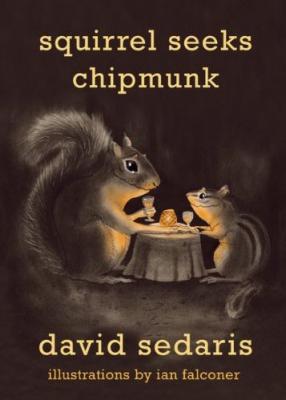
Squirrel Seeks Chipmunk

A Modest Bestiary
by David Sedaris
ages: adult
First sentence: “The cat had a party to attend, and went to the baboon to get herself groomed.”
Support your local independent bookstore: buy it there!

The number one rule in reviewing is never start a review saying you don’t like the genre. You do that and people will discredit everything you say after. Except… it’s really true in this case. Satire and I, we don’t get along. I am not a fan of the literary technique, I usually don’t “get it”, and I rarely find it funny.

And yet. I “got” this book, or at least most of it. It helps that Sedaris — again, whom I’ve had a bit of a rocky relationship with; I find him hilarious in person, but I don’t think his humor translates in writing for me — is poking fun at people we all know: hairdressers, complainers, obsessive parents, liberals, conservatives, intellectuals, vigilantes; no one is safe from the Sedaris’s caricaturization.

That’s not to say that every story works equally well, and truthfully, that may have been me. I really liked the ones I “got”, especially “The Cat and the Baboon,” “The Toad, the Turtle, and the Duck,” “The Parenting Storks” (an excerpt of which I heard on NPR, which led me to pick up the book in the first place), and “The Grieving Owl”. Each of these I found hilarious in their own way; possibly because the are the most accessible, and possibly because I found them funny, knowing people like that (though don’t we all).

Sedaris also balances between humanizing these animals and keeping them in the animal world: nothing really has a happily ever after, and the viciousness is often due to the nature of the animal: a baby stork falls from its nest presumably to its death, a bear is captured and forced to be a part of a circus, the crow eats the baby lamb’s eyeballs. It’s a reminder that, no matter how pretty we try to make it, nature is a cruel, vicious place. And the moral? Nobody’s exempt, no matter what you think.

It’s a weird little collection of stories, and not for everyone. But as far as satire goes, it’s quite good.

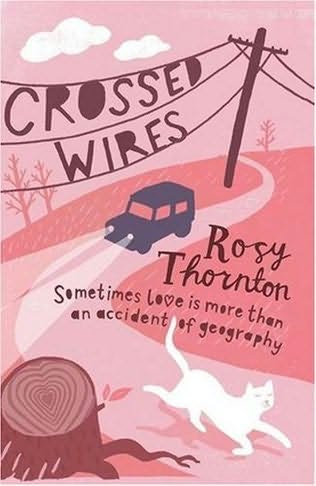
Crossed Wires

by Rosy Thornton
ages: adult
First sentence: “
I’ll still tell you to support your local indie bookstore, but you can’t buy it there. (Maybe you can order it? Or buy one of her other books?) Check it out on Amazon.
Review copy provided by the author.

It started off uneventfully. (Don’t all good love stories begin that way?)

Single-mom Mina, who works the phones at a Sheffield call center for auto insurance, just happens to get the call where single-dad (and Cambridge professor) Peter reports that he’s crashed his car into a stump. You wouldn’t think anything would come of this one-time, chance encounter. Especially since Mina has her hands full with her 10-year-old daughter, Sal, and her younger sister, Jess, who’s never around. And Peter, with his 9-year-old twins, is still kind of mourning the death of his wife several years back. But, when Peter (who tends to be incredibly accident-prone) crashes his car yet again, he calls and asks for Mina which begins a phone relationship that slowly develops into something more.

It’s an understated little book; both Peter and Mina dance around their relationship. It’s really only a friendship, but one of those friendships that mean something. Someone you come to rely on and find comfort in. It doesn’t matter that they live miles apart, have completely separate lives. In fact, as a reader, you don’t really care that you’re reading a fluff romance book in which there is, in fact, no romance. It’s more a life book: watching Mina deal with her ups and downs; watching Peter as he muddles through, and then how they reach out to each other to try and find something to hold on to. The writing is charming, the characters are ones you want to move in next door to. It’s Britishness at its finest, where you want to grab a cup of tea and a comfy blanket and curl up with a good book.

And it’s just the book to do that with.

Girl in Translation

by Jean Kwok
ages: adult
First sentence: “A sheet of melting ice lay over the concrete.”
Support your local independent bookstore: buy it there!

Nice.

I’m not sure I’m supposed to sum up an immigrant girl’s horrific-and-yet transcendent American experience in one word, especially nice, but there it is.

I found this book to be… nice.

It’s beautifully written, true. And it tells an untold story: of what can happen to immigrants (legal in this case) when they come to America. It’s the story of the American dream: how a girl’s ambition, and how one thing — in her case, being smart and having a “talent” for school — can change the fortunes of just about anyone, especially with hard work and a few lucky breaks. There’s also a love story, tragic and bittersweet.

We follow Kimberly Chang as she and her mother arrive in New York, fresh from Hong Kong, hoping for a better life. They’re under the patronage (thumb?) of the mother’s older sister, Patricia, who sets them up with a job — being finishers at a clothing factory, being paid by the skirt — and an apartment — in an abandoned building with roaches, no heating, and half the windows gone. It’s a rough adjustment for Kim, although she has some grasp of English, she is not prepared for school in Brooklyn. Her grade fall, she skips school, and it’s really only through the chance grace of a friendly gesture that gets her to go and stay. Which, in the end, is what saves her.

There’s some lovely writing in the book, and small touches here and there — like they way Kwok wrote what Kim heard as opposed to what the real word was, when she was just learning (“Where’s your accent note?”) — that I found to be charming. It covers a lot of time, eight years, as Kimberly goes through middle school and high school. There are lots of downs, understandably, but there are ups as well.

But, in the end, I felt that it was going for depth, for heartache, for the chance to move the reader and all I felt was that it was tragic, and yet how nice that she was able to overcome it all. How nice that it all mostly worked out. How nice that she was brilliant and had opportunities. How… nice.

There are worse things, though. At least it was nice.

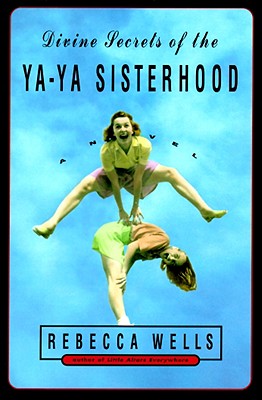
Divine Secrets of the Ya-Ya Sisterhood

by Rebecca Wells
ages: adult
First sentence: “Sidda is a girl again in the hot heart of Louisiana, the bayou world of Catholic saints and voodoo queens.”

I’ve seen this around for years (I think I’ve even seen the movie), and I always thought, off hand, that it would be an interesting book to read. Mother-daughter relationships, the South, and a promise to laugh and cry and be swept away.

And I tried to read it. I tried to like it. I tried. But…

*yawn*

I didn’t even make it 100 pages in, and I was bored stiff. Bored with Sidda and her whining. Bored with her attempts to find love and embrace life. Bored with the story. I did like Vivi as an adult; she had spunk and a fiery spirit, but there just wasn’t enough of her. I’m sure if I had given it time, I may have even grown to like the flashbacks to the Ya-Yas childhood. But the jumping around in time was bugging me, and I bailed after Vivi and Caro were scrubbing the Virgin Mary from Cuba white again.

Enough. I don’t have time to deal with this, and I exercised my right to stop reading.

Sometimes, doing that is really quite liberating.

Miss Pettigrew Lives For a Day

by Winifred Watson
ages: adult
First sentence: “Miss Pettigrew pushed open the door of the employment agency and went in as the clock struck a quarter past nine.”
Support your local independent bookstore: buy it there!

This book totally and completely charmed me.

It the story of basically twenty-four hours in the life of Miss Guinevere Pettigrew — forty years old, spinster, very bad governess — which she inadvertently (she answered the wrong ad at the employment agency) ends up spending with London socialite Delysia LaFosse — scatterbrained, sweet, and very indecisive — and it changes her life. Instead of being dowdy and proper, she experiences how “the other half lives”, and learns to let her primness and dowdiness go.

There’s so much to enjoy: from Miss Pettigrew’s initial hesitance with the entire situation, her realization that she’s very much out of her element, to her brazen embracing of that life, and her guiding poor Delysia through it. Miss Pettigrew is not really educated or even all that witty, but she’s got a good head on her shoulders and isn’t afraid — after an adjustment and acceptance of her present situation — to use it.

The book isn’t as delightfully funny as the movie (yes, I saw that first), and there’s a tad bit of racism in it that made me slightly uncomfortable (it was written in the 1930s, but that’s no excuse), and I do have to wonder at the “make yourself up and the world will be better”. But for the moments of pure pleasure, and because thoroughly charming that everything is forgiven. Especially since I read the book with a huge smile on my face.

Completely and utterly charming.

The Girl in Hyacinth Blue

by Susan Vreeland
ages: adult
First sentence: “Cornelius Engelbrecht invented himself.”
Support your local independent bookstore: buy it there!

I first read this book when it initially came out, back in 1999. I think I was drawn to it because it was Vermeer, and back in those days I was very much into art and artists. It was only three years, after all, since we had gone to the National Gallery and seen the Vermeer exhibition, which was a remarkable (if crowded) experience.

I hadn’t looked at it or even much thought about it since then — I remember liking it, but that’s about it — and so when a friend brought me a copy, having picked it for our in-person book group, I was more than happy to read it again.

It’s basically the story of a painting of Vermeer’s — one of a girl swathed in hyacinth blue, sitting, looking out a window, her sewing forgotten — as told backward through time, beginning with the present and ending with the painter and subject. It’s a collection of short stories, each one standing uniquely on their own, but work that much better as a collective whole. (As an aside: like novels in verse, I tend to like short stories better if they’re linked to each other somehow.) There are female and male protagonists, there are art lovers and those for whom the painting is an afterthought. There are villains and saints, lovers and merchants. It’s an eclectic bunch. But, perhaps, that’s the point.

I think the most interesting thing about this novel is the way the people interact with the art. Perhaps it’s best to explain this through my favorite story, Morningshine. This tells the story of a farmer’s wife during a winter flood in a small town in the Netherlands. She’s trying to make things meet, while her husband’s away repairing the dikes, and she discovers that someone has left the painting and a baby in their boat. She falls in love with both, and takes it as her personal mission to save them. She adores the painting, finding solace and satisfaction and peace in the simple beauty of something so unnecessary. The art touches her life, intersects with it, making it better. Of course, she ends up selling it: they are poor, after all, and the flood has all but devastated the potential to have crops that year. Better sell something unnecessary than starve. But for the fleeting days that she had the painting, her life was better, somehow.

It’s all like that: simple stories about simple people. The writing is simple, too: not simplistic, but almost poetic; it felt like every word had a use, something which always impresses me when I come across it. It’s not an earth-shattering book, in much the same way that Vermeer’s art isn’t earth-shattering. That doesn’t mean it’s not very nice to experience. Because it is.

The Elegance of the Hedgehog

by Muriel Barbery
ages: adult
First sentence: “‘Marx has completely changed the way I view the world,’ declared the Pallieres boy this morning, although ordinarily he says nary a word to me.”
Support your local independent bookstore: buy it there!

This book has been making the rounds over the last year or so, and I’ve come to a conclusion: you will either really love it (if you are a certain sort of person and it is the right sort of time) or really hate it (if neither of these things are true). To be completely honest: it is an incredibly pretentious book, full of Philosophy and Art and the Meaning of Life. There are times when you want to roll your eyes at the platitudes and the “smarter-than-thou” attitude of the whole book. (A common complaint is that one is just not smart enough to read this book.)

But, it’s also endearing in its pretentiousness; there are little moments of true charm, humor, and maybe even inspiration. My only advice: give the book some time to work on you. It starts with some heady philosophy, but then it settles in.

There isn’t much to the story. Our two main characters, 54-year-old Renee and 12-year-old Paloma, are both very brilliant, but neither one seems to know quite where they belong. Renee is a self-educated peasant that’s a concierge in a posh Paris apartment building; she knows the tenants expect her to behave in a certain way, and she’s more than happy to oblige. Paloma is at odds with her family: they are stuck in a rut, and she’s decided that life’s not worth living if all it has to offer is how her parents (or even the rest of the tenants) live.

Then Kakuro Ozu moves into the building. He’s not like anyone else: he’s introspective, intelligent, observant, elegant, and more than willing to reach out to both Renee and Paloma because he senses in them, as Anne would say, a kindred spirit. Age and class don’t matter; a friend is someone who is worth spending time with.

The ending is a bit abrupt, and, admittedly, not as moving as I think Barbery wanted it to be. But, even with that, it was an interesting and enjoyable book to journey through.

The Particular Sadness of Lemon Cake

by Aimee Bender
ages: adult
First sentence: “It happened for the first time on a Tuesday afternoon, a warm spring door in the flatlands near Hollywood, a light breeze moving east from the ocean and stirring the black-eyed pansy petals newly planted in our flower boxes.”
Support your local independent bookstore: buy it there!
Review copy sent to me by the publisher.

I was sitting on the computer, idly watching my Twitter feed when I noticed that Heather at Capricious Reader mentioned that she picked up this book. A prime opportunity for a buddy read… and so I proposed it. Thankfully, she was game to go along!

The basic story is about Rose who, at nine years old, discovers that she can “read” people’s feelings through the food she eats. It’s only the feelings of the people who pick or prepare the food, but it’s an incredibly unsettling experience. The book follows her journey as she figures out what the feelings mean, how to understand them, and how to deal with the fall out from what she knows. In addition, the book explores the dynamics within Rose’s family, with her hovering, yet disconnected mother; her distant father; and her very odd older brother.

Melissa: I wanted to read this book for two reasons: the cover looks sooo yummy, and I was looking for something similar to Sarah Addison Allen’s books, and readers on Twitter — don’t remember who — suggested Aimee Bender. How about you?

Heather: Pretty much the same reason. That cover is hard to resist! I also thought the premise sounded interesting. What did you think of Rose and her special ability?

Melissa: I thought it was an interesting idea, to be able to sense the places ingredients are from, to be able to sense the feelings of the cook. But nine seemed a little… young to handle it. I guess that was part of the story, though: Rose’s inability to handle her skill. There were moments in the book when I thought Bender captured the essence of Rose’s gift perfectly… the angst, the discovery, the learning. But, there were times when I wanted to smack the characters upside the head? What did you think?

Heather: About the same! I thought it was a very interesting idea. Nine did seem young, especially having to face such adult feelings coming from her mother, but like you said, I think that was part of the story. I also wondered what I would do, or anyone really, could do that and how they would react to it. I thought the fact that Rose, for the most part, kept it a secret was spot on. I don’t think I would want anyone to know that! Yet, at the same time, I was thinking if I could do that, I would want to help everyone FEEL BETTER and that could potentially make you go nuts. And I totally wanted to smack her father upside the head! And her brother too! What did you think of what happened to him?

Melissa: How much do I manage to answer that without giving too much away?!? Actually, I thought the subplot with the brother was the weakest part of the book. I kept wanting more Rose, more exploration of the food, more exploration of how Rose handles the food and less with her brother. Okay, he’s weird. And I got that he was doing weird stuff, but… it just wasn’t interesting? I think it would have been a different book had maybe Bender glanced at Rose’s childhood, but spent more time with Rose after she developed into her own; I wanted to know more about the cafe owners. Though, on the other hand, perhaps Bender was looking at the family dynamic as a whole?

Heather: I kept thinking he seems so autistic and no one seemed to want to help him. I mean, did anyone try to figure out what was wrong with him? In fact, it seemed he was encouraged to escape. He was definitely different and I agree, it felt kind of week. Almost like Bender wouldn’t even figure out what to do with him!

I think she was looking more at the family dynamic. It seemed Rose was the most normal, even with her “skills.” I thought their whole interaction was pretty interesting. They were always so together (eating meals together, watching TV together, etc), to not seem to know anything about each other. Well, except for Rose, of course. What did you think of their dynamic?

Be sure to head over to Heather’s for the rest of the conversation.

The Beekeeper’s Apprentice

Or, On the Segregation of the Queen
by Laurie R. King
ages: adult
First sentence: “I was fifteen when I first met Sherlock Holmes, fifteen years old with my nose in a book as I walked the Sussex Downs, and nearly stepped on him.”
Support your local independent bookstore: buy it there!

I would have never, ever picked up this book if it weren’t for a suggestion by Kelly at The Written World to do a buddy read. We tossed a few ideas back and forth, and she suggested this one. I had no idea what it was, I’d never heard of the author or the book… but it sounded interesting, so I said yes.

And was most pleasantly surprised.

Mary Russell was 15 years old when she met the by-then infamous Sherlock Holmes. It didn’t take very long for the two of them to become inseparable, and over the years, she ultimately became his apprentice. They tackled a few minor cases together, and as exercises, he lobbed cases (both from the newspaper and a few he was working on) at her. It wasn’t until the kidnapping of the American senator’s daughter, Jessica Simpson, that Mary was able to become a full-fledged partner. And it was a good thing, because soon afterward Holmes and Russell — as they called each other — were to face their most brilliant, most formidable foe yet.

I answered a few questions Kelly asked about the book; head over to her blog to see her answers to the questions I asked her.

When I recommended this book you weren’t entirely sure of it, and then when you finished it you seemed surprised that you liked it. Why didn’t you think that this book was going to work for you?
Mostly because I don’t particularly like mysteries. I don’t know why, because when I finish one — hopefully, it’s good — I realize that I usually have a grand adventure while reading it. They just aren’t at the top of my list of things to read, and I usually have low expectations. Perhaps that’s why I’m generally surprised when I like them!

What was it about the book that made you enjoy it?
I think a lot of it was the way she portrayed Sherlock Holmes. I’ve read some of the stories, but I’m a fan of the Jeremy Brett/BBC Sherlock Holmes series from the mid-80s. I don’t know if King was, too, but I kept picturing Jeremy Brett as Sherlock Holmes, and all the quirks and idiosyncrasies he brought to the character. It was also a pretty decent plot, though it took a while for it to get going for me.

Did you find the book believable based on the time period it was set during and what you know about Sherlock Holmes?
Yeah… I guess. I’m not really that versed on early 20th-century England, or even Sherlock Holmes, so I’m not quite sure how to answer that. The introduction of cars and phones in Holmes’ world worked for me.
Did you like Mary Russell? Was she a believable character?
I did like Mary Russell. I thought she was smart and resourceful, with a wicked sense of humor — loved the prank she pulled where she dressed up as the Indian dignitary for the term — and great intuition. I suppose the hesitancy of Holmes to completely trust her was applicable for the time period, but if I had one criticism is was that I wanted more from Mary. Especially near the end.

What did you think about the case and how it related to the plot?
Hm. I’m not sure what you’re trying to ask… if it’s how did I think the case related to the growing friendship (love?) between Holmes and Russell, then I thought it worked very well. I would have liked to seen more of them cooperating, bantering back and forth, using their minds and deductive reasoning to solve cases. But, if you’re asking what I thought of the main case as a whole, I thought it was interesting, but not especially super-well plotted as far as mysteries go. Then again, I’m not the world’s best judge of that! I found it interesting, if a bit meandering.

Easy question: Will you be reading the rest of the books in the series?

Maybe. Not right away; I don’t feel an urge to rush out and get the next book. This one stood alone quite well. But, maybe if I ever get in a mystery mood again, I’ll seek out the next one in the series.

Much Ado About Nothing

by William Shakespeare
ages: adult
First sentence: “I learn in this letter that Don Pedro of Arragon comes this night to Messina.”
Support your local independent bookstore: buy it there!

What does one say about this Shakespeare play? Good question.

How about…

It’s got some of the best bantering passages ever written in the dialogue between Beatrice and Benedick. One of my favorites, near the end:

Benedick: And I pray the now tell me, for which of my bad parts didst thou first fall in love with me?
Beatrice: For them all together, which maintain’d so politic a state of evil that they will not admit any good part to intermingle with them. But for which of my good parts did you first suffer love for me?
Benedick: Suffer love! a good epithite! I do suffer love indeed, for I love thee against my will.
Beatrice: In spite of your heart, I think. Alas, poor heart, if you spite it for my sake, I will spitie it for yours, for I will never love that which my friend hates.
Benedick: Thou and I are too wise to woo peaceably.

It’s a silly play, but not nearly as silly as some of Shakespeare’s other plays. Hubby’s always said Shakespeare had about 45 minutes of good material, and then had to write a play around that.

It’s pretty accessible as a play — and for reading a play, it wasn’t half-bad either — I watched a BBC version (I know: I adore the Branagh version, too, but I watched that separate from reading it), and by the end, both M and C were curious about what was going on.

The men in the play are infuriating. Absolutely infuriating. I was yelling at the book/movie at one point. I mean really: Hero’s own father didn’t believe that she was set up??

Don Juan is a thankless character. (Especially when Keanu plays him.) I don’t understand his motivations, and what he does is really low-brow rather than vindictive. A pox on him.

That said, it’s a fun play, an enjoyable play, and one definitely worth reading/seeing. Especially in the summertime.