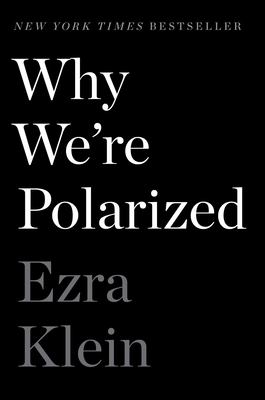
Why We’re Polarized

by Ezra Klein
First sentence: “‘I’ve spent a part of every day since November 8, 2016, wrestling with a single question,” writes Hilary Clinton in What Happened.”
Support your local independent bookstore: buy it there!
Content: There’s some mild swearing. It’s in the Current section (it’s where we put all political books) at the bookstore.

I don’t usually read political book. I leave that to my husband, who then (sometimes) summarizes them for me. But the title of — and the idea behind — this one captured my attention. I have noticed over the past four years (though probably longer, if I’m really honest) that we’re just getting more and more polarized politically, and I wanted to know what to do about it.

Well the bad news: Klein doesn’t have a whole lot of ideas about “what to do about it”, and what ideas he does have probably don’t have much chance of getting passed (get rid of the Electoral College, increase the Supreme Court to 15 people, and so on). But what he did do was help me understand how we got to this place. And the reason? It’s actually a logical growth from the way politics has been headed since the 1960s. In short: political parties could agree and compromise more because they both basically agreed that black people were the worst. Change things so black people have rights, and suddenly (well, over time), one party becomes a haven for everyone who thinks that’s a Bad Thing and the other party becomes more open to diversity. Sure, that’s simplifying, but it has a lot to do.

There are other reasons: how politics have become national (can you name your state representative?) instead of local, and that’s more polarizing. Or how parties have become less about politics and more about identities and how we identify. It’s less about concrete policies and more about ideologies, which isn’t a great way to run a country.

So, even though it’s not terribly helpful on the action end of things, it was quite fascinating to understand how we got to this point. Especially for someone who doesn’t read a lot of political science scholarship.
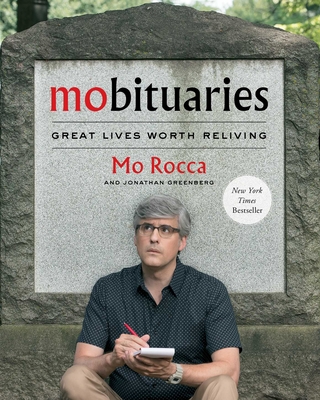
Audio book: Mobituaries

by Mo Rocca
Read by the author.
Support your local independent bookstore: buy it there!
Or listen at Libro.fm
Content: There may be some mild swearing. And sometimes the topics are kind of gross. It’s in the biography section of the bookstore.

I picked this one up because I like Mo Rocca on Wait Wait Don’t Tell Me. Which is also the reason I picked to listen to it rather than read it. I enjoyed listening to Mo tell these stories — some of which I knew, most of which I didn’t — about people and ideas that have passed on. The problem? In audio, while it was going, I was interested and entertained. Afterward, though, I couldn’t tell you a single thing about what I heard. Maybe it’s just how I retain knowledge, maybe it was a bit the way the book was structured (it was more a trivia book than anything else), but I didn’t retain a single thing. It’s very much a bathroom book: read a story while you go to the bathroom, and then put it down.

That does’t mean it was bad. Mo is very entertaining, both as a writer and a reader, and some of these stories were quite fascinating. But it just didn’t stick with me in the long run.

So: entertaining, but not really informative.

Dragonsong

by Anne McCaffrey
First sentence: “Almost as if the elements, too, mourned the death of the gentle old Harper, a southeaster blew for three days, locking even the burial barge in the safety of the Dock Cavern.
Support your local independent bookstore: buy it there! (Though I’m not entirely sure you still can.)
Content: There is some emotional abuse and injuries. It would be in the YA section (grades 6-8) of the bookstore.

I wrote about this about 14 years ago (I have been blogging for a very long time!) but I thought I’d give each of these a proper post of their own (because once you read the first, you kind of have to read the rest).

Menolly is the youngest daughter of the Half-Circle Sea Holder. He’s a strict man, in charge of the whole hold (think a small medieval city) and he doesn’t have time for Menolly’s “twaddlings” — her foray into music. She has a gift for songwriting, but because she’s a girl, her father (and mother) believes that she’s a disgrace because she should be doing women’s work. Not music. After a knife accident supposedly renders one of her hands useless, Menolly runs away. And inadvertently impresses nine fire lizards. She doesn’t think much of this until a dragon rider finds her, and brings her back to the Weyr. It’s there that she learns her true worth.

It’s a fantastic story. You can’t help but feel for Menolly’s plight in the Sea Hold, stuck with parents who don’t understand her desires and dismiss her talent as “useless”. It’s so very easy to hate her parents and her siblings (well, there’s one brother who’s okay) because they just don’t understand or care. And when Menolly gets to the dragon weyr, her life changes so drastically. There’s one scene where all the people at the weyr are fussing over her, helping her get new clothes and a haircut, and Menolly bursts into tears because no one has ever been this nice to her.

It’s a story about a girl persevering even though everything’s against her, and it’s a joy to read. And there’s bonus bits for those who have read all the other books as well. (Or at least the original trilogy.) The best thing is that it still holds up all these years later. Such a good book!

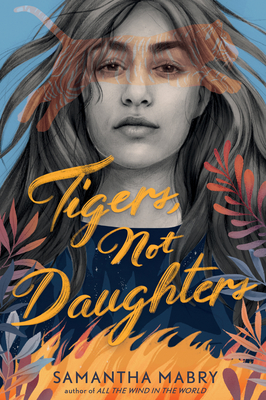
Tigers, Not Daughters

by Samantha Mabry
First sentence: “The window to Anna Torres’s second-story bedroom faced Hector’s house, and every night she’d undress with the curtains wide open, in full view of the street.”
Support your local independent bookstore: buy it there!
Content: There are a lot of swear words, including multiple f-bombs. There is also a lot of talk about teen sex and some teen drinking. It’s in the Teen section (grades 9+) of the bookstore.

The four Torres sisters live in an unhappy house. Their mother died when the youngest, Rosa, was born, and their father hasn’t been the same since. But their one attempt at running away was foiled. And a year later, the oldest sister, Ana, was dead.

The three remaining sisters have been grieving in their own way. And a year after Ana’s death they’re at a breaking point. And when Ana’s ghost shows up, it pushes the rest of the girls over the edge.

This is a little bit family drama, a little bit empowerment story, and a little bit ghost story, and Mabry makes it all work together excellently. The narrative switches between the three surviving sisters, as the story of Ana’s death, and their home life, unfolds. It’s a celebration of sisterhood — not just actually having sisters, but the act of women working together and supporting each other. And how we are stronger together than apart. It’s about grief and healing and support and the intersection of those three.

It’s an excellent story. I really ought to read more of Mabry’s book.

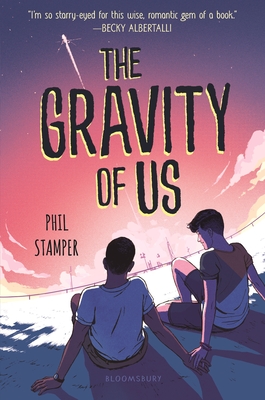
The Gravity of Us

by Phil Stamper
First sentence: “At home, I’m invisible.”
Support your local independent bookstore: buy it there!
Review copy provided by the publisher.
Content: There’s a bunch of swearing, including a dozen or so f-bombs, as well as some teenage drinking. It’s in the Teen section (grades 9+) of the bookstore.

Cal has a decent life in Brooklyn: he lives upstairs from his best friend, Deb. He has a goal in life for after his senior year. He’s got a following on FlashFame, a social media app. The only downer: his parents constantly fight, mostly about his dad applying to be a pilot for one of NASA’s missions to Mars. Which means, if he gets it — and he does — they’ll have to relocate to Houston. Which is something neither Cal or his mom wants.

But once they get to Houston, Call meets Leon, the son of another astronaut. And there’s some instant attraction. Like loads of it. Enough that maybe Cal might change his mind about wanting to go back to Brooklyn.

There’s more to the story than that. There’s tension between Cal’s FlashFame celebrity and StarWatch, a network that is supposed to have unlimited access to the astronauts and their families. And there’s some uncertainty about whether or not the program will, in fact, go forward.

I thought this was a sweet book. I liked the merging of a retro-60s feel with the astronauts and the space program; we don’t really get excited about astronauts going into space anymore, and maybe we’ve lost something by not caring more about space. I liked that Stamper balanced the astronaut story with the story about journalistic ethics and a very cute gay love story. I really liked Cal and Leon and how their relationship developed.

It was a charming read, and I’m looking forward to seeing what Stamper writes next.

Audiobook: The Glass Hotel

by Emily St. John Mandel
Read by Dylan Moore
Support your local independent bookstore: buy it there!
Or listen at Libro.fm
Content: There is a lot of swearing, including multiple f-bombs. It’s in the adult fiction section of the bookstore.

This one is a bit hard to sum up, plot wise. We mostly follow Vincent, who grew up in a small town in British Columbia, on the ocean, and whose mom died in a freak accident when she was 13. She’s working as a bartender in the posh Hotel Caiette when she meets Jonathan Alkaitis, who ends up going to jail for running a Ponzi scheme. There are various sub-plots and diversions, but that’s the basic meat of it.

However, the joy in this book comes from the diversions. It doesn’t follow a linear timeline, jumping back and forth throughout the years, as we get to know Vincent and others. Mandel focuses on the effects of actions, and everything in the book is interconnected. There’s a bit of mystery, a bit of romance, a bit of commentary on class issues, and a bit of reflection of art. That sounds disjointed, but it never felt that way. Mandel knows how to bring a reader in and help them care about her characters.

Though, maybe it’s because I listened to the book. The narrator was fabulous, and she was able to pull me in and keep me interested even though the timeline wasn’t always the easiest to follow. I found myself caring about Vincent and her life, as well as a lot of the people who intersected with it, and I’m sure that’s almost entirely because of the way Moore told the story.

It’s not my favorite book of the year, but it was certainly an intriguing one.

Almost American Girl

by Robin Ha
Support your local independent bookstore: buy it there!
Content: There is some mild swearing and a lot of bullying. It’s in the graphic novel section of the bookstore.

When Robin Ha was 14, in 1995, her mother married a Korean man in America and uprooted their life in Seoul, moving them to Alabama. Robin was shocked and upset (partially because her mother told them they were going on vacation, and then sprung it on her when they were already there) because she liked her life in Korea. She had friends, she liked her neighborhood, she liked her school. She fit.

And suddenly, she doesn’t. She doesn’t know much English and the kids in Alabama are cruel to an outsider. In this graphic memoir, Robin tells the story of the year she learned to adapt and learn and try to fit in. It’s an interesting immigrant story, but it’s also the story of how her mother didn’t fit into the conservative, patriarchal Korean society (she was a single mother who had never been married, and that’s looked down upon) and wanted not only a better life for her daughter, but a freer one for herself. Ha reflects on the dual nature of being Korean and living in America, and eventually not quite fitting in either place.

A customer at the bookstore pointed me in the direction of this one. She’s on a bit of a Korea kick, and she said this was one that helped her understand what life is like in Korea. I don’t know if I’d go that far, but it did delve into Korean cultural mores, and it really portrayed how Ha often felt like she was in over her head. I liked Ha’s artistic style as well. Everything was written in English, but she color coded the text bubbles: blue for Korean, black for English. She used color and framing to help portray young Robin’s feelings of helplessness and anger, and in sepia-toned flashbacks, gave readers her mother’s story and Robin’s history in Seoul.

It’s an excellent graphic memoir, and definitely one worth reading.

State of the TBR Pile: May 2020

So, Kansas started opening up last week. It didn’t look vastly different: the bookstore was still closed, there were more people out driving, but not hoards. This coming week may be more different, but I suspect life won’t really begin to change until after the 18th, when the next round of opens come. I am glad we haven’t been terribly hard-hit, but still, it’s worrisome.

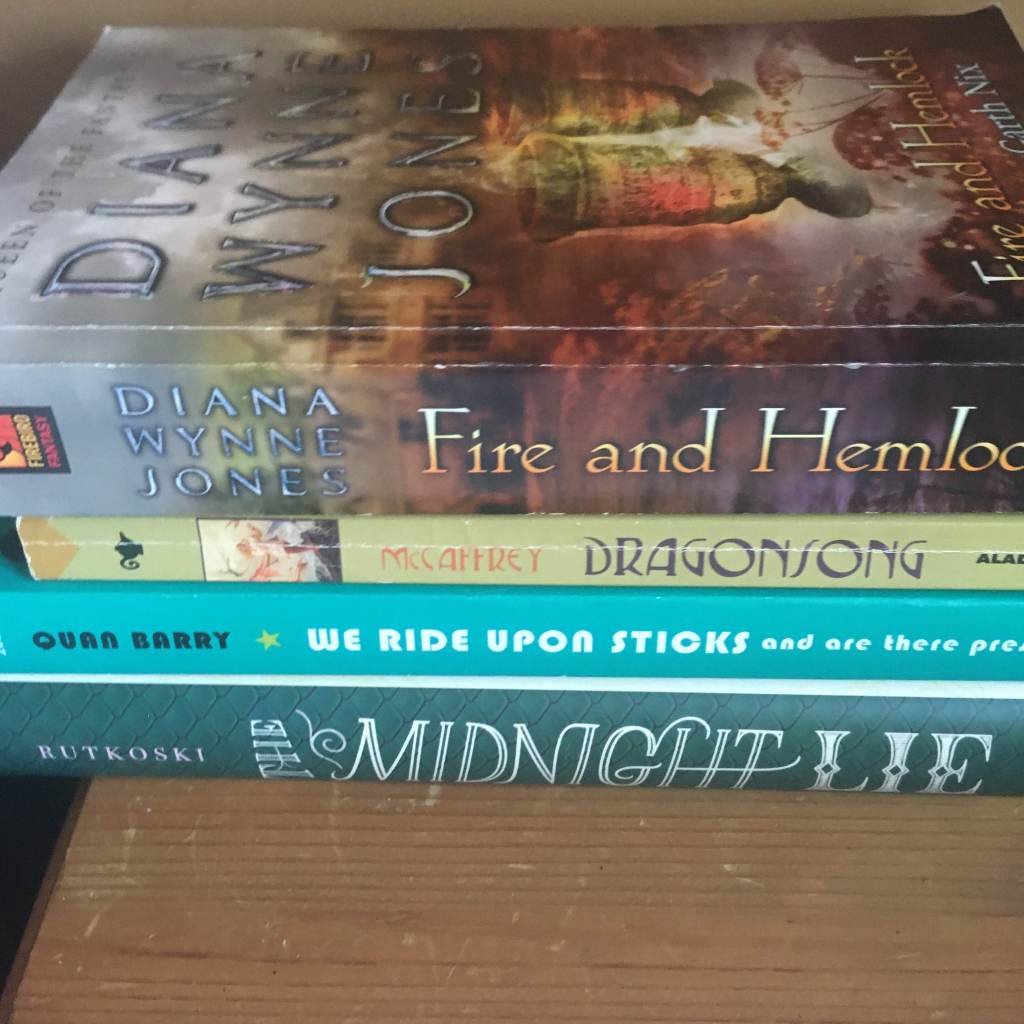
Here’s what I’m looking forward to reading:

Fire and Hemlock by Diana Wynne Jones
Dragonsong by Anne McCaffrey
We Ride Upon Sticks by Quan Barry
The Midnight Lie by Marie Rutkoski

What are you looking forward to reading?

Carpe Jugulum

by Terry Pratchett
First sentence: “Through the shredded black clouds a fire moved like a dying star, falling back to earth–“
Support your local independent bookstore: buy it there!
Others in the series:  Equal RitesWyrd SistersWitches AbroadLords and LadiesMaskerade
Content: There’s a few jokes about sex and a bit of violence. It would be in the science fiction/fantasy section of the bookstore if we had it.

We’re back in Lancre, and Magrat has just had a baby. They’re doing a naming ceremony, and her husband, King Verence, has decided that it would be “modern” and “diplomatic” to invite the residents of the next kingdom over, Uberwald. Which would have been a really great idea, except they’re vampires. Or rather: Vampyres, because they’re modern and sophisticated.

Thus starts a romp as Grany Weatherwax (who thought she didn’t get invited to the naming) goes into hiding as the vampyres take over, and it’s up to Nanny Ogg, Agnes, and Magrat (with some help from an Om preacher, Mighty Oats — go read Small Gods before this, because there are Easter eggs) to get rid of the infestation.

The thing I love most about Terry Pratchett’s books are the little things. Like a character named Igor, who limps and has a lisp and keeps complaining about the new vampires, saying “the old mathter did it better”. Or the page or two of thinly veiled penis jokes in the middle of a vampire fight that had me laughing out loud. Or the fact that the vampire castle is called Don’tgonearthe Castle. Or the Nac Mac Feegle (!), who show up (in an early iteration; they speak mostly gibberish and Nanny has to translate at one point. I like them better in Wee Free Men, but it was still delightful to see them). I think this is one of the better witch books: I liked how all the witches from Granny to Agnes got to play a role, and use their strengths to help.

It’s truly a delight, and a fitting end to the adult witch books. Now to dive into some more parts of Discworld!

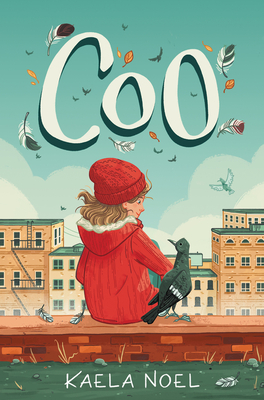
Coo

by Kaela Noel
First sentence: “April breezes, warm and mild as clean laundry, fluttered across the dark rail yard.”
Support your local independent bookstore: buy it there!
Content: It’s a long book, but the print is fairly large and there’s a lot of white space, so appearances are probably deceiving. It’s in the middle grade (grades 3-5) section of the bookstore. It would make a good read aloud for younger kids.

Coo was abandoned as a baby in an alley and discovered by a flock of pigeons. Who carried her to their rooftop and raised her, teaching her their language and feeding her. In return, she helped them when they were injured. She never left the roof, though. When she was older (11 maybe?), her favorite pigeon, Burr, was seriously injured, and the pigeons got Coo to go down an give him to Tully, a woman who came to feed them and helped when they were seriously injured. She saw Coo, and realized something needed to be Done about her. She tried the police, but they didn’t believe Tully that there was a child living with the pigeons.

Eventually, Coo went to live with Tully, learn English and more about the human world. However, when her flock is threatened by the mayor’s plan to eradicate pigeons, Coo rushes in to save them. Because family — especially found family — matters.

It’s a sweet story, if an odd one. Noel is tapping into some heavy themes: child abandonment, animal cruelty, survival, but she does it in such a way that it doesn’t seem heavy or inaccessible. Coo is an interesting heroine to follow, and her love for her flock of pigeons, whether they be the stalwart Burr or the chaotic Roohoo, is definitely palpable. There’s a lot of unnecessary conflict (from an adult perspective), but it kept the story flowing, and I think kids will enjoy following Coo and Tully as they try to figure out their predicament.

It’s an interesting take on the “raised by wolves” story, and one that’s worth reading.