Rockin’ Blog?

Actually, if you’d asked me, I would have said that I’m the furthest thing from rockin’, but Dewey seemed to think that I qualify, so here I am.

So, even though I don’t consider myself a “rockin’ girl blog”, I feel a sort-of obligation to pass along the tag. Here goes:

1 and 2. I’m going to tag the awesome editors of Estella, Andi and Heather. Putting together a respectable webzine every month, on top of all the craziness in their normal lives. That rocks.

3. Turtlebella over at Slow But Steady. Because she really does rock.

4. Nancy over at Bookfoolery and Babble. Because only a rockin’ girl (um, woman!) could live in Mississippi and have a good attitude about it. That, and I love her photos.

5. And all the good friends I’ve made blogging these past three years. (How do I manage to fit them all in a list of five?) You’re awesome, ladies.

Feel free to pass along the tag.

It’s July!

And the latest issue of Estella is up online. It’s a great one — devoted to YA books (Not that I’m biased about the greatness of YA books or anything). My contributions (it’s my blog, so I can plug my stuff, right?) are a review of a not-so-good book (though I’m going to have to come to terms with the fact that I seem to be the only one out there who doesn’t like it!), and a really good book. Interestingly, I found it more difficult to write a review of the good book — only because I wanted to do it justice, and I’m not sure I did. And the author of the good book graciously let me interview him… I think I need to do more interviews with people overseas. It was really quite neat sending off an email at 10 p.m. and having a response waiting for me the next morning.

There’s lots of other really good stuff in this issue, too. Go and enjoy.

The Redemption of Love

For all you non-Christians, this book isn’t for you. It’s basic premise — Rescuing Marriage and Sexuality from the Economics of a Fallen World — rests upon a belief in the Bible and in the words of Jesus. Without that, there really isn’t any point in reading this book. Oh, and this is going to be a long post because there’s a lot to say. Feel free to skip it. πŸ™‚
For the rest of us, this book, by Carrie A. Miles, is an interesting look into the history of male-female relationships, marriage, and th expectations laid out in the Bible for both. Her basic assertion is that God never intended marriage to be “man rules and works and woman stays at home”, but rather God created male and female to be complete in each other.

The reason given in Genesis 2 for woman’s existence in no way implies her inferiority, but neither does it support the notion that she is complete in herself. Woman is not creation’s all in all any more than the man is. … Rather, sexuality in creation belongs not to the individual but to the relationship. Female and male exist only for the sake of the other. Power has nothing to do with it.

It’s only because of the Fall that the historical pattern of marriage emerged.

Miles spends a lot of time on the economic history of marriage. She asserts that it’s because man had to work for his bread that what we’ve come to view as “traditional” marriage emerged. And then, only because the woman had an asset that man didn’t: the ability to give birth. Because she could do that, and because children were essential to the economy of the pre-industrial world, she was by necessity tied to the house. If she worked hard in the fields, she ran the chance of miscarrying. Having given birth, she was tied to the house to nurse and then raise the child. Miles writes, “Eve was told that she would bring forth children in sorrow– sorrow because they would be valued not for their individuality or for their relationship with God but for what they could produce.”

Miles goes on to write that Jesus (and even Paul) asserted that this was not the way relationships between man and women were supposed to be.

Jesus opened the door not only to female discipleship but to the possibility of men and women interacting without reference to sex. Further, in shifting the blame for lust from the woman to the man, Jesus removed the assumption of sinfulness that adhered to women’s very existence as female.

(There’s even a chapter on the Song of Songs — or the Song of Solomon, as I know it — and how it’s a blueprint for a true and lasting relationship. Very interesting.)

She goes on to assert that what Christians believe is a decline in morals in today’s society is a result of the Industrial Revolution. Marriage, in the last 100 years, has essentially become a luxury, not a necessity. We marry for love, for sexual attraction, not because we need someone to bear our children so that we have people to work the farm. “Feminism,” she writes, “did not cause the breakdown of the family; rather, the breakdown of the historic functions of the family caused feminism.”

She goes on to write:

With the forces sustaining the sexual cartel gone, young women in the 1960s discovered that they had little restraint on their sexual behavior. Casting away the old morality once inculcated through shame and obligation, young women began asking themselves the same question that importunate young men had been askig forever: Why not? Why not enjoy the same “sexual prerogatives” that men enjoyed? Economically dependent on neither man nor child, tehy armed themselves with reliable birth control, the right to abortion should birth control prove not to be so reliable, and, if all else failed, the knowledge that a good job, welfare, or child support would sustain them. While far from every woman personally embraced the sexual revolution, middle-class women increasingly took it as their right to join the wealthy in behaving as they pleased.

So, what do we, as Christians, do with this? If what has been historically the traditional marriage relationship is not supported by the Bible, then what? Unfortunately, here is where the book breaks down. It’s not that she doesn’t make the book relevant to 21st-century relationships; she does. But she doesn’t do it with the same passion and assertion that she talks about the historical relationships and Biblical expectations. I’m not sure what I was expecting; this isn’t a marriage-help book. But, I think I was expecting some sort of light: Ah, THIS is how I can make my marriage work better. Or, THIS is what I can do to survive in this world. There is a lot of talk about “in the world of thorns”, and I suppose the assumption is that if we didn’t want to live in the world of thorns, we wouldn’t do that. Perhaps, I may have been expecting something Miles felt wasn’t necessary. In fact, her last paragraph reads:

The Bible offers a single, simple ideal for marriage: a union of two souls that is romantic, poetic, and by worldly standards completely impractical. But God did not create sexuality and marriage to be practical. Practicality is for those who live outside the garden. redeemed as Christians and as lovers, we keep the fruit of our own vineyards.

In the end, then I figure this book is just an extended study on how the Bible interprets marriage. Whether or not anyone gets anything out of it is completely up to them.Which, I guess, is a lot like religion and our relationship with God. We can learn all we can but if we don’t do anything about it, there’s really no point to the knowledge we have. We need to be constantly progressing and changing, and if that means reconsidering our relationship to our spouse (and children) then this book can be a good catalyst for doing that.

Sunshine

Ah, Robin McKinley. I love her writing. And I was reminded during my Twilight/New Moon phase that she had written a vampire novel. So, during the first lull I had (between challenges and Estella books), I popped over to the library and picked it up.

It’s an interesting story, set in an interesting world. Sunshine — Rae — is a baker in a coffee house, specifically the Cinnamon Roll Queen. She has a nice little life, a boyfriend, a time-consuming job, friends, but one night she feels restless. She drives out to the lake, to her father’s cabin (divorced parents, father’s whereabouts is unknown), and proceeds to get kidnapped by vampires. She is taken to be a sacrifice for Constantine, whom a master vampire (Bo), has captured and is keeping prisoner. But, Sunshine manages to escape (by changing a pocket knife into a key; she’s got magic powers, but hasn’t used them) and takes Constantine with her. And their lives will never be the same (ominous music here).

I liked the ethical dilemmas posed by this: if a human is supposed to, by default, have an animosity with vampires then how does one deal with the fact that you let one live? For Sunshine could have just let Constantine die in the beginning and never thought about it again. It was something the character struggled with throughout the book, and one I thought McKinley manages better than Stephenie Meyer does in Twilight (since that same ethical dilemma is present there, too, on some level). There’s a lot of musing and soul-searching in Sunshine, though, and while a lot of it works, sometimes it gets heavy-handed. And it definitely asks more questions than it answers.

I enjoyed the book, though the ending leaves things hanging. And, on one level, it’s okay. Sunshine comes to accept and deal with who she is (and it’s not just the Cinnamon Roll Queen). The big bad guy gets his comeuppance. She has a relationship with Constantine, but it isn’t as unhealthy and obsessive as Bella and Edward’s is. You can’t call it a romance, though it’s something more than a casual alliance or even friendship. It all ends happily, for what it’s worth.

But I really wanted to know what happens next. There were too many questions left unanswered, too many ends left loose. And sometimes that’s just unsatisfying.

Stardust

All throughout the Once Upon a Time Challenge, I kept seeing Neil Gaiman’s name pop up. I’d read the reviews with interest, and would think it sounded interesting, but I wasn’t really motivated to do anything about it. Then, my younger brother hopped on the Gaiman fanwagon, and Carl added the incentive of a giveaway (though the odds are low that I’ll win anything), and so I checked out Stardust from the library.

I’m not sure you can count me among the hoards of Neil Gaiman’s super fans, but I did find this book charming and sweet. I was charmed from the first pages, with stable Dunstan falling for a faerie. I enjoyed so many elements of the story: the innocence and foolhardiness of Tristran, the crankiness of the fallen star toward him and her plight, the weirdness of the brothers (I was actually rooting for Primus, and so was a bit bummed when he got offed), and, yes, even the sinister witch-queen (though I think I was a bit disappointed by the way her story turned out). I enjoyed the sky-ship, the magical elements of the story, the way nursery rhymes came into play, the way Gaiman uses language.

It’s one of those stories that works just the way it is, but is really hard to define. It’s a fairy tale, but it’s not a typical one. It’s an adventure story, but mostly it’s just Tristran and the star wandering and helping and being helped. It’s a story about kindness and opportunity and, yes, love. I do wish I had read an illustrated copy; they sound beautiful.

I do have to admit that I’m made wary by the movie trailer; it looks like it’ll be fun, but I’m also suspecting that they’re going to play fast and loose with the story. Which would be too bad, since it’s nearly perfect as it is.

The Titan’s Curse

I tried to get an ARC for this one, but I caught Rick Riordan at the wrong time, and then The Lightning Thief was named the Today Show’s summer reading book, and now Rick Riordan is really much too busy for little ol’ me, and yeah, I know, blah blah blah.

The long and the short of it is: the library finally got it in, we checked it out, I waited for M to read it, and finally I got my turn.

Whew.

It was worth the wait, though. Instead of heading out with Percy on summer vacation at Camp Half-Blood, we pick up with Percy, Annabeth, Grover and Thalia (oops. Sorry, that was the end of the second book…) the week before winter solstice. They have a simple-ish assignment: pick up a couple of half-bloods from a school in Maine. As always in these books, it’s not quite that simple. Annabeth goes over a cliff, they meet a manticore, Artemis and her Hunters come to the rescue, and yes, all this ends up as another quest. This time, they’re off to save Artemis (who went hunting a monster and got trapped) and Annabeth. They, being: Percy, Zoe Nightshade, Grover, Bianca (one of the half-bloods they picked up), and Thalia. They meet gods (M is convinced that by the end of the series, Percy will have interacted with everyone in Greek mythology), they have close calls, they fight monsters, they fulfill prophecies.

My favorite chapter title: “I Have a Dam Problem” (though “I Wrestle Santa’s Evil Twin” comes a close second). They go off on that for a while in that chapter, much to my amusement.

“Let us find the dam snack bar,” Zoe said. “We should eat while we can.”
Grover cracked a smile. “The dam snack bar?”
Zoe blinked. “Yes. What is funny?”
“Nothing,” Grover said, trying to keep a straight face. “I could use some dam french fries.”

There were so many fun little moments in the book. Percy’s still a likable hero, even if he does have a tendency to be a bit impulsive. I have to admit, I missed Annabeth, though. Thalia’s cool and everything, but I liked the rapport between Percy and Annabeth. Though I suppose he had to get out on his own sometime. πŸ™‚

M and I were talking about it earlier tonight, and we both agreed: the book has a great ending and we’re both curious and excited to know where Riordan’s going with the story from here. (As M put it: it’s really hard to be involved in a series and have to wait for the next book to find out what happens!)

Just in Time, too


So the Once Upon a Time challenge is ending this week, and I was feeling a little sad (in spite of my determination to read Neil Gaiman’s Stardust before then, assuming I get through two other books as well… what am I doing hanging around the blogosphere?), and then I discovered (through the ever-connected Iliana) that over at A Life in Books there’s an armchair travel challenge. What? An excuse to read travel books? Hooray!

So, I’m joining in. I’ve got to read six travel books between July 1 and December 31, which shouldn’t be too hard…

I tried to spread out my choices, so that I get something from different parts of the world. I also tried to throw in a little fiction, too, just for fun.

So, I chose:

1. A Good Year, by Peter Meyer. Yeah, it’s a Russell Crowe movie, but I haven’t seen it yet, and there’s always something romantic about Provence. If I decide against this one, I’ll substitute A Year in Provence. Or maybe I’ll read them both.

2. Pomegranate Soup, by Marsha Mehran. A fiction work about Iranian refugees in Ballinacroagh, Ireland. Sounds fascinating.

3. Japanland, by Karin Muller. The adventures of an American woman spending a year in Japan trying to find the elusive “Wa” (focus, harmony, spiritual peace). Could be fun. [I gave up on finding this one; I read An Embarrassment of Mangoes, instead.]

That was all the travel books I had on my TBR list, so I had to do a bit of digging. These are the ones I found that sounded interesting.

4. From the Holy Mountain: A Journey Among the Christians of the Middle East, William Dalyrmple. Another one that sounded intriguing. From Amazon: “As a writer and as a traveler, Dalrymple treads the now-faint trail marked out by sixth-century monk John Moschos, who wandered the world of Eastern Byzantium, visiting the scattered Christian monasteries and hermitages and recording the rituals he saw and the preaching he heard in a book called The Spiritual Meadow. Unlike its predecessor, Dalrymple’s account of his journey through the same regions leads, not to meditations upon the eternal God, but, rather, to insights into a dying culture. “[ I bailed on this one, too, reading The Royal Road to Romance instead.]

5. The Outermost House: A Year of Life on The Great Beach of Cape Cod, Henry Beston . I saw this in our local indie store a while back, and it never made it on to my TBR list. Yay for challenges!

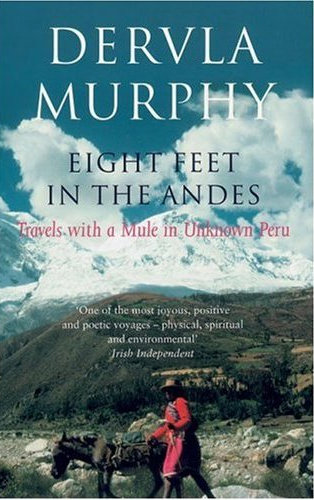
6. Eight Feet in the Andes: Travels with a Mule in Unknown Peru, Dervla Murphy. A woman, her 9-year-old daughter and a mule in Peru. From Amazon: “The story is a wonderful blend of feminism, anthropology and adventure. The set should appeal to many, both lovers of fiction and nonfiction.”

Procrastination

I’m supposed to be finishing up Evil Genius for an Estella review, but it’s just not holding my attention… and while wandering around the blogosphere today I found a lot of time wasters. So I thought I’d share.

Found at both Becky’s and Liz’s

Which Peanuts Character are You?


You are Marcie!
Take this quiz!


Quizilla |
Join

| Make A Quiz | More Quizzes | Grab Code

And at Bloomabilities


What type of Fae are you?

Dewey has a great Thursday Thirteen on Harry Potter quizzes. My girls spent an hour doing all of them. Since I’m doing personality quizzes today, here’s a Harry Potter one:

Pirate Monkey's Harry Potter Personality Quiz
Harry Potter Personality Quiz
by Pirate Monkeys Inc.

And from Annie at Reading is My Superpower, this game:

1. Go to Google.com
2. Type your name and the word β€˜needs’ in quotes in the search engine and hit the button. Give us 13 that make sense, if you can.

1. Melissa needs to board the blob ship that is hovering overhead.
2. Picture of after a night in heels melissa needs to take a break
3. Melissa Needs Maintenance Manuals!
4. “RE: Melissa needs to find a new agent”. It’s a regional thing. WeekiWatchee is charming. Imagine someone from Atlanta singing at Stone Mountain…
5. Melissa needs hydration after the walk.
6. Assistance required Melissa needs you! Dear All, We’ve entered a competition to win a 30 minute slot on stage at GuilFest, and we need your votes to win!
7. Melissa needs a very strong, patient adoptive family who will be able to accept that it may take her a long time to come to trust and appreciate them.
8. And of course they asked about old fights and I had to answer so everyone will say, β€œWow that Melissa needs to get over it,”
9. Melissa needs to go to school, and she needs her coffee to do so.
10. Go to google.com and type “(your name) needs” Then pick the 5 funniest ones there: β€’ Melissa Needs at least 10 hours of sleep a day β€’ Melissa needs to have… [there were several like this. That’s what I get for having a common name!]
11. After a healthy weight gain of 60 pounds, Melissa needs to get on board with her new body, but would also like to propose to her long-time boyfriend, Dan.

These last two were from Yahoo search, since Google didn’t have any more interesting ones.
12. The City of Melissa needs your help. We need any old photos of Melissa that you might have.
13. melissa needs 1 graduation ticket, not to step on allison, but i will pay you …

Oh, and my name’s a website: www.melissas.com.

Okay, enough. Happy Friday!

Midsummer Night’s Dream

Note to self: Shakespeare reads immensely better once seen. At least for me.

I thoroughly enjoyed the performance on Friday — sure, it was amateurs, and the actor who played Puck was young and he rushed his lines, but the the actor playing Bottom was hilarious, as were the other leads. But because I had seen it, and had the basic gist of who was whom and where they were going and what was supposed to be funny, the text was much more accessible to me than when I read As You Like It.

So, things that struck me while seeing/reading the play:

Oberon is a bit of a jerk, isn’t he? I mean, really, he set this whole mess in motion just because he wanted Tatania’s little changeling boy. How selfish.

It’s really a very silly play. All of the Riverside Shakespeare’s (that’s the version I have, complete with hubby’s notes from his college Shakespeare class written in the margins) hifalutin’ notions aside, there really isn’t much to this play other than a lot of silliness.

Shakespeare is amazing: not only can he write good plays, but he can write excellent parodies of bad plays. I think in many ways, the fifth act was my favorite part. Alack, alack, alack!

What happens if Demetrius wakes up one day wondering how on earth he managed to get married to Helena?

It’s quite fitting to see this play in a park setting, especially on a summer evening. There wasn’t any fixed stage; they had roped off an area, and we sat on blankets and lawn chairs surrounding the “stage”. The actors ran around us — for the part in the forest where Hermia’s chasing Lysander’s chasing Helena who’s being chased by Demetrius they ran all through the trees and the audience. It was very fun.

I think this play is probably one of Shakespeare’s more accessible plays. There’s romance, there’s humor, there’s faeries. And it’s really not all that confusing.

I’m glad that this was part of the challenge. Without it, I may have never been pushed to see the Shakespeare in the park, and I had a grand time. They’re doing Measure for Measure in September (when it cools back down!), and we’re definitely going to go.

Beast

An item of business, first. When I put Wildwood Dancing on my list for the Once Upon a Time challenge, I was confident that my wonderful local library would have it in and I would get to read it. Well, it’s days before the challenge ends, and, my wonderful local library has failed me. The book is still “on order” and since I’m the second person in line to read it, it ain’t goin’ to happen, at least for this challenge. (Oh, I know, I could BUY the book, but I have a thing about buying books before I read them, because if I don’t like it, I feel like it’s a waste of money, and yes, I know that’s a hangup I have. But then, that’s why there are libraries, right?)

So. I wandered the stacks, and discovered Beast, by Donna Jo Napoli. You have to understand that I read Zel by Napoli probably 10 years ago and had such a viscerally negative reaction (don’t remember why) to it, that I’ve avoided Napoli books since. So it was amazing that I even managed to take it home, let alone read it.

And I remembered why I didn’t like Napoli books.

It’s not the stories — this one is Beauty and the Beast from the Beast’s point of view, with an added twist that he was Persian and Muslim — it’s the storytelling. It’s not just that she’s incredibly graphic in her descriptions of things (did I really NEED to know about how Prince Orasmyn rutted with lionesses soon after he was transformed? Really?) but it’s also that she just gets lost in page after page after page of internal monologue and exposition. Which really got dull after a while. I didn’t care all that much about Orasmyn or his plight (I think I was supposed to), and I didn’t feel the transformation. How did he come to love Belle? Why? Was it just because she was there? He wasn’t a sympathetic prince. Then there was the whole unanswered questions at the end. He’s Muslim, she’s Christian. How are they going to make this relationship work? Is she going to go back to Persia with him? Will she convert? (He won’t.) How will she deal with life in Persia? Will they just stay in the castle in France, instead? (Okay, maybe it’s just me that has these questions at the end of the book. )

While I didn’t hate this book, it did little to change my opinion of Napoli.

In other news, I saw Midsummer Night’s Dream on Friday and loved it. And I’m going to try and read it, and now that I can picture what’s going on in my mind, I’ll probably enjoy it more.