Sword of the Rightful King

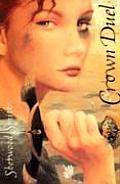
I have mixed feelings about this book by master storyteller, Jane Yolen. It’s not so much a retelling of the Arthurian legend, but rather a rethinking of the tales. She takes elements of the original legend — most specifically the sword in the stone — and turns it upside down and inside out. I liked what she did with it, but there was a part of me that felt dissatisfied in the end.

Arthur’s been king for four years, and still there’s unrest in the country. Not everyone — most notably, Morgause (in her typical role of North Witch, master of the black arts) — is convinced that Arthur should be High King. So his mage, Merlinnus, devises a plan: put a sword in a stone, with some writing on it that declares that the person who draws the sword will be king, and challenge anyone to pull it out. Of course, only Arthur can, since Merlinnus put a spell on it so that would be the only possible solution.

Yet this book isn’t so much about Arthur, as it is about Gawen. He shows up near the beginning, desiring to become one of Arthur’s knights. He gets shuffled off — because of his size and quick wit — to be Merlinnus’s assistant instead. There’s something puzzling about Gawen… how he knows so much, his observations, his becoming one of Arthur’s trusted advisors.

I liked Gawen… I liked him even more at the end, even though I felt the ending was a bit rushed. (Yes, there is a secret there, but I had my suspicions about a third of the way through, and figured it out a little more than halfway, so it’s not really that big of a secret.) It had the elements of everything I like: intrigue; magic; Merlin as his old cranky self; Arthur as a loveable, bear-like king; and I admit I didn’t even mind this Morgause too much. I really liked Gawen. But maybe that was it: Gawen was too perfect, to pert, too right, too observent, too… too much. And in the end, I thought it just was a bit unbalanced. Maybe a little less would have been more here.

Still, it’s a interesting — if imperfect — interpretation of the Arthurian legend.

100 Best Books

3M did a memeish type thing with EW’s 100 best books of the past 25 years. (I’ve seen it around other places, too, but they escape me right now…) Since I like lists, I thought I’d give it a whirl.

You can find the original list list here.

I’ve read the books in bold, and I own the books in green.

1. The Road , Cormac McCarthy (2006)
2. Harry Potter and the Goblet of Fire, J.K. Rowling (2000)
3. Beloved, Toni Morrison (1987)

4. The Liars’ Club, Mary Karr (1995)
5. American Pastoral, Philip Roth (1997)
6. Mystic River, Dennis Lehane (2001)
7. Maus, Art Spiegelman (1986/1991)
8. Selected Stories, Alice Munro (1996)
9. Cold Mountain, Charles Frazier (1997)
10. The Wind-Up Bird Chronicle, Haruki Murakami (1997)
11. Into Thin Air, Jon Krakauer (1997)
12. Blindness, José Saramago (1998)
13. Watchmen, Alan Moore and Dave Gibbons (1986-87)
14. Black Water, Joyce Carol Oates (1992)
15. A Heartbreaking Work of Staggering Genius, Dave Eggers (2000)
16. The Handmaid’s Tale, Margaret Atwood (1986)
17. Love in the Time of Cholera, Gabriel García Márquez (1988)
18. Rabbit at Rest, John Updike (1990)
19. On Beauty, Zadie Smith (2005)
20. Bridget Jones’s Diary, Helen Fielding (1998)
21. On Writing, Stephen King (2000)
22. The Brief Wondrous Life of Oscar Wao, Junot Díaz (2007)
23. The Ghost Road, Pat Barker (1996)
24. Lonesome Dove, Larry McMurtry (1985)
25. The Joy Luck Club, Amy Tan (1989)
26. Neuromancer, William Gibson (1984)
27. Possession, A.S. Byatt (1990)

28. Naked, David Sedaris (1997)
29. Bel Canto, Anne Patchett (2001)
30. Case Histories, Kate Atkinson (2004)
31. The Things They Carried, Tim O’Brien (1990)
32. Parting the Waters, Taylor Branch (1988)
33. The Year of Magical Thinking, Joan Didion (2005)
34. The Lovely Bones, Alice Sebold (2002)
35. The Line of Beauty, Alan Hollinghurst (2004)
36. Angela’s Ashes, Frank McCourt (1996)
37. Persepolis, Marjane Satrapi (2003)
38. Birds of America, Lorrie Moore (1998)
39. Interpreter of Maladies, Jhumpa Lahiri (2000)
40. His Dark Materials, Philip Pullman (1995-2000)

41. The House on Mango Street, Sandra Cisneros (1984)
42. LaBrava, Elmore Leonard (1983)
43. Borrowed Time, Paul Monette (1988)
44. Praying for Sheetrock, Melissa Fay Greene (1991)
45. Eva Luna, Isabel Allende (1988)
46. Sandman, Neil Gaiman (1988-1996)
47. World’s Fair, E.L. Doctorow (1985)
48. The Poisonwood Bible, Barbara Kingsolver (1998)
49. Clockers, Richard Price (1992)
50. The Corrections, Jonathan Franzen (2001)
51. The Journalist and the Murderer, Janet Malcom (1990)
52. Waiting to Exhale, Terry McMillan (1992)
53. The Amazing Adventures of Kavalier & Clay, Michael Chabon (2000)
54. Jimmy Corrigan, Chris Ware (2000)
55. The Glass Castle, Jeannette Walls (2006)
56. The Night Manager, John le Carré (1993)
57. The Bonfire of the Vanities, Tom Wolfe (1987)
58. Drop City, TC Boyle (2003)
59. Krik? Krak! Edwidge Danticat (1995)
60. Nickel & Dimed, Barbara Ehrenreich (2001)
61. Money, Martin Amis (1985)
62. Last Train To Memphis, Peter Guralnick (1994)
63. Pastoralia, George Saunders (2000)
64. Underworld, Don DeLillo (1997)
65. The Giver, Lois Lowry (1993)
66. A Supposedly Fun Thing I’ll Never Do Again, David Foster Wallace (1997)
67. The Kite Runner, Khaled Hosseini (2003)
68. Fun Home, Alison Bechdel (2006)
69. Secret History, Donna Tartt (1992)
70. Cloud Atlas, David Mitchell (2004)

71. The Spirit Catches You and You Fall Down, Ann Fadiman (1997)
72. The Curious Incident of the Dog in the Night-Time, Mark Haddon (2003)
73. A Prayer for Owen Meany, John Irving (1989)
74. Friday Night Lights, H.G. Bissinger (1990)
75. Cathedral, Raymond Carver (1983)
76. A Sight for Sore Eyes, Ruth Rendell (1998)
77. The Remains of the Day, Kazuo Ishiguro (1989)
78. Eat, Pray, Love, Elizabeth Gilbert (2006)
79. The Tipping Point, Malcolm Gladwell (2000)
80. Bright Lights, Big City, Jay McInerney (1984)
81. Backlash, Susan Faludi (1991)
82. Atonement, Ian McEwan (2002)
83. The Stone Diaries, Carol Shields (1994)

84. Holes, Louis Sachar (1998)
85. Gilead, Marilynne Robinson (2004)
86. And the Band Played On, Randy Shilts (1987)
87. The Ruins, Scott Smith (2006)
88. High Fidelity, Nick Hornby (1995)
89. Close Range, Annie Proulx (1999)
90. Comfort Me With Apples, Ruth Reichl (2001)
91. Random Family, Adrian Nicole LeBlanc (2003)
92. Presumed Innocent, Scott Turow (1987)
93. A Thousand Acres, Jane Smiley (1991)
94. Fast Food Nation, Eric Schlosser (2001)
95. Kaaterskill Falls, Allegra Goodman (1998)
96. The Da Vinci Code, Dan Brown (2003)
97. Jesus’ Son, Denis Johnson (1992)
98. The Predators’ Ball, Connie Bruck (1988)
99. Practical Magic, Alice Hoffman (1995)
100. America (the Book), Jon Stewart/Daily Show (2004)

Only 28. Less than I thought… There are some interesting choices here… for instance, Goblet of Fire. That’s not nearly Rowling’s best book. And I think some of them are just because they were extremely popular — Da Vinci Code, for example — rather than good. But there are some good books on there too.

Feel free to take it and pass it along. 🙂

In the Mood

I saw this challenge over at Becky’s (fitting, since she’s hosting it) a while back, and have been putting off joining it… Last week, though, it hit me: I’m in the mood for some serious chick lit. It’s summer, it’s hot, and my brain is much too fried for anything terribly taxing. Therefore, I’m joining up. Gimme some YA romance!

My list of six, as of right now (a couple aren’t at the library, so we’ll see if they come in, or if I just change my mind):

An Abundance of Katherines
, John Green
13 Little Blue Envelopes, Maureen Johnson
Love, Stargirl, Jerry Spinelli
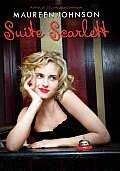
Suite Scarlett, Maureen Johnson
Breaking Dawn, Stephenie Meyer
The Juliet Club, Suzanne Harper

Let the swooning begin!

Watchmen

Earlier this year, when I began to discover an interest in graphic novels, Hubby got all excited. See, he was one of those guys: the ones who hang out at the comic book stores, reading about superheros and buying D&D stuff. Not that I have anything against all that — I married him after all, and he still plays D&D, as does M — but I never did it myself. (Nor did my brothers. We were Star Wars and computer geeks around my house). Anyway, I digress. He got all excited because now that I was reading graphic novels, he could finally share some of his comic books with me (aside from telling me about them when he drags me — mostly willingly, I admit — to superhero movies). He dug out this series of twelve — by Alan Moore and Dave Gibbons — and told me it was brilliant and that I had to read it.

And so, when I was looking yesterday for something non-French and non-novel, I pulled this out of my TBR pile and began reading.

First impression: it’s not nearly as well drawn as the other graphic novels I’ve read. I don’t know if the genre has evolved since the 1980s (it was written in 1986), or if there’s just a distinct comic book style. Either way, all their women look like men with breasts and the color scheme grated on me.

Second impression: It’s a very 80s story, which generated a lot of discussion between Hubby and me. The basic plot is begun with the death of a “costumed adventurer” (not superhero!), and another adventurer’s (possibly insane Rorschach) “inquiries” into the murder, and his attempts to warn his friends of a plot to kill off all the adventurers. This, of course, spirals into a more and more complicated plot (which includes a man who got completely blown up by radiation, and then proceeded to put himself back together into a true, um blue — he really is blue — super man), which includes a possibly evil genius, world domination, and an alien invasion. (Got all that? Neither did I.)

Back to the 80s comment. This series really is a product of the late-Cold War mentality: the idea that the Russians could blow us up at any minute, a mistrust of the computers that were increasingly being put in charge (think War Games… a movie I adored and watched at least two dozen times one summer), a community mentality that could easily evolve into a mob mentality, a lack of ready information (they had to watch the 6:00 news and read newspapers!) which all added to the air of uncertainty and panic. The world has moved on from that point — not only because of the falling of the Iron Curtain, but also because information is so readily available, at the same time communities are less connected — and so, much of the panic and the end-of-the-world attitudes are foreign and slightly hysterical now.

Third impression: I really don’t go in for serials. It’s the same problem I have with Dickens (sorry). I feel like that when works are serialed, the authors tend to go overlong in getting to their point. (As opposed to authors who sit down to tell a story straight in one novel. I have some of the same problem with long series, like The Sisters Grimm or, yes — sacrilege — Harry Potter, even.) This work had so many twists, so many turns, so many characters (Hubby pointed out that one of Moore and Gibbon’s geniuses was that they used every single character they drew; no one was not important. Unfortunately, that made for a lot of people to keep track of.) that by the end I felt like it was taking much to long to get to the point. Perhaps it was because they decided to do it over a year, a series of 12, instead of thinking of it as one whole and then dividing it up into chapters. It’s the nature of comic books, though.

Which makes me think that I’ll stick to bona fide graphic novels. (No offense, dear.)

The Sisters Grimm: Tales from the Hood

I’m not sure if any of you are still following along, but things have gotten pretty grim for the Grimm sisters. Mr. Canis was arrested by Ferryport Landing’s sham of a cop and mayor and is being put on trial for the murder of Red Riding Hood’s grandmother. It’s up to the sisters, of course, and their grandmother to prove Mr. Canis’s innocence and keep him alive.

I didn’t like this one as much as I’ve liked the past two, but it wasn’t bad. For all of Buckley’s verboseness, he did come up with some clever plot twists and action points, and a decent ending, the “to be continued” notwithstanding. I thought his re-telling and manipulation of the Red Riding Hood tale was pretty clever, giving the story a whole new interpretation.

But that’s about it. I do have to say that I’m honestly glad that this is the last one for a while. Though, both M and C really loved the series.

Superheroes and E-zines…

from Big A little a

First, because we all want to be a super hero:

You are Spider-Man

Spider-Man
85%
Robin
75%
Hulk
65%
Superman
45%
The Flash
45%
Supergirl
32%
Wonder Woman
32%
Green Lantern
20%
Iron Man
20%
Batman
15%
Catwoman
15%
You are intelligent, witty,
a bit geeky and have great
power and responsibility.


Click here to take the “Which Superhero are you?” quiz…

Next, the June The Edge of the Forest is up! You will find all this:

Okay, now here’s the scoop on the June issue:

Plus a myriad of reviews from me… I tried my hand at picture books (they’re harder to review than they seem!), plus one really good YA novel, and another decent fantasy one, and a fun little dinosaur adventure book. Whew. Enjoy!

Suite Francaise

I’ve spent the past week in France, enjoying the lyrical and evocative writing of Irene Nemirovsky. Amira highly recommended it a (long) while back, and so I was excited that my in person book group (which sometimes does pick really good books!) chose it this month.

It took me a bit to get into the book, but once I realized that there was no real plot, no real character development, but that it was a portrait of a time and a place and how individuals dealt with the time and place, I lost myself in it. And it was easy to do. The first part, Storm in June, dealt with the exodus of Paris in the wake of the German invasion. Nemirovsky followed a dozen or so people in the exodus, how they reacted to the crisis, how they managed to deal with an extreme situation. Some managed admirably, some horribly; some were noble and respectable, some were petulant and miserly. It was fascinating watching it all unfold, interesting to see how each individual person reacted to each individual situation.

The second part, Dolce, was my favorite of the two. It was the portrait of a country village after the German occupation and how the villagers responded to their German occupiers. My heart went out to Lucile, living with a horrible mother-in-law, and falling in love with the German who was living in her house. There was less going on in the second part, but I really thought Nemirovsky perfectly captured the emotions of a human being trapped between two realities.

And, then there’s the note at the end, about Nemirovsky’s history and how this book came to be. It shed a lot of light on how she treated some of her characters, especially wealthy and upper-middle-class women, and it made the whole book much more tragic.

And, because these popped out at me, I’ll include some of my favorite quotes…

From early on in Storm in June:

“I keep telling you, you don’t pay enough attention to the minor characters. A novel should be like a street full of strangers, where no more than two or three people are known to us in depth.”

And from Dolce:

She said “we” out of that sense of propriety which makes us pretend we share other people’s misfortunes when we’re with them (although egotism invairoable distorts our best inetntions so that in all inocencewe say to someone dying of tuberculosis, “I do feel for you, I do understand, I’ve had a cold I can’t shake off for three weeks now”).

Let them go where they want; as for me, I’ll do as I please. I want to be free. I’m not asking for superficial freedom, the freedom to travel, to leave this house (even thought aht would be unimaginably blissful). I’d rather feel free inside — to choose my own path, never to waver, not to follow the swarm. I hate this community spirit they go on and on about. The Germans, the French, teh Gaullists, they all agree on one thing: you have to love, think, live with other people, as part of a state, a country, a political party. Oh, my God! I don’t want to! I’m just a poor useless woman; I don’t know anything but I want to be free!

I’m a bit behind the times

But the June Bookworms Carnival is up over at Things Mean a Lot. It’s a delightful collection of fairy tales, some of which I’ve never heard of, let alone read. It’s one of the reasons I like carnivals — expanding TBR lists!

And check here for a two chances to win a free book from nymeth!

The next edition of the Bookworms Carnival is going to be hosted by Jenn at Mixed Metaphor. The theme is relationships (NOT Harlequin-type romances, Jenn says). To submit a post, email jenn at mixedmetaphor dot net until the 11th of July.

Frivolity on a Sunday Morning

Found via Becky:


Your Birthdate: September 17


You tend to find yourself lucky – both in business and in life.

And while being wealthy is nice, you enjoy sharing your abundance with others.

You put your luck to good use: you are very ambitious and goal oriented.

Often times, you get over excited and take on more than you can manage.

Your strength: Your ability to make your own luck

Your weakness: Thinking you can do it all

Your power color: Bronze

Your power symbol: Half Moon

Your power month: August

I’m chuckling about the “being wealthy” part…


Your Ice Cream Personality:


You are an incredibly modest person. You don’t feel comfortable bragging about yourself… or even receiving complements.

You have a wild reputation, but you’re not as wild as you seem. You take risks, but only measured risks.

You are a fairly open minded person with a wide range of tastes. You are quite accepting of unusual ideas and people.

You are a natural multitasker. You feel alive when you’re doing more than one thing at a time.

You can be a big dramatic and over the top sometimes. You are bold in every way

and the wild reputation part…


What Your Taste in Chocolate Says About You


You are sweet, mellow, and easily satisfied.

You don’t like anything too intense and dramatic.

Deep down, you’re a kid at heart… and you’re nostalgic for the past.

You are emotionally expressive and sensitive.

You’re effected by everything around you.

Your friends appreciate your open heart, but they are afraid of hurting your feelings.

You love to be the center of attention. You enjoy entertaining your friends.

You feel lost when no one is interested in you… You’re too interesting to be ignored.

and the center of attention part (though maybe secretly I do long to be the center of attention?)…


You Are Fruit Flavored Gum


You are quirky and independent. You don’t tend to follow any one style or rule book.

You are a mix and match type of person, and you draw inspiration from many sources.

While you’re definitely a bit unusual, you get along well with other people.

You’re eager to welcome anyone into your world. You are not judgmental at all.

You form close bonds with your friends, and your relationships tend to be very secure.

You hold firm to your beliefs and values, and you don’t let anyone talk you into compromising them.

this one, however, is spot on. 🙂

The Penderwicks on Gardam Street

I knew I would love this book. The first charmed its way into all our hearts around here — I picked it up on a whim at the bookstore, drawn by the title, and never regretted the purchase — and because Jen, Leila, and Erin all highly recommended it, I knew going in that this one would be just as wonderful.

There are books that are exciting and thrilling, holding you on the edge of your chair; there are books that make you laugh; and there are books that contain numerous twists and turns of plot, intricately setting up the conclusion. The Penderwicks on Gardam Street is not one of those books.

Then there are the books that you just smile at, content knowing the end from nearly the beginning, savoring the characters and loving the plot — such as it is — and patiently waiting for the characters to realize what you already know. The Penderwicks on Gardam Street is one of those books.

All the things I loved about the first book are back: the sisters, of course, but especially Batty (she’s at that wonderful, fun, precocious age); their lovable, endearing, slightly absent-minded father; boys to be friends with (their neighbors across the street — though I admit that I did miss Jeffrey); the scrapes the girls get themselves in to; and the wonderful, fun, evocative language. And there are new things to love: an amazing, smart, fun, interesting new next-door-neighbor with a very cute toddler whose one word is “Duck”; a scheme to keep their dad from dating, as his sister Claire seems determined to have him do; a neighborhood forest for exploring and hiding; and a little bit of learning and maturing on everyone’s part.

Other reasons to like the Penderwick family:

[Jane] hated finishing one of her favorite books, because she knew she’d have to wait at least a few months before she could read it again. It was a rule she’d imposed on herself after reading The Various twice in one week — a disaster, like eating three large slices of chocolate cake at one sitting.

He hung up the phone with a bang. “Here’s some advice, daughters. Try to avoid having younger sisters.”
“Too late for that, Daddy,” said Jane.

[Batty] must have done it well, because Hound nuzzled her joyfully, and then she pounced on hi, and they wrestled around the yard until they knocked the red wagon over and all the animals tumbled out. And then there was putting them back in, which was fun, and altogether, it was turning out to be an okay afternoon, even if Rosalind had scolded her for being noisy.

I have to agree that it’s a practically perfect book in every way.

(Just for the record: because this is a Cybils nominee, I’ve been asked to make sure y’all know this is my opinion only, and not that of the panel. Thank you.)