Yellow Star

by Jennifer Roy
ages 9-12

This is not a happy book. Then again, what book about the Holocaust is a happy book? Granted, this one has a happy ending — it’s a story based on the life of the author’s aunt, and she survived — but getting there is harsh, depressing, and painful. Which means that Roy did an incredible job depicting the life and circumstances of her aunt Syvia’s childhood.

I’m trying to figure out a way to sum up the book without giving a mini-history lesson. For those who don’t know their World War II history, this story of one of the 800 survivors — only 12 of which were children — of the Lodz, Poland ghetto is not a fun one to read. Written in verse, I think to mimic the spare conditions of Syvia’s life, Roy captures the faith and family togetherness in the face of pure hopelessness quite well. There were parts that made me cringe — the Nazis deported all the children at one point, tearing them from their family; it was only through the courage and resorcefulness of Syvia’s father (and herself) that she managed to survive that time — and others that made me cry. I am amazed at Syvia, and at the luck — miracles? providence? chance? — that she had during her life. There were so many (more than 270,000 people lived in the ghetto at one time) that didn’t get her chance.

I’m not sure I can separate a critique of the book (can I say that in this instance I felt the verse was good, but unnecessary?) from the life. It’s a good book — not a great one — with a worthy story. And a story worth reading. Which makes the book worth reading, too.

A Very Public (And Enthusiastic) Thanks

I had the good fortune to have two secret Santas this year. First, my online book group did a gift exchange, and my Scret Santa sent me this:

Inside… was this:


I’m not sure if you click on the image whether or not you can read all those words, but it’s all the books I’ve read this year (up through the Christmas Carol). Which was totally and completely amazing. I wish she’d tell me who she is, though, because I’d love to use the pictures on the bookmark (which I suspect she took herself) as a new blogskin…

Then there was the Book Bloggers Christmas Swap, and I had the good fortune to have my name given to:

Michele went totally and completely above and beyond the call of duty:

The chocolates were perfect: delicious, and fancy enough so I didn’t have to share with the girls. 😉 And when I opened up the gifts this morning, I found:

THANK YOU! I’ve wanted both for a while, and I am totally happy to finally own them both.

We did get other booky gifts: my brother, bless him, gave us 5 Babymouse books, including the latest which we haven’t read yet. 🙂 And M got The Thief and its sequels, and C got The Miraculous Journey of Edward Tulane. It’s been a very merry Christmas here. Hopefully, you all have had good booky holidays, too.

Happy Holidays!

May All Your Days Be Bookish and Bright

The two things we do well around here are books and blogs, so here’s our bookish bloggy Christmas letter!

K is our little spitfire, two and half years old, bouncing off the walls (when she’s not drawing on them), watching TV, going anywhere her older sisters go. Her favorite things are climbing (trees, couches, people), and kicking (balls, toys, people). And her favorite books are anything by Mo Willems, especially the Elephant and Piggie books. That, and Gingerbread Baby, by Jan Brett and Owl Babies, by Martin Waddell. You can’t say she’s not well-rounded.

A, who just turned five, is the most introverted child of the bunch. She doesn’t like starting anything, but once she gets there she’s just fine. The big start this year was preschool at West Heights Preschool. She loves her teachers, and has several friends at school. But her favorite time is when Mrs. Cindy comes, reads them stories, and lets them check out a book to take home. Out of all the books she’s brought home, Bats at the Beach, by Brian Lies has been everyone’s favorite. We were very sorry to send it back. She also has a fancy streak, and will never turn down the chance to bring a Fancy Nancy book home.

C, the budding writer and actress, is in third grade and still just as boisterous (which is a good word for loud and talkative) as ever. She has also discovered the joy of reading chapter books. Having the Percy Jackson series by Rick Riordan literally thrust into her hands by her older sister, she has found that she can’t stop reading them. Even though she enjoys reading books herself, she still loves to have Mom read out loud to her in the evenings, and still talks about when they read The Sisters Grimm series by Michael Buckley. Lots of fun voices to “do”.

Megan, who really epitomizes the word “bookish” around here, is 12, in seventh grade, and always has a book in her hand. In fact, when we asked what book we should use for her, she said “Give me a million years and maybe I could choose one.” This past summer, however, Mom introduced her to the pleasure of this:
which led her to read the original Jane Austen book. She liked it, enough so that for her history day project this year, she’s going to answer the question “What influence did Jane Austen have in history?” Something to ponder, anyway. Not one to be completely stuffy, she keeps up her fantasy reading, begging copies of Brisingr, by Christopher Paolini and Twilight, by Stephenie Meyer (heck, she read the whole series… and saw the movie) off her friends.

Hubby read a lot this year, but as usual the majority of it was scholarship for his lectures or news for his blog–he looks at his wife and daughters and how they plow through books (some of which are actual novels) and he feels terribly under-read. He keeps telling himself that he’s going get back to reading fiction someday, and perhaps one of these years he will. In the meantime, though, he feels blessed to have a good job at Friends University, and numerous colleagues and friends to learn from. His reading choice for the year was fascinating (but somewhat depressing) book, The World Without Us by Alan Weisman. (He figures he’s allowed a little melancholy; seeing as how he turned 40 this winter.) Two other books he thoroughly enjoyed were A Godly Hero, by Michael Kazin and Mountains Beyond Mountains, by Tracy Kidder.

And me, well, you know all about me. 🙂 Check back in a couple of days for my best of post…

May you all have a very Merry Christmas, and a blessed, bookish New Year!

The Foxes

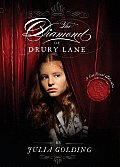
Diamond of Drury Lane

by Julia Golding
ages 10+

You’re looking for a good adventure story right? Something light, a little bit thrilling, with a smidgen of romance and mystery and politics, and a lot of getting out of tight scrapes? You’ve come to the right place, my friends, and I offer you The Diamond of Drury Lane, the first in a series by Brit author Julia Golding.

Cat — short for Catherine — Royal is an orphan of uncertain (call her 12ish) age, and having been taken in at a young age by a Mr. Sheridan, owner of the Royal Theater (hence the last name) in London. She’s grown up backstage at the theater, and while her most estimable position is message runner, she loves her life. Then one day, she overhears Mr. Sheridan talking to a somewhat suspicious-looking man about hiding a diamond in the theater. The same day, a former slave named Pedro Hawkins (who plays the violin marvelously) shows up. Between these two events, Cat’s life will never be the same — or boring! — again.

The best word to describe the book is fun. It’s not deep, being meant for middle graders and all, but it keeps it’s pace well (especially since it’s 400+ pages long!), and keeps the reader, well me at least, engaged. There’s a lot of tight scrapes, a lot of close calls, a lot of adventure in the highest sense.

What really made the book for me, though, was Cat. I loved her. She had me wrapped around her finger, hook, line and sinker. Full of spunk and sass, but caring, loving and oh-so-needy, Cat’s voice completely carried the book for me. She was willing to trust others, yet smart enough to figure what she needed to out. The other characters — and there were a lot — weren’t quite as compelling, though I did like Johnny and Lord Francis. I couldn’t quite figure Pedro out, but I think that was intentional. He wasn’t supposed to be a cut-and-dried character, but I’m not sure Golding quite pulled the ambiguity off. Still, that’s a minor quibble in what is otherwise a clever book.

This is a good stand-alone book, which makes me wonder what Golding’s going to do with Cat in the next book. Here’s hoping it’s published in the US…

(Just for the record: because this is a Cybils nominee, I’ve been asked to make sure y’all know this is my opinion only, and not that of the panel.)

Bringing the Boy Home

by N.A. Nelson
ages: 11+

Seven years ago, Tirio was put in a canoe and set afloat on the Amazon river; he’d been cast out by his tribe, the Takunami, because he was born deformed. He was rescued by an American anthropologist, Sara, and brought to Miami for treatment, and a good home. Now, nearing his thirteenth birthday, Tirio feels a pull back to the Amazon, to his tribe, and a desire to complete his soche seche tente, the test boys in his tribe have to complete in order to pass into manhood. The question is, will he be able to do it?

I was surprised at how much I liked this book. The cover does absolutely nothing for me, and I was expecting to sludge through it as per my duty. But, enjoy it I did. There’s a parallel story with Luka, another thirteen-year-old boy. I wondered about that story until about 2/3 of the way through I figured out the connection between Luka and Tirio. It seemed obvious, but once I figured it out , it worked for me, and it gave the story that much more power. Nelson is really quite good at balancing the natural and supernatural, Tirio believes in the Good Gods and they guide him on his quest. It could have been hokey, but it came off as believable and natural, if a bit eerie. I l iked Tirio as a character, too (more than Luka, though he was interesting). He had a disability, and he was able not only to work with it, but to overcome it. And he was more than willing to stand on his own two feet, and do what needed to be done.

My only quibble would be that it feels more factual than it really is; in the afterward, Nelson admits that little is known about indiginous tribes in the Amazon, and she pretty much made everything up. But, knowing that, it works as an adventure story. And it works really well.

(Just for the record: because this is a Cybils nominee, I’ve been asked to make sure y’all know this is my opinion only, and not that of the panel.)

Happy Midwinter!

Pull out a copy of The Dark is Rising, by Susan Cooper (and, if you’re like me, resolve to read the rest of the series. Soon… or sometime eventually.) get yourself something hot to drink (cocoa, with raspberry or mint for me, please), wrap yourself in something warm, build a fire, and stay in reading.

For an added bonus, check out Rhinoa’s post on her Yule celebration.

There are probably better ways to celebrate mid-winter, but I can’t think of them right now.

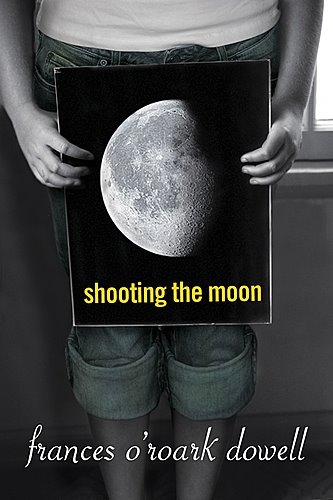
Shooting the Moon

by Frances O’Roark Dowell
ages 10+

Sometimes, when I read a book, I’m so moved by it that I’m at a loss for words. This is one of those times. This book hit me hard, in the gut. I loved it, I was moved by it… but I have no idea how to write what I’m feeling right now.

Instead, I’ll send you to read Becky’s and Betsy’s reviews. They pretty much sum up everything I’d like to say.

(Just for the record: because this is a Cybils nominee, I’ve been asked to make sure y’all know this is my opinion only, and not that of the panel.)

The Boy Who Dared


by Susan Campbell Bartoletti
ages 12+

I’m not sure how many people know the story of Helmuth Hübener. He was a boy during the rise of Hitler to power, and a teenager during the war. He was a member of my church, The Church of Jesus Christ of Latter-day Saints (the Mormons). He was increasingly disturbed by Hitler and the Nazis and the war, and decided to do something about it: distribute leaflets and paphlets, being helped by two of his friends, with information gained from the BBC. For which he was arrested. And executed.

He was 17.

I was familiar with Hübener’s story before reading this book; soon after I left to college, my two brothers were in a production of a play about Hübener’s efforts and outcome. I never saw the production, but I had one brother playing an SS officer and the other was one of Hübener’s friends (Karl Schnibbe). Needless to say, it was a pretty emotional event for everyone (including my mother, who sat in the audience and watched one son torture the other!), something so monumental that it made it into letters to me.

Needless to say, I was pretty interested in this book, not only because of the church connection but because of the play. Especially since I only knew the barest outline of Hübener’s life and what he had done, or tried to do. And on top of all that, there’s issues of church and state, and patriotism and doing one’s best. Not to mention is freedom of speech more important than obeying the law. It’s a complex story.

Bartoletti handled the whole thing marvelously. Told in flashback from Hübener’s reminsinces on his last day of life, she basically covers 10 years of his life… from Hitler’s initial rise to power in 1932 through to Hübener’s death in 1942. She treated Hübener’s beliefs and our church well, and accurately, and never made anyone out to be more than human. Hitler was evil, of course, but Bartoletti balanced the evil of Hitler’s deeds with the desire of the German people to save face, and their belief that Hitler’s promises would make everything better. She also addressed the complexities of obeying the law versus doing what one believes to be right, and Hübener’s efforts to fight the propeganda of the Nazis.

The only thing that I didn’t like — and it’s a minor quibble — is that because this is a book for younger readers, Bartoletti glanced over a lot of the harshness and violence. I felt like the trial and torture and prisonment of Hübener was glanced over, and almost downplayed. I think I would have liked a bit more, but that would have made this book more young adult than I think Barotoletti was going for. (Though my library has it shelved in the YA section.)

As I said, though, that’s a minor quibble. The afterword is fascinating, and the book is gripping. And I think this is one World War II story that deserves to be wider known.

(Just for the record: because this is a Cybils nominee, I’ve been asked to make sure y’all know this is my opinion only, and not that of the panel.)

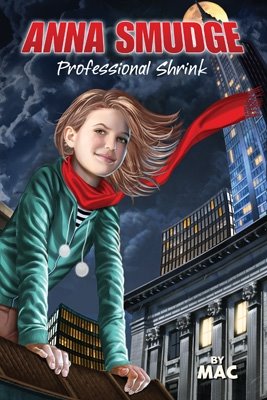
Anna Smudge: Professional Shrink

by MAC
ages 8+

Throw Nancy Drew, an action movie, a couple of graphic novels, Dr. Phil and a bunch of talented (and precocious) 11-year-olds in a blender, mix them up, you’d have… a mess. No, really, what’d you get is something pretty close to Anna Smudge. And, just for the record, it’s a whole lotta fun.

Donny “The Meatball” Fratelli has escaped from prison. Anna’s sixth grade art teacher, Mrs. Summer has gone insance, yelling about knowing who “Mr. Who”, a legendary (but mysterious) crime boss, is. Anna’s life is complex enough: she has to deal with her parents being gone because of business all the time, in addition to being bullied at school. Her two worlds intersect, though, when she discovers her true talent: being a shrink, and one of her clients turns out to be none other than The Meatball himself. Add a bit of mystery — who really is Mr. Who? — a lot of adventure — horse chases, breaking into abandoned gymnasiums, and being trapped in the Holland Tunnel — and you’ve got a quite the book.

I liked that it was fast-paced and entertaining. It read a bit like a movie, which isn’t a bad thing sometimes. Especially in a mystery/adventure novel; because of the way it was written, it managed to grab and keep my attention. There wasn’t anything deep or searching about it, but I thought it was a lot of fun. Additionally, I really 0liked the characters, especially Anna and her friends: Quenton (the chef), Rachel (the reporter) , Amy (the secretary), Todd (the artist), and Clea (the photographer). It’s a stylized book with a stylized concept, but it worked for me. Enough so, that I’m looking forward to the next book in the series, Quenton Cohen: Professional Chef, due out May 2009.

(Just for the record: because this is a Cybils nominee, I’ve been asked to make sure y’all know this is my opinion only, and not that of the panel.)

What’s in a Name 2 Challenge

I probably should have done this one this year, but didn’t (for whatever reason). I’m rectifying that this year. 🙂 From the blog:

*Dates: January 1, 2009 through December 31, 2009

*You may overlap books with other challenges, but please don’t use the same book for more than one category.

*The Challenge: Choose one book from each of the following categories.

1. A book with a “profession” in its title. Captain Alatriste, Arturo Perez-Reverte (also for my challenge)

2. A book with a “time of day” in its title. Evernight, Claudia Gray

3. A book with a “relative” in its title. The Heretic’s Daughter, Kathleen Kent

4. A book with a “body part” in its title. Orcle bones : a journey between China’s past and present, Peter Hessler

5. A book with a “building” in its title. Coffeehouse Angel, Susan Selfors

6. A book with a “medical condition” in its title. Echoes From The Dead by Johan Theorin (also for Lost in Translation challenge)