Darkwood

by M. E. Breen
ages: 10 to 14
First sentence: “The sun sets so quickly in Howland that the people who live there have no word for evening.”
Review copy sent to me by the publisher.
Support your local independent bookstore: buy it there!

Hmmm. This book has an interesting premise: an orphan girl, Annie, is sold by her “Uncle” to the Drop, the mine where all the kingdom’s jewelstones are mined. Except, Annie — who has learned that she can see in the dark — gets away. She makes her way to the main city, gets into the palace, and begins to discover that the fact that the Drop is exploting children is only the tip of the iceberg.

But, the premise — complete with twists and turns and prophecies — wasn’t quite enough to make this book soar. With all it’s evocative language and descriptions, and Annie running about here and there and everywhere, I found myself slightly confused with what was exactly going on. And when the big reveal came at the end, I was completely underwhelmed. Maybe this has something to do with being an adult, but I’m not sure. The plotting felt uneven — too little happened for too much of the book, then it all came crashing down in the last 1/3. Which is too bad, becuase, really: it was an interesting premise.

Shug

by Jenny Han
ages: 10+
First sentence: “It is the end of a summer afternoon and the sun will be setting soon, our favorite part of the day.”
Support your local independent bookstore: buy it there!

Ah, first love. Generally speaking, I’m pretty jaded about the whole first love thing — especially if it morphs into True Love — but I found this book by Jenny Han to be exceptionally sweet and poignant as it looked at a girls first “real” crush, as well as the bumps and joys of growing up.

Twelve-year-old Annemarie Wilcox — Shug for short — has just realized she’s is in love. Unfortunately, it’s with her best friend, Mark, who increasingly — now that they’ve started the 7th grade — won’t admit that she exists. On top of that, things are getting increasingly worse between her parents, her best friend Elaine has a boyfriend and is spending less time with Shug. Not to mention that she’s being forced (for the sake of a grade) to tutor her mortal enemy. Increasingly, Shug just can’t seem to find where she fits in all of this change.

There is so many things to love about this book, from it’s genuine Southernness (I’m a sucker for Southern books), to the affection Han has for her characters, to Shug’s voice throughout the book. Shug is a charming character, torn between hanging on to childhood and yet entranced by growing up. She’s easy to relate to: everyone has a first crush, and, for me at least, I found the awkwardness Shug has to be completely believable.

In short, Han has captured a perfect slice of pre-teen life. And done it in a quiet, yet completely charming, way.

The Handmaid’s Tale

by Margaret Atwood
ages: adult
First sentence: “We slept in what had once been the gymnasium.”
Support your local independent bookstore: buy it there!

I read this book in my early 20s, sometime soon after I finished college. I remember thinking that this was a Great Warning; plausible enough to become true, and thus making it that much more powerful to me. I was moved to anger by the treatment of women as objects, and considered this one of the Best Books I’ve Ever Read.

This time around — 15 years later — I am still moved by it, but in a completely different way. The basic plot, for those who are unfamiliar with this dystopian classic, is that the U.S. falls apart after an attack which kills the president and Congress. The country is put into a state of emergency, which evolves into this warped religious state. Offred, our main character, is a handmaid: a woman whose sole purpose in life is to have babies for the Commanders. She is told that it is her religious duty to do so; the Wives and Marthas (the maids and cooks) tolerate her presence because her “duty” is so important. Offred — we never learn her real name — longs for her former life: the one where she had a job, money, husband, child. And it’s all she can do to put one foot in front of the other in her life.

I found this all monstrous. I’m thinking of it in a different light — I could very easily be Offred — and it’s monstrous what Attwood has dreamt up. Not only for the handmaids, but for the wives and commanders, too. (Maybe those books on polygamy are influencing my reading of this, too, because there are definite parallels there.) And I was depressed by it. I don’t think we — as a country — would ever head that way (though there was this one passage that struck me because of its similarities to 9/11 and the Patriot Act), but it’s depressing that there is that awful potential in people to control other people in that way. There are also Taliban similarities, as well — something which wasn’t even on the radar when I read this the first time around — that saddened me.

I can’t imagine — more like, don’t want to imagine — a world where women are treated as nothing more than the sum of their bodies, where men get excused for their behavior because of their position, where women hate and loathe each other because of their roles. Wait… that, too much, describes what our world is like now. Without the religious framework, without the robes, without the martial law, there are elements of this world around us.

And that really depresses me.

11 Birthdays

by Wendy Mass
ages: 9-12
First sentence: “The oddest thing about Angelina D’Angelo was that no one could remember a time when she didn’t live in Willow Falls.”
Support your local independent bookstore: buy it there!

When I saw this book over at Shelf Elf a while back, I knew I had to put it on hold if only because Wendy Mass wrote my favorite middle grade book of last year.

And, while I don’t think I loved this one as much as Every Soul a Star, it’s still charming and magical and sweet, and well worth the time to read.

Amanda and Leo were born on the same day. Their parents met, and nothing more was thought about it until a year later, when they both scheduled the same party place at the same time and on the same day and ended up celebrating their birthdays together. Thus a tradition was born. Fast forward 10 years, when Amanda overhears Leo trying to be cool with his friends, telling them he’s only her friend out of pity. The tradition end, the friendship broken.

Then comes her eleventh birthday, which really isn’t all that grand. It’s not, particularly, that anything goes wrong. It’s more that nothing quite feels right. And that evening, when her party is a spectacular flop — because Leo is having his across town instead of with her — it seems that nothing will ever be right again.

And then, the next morning she wakes up and it’s her birthday all over again.

It’s kind of a Groundhog Day for middle grade readers: Amanda and Leo are stuck in the loop together and have to figure out how to get it to stop looping their birthday. I have to be honest: this idea worked well enough as a movie (except for Andie McDowell, who sucks the life out of the movies she’s in), but I had little confidence that it would work as a book. Thankfully, Mass is skilled enough to pull it off. It’s amusing and gratifying to see how the enchantment all plays out, from the realization that they’re stuck in the loop (not only individually, but together), to their working out their differences, to the way they figure out how to get out of the loop. Mass has used the right amount of whimsy and magic to make this story believable, without overburdening it with charms and spells. Amanda and Leo are perfect friends, tentative at first because of the fall-out, but in the end making a perfect team.

It’s a cute story about finding and remaining friends even when it seems impossible. But then, with Wendy Mass, nothing is impossible.

July Jacket-Flap-a-Thon

I had a list of books I wanted to get to this month, and I managed to get to almost all of them. Only four left sitting on my bookshelf. Hopefully, I get to them next month.

As for the ones I did read, there weren’t too many captivating jacket flaps. The two I did like (sort of):

Beastly (HarperTeen): “I am a beast. A beast. Not quite wolf or bear, gorilla or dog but a horrible new creature who walks upright—a creature with fangs and claws and hair springing from every pore. I am a monster. You think I’m talking fairy tales? No way. The place is New York City. The time is now. It’s no deformity, no disease. And I’ll stay this way forever—ruined—unless I can break the spell. Yes, the spell, the one the witch in my English class cast on me. Why did she turn me into a beast who hides by day and prowls by night? I’ll tell you. I’ll tell you how I used to be Kyle Kingsbury, the guy you wished you were, with money, perfect looks, and the perfect life. And then, I’ll tell you how I became perfectly . . . beastly.”

Clever; you don’t often see a jacket flap in the first person. It caught my attention, and made me want to read the book.


My Life in France (Knopf): “In her own words, here is the captivating story of Julia Child’s years in France, where she fell in love with French food and found her true calling. From the moment the ship docked in Le Havre in the fall of 1948 and Julia watched the well-muscled stevedores unloading the cargo to the first perfectly soigné meal that she and her husband, Paul, savored in Rouen en route to Paris, where he was to work for the USIS, Julia had an awakening that changed her life. Soon this tall, outspoken gal from Pasadena, California, who didn’t speak a word of French and knew nothing about the country, was steeped in the language, chatting with purveyors in the local markets, and enrolled in the Cordon Bleu. After managing to get her degree despite the machinations of the disagreeable directrice of the school, Julia started teaching cooking classes herself, then teamed up with two fellow gourmettes, Simone Beck and Louisette Bertholle, to help them with a book they were trying to write on French cooking for Americans. Throwing herself heart and soul into making it a unique and thorough teaching book, only to suffer several rounds of painful rejection, is part of the behind-the-scenes drama that Julia reveals with her inimitable gusto and disarming honesty. Filled with the beautiful black-and-white photographs that Paul loved to take when he was not battling bureaucrats, as well as family snapshots, this memoir is laced with wonderful stories about the French character, particularly in the world of food, and the way of life that Julia embraced so wholeheartedly. Above all, she reveals the kind of spirit and determination, the sheer love of cooking, and the drive to share that with her fellow Americans that made her the extraordinary success she became. “
Long, long, long. But it gives you a good overview of the book. I just wish they’d tried harder to capture the spirit of Julia Child.

Other Books Read:
Need
Echoes From the Dead
Fire
20 Boy Summer
Story of a Girl
Oh. My. Gods.
Previously Engaged
Why Darwin Matters
Sprout
The Sisters Grimm
Goddess Boot Camp
Fragile Eternity (DNF)
Fiction
Coffeehouse Angel

Book To Movie Friday: Half-Blood Prince

The point of these Book to Movie Fridays is not to judge a movie on its own merit, but rather to compare it to the book to see how it holds up.

If it were the former, Half Blood Prince would be okay. It holds together on its own for about the first 2/3. Lavender Brown is spot on, Luna is her charming self, Harry is… well… dark-haired and British (even though that’s still really quite creepy on my part), and Draco sulks marvelously.

Then, about the time of the Sectumsempra curse, and the wand fight in the bathroom, the movie — as a movie — derails. It heads down into maudlin and kind of confusing territory, doesn’t hold water, and completely disregards Snape. Again. (Will the screenwriters ever learn?)

And, while it’s an okay movie as movies go, it’s really hard to compare the book to the movie because while it’s a similar story that shares names, places and plot elements, it’s really not the story Rowling was telling. Rowling — if I remember right ; I didn’t get a chance to reread it before we went — was exploring and explaining Voldemort’s past, giving us glimpses into the path Riddle took and the choices he made in becoming Voldemort. Yes, there was a lot of teen angst and romance in the book, but there was a lot about friendship and trust as well, some of which came through in the movie, but not as strongly as it did in the book.

And then there’s Dumbledore. When I read the book, I remember bawling. Sobbing. How could he be gone? What will Harry, or Hogwarts, or me as a reader do without Dumbledore?

And, honestly, I didn’t care when he died in the movie. It was ho-hum, Dumbledore’s falling off the balcony, that’s nice, what now?

What a disappointment.

Verdict: the movie’s OK, but really (if you didn’t already know), you should read the book.

Library Loot #29

It’s library day! *doing the library happy dance*

We picked up some good loot, today, too.

For A/K:
Book! Book! Book!, by Deborah Bruss/Illus. by Tiphanie Beeke
Rita and Whatsit, by Jean-Philippe Arrou-Vicnod/Illus. by Olivier Tallec
Paddington Bear, by Michael Bond/Illus. by R. W. Alley
Jack the Tripper, by Gene Barretta
Princess Pig, by Eileen Spinelli/Illus. by Tim Bowers**
Pie’s in the Oven, by Betty G. Birney/Illus. by Holly Meade
Dora’s Starry Christmas (Dora the Explorer) — Argh. A Dora book was in!
One Day, Two Dragons, by Lynne Bertrand/Illus. by Janet Street**
The Beckoning Cat: Based on a Japanese Folktale, by Koko Nishizuka/Illus. by Rosanne Litzinger
Rotten Ralph Feels Rotten, by Jack Gantos/Illus. by Nicole Rubel**

For C:
Harry Potter and the Order of the Phoenix (Book 5), by J. K. Rowling — this is the audio book; we discovered with Inkheart, that C really likes listening to long books in audio form. We told her she could watch the Order of the Phoenix movie if she read the book…she’s very excited.
Thora and the Green Sea-unicorn, by Gillian Johnson

For M:
Chronicles of Faerie: The Hunter’s Moon (The Chronicles of Faerie), by O. R. Melling — we discovered that the book she picked up last week was the third in a series. Well, of course we had to get the other two!*
Chronicles of Faerie: The Summer King (The Chronicles of Faerie), by O. R. Melling*
Long May She Reign, by Ellen Emmerson White — Help! Is this the first in a series? Or a later one? We can’t tell.*
Flavor of the Week, by Tucker Shaw*
Chalice, by Robin McKinley*

For me:
Mark Twain: The Gilded Age and Later Novels: The Gilded Age / The American Claimant / Tom Sawyer Abroad / Tom Sawyer, Detective / No. 44, The Mysterious Stranger (Library of America), by Mark Twain. Lest you get all intimidated: I’m only planning on reading The Guilded Age, but this was the only copy in at the library.
The Evolution of Calpurnia Tate, by Jacqueline Kelly

The roundup is either at Reading Adventures or A Striped Armchair.

*Ones that M eventually read.
**Picture books we really liked.

Introducing…


My debut YA cover! (Found via 100 Scope Notes… I just needed something diverting today!)

The directions:

CREATE YOUR DEBUT YA COVER

1 – Go to “Fake Name Generator” or click http://www.fakenamegenerator.com/

The name that appears is your author name.

2 – Go to “Random Word Generator” or click http://www.websitestyle.com/parser/randomword.shtml

The word listed under “Random Verb” is your title.

3 – Go to “FlickrCC” or click http://flickrcc.bluemountains.net/index.php

Type your title into the search box. The first photo that contains a person is your cover.

4 – Use Photoshop, Picnik, or similar to put it all together. Be sure to crop and/or zoom in.

5 – Post it to your site along with this text.

Final Top 100 MG Books

Oh My Gosh. This was an incredibly hard thing to do: chop everyone’s lovely recommendations to a list of 100 that is not only reflective of all the wonderful middle grade writing, but also reflects the diversity out there. There’s books about people of color, of course (though not as many as I think there *could* be), but fantasy, adventure, family-oriented, classics, new books, boy books, girl books… I ended up only having one book per author, because of space. And I eliminated graphic novels (except for Diary of a Wimpy Kid, which isn’t really one). And I tried to choose the best one when I had three or four on the same theme (which wasn’t easy).

It’s not perfect — how could a list compiled by one person running a blog ever be? — but I think it’s a dang good one. Enjoy!

  1. Wolves of Willoughby Chase, by Joan Aiken
  2. How Tia Lola Came to Visit, by Julia Alvarez
  3. The Book of Three, by Lloyd Alexander
  4. The Underneath, by Kathi Appelt
  5. Tuck Everlasting, by Natalie Babitt
  6. The Indian in the Cupboard, by Lynn Banks
  7. Wizard of Oz, by L. Frank Baum
  8. Peter Pan, by J. M. Barrie
  9. Tales of Fourth Grade Nothing, by Judy Blume
  10. The Secret Garden, by Frances Hodgson Burnett
  11. Alice’s Adventures in Wonderland, by Lewis Carroll
  12. Al Capone Does My Shirts, by Gennifer Choldenko
  13. Ramona Quimby, Age 8, by Beverly Cleary
  14. Gregor the Overlander, by Suzanne Collins
  15. The Dark is Rising, by Susan Cooper
  16. Elijah of Buxton, by Christopher Paul Curtis
  17. Matilda, by Roald Dahl
  18. Because of Winn-Dixie, by Kate DiCamillo
  19. The London Eye Mystery, by Siobhan Dowd
  20. The City of Ember, by Jeanne DuPrau
  21. Half Magic, by Edward Eager
  22. Then there were Five, by Elizabeth Enright
  23. The Moffats by Eleanor Estes
  24. The Great Brain, by John F. Fitzgerald
  25. Harriet The Spy, by Louise Fitzhugh
  26. The Whipping Boy by Sid Fleischman
  27. Coraline, by Neil Gaiman
  28. Moxy Maxwell Does Not Love Stuart Little, by Peggy Gifford
  29. The Liberation of Gabriel King, by K. L. Going
  30. The Thing about Georgie, by Lisa Graff
  31. The Wind in the Willows, by Kenneth Grahame
  32. Among the Hidden, by Margaret Peterson Haddix
  33. The Princess Academy, by Shannon Hale
  34. Penny From Heaven, by Jennifer L. Holm
  35. Everything on a Waffle, by Polly Horvath
  36. Journey to the River Sea, by Eva Ibbotson
  37. Toys Go Out, by Emily Jenkins
  38. The Phantom Tollbooth, by Norman Juster
  39. The Ordinary Princess, by M. M. Kaye
  40. Diary of a Wimpy Kid, by Jeff Kinney
  41. The Jungle Book, by Rudyard Kipling
  42. The Book of Story Beginnings, by Kristin Kladstrup
  43. Schooled, by Gordon Korman
  44. The Mixed-up Files of Mrs. Basil E. Frankweiler, by E. L. Konigsburg
  45. Savvy, by Ingrid Law
  46. Rabbit Hill by Robert Lawson
  47. A Wrinkle in Time, by Madeleine L’Engle
  48. Ella Enchanted, by Gail Carson Levine
  49. The Lion, Witch and the Wardrobe, by C.S. Lewis
  50. Where the Mountain Meets the Moon, by Grace Lin
  51. Pippi Longstocking, by Astrid Lindgren
  52. Rules, by Cynthia Lord
  53. Alvin Ho: Allergic to Girls, School, and Other Scary Things, by Lenore Look
  54. Betsy-Tacy by Maud Hart Lovelace
  55. The Giver, by Lois Lowry
  56. Mrs. Piggle Wiggle, by Betty MacDonald
  57. Every Soul a Star, by Wendy Mass
  58. Homer Price by Robert McCloskey
  59. Saffy’s Angel, by Hilary McKay
  60. The Blue Sword, by Robin McKinley
  61. The Pushcart War by Jean Merrill
  62. Winnie the Pooh, A. A. Milne
  63. Rascal, by Sterling North
  64. The Borrowers, by Mary Norton
  65. Mrs. Frisby and the Rats of NIMH, by Robert C. O’Brien
  66. Greetings from Nowhere, by Barbara O’Conner
  67. Island of the Blue Dolphins, by Scott O’Dell
  68. A Single Shard, by Linda Sue Park
  69. The Bridge to Terebithia, by Katherine Patterson
  70. Soup by Robert Newton Peck
  71. Clementine, by Sarah Pennypacker
  72. Rickshaw Girl, by Mitali Perkins
  73. Six Innings, by James Preller
  74. Where the Red Fern Grows, by Wilson Rawls
  75. The Westing Game, by Ellen Raskin
  76. The Lightning Thief, by Rick Riordan
  77. Harry Potter and the Sorcerer’s Stone, by J.K. Rowling
  78. Yellow Star, by Jennifer Roy
  79. Becoming Naomi Leon, by Pam Munoz Ryan
  80. The Invention of Hugo Cabret, by Brian Selznik
  81. Black Beauty by Anna Sewell
  82. Where the Sidewalk Ends, by Shel Silverstein
  83. The Bad Beginning, by Lemony Snicket
  84. The Egypt Game, by Zilpha Keatley Snyder
  85. The Mysterious Benedict Society, Trenton Lee Stewart
  86. The Witch of Blackbird Pond, by Elizabeth George Speare
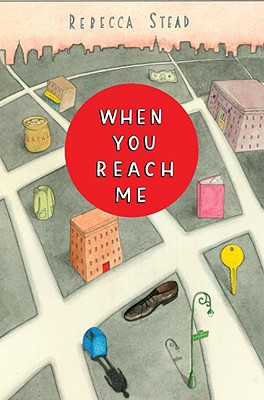
  87. When You Reach Me, by Rebecca Stead
  88. Treasure Island, by Robert Louis Stevenson
  89. Ballet Shoes by Noel Streatfield
  90. Keena Ford and the Second Grade Mix-Up, by Melissa Thompson
  91. The Hobbit, by J.R.R. Tolkien
  92. Mary Poppins by P.L. Travers
  93. Dicey’s Song by Cynthia Voigt
  94. So B. It, by Sarah Weeks
  95. Charlotte’s Web, by E.B. White
  96. Little House in the Big Woods, by Laura Ingalls Wilder
  97. Leepike Ridge, by Nathan D. Wilson
  98. Dealing with Dragons, by Patricia Wrede
  99. Dollhouse Murders, by Betty Wren Wright
  100. Passager, by Jane Yolen

Coffeehouse Angel

by Suzanne Selfors
ages: 12+
First sentence (ARC): “The first time I saw him, he was lying in the ally behind my grandmother’s coffeehouse.”
Review copy sent to me by the publisher.
Support your local independent bookstore! Buy it there.

Katrina is an average girl. Not exactly pretty. Not exactly ambitious. Not exactly memorable. She works in her grandmother’s coffeehouse, which doesn’t exactly do brisk business; most of that goes next door to the new Java Heaven. Katrina is, however, a decent human being, and so when she opens the coffee shop one day, and spies what seems to be a homeless man in the alley, she leaves him a cuppa joe, a bag of pastries, and some chocolate-covered coffee beans, and doesn’t think anything of it.

That is, not until the guy — whose name is Malcom — shows up at an assembly, wearing a kilt, and knowing her name, saying that, in thanks, he wants to grant her innermost desire. That’s a tricky one, since Katrina is not only average, but a bit driftless, too: she has no idea what she really wants… until she gets to know Malcom a bit better. Then what she wants is something she really can’t have.

Selfors has written another delightful, unexpected romance. While Katrina was a bit too angst-ridden at times, she was also amazingly unselfish. Twice, Malcom offers her her heart’s “desire” — first fortune and then fame — and twice, she lets it slide, almost purposefully, through her fingers. She doesn’t want fame, or fortune. She wants to stop fighting with her best friend. And for the coffee shop to stay open. And for her grandmother to be happy. You would think with all this unselfishness that Katrina would be annoying, but she’s not. Not really. Selfors writes in such at way that you feel for Katrina, and when she makes the ultimate unselfish decision, it’s quite touching.

Ultimately, though, it is a romance. And a very sweet one at that. You think it’s going to go in one particular direction, but Selfors is skilled enough in the use of magic — or in this case the angelic — that she makes something outrageous seem effortless, plausible, and not in the least hokey. Which is magic in and of itself.