Forest Born

by Shannon Hale
ages: 12+
First sentence (ARC): “Ma had six sons.”
Review copy sent to me by the publisher.
Release date: September 15
Support your local independent bookstore: buy it there!

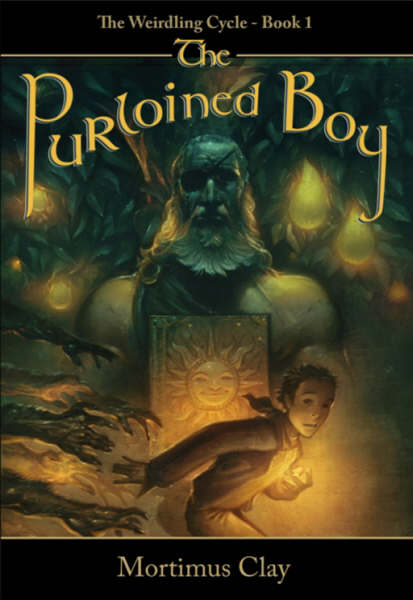
Rin is the youngest of seven children, the only daughter in her Forest family. She’s her Ma’s shadow, a tree-climber, a great aunt, and Razo’s (of River Secrets fame) best friend. She can listen to trees, sinking into their consciousness and enjoying the cool, green peace that emerges from them. Then, one day, she’s taken with a local forest boy, Wilem, and convinces him to stay with her and kiss her. Yet, her convincing is something more than simple persuasion: it’s power, it’s a rush for her. And afterward, the trees reject her.

So, she packs up and heads to the city with Dasha and Razo, to become a lady-in-waiting for Queen Isi (of Goose Girl fame). Things seem to be going well, until word comes from the border that a town was burned. Geric goes to see what the problem is and ends up injured. So it’s up to Isi, Enna (of Enna Burning fame), Dasha and Rin — who tags along at first with what she’s dubbed the Fire Sisters, but is eventually included in their plans — to figure out who or what is behind this latest spurt of violence, and come up with a way to stop it.

This book is an excellent culmination of all the other Bayern books, and not just because everyone from the previous books are in them and playing fairly major roles. No, it was something more, something deeper than that: it felt like it was the culmination of ideas and themes that Hale has been exploring throughout the Bayern books: of family, of self-control, of self-interest versus the greater good, and so on.

One of the best things about this book is that all of Hale’s heroines have a chance to shine. Each one, including — eventually — Rin, are powerful on their own they have a quiet strength about them. They’re feminine, caring, supportive, and yet, when the need arises, fierce and powerful. Yet, put them all together and they are truly forces to be reckoned with. The best parts of the book are when Isi, Enna, and Dasha work together, and then when they realize what Rin has to offer them, they include Rin in their ring of power, where Rin is least comfortable, yet most needed.

It’s possibly Hale’s quietest Bayern book since Goose Girl. I’m going off of memory here, since I didn’t go out an re-read the other three before picking this one up (good news: it works well as a stand alone). But, this book is a very introspective, quiet, nature-filled book, something which I remember being a strength about Goose Girl. There is no real kick-butt action, there is no super-awesome heroines (or heroes), there’s not even any real romance. Yet, all of Hale’s hallmarks are there to draw the reader in: from world-building, to descriptive language, to her humor, and (most of all) her ability to tell a whopping good story. Which means, while there’s nothing flashy, it’s a good, solid story that will entertain and engage readers.

And, really: isn’t that what we all love about Hale’s books?

The Secret Story of Sonia Rodriguez

by Alan Lawrence Sitomer
ages: 14+
First sentence: “I was born in the United States of America.”
Review copy sent to me by a publicist (I think).
Support your local independent bookstore: buy it there!

This is one angry book.

Then again, Sonia has much to be angry about. The daughter of illegal immigrants from Mexico, all she wants to do is make good her father’s efforts to not only get her the opportunities in America, but who works three jobs to pay for them.

However, the rest of the family doesn’t see it that way. They see Sonia as the oldest daughter, someone who is supposed to cook, clean, supervise, care for and help around the house. As Sonia would say, es mi cultura and es familia. Her mother, pregnant with twins, spends the day watching telenovelas, relying on Sonia for help at every possible (and usually inconvenient) moment. Her uncle is a drunk and a gambler (and a lech), her older brother a school dropout who smokes pot.

She’s up against a lot.

This is not the story of her slow descent into Hispanic stereotypes. In fact, it’s a intelligent, articulate treatise on the state (plight?) of immigrants in America — not only the conflict between cultures, but expectations as well. It’s also Sonia’s personal war with her family and her culture and her dreams for being and doing better.

It’s not an easy read: the anger Sonia has for everything is palpable. It’s uncomfortable to read about the way Sonia’s treated; it’s difficult to make it through the negativity and stereotypes. But stick with it and you’ll be rewarded: not only does the book get better, but Sonia learns to appreciate the good in her Mexican heritage, and things do work out in the end for her (and her family).

It helps to have a passing knowledge of Spanish: the book is littered with Spanish words and phrases, some of which are just left to the reader to catch the gist of, which sometimes disrupted the narrative flow. In addition, it’s an unflinching book: nothing is sugar-coated or glossed over. However, it’s because of that honesty, that rawness, though, that this book, ultimately, is worth reading.

Ariel’s Journey

by Doug Kane and Christy Wood
ages: 9-13
First sentence: “My jeans are trashed!”
Review copy sent to me by the publisher (or a publicist? I can’t check since I lost all my emails…)

This is a horse book.

This is a horse book that M kind of liked.

This is a horse book that really knows its audience.

This is a horse book that I couldn’t make it past the first three chapters after which M said it got interesting.

This is a horse book that I felt the authors got stuck in the old show-not-tell mire.

This is a horse book that I could care less about.

This is a horse book, though, that if you have a pre-teen girl who LOVES horses, it would be a good fit for her.

I won’t begrudge you for liking horse books. It’s just the rare horse book that I can tolerate.

This is not that horse book.

Library Loot #33

Remembered the big bag.
Got lots of books for everyone.
There were no Dora books in.
And I even managed not to have too many on hold.

Happy day!

For A/K:
Rita and Whatsit At the Beach, by Jean-Philippe Arrou-Vicnod/Illus. by Olivier Tallec
Shopping with Dad, by Matt Harvey and Miriam Latimer**
Martha Doesn’t Say Sorry, by Samantha Berger/Illus. by Bruce Whatley**
Pumpkin Baby, by Jane Yolen/Illus. by Susan Mitchell
The Cow That Was the Best Moo-ther, by Andy Cutbill/Illus. by Russell Ayto**
Charlie and Lola: We Are Extremely Very Good Recyclers (Charlie & Lola), by Lauren Child**

For C:
My New Best Friend, by Julie Bowe
The Beautiful Stories of Life: Six Greeks Myths, Retold, by Cynthia Rylant/Illus. by Carson Ellis
Nana Cracks the Case!, by Kathleen Lane/Concept by Cabell Harris/Illus. by Sarah Horne
Pete’s Disappearing Act, by Jenny Tripp/Illus. by John Manders

For M:
Hattie Big Sky, by Kirby Larson (I want to read this one, too)
A Long Way From Chicago, by Richard Peck
Airhead, by Meg Cabot*
The Exchange, by Graham Joyce

For me:
The Beef Princess of Practical County, by Michelle Houts
From Cover to Cover: Evaluating and Reviewing Children’s Books, by Kathleen T. Horning
A Finder’s Magic, by Philippa Pearce/Illus. by Helen Craig
Shadowland: Book III of the Brotherhood of the Conch, by Chitra Lekha Banerjee Divakaruni (Yeah, I didn’t realize that this was a third in a series… rectified that by putting the first two on hold for next week!)

The roundup is either at Reading Adventures or A Striped Armchair.

*Ones that M eventually read.
**Picture books we really liked.

Someone Like You

by Sarah Dessen
ages: 13+
First sentence: “Scarlett Thomas has been my best friend for as long as I can remember.”
Support your local independent bookstore: buy it there!

I had a hard time with this one.

It’s not because the story was awful, or the characters were unsympathetic, or the writing banal… no: this time, I can honestly say it was me. (Warning: moralistic rant ahead…)

See, the book is about a girl — Halley — whose best friend, Scarlett, finds out she’s pregnant with her boyfriend’s kid (it only took once!). She turns to Halley for support, just as Halley begins to pull away from her uber-controlling mom (if I’m EVER that bad, will someone please shoot me?) and falls into a serious relationship of her own. I think the book was supposed to be about friendship, about a girl trying to find her own way and her own strength (as opposed to just listening to her mom all the time), and while I can respect that, I had issues.

On the one hand: at least Scarlett didn’t get an abortion, although that’s what her mom really wanted her to do. I can accept that. On the other hand: she kept the baby. When I was 16, my best friend got pregnant, and decided to keep the baby. While I was not nearly as sympathetic as Halley was (shoot: I wasn’t sympathetic at all… devastated was more like it….), I did see how keeping the baby ruined my friend’s life. No, that’s not the way it has to be, but… it’s a hell of a lot harder to make it through high school when you have a kid at 16. And it bothered me that that was the choice Scarlett wanted to make. All that said, Scarlett being pregnant had an interesting effect on Halley’s decision on whether or not to have sex with her boyfriend.

On the one hand: I can understand Halley’s mother’s desire to help steer her daughter down a safe path. Isn’t that what all parents want for their kids: for them to make right choices and lead successful lives? On the other hand: There’s a difference between guiding and controlling, and this mom was controlling. It made me — as an adult — uncomfortable, and I wasn’t surprised that Halley took to sneaking around and withdrawing from her mom. I’m also not convinced that, by the end of the story her mom’s really changed. Changing, perhaps… and maybe that’s all Dessen really wanted to portray.

Moralistic rant over. I’m not saying it’s a bad book, just one that I had a bad reaction to. Maybe you’ll like it better…

RIPing It Up

It’s time for Carl’s RIP Challenge!

I had a grand time with this last year, and have actually been looking forward to it. Does this mean that it’s fall, already?

Since both of the book I’ve chosen are HUGE, I’m only doing Peril the Second…

My books:

1. The Stand, by Stephen King (I’m supposed to read it by the end of October, anyway)
2. The Historian, Elizabeth Kostova

Edited to add: we’re reading The Moonstone, by Wilkie Collins for my F2F bookgroup in October… perhaps I’ll even come up with a 4th book…
Great Stories and Poems of Edgar Allan Poe
Ninth Grade Slays, by Heather Brewer

Wish me luck!

Intuitive Eating

A Revolutionary Program that Works
by Evelyn Tribole and Elise Resch
ages: adult
First sentence: “If you could cash in every diet like a frequent flier program, most of us would have earned a trip to the moon and back.”
Support your local independent bookstore: buy it there!

My mom sent me this book a month or so ago after I was complaining that I couldn’t stop eating, that whatever I’d been doing to control what I stuck in my mouth (especially when I was sad or stressed) wasn’t working.

The basic premise is really very simple: basically it’s to listen to your body and what your body wants to eat, and how much. I was suspicious at first: no “diet”, no eating plan can really be that simple. Right?

Well, it’s simple because it’s not a diet. It’s a re-thinking of one’s attitude towards food, which is something I sorely needed. I say that because I think I was relying on external factors to control my eating habits, rather than internal ones.

The book helps people like me — though I’m not the chronic dieter that they specifically target as their audience, I do teeter on that precipice — work through the process (and it is a process) of getting in touch with the body’s hunger and fullness, as well as balancing health and pleasure when eating. The authors are quite specific and detailed in the steps of the process, from giving up the diet mentality to addressing exercise and healthy eating near the end. It’s obvious that they expect the reader to participate in the program, and not just read the book — there’s spaces for notes, and I photocopied a couple of the charts and hung them up.

That said, my brother-in-law had complaints about their approach: it seemed too lackadaisical, too unscientific for his tastes. And, yes, it is at first glance a fairly unrigorous approach, mostly because every body is different and every approach to this way of thinking about food will be slightly different. However, my BIL’s objections aside, it seems to be “working” for me: I stress eat much less, the feelings of resentment about food (and my self-imposed restrictions on them) are gone, and I’m tending not to over-eat.

While this book probably isn’t for everyone, it actually helped me quite a bit. Which makes it a good book in my mind.

Geeky TBR List

For this week’s geek, we’re talking about books you’ve been meaning to get around to.

I think just about every reader has a least one book that they’ve been meaning to read for awhile (months or even years) but, for one reason or another, they just haven’t gotten around to it. Maybe it’s a book a friend recommended last year, or a title you’ve flirted with in a bookstore on more than one occasion, or maybe it’s a book that’s sitting right there on your bookshelf, patiently waiting for you to pick it up — but the thought is always there, in the back of your mind: Why haven’t I read this yet?

This week, tell us about a book (or books) you have been meaning to read. What is it? How long have you wanted to read it? And, why haven’t you read it yet?

Um, that describes nearly everything on my TBR list… actually, I try to keep up with all the recommendations that everyone gives (not just in comments, but in great reviews on their blog), but there’s only so many hours in a day, and I can only read so fast, and there are just WAY too many books out there.

Most of my list like this is adult books; I seem to get to the YA/MG books I hear about and want to read before I tackle the adult ones. That definitely shows my bias there… though my MG list is shorter than my YA list, which I find interesting.

Anyway. Some (very few) of the adult books I should get around to eventually:

  • The Deptford Trilogy, Robertson Davies — Julie’s favorite author… and I checked it out once, but didn’t read it. (By that token, I should read Patrick O’Brien.)
  • Neverwhere, Neil Gaiman — because I’ve heard it’s his best.
  • The Historian, Elizabeth Kostova — vampire novel. Right?
  • The Sugar Queen, Sarah Addison Allen — because I liked Garden Spells
  • The Spellman Files, Lisa Lutz — because Jen likes it, and that’s good enough for me.
  • Extremely Loud & Incredibly Close, Jonathan Safran Foer — don’t remember. Good buzz?
  • The Curious Incident of the Dog in the Nighttime, Mark Haddon — again, NYTimes best seller, probably
  • anything else by Georgette Heyer — because she rocks
  • the rest of the Outlander series — so many of my friends (not book bloggy ones) love this series, and I’m curious as to why (since I only read the first one, which was okay, but not great)
  • North and South, Elizabeth Gaskell — because I loved the movie, and I should.

My solution? Freeze time and then spend a week or so doing nothing but reading. Either that, or you all need to stop recommending great-sounding books. But neither is going to happen, so I’ll just have to be satisfied with always having a HUGE TBR list.

C’est la vie.

Let It Snow

by Maureen Johnson, John Green and Lauren Myracle
ages: 13+
First sentence: “
Support your local independent bookstore: buy it there!

Yes, I am reading Christmas books in August.

In my defense, as much as I love Maureen and John, I wasn’t about to go out and buy the book without having read it first, so I had to wait for my library (which wasn’t on the ball last Christmas) to get one in. Now, having read the book, I can safely say that I need to buy it. (As much as I love Maureen and John.)

And, also in my defense, it’s not really a Christmas book. More like several romances that happen to be set at Christmastime. Which really doesn’t make it all that inappropriate for August. (Think of it this way: maybe reading about a blizzard in North Carolina will help keep you cool in the middle of the August heat.)

Maureen gets the story started with the first of the three novellas, “The Jubilee Express.” In it, our main character, Jubilee (who is not a stripper, thankyouverymuch), is thrust upon a train bound for Florida because her parents, Christmas village collecting nuts, are arrested on Christmas Eve, throwing a wrench into Jubilee’s best laid plans to go to her boyfriend’s family’s Christmas Smorgasbord. (Okay: you have to love Maureen for including a smorgasbord in this story. You just have to.) The train only gets as far as a small town in North Carolina, where it gets stuck because of a blizzard. Off the train Jubliee goes (who wants to be stuck on a derailed train with a bunch of cheerleaders? Not Jubilee.), and into the path of Stuart. Let’s just say that not only does Maureen have a gift for comedic writing, she (and I know I’ve said this before) writes the most swoon-worthy kisses. Period.

John picks it up in the next story, “A Cheertastic Christmas Miracle,” from the point of view Tobin, who’s just hanging on Christmas Eve with two of his best friends, JP and the Duke (who’s a girl). They get a call from Keun, who’s working at the Waffle House in town, after the cheerleaders from Maureen’s story invade. One of the best things about this book was seeing how all the stories intertwined: a character from the first would make an appearance in the second, and again, in a different way, in the third. Quite fun. Anyway, Tobin, JP, and the Duke head out — yes, in the blizzard — to make it to the Waffle House so the guys can ogle (or is it oogle?) the cheerleaders. Of course, it isn’t easy (it’s a blizzard, for goodness sake!), and of course, there’s romance along the way. John’s romance isn’t swoon-worthy, but it’s very JohnGreen: sweet, with just the right touch of cynicism. I liked his exploration of “happy middles”.

Lauren has the unenviable job of following John’s and Maureen’s stories: how on earth do you top those two? I’ve not read any of her books before, so I didn’t quite know what to expect. Let me say, though, that I think she did admirably: she not only had the story with the best title — “The Patron Saint of Pigs”, she told a very sweet story of a girl — Addie — dealing with the after effects of a mistake she made — cheating on her boyfriend — and she managed to tie in all three stories in a very sweet, very touching way.

A very sweet (count how many times I’ve used that in this review!) collection of stories, great for both fans of the authors and of YA romances alike. Fun, fun, fun.

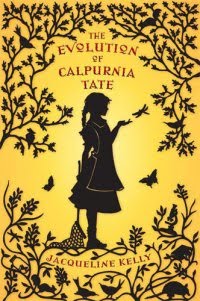
The Evolution of Calpurnia Tate

by Jacqueline Kelly
ages: 10+
First sentence: “By 1899, we had learned to tame the darkness but not the Texas heat.”
Support your local independent bookstore: buy it there!

Calpurnia Virginia Tate (Callie Vee for short) is the only daughter of seven children, positioned smack dab in the middle of all those boys. It’s not an enviable position, even though she’s her oldest brother, Harry’s, only pet. It’s made even less enviable because Calpurnia is not a huge fan of anything domestic: sewing, tatting, knitting, cooking… no, she’d much rather be outside.

Then, the summer of 1899, she and her grandfather (who has been living with them all the time) discover each other. Her grandfather is a naturalist of sorts — a founding member of the National Geographic Society and all — and Callie discovers that studying the world around her is what she really wants to do. She spends as much time as possible with her grandfather — in between piano recitals, forced sewing, school, and managing her brothers’ crushes for her best friend — living for and thriving off of the time spent studying and observing.

Of course, since this is 1899 and Texas, Callie couldn’t be allowed (allowed!) to proceed this way: good, proper, well-off girls just didn’t tromp through the underbrush looking at bugs. For me, this was the heart of the novel, this pull for Callie to do what she wanted and not what everyone expected of her:

I clomped through the kitchen on the way to washing up and said to Viola, “How come I have to learn how to sew and cook? Why? Can you tell me that? Can you?

I’ll admit it was a bad time to ask her — she was beating the last lumps out of the gravy — but she paused long enough to look at me with puzzlement, as if I were speaking ancient Greek. “What kind of question is that?” she said, and went back to whisking the gravy in the fragrant, smoking pan.

My Lord, what a dismal response. Was the answer such an ingrained, obvious part of the way we lived that no one stopped to ponder the question itself? If no one around me even understood the question, then it couldn’t be answered. And if it couldn’t be answered, I was doomed to the distaff life of only womanly things. I was depressed right into the ground.

The other things about the novel are true: Callie’s mom is a bit much (though I think I understood where she was coming from), and her father is little more than a cardboard cut-out. But, I adored the brothers — especially J.B., Travis and Harry — and her grandfather more than made up for her parents in character. Callie is, yes, spunky, but she’s more than that: she’s curious and observant, and — the thing that really got to me — doesn’t really want everyone to grow up and change. A girl after my own heart.

I also liked the way Kelly evoked a particular feel; the sense of anticipation, of change that must have accompanied the time period was quite palpable in the book. It’s a historical novel that actually felt like it. Callie was modern, sure, but she was struggling with her modernity against all the traditional values that were around her, and that dichotomy was intriguing.

A good story.