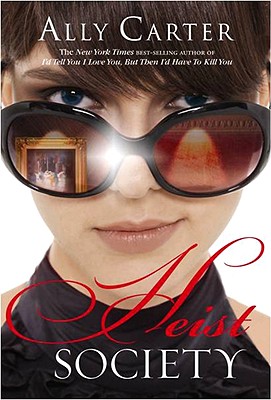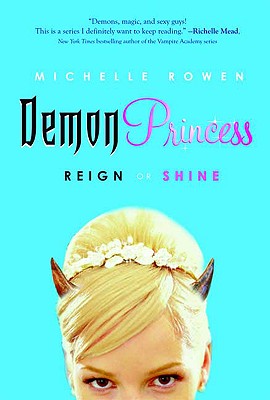
Library Loot 2010-11

I missed last week because we were gone for spring break, and let me tell you: going to the library mid-week has got to be one of the things that gets me through the rest of the week. Last week was so LONG without a library trip.

It’s the little things. 😀

Picture Books:
Dora Celebrates Earth Day!
No T. Rex in the Library, by Toni Buzzeo/Illus. by Sashiko Yoshikawa
The Banshee, by Even Bunting/Illus. by Emily Arnold McCully
Shades of People, by Shelley Rotner and Sheila M. Kelly
Bats at the Beach, by Brian Lies
I Will Be Especially Very Careful, by Lauren Child
Bobby Bramble Loses His Brain, by Dave Keane/Illus. by David Clark

Non-Fiction books:
Marching For Freedom: Walk Together Children and Don’t You Grow Weary, by Elizabeth Partridge

Middle Grade Fiction:
Dragonbreath, by Ursula Vernon
Green, by Laura Peyton Roberts
, by Julia Alvarez

YA Fiction:
Never Cry Werewolf, by Heather Davis
Hamlet, by John Marsden
A Brief History of Montmaray, by Michelle Cooper
, by Lisa Mantchev

Adult Fiction:
Neverwhere: A Novel, by Neil Gaiman
Except the Queen, by Jane Yolen and Midori Snyder

The roundup is either at Reading Adventures or A Striped Armchair. Obligatory FTC note: the links are provided through my Amazon Associates account. If you click through and actually purchase one of these books, I’ll get a teeny, tiny payment. But, since no one ever does, and it’s SO much easier using the associates account to put up these links, I’m going to keep doing it.

A Swiftly Tilting Planet

by Madeline L’Engle
ages: 8-11
First sentence: “The big kitchen of the Murrys’ house was bright and warm, curtains drawn against the dark outside, against the rain driving past the house from the northeast.”

I never much liked this one, even as a kid. And the only reason I can think of, now, is that it’s because Meg isn’t really a part of the story. Oh, she’s there: she’s older now, married to Calvin, and pregnant with her first child. But she’s not really an active part in the story. She spends the book lying on a bed kything with Charles Wallace, who, at age 15, is off on an adventure of his own.

And honestly his adventure — saving the world from certain destruction by Madog Branzillo — isn’t really that interesting. He rides through time with a unicorn/Pegasus creature named Gaudior, popping in and out of within other people. I’m sure it has a very nice and neat conclusion, where Madog is stopped (not that it was memorable enough to stay with me), but honestly, I gave up halfway through. Charles Wallace was never my favorite character; he was always a bit too precocious for my taste. It was Meg I liked, Meg that resonated with me. And a Meg that just lies around being worried for Charles Wallace is kind of boring. Even now — perhaps especially now — after I’m all grown up, living the life that Meg was starting out on.

I feel bad about it, though. Like I’m giving up on some part of my childhood. Perhaps some books just shouldn’t be reread?

Candor

by Pam Bachorz
ages: 14+
First sentence: “Ca-chunk, ca-chunk, ca-chunk.”
Support your local independent bookstore: buy it there!
Review copy given to me by the author.

There’s perfect, and then there’s Candor.

Perfect houses on perfectly manicured lawns, full of perfect parents and perfect children all doing perfectly respectable things. And it’s desired: the waiting list to get into the community is over a year long, because once you move into Candor, you don’t move out. It’s not just that you don’t want to, it’s that you can’t. No, there’s no fences; there’s something more sinister holding you there: subliminal Messages piped into all the music that’s constantly running throughout the town, all day, all night. Messages training you to do perfect things, say perfect things, be perfect people.

Except for Oscar Banks, son of the town’s founder.

He’s figured out a way to get past his father’s Messages, and knows how to create his own. He uses this knowledge to help smuggle teens — ones old enough to survive on their own — out of Candor. Not out of the goodness of his heart; no, he’s making a bundle on this, all squirreled away in a nice offshore account. He’s the perfect kid by day, rebel — complete with a shed full of magazines, candy and liquor — by night.

And then Nia moves in. Oscar is immediately attracted to her: she’s everything that Candor is not. Free, artistic, fun, slightly dangerous. He wants to help her, and yet can’t bring himself to tell her everything. It’s a long, slippery slope, one that, ultimately, Oscar finds he can’t control.

It’s an intense book, one that looks at the danger of conformity as well as the meaning of freedom. There’s not a wasted word or scene; everything builds upon everything else leading toward the inevitable conclusion, the one which you hope won’t come, and yet expect all at the same time. The tension between being human and being perfect was palpable throughout the book, which just added to the intensity.

It’s also got one of the best bad guys to hate: Oscar’s father is quietly evil, doing what he deems to be “right”, and yet you just want to yell at (or possibly) kill the guy. I don’t think I’ve had this strong of a reaction to a character in a very long time. Oscar’s father. is. evil. As for the rest of the characters, they range from the pathetic — Sherman — to the creepy — Mandi. The only one I felt was truly “real” was Nia. Perhaps, though, that’s the way we’re supposed to feel about them.

At any rate: an excellent story.

The Truth About Forever

by Sarah Dessen
ages: 13+
First sentence: “Jason was going to Brain Camp.”
Support your local independent bookstore: buy it there!

As far as Sarah Dessen books go, this one’s pretty mild. Macy Queen’s dad died a year and a half ago — a heart attack on a morning run; Macy was the one to find him, which led to a lot of people giving “the look” — and Macy and her mom have been scraping by. Emotionally, that is. From the outside, everything looks perfect: Macy’s mom has thrown herself into her work. Macy has thrown herself into being perfect: perfect boyfriend, perfect grades. No waves, no problems.

Except that, deep down, Macy’s not really happy.

She doesn’t realize this until she falls in with a crazy group of caterers (you know those catering types: absolutely insane), and slowly begins to realize what she’s been missing. Real friendship. Real laughter. Real love. Connection.

Of course there’s a boy — Wes, a gorgeous artist with a tortured past. Of course Macy has issues with her mother — she doesn’t want to let Macy grow up and change; heaven help me if I’m EVER this controlling as a mother. Of course the whole thing bubbles and boils over near the end, where everything comes tumbling out, and finally there’s resolution and healing begins to happen. We don’t read Sarah Dessen books for new and edgy. We read them because she’s a good storyteller, good at romance — though this one fell short of some of her others — and unafraid to paint a picture of imperfect teens.

And this book was all of those things. It wasn’t as good as some of the other ones I’ve read, but it was good enough. And for some authors — Sarah Dessen being one of them — that’s okay.

Sunday Salon: Ten Influential Books

I was musing about the fact that I didn’t have a Sunday Salon post, and hubby mentioned that around the blogs he frequents, they’re talking about the ten influential books in their lives. Hubby’s list includes 15 heady philosophical books; he said that while it’s mostly academics doing this, there’s no reason why us non-academic readers can’t play along.

So, ten influential books in my life, in no particular order:

Omnivore’s Dilemma, by Michael Pollan: I’ve mentioned this before, but Pollan has changed the way I — we — think about food. It started with some articles that were the basis of this book, but ever since I first read them, I’ve been obsessive about High Fructose Corn Syrup in my diet. I make bread weekly because of this man. I shop at farmer’s markets and buy my meat from a local rancher because of this man. I cringe every time I walk into Wal-Mart (it’s still a work in progress; we are on a limited budget after all) because of this man. My life is healthier because of this man, and I am glad for it.

Beauty, by Robin McKinley: this is what started my love of KidLit as an adult. A friend was properly shocked that I hadn’t read this, handed it to me, and I’ve never looked back. So they’re kids books? So what? I love kids books. I love the writing — I think it’s tighter, almost better, than adult books — and I love the stories being told. My life would be so much less without the kids books that I read.

Austenland, by Shannon Hale: admittedly, it’s not one of Shannon Hale’s better books, though I do like it quite a bit. But, this is on my list because it’s the first ARC I requested from a publisher. I’d never even thought about doing that before Andi and Heather came into my life, and then suddenly a whole new world was opened up: I could request books! Before they are published! I heard about this one; I coveted it. And, when I asked, they sent it to me! Amazing. I’m still not as into all the ARC love as other bloggers, but I do like it when I get some in the mail. It’s kind of a validation thing, I guess. At any rate, I do love what I do.

Pride and Prejudice, by Jane Austen: I couldn’t not have a Jane Austen on here, right? This one, my mother handed to me when I was 14 and I just didn’t get it. Everything fell flat. Luckily A&E and Colin Firth came along and reintroduced me to Lizzy and Mr. Darcy (yes, I saw the miniseries before I read the book!). I went back to the book, discovered Jane’s wit and observations and humor, and fell in love with her. Now I can’t imagine literary life without picking up and reading an Austen book once in a while.

Little House on the Prairie, by Laura Ingalls Wilder: Hubby said I should have a book from my childhood, and this one popped into mind. As I wrote to Besty at Fuse #8 when I submitted my Top 10 Children’s fiction books: “This was one book that spurred my love of reading. I read it so many times when I was a kid that I practically memorized it. (And I still quote passages of it to my children.) I wanted to be Laura. I wanted to enjoy life like Laura. I wanted to write like Laura. I’m glad I had Laura in my life.”

Sports Illustrated magazine: I know: not a book. But, honestly, it influenced me to major in journalism in college. I had my own subscription for most of high school, paid for with my own money. My mom would always watch for the swimsuit issue and squirrel it away — though I managed, on occasion, to find it: there were articles I wanted to read! It fed my love of sports, it showed me what tight, interesting, good reporting could do. I suppose I should have been reading Time or Atlantic Monthly, but, dang it, I loved my SI.

Deadly Persuasion, by Jean Kilborne: Soon after C was born, a friend loaned me this book. It simultaneously scared and empowered me: these girls I was embarking upon raising were going to be inundated with terrible images from the media, they would be pressured into buying things that were degrading to them, and yet… I had the power to teach, to guard, to guide, to put my money where my mouth was. Which is why I won’t let my kids be billboard ads for companies, among other things.

The Great Gatsby
, by F. Scott Fitzgerald: Hubby thought this was an odd inclusion: why does a book that I haven’t opened up in 20 years rate here? Because, for me, this is all tied up in thinking about music and literature and the power of metaphor. I’m not sure it changed me, but it did stay with me.

Civil Disobedience, Henry David Thoreau: I’m a pacifist. I can pinpoint this to my reading of Thoreau’s work and the whole idea of non-violent protest as a means for change. My admiration of Martin Luther King, Jr. and Ghandi came from this essay, too. It resonated deep within me, and — again — even though I haven’t reread this since high school, I found that it fundamentally changed my thinking about war, about protest, about how to go about creating change.

I’m a Stranger Here Myself, Bill Bryson: I’m sure I could have picked any number of travel books to fill this last slot; ones that feed the wanderlust that my pocketbook cannot satiate. But, it comes down to this one: Bryson’s hysterical reflections on being reintroduced to America after years of living in England. It feeds into my European sensibilities, it looks at my country with a new and fresh light. But, most of all, it makes me laugh.

So, there are my ten. What are yours?

Book to Movie Friday: Coraline

Chalk this one up to mom-brain: I was going through something the other day, and I discovered I had written this one up last September, but never published it. Sigh….

I think I really should have seen this one in the theaters. I think, for maximum chills, this one should really be seen on a large screen with surround sound. Granted, it’s too late now (unless you have friends like ours who have an in-home movie system), but still. If you saw it in the theaters, lucky you.

I wasn’t necessarily attached to the book, but I still found myself comparing the movie to the book to see how it held up (which, I suppose, if you’re a reader, that’s inevitable). And, it held up pretty well.

The biggest difference (aside from making it American — I got the distinct impression when reading the book that Coraline was supposed to be British) was the addition of a boy character, Wybie. I’m not sure why they did that — perhaps the movie makers felt that if there wasn’t a boy character, boys wouldn’t want to see the movie (because, you know, it’s about a girl). But, really, Wybie didn’t do anything, or at least not much of anything. Sure, he gave her a doll that allowed the other mother access to Coraline, and he helped Coraline in the end, and he was her (non-talking) companion in the other world. But the movie would have been just as good without him as it was with him. Sorry, boys. (And while we’re at it: the ending in the book is better. In my humble opinion.)

What the movie did get spot on was the mood. This was one creepy, scary movie. (My girls watched it without me — I wasn’t even home — and they were still up when I got back late, watching “happy things” in order to counteract the scary.) The Danny Elfman-esque music aided immensely, as did the animation. I really like how they envisioned the other mother, dissolving slowly into a spider-like entity. And the other world was exotic and terrifying all at the same time.

Sure, there were issues: I didn’t like Coraline’s parents, and was baffled as to why she’d want to rescue them, since they were such jerks. But, that’s a minor thing. It was a grand movie experience. One that would have only been better had it been on a larger screen.

Verdict: nearly as good as the book (but read it first!).

Sea Glass

by Maria V. Snyder
ages: adult
First sentence: “Worry and dread clawed at my stomach.”
Support your local independent bookstore, buy it there!

The problem with second books in a trilogy is precisely that: they are second books. They neither create nor resolve conflicts that are playing out over the course of the books. Their place is to advance the story, to create subplots, and to, well, make people want to read the conclusion. Which means, often, that they are either meandering or depressing.

In this case, it’s meandering that wins out. We pick up the story immediately after Storm Glass ends, with Opal facing the consequences of her new-found powers. Opal, as a character, is all over the map in this one: she’s moody, she’s mistrusting, she’s insecure, she’s trying to strike out on her own. She develops her romance with one of the leads, but yet can’t deny she has feelings for another. She wanders around in the dark abyss of second-book-in-a-series-dom, leaving us readers to wonder why on earth we’re reading this book (so we’ll be ready for the conclusion!).

Synder’s not on the top of her game in this book; while the world is still fascinating, it’s not quite enough to offset the wandering plot. Snyder has the characters go all over the place — so much time is spent traveling! — and introduces plots and subplots and characters that don’t go anywhere, or even do much to add to the initial story. It’ll all probably make sense when the third book comes out, but until then, readers are left hanging and wondering what this all means.

And until then, we can blame it all on it being the second book in a trilogy.

Over Sea, Under Stone

by Susan Cooper
ages: 9+
First sentence: “Where is he?”
Support your local independent bookstore: buy it there!

I’ve been trying to remember when I first read these books. It wasn’t when I was a kid, even though I would have loved them had I come across them. I’m thinking it was about the time that I rediscovered kidlit, about 15 years ago. I don’t remember what I thought about this particular book — I do love the next one in the series, The Dark is Rising — but I did find I remembered elements of the plot.

Simon, Jane and Barney Drew are on vacation in Cornwall with their family and their Great-Uncle Merry. On their second day there, they’re exploring the old house that “Gumerry” rented for them and discover an old map. It turns out that the map is written in old English and Latin; it’s a guide of some sort leading to the Holy Grail. It’s up to the kids to figure it out and find the grail… before the “other” side does. There’s a bit of adventure, some kind of tense moments, and it’s truly a middle grade book: except for a bit at the end, it’s a straight-up mystery that’s solved by Simon, Jane and Barney working together.

All that said, it’s really kind of a silly little book. Aside from introducing us to Merry (Merriman Lyon, who shows up in the other books. He’s actually Merlin…) and the Drew kids (they do make a reappearance), I’m not quite sure what purpose this book serves to the whole of the series. (Maybe it’ll become clearer as I read more.) You could honestly not read this book and not be missing much of anything. The writing’s not even as evocative as I remember some of the other books in the series being.

It’s a good thing I don’t judge series by the first book.

Good Heavens, It’s That Time Already!

For Carl’s Once Upon a Time Challenge!! (YAY! It’s really, truly spring now.) I love the gorgeous button this year, too.

I think I’m going to do Quest the Third this year. (I wouldn’t mind rereading Midsummer Night’s Dream…)

1. Fantasy: A Conspiracy of Kings, Megan Whalen Turner
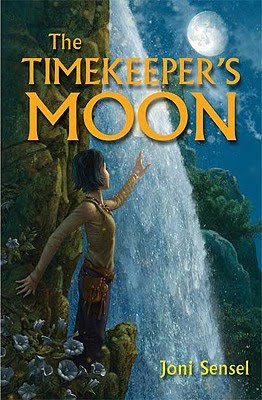
Timekeeper’s Moon, by Joni Sensel
Neverwhere, Neil Gaiman
2. Folklore: I am Morgan le Fay, Nancy Springer
3. Mythology: Radiant Darkness, Emily Whitman
4. Fairy Tale: Princess of Glass, Jessica Day George
The Wide-Awake Princess, E. D. Baker
5. Midsummer Night’s Dream, via Manga Shakespeare

Ah, let the fun begin!!

Open: An Autobiography

by Andre Agassi (with help — credited in the acknowledgments — from J. R. Moehringer.)
ages: adult
First sentence: “I open my eyes and don’t know where I am or who I am.”
Support your local independent bookstore: buy it there!

I’m a sucker for memoirs, especially well-written ones by interesting people. I was doubtful — at first — that this one would be well-written, but was game to read it anyway: I’ve adored Agassi for years. And I was pleasantly surprised: while the writing style took some getting used to (there’s conversations, but no quotation marks, which bugged me at first), thanks to the help of Moehringer, this book was honest– almost brutally so — and interesting.

It’s basically Agassi’s story about his relationships: with tennis, with his father, with the women in his life, with his trainers and coaches, with himself. It’s not an easy road: he was (you get the impression, by the end, that he isn’t anymore) a very tortured individual. He was often depressed, conflicted, unsure of himself. You would think it would be a very depressing book, a harsh read, and yet it’s not. Partially that’s because it’s fascinating (I thought, anyway) to see Agassi’s tennis career from his point of view. It’s interesting to see the inner conflict between his hatred of the sport and the fact that he had this natural talent for it. It’s interesting to see his career ups and downs from his point of view — like how much losing to Pete in Slam finals really ate at him, and how much winning the 1999 French Open meant to him. He breaks down most matches he played, talks about the men he played against (dislikes Connors, loathes Chang, and hates Becker; respects Borg, Federer and Sampras), and talks about what’s going through his mind. I found it interesting to see the game from the inside (even if it was tortured), to get a feel for what goes on in the head of a player on the court. Fascinating stuff.

But, what really made the book for me was when he finally got to his relationship with Steffi (he calls her Stefanie, since that’s what she prefers, which I think is really sweet) Graf. She’s a running theme through the book, an aside here and a mention there (I wonder if it really happened that way, or if he’s just remembering it that way because he loves her), but his recollection their first “real” meeting (they met in 1991 and 1992, and she brushed him off) in 1999, before the French Open, is so incredibly sweet, you can’t help but smile. And for the rest of the book, the tone changes: he’s a better man because of her. (Well, that, and he finally realizes that doing something for someone other than yourself is a helpful thing; he’s so incredibly proud of the school he’s helped build and the good its doing.) Maybe he’s not a better player — he still wins some and loses some — but he’s less conflicted, more sure of himself.

I’m not sure if your average reader would like this book, though. It’s for fans of Agassi, of tennis. But for us, it’s fantastic.