Library Loot 2010-16

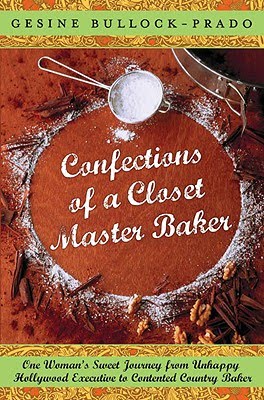
I did better with the loot today, though I’m still in a reading slump (I’m reading, I’m just not loving anything I’m reading. It’s all kind of just meh.). I did stop by the Friends of the Library bookstore and picked up Divine Secrets of the Ya-Ya Sisterhood: A Novel and A Short History of Tractors in Ukrainian, both of which I can use for the 2010 challenge. But what I’m really excited about is this: ChocolateChocolate. Yes, it’s a chocolate cookbook. *swoon* Here’s hoping there’s some yummy recipes.

One question, though, to help me out of my slump: what’s the best book you’ve read recently??

As for the library loot:

Picture Books:
It’s Picture Day Today! , by Megan McDonald and Katherine Tillotson
Zarafa: The Giraffe Who Walked to the King, by Judith St. George/Illus. by Britt Spencer
Wink: The Ninja Who Wanted to be Noticed, by J.C. Phillipps
Ron’s Big Mission, by Rose Blue and Corinne J. Naden/Illus. by Don Tate
Shwatsit!, by Christin Ditchfield/Illus. by Rosalind Beardshaw
It’s a Secret, by John Burningham
The Pigeon Wants a Puppy, by Mo Willems
The Old Woman and Her Pig: An Appalachian Folktale, retold by Margaret Read MacDonald/Illus. by John Kanzler

Middle Grade Fiction:
The Birthday Ball, by Lois Lowry

YA Fiction:
Wintergirls, by Laurie Halse Anderson
Runaway (Airhead), by Meg Cabot
Being Nikki (Airhead)
The Will Of The Empress, by Tamora Pierce
The Sorceress, by Michael Scott

The roundup is either at Adventures of an Intrepid Reader or A Striped Armchair. Obligatory FTC note: the links are provided through my Amazon Associates account. If you click through and actually purchase one of these books, I’ll get a teeny, tiny payment. But, since no one ever does, and it’s SO much easier using the associates account to put up these links, I’m going to keep doing it.

Breathless

by Jessica Warman
ages: 15+
First sentence: “There’s a man feeding the koi in our fishpond because my parents don’t want to do it themselves.”
Review copy sent to me by the publisher.

I thought the premise of this one was intriguing, and by all accounts, should have really liked it. Katie Kitrell has an incredibly messed up family: her father, a psychiatrist, is so absent that his children call him “the Ghost”. Her mother is an alcoholic; her older brother, Will, a schizophrenic who is becoming increasingly violent. So, when she’s shipped off to boarding school her sophomore year, she finds herself trying to reinvent who she is.

I thought it would be a fascinating story; a bit of a coming of age a bit of a mystery (the back says “And when Will commits an unthinkable act”; what is that, exactly). And for a while, it was. I’m not sure how much I connected with the characters, but Warman’s writing is quite elegant, feeling almost effortless. She does broken very well, and knowing that this story is semi-autobiographical makes it that much more powerful. But then, about halfway through, I became bored with it. I think part of it was that the book covers three years of time, and I just wasn’t interested in following Katie all through the rest of high school (with an epilogue that takes place ten years later). I think if the story had been more condensed over time, it would have worked better. For me, at least.

I also had a difficult time connecting with any of the characters. Most of them were either off-putting, spoiled, grating, or just plain irritating. I understand that it was the nature of the story, and I can accept that. Perhaps it would have been easier to stomach the characters if the time frame for the plot were shorter.

So, I abandoned it halfway through. I read the ending to see how it would all turn out (shame on me?), and then decided I didn’t care that much to go back and read about how the characters all got there. Time’s too precious to waste on books I’m not really connecting with. Right?

A Conspiracy of Kings

by Megan Whalen Turner
ages: 12+
First sentence: “The king of Attolia was passing through his city, on his way to the port to greet ambassadors newly arrived from distant parts of the world.”
Support your local independent bookstore: buy it there!

First off, if you haven’t read the other three books in the series (The Thief, The Queen of Attolia, and The King of Attolia) go do that first. Secondly, when I discovered that Melissa at One Librarian’s Book Reviews was also reading this, I knew we had to do a buddy read. Thankfully, she agreed. Here are my answers to her questions; you can pop over to her blog to read her answers to mine.

This book follows the story of Sophos, one of the characters from The Thief, and what happened to him after he and Gen parted ways in Eddis. There’s a lot of action, a lot of political intrigue, and a very nice twist at the end. It’s amazing to watch the growth of Sophos as a character; you know from the beginning that he has been made king of Sounis, but his journey to that point and afterward is fascinating. It’s a complex, involved story, one that works the backstory in brilliantly without compromising the current story being told. It’s suspenseful, and is resolved in ways that you won’t expect. A worthy addition to a great series.

How does this book rank for you as compared to the other three in the series?
I’m not sure I can really answer that question; it’s been nearly two years since I read the other three. (I meant to do a reread, but never really got around to it.) However, when I finished this, the one book I wanted to go back and reread was The Thief. I’m not sure Conspiracy was as good as that one, but I think I liked it better than the other two Attolia books, even if Gen wasn’t in this one very much.

Did you remember characters and events from the previous books well, or did you have to go back and refresh your memory on some?
I had to go back, dig up The Thief, and remind myself who the heck Sophos was. I had no clue. And then I had to find a plot summary of that book to remind me of the relationship between Gen and Sophos and the mage. I really should have been patient and reread the others first!!

Having read her other books, were you watching for the twists and surprises? Did this help you to see any of them coming?
I wasn’t really watching for twists and turns, but because I’d read her other books, by the time I got to the final section, I had this feeling that something was missing, that something was going to happen. I had no idea what, but I got to a point where I couldn’t put it down because I had to know how it was all going to end. Which it did most satisfyingly (and spectacularly).

Why do you think Turner used the different narrative styles in this book (the 1st, 3rd, 1st structure)?
I think to give us a sense of immediacy when there’s action, and to make the boring political part go more smoothly? I think if it had all been in first person, the middle section would have really dragged. As it was, while we were still tied to Sophos’s perspective, we got more of a feel of the other characters than we would have had we stayed in Sophos’s head. Or I may just be blathering here.

Who’s your favorite character from the book or the series?
I still love Gen, even though he was hardly in this book. When he was, though, he stole the show. I also found myself intrigued by the Queen of Eddis.

Where do you think Turner will go with the next book (if there is one) or what would you like her to write about?
I’d like to know Eddis’s story. How she became queen, some of the decisions she had to make, and what’s going to happen with her and Sophos. I think it’s about time we had another book about one of the female characters, anyway.

Amulet

by Kazu Kibuishi
Vol 1: The Stonekeeper
First Sentence: “We were supposed to pick up Navin at eight o’clock. We’re late”
Support your local independent bookstore: buy it there!

Vol 2: The Stonekeeper’s Curse
First sentence: “Let go of me. I don’t want to see him.”
Support your local independent bookstore: buy it there!

First off, I read this one backwards, and got Volume 2 first. While it works okay as a stand-alone, I highly recommend getting Volume 1 first and reading them in order. It makes much more sense that way.

After the car accident that kills their father, Emily, her brother Navin move with their mother out to the woods, into the country house owned by their mother’s Grandfather Silas. It doesn’t seem like anything exciting, until on their first night they are lured into the basement by a strange noise. Which turns out to belong to a strange beast that kidnaps their mother. Emily and Navin follow twists and turns, aided by a strange necklace that Emily found in the house, discovering the strange new world below.

In the second book, the story continues: Emily’s mother has been poisoned, and it turns out that the evil Elf King is out to get Emily. In search of an antidote for her mother, Emily takes on the elves as well as fighting the overpowering influence of the stone. She meets a guide, and learns that there is an underground resistance, which Navin happily joins, to overthrow the king. What her part in all of this, and whether or not she can save her mother, remains to be seen.

Yeah, it’s all a bit Star Wars and Lord of the Rings (C, who also read them even noticed the similarities), but it’s gorgeously drawn, and a rollicking adventure. The world is creative, combining both fantasy elements — like the powers of the stone — with technology — Emily and Navin are accompanied in their endeavors by a collection of robots, ranging from the crotchety to the overly-sensitive. Emily’s personal bodyguard is a pink bunny robot named Miskit, which I found to be highly amusing. It’s well-paced; there’s always something to keep the pages turning. All of which makes me curious for the next installment.

A great addition to middle grade graphic novels.

Library Loot 2010-15

I’m feeling slightly embarrassed about the piddly loot today, since the only reason I have for such a small haul is that I’m feeling uninspired in both my reading and my choosing. All M seems to want to do is reread comfort books, and C just finished Savvy, by Ingrid Law. How does one find a book to follow one that wonderful??

Here’s what we did get:

Picture Books:
Two of a Kind, by Jacqui Robbins and Matt Phelan
Jeremy Draws a Monster, by Peter McCarty
The Yellow Tutu, by Kirsten Bramsen/Illus. by Carin Bramsen
A Mighty Fine Time Machine, by Suzanne Bloom
Chicken Cheeks, by Michael Ian Black and Kevin Hawkes

Non-Fiction:
One Well: The Story of Water on Earth, by Rochelle Strauss/Illus by Rosemary Woods

Middle Grade Fiction:
The Stonekeeper (Amulet, Book 1), by Kazu Kibuishi

YA Fiction:
Will Grayson, Will Grayson, by John Green and David Leviathan
God Went to Beauty School, by Cynthia Rylant

The roundup is either at Adventures of an Intrepid Reader or A Striped Armchair. Obligatory FTC note: the links are provided through my Amazon Associates account. If you click through and actually purchase one of these books, I’ll get a teeny, tiny payment. But, since no one ever does, and it’s SO much easier using the associates account to put up these links, I’m going to keep doing it.

Three for the Circular File

I haven’t done something like this in a while, but none of these three books deserved their own post, so here I am lumping two did not finishes and one blah book in a post. Feel free to skip if you feel so inclined.

Hachiko Waits
by Leslea Newman/Illus. by Nachiyo Kodaira
ages: 7/8-10
First sentence: “When Professor Eizaburo Ueno woke up, he liked to play a game with his golden-brown puppy, Hachi.”

My fundamental problem with this one wasn’t so much that I often felt the author was talking down to me — sure it’s for lower Middle Grade readers, but in the best ones, I never feel that way — it’s that this simplistic little book was the one chosen for our 4th/5th grade mother-daughter book group. I kept wondering why we couldn’t have picked a story that wasn’t so maudlin (sweet, yes, but so maudlin).

It’s the story of a dog, a dog so faithful and so unwavering, that he became beloved by the Japanese people in the early 1930s. Hachi was the dog, an Akita-ken, and every day he waited for his master, Professor Ueno, at the train station. One day, Professor Ueno had an unexpected heart-attack at work and didn’t come home. Hachi was confused, and the next day came back to wait. He kept coming back, day after day, for ten years, until he finally passed away… waiting.

Yeah.

As I said, it wasn’t so much the story, or even the author talking down to me as a reader, as it was that I can’t believe there’s going to be much to discuss. Next month, I swear, I’m going to push something more complex. (Appropriate, though.)

Hamlet
by John Marsden
ages: 15+
First sentence: “‘Do you believe in ghosts?’ Horatio asked him.”

I picked this one up in my ever-continuing attempt to make sense out of htis play. It’s not a constant search, just every once in a while, I do like to try and see if a different person — especially someone with more imagination — can make more sense out of Hamlet than I can.

I abandoned it because it just wasn’t jiving with me. It’s a very sexualized version of Hamlet, and a very modern take as well. Hamlet was a bit of a weird jerk — there was this scene involving animals and I wasn’t quite sure if it was bestiality or just ritualized killings — and the narrative kept flitting between characters. Each one of these things, individually, could have worked for me. But the combination of them just killed the story. Admittedly, I didn’t get very far — my time is precious, of course — and perhaps it got better further along in the book. Then again, maybe it wouldn’t have and I’ve spared myself the agony of time lost, never to be returned.

But we’ll never know, will we?

Return to Sender
by Julia Alvarez
ages: 11+
First sentence: “Tyler looks out the window of his bedroom and can’t believe what he is seeing.”

I wanted to like this one. Really, I did. But, it had one strike against it from the start: I really don’t like books written in present tense. (Yeah, I know: I just complained a couple days ago about a book written in past tense. I’m being picky this week.) But it seemed like a nice story about a farmer, and about the use of illegal immigrants, and separation and loss. And I felt like I needed a Hispanic story.

And yet, what I hoped this story could do got lost in what I thought was an overly preachy tone. I’m sure Alvarez meant to be sympathetic to the plight of illegal immigrants, especially the children of the immigrants. But she kept hammering this point in over and over and over and over, that I finally abandoned the book due to preachiness.

Sigh. You can’t win them all.

The War of the Worlds

by H.G. Wells
ages: adult
First sentence: “No one would have believed in the last years of the nineteenth century that this world was being watched keenly and closely by intelligences greater than man’s and yet as mortal as his own; that as men busied themselves about their various concerns they were scrutinized and studied, perhaps almost as narrowly as a man with a microscope might scrutinize the transient creatures that swarm and multiply in a drop of water.”
Support your local independent bookstore: buy it there!

This review comes to you in two parts.

Part one:

Yawn.

I could not, could NOT, make myself get interested in this book. Sure, it’s supposed to be gripping and scary, and the introduction by Orson Scott Card made it sound like a contemporary commentary, which I suppose most end-of-the-world novels are. But this book lost my interest for two reasons: first — and this surprised me — it’s written in the first person, past tense. We know from the start that our narrator, whatever his name is (strike two), will survive because he’s writing this as though it’s happened, done and gone. No sense of immediacy, no suspense, no thrill, at least for me. The second reason is evidenced in the first sentence. Blame it on Twitter, blame it on my reading YA books, but whatever the reason, I found wading through these sentences to be incredibly… boring. Which didn’t do anything to help the already dismal situation.

Then… part two:

After the Martians attacked, killed most everyone off, and settled in to “rule” the earth, I found myself fascinated in the book. Nothing changed, yet everything changed. I found myself fascinated by our narrator’s will to survive and the various stages of madness around him. I found myself thinking about The Stand, and how the second half of that book was more interesting to me as well. Perhaps I’m not so much a lover of end-of-the-world fiction, as I am interested in how society all plays out after the end of the world. Which, I suppose, feeds into my interest in dystopian fiction. Who cares how the world ends, really? The fascinating stuff is the rebuilding, the surviving, the changes that society goes through after the fall.

So, this book was kind of a wash for me in the end.

The Girl Who Chased the Moon

by Sarah Addison Allen
ages: adult
First sentence: “It took a moment for Emily to realize the car had come to a stop.”
Support your local independent bookstore: buy it there!

I don’t know why I picked up this Sarah Addison Allen book next, and not Sugar Queen. Perhaps because it was making the rounds on various blogs, and for some reason it looked appealing. Perhaps it was because of the cover; it’s a bit busy, but there’s something alluring about it, making me curious as to what’s inside.

And, from my limited experience with Allen, it’s pretty much exactly what to expect from her: a love story about broken people trying to heal, mixed with Southern charm, and just a dash of magical realism to add some spice to the story.

Don’t get me wrong, though: I enjoyed the book. In fact, I came away again wanting to make and eat food, in this case cake and pulled-pork sandwiches (though I’m a Memphis, not North Carolina, barbecue girl). I enjoyed the Southerness of the book as well; the summer humidity, the slowness of the days, the friendliness-bordering-on-nosiness of the townspeople. But, it also felt like it was more of the same in a different wrapper: the character coming home to find a mystery and dysfunction that she has to overcome. The heartbreak, the consequences and the trying to heal from said heartbreak. The magical home-grown elements; this time a mood-changing wallpaper, a sweet sense that allows characters to see/feel when cake is being made; and the biggest mystery of all… which I won’t spill because it is interesting to see how it all plays out.

That said, it was still an enjoyable read. Allen does have a way of drawing you into her world, of making you care about her characters, of entrancing you with her storytelling. It’s still the only magical realism that I can stomach without cringing — still can’t explain why, though — and I found that the book called to me whenever I put it down, until I finally gave in and let the family run wild while I finished.

Which means, in the end, I can’t complain.

Sunday Salon: My Top Ten Lists

I thought, since Betsy at Fuse #8‘s Top 100 Children’s Fiction book poll was over, and since Persnickety Snark‘s putting together a Top 100 YA book poll, that I’d share with you the top 10 lists I submitted for each of those.

My top 10 Children’s Fiction books (I’m not going to include the little quotes I sent about these since most of them made the final list.)

1. Bridge to Terabithia, by Katherine Patterson
2.HP and the Prisoner of Azkaban, by JK Rowling
3. Charlie and the Chocolate Factory, by Roald Dahl
4. Little House on the Prairie, by Laura Ingalls Wilder
5. The Wastons Go to Birmingham, 1963, by Christopher Paul Curtis
6. Harriet the Spy, by Louise Fitzhugh
7. Ramona Quimby, Age 8, by Beverly Cleary
8. Lion, Witch and the Wardrobe, by C.S. Lewis
9. Jacob Have I Loved, by Katherine Patterson
10. Saffy’s Angel, by Hilary McKay

And my top 10 YA books (with little explanations this time):

1. Beauty, by Robin McKinley: I’m not sure it’s the “best” by any means, but it’s my personal best for sentimental reasons. I loved McKinley’s world building, but mostly this book showed me that the quality of writing in YA books is phenomenal. I couldn’t believe I missed this book as a teen.

2. Speak, by Laurie Halse Anderson: Powerful. Simply and utterly powerful. Completely blew me away.

3. My Most Excellent Year: A novel of Love, Mary Poppins and Fenway Park, by Steve Kluger: This book made me utterly and completely happy. It’s one I can see rereading as a comfort read over and over again, and never growing tired of the characters or the story. Even though it’s relatively new, it has all the hallmarks of a classic.

4. Thirteen Reasons Why, by Jay Asher: Very seldom do I read a book that makes me reflect on my life, makes me want to change the way I interact with people. This book did that. I give it to as many people as I can.

5. The Goose Girl, by Shannon Hale: Fairy-tale retelling at its finest. Hale is a master-storyteller, and this is one of her best.

6. Paper Towns, John Green: It made me laugh, it made me think, it made me want to read Walt Whitman. And it’s stuck with me.

7. Uglies, Scott Westerfield: If science fiction is more about the present than the future, then this book is spot on. An excellent commentary on beauty and society. A rocking good story, too.

8. The Absolutely True Diary of a Part-Time Indian, by Sherman Alexie: Not for everyone, yet is one of those books that everyone should read. Funny, painful, fascinating, enjoyable, tough. Classic.

9. Jackaroo, by Cynthia Voight: Contrary to what the publisher will tell you, this is not an action adventure book. It’s much more thoughtful and introspective, full of vivid characters making tough decisions.

10. Summer of My German Soldier, by Bette Green: It took me too long to get around to this book, but it has absolutely stayed with me.

So, this begs the question: what are your top ten? (Either one or both.)

Book to Movie Friday: Masterpiece Theater’s Emma

I do have a confession before I begin: Jeremy Northam is really, truly the only Mr. Knightly in my mind. It is hard for me to imagine Mr. Knightly any other way, no matter how good the actor is.

Given that, I was more than willing to try out the new Emma — love of all things Austen trumped love of Mr. Knightly — and see how they treated one of Austen’s funniest books.

And…

Sigh.

I really wanted to like this. Yes, even given my above confession, the 1996 movie version with Gwyneth Paltrow drives me a bit bonkers. I’d love a new movie version of Emma I could love and adore and laugh at. However, this wasn’t it. I did like Romola Garai as Emma; I felt she managed to capture a bit of Emma’s silliness and immaturity without being utterly annoying. Mr. Knightly, well, wasn’t Jeremy Northam, which really is no fault of his own. But, beyond that, he was much too earnest for my taste. In fact, I think that’s my biggest complaint with the whole movie: aside from adding things in which really didn’t need to be there (four hours? Really? There’s not that much in the book!) — back stories and extra scenes that I know weren’t in the book! — it just took itself way too seriously.

I know: I adore the Colin Firth Pride and Prejudice, which also takes itself more seriously than the book warrants. But, Emma is a comedy, more so than any of Austen’s other books. We’re supposed to laugh at Emma’s folly. We’re supposed to laugh at the silliness, the vanity, the insecurity, the puffed up characters. We’re supposed to dislike Mrs. Elton because she’s annoying and vain, not because she’s mean. We’re supposed to laugh at Miss Bates because she’s a ditz not roll our eyes at her because her mannerisms grate on us. Something is wrong when the funniest character is one — John Knightly — that’s barely in the book at all.

We’re not really supposed to swoon. It’s not a swooning book. It’s not a swooning story. Sure, Emma and Mr. Knightly end up together, but it’s a love born of many, many years, of a deep and lasting friendship. Which is really not swoon material. (Don’t get me wrong: I’d rather a marriage like that than a swooning one, but that’s not the point.) It’s a frivolity, a romp, a mirror for us to hold up to ourselves and say, yes, we’re Emma. Thank heavens there’s Knightly out there to love us anyway.

Verdict: The book’s best. But even though Gwyneth’s highly annoying, I think that version is a better adaption.