Sunday Salon: State of the TBR Pile 2

I had thought I had more left over from last month, but it turns out that there’s only 2. I wonder, though, if it’s too much to think that I can finish most of these before the end of the year?

Archer’s Quest (for Mother-daughter book group in January)
The Snow Child (for work)
The Heroines (I got the review copy because it sounded interesting)
Tuesdays at the Castle (I will read this, I promise. Really.)
Pie (A Cybils nominated book that caught my eye)
Dragon’s Castle (Saw this at Fuse #8, and it sounds good)
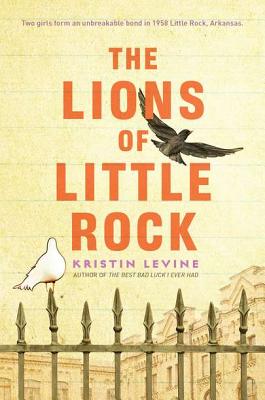
Crossing to Safety (Last one for the Great Blogger Book Swap.)
Child of the Prophecy (for a buddy read with Kelly)
Rebel Island (My goal is still to finish this before the end of the year.)

Liesl & Po

by Lauren Oliver
ages: 9+
First sentence: “On the third night after the day her father died, Liesl saw the ghost.”
Support your local independent bookstore: buy it there!

Liesl is all alone in the world. Her father has just died, and not only is her stepmother keeping Liesl locked in the attic, she wouldn’t even let her say goodbye to her beloved father. Given this, Liesl is about to give up entirely on life, when the ghost appears in her room, drawn by the light. Po — its neither boy nor girl, having been on the Other Side long enough to lose its identity — and its companion, Bundle (neither dog nor cat, but both), show up to keep Liesl company.

This little visit changes Liesl’s life entirely: she discovers a friend in Po, and then given courage by Po’s conversations with Liesl’s father, she decides to take her father’s ashes back to the house where she was born to bury them. This leads to an adventure: another friend, Will; some mix-ups; and the Greatest Magic in the World.

It’s a quiet, sweet little book, with just a dab of magic, about dealing with loss and finding happiness again. It’s a very hopeful book; as Oliver points out in the afterword, books like these are about finding the happy ending that life often denies us. There are Messages in the book, but woven in the old-fashioned storytelling, thankfully not blatantly beating us over the head. It’s a grim tale to begin with: shades of Cinderella, a gray and dark world filled with adults who actively dislike children. However, there is a happy ending: the bad guys get their comeuppance, Liesl finds a new family, and there is sunshine and gladness in the world again.

All which brings a little sigh of contentment when you finish the book.

Dead End in Norvelt

by Jack Gantos
ages: 12+
First sentence: “School was finally out and I was standing on a picnic table in our backyard getting ready for a great summer vacation when my mother walked up to me and ruined it.”
Support your local independent bookstore: buy it there!

From the get-go, I found this book to be weird. It’s basically the story of Jack Gantos (no, I don’t know how much is real and how much is fiction, but it’s in the fiction section, so let’s assume it’s more fiction than fact) who lives in the (real) town of Norvelt, Pennsylvania and the summer (of 1962) he spent grounded. For mowing down his mother’s cornfield. On his father’s orders.

He’s let off as often as his next-door neighbor, Miss Volker, needs his help. She’s the town medical examiner and obituary writer, but severe arthritis in her hands is keeping her from doing very much, and so she gets Jack to help her out. This leads to not only some pretty long-winded, but sometimes interesting, stories about the original residents of Norvelt. Not to mention Norvelt history (was Eleanor Roosevelt really involved?). There’s also a bit of a mystery thrown at us at the end: all the original residents are dropping like flies, and someone is finally asking if they really are “natural causes”, and there’s a band of Hell’s Angels that are burning down houses in town.

As I mentioned, I just found this one weird. Sure, it was sometimes funny: some of the situations that Jack finds himself in are quite, well, surreal and odd, which made them amusing. But, for the most part, I just found myself wondering what was real and what was fiction. I wished for an author’s note at the end, and was quite disappointed when Gantos chose not to include one. I never really connected with any of the character; aside from the spitfire Miss Volker, everyone else seemed to be cliches: the devoted mother, the tough father, the bully-ish best friend (who was a girl), the greedy business owner, the annoying busybody. I never cared enough about the characters to read through all the history, and found myself skipping pages.

That said, maybe I just wasn’t the right audience for this one. Perhaps some 11- or 12-year-old boy would find Jack and his adventures the right mix of history and fun.

Divergent

by Veronica Roth
ages: 14+
First sentence: “There is one mirror in my house.”
Support your local independent bookstore: buy it there!

In what used to be known as Chicago in this post-apocalyptic world, humanity is divided into four factions, each devoted to developing a particular virtue: Candor, the honest; Erudite, the intelligent; Amity, the peaceful; Dauntless, the brave; and Abnegation, the selfless.

Beatrice has grown up in Abnegation, but doesn’t quite feel she fits. She’s not as selfless as her parents and brother, she’s always questioning her own inner motives. She sees kids from the other factions and wonders if she wouldn’t fit in better there. Then, at age 16, she is given a test and the opportunity to stay with her faction or choose another one. And she discovers that she’s Divergent.

We spend most of the book wondering, along with Beatrice — who christens herself Tris after she joins Dauntless — what the heck Divergent is. On one level, this is annoying; but by the end, when it all makes sense and you realize that the timing was perfectly right for it, all is forgiven. It’s an intense book and a violent one, as we follow Tris through her brutal training to join the Dauntless faction. As she goes through the training, Tris discovers two things: that the people in the factions — including her birth faction — aren’t nearly as altruistic as they proposed to be. And that romance can blossom in the oddest places.

There will be inevitable comparisons to The Hunger Games (it’s really a good book for those who love Hunger Games and are wondering what to read next): there’s a society that’s become corrupt, and a girl who doesn’t fit the norm who has the potential (yes, there is a sequel, at least) to change that society for the better. Though Tris is a more active and less selfish heroine than Katsa was, which makes her more interesting in my book. It’s less black-and-white, and more complex; Roth does an excellent job balancing the good and bad in every faction, providing us with not only the worst, but also both the best and the human in human beings.

It’s compelling and engrossing storytelling as well, with a little bit of everything — romance, politics, action, tension — for everyone. An excellent start to a good new series.

Christmas Gift Tradition: American Girl Dolls

Over the years that I’ve participated in the Virtual Advent, I’ve talked about lots of things: books, the tree, music… but never toys. I’m changing that this year. 

When I was younger, my mother gave to me a couple porcelain dolls that she’d had when she was a child. I loved those dolls, played with them, and cherished them. (Granted, this is all in retrospect; maybe I didn’t.) They, somehow, managed to survive me as a child, and I saved them to pass down to my daughter.

And then I had four girls.

There was no way I could pass down two dolls to four girls (well, there was only three at the time I made the initial decision), and I wanted them to have the same sort of experience with dolls that I had as a child. The Christmas M was in second grade, we were searching for gift ideas for her, and I hit upon the perfect solution: American Girl Dolls.

I feel a need to justify this a bit: they are expensive, somewhat extravagant, and definitely over-commercialized. There is a part of me that dreads getting the catalog whenever it shows up, because there’s always more in there that the girls want then we can get.

But.

The dolls are well-made, the clothes are well-made, they’re not Barbies (a big plus in my book!), and they are made to be played with and yet will last to be handed down. And there’s enough stuff to last through birthdays and Christmas presents for a few years.

Additionally, the historical ones — which are the ones that I require they choose from — are fascinating in their detail (which is hopefully accurate), and they make history accessible and fun to the girls. But best of all, they come with books. Possibly not the best-written books, but ones that a second-grader can read on her own, ones that help make the doll that much more interesting.

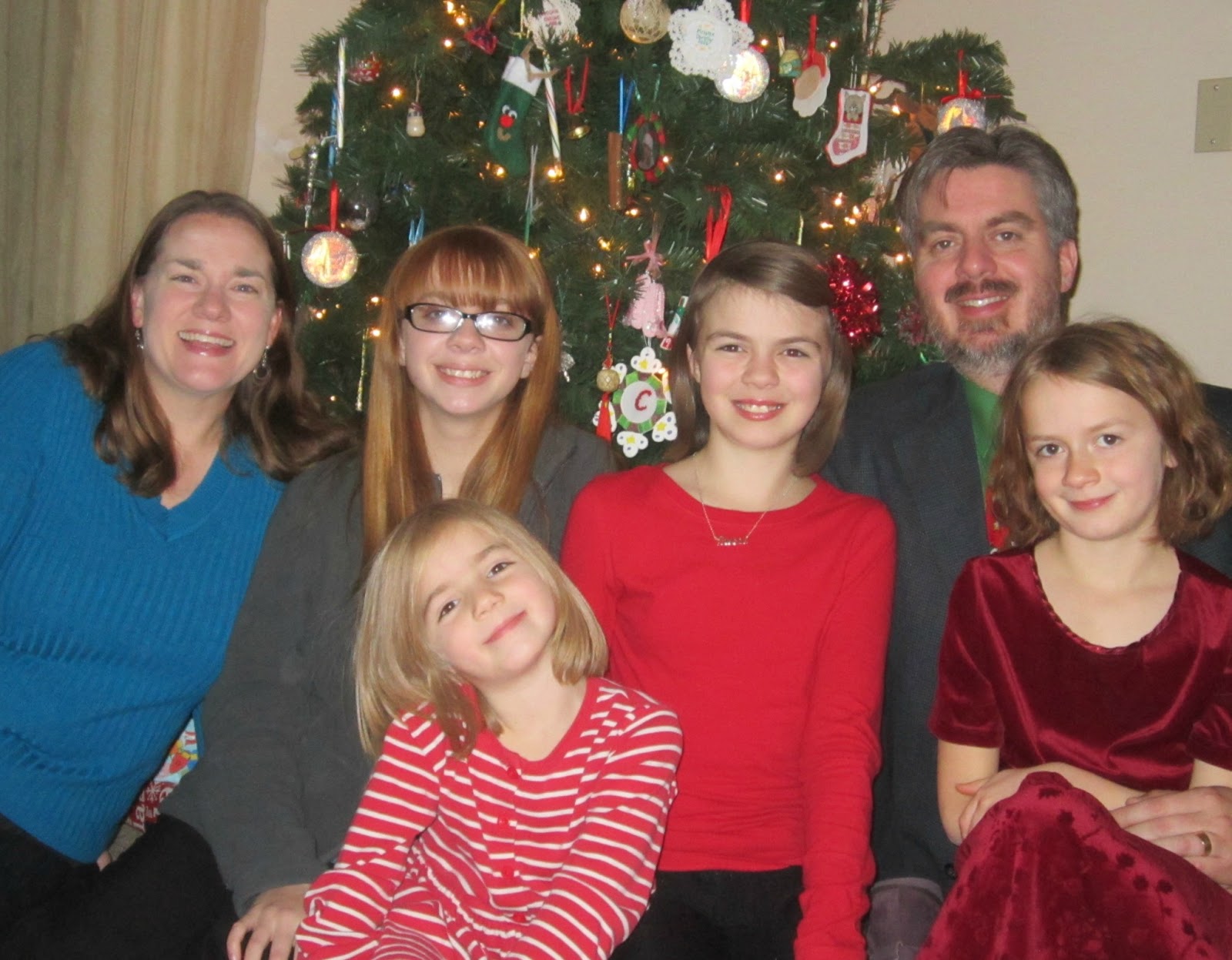
Thankfully, M (who picked the now-retired Samantha) and C (who picked Kit), and now A (who has picked Molly) were able to find dolls that fit their personality, whose stories they were interested in, and ones they loved to pieces. M no longer plays with her doll, having put it in storage for the time when she (hopefully) has a daughter she can pass the doll and books down to.  C still keeps hers around, playing with her on occasion, but mostly keeping her because she likes to have her things around her. A is over the moon with anticipation of getting her doll this Christmas. And K has already spent hours with the catalog, looking at the dolls, trying to decide which one she will like in a couple of years.

It may be extravagant, but it’s a tradition I’m glad to have started with the girls.

I’m not the only one posting today. Check out these other posts:

Martina Kunz @ Book Drunkard

Six Sentence Saturday: Unfinshed Books

Guys Read
ed. by Jon Scieszca
ages: 10+

It was a good idea to get together a bunch of talented writers and compile a collection of thriller stories. The problem was, in my humble opinion, that none of the stories (that I read; I bailed, I have to admit) were even remotely thriller-y. Perhaps if I were a 10-year-old boy, these would have some appeal. (Maybe it’s just that my humor is more along the lines of a 10-year-olds, that I liked Funny Business better?) Or maybe I just don’t go in for thriller stories anyway. Whatever the reason, this fell flat.


The Power of One
by Bryce Courtenay
ages: adult

This was a case of me just not being interested in the book. I tried; I got about 100 pages in, but this boy’s story just wasn’t to my interest. And the writing wasn’t holding me. And I have a huge pile of other books to read. So, I abandoned it. Who knows, though: maybe someday I’ll come back to it.

City of Orphans
by Avi
ages: 10+

Heaven knows, I enjoy an Avi book. The detail, the characterizations, the plots: all top-notch. But, this one didn’t grab me. The language, while authentic, was off-putting, and the plot was just so dang slow. I gave it 75 pages, and then realized that my time is much more precious than to slog through a book I have no interest in.

Heat Rises

by Richard Castle
ages: adult
First sentence: “The thing about New York City is you never know what’s behind a door.”
Support your local independent bookstore: buy it there!

Nikki Heat is investigating the murder of a local parish priest, found at an S&M studio (is that what they’re called?). The investigation takes her in all sorts of directions, but then she’s called off the investigation, on the orders of her precinct captain. It’s nothing, he assures her. Which only makes her — and her lover, companion, sometimes partner, Jameson Rook — more suspicious. And since Nikki Heat doesn’t give up, she ends up digging into things she really shouldn’t have.

I’m realizing that the books really do follow not only the plots from the season (yes, this one has elements from Castle season 3 episodes), but also the mood. Which means, this book wasn’t as fun as either Heat Wave or
Naked Heat. Not to say that there wasn’t fun moments (like the passing Firefly reference? Cracked me up.) in the book. There were. It just wasn’t as fun as the previous two. (Also: not as sexy or foul; they really pulled back on the language and the sex was entirely off-screen.) It’s still good brain candy, and it was gratifying to see Nikki do so much entirely on her own. She really does rock.

Oh, and if you’ve seen the entire season 3, there’s a nice twist on the ending in the book. Which means, of course, that there will be a fourth. And yes, I will read it. (Hopefully, considering the way season 4 is going, the next book will be more fun to read overall.)

November Jacket Flap-a-Thon

Drink, Slay, Love (Margaret K. McElderry): “Pearl is a sixteen-year-old vampire . . . fond of blood, allergic to sunlight, and mostly evil . . . until the night a sparkly unicorn stabs her through the heart with his horn. Oops. Her family thinks she was attacked by a vampire hunter (because, obviously, unicorns don’t exist), and they’re shocked she survived. They’re even more shocked when Pearl discovers she can now withstand the sun. But they quickly find a way to make use of her new talent. The Vampire King of New England has chosen Pearl’s family to host his feast. If Pearl enrolls in high school, she can make lots of human friends and lure them to the King’s feast—as the entrees. The only problem? Pearl’s starting to feel the twinges of a conscience. How can she serve up her new friends—especially the cute guy who makes her fangs ache—to be slaughtered? Then again, she’s definitely dead if she lets down her family. What’s a sunlight-loving vamp to do?”

I love how this one not only reflects the tone and the style of the book, but makes you 
want to read it. And can I say that cover is just gorgeous?

Ten Miles Past Normal (Atheneum): “Janie Gorman wants to be normal. The problem with that: she’s not. She’s smart and creative and a little bit funky. She’s also an unwilling player in her parents’ modern-hippy, let’s-live-on-a-goat-farm experiment (regretfully, instigated by a younger, much more enthusiastic Janie). This, to put it simply, is not helping Janie reach that “normal target.” She has to milk goats every day…and endure her mother’s pseudo celebrity in the homemade-life, crunchy mom blogosphere. Goodbye the days of frozen lasagna and suburban living, hello crazy long bus ride to high school and total isolation–and hovering embarrassments of all kinds. The fresh baked bread is good…the threat of homemade jeans, not so much. It would be nice to go back to that old suburban life…or some grown up, high school version of it, complete with nice, normal boyfriends who wear crew neck sweaters and like social studies. So, what’s wrong with normal? Well, kind of everything. She knows that, of course, why else would she learn bass and join Jam Band, how else would she know to idolize infamous wild-child and high school senior Emma (her best friend Sarah’s older sister), why else would she get arrested while doing a school project on a local freedom school (jail was not part of the assignment). And, why else would she kind of be falling in “like” with a boy named Monster—yes, that is his real name. Janie was going for normal, but she missed her mark by about ten miles…and we mean that as a compliment. Frances O’Roark Dowell’s fierce humor and keen eye make her YA debut literary and wise. In the spirit of John Green and E. Lockhart, Dowell’s relatable, quirky characters and clever, fluid writing prove that growing up gets complicated…and normal is WAY overrated.”


It’s a little long, but it hits all the high points without giving away everything. And I really like the final line.

The Girl Who Circumnavigated Fairyland in a Ship of Her Own Making (Square Fish): “Twelve-year-old September lives in Omaha, and used to have an ordinary life, until her father went to war and her mother went to work. One day, September is met at her kitchen window by a Green Wind (taking the form of a gentleman in a green jacket), who invites her on an adventure, implying that her help is needed in Fairyland. The new Marquess is unpredictable and fickle, and also not much older than September. Only September can retrieve a talisman the Marquess wants from the enchanted woods, and if she doesn’t . . . then the Marquess will make life impossible for the inhabitants of Fairyland. September is already making new friends, including a book-loving Wyvern and a mysterious boy named Saturday.  With exquisite illustrations by acclaimed artist Ana Juan, Fairyland lives up to the sensation it created when the author first posted it online. For readers of all ages who love the charm of Alice in Wonderland and the soul of The Golden Compass, here is a reading experience unto itself: unforgettable, and so very beautiful.”


I like that they managed to sum up a very un-sum-up-able book. And make it sound as whimsical and charming as it really is. That said, I think if I have to read about another “unforgettable” book, I may scream. Please, publishers, find a different adjective.

Other books I read this month:
Caleb’s Crossing
The Help (audiobook)
Addie on the Inside
The Chronicles of Harris Burdick 
Chime
The Scorpio Races
The Son of Neptune
Jeremy Bender vs. the Cupcake Cadets
The Buddha’s Diamonds
War and Watermelon
Precious Bane
Floors

Floors

by Patrick Carman
ages: 9+
First sentence: “Merganzer Whippet was an impulsive young man of fifteen when he raced into his father’s room just in time to hear these fateful words.”
Support your local independent bookstore: buy it there!

Leo Fillmore lives and works with his father in the most amazing place: the Whippet Hotel. It’s small, exclusive, and very, very wild (and weird). All the rooms are themed: from the Cake Room, to the Pinball Room, to the Caves and Ponds Room; it’s a kid’s dream (and possibly a maintenance man’s nightmare) to live in a place like this, even if it is only in the basement.

Except Merganzer Whippet, the owner, has disappeared, been gone for more than 100 days, and the hotel is falling apart. Then, a small purple box arrives for Leo, and he finds out that saving the hotel is up to him, his new friend, and a duck named Betty. They’re in for some wild (and weird) adventures, as they figure out who is sabotaging the hotel (because it’s just not falling apart on its own) and save it from being sold to developers.

Part mystery, part buddy novel, part adventure story, this quirky little book has a lot going for it. Carman’s writing is accessible without being overly simplistic, and the whole whimsical aura gives it a very carnival-like feel. There’s a couple of nice twists and turns throughout the book, and the story wraps up quite nicely. Which leads me to my only concern: this one is billed as Book 1, and I have no idea where the story could go in book 2 (or 3 or 4 or 5). It’s a self-contained story, one that is quite entertaining and very sweet, and doesn’t need a sequel. At all.

*sigh*

Sometimes children’s publishing these days frustrates me. In spite of that, the book is more than worth reading.

Precious Bane

by Mary Webb
ages: adult
First sentence: “It was at a love-spinning that I saw Kester first.”
Support your local independent bookstore: buy it there!

Prue Sarn was born “hare-shotten”, with a hairlip. Because of this, she has been told her whole life that she is cursed, that no one will want her, that her lot in life is to just support her family, which includes her older brother, Gideon, in his ambition to become wealthy, for he believes that only money can buy happiness.

However, money doesn’t buy happiness. Although Gideon skimps and makes Prue slave (granted, he works hard, too), and although he’s in love with and engaged to fair Jancis, grudges, ambition, and pettiness kept him from his happiness. Cursed Prue, however, with her kind-hearted nature, and willingness to help others helps her get her happy ending, in spite of her appearance.

It took me the longest time to get into reading the book. It’s in dialect, set in Shropshire, but I’m not sure that’s what it was. I think a lot of it is that it’s just a slow-starting book. However, I stuck with it, and halfway through, I figured out not only what was going on, but the story that Webb was trying to tell. And from there, the story picked up. It’s a both a heartbreaking and a hopeful one. There’s a message, yes, but it’s told in such a way that it isn’t heavy-handed. As a reader, you feel pain for Gideon, and see what the consequences of his stubbornness will lead him, and yet are powerless to stop the outcome. It’s a hard read, but one most definitely worth the time.