Sunday Salon: State of the TBR Pile 7

Which is hopeless, as usual. I’m also reading Ilium, by Dan Simmons. I think reading YA fantasy has killed me for the adult stuff: there’s about a third of Ilium I like, a third I think I get, and a third that I’m completely lost with. And I’m losing patience as to how all three relate to each other…

At any rate, on the nightstand:

Insurgent, by Veronica Roth (of course!)
Summer of the Gypsy Moths, by Sarah Pennypacker (because it’s Sarah Pennypacker)
Purity, by Jackson Pearce (for curiosity)
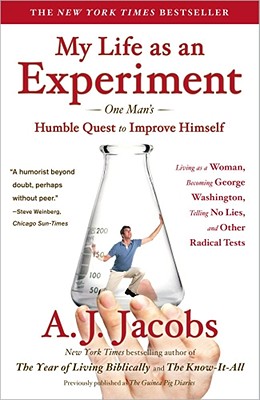
My Life and an Experiment, A. J. Jacobs (because I haven’t read this one!)
Jeremy Fink and the Meaning of Life, by Wendy Mass (I’ll get to it… eventually)
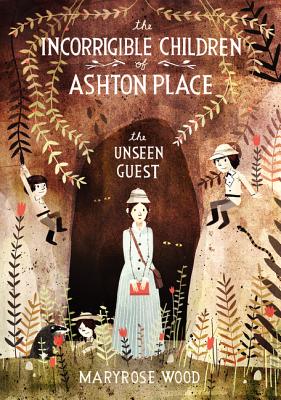
Incorrigible Children of Ashton Place, book 3: The Unseen Guest, by Maryrose Wood (because I like the series, though I’m finding a lack of enthusiasm to read this one… It may go back unread.)
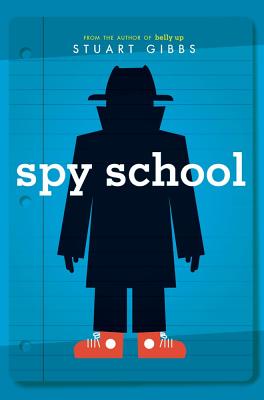
Spy School, by Stuart Gibbs (Because I liked Belly Up.)
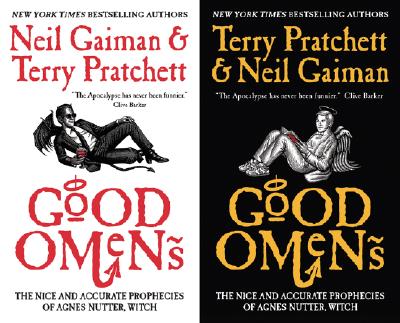
Good Omens, by Neil Gaiman and Terry Pratchett (for the Once Upon a Time Challenge)
She Walks These Hills, by Sharyn McCrumb (for my in-person book club)
The Sherlockian, by Graham Moore (Sherlock starts tonight; I wonder if that will make me more interested in reading this one…)
Fables, by Bill Willingham (for the Once Upon a Time challenge)

Phew. What’s on your TBR pile?

True Sisters

by Sandra Dallas
ages: adult
First sentence: “The two sisters leaned forward, their hadns flat against the rear of the handcart, waiting, fidgeting, impatient.”
Support your local independent bookstore: buy it there!

When this book came into the store last week, they all looked at the jacket flap copy, said “It’s Mormon,” and then looked pointedly in my direction. I took a look at the book, said “It’s the Martin Handcart Company,” and took one home.

See, my ancestors — my grandmother’s grandmother, I think — came over with the Martin Handcart company. I listened to my grandmother tell me stories of hardship and survival. It’s part of my heritage. And even though I’ve never picked up a Sandra Dallas book in my life (um, she’s popular, right?), I needed to see what this woman — someone who is outside of my “tribe”, for lack of a better word — was going to do with my heritage.

The basic story is that of the Martin Handcart Company — a group of immigrants from Great Britain (and Scandinavia, something which she omitted much to my disappointment), who for economic reasons made and pushed handcarts across the plains from Iowa to Utah. It was an ill-fated trip from the start: the handcarts were made of green wood, and weren’t very sturdy; they left late; and winter in Wyoming came early. Out of the 650 that started, more than 100 died before making it to Salt Lake City.

Dallas focuses on four women: Anne, whose husband is a member but who has refused to join the church; Jessie, an unmarried woman with two brothers making it over on their own; Ella, a pregnant woman who is crossing with her husband and sister; and Louisa a young wife of one of the company’s leaders. Their stories never really intersect — I kind of was expecting them to, given the title — but, rather, the narrative switches to follow each one as they cross the plains and experience trials and hardships and setbacks and miracles.

While it wasn’t a great novel — she never really got much tension going, and it seemed as if she was just checking things off a list (mention Joseph Smith? Check. Polygamy? Check. Hardship? Check.) — it was a good one, and she did treat the Mormons sympathetically. I liked how she had characters along the whole spectrum of faith: men who were overbearing and overly zealous to men who were sympathetic and supportive; women who were doubters, ones who were strong (both physically and mentally), and ones who were blindly following their husbands. It gave a more nuanced picture of our faith — unlike books in the past, we are neither all always gung-ho about the edicts we’ve been given, nor are we all dissenters.

It’s not a great book, but it’s a good one, something which I wasn’t expecting.

Spell Bound

by Rachel Hawkins
age: 12+
First sentence: “There are times when magic really sucks.”
Support your local independent bookstore: buy it there!
Others in the  series: Hex Hall, Demonglass

I suppose it’s typical, but honestly: Sophie Mercer just can’t catch a break. Then again, when you’re 17, a demon (though not currently in possession of her powers), and facing down some of the most evil people on earth (the problem is that they always think they’re right), then there’s not many breaks to be had.

Then — after she discovers that her mother isn’t really who she thought she was (sounds creepy, but it’s not) — she mysteriously gets transported back to Hex Hall (thankfully, with BFF, boyfriend, fiance, and ghost-friend) to face down the evil demons once and for all.

There really isn’t much to be said about this one that I already haven’t said about the other two.

Swoon-worthing kissing? Check.
Snark? Check.
Awesome magic fighting? Check.
Cool vampire BFFs? Check.
Creepy ghosts? Check.
Kick-butt heroine? Check.

And a great way to end the series, as well. Hawkins wrapped everything up nicely, put a bow on it, managed the love-triangle thing without getting all weird on us, and gave us some fun, magical nonsense in the process.

What more can you ask for? Nothing.

Demonglass

by Rachel Hawkins
ages: 12+
First sentence: “At a normal high school, having class outside on a gorgeous May day is usually pretty awesome.”
Support your local independent bookstore: buy it there!
Others in the series: Hex Hall


When we last left Sophie, she had figured out who was killing off the witches, but not in time to save Elodie, one of those popular girls/dark witches. (She wasn’t exactly the nicest person around, but she didn’t really deserve to die…) Oh, and she discovered that Archer Cross, love of her life, was actually a member of L’Occhio di Dio (aka, The Eye, an organization that’s out to eradicate the world of Prodigium), and they can never see each other again. In other words: life sucks.

So, how about summer vacation in England? (That makes everything better, right?)

She finally gets to meet her demon/warlock/powerful dude dad, who comes to Hex Hall to take Sophie away from the frying pan and into the fire. Sure, they place they’re staying (Thorne Abbey) is huge and gorgeous and English, but there’s trouble brewing. There are two demons staying at the abbey, which means someone is “breeding” them. Then, there’s an attempt on Sophie’s life. And, to make matters worse, Archer saunters back into her life. Just when she thought she was getting over him, and learning to like the guy she’s betrothed to (don’t ask), Cal.

This book is just as full of smart, magical nonsense as Hex Hall was. And I’ll have to add Hawkins to my list of people who know how to write a kiss, because there were some seriously swoon-worthy parts of this one. They are snarky fun, books that are meant to be read in one sitting, engrossing and hilarious, with pretty wicked twists and turns.

Awesome.

April 2012 Round Up

This month, I played review catch-up. The funny thing is: I’m still about two weeks out for reviews. Perhaps I need to read less and get outside more… especially now that the weather’s warming up!

My favorite:

Grave Mercy

Hands down: the absolute perfect book for a fantasy lover like me. (That said, I can’t wait for Bitterblue…)

The review that was most fun to write:

Something Like Fate

Read for work (Grave Mercy counts here, too. Though none have sold at the store. WHY? I don’t understand…):

Crow

Mr. and Mrs. Bunny — Detectives Extraordinaire

The rereads:

The Color of Water
Dealing with Dragons

The audiobooks:

Castle in the Air

Who’s Your Caddy

Didn’t finish:

The Final Four

Huntress

Middle Grade:

Caddy’s World

I want to buy this one, but I hate the cover. I wonder if they’ll do something more like the others for the paperback? I can only hope…

Clementine and the Family Meeting

Remarkable

YA:

Before I Fall

Blood Red Road

The Floating Islands

Hex Hall

If I hadn’t read Grave Mercy this month, this would have been my favorite. 

Karma

Stupid Fast

Adult:

I, Robot

Rules of Civility

What were your favorites this month? 

Sunday Sundries (And Announcements)

It’s time for Mother Reader’s 48 hour Book Challenge! Go here for all the info.  Sign up post with rules goes up tomorrow. For the record: I’m planning on donating a dollar an hour to RIF for this; I figure that gives me some motivation to go more than the usual 23/24… but we’ll see… At any rate, I’ve got it on my calendar, and Hubby says he’s more than willing to take that weekend to help out around the house so I can knock out some on my TBR pile. (Speaking of which, I’m due for another TBR pile post…)

I love it when two of my favorite things intersect. In this case: Nathan Fillion and Percy Jackson.*swoon*

And I’m tossing around the idea for a Tumblr: pictures of all the books I see at the store that make me do a double-take/laugh/scratch my head. Like this one:

I think if you need an idiot’s guide to being sexy, you’re already a lost cause.

Or, I could just do a dump-feature here, because I don’t know if I have enough pictures/time to justify a tumblr. Thoughts??

Happy Sunday!

Blood Red Road

by Moira Young
ages: 15+
First sentence: “Lugh got born first.”
Support your local independent bookstore: buy it there!

This one took a while for me to get into. In fact, I read the first quarter, then put it down for a good week before picking it up again (and then, only because I didn’t want to return it to the library unread — since I had already started it — and I couldn’t renew it). But, once I got halfway through, I was in, hook, line and sinker.

It’s the future, and because of some undetermined event, the world as we know it has dissolved into chaos. Saba and her family, twin brother Lugh and little sister Emmi along with their father, live out in the middle of nowhere, going nowhere, basically existing. That is, until four men come and forcibly take Lugh away. Well, that doesn’t sit well with Saba, so after her father dies (which is pretty much right away), she takes Emmi and heads off to get Lugh back. Actually, she tries on several occasions to ditch Emmi, but the little girl is tough and won’t be left behind.

The world they discover is not a happy place. They spend a month in Hopetown where Saba is a cage fighter (which is as grim as it sounds), before they manage to escape. From there they have to make it to the hidden valley in the mountains where the king (who is certifiably insane) has Lugh hostage, preparing to kill him as a human sacrifice on midsummer day. Which, by this point, is right around the corner.

It’s a tough book to get into — there are no quotations marks, and it’s written in dialect, which always throws me for a loop — but I have to admit that Young knows how to write action (there are many intense moments) as well as romance (seriously). She’s given us a strong reluctant heroine, someone who leads without knowing it, inspiring greatness in both herself and those around her.

All of which makes me curious to see where Young is going to go in the next book.

I, Robot

by Isaac Asimov
ages: adult (ish)
First sentence: “I looked at my notes and I didn’t like them.”
Support your local independent bookstore: buy it there!

This is one of those books that I’ve always heard of but never had gotten around to reading. I can’t really tell you why; it just never seemed like something I’d be interested in.

Thank heavens for book groups.

Framed as an interview with retiring robopsychologist, Dr. Susan Calvin, it’s a series of interconnected short stories detailing the evolution of robotics in the “future”. It’s an interesting look into what Asimov thought our future would be like, and the prevalence of robots in society.

I’m not quite sure what to say about the book other than I really, really liked it I thought it was fascinating to read about what Asimov though the future would be like. I liked the character of Dr. Calvin; she was an interesting person to frame the book around, smart and capable (if a bit cold), and gave the book a good grounding. In fact, the stories went down better for me than short stories usually do, mostly because they seemed like chapters in something larger.

That said, two of my favorite stories were “Liar”, in which a mind-reading robot just tells humans what they want to hear; and “Little Lost Robot,” in which a robot goes missing, hiding in the midst of a bunch of other robots that look exactly like it. I found it fascinating the things the psychologists and scientists go through to figure out which one is the missing robot.

But my favorite was one near the end, “Evidence,” where a man is running for mayor of the region, but there are allegations against him: he’s a robot. The point is to prove he’s not. It’s a fascinating look at the line between robotics and humanity, and the issues about whether or not it’s ethical for a robot to actually “act” human.

It’s a good work, one that stands up to the test of time, even if there were moments when I cringed at the 1950s-ness of it all. Even so, I’m glad I had the chance (finally!) to read it.

Hex Hall

by Rachel Hawkins
ages: 12+
First sentence: “Felicia Miller was crying in the bathroom.”
Support your local independent bookstore: buy it there!

Back in the fall, I was invited by the lovely Laura at A Jane of All Reads to participate in a book group. We read YA books, snark quite a bit, and then post about it on our blogs (so you all can be jealous?).

This month was mine to be Keeper of the Book, and the one out of my nominations that was chosen was the “smart magical nonsense” of Hex Hall.

So: the basic plot for those of you with your heads under rocks…. Sophie Mercer is a witch. She’s been raised for the past 16 years by her human mom, but after a prom night gone bad (don’t ask), she’s shipped off to juvie for Prodigium (that is: fairies, witches and shapeshifters): boarding school Hex Hall. There, she makes a best friend in Jenna, her pink-loving vampire roommate; develops a wild crush on the hottest warlock on campus, Archer Cross; makes enemies of the only other dark witches (read: the popular girls); and eventually crosses paths with a demon. Part boarding school story, part teen crush, part mystery, and all sorts of awesomeness, Hex Hall is quite the fun read.

This is what the three of us who read it (and Demonglass and Spell Bound) had to say about it (spoilers, obviously, ahead):

Me: So… I’ve finished both Hex Hall and Demon Glass, and I’m trying to figure out a way to get Spell Bound without having to buy it (if I can find one of the two copies we’re supposed to have it at work, I’m going to check it out there). So, if y’all want to start discussing any (or all?) of the trilogy, be my guests. 🙂

Sya: I have it on my kindle and plan on reading it before the hex hall discussion.

Donna: I’m almost done with mine. I’m ambivalent. I’m entertained but I’m not blown away by it or anything…. Just finished and read the teaser for the next book. If there’s more Cal, I may read on. He’s awesome. Overall the whole book reminded me a bit of Mari Mancusi’s titles in tone and voice but not as satirical. Entertaining but still not blown away. Did like the ending though.

Sya: I think that that’s kind of the point – it’s solidly entertaining without being even remotely challenging. And yes, there’s quite a lot more Cal in book two and he’s particularly swoonsome on a regular basis.

Me: I agree with Sya: it’s good, fluffy, magical chick-lit. I don’t think it’s supposed to blow you away. And I agree, too, Donna: the ending was quite good. Did you see any of it coming? Also: what think ye about the love triangle nonsense (it develops more in book 2)?

Sya: I think the love triangle is a bit of a non starter… It’s not been played up as that much of a plot point as far as I can see (I’ve just started the third book) so far.

Melissa: Oh, good. Actually, I was worried about that (in the third book); I didn’t want it to become your typical YA-we-can’t-just-have-one-love-interest thing.

Sya: I really am right at the beginning of the third one so out could come into play. Will keep you posted.

Me: Thanks! (I really do need to get my hands on that one…) I have higher hopes than mediocre YA tropes for it.

Donna: I saw the big baddie ending up being someone close to Sophie. I just didn’t have it pinned down as who. As for Alice, she didn’t sit right although I didn’t see the entire thing coming. It’s not too often I see something coming full force. When I do then it’s really bad! I didn’t even realize there was a love triangle, unless you count Elodie-Sophie-Archer. And I found it slightly hypocritical of Archer to rank on Sophie’s name for the ‘ie’ when he’s dating the Cliff Notes version of Melodie.

Sya: I kind of figured that Alice didn’t have the best of intentions but I was still taken aback by the ending and liked the way it set things up for book two. On the love triangle front, it’s a bit more prevalent in the third book but still in a sort of background way and doesn’t detract from the rather exciting and sinister story.

Me: Donna: “And I found it slightly hypocritical of Archer to rank on Sophie’s name for the ‘ie’ when he’s dating the Cliff Notes version of Melodie.” HA! I totally agree. Sya: Rather exciting and sinister??? I need to find that one.

Sya: I just finished it. I thought it was completely awesome – such a lot of fun and actually even a wee bit moving in places. Great way to end the series.

We kind of got off-topic there. Back to Hex Hall…

Sya: I’m not quite sure what thread I should be posting my Hex Hall thoughts so I’m jumping in here. I thought the book was great. I read it for the second time for this discussion and followed it up with the second and third in the series. And I really enjoyed the whole lot. Sophie is a fun and believable protagonist, pleasingly flawed and endlessly entertaining. The mean girls are particularly fun to read and Archer is a bonafide hottie – played by Ethan Peck in my head (also, Sophie’s dad? Totally Richard Armitage. Obvs). Cal is also rather scrummy and I actually really liked his character arc as the trilogy continued. In fact, I was pleased that in a trilogy that is essentially light reading the characters really did display some depth. The plot itself kept me reading and while I could see that Alice wasn’t all she seemed, I didn’t really see the whole demon-family thing coming. The writing was fluid and pleasingly visual – I had a really good sense of what Hex Hall looked like – and all in all I’d recommend these books. Will be interested to see what Rachel Hawkins comes up with next.

Me: I agree about the depth of the characters. In my mind, these are a lot like Ally Carter’s books: a lot of fun, but smart, engaging fun. Entertaining, without making you feel guilty. And proof that brain-candy doesn’t have to be written badly, or just hit the same note over and over and over again. I also like that it’s basically clean, geared toward the age group, without pandering and talking down.

Donna: I grew a little tired of Carter’s Gallagher girls books but that quirk kind of wore off. I’d have to keep reading the HEX HALL series to see if I’d feel the same way but since I’m more amenable to this Mancusi-ish quirk it might have more staying power for me. The GG series kind if got away from me and went a little too quirky.

Me: Mancusi-ish quirk”??? And I wasn’t thinking so much Gallagher girls as Heist Society, which I like better, anyway. (*sigh* Hale. *swoon*)

Donna: Mancusi is really over the top but in a way it’s really palatable for me. It’s probably totally personal as she and I share a Lost Boys love and she satirizes current camps to no end so the joke ran longer for me. Haven’t read Heist Society and I think I got to book 2 in GG before I didn’t feel much of a need to keep reading. I may have read three.

And that ends our discussion… we get a little scatterbrained when talking, no? Have you read Hex Hall (or any of the sequels — my reviews coming next week)? What did you think?

(Participants in this discussion: Sya @ The Mountains of Instead and Donna @ Bites)

Rules of Civility

by Amor Towles
ages: adult
First sentence: “On the night of October 4th, 1966, Val and I, both in late middle age, attended the opening of Many Are Called at the Museum of Modern Art — the first exhibit of the portraits taken by Walker Evans in the late 1930s on the New York City subways with a hidden camera.”
Support your local independent bookstore: buy it there!

The thing that first drew me to this book (aside from the catchy cover), was that someone at work called it “Gatsby-esque.” Adoring all things Gatsby, I figured that I would (eventually) need/want to read this one. So, when it came through at the library, I snatched it, hoping to be thoroughly engrossed by it.

And I was. Sort of.

The setting is New York City, 1938. Our main character, Kate Kontent (the emphasis is on the second syllable), is a working girl from Brighton, trying to make ends meet. She rooms at a boarding house and there makes friends with Eve Ross, who has slightly higher ambitions. They’re out for a night on the town, when they meet — almost by accident — Tinker Grey: young, handsome, rich, suave. They both pounce, grasping at the chance to get out of the dead-end they’re in.

The book follows Kate’s year: one in which, either directly or indirectly because of Tinker, she gets a new (and better) job, dates a couple of rich socialites (while all the while pining, deep down, for Tinker), and watches as Eve managed to nab Tinker and swing into his lifestyle with ease. It’s a remarkable year, if only for the changes, and revelations it brings in Kate’s life.

It’s Gatsby-esque for the time period (roughly) and the love of jazz (again, roughly), but it’s missing all the other things — regret and fate as well as Gatsby’s elusiveness — that makes The Great Gatsby great. But, even though the characters are rich and reckless, with their lives and their money, there lacks a certain gravitas about it that would help give it a center. Perhaps it’s because Kate is really the least interesting person in the book: Tinker, Eve, and eventually her friends Wallace and Bitsy are all far more elegant and interesting. Once in a while Kate shows some class — like her love of books, and their organization system — but it wasn’t enough for me to truly care about the ups and downs of her year. And the end, the final twist and reveal, fell flat as well.  Perhaps it was because by that point, I was really quite past caring.

I make it sound worse than it was; there was enough to keep me going, since I actually did finish the book. But, it’s not enough to make me love it.