State of the TBR Pile 13: February 2013

My TBR pile was actually under control. And then the SLJ BoB crew announced their lineup and my pile exploded.

Also: I bought myself a mini Mini a week ago. Even though I can’t drive it, it makes me happy.

One for the Money, by Janet Evanovich (lent to me by a member of my in-person book group)
Titanic: Voices From the Disaster, by Deborah Hopkinson (SLJ BoB book)
Paper Valentine, by Brenna Yovanoff (for the YAckers)
Eva of the Farm, by Dia Calhoun (recommended by a dear friend of mine)
Endangered, by Eliot Schrefer (SLJ BoB book)
A Tangle of Knots, by Lisa Graff (came in at work, and it looked good)
Prophecy, by Ellen Oh  (Mike Jung recommended it)
Twelve Kinds of Ice, by Ellen Bryan Obed (it got Newbery buzz, and caught my eye)
After Eli, by Rebecca Rupp (picked it up for C, and thought it looked good)
Revolution 19, by Gregg Rosenblum (seeing if this is any different from all the other dystopians out there)
The Diviners, Libba Bray (I WILL READ THIS.)
Temple Grandin: How the Girl Who Loved Cows Embraced Autism and Changed the World, by Sy Montgomery (SLJ BoB book)
No Crystal Stair, by Vaunda Micheaux Nelson (SLJ BoB book)
Moonbird, by Phillip M. Hoose  (SLJ BoB book)

What’s on your pile?

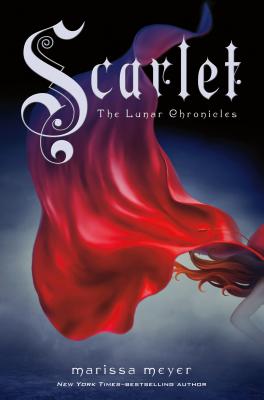
Scarlet

by Marissa Meyer
ages: 12+
First sentence: “Scarlet was descending toward the alley behind the Rieux Tavern when her portscreen chimed from the passenger seat, followed by an automated voice: “Comm received for Mademoiselle Scarlet Benoit from the Toulouse Law Enforcement Department of Missing Persons.
Support your local independent bookstore: buy it there!
Others in the series: Cinder
Review copy handed to me by the publishing representative.

I wasn’t going to read this one. Really. After my issues with Cinder, I was going to let the whole series slide. But the Macmillian rep who comes by the store once a quarter handed this to me back in November with the words: this is a LOT better than the first.  So, I took a chance.

And was completely blown away.

I’m not going to say this is the Best Book Evah, but honestly? Meyer took what was kind of a weird thing in Cinder, and delivered something intense. (Obviously, spoilers for Cinder will follow.)

Scarlet Benoit’s grand-mere has been missing for two weeks, and she’s getting annoyed at the lack of leads in the case. It’s not a suicide, like the authorities have ruled: Scarlet knows her grandmother well enough to know that. But she has no idea where to start looking for her. Then a strange man called Wolf falls into her life, claiming to have knowledge — though he’s reluctant to share it — about where her grandmother is. They head to Paris to get some answers.

Meanwhile, Cinder escapes from prison and teams up with an American to try and process all the information that’s been given her in the last 24 hours. Turns out that Scarlet’s grandmother may have information that Cinder needs as well.

All that against the backdrop of an impending invasion from the very creepy Lunar queen Levana.

The thing I liked best about this one, I think, is that Meyer gives us more of this fascinating futuristic world that she’s created. Sure, Scarlet is loosely based on Little Red Riding Hood, but it’s not so much a fairy tale as a story of what people will do for those that they care for. Which makes it sound deeper than it is. Really? It’s just a lot of fun, a great second novel in a series. (You don’t often hear that.) Which leaves me begging for the next installment.

Son

by Lois Lowry
ages: 12+
First sentence: “The young girl cringed when they buckled the eyeless leather mask around the upper half of her face and blinded her.”
Support your local independent bookstore: buy it there!
Others in the series: The Giver (which I have read, but not reviewed; I should reread it!), Gathering Blue, Messenger

Welcome back to the world of The Giver, where everything is perfect. This time, we get to see it through the eyes of 14-year-old Claire, who has been selected as a Birthmother, which is exactly what it sounds like. Through artificial insemination (it’s a very sexless society), she gets pregnant and delivers a “product” for the community, number Thirty-six. Except, things don’t go well for her: she ends up having a C-section, and afterward is deemed unfit to be a birthmother, and is summarily dismissed.

She’s supposed to move on, to lead a productive life, but she can’t get her son out of her mind. She ends up visiting him in the nurture center, feeling the bonds of motherhood growing stronger. And then (as all who have read The Giver know), things come to a head (though Claire is not involved in them), and Jonas leaves with the baby.

Claire next wakes up (I was unclear how she came to be unconscious, but that’s probably just me), in a community by the ocean, in the shadow of a cliff wall. She recovers there, and regains her memory and a purpose: to find her son.

I liked this novel, but I’m not sure I loved it. On the one hand, it was fun revisiting the world Lowry created, seeing people I’m familiar with, and hearing the story from another point of view. On the other hand, even as a mother, I’m not sure I fully grasped Claire’s desire to find her son at the exclusion of all else. The story went in directions that I wasn’t fully satisfied with, and I have to admit that I found the ending too pat. I think I expected more from Lowry and from the world. What I got was good, but not as good as I had hoped.

(For the record, C really liked this one. She said it’s her second-favorite in the series, after The Giver, of course.)

Out of the Easy

by Ruta Sepetys
ages: 14+
First sentence: “My mother’s a prostitute.”
Support your local independent bookstore: buy it there!
Release date: February 12, 2013
Review copy provided by my place of employment.

The first sentence says it all: for most of her nearly 18 years, Josie has grown up in the New Orleans French Quarter, the daughter of a prostitute, with all that implies. Except, she hates the implications of it all: the catcalls from the boys, the assumptions that she’ll just hop into bed with anyone, just because her mother does. Josie has done all that she could to separate herself from that world: she works at a local bookstore, living upstairs. She does clean the whorehouse — she had an agreement and a friendship with the owner, Willie — coming in the early mornings. But she has bigger dreams:of getting out of New Orleans, of getting into Smith College, of making a real life for herself.

But, her life — and her mother, who is one of the worst I’ve seen in a while — is conspiring against her. There’s been a murder, which Josie’s mother is implicated. There’s an incident with the mob. There are boys she likes. And the owner of the bookstore whose health is failing. There’s the fact that she can’t get a reference for Smith. All are making her question her decision to get out. Maybe she’s just a daughter of a New Orleans whore, and she should just embrace it.

Even though I’ve read Sepetys’s first book, I didn’t quite know what to expect from this one. New Orleans is such a vastly different place than Stalin’s Russia.  But, upon reflection, maybe there are similarities. Both Lina and Josie are trapped by circumstances out of control. And even though Lina’s circumstances are more life-threatening (even though Josie always carries a gun; the French Quarter is not exactly a safe place for a young girl, even in the 1950s), Josie is just as trapped, just as desirous of freedom as Lina is.

And Josie is such a great character to root for; I wanted her to get out, to succeed. I felt her heartbreak, her anger, her hope. Which is really the mark of a great writer. Sepetys knows how to engage the reader, to write in a way that makes these characters fully dimensional. And even though her subjects are not pretty, her writing is gorgeous.

It’s not as heartbreaking as her first novel, but it is just as amazing.

First Sunday Daughter Reviews: February 2013

Laura over at Bitching, Books, and Baking suggested that I need to make my daughters review books on the blog. And since I adore Laura and do (almost) anything she suggests, we’re going to give this thing a try. Short, capsule reviews, written or dictated by my daughters on something they’ve read in the past month.

Enjoy!

We’ll start with K (age 6 1/2), who is, obviously, a budding librarian. She’s reading one of her (and our) favorite books, I Want My Hat Back, by Jon Klassen.

She says, “I like this book because it’s really fun to read and very funny!”

This is what A says about the last few books she’s read (and one movie):

  Hotel  Transylvania ………………………… I’d say about an eight, could be better. Less butt jokes.
  Origami Yoda  ……….. Awesome!!!!!!! 10 for sure! So funny!
  Harry Potter Five…….. Nine, not ten. bet to scary!
 Darth Paper…………. Not as good as Origami Yoda! Eight.

C says: “I  have currently read and finished quite a impressive some in two  weeks (based on the numbers at my school). But one stood out and I think it’s my new favorite book; Son by Lois Lowry. Lowry tells the story of a fourteen year old girl that goes looking for her son that got taken away from her. It was exciting and interesting and I loved the descriptions in it. But the again it’s Lois Lowry so; you can’t really go wrong there.”

And M says that she hasn’t read anything interesting of late. Maybe next month.

Just One Day

by Gayle Forman
ages: 14+
First sentence: “What if Shakespeare had it wrong?
Support your local independent bookstore: buy it there!
Review copy provided by my place of employment.

Allyson and her best friend Melanie have just recently graduated high school, and are off on a tour of Europe. You know the type: scheduled, regimented, seeing all the highlights tour. If it’s Wednesday, we must be in Rome type of thing. Allyson, being the structured-type girl herself, is enjoying it okay, in spite of Melanie’s attempts at a re-do. She keeps saying that in college they can reinvent themselves, but at the same time, loves that Allyson is so reliably… Allyson.

Then, they meet Willem. It was a fluke: when they were in Stratford-upon-Avon, they passed up the chance to see the Royal Shakespeare Company do Hamlet in favor of seeing a company called Guerrilla Will do Twelfth Night. And it was… something. Willem, 20 and Dutch, was charming, and Allyson fell, well, in like. And the next day when they met again on the train, she decided it was kismet, and decided on a whim to go to Paris with him. For the day.

Forman really works this implausibility. (Especially for me, as a mother of four girls, I was conflicted. Part of me was: YES, PARIS!! How romantic! And it was, really. The other part of me was screaming: NOOOOOOOO!!!!) It makes sense for Allyson in that moment to make that choice, to experiment with living a life that was something other than her same structured existence. And what better place to do it than Paris? She has a marvelous day, and then… Willem’s gone. She’s alone. “It” didn’t work.

So she packs off home and heads up to college, where she tries to move on with her life. Or rather, move on with the life that her mother has assigned to her. I realized while reading this one that a lot of my ideas on parenting teens have come from reading teen novels because I could totally see where things were going to go. Helicopter mom = disastrous first semester. It wasn’t until her second semester that Allyson began to figure out how to stand up for what she wanted, how to make friends, how to find her own path instead of the one her parents made for her.

And the end? Well, let’s just say it’s a hopeful one. I’m not sure how plausible it is, but by that point, I didn’t care. I was fully invested in Allyson’s story, in her trials and her hopes and dreams. Which Foreman made come alive for me.

Besides, it’s Paris. You can’t get any better than that.

January 2013 Roundup

It’s a new month, a new year, and I can tell I’m burned out on middle grade fantasy, because I didn’t read a single one this month (unless you count Amulet, which is a graphic novel)!

My favorite?

The Homecoming of Samuel Lake

 For the setting, the thoughtfulness, the characters, and because Ras scared the crap out of me.

The rest…

Middle Grade:

Navigating Early
The Second Life of Abigail Walker

Non-Fiction:

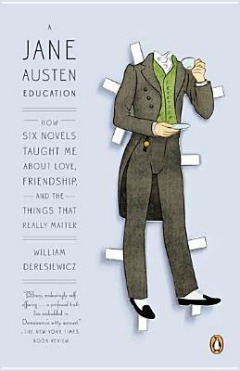
A Jane Austen Education
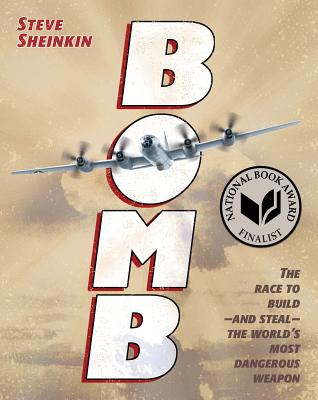
Bomb

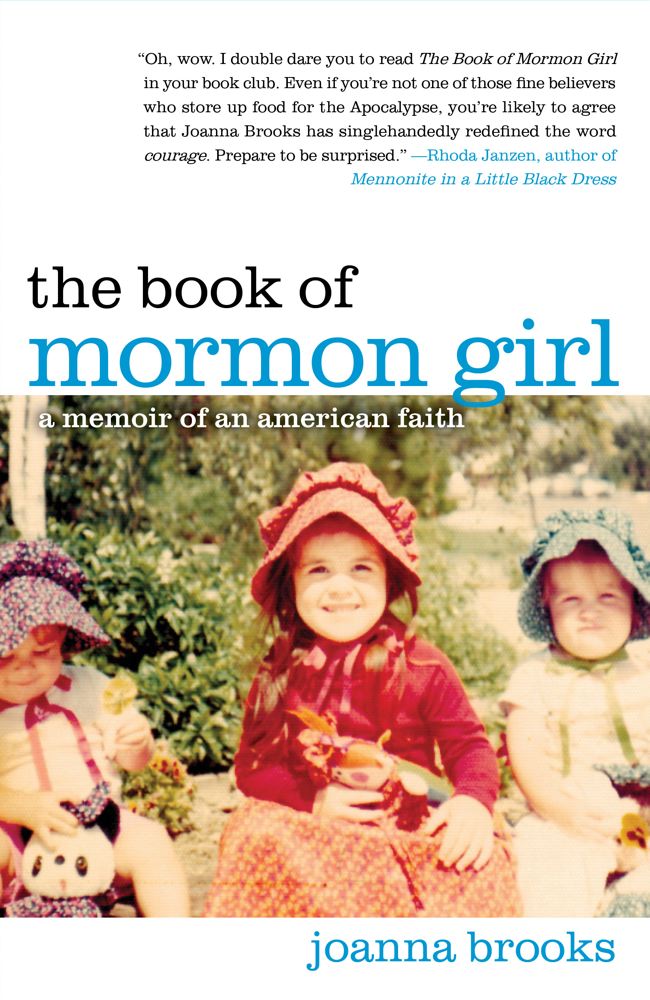
The Book of Mormon Girl

Graphic Novels:

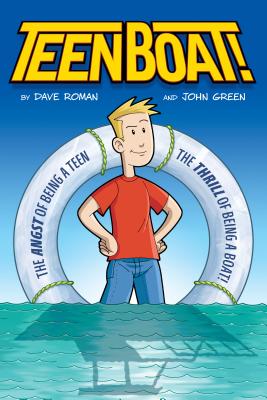
Teen Boat
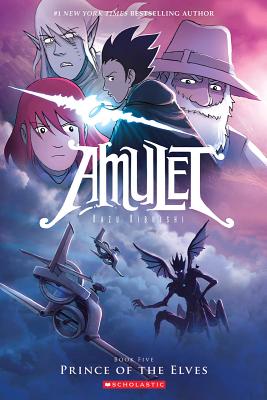
Amulet: Prince of the Elves

YA:

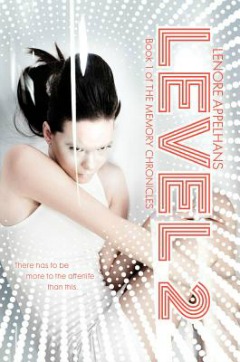
Level 2
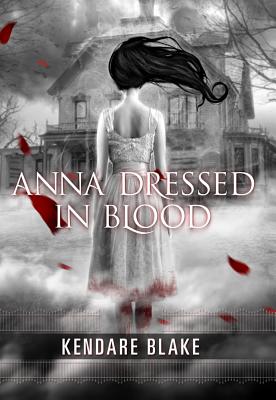
Anna Dressed in Blood

What were some of your favorites this month?

Bomb

The Race to Build — and Steal — the World’s Most Dangerous Weapon
by Steve Sheinkin
ages: 10+
First sentence: “He had a few more minutes to destroy seventeen years of evidence.”
Support your local independent bookstore: buy it there!

I picked this one up in an effort to catch up on the books that are getting Newbery buzz. And because “everyone” has been raving about it. And because it was a National Book Award finalist. And because I sold it the other day to a mom looking for a non-fiction book for her 4th grade son by saying “it’s brilliant” and figured I really ought to read it before I say things like that. (Truth in advertising and all that, you know.)

The short review: it really is all that. In fact, I think I need to pick up Sheinkin’s other book, “The Notorious Benedict Arnold,” because I thoroughly admire the way he tells a story.

This one is about the development of the nuclear bomb in the early 1940s. Which, to a non-scientist like myself, is admittedly a pretty dry subject. Yet, in Shienkin’s hands he turns it into a tale of science and spies, of duty and responsibility, of anxiety and choice.

There are three threads running through this story. The first is the American’s race to develop the atomic bomb. I’m going to get into details here (which would probably be wrong, and my phsyics-professor brother will get on my case for), but essentially, Germans figured out how to split atoms, and then everyone (well, Einstein and a couple others brought it to the attention of Roosevelt) panicked because a nuclear weapon in the hands of Hitler would have been a bad thing. Robert Oppenheimer plays a big role in this thread (he’s a fascinating character), but also some other scientists as well.

Thread number two is the effort by the OSS to stop the Germans from developing the bomb. The Germans were using heavy water (argh, more science-y stuff!) from a plant in Norway to keep the uranium from reacting (I think that’s how you put it), and the British sent a team of Norwegians in to destroy the plant. It was all pretty exciting.

The third thread involved Stalin and the Soviets, and was the most fascinating to me. (Well, not entirely true: I did like learning about how the bomb was developed. I had no idea it was a huge round thing. Or that it went off over the city of Hiroshima. I think I always thought it hit the ground before exploding.) Anyway, the Soviets got wind of the American’s development of the bomb, and realized they couldn’t be left out. But because they were fighting the Nazis, they didn’t have the resources to do the research on their own. So, they set out to steal the American’s design. Which they succeeded in doing with the help of Harry Gold (a courier, who got caught in the end), Klaus Fuchs (a scientist who was the first to confess), and Ted Hall (a prodigy who got off; no one knew of his involvement until 1995.) I found it fascinating mostly because of those men’s reasons for getting involved with the Soviets. Especially Hall’s, who said that something this destructive shouldn’t be in one country’s hands.

That said, I did like how Sheinkin pressed upon us the enormity of the whole thing. Oppenheimer’s refusal to build something bigger and “better”. The scientists throwing up once they realized what they’d unleashed upon the world. And the final sentences: “The making of the atomic bomb is one of history’s most amazing examples of teamwork and genius and poise under pressure. But it’s also teh story of how humans created a weapon capable of wiping our species off the planet. It’s a story with no end in sight. And like it or not, you’re in it.”

Brilliant.

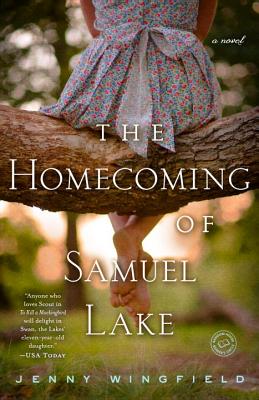
The Homecoming of Samuel Lake

by Jenny Wingfield
ages: adult
First sentence: “John Moses couldn’t have chosen a worse day, or a worse way to die, if he’d planned it for a lifetime.”
Support your local independent bookstore: buy it there!

I finished this several days ago — having devoured it almost entirely in one sitting — and I’m still at a loss how to put my thoughts on this book into words.

The plot centers around the Moses family in 1950s Arkansas. John Moses, the patriarch, has been slowly drinking himself into oblivion, and at a family reunion, decides he can’t take any more and kills himself. This propels Willadee’s, John’s only daughter, husband, Sam Lake, back to Arkansas — granted, he didn’t have a church assignment for the year, so being unemployed kind of helped — to try and figure out what God wants him to do with his life. Their three children — Noble, Bienville, and Swan (yes, that is her name) — try to adjust to life as something other than preacher’s kids. Especially after they meet the neighbor’s boy, Blade Ballenger.

Actually, it was Blade’s father that kept me turning pages. And that solely because he’s the most hateful character I’ve read since Kristin Cashore’s Lek. He was pure evil, and many of his actions were more than difficult to stomach. And yet, I kept reading, desperately needing to know whether or not he got what I felt he deserved. I suppose it’s wrong to spend a book wishing someone would die a violent death, but there you have it: I wished it, and I wished it hard. (I was also depressed to realize that people like that exist. Still. It’s horrible.)

Even with the evil running through the pages, it wasn’t a dark book. There is a lot of love and hope in the pages as well. And thoughts about religion and God, too. And the characters were written — from John’s wife, Calla through to the rest of the family — in ways that made them all unique and fully fleshed out. And I really didn’t think there were any words out of place, which is unusual for me and an adult novel.

All of which made this one a book to both devour and savor.

Beginning a Book Group (or Two)

For a while at work (well, since last summer, actually), I’ve been thinking that while we do a lot to get our “regular” audience into the store (upper-middle class, older, white people), we don’t do a whole lot for the younger crowd. (We actually do very little for the 18-30 somethings, but since I’m not really interested in them — yet — I’m not making that my problem.) We have a storytime for infant-preschool on Tuesday mornings, and the woman who does that is fabulous with them.

But for the elementary school/middle school bunch? Nothing.

So,  I’ve decided to start a book group — well, two, actually — for them. I was thinking on doing it one Saturday a month, trying it out for the summer months to see if it catches. And having one group for 3-5th graders and another for 6-8th. Parents would be allowed to come in the former, not in the latter. But aside from that, I’ve got no ideas.

So here is my plea, librarians: what do I do?? How do I go about picking a book? Leading a discussion?? And parents: what do you want to see in a bookgroup? Is  this even something I should be trying? This isn’t totally outside of my comfort zone, but I do feel a bit lost and can use some advice.

At the very least, help me with this: I have no idea what to call the book group. (The groups at the store all have names like “Classic Book Club” and “Longitude Book Club” and “Chick Lit Book Club” and all I have so far is “3-5th Grade Book Club” which works but isn’t terribly appealing.) Can you at least suggest a name?

HELP!