Finished the Local Reading Challenge

Finishing up the local reading challenge… my favorite (hands down) was Northanger Abbey. A close second was Omnivore’s Dilemma.

My list:
Time and Place: Loving Will Shakespeare, Carolyn Meyer and The Book Thief, Marcus Zusak
Arts and Entertainment: Northanger Abbey, Jane Austen and Born Standing Up: a Comic’s Life, Steve Martin
Food and Family: Omnivore’s Dilemma, Michael Pollan and Saffron Kitchen, Yasmin Crowther

March Jacket Flap-a-Thon

I have to apologize for the short reviews the past couple of weeks. I was looking through them yesterday, and I realized how little I had to say. Ah, well. Chalk it up to residual flu-like symptoms. I hate being sick, it tends to slow me down and make everything (mostly my brain) hazy. I’m feeling more up to snuff today… the first time in a couple of weeks. Maybe I’ll even be able to churn out something lucid this week.

On to our flaps…

The Top Five:
5. Robot Dreams (First Second): “Richly endearing and full of surprises, Robot Dreams follows an ill-fated friendship between a dog and a robot. After a Labor Day jaunt to the beach leaves Robot rusty and immobilized in the sand, Dog, unsure what to do abandons him. As the seasons pass, Dog tries to replace his friend, making and losing a series of new ones, from a melting snowman to epicurean anteaters. Meanwhile, Robot passes his time daydreaming, escaping to better places. . . Through interwoven journeys, the two characters long to recover from their day at the beach. Although its adorable characters and playful charm will win over young readers, Robot Dreams speaks universally to the fragile nature of friendship, loss and redemption.”

I think this is remarkable — it’s a wordless book, and yet they’ve come up with an interesting (and accurate!) blurb about the book. Not an easy task.

4. Alcatraz Versus the Evil Librarians (Scholastic): “A Hero with an incredible talent… for breaking things. A life or death mission… to rescue a bag of sand. A fearsome threat from the powerful secret network that rules the world… the Evil Librarians. Alcatraz Smedry doesn’t seem destined for anything but disaster. But on his thirteenth birthday, he receives a bag of sand, and his life takes a bizarre turn. This is no ordinary bag of sand… and it is quickly stolen by the cult of evil Librarians who are taking over the world by spreading misinformation ans suppressing truth. The sand will give the evil Librarians the edge they need to achieve world domination. Alcatraz must stop them!… by infiltrating the local library, armed with nothing but eyeglasses and a talent for klutziness.”

I liked this one primarily because it made me laugh. Kind of like the book.

3. A Curse Dark as Gold (Arthur A Levine Books): “The gold thread shimmers in the fading light. It promises Charlotte Miller a way out of debt, a chance to save her family’s beloved woolen mill. It promises a future for her sister, livelihood for her townsfolk, security against her sinuous and grasping uncle. It might even promise what she didn’t know she needed: lasting hope and true love. But at what cost? To get the tread, Charlotte must strike a bargain with its maker, the mysterious Jack Spinner. But the gleam of gold conjures a shadowy past — secrets and bonds ensnaring generations of Millers. And Charlotte’s mill, her family, her friends, her love… What do those matter to a powerful stranger who can spin straw into gold? In her brilliant debut, Elizabeth Bunce weaves a spellbinding fairy tale, spun with mystery and shot through with romance.”

I like how this alludes to Rumpelstiltskin, without coming outright and saying “this book is based on the fairy tale Rumpelstiltskin”. I also like that it works in the elements of weaving and family, which were also important to the book.

2. The Winter Queen (Random House): “Moscow, May 1876: What would cause a talented young student from a wealthy family to shoot himself in front of a promenading public in the Alexander Gardens? Decadence and boredom, most likely, is what the commander of the Criminal Investigation Division of the Moscow Police thinks, but still he finds it curious enough to send the newest member of the division, Erast Fandorin, a young man of irresistible charm, to the Alexander Gardens precinct for more information. Fandorin is not satisfied with the conclusion that this is an open-and-shut case, nor with the preliminary detective work the precinct has done — and for good reason: The bizarre and tragic suicide is soon connected to a clear case of murder, witnessed firsthand by Fandorin. There are many unresolved questions. Why, for instance, have both victims left their fortunes to an orphanage run by the English Lady Astair? And who is the beautiful “A.B.,” whose signed photograph is found in the apparent suicide’s apartment? Relying on his keen intuition, the eager sleuth plunges into an investigation that leads him across Europe, landing him at the deadly center of a terrorist conspiracy of worldwide proportions. In this thrilling mystery that brings nineteenth-century Russia to vivid life, Akunin has created one of the most eagerly anticipated novels in years.”

A bit long, but really fun — and it works in a bit of Fandorin’s personality without giving away too much.

1. Memoirs of a Teenage Amnesiac (Farrar Straus Giroux): “If Naomi had picked tails, she would have won the coin toss. She wouldn’t have had to go back for the yearbook camera, and she wouldn’t have hit her head on the steps. She wouldn’t have woken up in an ambulance with amnesia. She certainly would have remembered her boyfriend, Ace. She might even have remembered why she fell in love with him in the first place. She would understand why her best friend, Will, keeps calling her “Chief.” She’d know about her mom’s new family. She’d know about her dad’s fiancée. She never would have met James, the boy with the questionable past and the even fuzzier future, who tells her he once wanted to kiss her. She wouldn’t have wanted to kiss him back. But Naomi picked heads. After her remarkable debut, Gabrielle Zevin has crafted an imaginative second novel all about love and second chances.”

Clever, intriguing and to the point. It also reflects the tone of the book really well. Very, very good.

The Worst One:
Totto-Chan: The Little Girl at the Window (Kodansha):“This engaging series of childhood recollections tells about an ideal school in Tokyo during World War II that combined learning with fun, freedom and love. This unusual school had old railroad cars for classrooms, and was run by an extraordinary man — it’s founder and headmaster, Sosaku Kobayashi — who was a firm believer in freedom of expression and activity. In real life, the Totto-chan of the book has become one of Japan’s most popular television personalities — Tetsuko Kuroyanagi. She attributes her success in life to this wonderful school and its headmaster. The charm of this account has won the hearts of millions of people of all ages and made this book a runaway bestseller in Japan, with sales hitting the 4.5 million mark in its first year.”

For me, the worst crime a jacket flap copy writer can commit is to underplay a very cute book. Granted, it’s a very hard book to categorize and summarize, but, still, this blurb does not do anything to make me want to read the book, and the whole deal about the author becoming a huge TV star in Japan is just padding. Terrible.

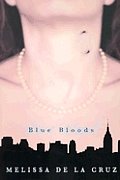
Blue Bloods

I got this book by Melissa de la Cruz because the idea sounded fascinating: vampires masquerading as the New York City elite socialites. One girl — Schyler — who normally doesn’t fit in at her prep school all of a sudden finds herself in the middle of the whole affair; add a murder of a classmate, and you’ve got an interesting book.

Except you don’t.

It was so crowded with litanies of who’s wearing what that there wasn’t any room left for a storyline. Why do I care that Bliss is wearing Prada sling back heels? Or that Schyler’s in a vintage black lace dress and “the skirt blossomed out at the hips like a graceful bell held aloft by a layer of tulle petticoats”? I don’t. I want plot. And characterization. And something interesting to happen. And in the spaces where there weren’t some sort of clothing list, there was tabloid adventure liberally spliced with name dropping. “They were like the Brad Pitt and Angelina Jolie of Duschene.” So freaking what?

I bailed at 110 pages. And that was too much of this book.

Bella at Midnight

This really wasn’t so much a fairy tale as a tale of discovery with fairy tale overtures. There’s a wicked father, a frustrated step-father, a prince and a not-quite-princess in disguise. There’s intrigue, courage, love, war, betrayal: what more does a good tale need?

Nothing.

Bella is a happy peasant girl, daughter to a blacksmith, who happens to be friends with the king’s youngest son. That is, until her life is turned upside down the year she turned 13. She discovers that her real father is a knight, but a cruel one; he has remarried and has sent for her, tearing her from the family she loves. On top of that, Prince Julian is sent as a hostage/prisoner/guest to the enemy country, where it turns out — because of his brother’s vanity — that his life may be forfeit. What is Bella to do, but try and save his life?

I loved this little book. With elements from Beauty and the Beast, Cinderella, Joan of Arc, Diane Stanley wove a captivating little tale of a courageous girl with a huge heart. It wasn’t as magical as I was expecting, though there were some elements of magic. It was more religious than I was expecting (the climax is attributed to a miracle of God), but I feel that’s what this story needed, especially since Bella had a role similar to Joan of Arc. I also liked the format; Stanley deftly wove the story from numerous perspectives; different chapters being narrated by different characters. This very easily could have been distracting, at the least, but I thought that it actually added to the charm of the story.

Which made it, if not a fairy tale, then a really good book.

A Spot of Poetry

By M, for her Language Arts class (I found it lying on the counter…)

I AM
I am a loud reader
I wonder what to read next
I see my books as gold
I want a library
I am a loud reader

I pretend I’m the hero
I feel the characters
I touch my imaginary friends
I worry for them
I cry at the sad parts
I am a loud reader

I understand my “insane” mom
I say “Go away, I’m reading!”
I dream to be the hero
I try to eat and sleep
I hope to have a book dedicated to me
I am
a
LOUD
READER!

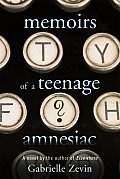
Memoirs of a Teenage Amnesiac

Ever wonder what you’d do if you lost — just like that — four years of your life? Panic? Start over? Get depressed? I was fascinated by the whole premise behind Gabrielle Zevin’s latest book: Naomi is a 16-year-old, who, because of one fall down a flight of concrete steps and a nasty bump on the head, can’t remember anything past the time she was 12 years old. Call it fate, call it gravity, but suddenly she’s a completely different person than what everyone else was expecting.

There’s a lot going on in this book. There’s a love story, there’s a psychological mystery (who was Naomi before), there’s issues of alienation and depression and dealing with choices one makes.

But beyond all that, it’s a smartly written novel with a compelling story about a fascinating girl who takes the chance fate has given her to create something and someone new. A good little book.

Three Days Gone

And I get behind… We had family — both my parents and Hubby’s — in town this weekend and on top of all that, I caught the flu on Thursday, so I’m just now coming out of my self-imposed blog hiatus (only three days, and there were more than 200 posts to read!) , and I discovered that Armenian Odar put up the March Bookworms Carnival. It’s a very lovely little carnival, go visit it, if you haven’t already.

Next month, the carnival will be held at In the Louvre, and the theme will be Latin American literature/authors. If you’d like to submit a post, email admin at inthelouvre dot org. Michelle has also set up an informational page for the April carnival.

Enjoy!

The Faerie Path

My first book for the Twisted Fairy Tale Challenge. I picked this mostly because it was a take off on Midsummer Night’s Dream: the main character, Anita/Tania, is the seventh daughter of Faerie King Oberon and Queen Titania. But that’s where the similarities end.

The basic plot is that on her 16th birthday, Anita is pulled back into the Faerie Realm (by the man who was once engaged to her as Tania) where she discovers that she’s been missing for 500 years. Everyone is overjoyed to see her, and she must set about figuring out what all this means, as well as coming to terms with her power, to straddle the Mortal and Faerie worlds.

As a stand-alone book, this wasn’t very good. Anita spends half of the book denying that she’s the fairy princess Tania, and then when she does try to accept and believe in it, she spends time trying to figure out whom to believe and wanting to get back to the Mortal World. It isn’t until the last 50 pages that the book gets exciting, where action takes over for exposition.

But as a first book in a series (which it is, the second being The Lost Queen and the third, The Sorcerer King), it serves it’s purpose extremely well. It sets up Tania as a seemingly flighty girl, but also one who knows her own mind, and who can use the experience of the Mortal World to her advantage. The romance isn’t very interesting, but since Tania spent half the book being angry at her “true” love, perhaps it will be stronger in the later books. But there’s intrigue, betrayal, and confusion, and finally revelation and an even bigger quest to fulfill. It ends with the promise of more adventure, more danger, more romance. Which is good, because the one thing this book did was leave me wanting to find out the rest of the story.

A Sure Sign it’s Spring

Is that it’s time for Carl’s Once Upon a Time Challenge again!

I had so much fun with this last year that I’ve been eagerly looking forward to participating again. I’m going to do Quest the Second, since I actually read Midsummer Night’s Dream last year and I think the Nook is learning toward a tragedy this year…

So, my list:

1. Fantasy: Swordspoint, by Ellen Kushner. (If I’m feeling ambitious, I may actually read the other two in the series… The Privilege of the Sword and The Fall of the Kings.)

2. Folklore: The Other Boleyn Girl, by Philippa Gregory. Again, like last year, it’s more historical fiction than folklore, but I’m going to pretend it’s not. 🙂

I bailed on The Other Boleyn Girl, and read American Gods by Neil Gaiman instead.

3. Fairy Tales: Into the Wild, by Sarah Beth Durst. Also for the Twisted Fairy Tales Challenge

4. Mythology: I’m going to re-read Mary Stewart’s Merlin Trilogy (The Crystal Cave, The Hollow Hills, The Last Enchantment). I’ve wanted to do this ever since finishing Song of the Sparrow, and this is my golden opportunity. Bonus book: Rick Riordan’s Battle of the Labyrinth. It’ll be out in May, and M has promised me we’ll get it AS SOON AS IT COMES OUT. (No, she’s not excited.) I’m second in line for reading it anyway. 🙂

I’m really looking forward to this. So much fun!

Graphic Novel Roundup #2

My second foray into graphic novels, all YA this time:

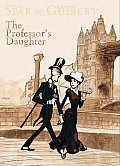
I liked this book — done in the more traditional comic book style by Joann Sfar and Emannuel Guibert — in the broadest sense of the word. That is, it entertained me. But, man, was it weird. The basic plot: an Egyptian mummy, Imhotep IV, comes to life (how? why?? I have no idea.) and falls in love with the Professor’s daughter, Lillian. They have adventures, get in trouble, escape, run into Imhotep’s dad (why is he alive?) and eventually live “happily ever after”. It was odd, it was violent, it was funny in it’s oddness and violence (Imhotep III was , but I finished with a feeling of “wha‘, huh, what on earth just happened?”

Maybe I’d have gotten it better if I knew more about ancient Egyptian kings?

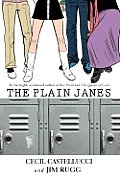
Plain Janes by Cecil Castellucci and Jim Rugg, on the other hand, I really liked. And not just because it was entertaining, though it was that. I liked Jane, I liked the story that was being told, and I liked the way that it was told. It’s a story of losing thing and finding oneself of adjusting and making friends and belonging.

Jane was a survivor of a bombing in Metro City, and because her parents don’t feel safe in the city any more, they move out to Kent Waters, a suburb. Jane’s going through shock on top of the adjustment of moving and starting new high school. And as part of her reinventing herself she gravitates toward the less-popular crowd, which just happen to be a group of Janes. They form a friendship, create art and inspire a town. I enjoyed the creativity, and realized when I finished it that this was something unique: I don’t think this story could have been told nearly as effectively in novel form. And perhaps that’s what graphic novels are for.