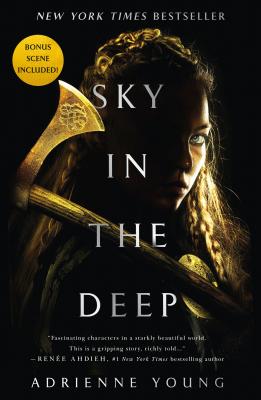
Sky in the Deep

by Adrienne Young
First sentence: “”They’re coming.'”
Support your local independent bookstore: buy it there!
Content: There’s violence, off-screen sex (a brief mention), and a couple of mild swear words. It’s in the YA section of the bookstore.

Eelyn was raised to be a warrior: her people, the Aska, have had a generations-long feud with a neighboring clan, the Riki, where they meet in battle to honor this feud (which, to be honest, didn’t make much sense?). Eeyln lost her brother in the last battle, five years ago, and has mourned him ever since. Except in this battle, she sees something she didn’t think she would: her brother, alive, fighting alongside the Riki. It shakes Eelyn to her core, and is part of the reason why she ends up captured by the Riki and taken prisoner/hostage/slave. However, there is a larger threat — a bigger, more vicious tribe to the north — and it’s up to Eelyn to put aside her pride and help join the Aska and the Riki for their own survival.

I liked this well enough. I enjoyed the Norse-ish elements, and the world that Young has created. She’s not great at the romance, though: this is a problem with all the books I’ve read by her (which is almost all of them, now). She tries to do a slow build up, enemies to lovers here, but it really just comes out of nowhere. All of a sudden characters are kissing and professing undying love, and I’m like: where did this come from? But that’s just me.

And that’s really my only complaint. I liked the book as a whole. It was a fun, quick read, and Young is a talented world-builder. It’s worth checking out.
Monthly Round-Up: April 2021

It must be spring: I read more this month! At least that’s what it felt like. Maybe it’s because I got my second vaccine (yay!) and I’m feeling hope (even though cases are rising here, again). Maybe it’s just because the weather warmed up. Whatever the reason, I’m glad I’m finding joy in books again.

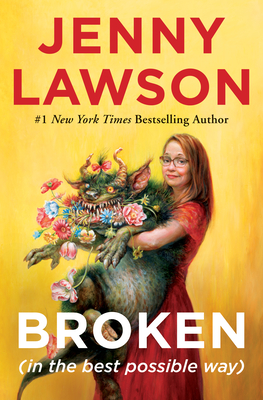
My favorite this month:

I love Jenny Lawson’s writing: it’s hilarous and honest and just a lot of fun. Highly recommend this one on audio, especially.

And the rest:

Non-fiction

Dying of Whiteness
Why Peacocks?
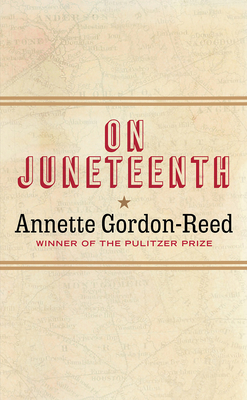
On Juneteenth

YA

Cemetery Boys
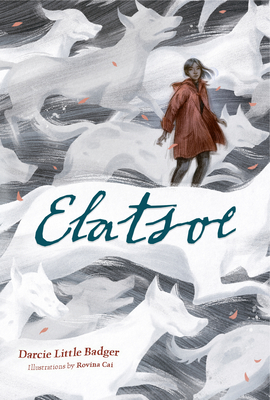
Elatose

Adult Fiction

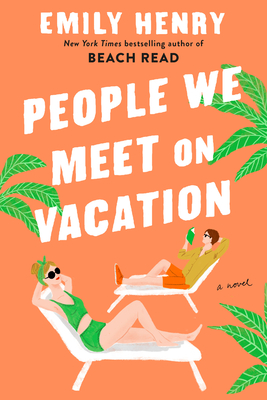
People We Meet on Vacation
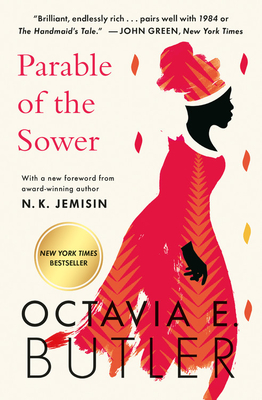
Parable of the Sower
Dirk Gently’s Holistic Detective Agency

What were your favorites this month?

On Juneteenth

by Annette Gordon-Reed
First sentence: “Texas, perhaps more than any other state in the Union, lives in the public imagination as a place of extremes.”
Support your local independent bookstore: buy it there!
Review copy provided by the publisher.
Content: It’s short, and there’s nothing objectionable. It does lean toward the history/memoir. It’s in the biography section of the bookstore.

This one ended up in my box at work (which meant someone there saw it and thought “Ah, Melissa will like this”) so I decided to give it a shot. But, before I could, Russell stole it off my TBR shelf because (I guess?) he knows Gordon-Reed’s work and was interested. His verdict? It’s a great little book of essays, though it’s really less about Juneteenth and more about how Texas is a microcosm for the US as a whole.

And he was right. In these five short essays, Gordon-Reed looks at growing up in Texas as segregation was ending, its history with slavery and the Confederacy, and, yes, what Juneteenth meant to her family growing up. It’s a quick read, but a fascinating one. It’s part memoir, part history, and interesting.

Definitely one to add to your piles.

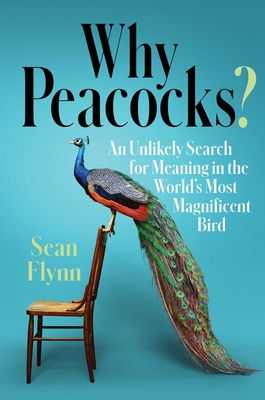
Why Peacocks?

by Sean Flynn
First sentence: “The reason to have a peacock, I would have thought, is self-evident.”
Support your local independent bookstore: buy it there!
Release date: May 11, 2021
Content: There is some talk of violence, animal death, and mild swearing (with about four instances of f-bombs). It will be in the Creative Nonfiction section of the bookstore.

Why have peacocks? That’s the question that Flynn ends up asking when — kind of unexpectedly — he and his family ends up with three peafowl (two cocks and a hen). This book is the exploration of his experiences owning peafowl, the good, the bad, and the fascinating. There’s a bit of history, of how peafowl ended up here in the states, a bit about the learning curve for taking care of the animals, and a bit about the breeding and obsessions with them (both positive and negative).

It’s a delightful little book. Nothing deep or life-changing, but it’s a lot of fun. Flynn’s a good writer — he usually writes about death and disasters, so the birds are a welcome distraction from all that — and balances memoir with history and animal nonsense quite well. I enjoyed spending time with Flynn and his birds, and hearing the stories about them.

It’s a fun read.

Elatsoe

by Darcie Little Badger
First sentence: “
Support your local independent bookstore: buy it there!
Content: There are a couple instances of mild swearing. It’s in the YA section (grades 6-8) of the bookstore, but it’s appropriate for younger readers, if they’re not turned off by the length.

Ellie is an Apache living in an alternative Texas where there are monsters, fairy rings to travel in, and she can raise ghosts. It’s an old family gift, and they only use it to raise the ghosts of dead animals. More specifically, for Ellie, the ghost of her beloved dog, Kirby. When her cousin, Trevor, appears to her in a dream saying that he’s been murdered, Ellie takes it upon herself to go down to the town where Trevor is and try and figure out what happened. However, there are secrets in Willowbee. Ones that could put Ellie and everyone she holds dear in danger.

I really liked the premise of this one: ghosts and monsters and vampires and fairies all superimposed on the current United State, plus a murder mystery? Yes! However, this one lost me when it just couldn’t figure out who the audience is. Ellie is seventeen, but she acts like a 13 year old. It feels like a middle grade book: illustrations, short chapters, simpler language. The only reason Ellie is 17, I feel, is so she can drive. There’s no romance, the swearing is pretty mild… it’s not really the YA that YA readers have come to expect. But, it’s also not really a middle grade book, either.

I did finish it, and it was a good story with a decent ending. But, it’s not one of my favorites.

Dirk Gently’s Holistic Detective Agency

by Douglas Adams
First sentence: “This time there would be no witnesses.”
Support your local independent bookstore: buy it there! (though it may not be in print anymore?)
Content: There’s some mild swearing. It would be in the Science Fiction/Fantasy section if we had it at the bookstore.

Dougas Adams, I have decided, does not really do plot. I mean, really: what Is the plot of Hitchhiker’s Guide to the the Galaxy? Right? So, to say that Dirk Gently doesn’t have much of a plot, but rather Stuff Happens is pretty on par for Adams. It’s Enjoyable Stuff. Sometimes it’s even Funny Stuff. But it’s not Plot.

There are characters — Richard McDuff (who is our Arthur Dent in this book), Dirk Gently (the holistic detective who specializes in believing the impossible), Reg (the forgetful old Cambridge professor with a Secret), Gordon Way (who really just is the reason to try and have a Plot), and his sister Susan (and the girlfriend of Richard, who really doesn’t do anything). There’s an Electric Monk, too. But he’s not really of much importance.

I spent the book thinking — now that I’ve read a lot more Pratchett than when I first read Adams — that Pratchett does what Adams was trying to do — societal satire with witty observations and quirky characters — but a whole lot better. For one thing, Pratchett’s books have a Plot. But, in talking to Russell, he pointed out that it’s probably because Adams was a radio guy. He came up with Sketches (how influenced was he by Monty Python?), and maybe there was an over-arching story, but what he really wanted was a clever idea and a punchline. Which is what this book is. A clever idea — of the Holistic Detective Agency that investigates, well, Weird Phenomena — and a bunch of sketches that were sometimes funny.

Still. It’s not a bad way to pass some time.

Parable of the Sower

by Octavia E. Butler
First sentence: “I had my recurring dream last night.”
Support your local independent bookstore: buy it there!
Content: There is a lot of violence, some frank talk about sex and rape, and some mild swearing (with one or two f-bombs). It’s in the Science Fiction/Fantasy section of the bookstore.

It’s 2024 and the world has gone to hell. Climate change, drugs gone rampant, violence due to poverty and desperation, the rich getting richer and the poor getting poorer. Fifteen-year-old Lauren Olamina lives with her father, step-mother and three-half brothers in a walled and gated community that isn’t rich, but is surviving pretty well. Lauren’s biggest obstacle is her hyperempathy — a condition that allows her to feel and experience another’s pain if she sees it — which makes her extremely vulnerable. And then, as the years and book goes one, things get worse. Lauren finds herself in the open, trying to survive the growing chaos, and finds, among other things, a birth a of a new faith.

I remember reading an Octavia Butler ages and ages ago, or at least trying it. I wasn’t successful. I’m not sure which one it was, but it just didn’t connect with it. But this one? Maybe it was the time — it begins basically in our present — and my awareness of our current political situation, but this felt not just like fiction, but, well, prophecy. It’s less about the characters, though I did care about them and what happened to them, and more about the way the characters interact with the world. It’s a survivalist tale, it’s a dystopian — though it’s in the early stages of being a dystopian — it’s a book about trusting each other and yet not making oneself vulnerable. It was disturbing, thought-provoking, harsh, brutal, and very very hard to put down. I went out and picked up the sequel because I need to now how this story ends.

I’m so very glad I read it.

Cemetery Boys

by Aiden Thomas
First sentence: “Yadriel wasn’t technically trespassing because he’d lived in the cemetery his whole life.”
Support your local independent bookstore: buy it there!
Content: There is some swearing, including a few f-bombs, and some violence. It’s in the Teen section (grades 9+) of the bookstore.

Yadriel is a trans Latinx boy and a member of a family of brujx. It took him a while to come out as trans, and make the transition, and as a result, some of his extended family have resisted him becoming a brujo like he was meant to be. So he decides to go through the ceremony in secret… and inadvertently raises the ghost of Julian Diaz, a kid from Yadriel’s school. Except that Julian really shouldn’t be dead. And Yadriel’s cousin Miguel has gone missing as well.

So Yadriel and Julian team up to figure out what’s going on. And in the process, Yadriel hopes that her family will accept him as a full-fledged brujo.

I liked thine one a lot. I liked it for the representation; Thomas is a transgender Latinx and I thought the traditions and language came through seamlessly. I loved the push-and-pull between Yadriel and Julian and I adored Yadriel’s cousin Maritza. I liked the mystery, even if I guessed it a bit before Thomas revealed it. And I liked that it was centered around Dia de los Muertos.

I didn’t love the chemistry between Yadrial and Julian, and the ending kind of threw me off. It was fine and all, but kind of felt like fan service rather than true to the story, but that’s just the way I reacted. It’s a really good book, and not justs for the representation.

State of the TBR Pile: April 2021

It’s spring! I’m fully vaccinated! Life is looking up!

Sky in the Deep by Adrienne Young
Parable of the Talents by Octavia Butler
Rise to the Sun by Leah Johnson
On Juneteenth by Annette Gordon-Reed
The Elephant in the Room by Holly Goldberg Sloan
Unsettled by Reem Faruqi
Stormbreak by Natalie C. Parker
The Girl King by Mimi Yu
Firefly Legacy Edition, Volume 1 by Joss Whedon (and a lot of others)
Firefly Legacy Edition, Volume 2 by Joss Whedon (and a lot of others)

What’s on your TBR pile that you’re looking forward to?

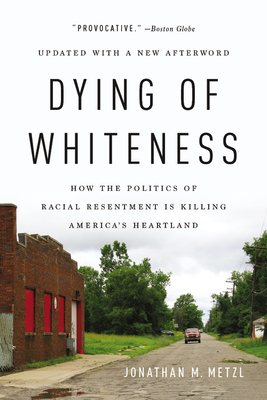
Dying of Whiteness

by Jonathan M. Metzl
First sentence: “Before Donald Trump could implement his agenda — in some cases, before he even took the oath of office — reporters and pundits were already tallying the negative implications of his proposals for many Americans.”
Support your local independent bookstore: buy it there!
Content: There is some racist language (the n-word is edited) and it’s in the sociology section of the bookstore.

The basic premise of this book is this: why do white voters vote for politicians that enact policies that, in the end, detrimentally effect white people (as well as people of color)? He specifically looks at three areas: gun laws (by studying Missouri), opposition to the ACA and Medicare expansion (in Tennessee), and in cutting funding to education (here in Kansas). He talked with ordinary people on all sides of the aisle to see how policies were effecting them personally, and their health specifically.

It was a fascinating book, looking at data (suicides by gun for white males are much higher in states with lax gun laws, so in that instance, these laws are literally killing people) as much as it exists (there’s not much data on health-related gun issues because of the ban on gun research passed by Congress, and it’s difficult to extrapolate health costs based on education). I’m not sure there was anything I didn’t already know (like the overall heath of people in states that expanded Medicare through the ACA is better than the ones who didn’t). What I found interesting was the reasoning people gave. They need to feel protected, against the “bad guys” so they buy guns. When someone dies, it’s because they didn’t see the signs, and not because they had access to a gun. It doesn’t make sense to me, but it does to them. Metzl wants white people to realize the cost of maintaining this hierarchy, one where people refuse to use the ACA because of the “Mexicans and welfare queens” who are abusing it. Or, in Kansas’s experience, defund education because “some” districts are “mishandling” their money. (As an aside: he quantified what I’ve been feeling for a while: the Brownback years of defunding education has given my youngest daughter a much worse education here than the one my oldest daughter got. I couldn’t quite pinpoint why I felt that, but the data speaks: Kansas education, in fact, is much worse now than it was when we moved here.)

It’s not a light read, but it is an accessible one (I admit when he got into the data, I did some skimming). And I’m glad I took the time to read it.