Intuitive Eating

A Revolutionary Program that Works
by Evelyn Tribole and Elise Resch
ages: adult
First sentence: “If you could cash in every diet like a frequent flier program, most of us would have earned a trip to the moon and back.”
Support your local independent bookstore: buy it there!

My mom sent me this book a month or so ago after I was complaining that I couldn’t stop eating, that whatever I’d been doing to control what I stuck in my mouth (especially when I was sad or stressed) wasn’t working.

The basic premise is really very simple: basically it’s to listen to your body and what your body wants to eat, and how much. I was suspicious at first: no “diet”, no eating plan can really be that simple. Right?

Well, it’s simple because it’s not a diet. It’s a re-thinking of one’s attitude towards food, which is something I sorely needed. I say that because I think I was relying on external factors to control my eating habits, rather than internal ones.

The book helps people like me — though I’m not the chronic dieter that they specifically target as their audience, I do teeter on that precipice — work through the process (and it is a process) of getting in touch with the body’s hunger and fullness, as well as balancing health and pleasure when eating. The authors are quite specific and detailed in the steps of the process, from giving up the diet mentality to addressing exercise and healthy eating near the end. It’s obvious that they expect the reader to participate in the program, and not just read the book — there’s spaces for notes, and I photocopied a couple of the charts and hung them up.

That said, my brother-in-law had complaints about their approach: it seemed too lackadaisical, too unscientific for his tastes. And, yes, it is at first glance a fairly unrigorous approach, mostly because every body is different and every approach to this way of thinking about food will be slightly different. However, my BIL’s objections aside, it seems to be “working” for me: I stress eat much less, the feelings of resentment about food (and my self-imposed restrictions on them) are gone, and I’m tending not to over-eat.

While this book probably isn’t for everyone, it actually helped me quite a bit. Which makes it a good book in my mind.

Geeky TBR List

For this week’s geek, we’re talking about books you’ve been meaning to get around to.

I think just about every reader has a least one book that they’ve been meaning to read for awhile (months or even years) but, for one reason or another, they just haven’t gotten around to it. Maybe it’s a book a friend recommended last year, or a title you’ve flirted with in a bookstore on more than one occasion, or maybe it’s a book that’s sitting right there on your bookshelf, patiently waiting for you to pick it up — but the thought is always there, in the back of your mind: Why haven’t I read this yet?

This week, tell us about a book (or books) you have been meaning to read. What is it? How long have you wanted to read it? And, why haven’t you read it yet?

Um, that describes nearly everything on my TBR list… actually, I try to keep up with all the recommendations that everyone gives (not just in comments, but in great reviews on their blog), but there’s only so many hours in a day, and I can only read so fast, and there are just WAY too many books out there.

Most of my list like this is adult books; I seem to get to the YA/MG books I hear about and want to read before I tackle the adult ones. That definitely shows my bias there… though my MG list is shorter than my YA list, which I find interesting.

Anyway. Some (very few) of the adult books I should get around to eventually:

  • The Deptford Trilogy, Robertson Davies — Julie’s favorite author… and I checked it out once, but didn’t read it. (By that token, I should read Patrick O’Brien.)
  • Neverwhere, Neil Gaiman — because I’ve heard it’s his best.
  • The Historian, Elizabeth Kostova — vampire novel. Right?
  • The Sugar Queen, Sarah Addison Allen — because I liked Garden Spells
  • The Spellman Files, Lisa Lutz — because Jen likes it, and that’s good enough for me.
  • Extremely Loud & Incredibly Close, Jonathan Safran Foer — don’t remember. Good buzz?
  • The Curious Incident of the Dog in the Nighttime, Mark Haddon — again, NYTimes best seller, probably
  • anything else by Georgette Heyer — because she rocks
  • the rest of the Outlander series — so many of my friends (not book bloggy ones) love this series, and I’m curious as to why (since I only read the first one, which was okay, but not great)
  • North and South, Elizabeth Gaskell — because I loved the movie, and I should.

My solution? Freeze time and then spend a week or so doing nothing but reading. Either that, or you all need to stop recommending great-sounding books. But neither is going to happen, so I’ll just have to be satisfied with always having a HUGE TBR list.

C’est la vie.

Let It Snow

by Maureen Johnson, John Green and Lauren Myracle
ages: 13+
First sentence: “
Support your local independent bookstore: buy it there!

Yes, I am reading Christmas books in August.

In my defense, as much as I love Maureen and John, I wasn’t about to go out and buy the book without having read it first, so I had to wait for my library (which wasn’t on the ball last Christmas) to get one in. Now, having read the book, I can safely say that I need to buy it. (As much as I love Maureen and John.)

And, also in my defense, it’s not really a Christmas book. More like several romances that happen to be set at Christmastime. Which really doesn’t make it all that inappropriate for August. (Think of it this way: maybe reading about a blizzard in North Carolina will help keep you cool in the middle of the August heat.)

Maureen gets the story started with the first of the three novellas, “The Jubilee Express.” In it, our main character, Jubilee (who is not a stripper, thankyouverymuch), is thrust upon a train bound for Florida because her parents, Christmas village collecting nuts, are arrested on Christmas Eve, throwing a wrench into Jubilee’s best laid plans to go to her boyfriend’s family’s Christmas Smorgasbord. (Okay: you have to love Maureen for including a smorgasbord in this story. You just have to.) The train only gets as far as a small town in North Carolina, where it gets stuck because of a blizzard. Off the train Jubliee goes (who wants to be stuck on a derailed train with a bunch of cheerleaders? Not Jubilee.), and into the path of Stuart. Let’s just say that not only does Maureen have a gift for comedic writing, she (and I know I’ve said this before) writes the most swoon-worthy kisses. Period.

John picks it up in the next story, “A Cheertastic Christmas Miracle,” from the point of view Tobin, who’s just hanging on Christmas Eve with two of his best friends, JP and the Duke (who’s a girl). They get a call from Keun, who’s working at the Waffle House in town, after the cheerleaders from Maureen’s story invade. One of the best things about this book was seeing how all the stories intertwined: a character from the first would make an appearance in the second, and again, in a different way, in the third. Quite fun. Anyway, Tobin, JP, and the Duke head out — yes, in the blizzard — to make it to the Waffle House so the guys can ogle (or is it oogle?) the cheerleaders. Of course, it isn’t easy (it’s a blizzard, for goodness sake!), and of course, there’s romance along the way. John’s romance isn’t swoon-worthy, but it’s very JohnGreen: sweet, with just the right touch of cynicism. I liked his exploration of “happy middles”.

Lauren has the unenviable job of following John’s and Maureen’s stories: how on earth do you top those two? I’ve not read any of her books before, so I didn’t quite know what to expect. Let me say, though, that I think she did admirably: she not only had the story with the best title — “The Patron Saint of Pigs”, she told a very sweet story of a girl — Addie — dealing with the after effects of a mistake she made — cheating on her boyfriend — and she managed to tie in all three stories in a very sweet, very touching way.

A very sweet (count how many times I’ve used that in this review!) collection of stories, great for both fans of the authors and of YA romances alike. Fun, fun, fun.

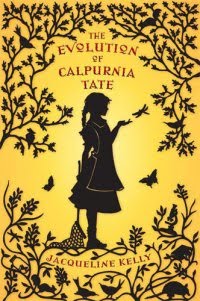
The Evolution of Calpurnia Tate

by Jacqueline Kelly
ages: 10+
First sentence: “By 1899, we had learned to tame the darkness but not the Texas heat.”
Support your local independent bookstore: buy it there!

Calpurnia Virginia Tate (Callie Vee for short) is the only daughter of seven children, positioned smack dab in the middle of all those boys. It’s not an enviable position, even though she’s her oldest brother, Harry’s, only pet. It’s made even less enviable because Calpurnia is not a huge fan of anything domestic: sewing, tatting, knitting, cooking… no, she’d much rather be outside.

Then, the summer of 1899, she and her grandfather (who has been living with them all the time) discover each other. Her grandfather is a naturalist of sorts — a founding member of the National Geographic Society and all — and Callie discovers that studying the world around her is what she really wants to do. She spends as much time as possible with her grandfather — in between piano recitals, forced sewing, school, and managing her brothers’ crushes for her best friend — living for and thriving off of the time spent studying and observing.

Of course, since this is 1899 and Texas, Callie couldn’t be allowed (allowed!) to proceed this way: good, proper, well-off girls just didn’t tromp through the underbrush looking at bugs. For me, this was the heart of the novel, this pull for Callie to do what she wanted and not what everyone expected of her:

I clomped through the kitchen on the way to washing up and said to Viola, “How come I have to learn how to sew and cook? Why? Can you tell me that? Can you?

I’ll admit it was a bad time to ask her — she was beating the last lumps out of the gravy — but she paused long enough to look at me with puzzlement, as if I were speaking ancient Greek. “What kind of question is that?” she said, and went back to whisking the gravy in the fragrant, smoking pan.

My Lord, what a dismal response. Was the answer such an ingrained, obvious part of the way we lived that no one stopped to ponder the question itself? If no one around me even understood the question, then it couldn’t be answered. And if it couldn’t be answered, I was doomed to the distaff life of only womanly things. I was depressed right into the ground.

The other things about the novel are true: Callie’s mom is a bit much (though I think I understood where she was coming from), and her father is little more than a cardboard cut-out. But, I adored the brothers — especially J.B., Travis and Harry — and her grandfather more than made up for her parents in character. Callie is, yes, spunky, but she’s more than that: she’s curious and observant, and — the thing that really got to me — doesn’t really want everyone to grow up and change. A girl after my own heart.

I also liked the way Kelly evoked a particular feel; the sense of anticipation, of change that must have accompanied the time period was quite palpable in the book. It’s a historical novel that actually felt like it. Callie was modern, sure, but she was struggling with her modernity against all the traditional values that were around her, and that dichotomy was intriguing.

A good story.

The Prince

by Niccolo Machavelli
ages: adult
First sentence: “All states, all dominions that have had and continue to have power over men were and still are either republics or principalities.”

My husband, bless his heart, has been trying to get me to read this book (and the Communist Manifesto) for years, since he discovered that I managed to get out of college without reading it (either one, really).

I had begged him to join my online book group, mostly because there was only one lone man and all us women, and I thought Russell would help balance out the testosterone. Unfortunately, that meant when it was his turn to host a book, he picked ones that he was interested in… which meant I would actually have to crack open the cover of a work of political theory. (I could have skipped, I know, but I live with the guy: do you think I’d live it down if I did?)

So… I got through it.

It wasn’t easy; the language was dense and I found that my usual reading situation (during the kids TV time) didn’t work: I had to actually focus on the words. Which meant reading later at night, which meant that I tended to doze off while reading the book. Not exactly ideal.

That said, I can see why this is one of Hubby’s favorite books to teach: there’s a lot to discuss in it. Machiavelli was a brilliant mind, and his ideas, although ruthless by modern standards, are quite, well, practical for the time period. I’m sure, though, that I didn’t get everything I could have out of it (though, when talking to Hubby, I realized I absorbed more than I thought I did!). Which means that maybe someday, I’ll actually have to sit in a class of Hubby’s and listen to him lecture on it.

That would be fascinating.

Little House in the Big Woods

by Laura Ingalls Wilder
ages: 8+
First sentence: “Once upon a time, sixty years ago, a little girl lived in the Big Woods of Wisconsin, in a little gray house made of logs.”
Support your local independent bookstore: buy it there!

I just finished reading this to A last night; her first time meeting Laura and Mary and Ma and Pa. My… I don’t know how many times I’ve read this book. I first cracked the cover when I was about eight, and I fell in love with the Ingalls family. I admired Laura’s spunk, and the fact that she was so not-perfect. I wanted to experience what she experienced, live the life that she lived.

And so, it’s one of those books that is a must read for my girls. (Granted, so far, M and A are the only two that expressed interest. C preferred to read Wizard of Oz, so I forgave her for not being interested in Little House.)

What I noticed this time around — aside from A’s questions about life back then (playing with a pig’s bladder? Making cheese? Really?) and her constant “Is it really real?” — is the affection that Laura had for her childhood and her family. She loved her parents — her Pa especially — and it comes through loud and clear. And — this year at least, I know things get hard once they leave the big woods — she had a wonderfully idyllic childhood. Sure, they worked hard and things weren’t cushy for anyone, but they were happy. And that happiness leaps off the page.

I’m just glad for the chance to share the book with my girls. I don’t know if they’ll be as entranced with it as I was, but at least they got to experience a different sort of life, if only through a book.

On top of that, I got to share a little piece of me with them.

Library Loot #32

As I headed out to the library, I grabbed the bag I’ve been using all summer. I’d forgotten that with the girls back in school, I’m responsible for all their reading material as well.

I’m going to need to take the bigger bag for a while.

For A/K:
The Duchess Bakes a Cake, by Virginia Kahl
Balloon on the Moon, by Dan McCann/Illus by Nathan Hale
Just in Case, by Yuyi Morales
That New Animal, by Emily Jenkins/Illus. by Pierre Pratt
Fribbity Ribbit!, by Suzanne C. Johnson/Illus. by Debbie Tilley**
Itty Bitty, by Cece Bell**
Mommy Go Away!, by Lynne Jonell and Petra Mathers
Poppy & Ella, by Jef Kaminsky
Rhyming Dust Bunnies, by Jan Thomas
Cornelius P. Mud, Are You Ready for Bed?, by Barney Saltzberg
Wow! America!, by Robert Neubecker

For C:
Actually, she informed me after school yesterday, that her teacher has the largest classroom library in the school, and she may not need me to do the choosing for her. She’ll just get what she wants at school. (That said, her teacher is a woman after my own heart!)

For M:
Stardust: Being a Romance Within the Realms of Faerie, by Neil Gaiman/Pictures by Charles Vess*
The President’s Daughter, Ellen Emerson White*
Larklight, by Philip Reeve
Stargirl, by Jerry Spinelli
Warrior Princess, by Jerry Spinelli*
M is for Magic, Neil Gaiman

For me:
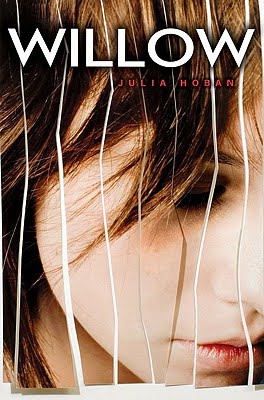
Willow, by Julia Hoban
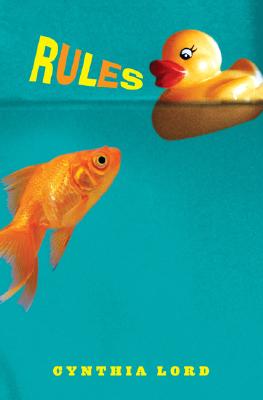
Rules, by Cynthia Lord

The roundup is either at Reading Adventures or A Striped Armchair.

*Ones that M eventually read.
**Picture books we really liked.

Dreamdark: Silksinger

by Laini Taylor
ages: 10+
First sentence (ARC): “”The Tapestry of Creation is failing,” hissed the Djinn King.”
Release date: September 17th; review copy sent to me by the publisher.
Support your local independent bookstore: buy it there!

I read the first book in this series a year and a half ago, and (for a variety of reasons), I decided not to reread it before delving into this sequel. When I went back and looked at my review for the first one, before sitting down to write this one, I realized two things: 1) everything I said the first time around is just as true for the second book, and 2) while you can read the second book as a stand-alone, you really should read them in order, and quite possibly one right after another. (For you “I-hate-waiting-till-a-series-is-done” types, you might want to put it off because the overall story isn’t finished.)

This story picks up one month after Blackbringer. Whisper Silksinger — the last member of a dying fairy clan of weavers and guardians to the djinn Azazel — is fleeing for her life from a group of devil monsters. She is tasked with the job of getting Azazel back to his throne in Nazneen, which — of course — is much easier said than done. Assisting her is Hirik, a Mothmage, who is in disguise because his clan is the most hated in all of fairy because of their betrayal in the Dawn Days. He is out to become the champion of Azazel because he feels a need to restore his clan’s honor.

Whisper is a slight thing, barely speaking above a whisper (hence her name), and constantly trembling in fear. Don’t let that fool you, the girl is an admirable heroine, determined and plucky and strong in ways that, while not flashy or dramatic, are still quite substantial. Hirik, too, is admirable: one of Taylor’s gifts is the ability to write both strong male and female characters who compliment each other rather than competing against one another.

For those who loved Blackbringer, Magpie Windwitch and Talon Ratherstring are also a big part of this story (yay!). They’re tasked with the waking of all the djinn, in order to help repair the Tapestry. This — of course — isn’t as easy as it sounds, either, especially after their path changes in order to find and protect Whisper. It’s the last third of the book that is the most intense; Taylor builds, and maintains, suspense brilliantly, keeping the reader turning page after page dying to know what’s going to happen next.

Even though it’s the second in a yet-to-be completed series, one thing that I really appreciate is that it wraps up the story while leaving a thread alive for the next book. A big complaint I have with many series is the “to be continued” aspect of the books, the cliff-hanger feeling at the end. There is no such feeling at the end of this book; Taylor leaves us satisfied with the story as is, and yet curious about what will happen next. Which is, in my mind, how a series is supposed to work.

It’s also hard for an author to keep the same spirit and drive that they captured in the first book going in the subsequent books of the series. This is not something Taylor suffers from: I enjoyed Silksinger as much as I remember enjoying Blackbringer, and I am excited and curious as to where Taylor is going to take the story.

And that, my friends, is a mark of a great writer.

Secret Keeper

by Mitali Perkins
ages: 13+
First sentence: “Asha and Reet held their father’s hands through the open window.”
Support your local independent bookstore: buy it there!

First and foremost, Asha and Reet are sisters.

Their dad — Baba — has lost his job in 1974 Delhi India and decides to see if he can find a job in America. Since they don’t have enough savings to send the entire family, Asha, Reet, and their mother go to live with Baba’s family in Kolkata, in West Bengal. It’s not a happy time for any of the women: the sisters are not only forced to stop attending their school in Delhi, but are increasingly pushed into more traditional roles than they were previously. And their mother — whom her in-laws have never approved of — is constantly under the influence of what the girls call her “Jailor”: a black depression that is hard to shake.

It’s more Asha’s story than Reet’s; Reet in many ways felt inaccesible to me as a reader: she’s the perfect model of a traditional Indian woman, and although she’s sympathetic, she’s just not all that interesting. Asha, on the other hand, is a fascinating mix between the need to be traditional and please her family, and her desires — in part fueled by the feminist movement in the US — to be her own woman. It’s Asha’s secrets we are privy to, and care about, as well as her desires: whether it’s her desire to be a psychologist (unheard of at this time in India) or to play tennis and cricket, or — more importantly — her growing fondness for the boy next door. And the decisions she makes, as well as the secrets she ends up keeping, are unexpected and yet make perfect sense.

Perkins has written a compelling tale that works on so many levels: it’s a love story, it’s a story of sisters, it’s a story of tension between old and young, it’s a story of second chances. And, because of this, it’s a story will be treasured.

Troubadour

by Mary Hoffman
ages: 12+
First sentence: “A small group of monks was making its way down to the river crossing.”
Review copy sent to me by publisher.

I generally like historical fiction. I generally like the pre-Renaissance time period. I generally like stories set in France. I sometimes like unrequited love. I generally like girls who know their own minds and set out to do what they want in spite of the odds.

But, even though this book had all those elements, it just didn’t do anything for me. In fact, it did so little that I abandoned it a third of the way in.

Perhaps it was me; it is August, I’m a bit distracted in my life right now, and I’m not focusing terribly well on complex books. Fluff is about my speed…

But, it also could be the book: there’s so much that Hoffman’s trying to bite off here. Not only is it a sweeping work of historical fiction, but there’s freedom of religion conflict, portraits of troubadour life, Medieval French politics… perhaps it was a bit much for a single story. That, and the narrator kept flipping between Elinor — our heroine who leaves her noble life for that of a troubadour so she won’t have to marry the man her father picked out; Bertran — the troubadour Elinor loves who is also a follower of the religious sect the Cathars whom the Catholic Church persecuted; and Pope Innocent II. It was a bit much for me.

And, perhaps the story would have picked up as it went along. I didn’t have the patience or fortitude to stick it out, though. And, perhaps that means I’ll be missing out on an excellent historical novel.

But then, maybe not.