God Went to Beauty School

by Cynthia Rylant
ages: 12+
First sentence: um… it’s a book of poetry. This doesn’t really fit.
Support your local independent bookstore: buy it there!

I picked this up because the title, of all things, cracked me up. Sure, God went to beauty school. What’s with that? I needed to know.

It turns out that it’s a collection of poems about things — human things — that God experiences. It’s simply written, thoughtful, and at times both hilarious and moving. I like Rylant’s version of God: an interesting combination of human and divine; wondering at all the little things that we often take for granted. It’s a delightful collection, spiritual in nature, yet not overly religious. And, above all, thoroughly enjoyable (And I say that I don’t like poetry!)

One of my favorites:

GOD BOUGHT A COUCH
He ordered it from Pottery Barn
and He had a little trouble
because His credit card
billing address didn’t match
the delivery address.
They weren’t totally convinced
He was God.
Because for one thing
He got His credit card
bills in Hell
(just His quirky
sense of humor)
and He wanted the
couch shipped to Heaven
(the old one was too hard),
but they didn’t buy it
until He told them
how He made the first
rhinoceros.
He had it all down,
the DNA, the chromosomes,
and especially the
Holy Spirit.
Nobody is as convincing
about the Holy Spirit
as God.
They asked Him did
He want corduroy or leather.
He said, “What do
you think?”

One of the best ways to spend 30 minutes, I promise.

10 Questions for Pam Bachorz

Pam Bachorz’s debut novel, Candor (my review, because it’s been a couple of months), has arrived with a bit of a splash. I haven’t read a single bad review of it (I swear), and it made the short list for this year’s Cybils Young Adult Fantasy and Science Fiction. It’s my pleasure to have her as a guest on my blog today, talking about Candor, writing, and reading. You can find out more about Pam at her website and on her blog.

MF: Candor — to me — was a very creepy place — from the basic housing development all the way through to the brainwashing. Where did you get the idea?

PB: Candor, Florida was in part inspired by my born paranoia. Brainwashing has freaked me out since I first heard kids at school talking about hidden messages that you could hear when you played a record backwards. Then we moved to a small planned community in Central Florida, and I was surrounded by perfection: white plastic picket fences, lush flower beds, pretty houses and smiling people. There was a truck that drove around every night, spraying mosquito repellent from the back, and one night it passed me as I was walking the dog. I wondered what was really in that mosquito spray–what if it was Prozac? Maybe that was what made everybody so happy… and willing to mow their lawn every three or four days! From there it wasn’t a big jump to thinking about brainwashing. Candor, Florida was born.

MF: Planned communities gone awry? Not too far-fetched…. Music plays an important role in the town, as well as in Oscar’s business… is there some reason that you chose music as a vehicle for the brainwashing, or was it just convenient? (I don’t suppose you’ve toyed with the idea of a playlist?)
PB: I played with lots of ideas, but I wanted to pick a brainwashing method that wouldn’t be illegal. You can’t BROADCAST hidden messages but there’s nothing to stop you from slipping it into publicly-played music (I think… I’m no lawyer, but that’s what I discovered with my research). I liked using music because it’s something that can pervade every moment of your life–and the town I lived in actually had these disguised outdoor speakers that played background music in the downtown area.

I actually DO have a short playlist on my website.

MF: While we’re on the subject… why brainwashing as a tool for control?
PB: Well, first and foremost, it is just plain creepy. It overwhelms and leaves little room for doubt or weakness. You don’t have to remember to take it, like you would with a pill, and you also can’t resist it… unless you plug your ears 24/7. Or unless you’re CANDOR’s main character Oscar..
MF: My oldest — who also loved the book — saw some parallels to Lois Lowry’s The Giver. Do you consider this book to be dystopian/science fiction? Why/why not?
PB: I am so flattered by comparisons to THE GIVER. I do think both books share a fear that people would give up their own free will, and their children’s free will, in exchange for perceived perfection. And that, to me, is definitely dystopian.

MF: I didn’t find many of the characters to be sympathetic, though Oscar grew on me by the end of the book. Do you have a favorite character or scene?
PB: I’m a mother and I love all my characters like I birthed them. Even when they’re very, very bad I can’t help but to love them. Oscar is my favorite, if I have to choose one, and in fact he STILL shows up in my imagination to tell me things! I like the flashback scene with Oscar and his parents christening the bricks with applejuice–I like seeing what Oscar lost when his mother was gone.

MF: You’ve created a whole faux website for Candor, which I simultaneously found amusing and not a little scary. What prompted you to do this?
PB: Glad you enjoyed it and also glad it freaked you out! I thought it would be a fun way to extend the reader’s experience with CANDOR and it might also attract a few new readers. I also thought it would be a cool way to get people thinking about how easy it is to deceive. But mostly, I did it because it was fun.

MF: Can you tell us a bit about the process of writing Candor? How long did it take, how much did it change from your initial idea…?
PB: Hoo boy this one took awhile. Start to finish, it took 5 years–but in that time I also had a kid, wrote two other (forever shelved) books, and moved to a new state. When I started writing the book, it was told from Nia’s point of view and Oscar was the janitor’s son! So it saw a ton of change before the finished product. Once Oscar announced to me that A. I had him all wrong and B. this was HIS story, it flew… probably 9 months from starting the rewrite to selling the book.

MF: Who, or what, influences your writing?
PB: Anything and everything. I am very inspired by dramatic, energetic music–my fingers fly when I listen to the Fratellis, Evanescence or Lady Gaga! I read YA constantly, everything from historical romance to sci fi to realistic fiction. But probably my biggest, most lasting influences are the authors I obsessed over as a teen and pre-teen: Lois Duncan and L.M. Montgomery. No wonder I like a combination of creepy and star-crossed romance.

MF: Are there five books that you think everyone should read?
PB: Well, I think there’s no one universal book that’s perfect for every reader. And thank goodness for that; how boring things would be if there was one universal taste. I do think most everyone would love these three: THE TRUE MEANING OF SMEKDAY, by Adam Rex, because it makes me laugh; CROSSING STONES, by Helen Frost, because it is simply beautiful and it made me cry; and DEADLINE by Chris Crutcher because the characters leap off the page and yes, again, it made me cry. And then there is ANNE OF GREEN GABLES, by LM Montgomery (sentimental and spunky perfection) and the creeeeepy DOWN A DARK HALL, by Lois Duncan. I swear to you, I think about DOWN A DARK HALL every single day. I think I read it ten times one summer.

MF: I’ve not, aside from Anne, that I’ve read any of those. They all sound excellent. Last question: If you don’t mind telling us, what can we expect next from you?
PB: I am in complete rewrite mode on my next release, DROUGHT, schedule for Winter 2011 publication with Egmont USA. It’s another dark, twisty tale but in a very different setting. This time the main character is a girl! A girl with a Very Big Problem… and a Very Big Gift.

MF: Thanks, Pam, for your time!
PB: Thanks again for featuring me!

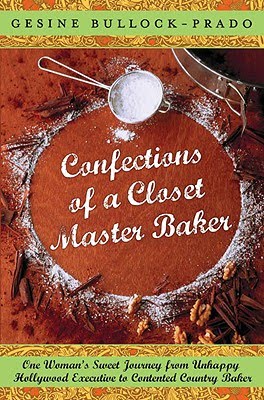
Confections of a Closet Master Baker

One Woman’s Sweet Journey from Unhappy Hollywood Executive to Contented Country Baker
by Gesine Bullock-Prado
ages: adult
First sentence: “I saw the devil at age three and he gave me chocolate.”
Support your local independent bookstore: buy it there!

I needed something light, something foody, something not-YA, yet something interesting, and when Andi reviewed this, I knew that this had to be my next book. And, thankfully, it was everything I wanted it to be.

One part memoir of a childhood, one part food-lover’s delight (including recipes!), one part Hollywood insider (sans names, except for older sister Sandra, though), this book follows Gesine (pronounced Geh-see-neh) Bullock-Prado’s path from high-powered Hollywood executive to the owner of Gesine’s Confections in Montpelier, Vermont. It’s not a comfortable journey; baking increasingly becomes self-described social misanthrope Gesine’s obsession before she left Hollywood, and the store had some fits and starts before becoming a smoothly operating business. And the book isn’t exactly even either: told in hour increments mirroring the arc of Gesine’s day, it’s often uneven, sometimes telling the same stories more than once, and often the lack of chronology in the stories is quite jarring.

But, given that, Gesine’s a likable person and, Hollywood gossip aside, it’s an interesting story. She grew up in Germany and with her descriptions of food and customs and traditions, made me long to visit there again. I know I have to try every single recipe (well, not the carrot cake) in the book. It was comforting to read about of someone who adores baking, someone who finds satisfaction in creating something delicious to eat. And, no, it’s not the best-written book ever, though she is often funny, sometimes sentimental, and occasionally wandering, you can’t help but love her and want to sit down with her, eat something delicious and chat a while.

Which, I’d like to think, is what she wanted you to think when she wrote this book.

Sunday Salon: And Now for Something Completely Different

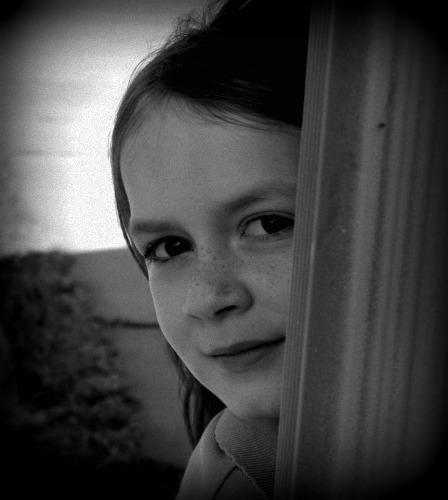
It’s been a while since I’ve done anything really non-bookish here. And it’s also been a while since I’ve shared pictures of my lovely girls. And it’s been a while since I’ve bragged about M… and so I thought I’d combine all three today. This past year, M has discovered that she loves photography (like mother like daughter?), and that she has a talent for it. She’s basically taken over my “good” camera (as opposed to the everyday one that the rest of the girls use), and loves walking around the house taking pictures.


Her favorite subjects, though, are her sisters. And, perhaps not surprisingly, they love to have their pictures taken.

K being sassy:

I love A’s freckles!

And she’s really not like this all the time, but C does pouty SO well.

And, as everyone knows, it’s hard to get one of yourself, when you’re the photographer. Good thing M’s resourceful.

Aren’t they great? (And yes, I am proud of all of them!)

My Double Life

by Janette Rallison
ages: 13+
First sentence: “I didn’t want to write this.”
Support your local independent bookstore: buy it there!
Review copy provided by the publisher.

Alexia Garcia has lived a quiet life with her mother and grandmother in Morgantown, West Virginia. It’s not been easy with her mother working all the time, but it’s been okay. The only weird thing is how much Alexia looks like mega superstar Kari Kingsley. And so when a picture of Alexia goes viral on the Internet, and Kari’s manager comes calling, offering Alexia a job as Kari’s double, what is Alexia supposed to say? Especially when she realizes that it’d be a chance to meet her father. What she doesn’t expect, though, is how complicated it’ll be being Kari and staying true to herself.

Yes, this is fluff. Complete with a swooning romance with a hot guy. But, contrary to the impression that the cover gives, it’s well-written, enjoyable, fun fluff. Sure, it’s got the whole princess-and-the-pauper thing going, but it managed not to be cloying. It was neither “oh look Alexia is so poor, isn’t that horrible” or “rich people are SO incredibly spoiled.” Yes, there were elements of both; Alexia does deserve more, and Kari is quite spoiled. But I felt that Rallison walked a nice balance between the two extremes. It also helped that Alexia is a winning main character: struggling with wanting to connect with her father, star-struck with being out in California, and just plain unsure of herself. She’s smart and caring, and it’s thoroughly entertaining watching her figure out the ropes of Hollywood. And when the ethical stuff comes knocking, as it most surely will, she handles it with grace and dignity. It’s fast-paced — if there’s one thing that Rallison has down it’s pacing; there’s no real lag time — and funny. I’m not sure how “accurate” the Hollywood insider stuff is, but it really doesn’t matter; it’s a good portrait of what us normal everyday mass types think being a megastar would be like. And sure, the ending’s too perfect, as well. But you know? It didn’t matter. Everything turned out happily-ever-after, and we had a perfectly fun, fluffy ride along the way. You can’t get better than that.

Since I’m feeling like passing my ARC along, I’m going to do a quickie giveaway on this one. One entry for commenting here. One more for Tweeting this (let me know, either on Twitter — I’m @book_nut — or commenting here). You have until tomorrow — Friday, May 7th — at noon CDT. I’m willing to ship worldwide. Good luck.

Library Loot 2010-17

I have a reason for the piddly loot today: the library is closed for construction for the next two weeks, and I can only pick up holds. I feel like a part of me has gone missing. As does K… she was visibly upset when we went today and she couldn’t browse the books or the movies. It may be a long month…

Most of these books are ones that people mentioned they loved — either here last week or on Facebook. Others are ones that I’ve read reviews where people have loved them. Either way, I’m hoping to snap out of my slump.

What came in this week:

Adult Fiction:
Germinal , by Emile Zola
The Elegance of the Hedgehog, by Muriel Barbery
Griffin & Sabine: An Extraordinary Correspondence, by Nick Bantock
The Last Chinese Chef, by Nicole Mones

Non-Fiction:
Eat, Pray, Love: One Woman’s Search for Everything Across Italy, India and Indonesia, by Elizabeth Gilbert
French Milk, by Lucy Knisley
Confections of a Closet Master Baker: One Woman’s Sweet Journey from Unhappy Hollywood Executive to Contented Country Baker, by Gesine Bullock-Prado

YA Fiction:
Crossing Stones, by Helen Frost

The roundup is either at Adventures of an Intrepid Reader or A Striped Armchair. Obligatory FTC note: the links are provided through my Amazon Associates account. If you click through and actually purchase one of these books, I’ll get a teeny, tiny payment. But, since no one ever does, and it’s SO much easier using the associates account to put up these links, I’m going to keep doing it.

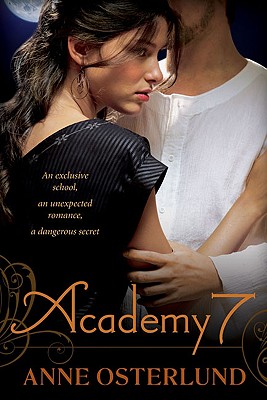
Academy 7

by Anne Osterlund
ages: 13+
First sentence: “Aerin tried to ignore the bloodstain on the control panel of the Fugitive.”
Support your local independent bookstore: buy it there!

Perhaps it was because Hubby and I just discovered Firefly (yeah, yeah, I know: we’re behind the times), but this book really hit the spot this past week. The quick description: it’s a space drama with a bit of mystery and a dash of romance. I could easily see how this would transfer, quite well actually, to the screen: while its pacing is slightly off (too much too fast at the end, with a whole chunk of time just skipped over), it’s a thoroughly enjoyable jaunt into a fascinating universe of Osterlund’s imagining.

Aerin’s on the run — escaped from the slave planet where she’d been living for the past six years since her father’s death — when she’s intercepted/rescued by a trade ship. The captain ran some tests, and it turns out that Aerin’s smart enough to be accepted into the Alliance (the central governing body of the group of planets) top school, Academy 7. There, she finds her top competition is Dane Madousin: son of the top general in the Alliance’s military, he’s never really been challenged in much of anything before. They both rise to the competition, and building upon a tentative friendship, slowly discover much about their parents’ pasts, which, invariably, effects their shared future.

Much of the mystery is related to the pasts of Dane’s and Aerin’s parents; unasked questions gone unanswered for most of their individual lives. And yet, those unasked questions shaped their views of the present. And all this is sounding much hokier than it comes off in the book. We’re privy to both Aerin’s and Dane’s thoughts and their individual insecurities and determination help make the book quite compelling. However, in retrospect, much of the book isn’t really about Dane and Aerin; it’s about the consequences of their parents actions. Which makes me hope for a sequel: I want to know more about Dane and Aerin, and how they choose to move forward after the revelations at the end of this book. It also helps that the universe is really quite cool.

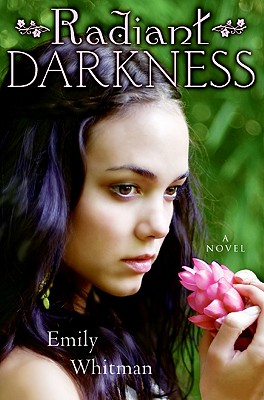
Radiant Darkness

by Emily Whitman
ages: 12+
First sentence: “Persophne. Daughter of Demeter, the harvest goddess.”
Support your local independent bookstore: buy it there!

You know the story: Persephone, the daughter of the goddess Demeter, is walking through the fields of her mother’s realm, when Hades, god of the Underworld, opens a chasm in the ground and snatches Persephone away. Demeter is so distraught that she ceases to help mortals until their suffering is so bad that Zeus interferes, demanding Persephone’s return. Except, she’s eaten some pomegranate seeds, which binds her to the Underworld. The compromise is that she spends some time up on Earth with her mother, and the rest in the Underworld with Hades.

Except, as Whitman’s imagined it, that isn’t the story at all. Or, more specifically: not all of it. Whitman takes the basic myth and expands it, changing the motivations. Persephone — thank heavens — is no longer a passive character, totally at the whims of more powerful gods, but a acting, thinking, feeling person. She dislikes her mother, from whom she can’t seem to get much approval and who doesn’t accept that Persephone is growing up. She falls in love with Hades; though they sneak around behind Demeter’s back, he doesn’t kidnap her. And most of all, this Persephone makes choices.

Unfortunately, many of those choices were based on faulty information: both Hades and Demeter chose to refrain from telling Persephone information that would have helped her make better choices, or helped her be more at ease with the choices she did make. And this grated; both Hades and Demeter filled parental roles: they knew better than Persephone, and therefore limited her. Hades, especially, grated: he was trying to fill both the role of lover and parent, which kind of made him seem Edward-creepy. Most of the time, I wanted to smack him. And while we’re told that Demeter’s actions were motivated by love, we never really saw it. (Either that, or it’s some funny kind of love…)

All of that added up to making the book kind of… flat. I really wanted to like the book. I did like Persephone, as a character. And Whitman’s vision of the Underworld was interesting; it became not just a place for the shades to reside, but an actual kingdom, something that Persephone could work with and improve. (Though, as M pointed out, my perceptions of Greek mythology may be forever warped because of Percy Jackson.) But the gods-being-gods aspect of it kept me, at least. from really enjoying the story.

Sunday Salon: On Objectivity, Niceness and Dialogue

This was not the Sunday Salon post I had originally planned, but a couple of things conspired to bring it about. First, was Liz B‘s very thoughtful (and eloquent) response to the Faking Nice in the Blogosphere essay in the Huffington Post. Second, was a conversation I had with a commenter on a recent post of mine. Add musing about Lenore’s post on bloggers’ unforgivable sins/pet peeves (which I followed mostly on Twitter), and you’ve got a post that’s begging to be written.

Once upon a time, when I was in school, they told me that journalists are supposed to be objective. Get every side of a story, they said. Tell the facts, they said. We’re here to give the public the truth, they said. And, for the most part, I believed them. I believed that I could be objective about the story I was reporting on. I believed there was a way to get the whole truth, to fully inform the public.

Then again, I was a naive 20-something college student.

See, leaving aside debates about the metaphysical here, I’ve come to believe that there is no “truth”. There is no objectivity. Instead, there are only various sides to a story. A reporter, a reviewer, a person telling their neighbor what happened at school yesterday: all of them are constantly choosing what information to put in and what information to leave out. If you, for whatever reason, believe one newspaper, one TV news station, one reviewer, one blogger to be telling the “truth” about something, then, my friend, you are seriously misguided. What you are getting is one perspective. Which is a whole other ball of wax.

Now, you may find you agree with that perspective. That is entirely your prerogative. Or you may not. Again: that’s your prerogative. In fact, to throw in my two cents about the Huffington Post essay, that is one of the things I love about book bloggers. See: everyone has their own individual take on books; if you’re a serious blog reader (or even a serious reader looking for recommendations), you’ll read a fair number of blogs to get a wide view on a number of different books. You find the ones you like, you respectfully disagree with others, and we’re all happy.

Except when we’re not. See, it’s the respectfully disagree clause that gets me. One of the things about blogging and opinions is that they’re personal. As an aside — that’s one of the things I think contributes to the value of the lit blogsphere: there really is no pretense of objectivity here. We all have our individual views, our individual biases, and we’re not really afraid to get personal, to honestly speak our minds, especially when we’re discussing what we think about the books we read.

However, that leads us sometimes to give offense. Authors, publishers, other readers don’t particularly like it when our opinions don’t fully mesh with theirs. Which is why they told us, in school, that journalists (or reviewers) needed to be objective, impersonal. If we didn’t bring our bias into it, then we were above giving offense, we were above opinion, above debate. Honestly, though? That’s all really bull. And I think, on some level, we know it. In America at least, we are constantly throwing terms like “liberal bias” or “conservative bias”, or in the Huffington Post’s case “niceness” and “rigor”, around, which means — honestly — that we don’t really believe in total objectivity.

I really shouldn’t wonder, then, that we’ve forgotten how to have a dialogue. See, I have my opinions — and that’s all I’m expressing here — and you have yours. Sometimes, Heaven be praised, we agree. Other times, we don’t. And, you know what? That’s not the end of the world. I respect that you didn’t like a book I loved, and I hope the reverse is true. I respect your honest opinion of my reviews, whether you think they’re too chatty (yes, I’ve been told that) or too nice or too honest and mean (yes, I’ve been told that, too).

However, I do have a caveat: when we are having a discussion — whether it be in comments or as blog posts — I would appreciate it if you quoted my reviews correctly; not what you think I said, but what I actually wrote. I would also appreciate it if we could have an honest, open discussion (I know I circumvent this by sometimes calling authors arrogant asses, and I apologize for that; I could choose my words more carefully) without name-calling, sarcasm, or prejudgment.

I know I’m asking a lot, but there it is: it’s my blog you’re visiting, be nice. They’re my opinions you’re reading, take them for what they are. I would only expect that you’d expect the same from me.

April Jacket Flap-a-Thon

Another month, another roundup. There were a lot of good books this month, it was hard to choose just three.

The Girl Who Chased the Moon (Bantam): “In her latest enchanting novel, New York Times bestelling author Sarah Addison Allen invites you to a quirky little Southern town with more magic than a full Carolina moon. Here two very different women discover how to find their place in the world…no matter how out of place they feel. Emily Benedict came to Mullaby, North Carolina, hoping to solve at least some of the riddles surrounding her mother’s life. For instance, why did Dulcie Shelby leave her hometown so suddenly? Why did she vow never to return? But the moment Emily enters the house where her mother grew up and meets the grandfather she never knew—a reclusive, real-life gentle giant—she realizes that mysteries aren’t solved in Mullaby, they’re a way of life. Here are rooms where the wallpaper changes to suit your mood. Unexplained lights skip across the yard at midnight. And a neighbor bakes hope in the form of cakes. Everyone in Mullaby adores Julia Winterson’s cakes. She offers them to satisfy the town’s sweet tooth and in the hope of bringing back the love she fears she’s lost forever. In Julia, Emily may have found a link to her mother’s past. But why is everyone trying to discourage Emily’s growing relationship with the handsome and mysterious son of Mullaby’s most prominent family? Emily came to Mullaby to get answers, but all she’s found so far are more questions. Is there really a ghost dancing in her backyard? Can a cake really bring back a lost love? In this town of lovable misfits, maybe the right answer is the one that just feels…different.
It’s a bit long, but it’s one of those jacket flaps that make you just want to read the book. Enough information to tease and interest, but not enough to give away the book’s secrets.

A Conspiracy of Kings (Greenwillow Books): “Sophos, under the guidance of yet another tutor, practices his swordplay and strategizes escape scenarios should his father’s villa come under attack. How would he save his mother? His sisters? Himself? Could he reach the horses in time? Where would he go? But nothing prepares him for the day armed men, silent as thieves, swarm the villa courtyard ready to kill, to capture, to kidnap. Sophos, the heir to the throne of Sounis, disappears without a trace. In Attolia, Eugenides, the new and unlikely king, has never stopped wondering what happened to Sophos. Nor has the Queen of Eddis. They send spies. They pay informants. They appeal to the gods. But as time goes by, it becomes less and less certain that they will ever see their friend alive again. Across the small peninsula battles are fought, bribes are offered, and conspiracies are set in motion. Darkening the horizon, the Mede Empire threatens, always, from across the sea. And Sophos, anonymous and alone, bides his time. Sophos, drawing on his memories of Gen, Pol, the magus—and Eddis—sets out on an adventure that will change all of their lives forever.”
Great book. Really. Read the series; I promise you won’t regret it. But. Don’t read the jacket flaps. Because, really!, this is not what happens. Kind of made me mad, in the end.

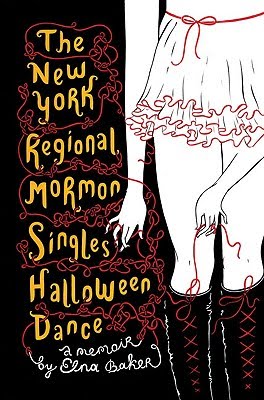
The New York Regional Mormon Singles Halloween Dance (Dutton): “It’s lonely being a Mormon in New York City. So once again, Elna Baker attends the New York Regional Mormon Singles Halloween Dance-a virgin in a room full of virgins doing the Macarena. Her Queen Bee costume, which involves a black funnel stuck to her butt for a stinger, isn’t attracting the attention she’d anticipated. So once again, Elna is alone at the punch bowl, stocking up on generic Oreos, exactly where you’d expect to find a single Mormon who’s also a Big Girl. But loneliness is nothing compared to what happens when she loses eighty pounds. . . . and falls in love with an atheist. The New York Regional Mormon Singles Halloween Dance is the memoir about a girl who’s as paradoxical as the city she’s coming-of-age in: A girl who distresses her family when she chooses NYU over BYU; a girl who’s cultivating an oxymoronic identity as a bold, educated, modern, funny, proper, abstinent, religious stand-up comic — equal parts wholesome and hot. As Elna test-drives her identity, she finds herself in the strangest scenarios: including selling creepy, overpriced dolls to petulant children at FAO Schwarz; making out with the rich and famous; nearly getting married in Utah; and arriving at the New York Regional Mormon Singles Halloween Dance in an obscene costume. It all boils down to a young woman wondering where love comes from and what will make her feel the least alone in a city full of strangers. Brazenly honest, this is Elna’s hilarious and heartfelt chronicle of her attempt to steer clear of temptation and find out if she can just get by on God.”
I thought this was clever; it made the book sound so interesting. Unfortunately, it hits all the highlights. There’s not much else to the book except what’s in the jacket flap.

Other books read this month:
As You Wish
How to Say Goodbye in Robot
Kaleidoscope Eyes
Demon Princess: Reign or Shine
The Dark is Rising
I am Morgan le Fey
Neverwhere
The Storm in the Barn
The War of the Worlds
Amulet: The Stonekeeper
Amulet: The Stonekeeper’s Curse
Hachiko Waits
Return to Sender (DNF)
Hamlet (DNF)
Breathless (DNF)

Running Total: 57
Adult fiction: 11
YA: 20
MG: 12
Non-fiction: 6
Graphic Novel: 8
Didn’t Finish: 5